


Rivernerd
-
Posts
963 -
Joined
-
Last visited
-
Days Won
18
Posts posted by Rivernerd
-
-
On 10/16/2023 at 2:25 PM, dewdev said:
The procedure for Sanitizing is on the Oliver University section of the forum. I suggest that you watch that prior to doing the sanitizing (and take notes as I did).
And, don't make the same mistake I did when sanitizing: don't drain the bleach water onto concrete, if you can avoid it!
I did this earlier this year, thinking that it would do no harm to the concrete pad in front our our garage. The error in that thinking became apparent the next time it rained. Six months later, whenever it rains, you can still see a light-colored pattern where the bleach water drained onto the concrete and then flowed off of it. Fortunately, once the concrete pad dries up the splotches disappear.
But, the next time I sanitize my tank, I will take the extra effort to move the Oliver and drain the bleach water onto our gravel parking area beyond the concrete pad!
-
 1
1
-
 3
3
-
-
4 hours ago, Geronimo John said:
Many of us DYIers use walmart poly cutting boards and cut them to the desired size. Cheap and easily found.
Also available from Amazon if, like us, you live a 1+ hour drive from the nearest Walmart. The one linked below is 1/2" thick, the size I prefer to work with.
-
1
-
3
-
-
12 hours ago, Chukarhunter said:
If I didn't have the access port below the pantry, I would probably add a second return vent even farther forward, probably under the forward dinette.
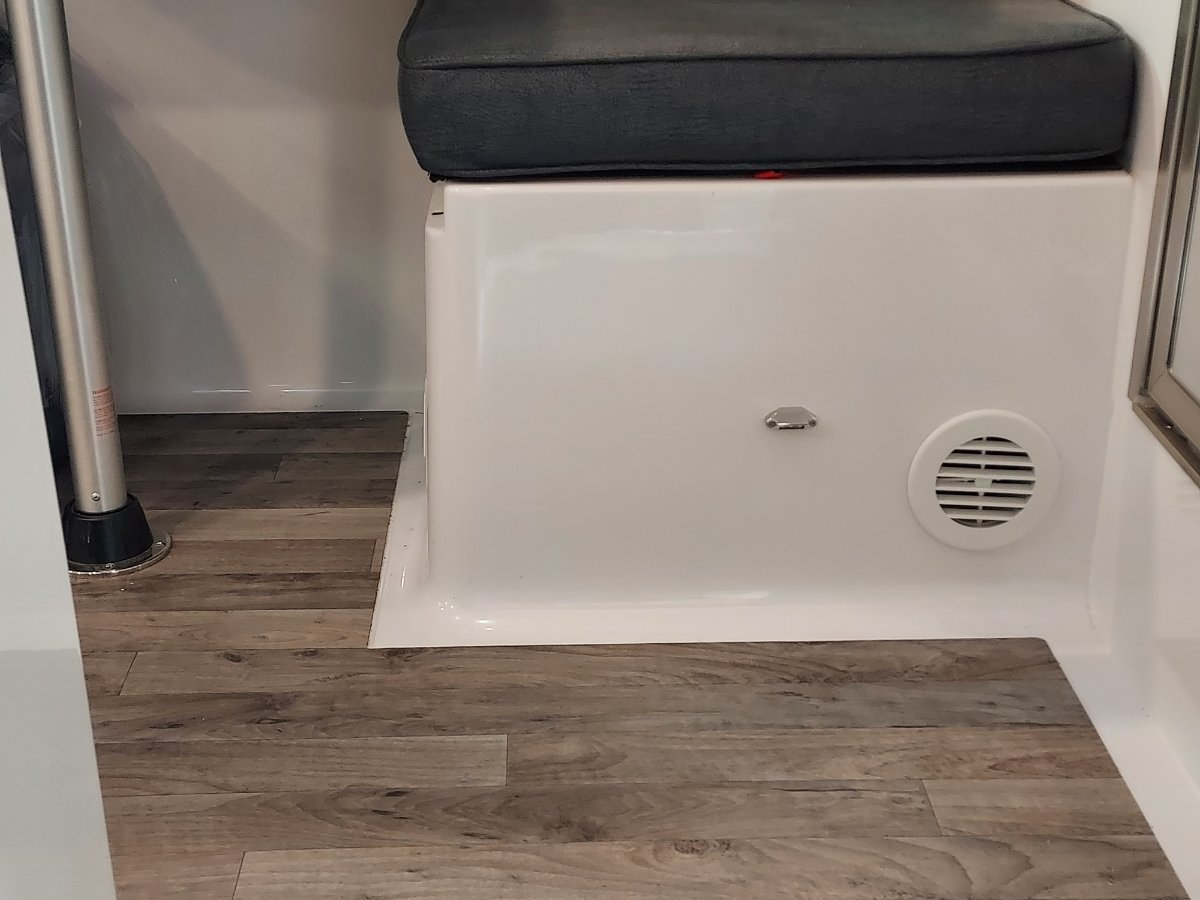
Like this?
 12 hours ago, Chukarhunter said:
The best solution I believe is to provide a decent sized return vent in the bathroom which will allow warm cabin air to warm the entire length of the cabin as it is pulled into the bathroom and also the entire length of the basement on the way back to the furnace intake vents. I believe that Oliver started putting in a return vent in the bathroom in 2022 (although I think it is very small).
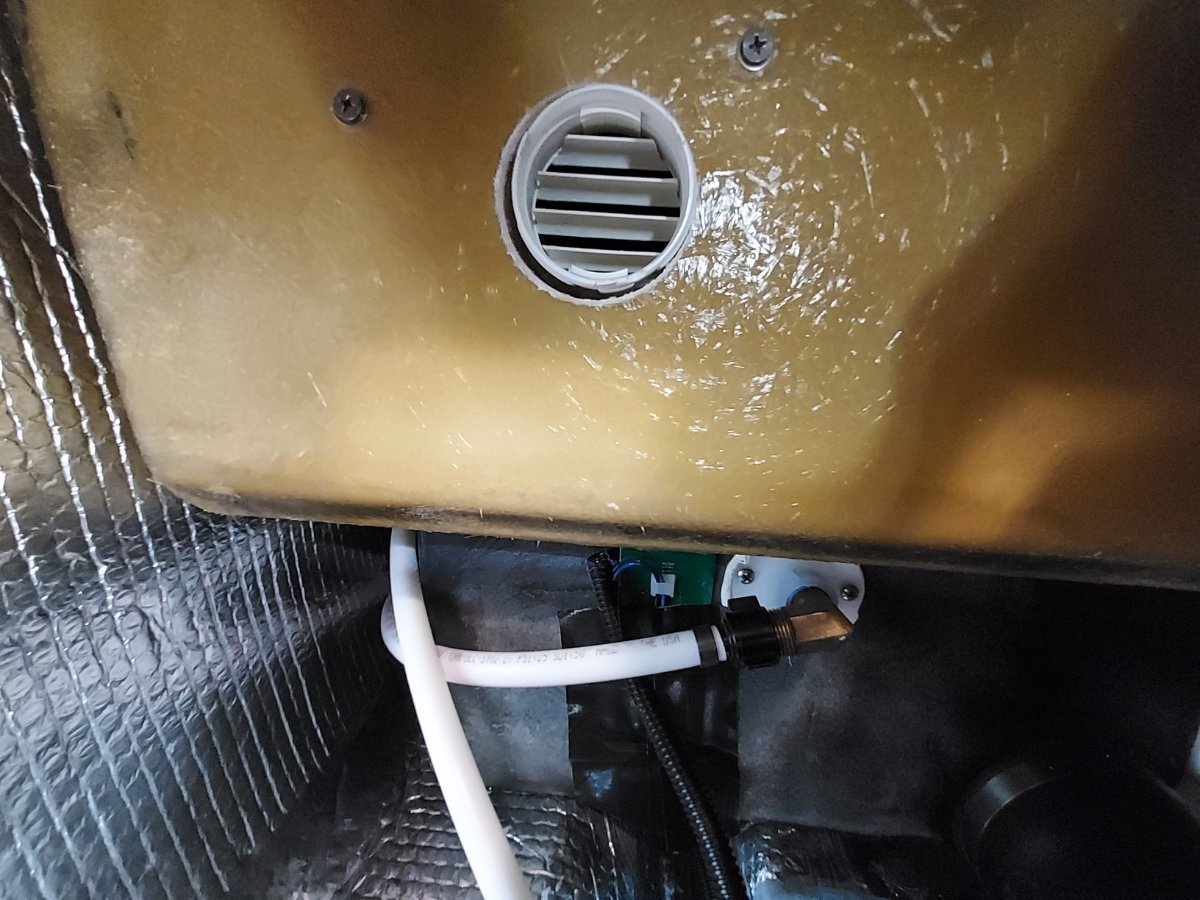
Like this bathroom return air vent (viewed from underneath the forward dinette seat opening in our 2022 Elite II)?
They have significantly improved heated air circulation in our Elite II, and helped keep the "bilge" area warmer in cold weather.
I agree that the solution is not relocation of the primary return air vent, but addition of more return air vents in the forward area of the trailer, particularly the bathroom.
-
3
-
-
19 minutes ago, rich.dev said:
also closing off that stock vent should draw more "warmer" return cabin air from your 4" vent through the street side basement area. Now that its cooling down maybe you can run your test again by closing off that existing return vent?
I don't plan to close off the main return air grill under the street side bed, because it serves two important functions in that location: (1) avoiding creation of low pressure in the area around the furnace, and (2) providing a supply of free-flowing air to the furnace intake.
1. Creating Low Pressure Around the Furnace
A couple years ago, John Davies noted:
"But if you relocate the furnace grill to the far side of the cabin, you are essentially creating a slight vacuum under the floor with the furnace fan, so air is going to be pulled inside through those [scupper] holes [in the bottom of the hull]. A little air infiltration isn’t bad, but on a really frigid day it will also suck in trickles of freezing cold outside air right where you don’t want it, under the tanks and plumbing. With the existing location there is no suction created under the floor, instead the cabin air enters directly. So maybe [the Oliver engineers] really did choose this spot for a good reason."
See this thread:
2. Providing Free-Flowing Air Supply to the Furnace.
I tried installing a homemade furnace filter over the air intake of our Truma Varioheat furnace a few months ago. The furnace began throwing error codes, I suspect because it sensed that the supply air intake was partially blocked by the filter. Removing the filter solved the problem. That furnace air intake sits directly behind that return air vent. It appears to me that the Varioheat furnace is designed to have the large, free-flowing air supply provided by that return vent directly in front of the air intake.
I do not plan to block it.
-
4
-
-
1 hour ago, topgun2 said:
I can run my fridge on one 20 pound tank for about 6 to 7 weeks.
I expect yours is an absorption fridge. The 2023s come with compressor fridges. This is another reason to consider solar and lithium: a compressor fridge requires a fair amount of power, and very few RVers get along without a fridge.
Also, many campgrounds limit the hours you can use a generator. If you plan to rely on a generator, I hope we don't end up camping next to you! (with all due respect)
Yes, the lithium upgrade is pricey. But, unless used nearly full time, Lithionics LiFePO4 batteries should last at least 10 years, likely more like 15. Wet cell or AGM batteries must be replaced every 3-5 years regardless of use. Over time, the marginal cost differential between lithiums and lead/acids is not that great.
-
3
-
3
-
-
On 10/9/2023 at 3:50 AM, Dennis and Melissa said:
Door lock (do I need the electric one?)
We didn't get the electric door lock on our 2022 Elite II, because some folks on this forum noted issues with them. One poster got locked in the trailer when it malfunctioned and had to crawl out the rear window!
We have not regretted saving $$$$ by going with the standard key lock. We keep the key in the center console of our truck.
-
1
-
3
-
-
1 hour ago, rich.dev said:
Since you added a 4" round return air vent on the aisle side of the front dinette seat, did you also leave the existing stock return vent open?
Yes.
-
15 minutes ago, GeoffChapman said:
I knew there were weep holes to drain any moisture that got in between the hulls, but wasn’t sure about the basement itself.
The "basement" is comprised of the area between the inner and outer hulls at the bottom of the trailer. Although there are scupper holes for drainage, there are also lots of places where water could pool, in between and under plumbing lines, duct runs, etc. If you can, I would also place fans in the open hatches for several hours to accelerate evaporation.
-
3
-
-
5 hours ago, MSURRATT said:
Who do you recommend for insurance. My insurance company that I use for home and vehicles was a little high and doesn't offer any type roadside assistance.
We just switched our auto policies, which include coverage for our Elite II, to Safeco (a subsidiary of Liberty Mutual). Our auto coverage includes roadside assistance, although I carry lots of tools and prefer to address on-the-road issues myself.
-
1 hour ago, Patriot said:
Another suggestion is to consider few extra days at David Crockett SP to do your shakedown of your new Oliver. A few days spent at the SP will allow you to familiarize yourself with your Oliver. While at Oliver Service, go through every system, push every button and make sure EVERYTHING works. If you have an issue and new Olivers can have issues, you are close enough to OTT to get it addressed before heading home. Before heading home, take as much time as you can.
We spent 3 days at David Crockett State Park after picking up our Elite II last November. When we drove back to Hohenwald the following Monday morning, the Oliver Service staff jumped right on the few issues we had discovered during my thorough 3-day inspection and testing. Their commitment to ensuring that all issues were promptly, and properly, resolved before we took the trailer home to Idaho was exemplary.
-
3
-
 1
1
-
-
1 hour ago, Apreski said:
Again, I fail to see why the trailer Victron system can’t be utilized to recharge . It has worked well all summer.
Lithionics Storage Procedure Rev.7-1.pdf
Attached is the most recent Lithionics Storage Procedure memo.
When reducing charge to 50% SOC, removing the batteries and storing them in a temperature-controlled environment (as recommended in that document), I see no mention of using an "external charger" to perform the discharge/recharge cycle after 6 months.
I would just reinstall the batteries next spring, run them down to the reserve charge level, and let the trailer's internal inverter/charger do the recharge for you.
-
1
-
-
55 minutes ago, John E Davies said:
Getting the sap off your Ollie is going to be a chore. Plastic scraper blades work well if it is cool (not sticky).
We live in a pine forest in central Idaho. After I installed a sign on a tree two years ago, long trails of pine sap ran down over the sign in several places. I found that WD40 sprayed onto the sap trails, and left to soak overnight, emulsified the sap and made it much easier to remove with a plastic scraper, without damage to the sign.
When pine sap gets onto our Elite II, I plan to use WD40 to help with removal.
-
2
-
-
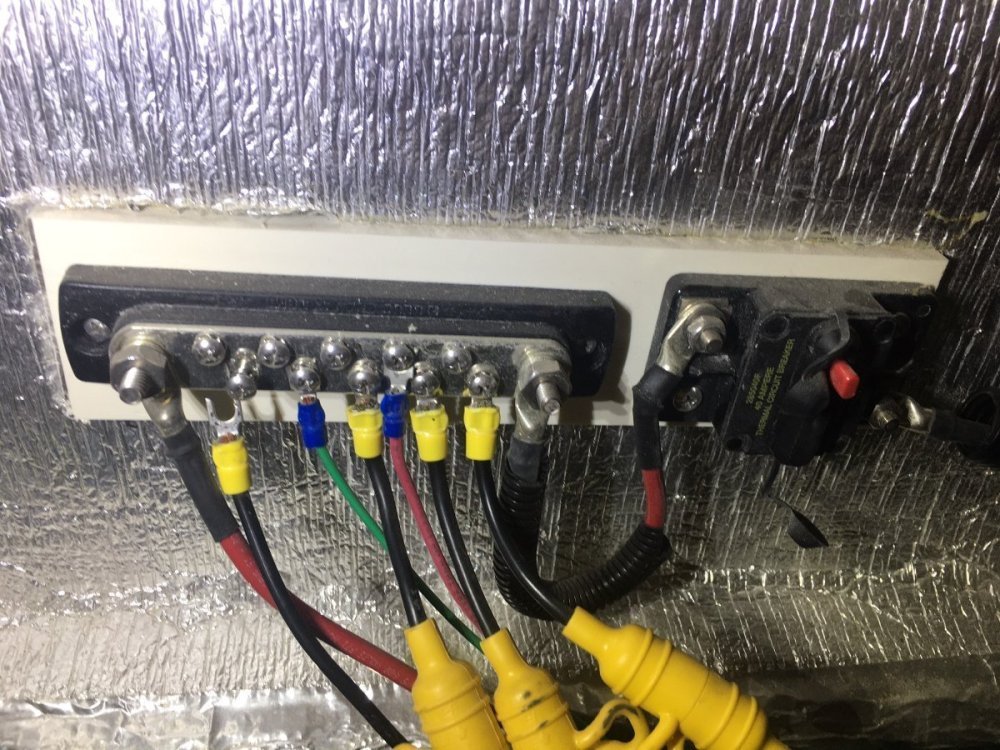
I note that the spade terminal on one of the black wires is not connected to the screw above it. Is this intentional?
-
2 minutes ago, Steph and Dud B said:
Interesting. How was the bus bar a power drain? Our was it high resistance?
My poor word choice. Yes, the new bus bar has high resistance, so less DC power is getting to the appliance.
-
On 6/29/2023 at 7:12 PM, msteen said:
After having my 2022 Oliver (Hull # 1256) on AC power and batteries indicating 13.7 volts, when I disconnect from shore power and go strictly on Inverter, the battery voltage drops to 12.4 volts. Is this normal?
You may have the new bus bar Oliver started installing in 2022s. We have one in our Hull #1291. Have you checked the voltage at the battery bank with a reliable multimeter, then compared it to the voltage reading on the Seelevel monitor when using an appliance (like the microwave) on inverted power? A significant difference between the two readings could be explained by the new bus bar, which causes a significant DC voltage drop.
We kept getting inverter shutdown under large (1400-watt+) DC loads until Oliver Service figured out that the new bus bar was draining lots of DC power. We would have 13+V at the battery but the inverter was reading below 12V when under load. The "solution" for us was to drop the Low Battery Cutoff setting on the inverter down to 11.5V, from the factory default of 12.0V.
I recommend you open a service ticket.
-
1
-
-
On 8/22/2023 at 7:34 PM, Hperdue said:
I have to sell the truck because it will not fit the garage.
I expect that is a length, not width, issue. Does your 3500 have an 8' bed? Could you trade for one with a shorter bed?
-
1
-
-
10 hours ago, Boonter Jeff said:
There is valve lube that you can add to your gray and black water tanks.
We use Thetford drain valve lubricant in both the gray and black tanks. We add add some lubricant after each time we drain, per the instructions on the bottle.
And, we leave the "stinky slinky" attached. So far, no notable leakage.
-
3
-
-
2 hours ago, HDRider said:
The manual of standard equipment says I have the Truma Varioheat
My oversight. Glad you've got the Varioheat, which means you should have the return air vent from the bath to the underside of the front dinette seat.
Our tests last November suggest that, with the Varioheat running to maintain cabin temp at about 70 F, and with the external faucet removed from the hose and re-installed to the hose through the access under the street side bed, the -plumbing in your Elite II should be protected from freezing with outside temps down to about 15 F.
As noted above by Mike and Carol, a small electric space heater placed under the rear dinette seat blowing aft can make a big difference keeping the "bilge" areas where the plumbing is located warm. As we like to leave the bed made up in our standard bed Elite II, we prefer the space heater method to leaving the hatches open to allow warm furnace air to circulate.
-
1
-
-
2 hours ago, HDRider said:
Does an Oliver need to be winterized if it is plugged into shore power and the furnace is on?
The answer to this question depends, to some extent, on how recently your hull was manufactured. Our late 2022 Hull #1291 with the Truma Varioheat furnace can withstand colder outside ambient temps than earlier models because Truma required a redesign of the duct system that includes a return air vent between the bathroom and the under side of the front dinette seat. See photo below:
This return air vent enables distribution of more heat to the underbelly of the trailer, providing some additional thermal protection to the plumbing. Your Hull No. 1423 probably does not have the Truma Varioheat, and, therefore, does not have the updated ducting.
The thread below contains lots of information about the performance of Olivers of various ages in cold temps:
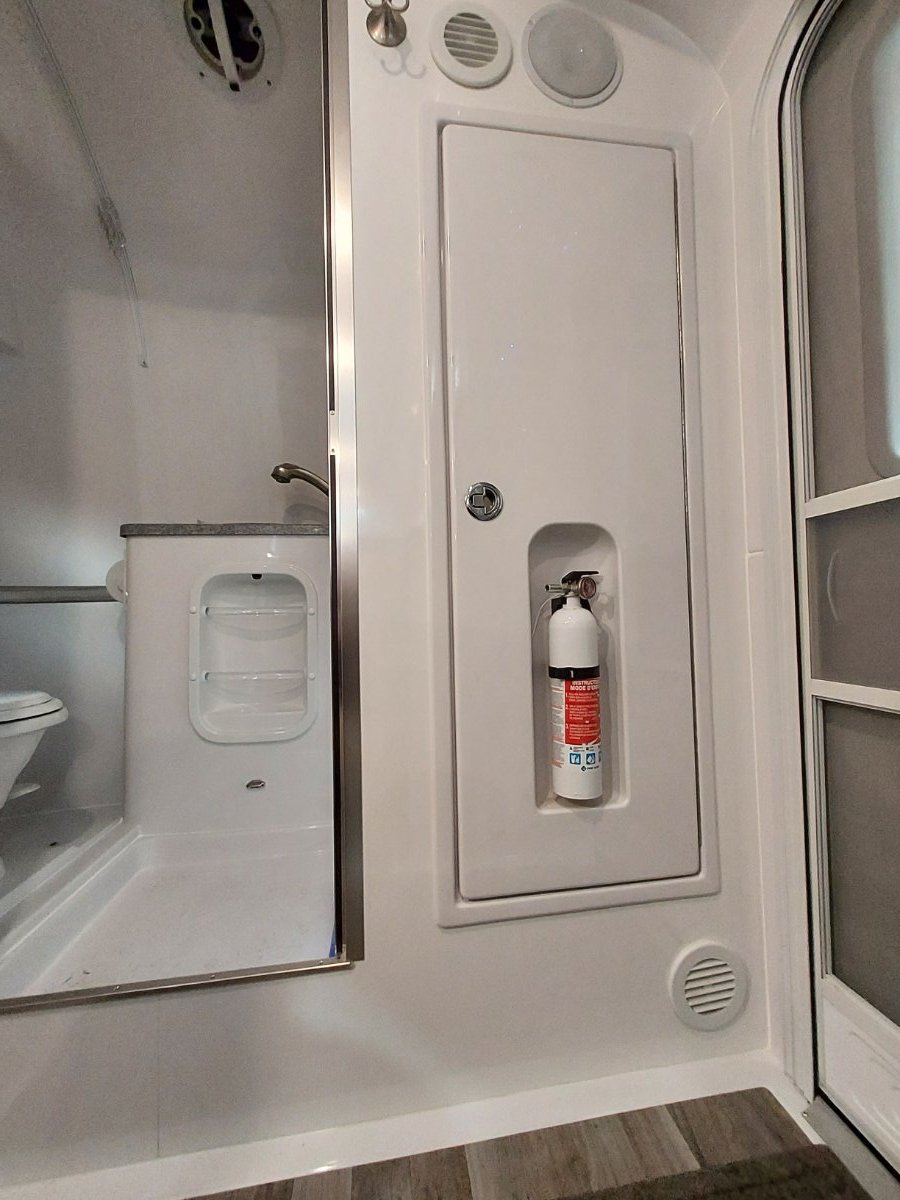
There are adjustments and mods you can make to help the plumbing system better withstand cold temps. The easy one is removing the outside faucet head and re-installing it on the inside of the hull (underneath the street side bed) when camping in cold temps. I have added some additional return air vents to improve circulation of warm air through the otherwise isolated parts of the trailer. See photos below:
The bottom line: the plumbing will not freeze in any Oliver, with the furnace running, down to temps in the high 20's. To be able to use the trailer without winterizing at temps below that level, take the steps detailed here, and in the thread embedded above.
Good luck!
-
1
-
4
-
-
1 hour ago, Wandering Sagebrush said:
I went into my shop and found one leg had failed, and the bow dropped.
A concern for sure. But less of a concern with 4-point attachment, as with the My LIfter.
-
2 hours ago, Wandering Sagebrush said:
Not certain it would be my best option, but it certainly looks like a workable solution.
My solution enabling me to lift the topper off my truck bed by myself is the My Lifter system. It is much more expensive, but the lift, with canopy, stays suspended below the ceiling of my garage, leaving the entire garage bay usable with the canopy off the truck.
https://www.smarterhome.com/products/truck-top-lifter
The Rapid Lift/Rapid Stand combo costs less, but occupies storage space when the canopy is off the truck.
-
1
-
-
2 hours ago, Townesw said:
Has anyone else looked at their Oliver and seen this movement? Surely hulls 92 and 313 aren’t the only ones that exhibit this condition?
Hull #1291 exhibits nearly identical flexibility up and down when someone is moving about the trailer.
Such movement is particularly noticeable when someone is climbing the stairs to enter the trailer.
-
1
-
2
-
 1
1
-
-
13 hours ago, ScubaRx said:
You've hooked your black flush hose to the outside port and begun to fill your black tank in preparation for dumping.
Is there an advantage to filling the remainder of the black tank with water before dumping? For the "Twilight Zone" reasons you so aptly described, I have always drained the black tank first, then left the dump (termination) valve open BEFORE connecting my "black water" hose to the flush port under the bathroom window. Once the drain hose runs clear, I then disconnect the black water hose from the flush port, close the dump valve and then put the drain hose back into the bumper.
I have envisioned a spray nozzle inside the black tank which distributes the pressurized water input throughout the black tank flush port, which rinses the residual contents out through the drain hose. Is this not correct? Does filling the black tank before draining result in a cleaner black tank, even though that process risks the awful result you have described?
-
16 hours ago, SNY SD UP said:
Can anyone tell me what the 2 groups of wire connectors would be connected to, so I might label them.
Have you verified that your trailer turn, backup and running lights work when your 7-pin is connected to your tow vehicle? My first impression when viewing your posted photo is that some of those wires may be designed to be connected to each other, to enable your rear trailer lights to function.
-
1
-


Norcold refrigerator when not level
in General Discussion
Posted
The two of you like to live dangerously!
A reminder that absorption fridges use an open flame to heat the refrigerant when in propane mode. The potentially catastrophic consequences of an open flame parked anywhere near a gas pump are enough to persuade me to use DC mode when on the road.
John, as I recall you have solar panels and a 390 Ah Lithionics battery bank. For what it 's worth, we always use DC mode when on the road, with the solar turned on. Each time, when we arrive at camp, we switch to propane if boondocking, or to AC if we have hookups. I then check battery State of Charge to determine how much the fridge in DC mode has drawn down our 390 Ah Lithionics battery bank, given the offset from the solar panels. I have yet to find the SOC below 90% when we arrive at camp. That 10% deficit is quickly replenished by the solar panels after a few daylight hours when boondocking.
My brother died 6 years ago after he ignited a slash pile doused with gasoline. My son quips that "Uncle Larry went down in flames...."