Leaderboard



Popular Content
Showing content with the highest reputation since 09/01/2026 in all areas
-
This video will give you a basic outline to some of the upgrades we had done earlier this summer on the Outlaw Oliver.18 points
-
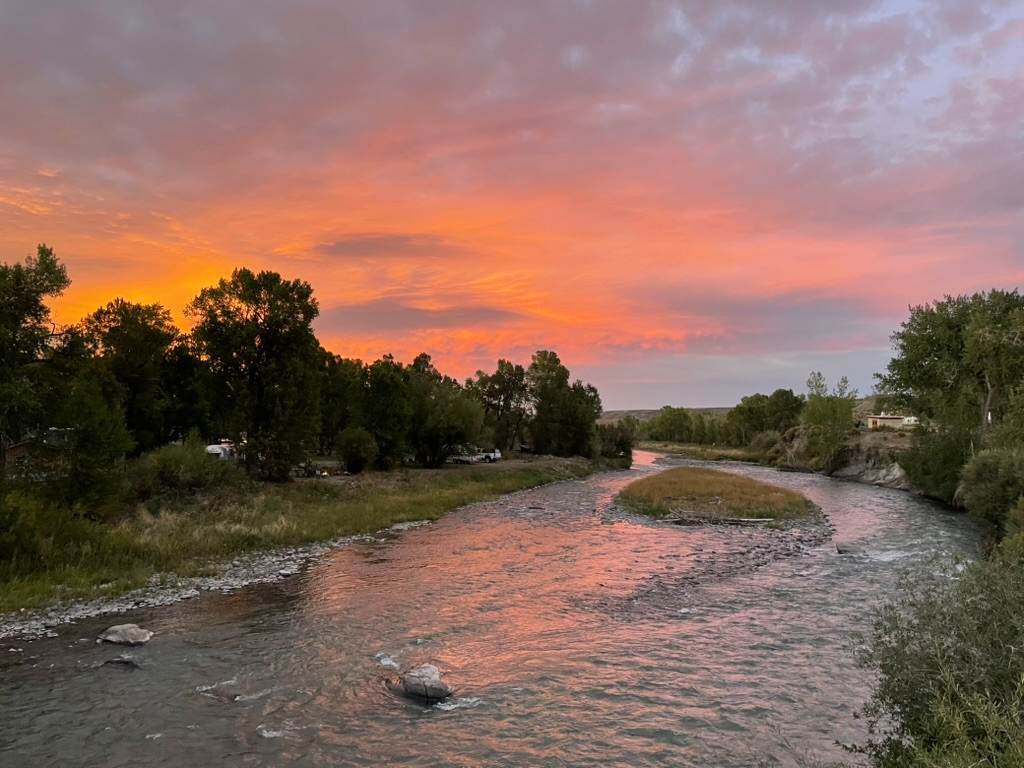
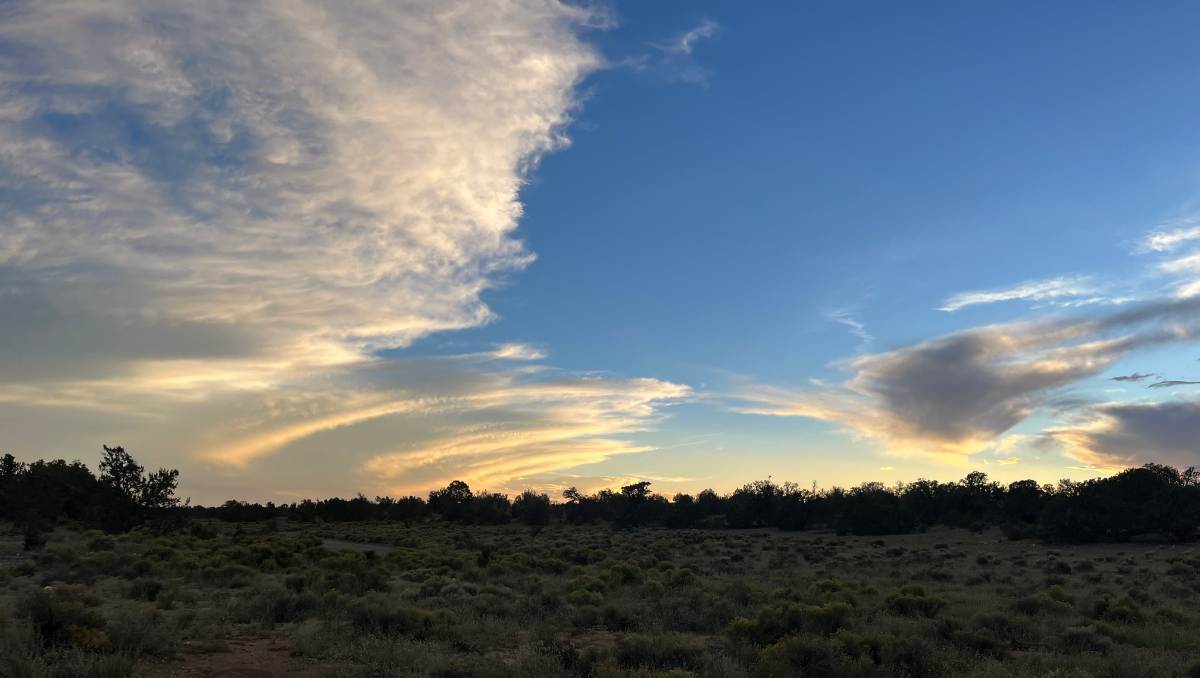
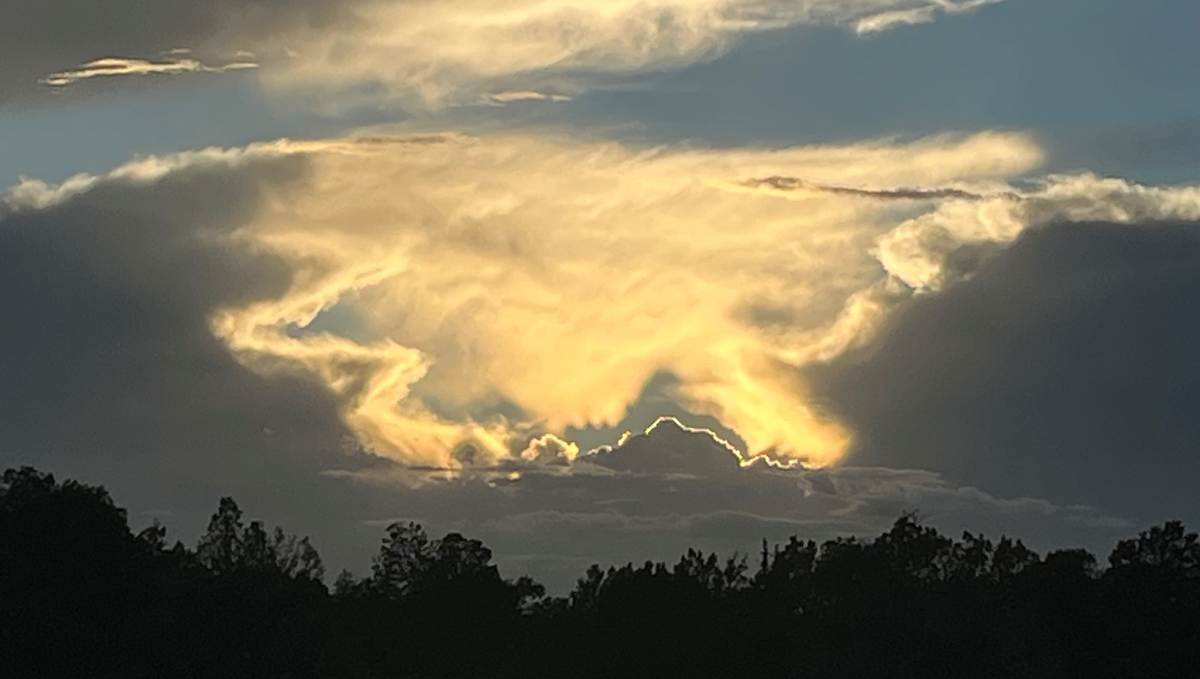
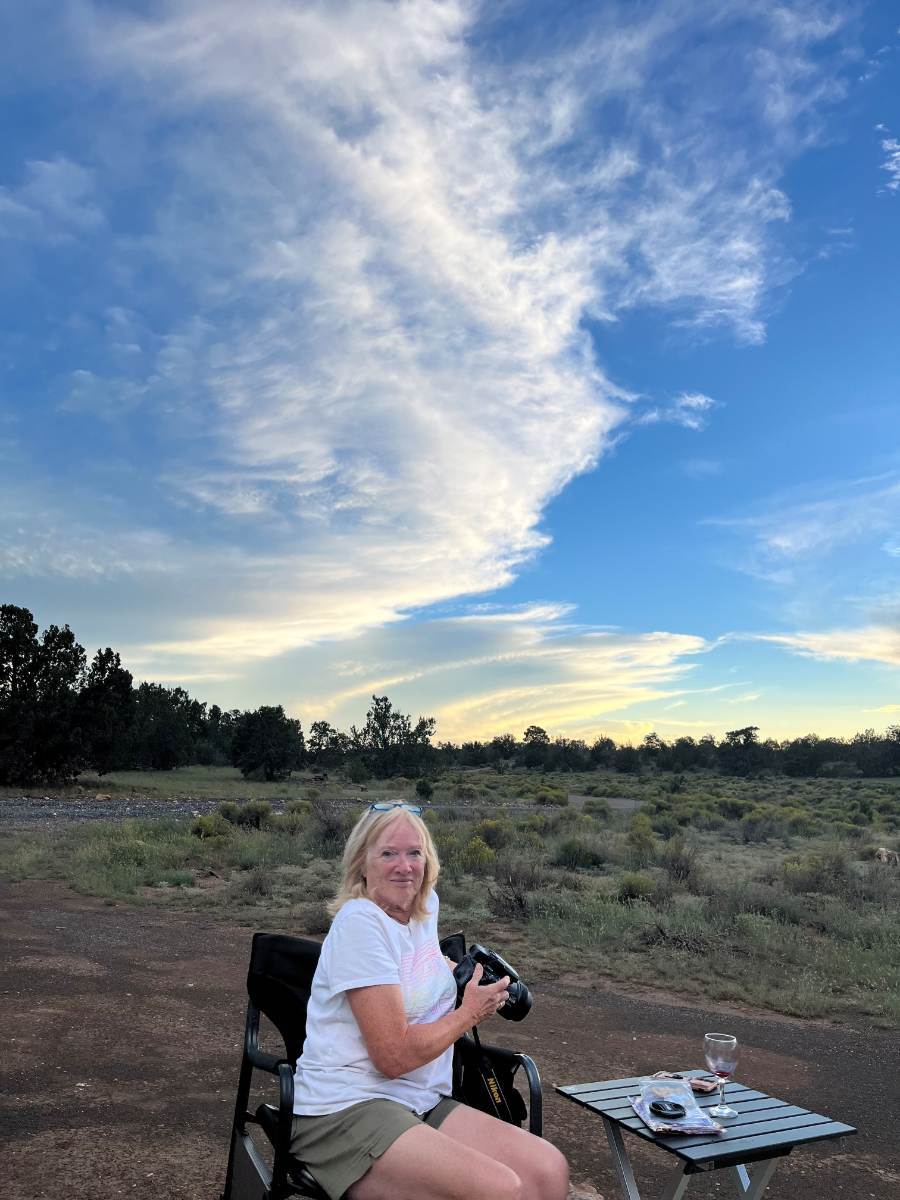
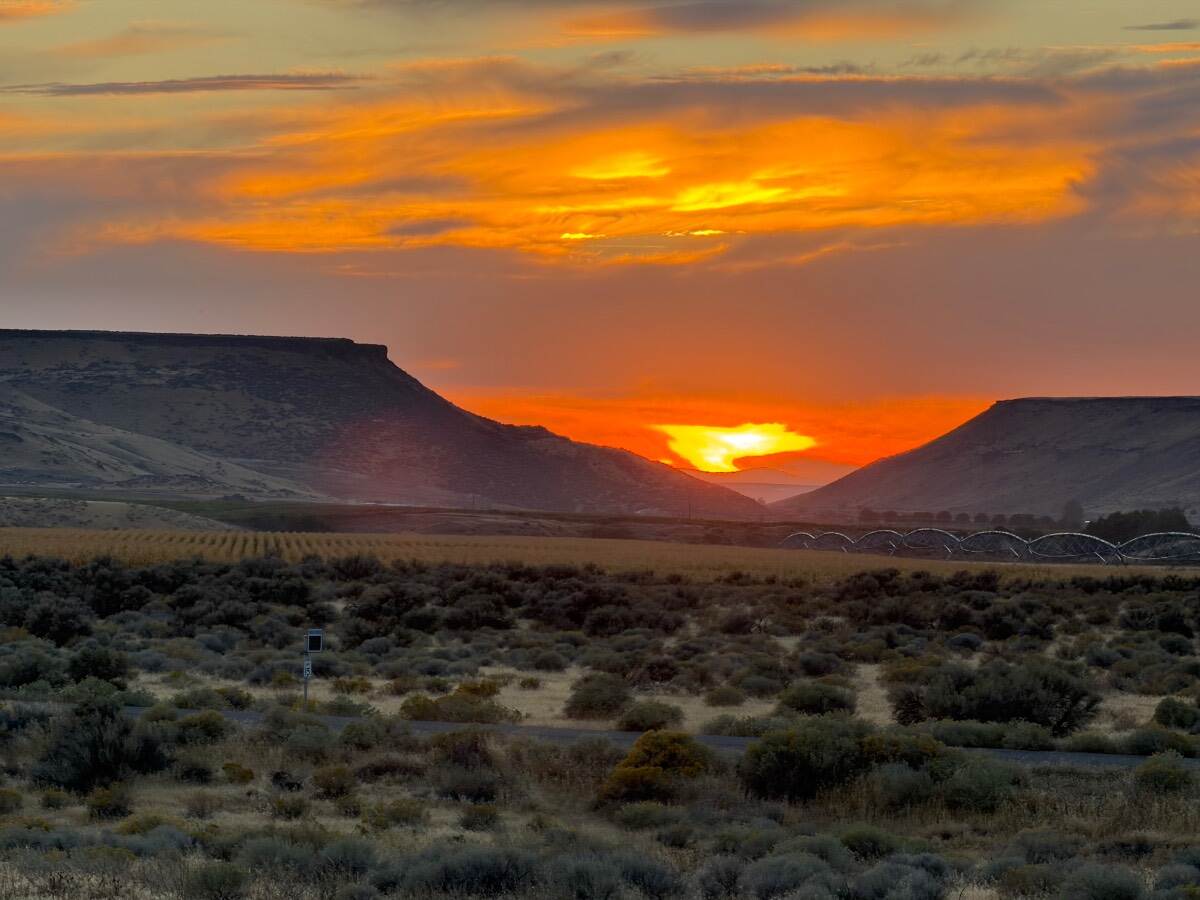
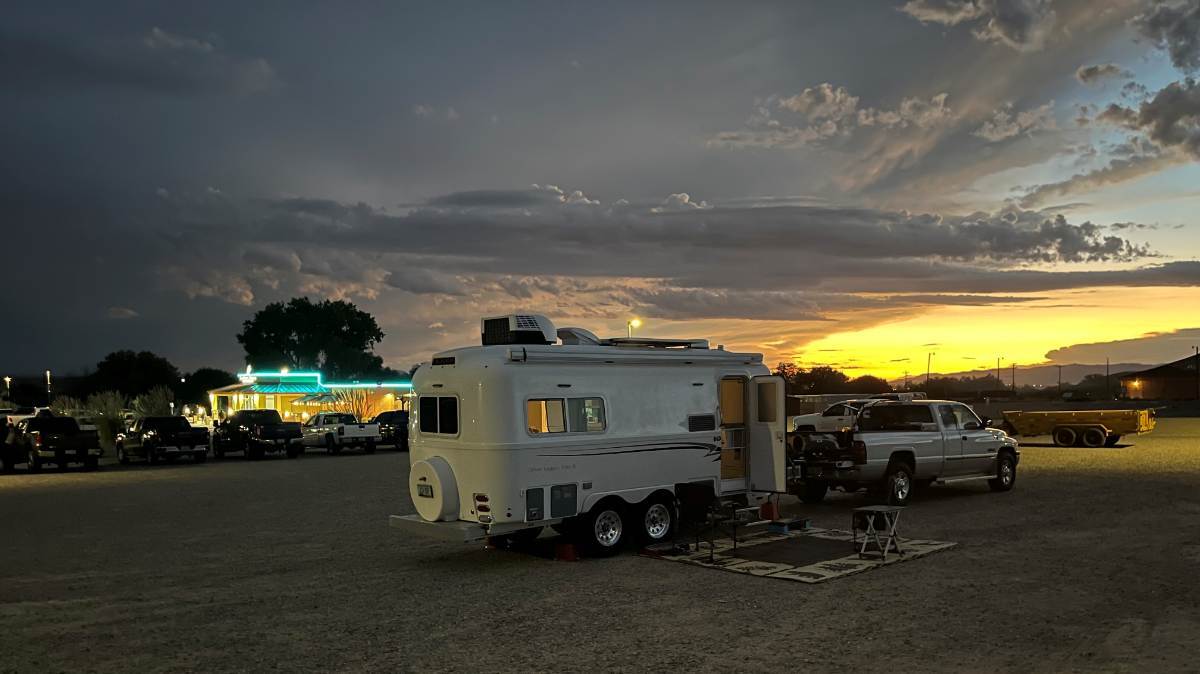
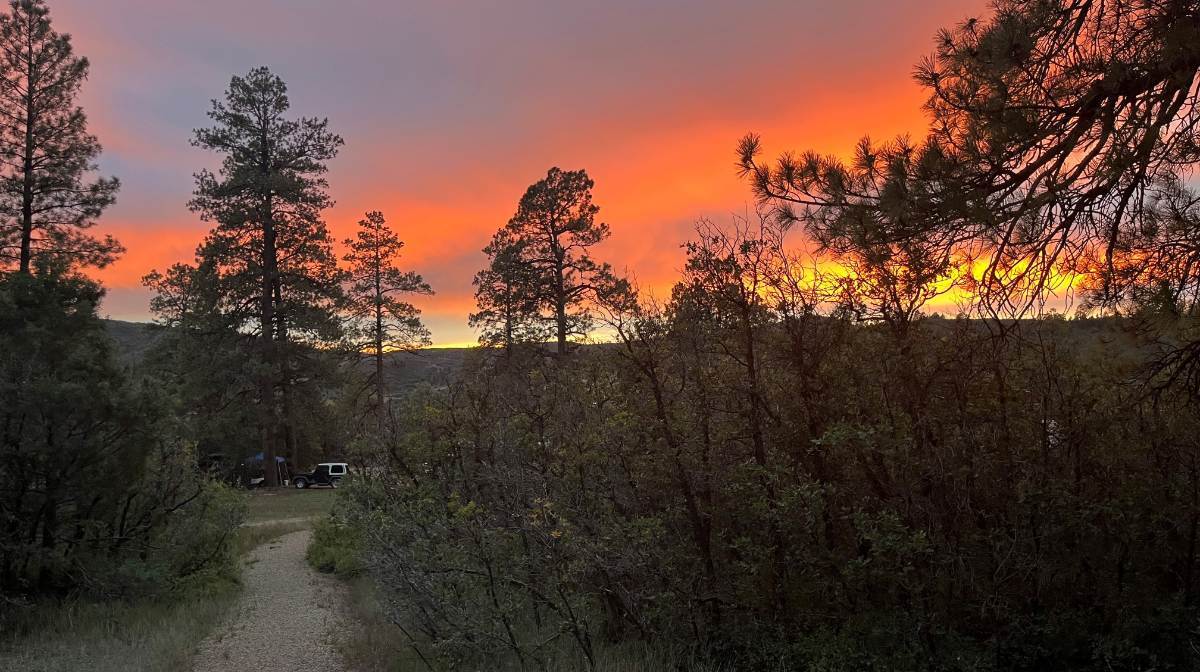
Wyoming sunsets are glorious.
 11 points
 -
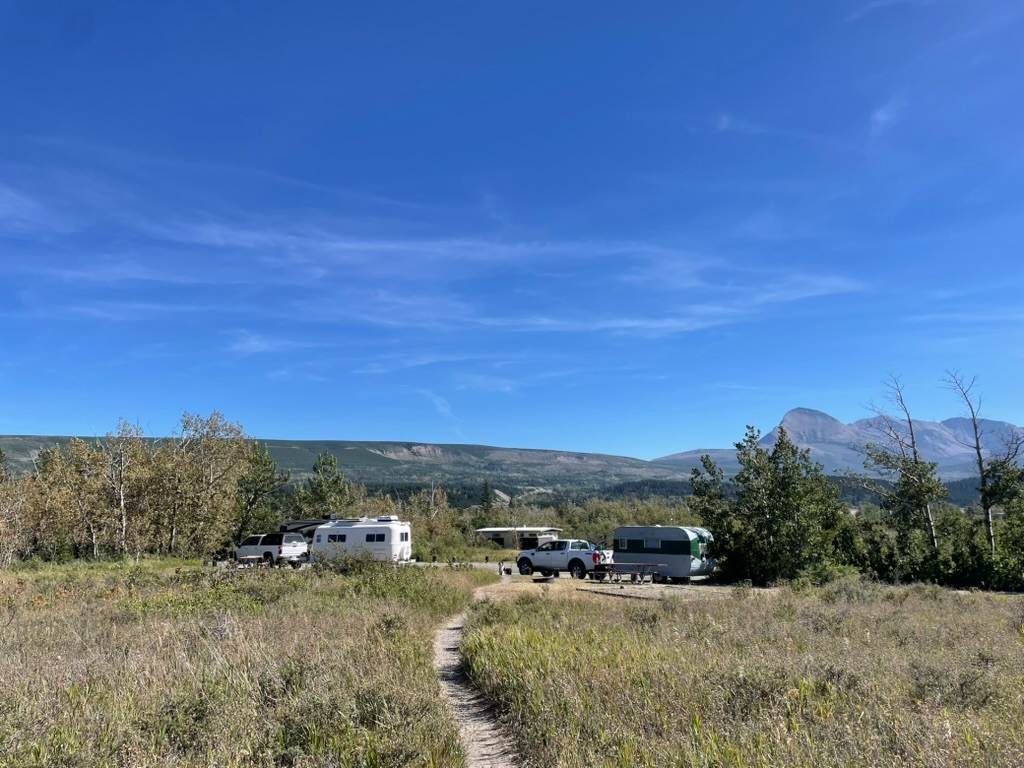
Glacier National Park, Saint Mary Campground near eastern entrance to the park. The campground amenities vary a bit depending on the loop, but they have hot showers (free) as well as fresh water spigots, waste water dump station (for gray water from dish washing) and an RV dump near the entrance. Full of berries and full of bears; maybe that's why the campground isn't full! The sites cannot be reserved before the day-of-arrival, but it wasn't a problem to find space. I'm so glad I took the opportunity to come here this year, at the suggestion of a friend. The weather has been perfect camping weather; cold enough to want a camp fire, and damp enough to be allowed to have a camp fire.
10 points
-
9 points
-
I posted something about this BLM dispersed camping site in another thread, "Oliver - Again?" But this reference should really be in our favorite thread, "Where' Ollie!" So here it is! So many of us drive by Flagstaff AZ, whether you're going to The Grand Canyon or Sedona, elsewhere in northern AZ or just traveling to or from California! Winona AZ is 16 miles east of Flagstaff and just east of Walnut Canyon, which is worth a visit (I posted pics from our visit here just a few weeks ago). Walnut Canyon and these boondocking campsites are only 10 minutes south of I-40. Drive south on Winona Ranch Rd and turn right on FS Road 128. These are well maintained service roads with some ranch traffic. Our campsite was 2.5 miles down and there are 100s to chose from! Camp another few miles down this road and you'd be a short hike to the western rim of Walnut Canyon. 🤠
8 points
-
That's just funny "Where is Ollie" I just joined your forum and my real first name is Ollie. haha8 points
-
Hi all, First off, thanks to all of the Oliver forum members who post comments and Q&As. The info we’ve gained from periodically checking the forum activity was incredibly helpful in our decision to buy an Oliver, and in figuring out which model and options would work best for us. Although it took more than a year of research, we finally made the leap this past June! We will be picking up our 2027 Oliver Legacy Elite II (Twin Bed floorplan) on September 8th — Hull #1735. We were tent campers for about 40 years and spent the last 8 years camping throughout the Carolinas and Virginia in a 15-foot Taxa Cricket. We are really looking forward to the next chapter of traveling and exploring the country in our Ollie. If anyone is around Hohenwald during our pickup week, say hello! Chuck and Beth Lexington, NC8 points
-
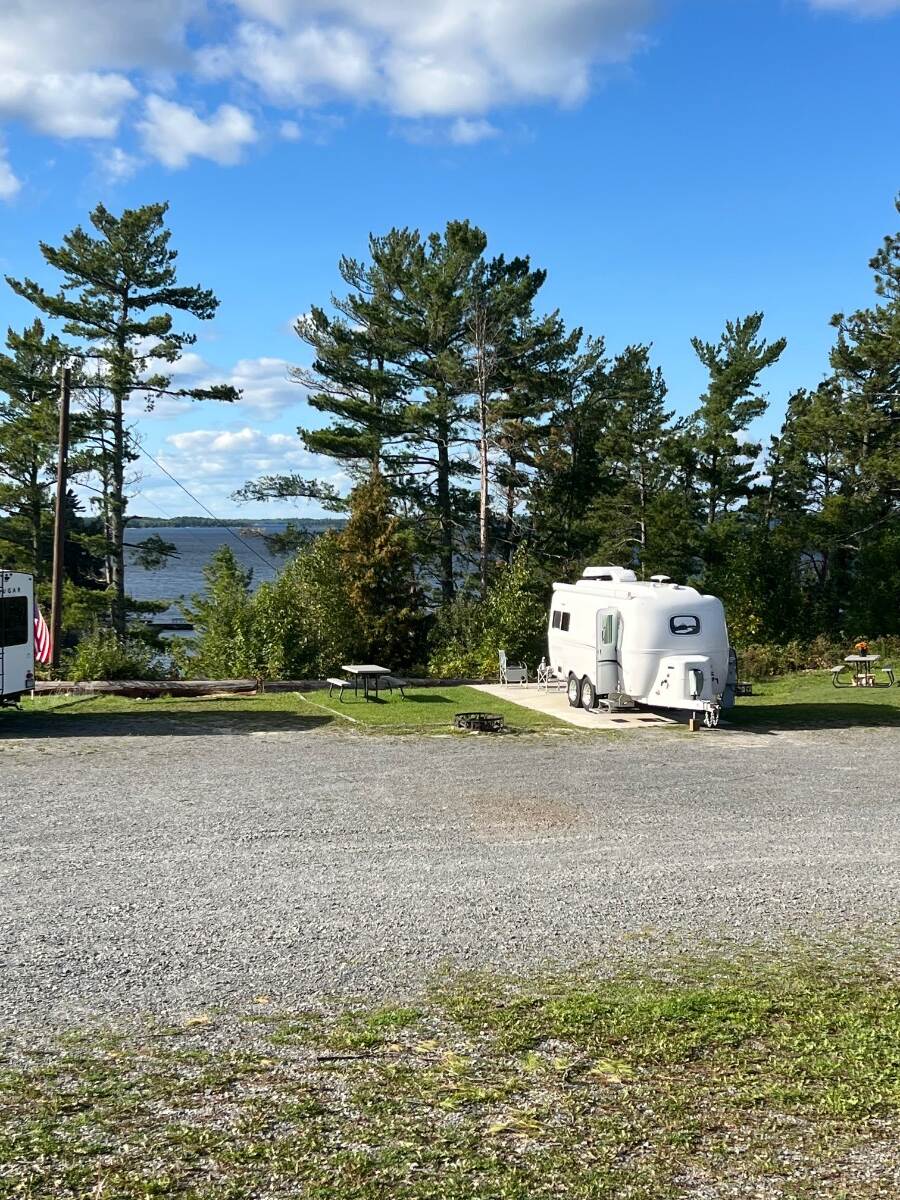
Roche Rouge Campground, Killarney ON
7 points
-
Reviving this thread for those who are not interested in the ceramic path for what ever reason. Thanks Trainman! It works! My gelcoat was beginning to chalk and shadows were present where the Oliver logo was removed in the lower rear. Using a 120v makita rotary buffer, a white Presta wool pad and Meguiars One Step polish, the gel coat is again glossy and shadows have been eliminated. Took about 2 hrs to do the entire lower half of the trailer. Will finish buffing the upper half using scaffolding then apply 3M Marine paste wax by hand. While I wax the entire trailer each year, this is the first time the lower half of trailer has had to be buffed since new (upper half was buffed 2years ago for the first time). Trailer lives outdoors 24x7x365.
7 points
-
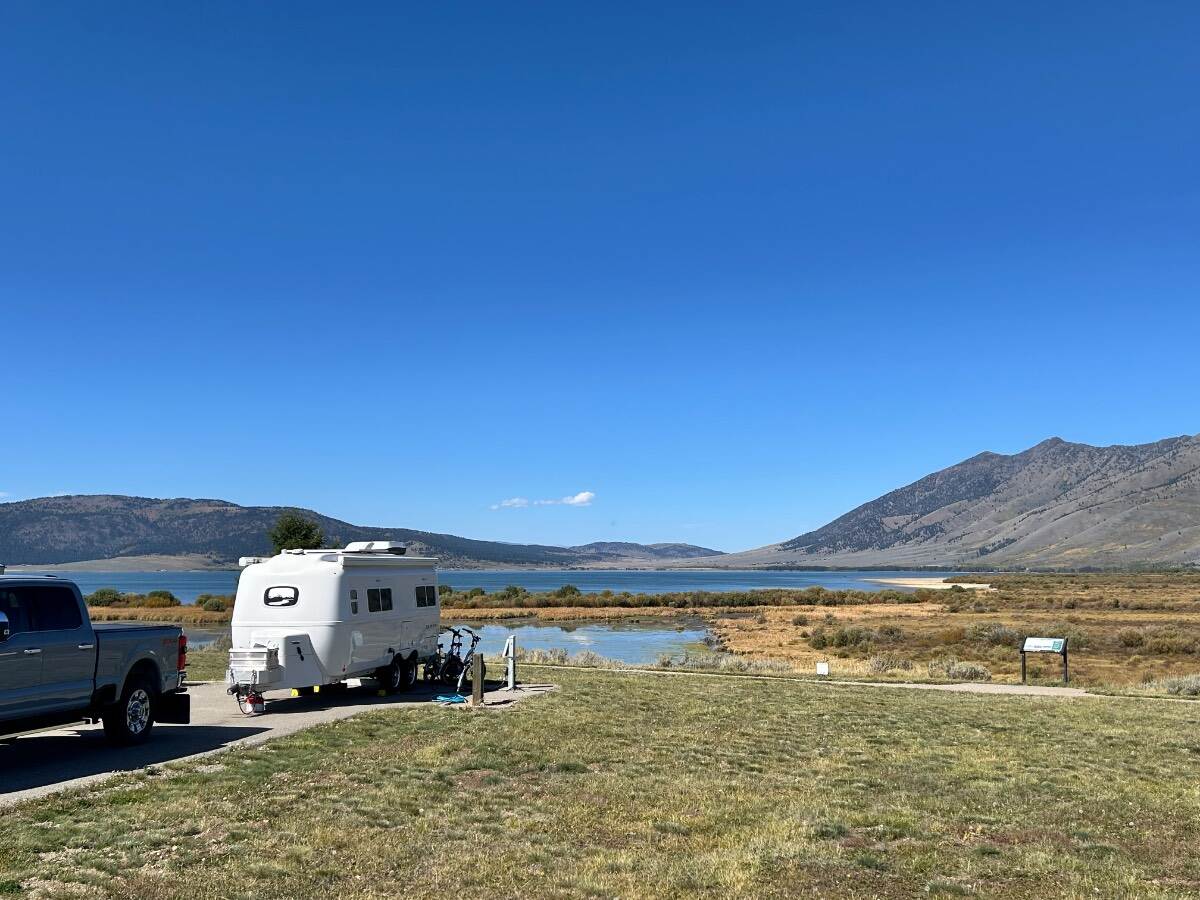
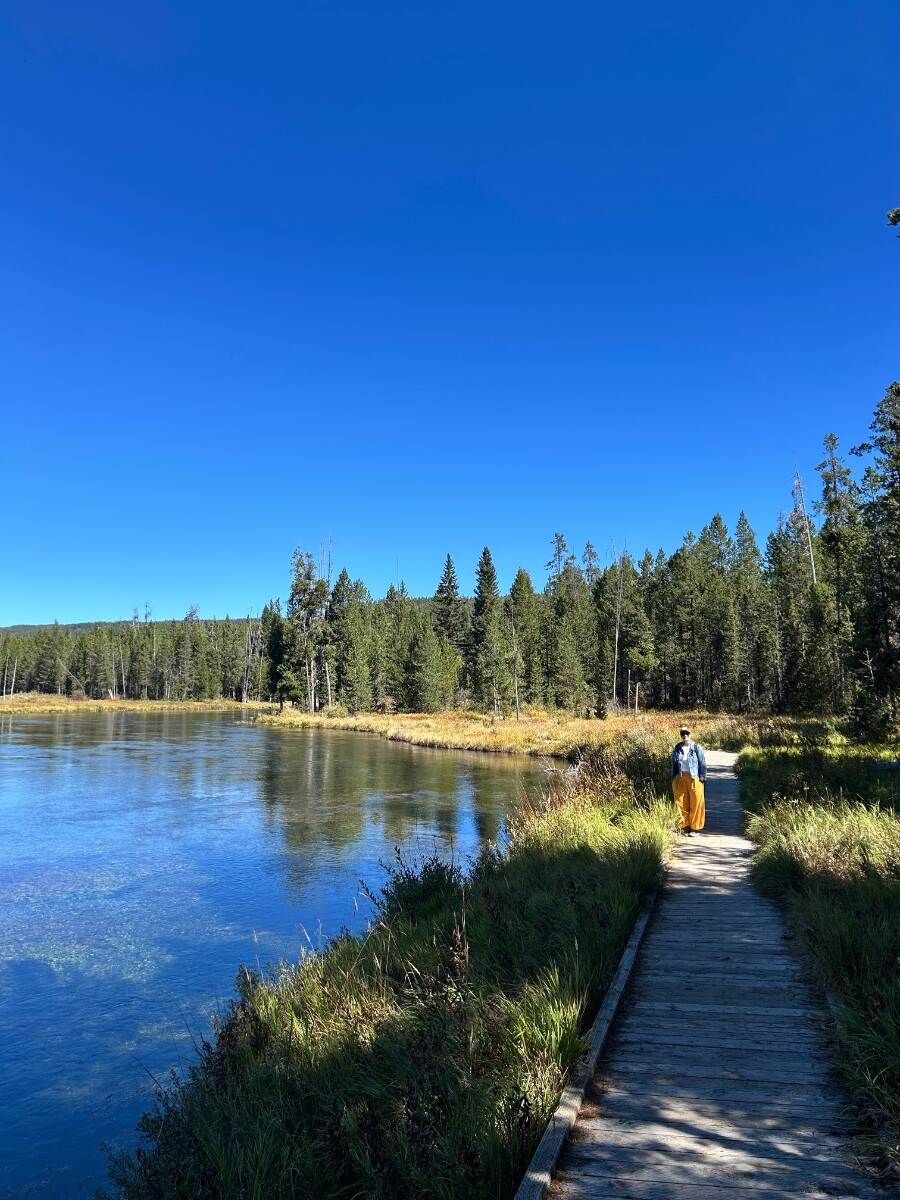
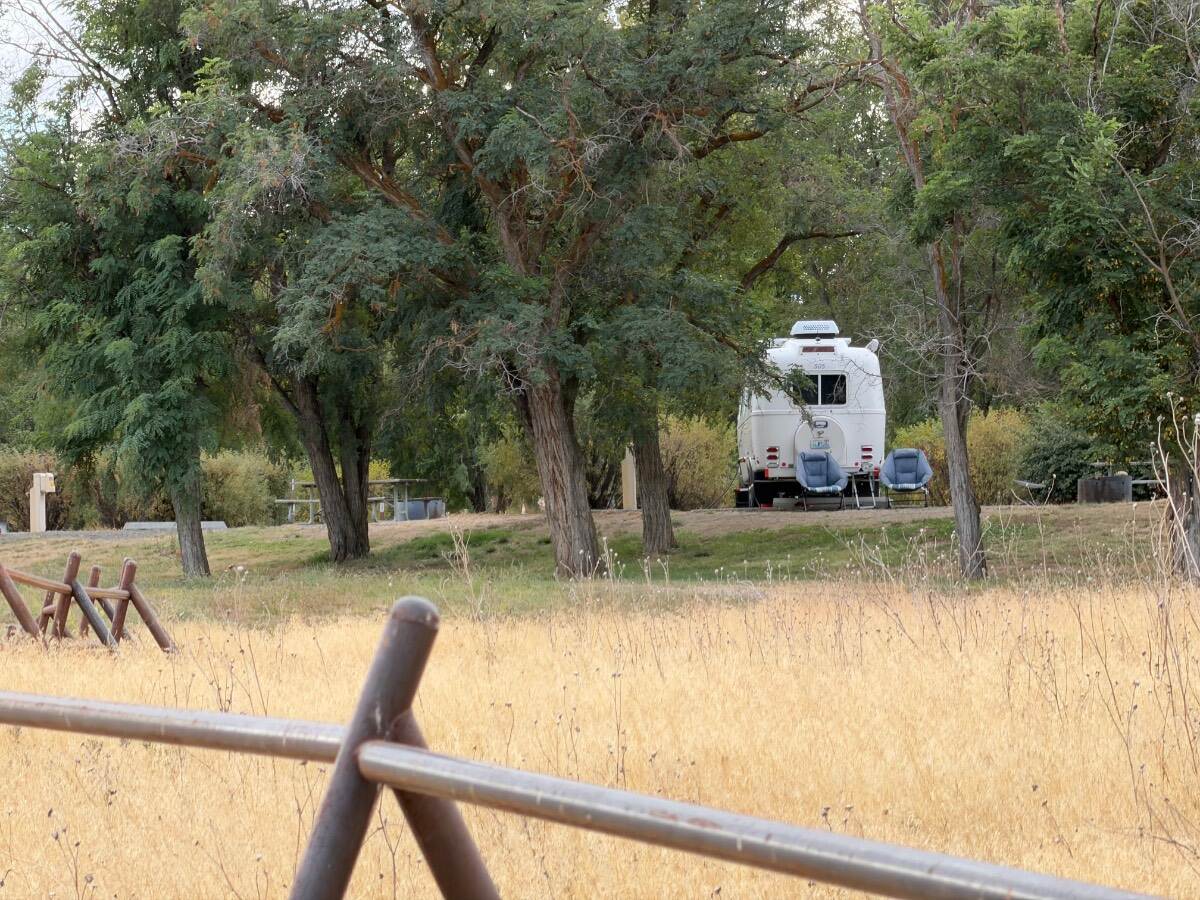
4 nights at Henry’s Lake in Island Park ID. Before heading into Yellowstone. Great park and every sight has a great view. It can get a little windy though.
7 points
-
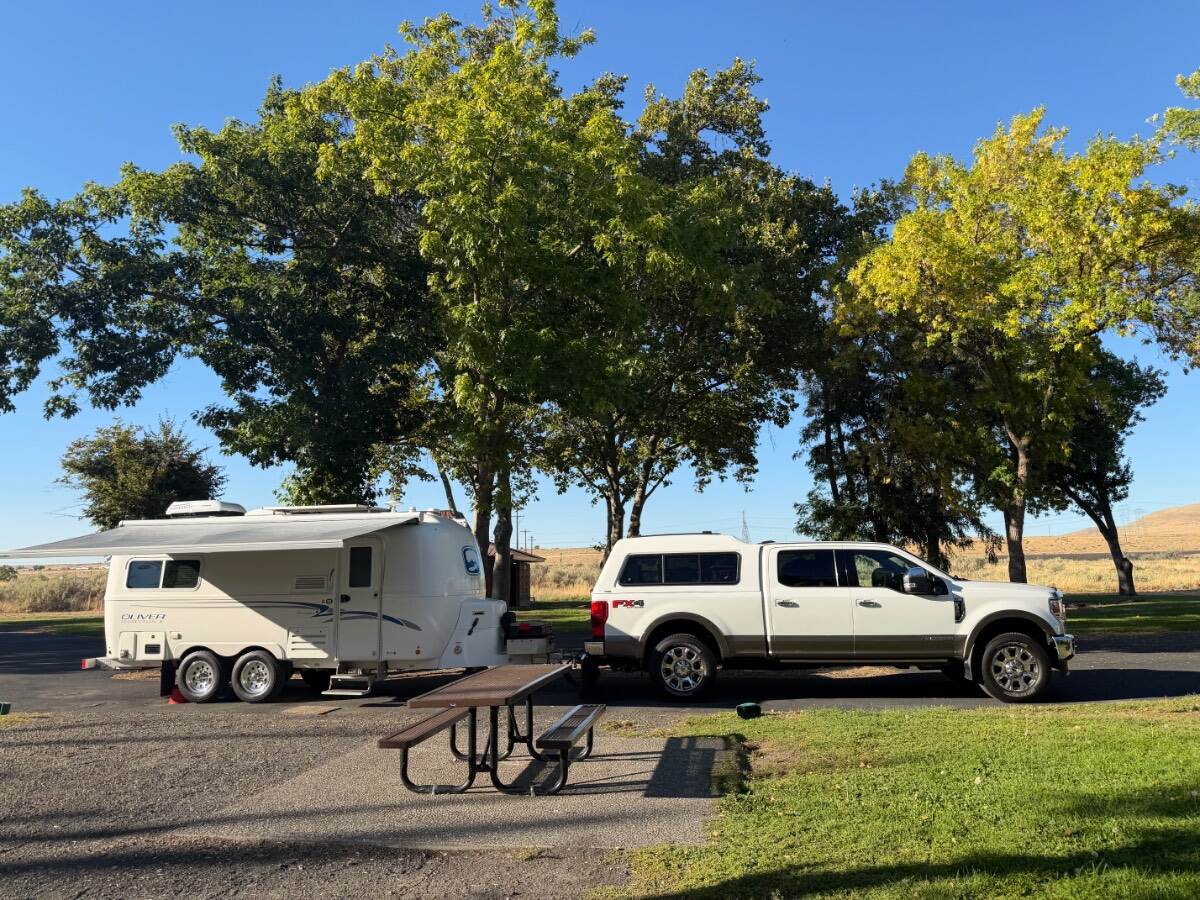
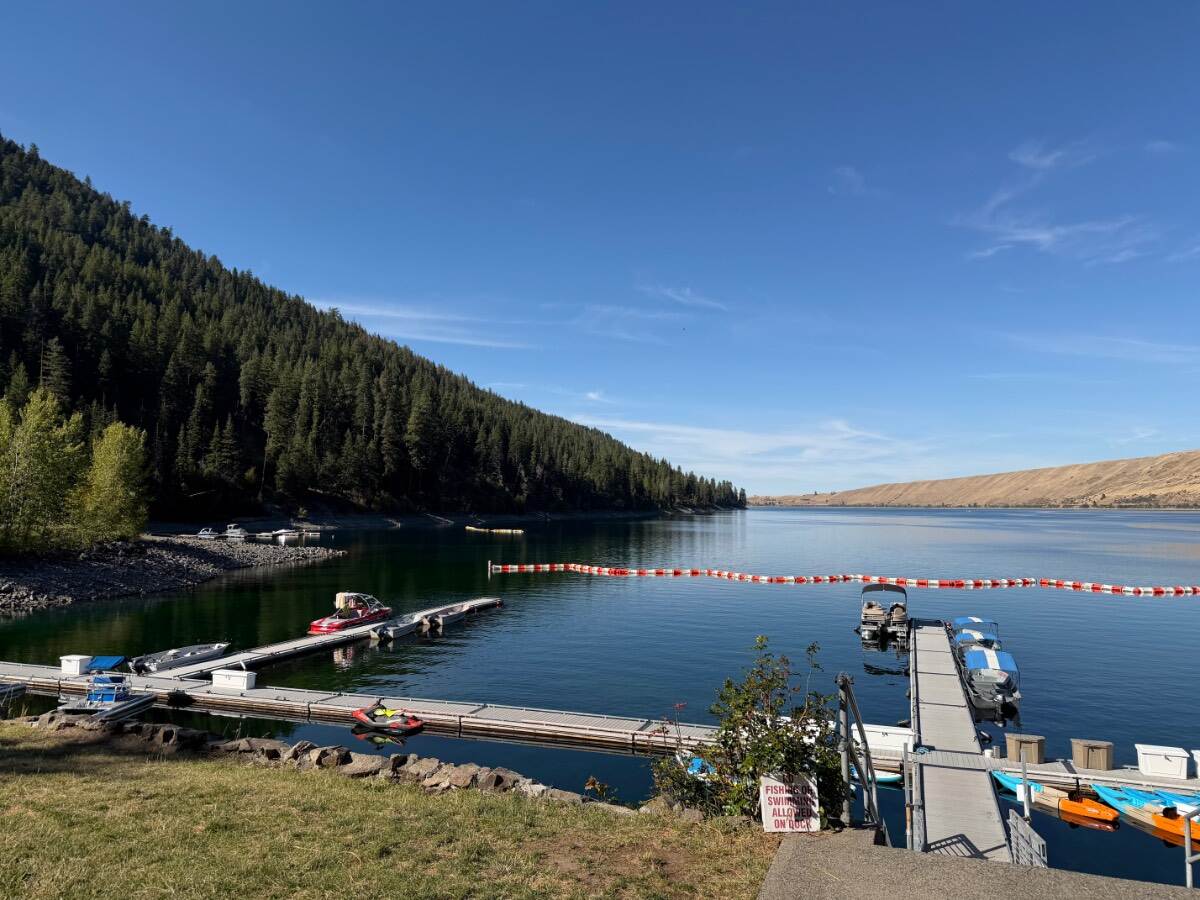
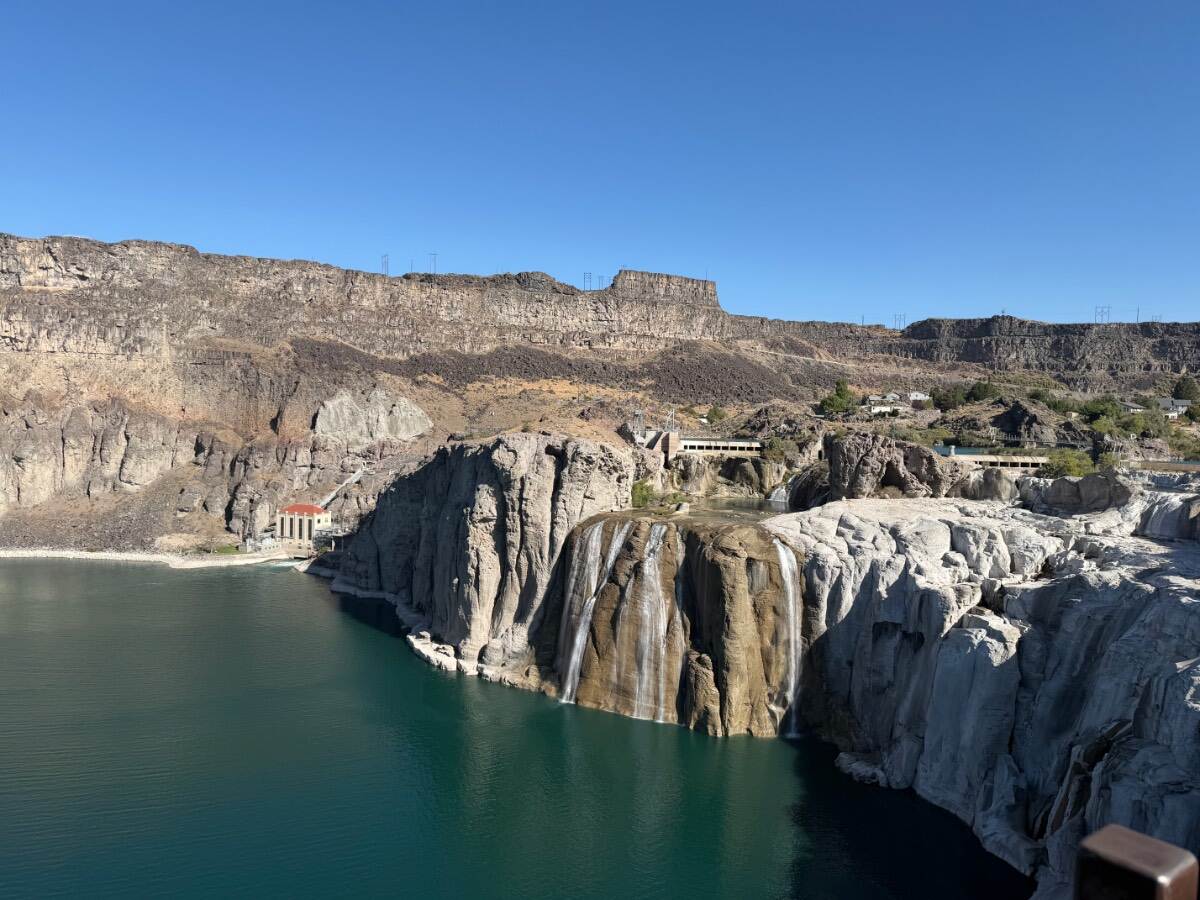
On our way to the rally. 4 stops so far Plymouth Wa COE Wallowa Lake SP OR Farewell Bend Rec Area OR Three Island Crossing SP -Glenns Ferry ID Roses Great Grandpa was a wagon master for 6 crossings here on the Oregon Trail before stopping in Idaho as a settler.
7 points
-
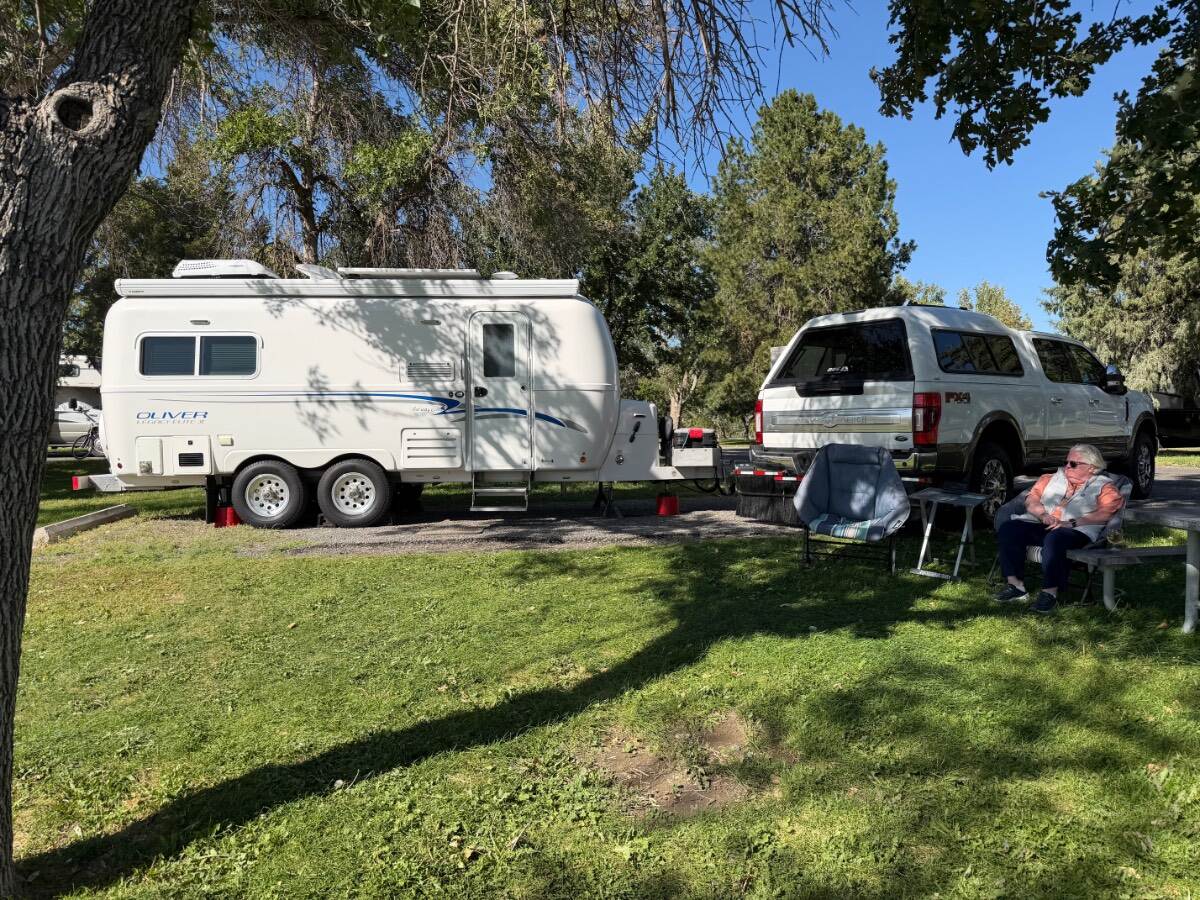
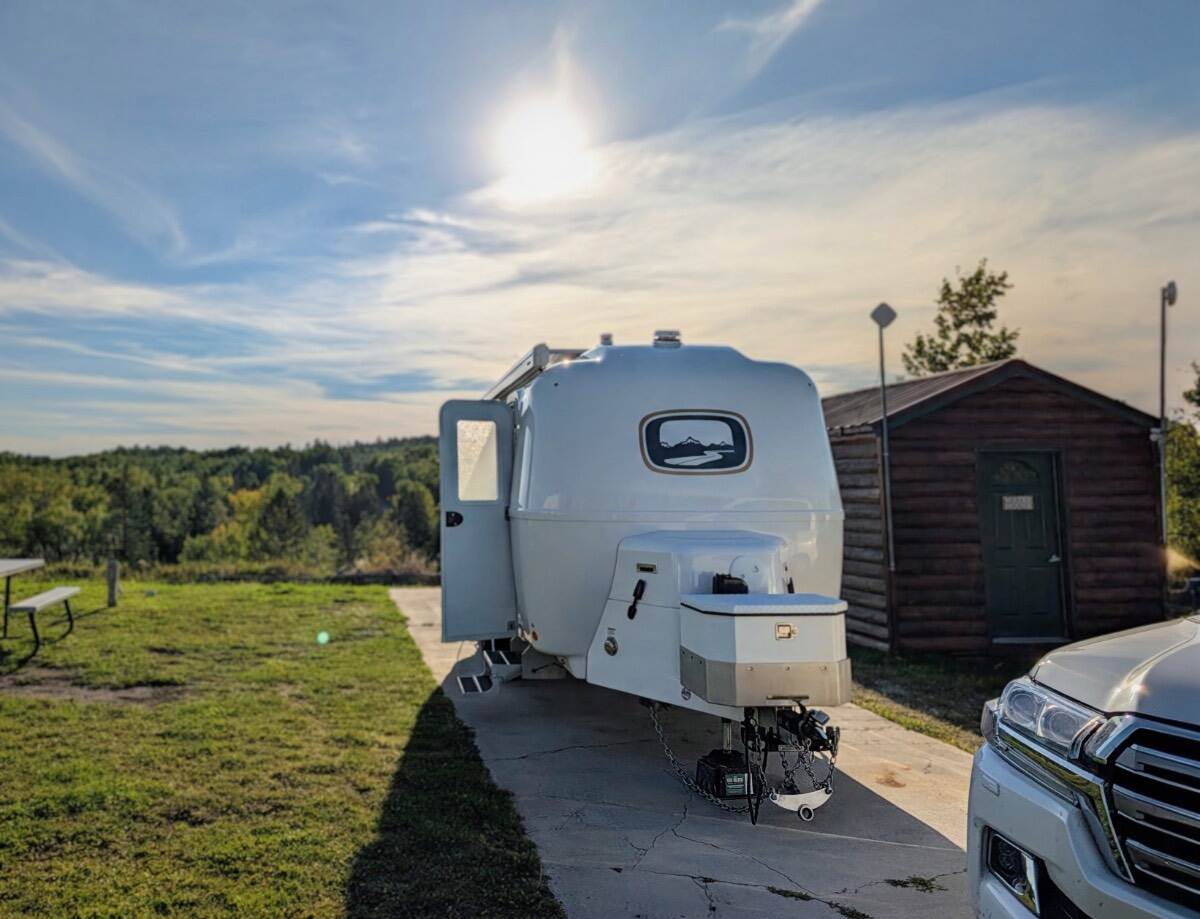
The Pines of Kabetogama! The other Oliver! Charlie 1607 2025 LEII 2021 Landcruiser 200
7 points
-
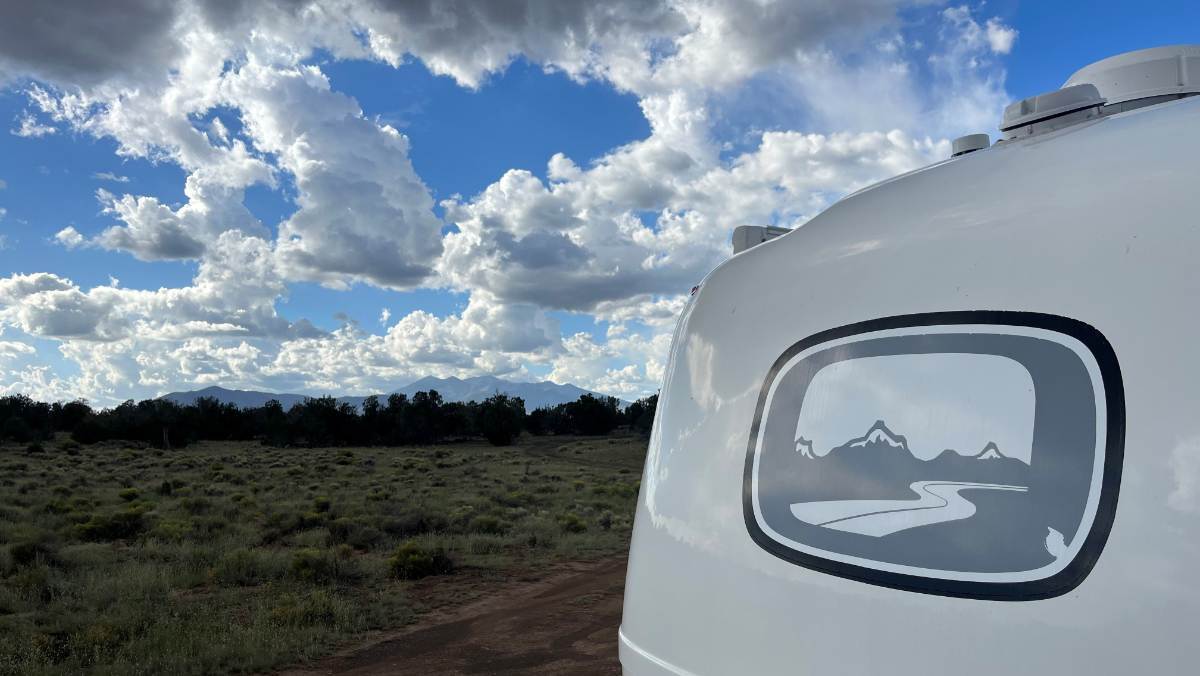
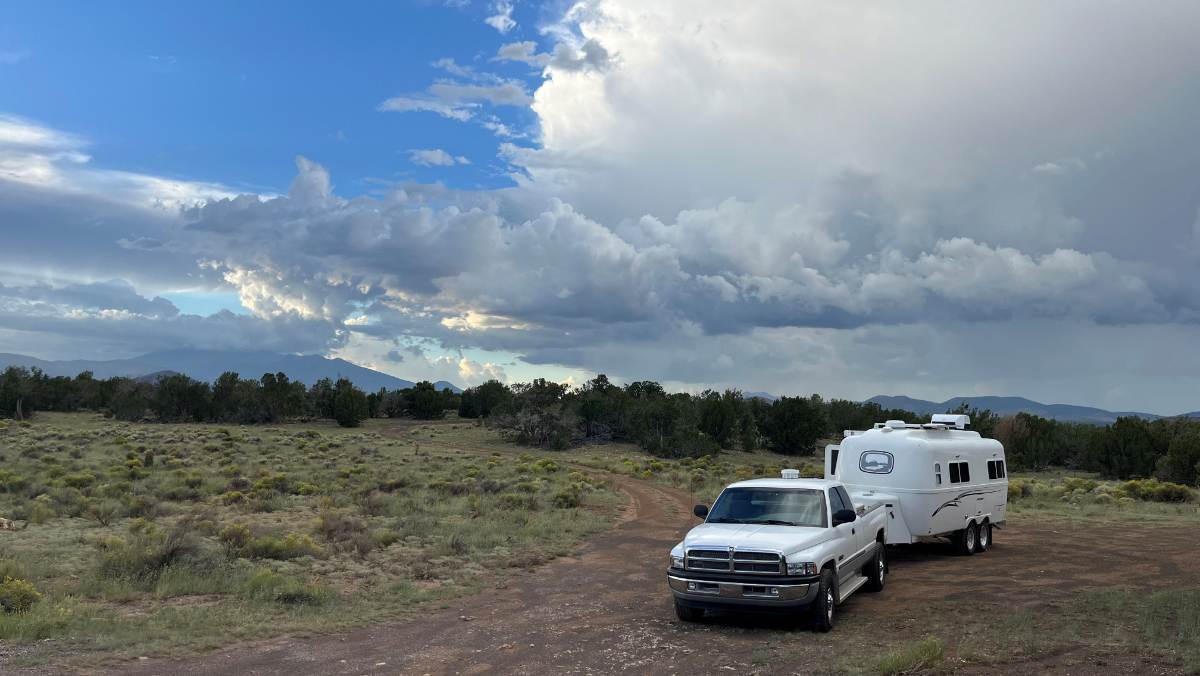
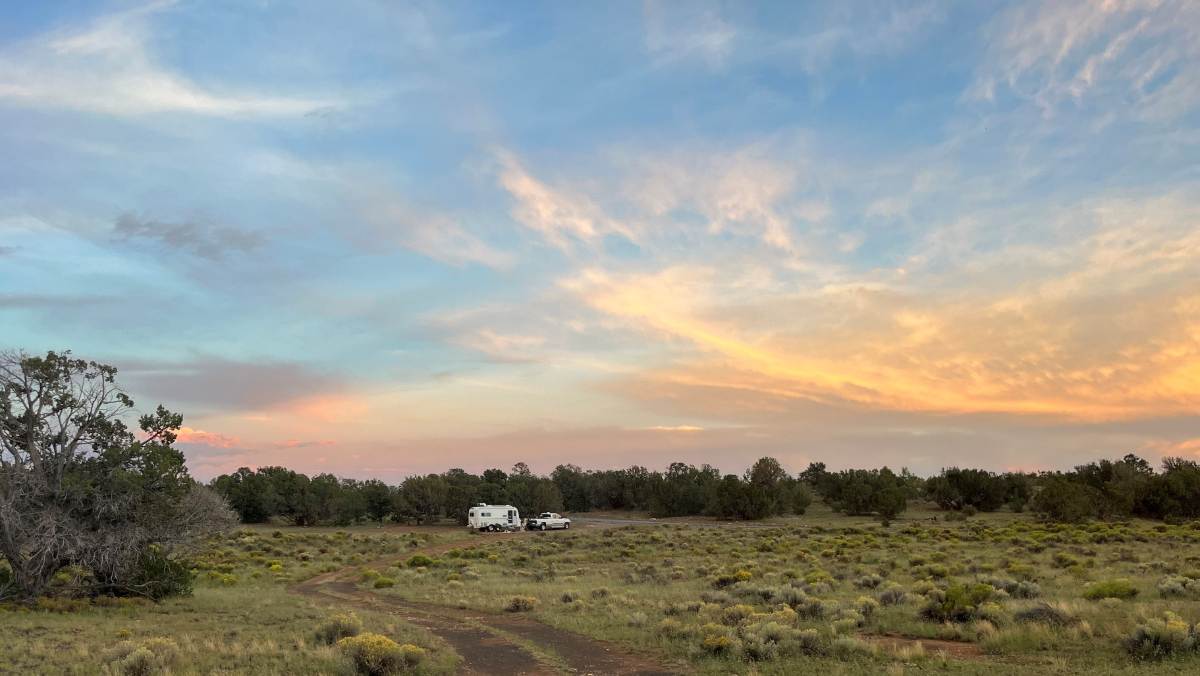
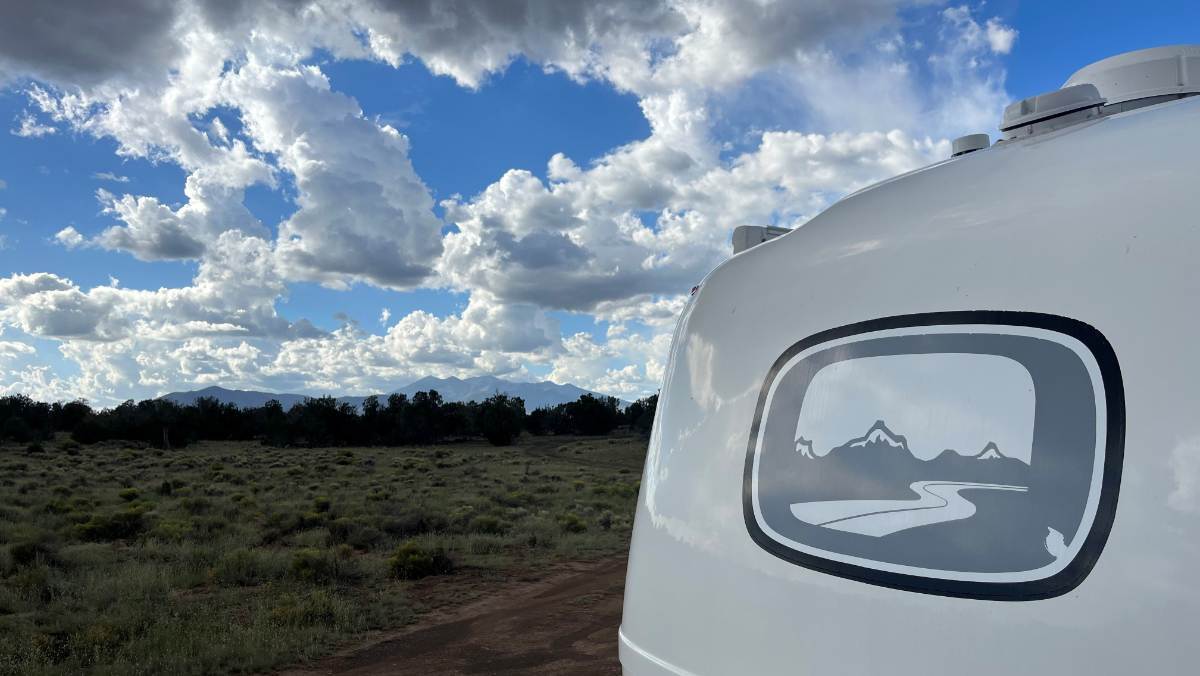
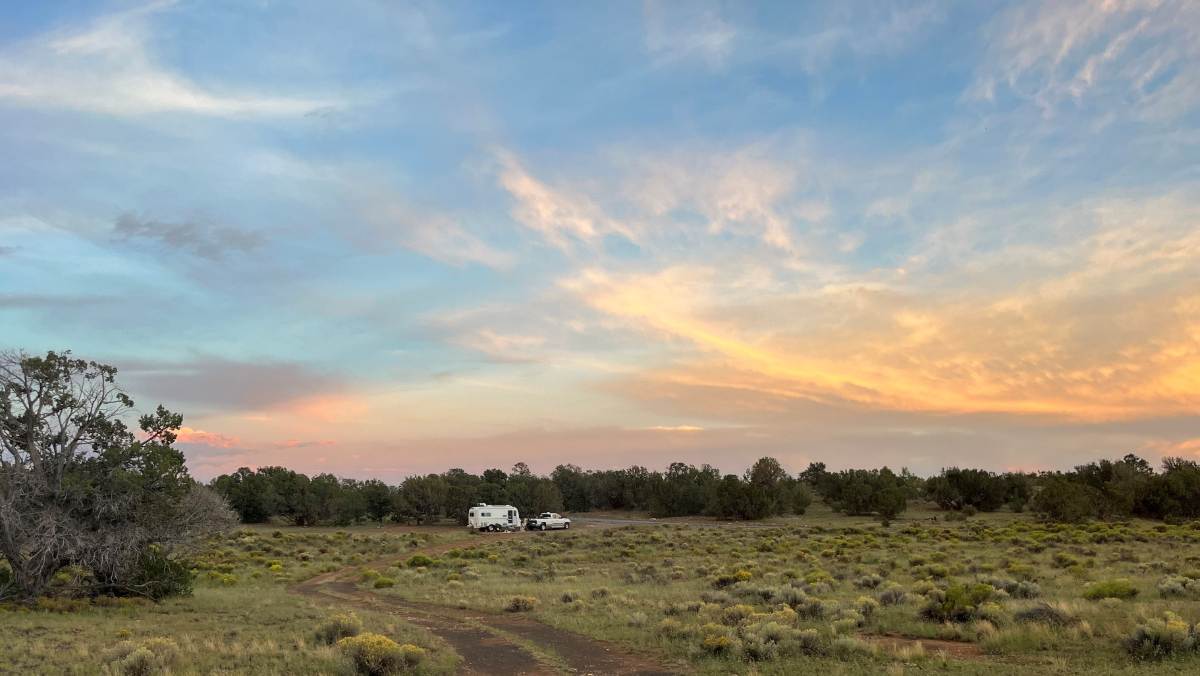
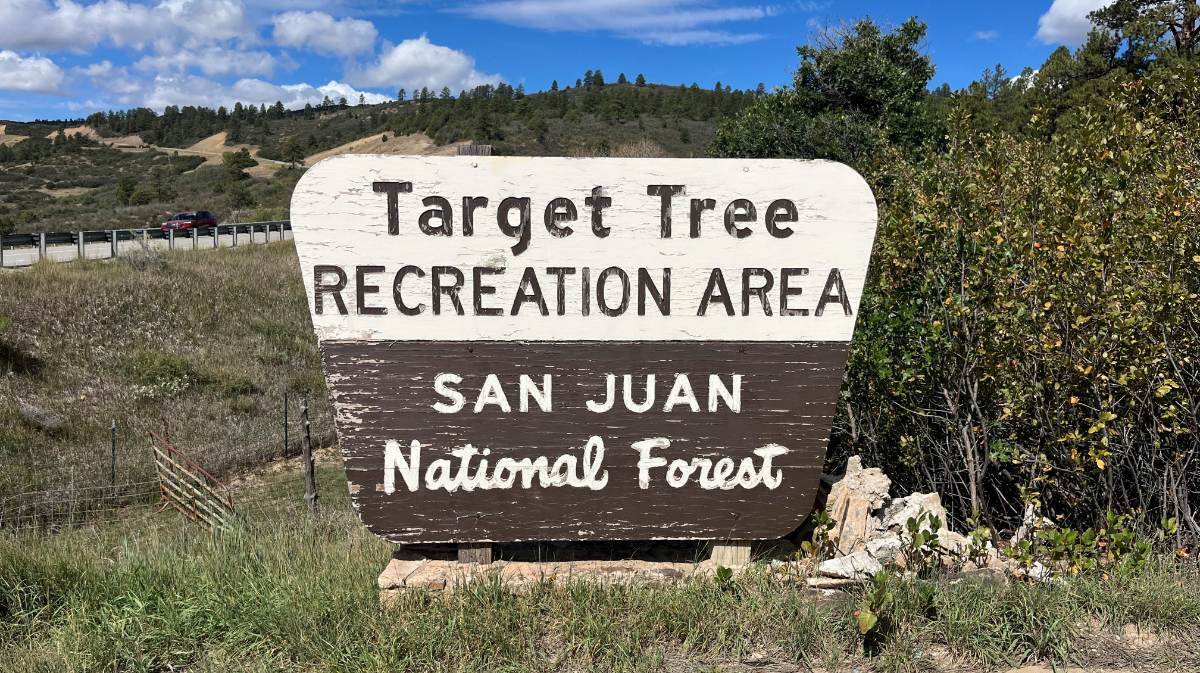
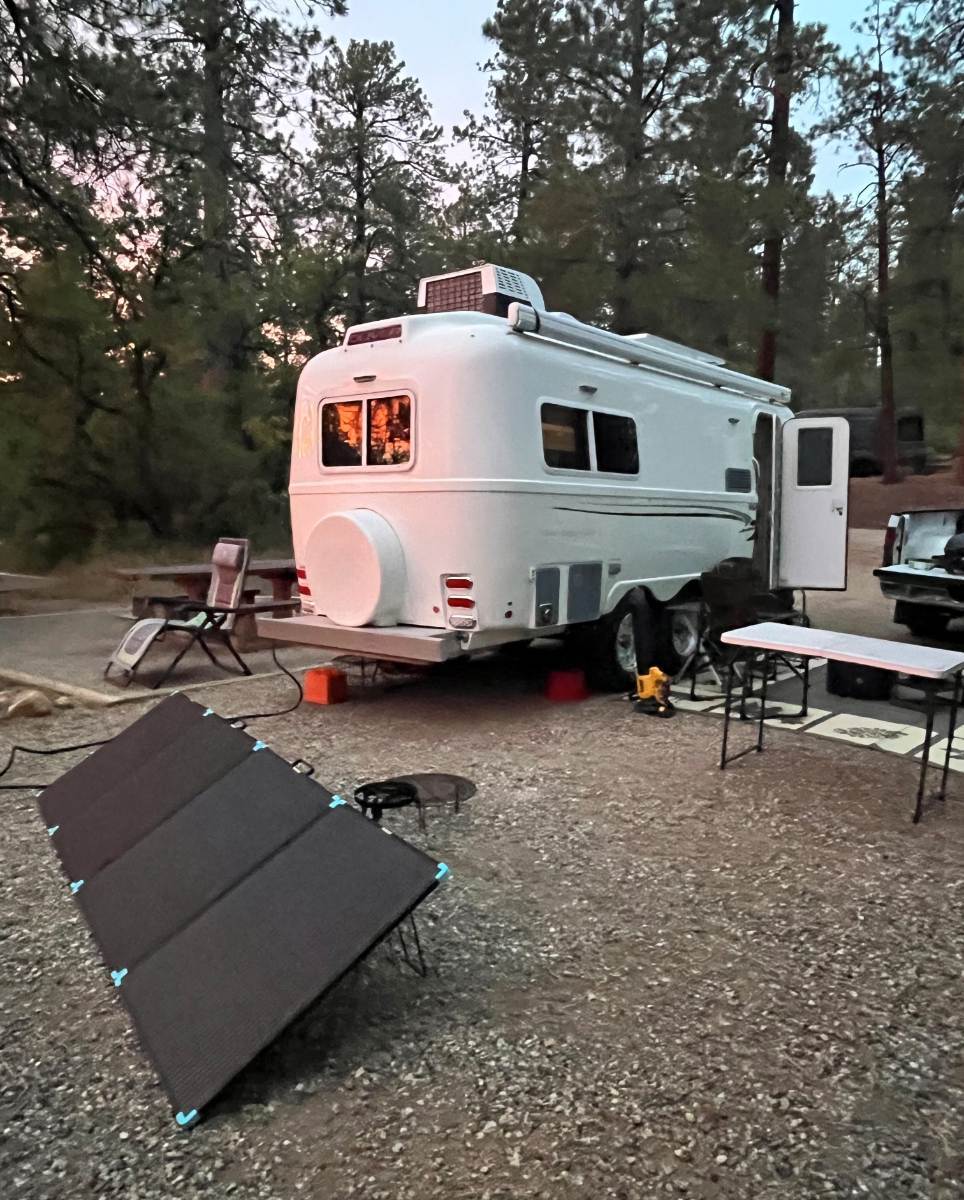
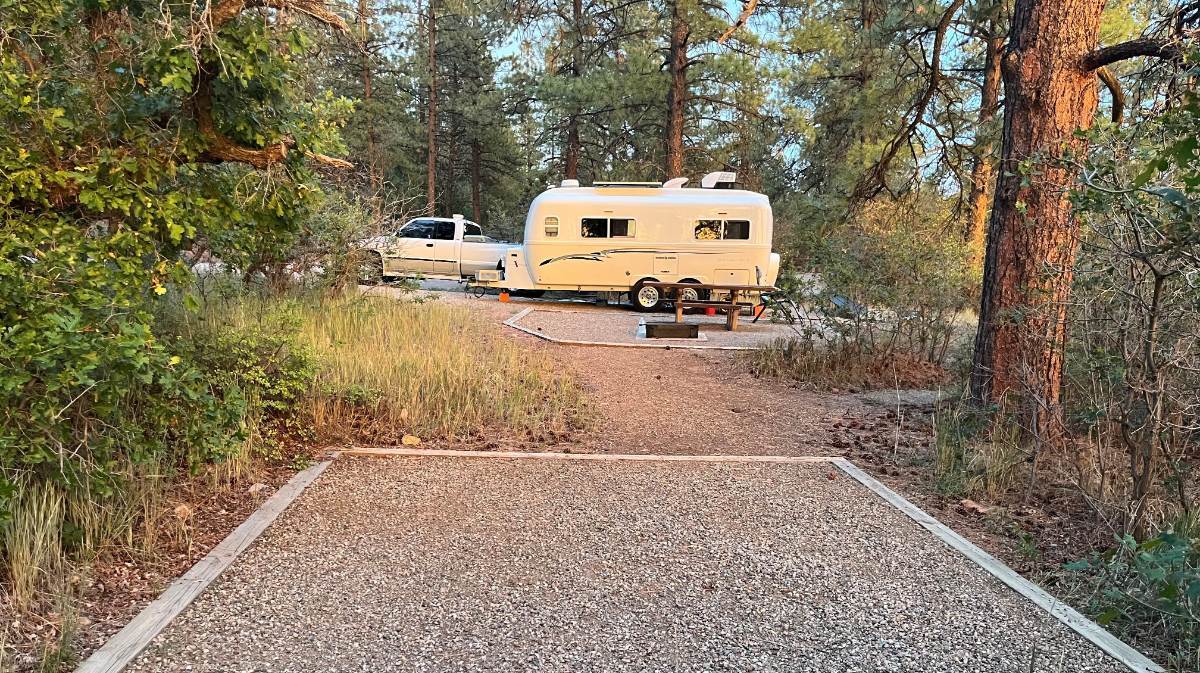
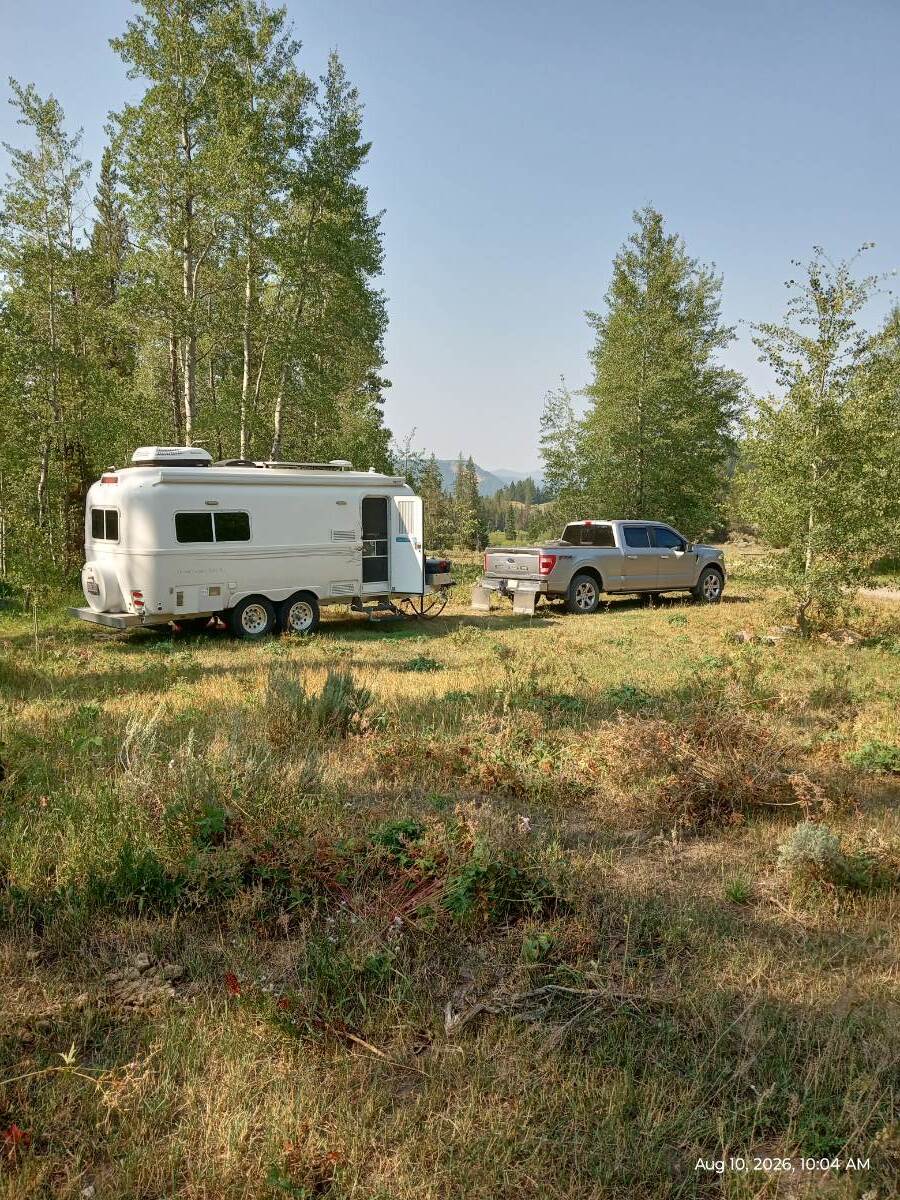
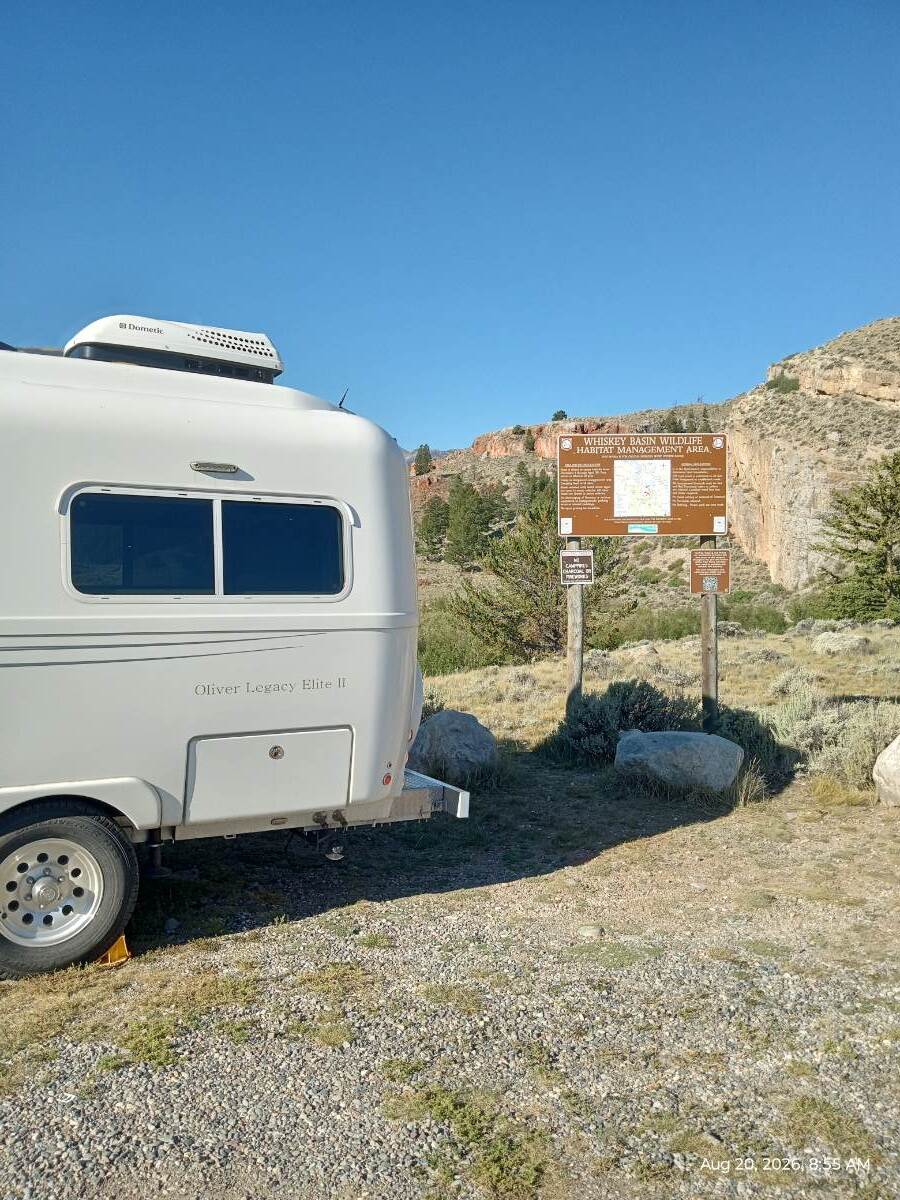
First thing I would do is call up the new owners of hull #359 and get her back! A quick search on RV trader shows 7 Olivers for sale from $46.5K to $74K. Buy at the low range if you are the DIY type to have money left over for your upgrades. This was my plan and with a whole lot of work hull #113 is more capable than most of them out there. If you’re not the DIY type or not wanting to do the work to upgrade, RV labor cost a lot, and “professional installations” are rarely what they’re cracked up to be! 😉 If so, then get one at the high range in EC with options you could live with. Or just dive in and buy new! Yes, they’re now $100K min plus new vehicle sales taxes. I've fought to avoid crowds most of my life, being raised in Chicagoland when my heart was always in the mountains. I don't wait in lines, period. You won't find me at a theme park, my last stadium concert was back in the 80s, gave up on airports, I could go on and on! Prescott is the Yavapai County AZ seat. It’s the size of New Jersey in area with only 250K people. Why did we move here? Think about that (though people are moving here in droves). There was recently a Where's Ollie post on Glacier. Yes, it’s truly a one-of-a-kind beautiful place! It's so unique that almost everybody wants to go there, like Yellowstone, the Tetons and Yosemite to name just one of the great NPs in CA. I went to Glacier in 1986, the 100th anniversary of the state of Montana. There were so many tour buses, Chinese tourists many and others, after a quick chase up a trail to try to catch up to a mountain goat, we left asap and tent-camped after hiking into the Bob Marshall Wilderness. There we didn’t observe another human all week. The NF and Lake Flathead were great! I lived East most of my life, besides IL 10 years in VA (both Tidewater and NoVa). Eastern Tennessee is beautiful but the entire east coast is so highly populated. It's certainly more difficult to boondock somewhere East vs. West. BLM land is only in western states and I believe there are about 8 National Forests in Arizona alone. Then we have Utah and SW CO within a days drive. Just finishing a 10 day trip to SW Colorado. Last night we arrived at a boondocking site off I-40 in Winona AZ, two hours from home. I found it using the Motor Vehicle Use Map (MVUM) for the Coconino NF and then I use OnX Offroad to navigate the FS roads. We are on a ranch road, so there’s ranch traffic which I mind less than tourist traffic. You can tell when at 5 PM 6-8 work trucks were heading out and this morning at 4:45 AM they all returned to work. I got back to sleep. Take a look at our campsite, not bad with views of the San Francisco Peaks! Last night I walked down the short dirt road next to us. There was a Casita pull by a Honda SUV. They are 200 yards behind us but we haven’t talked, each keeping to ourselves (behind where I took the second picture). After a few nights boondocking in another great spot north of Dolores CO, we tried some locations east of Mancos, west of Durango. We found too many modern homeless types. Those who camp in their vans, trucks or cars. It was Labor Day weekend making campsites busier. Not feeling good about camping there, we stayed at Target Tree a US FS campgrounds. Check in on Labor Day and the grounds were about 2/3 full. The next morning everybody left except us, the very nice host and one other. Yeah, a view of the Grand Tetons would be great, but don’t go in season unless you want the traffic and the lines. This place is not bad to have to ourselves. What a site the Casita guy has, far enough off the road. We’ll come back here again. There is a huge network of roads with literally 100s of boondocking sites. If you want this kind of experience don’t cheap out on batteries/inverter/solar and install a new efficient A/C (yay Chill Cube)! We just finished 10 days without hookups. Our 900 Ah batteries are now down to 30% SOC. We ran the A/C for 2 full days plus lunches on the road and a couple days just late afternoon. We ran the fridge and hot water heater on LP when camped. Our DC-DC charger is always attached when towing. By the time we get home, SOC should be up to 45%. Keep in mind that these numbers are % of 900 and if they are to get done to 25% our reserve would be equal to 4 large AGMs. Yeah, for us having an Oliver is worth it. It’s what you make it to be. We love ours!
7 points
-
Just to circle back, I got to field-test my design on my trip, and I’m super happy with how it worked! So much so that it even survived a random weather microburst and the suction cups remained planted! 😂 Not only was I able to camp in extremely hot weather and use the shower often, but after eleven days I still had 25% capacity left in the gray tank. There’s honestly nothing I would change, except possibly adding a wooden bath mat to keep my feet clean. I used one of those inexpensive folding stools to keep my shampoo and soap at an easy-to-reach height, and added another suction hook for my towel. I also attached a tarp clip to a suction cup on the side of ILOVHER to keep the shower curtain pulled in and prevent any unwanted exposure. 😉 I’m really happy with how it turned out. It’s compact, works extremely well, and will travel with me for future camping where gray-water discharge is allowed!7 points
-
DBL-R, I also have an early model LE I (2008 - #14) with the same plumbing configuration up front and for years, I dealt with the potential back flow of grey water into the shower pan if the handle for the valve on the back wall of the shower was not adequately closed before travel and the spring actuated foot valve was open. Then, many years ago, a good friend, Larry Gamble, of Little House Customs, fixed the issue by installing a HEPvO valve and magically solved the back slosh issue. The HepvO valve is a one way valve which closes like a duck bill and prevents the grey water from backing up into the shower during nose down or deceleration while braking. Now that handle on the shower wall is always in the out position, allowing water to drain from the pan into the tank and the HEPvO precludes it from making the return trip. I've removed the foot actuated drain plug and replaced it with a small sink screen to catch any small items and prevent them from gumming up the HEPvO valve. Larry said the clearance to install the HEPvO was very tight, but with his skill he managed to get it done anyway. He's retired now making music instead of bending wrenches, but there should be some skilled RV mechanic you can find to make the same modification on your trailer. Good Luck, Pete6 points
-
Looks like they are opening a new state park in Hohenwald, Dry Branch State Park. Not open yet, info at the link below. Mike Dry Branch State Park6 points
-
Craig, I would caution you about using paint to touch up your Oliver. Paint and Gelcoat are two entirely different coatings. I would suggest a quick google search or a visit to some boating forums to learn about the process of repairing damaged gelcoat. You didn't specify your issues, but if they are rock dings and such, I would not paint them. Paint will not age well, doesn't have the build of gelcoat, and cannot be polished with the rest of the trailer when that time comes (and it will). You will need to apply your 2 part gelcoat (it can be tinted and is a catalyzed product) to a properly prepared surface. Overfill slightly, wet sand flush, then polish out. Yes, it's a lot more labor than spraying on a coat of paint, but will give you far superior and much longer lasting results. My 2 cents. Dave6 points
-
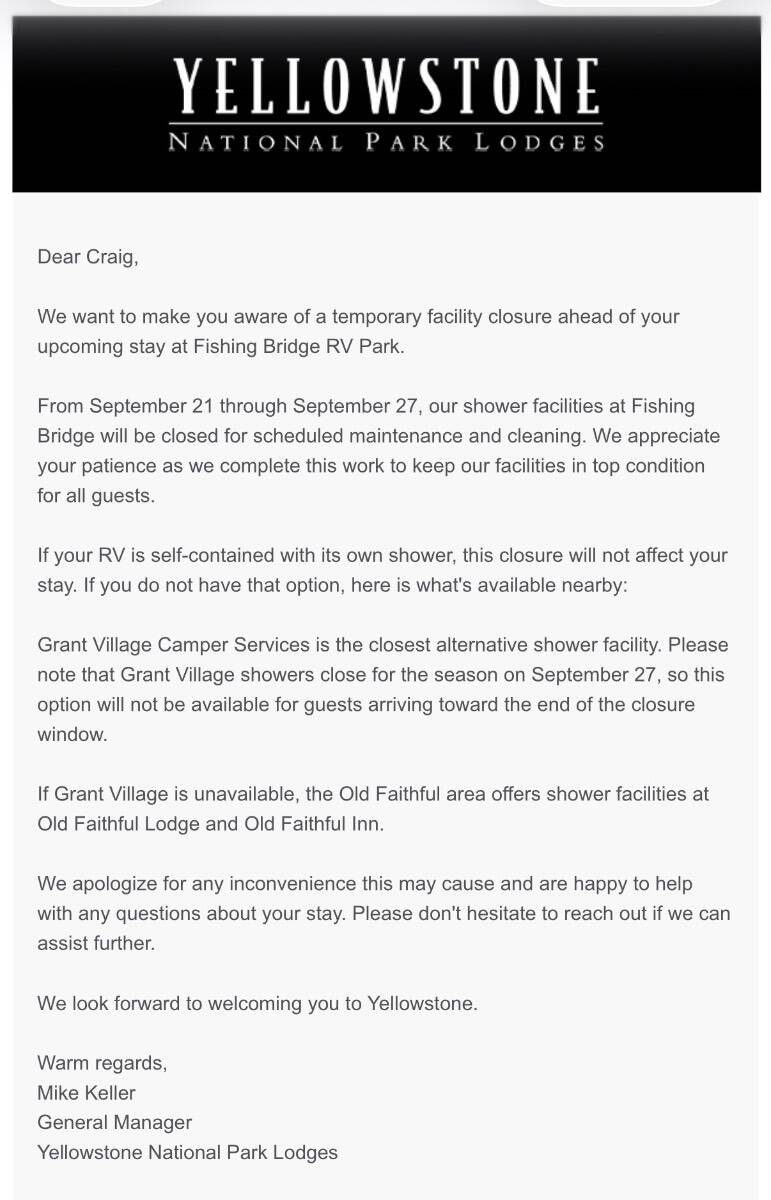
Yellowstone Shuts Showers at newly revamped Fishing Bridge: We’ve had a reservation in Yellowstone for 9 months. They just sent a notice of no working showers today. We will be fine but I sent the GM a 50% refund request … at $125 a night, showers and bathrooms must work. I’ve grown weary of company execs who are clueless and don’t care for the customers they are supposed to serve. The "Amenity" Loophole: Because your reservation at Fishing Bridge RV Parkprovides you with a physical campsite, water, and electrical hookups, Xanterra classifies the public shower facility as a "complimentary amenity" or a separate service rather than a guaranteed part of your nightly site fee. Their terms dictate that the closure of a single amenity does not qualify a guest for a partial refund on the campsite itself. [1] Read more Thursday at 05:33 PM 1 1 Edit Report topgun2 My personal opinion is that you are absolutely correct. These "vendors" don't put nearly enough back into our National Parks and as a result, trash bins overflow, the lodges we all paid for are in sad need of maintenance as are the kind of facilities you mention. Yes, we are loving these Parks to death but I don't see where the vendors are doing anything but "taking" with precious little "giving. Bill Yesterday at 06:54 AM Report Tom and Doreen We had the a similar issue camping at Skidaway Island State Park, they had a water main break. We had no city water connection for the duration of our stay; no discount or refund. 19 hours ago Report Galway Girl Update: I emailed the GM for Xanterra with a concern of false advertising of amenities. He had a person call back to explain that they still had nearby restrooms open but no shower for 25 miles. They said they will apply a $50/night discount for the inconvenience. This dropped the price at Fishing Bridge from $125 to $75/night. Tip: Next year these bookings will be managed by Rec.gov instead of Xanterra, and they now only allow 6 months advance booking so if your going to Yellowstone next September, bookings open March 1.
6 points
-
Coming back from Colorado to AZ, it takes a full day drive to cross the Navajo Nation. It's a shame that many tribes around the country live on casino revenues, but it is what it is. I learned gambling was not for me at a very young age. Many casinos in the west allow for overnight camping! No charge to stay overnight at Flowing Water Casino! We spent $10/night at Quechan Casino Resort in the very SE corner of California, when going to Los Algodones Mexico, the dentistry capital of the southern border for professional reasonable work and free cleanings! 🤣 Just drive up to the entrance and ask security. At this location, the officer named Everette was so friendly and helpful. He wrote down our names, license plate numbers and asked for my phone #, told us about casino hours and the restaurant inside. They have a large gravel lot for campers! It was very quiet at this small casino with one noisemaker at 2AM that security handled. There's nowhere else to camp around Shiprock NM! A Casino Resort might be a good place for an occasional overnight stay. He made us feel welcomed, we had the lot to ourselves and it was a beautiful night.
6 points
-
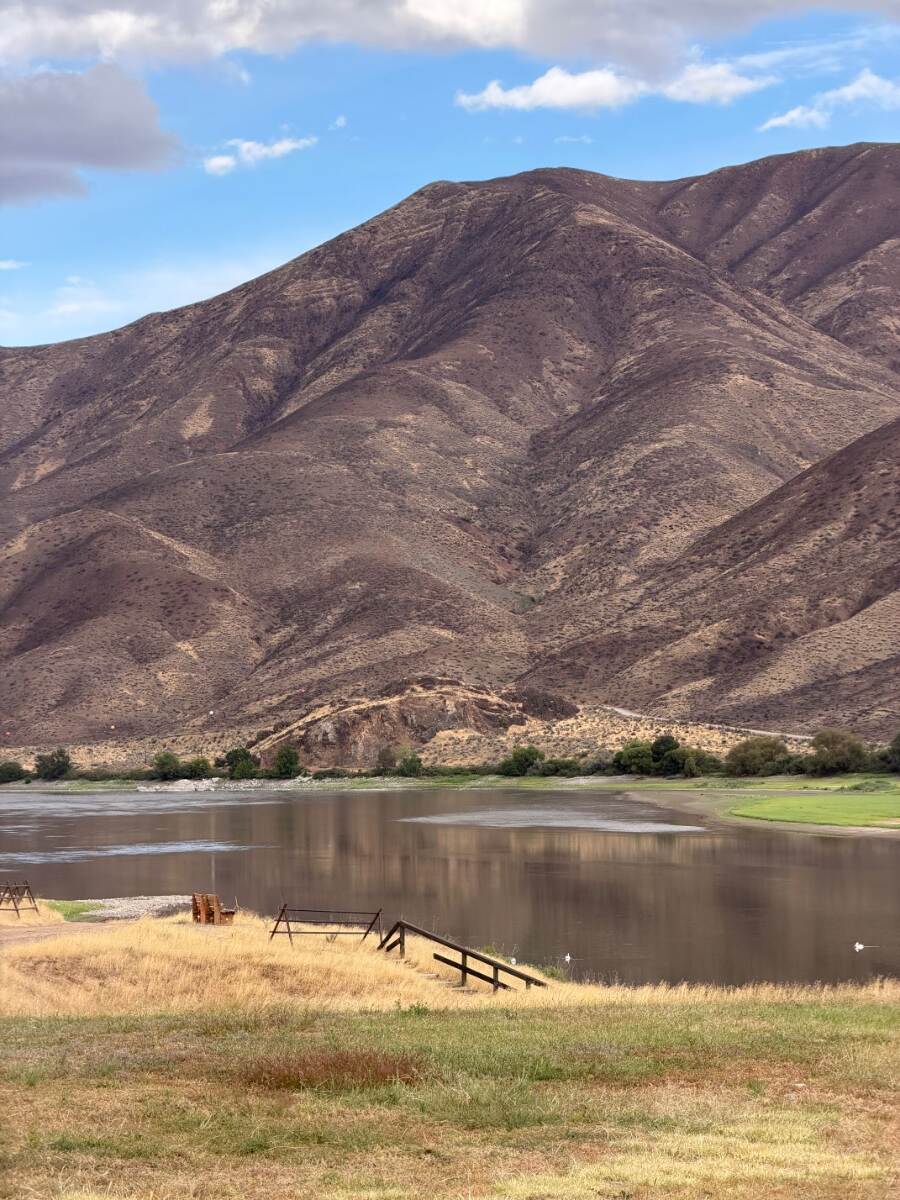
Our previous Tundra's name was Stan 🙃, photo taken at W. Kerr Scott Dam and Reservoir,6 points
-
I agree with JD's thoughts and recommendations. The rear gray water valve is a bear to take apart. But it appears that your problem likely is the vent valve up front. I would add that if the valve is not closing there could be two causes. The valve is partially clogged. That can turn into a mess for sure to also deal with. I would approach it this way: Step 1: First try servicing all your cables as in the below DIY. Such a DIY is long overdue for your hull 99. Mine was and it is 342. That process may result in the valve clog getting mushed and then flow down to the dump station. If that does not fix the try Step 2. Step 2: At a dump station, from inside, flood the gray water lines with a LOT of water. Use your pump hot water at both sinks. Then try max flow with the pump and a garden hosed flowing into the bathroom sink. Suggest having a watchful eyed helper. Step 3: Send a garden hose with the end cut off it from the rear of the trailer to see if you can clear it that way. Be sure to open the gray valve outside to clear the pathway. Step 4: Consider getting help with a camera inspection. Hope this helps. GJ DIY - Sanitary Drain Valve Cables.docx6 points
-
Horse Creek, north of Dubois, WY
6 points
-
The Pines of Kabetogama, Kabetogama MN. We were surprised to see another Oliver here when we pulled in. Bill 313
6 points
-
We find it reasonably easy to escape crowds but it depends on your style and setup. A few of our rules that have led to success. We almost never camp on friday and saturday nights. We rarely hook up to anything ( water, electricity, etc). With these two alone we find crowds are easy to avoid. We purchased in 2023 and it was pricey then but its all a matter of perspective. Alot less than a class a, b or c and we already had our tow vehicle. So all in all the quality and manufacturer support structure make it worthwhile for us.6 points
-
We got our trailer in 2019 and feel like the crush of people in the outdoors was and is still significant. Our solution has been to spend most of our time off the grid, off paved roads and away from the national parks except for the off season. We have had fantastic trips Nov through Jan in the southwest the last couple of years. Count us out for mainstream campgrounds, state and national parks May through August. We must work to avoid crowds but have always found wide open space in the west side of the USA. Lots of BLM and other remote space to explore. If you are opposed to gravel roads and off-season travels, you will likely be crushed by the crowds. Yep, 100k for new trailer is a big bite. We found ours used in great shape. We did have to upgrade solar / batteries and few other things but got great value buying used. Water is the gating item for extended off the grid travel. We equipped our truck with an additional 30 gallon water tank enabling extend time off the grid. Best of luck. Hope to cross paths in the open spaces out west.6 points
-
Not bad for $12/night! I think going forward, besides boondocking we'll focus on National Forest Service or Army Corps of Engineers sites that give half off with the senior pass. But kind of a bummer that now on recreation.gov the next 4 nights cannot be reserved online. But you can go online to see what is reserved or FF (first come-first serve). Our campsite #7 is shown, all sites no hookups, some pit toilets, water spigots in 5 spots around the campgrounds but without hose connections. All the campsites inside of the loop are setup in the wrong direction (curbside away from picnic table). A little road noise being right off US Hwy-160 but always quiet in an Oliver! Just east of Mancos CO, Target Tree is within a half hour of Cortez to the west and Durango to the east, with Dolores nearby and Mesa Verde NP. Beautiful roads with beautiful mountain views, forest service access trails everywhere! 🤠
6 points
-
6 points
-
We've been camping at Stone Mountain State Park NC. The weather was fantastic allowing great views on the Blue Ridge Parkway and we got plenty of hiking in at Doughton Park on the BRP. There was also a Carolina Casita Rally happening here too, we met many nice fellow fiberglass RVers. Woolly Worm Weather Outlook: https://www.thoughtco.com/woolly-bears-and-winter-outlook-34445225 points
-
Headed back to our campsite at Wilderness State Park, MI, near Mackinac City, MI and passed an Oliver headed out of the park. No front decal and black AC cover. Waved, just couldn't get the window down to make a fool of my self🤣5 points
-
We have towed Ollie (LE2) with 5 different tow vehicles. Found a new 2024 F-350 6.8L (gas) on the lot last summer (2025) and got a super deal on it, lower price compared to many 1/2 ton pickups with an old school normally aspirated gas engine. No weight distribution hitch to worry about and no worry about running out of payload capacity when loading for trips with Ollie connected. Olivers are known for how stable they are when towing, but with the longer wheel base of our Heavy Duty pickup our rig is extremely stable. I used to modify 1/2 ton pickups rear suspension to get rid of rear end sag with either airbags or Timbren systems, not needed with our current rig. Installed a Diamond back bed cover, but we have enough payload capacity to install a fiberglass shell if we chose one, a little over 4,000lbs payload. Heavy Duty pickup trucks have heavy duty brake systems and heavy duty cooling systems for towing in the mountains, too. Best Regards, Bill5 points
-
Our owners are the most important part of the Oliver Travel Trailers brand. The experiences you have, the places you visit, and the ways you make your Oliver your own show what this community is really about. We’re inviting owners to share photographs, videos, travel stories, helpful ideas, and memorable moments with the Oliver marketing team. This content may help us tell the Oliver story through social media, our website, email, video, and other marketing projects. We are also developing a new Oliver Magazine. As owner content is collected, we will identify stories and photographs that may be a strong fit for the magazine and work directly with those contributors to develop the material for publication. You do not need to be a professional writer, photographer, or videographer. You also do not need to submit a completed article. A contribution can begin with a few photographs, informal notes, a video, or a simple idea. I’ll help review and curate the material so we can find the best way to tell your story. We’re especially interested in: Memorable trips and destinations Why you chose an Oliver Traveling with pets Campsite cooking and outdoor living Interior decorating and organization Boondocking and four-season travel Hiking, kayaking, fishing, cycling, and other hobbies Lessons learned over years and thousands of miles Gear you rely on and what you have learned to leave behind A favorite photograph and the story behind it Everyday moments that capture what Oliver ownership means to you Not every submission will appear in the magazine, but each one helps us better understand and represent the Oliver community. We will work directly with contributors and confirm the intended use before publishing their material. To share your story or idea, email Media@olivertraveltrailers.com. Please include a short description of your submission and the best way to contact you. If your photographs or videos are too large to email, let us know and we can provide an upload folder. Thank you for helping us tell the Oliver story through the people who live it.5 points
-
OK - I think I've got it. The reason that you have to raise the front of the Ollie to drain the tanks is common to all Olivers that I know of. This is because of the basic design of the tanks - they are fairly wide and long - but - not very tall since they have to fit between the inner and outer shells of the Oliver. The good news is that this design helps lower the trailer's center of gravity and more evenly distributes the weight of the tank's contents from side to side and front to back. In addition, the location provides protection to the tanks from sources outside the outer shell of the Oliver and given that in colder temperatures the area between the shells is somewhat warmer as compared to outside. Unfortunately, the downside to this location and design is that in order to completely empty the tanks, the front of the trailer must be elevated such that the liquid contents flow more completely (and faster) towards the outlet which is basically at the rear of the camper. Your 40% seems a bit on the high side but that could be a sensor issue (again, it really doesn't take all that much of a mis-placed sensor and/or the degree of level of the trailer to have a fairly dramatic effect on the reading). I think that most of us develop an idea/sense of when and how long we can "go" before these tanks need to be emptied and or what our readings really mean. But, in virtually all cases if we want to really empty these tanks, the nose of the Oliver must come up. Bill5 points
-
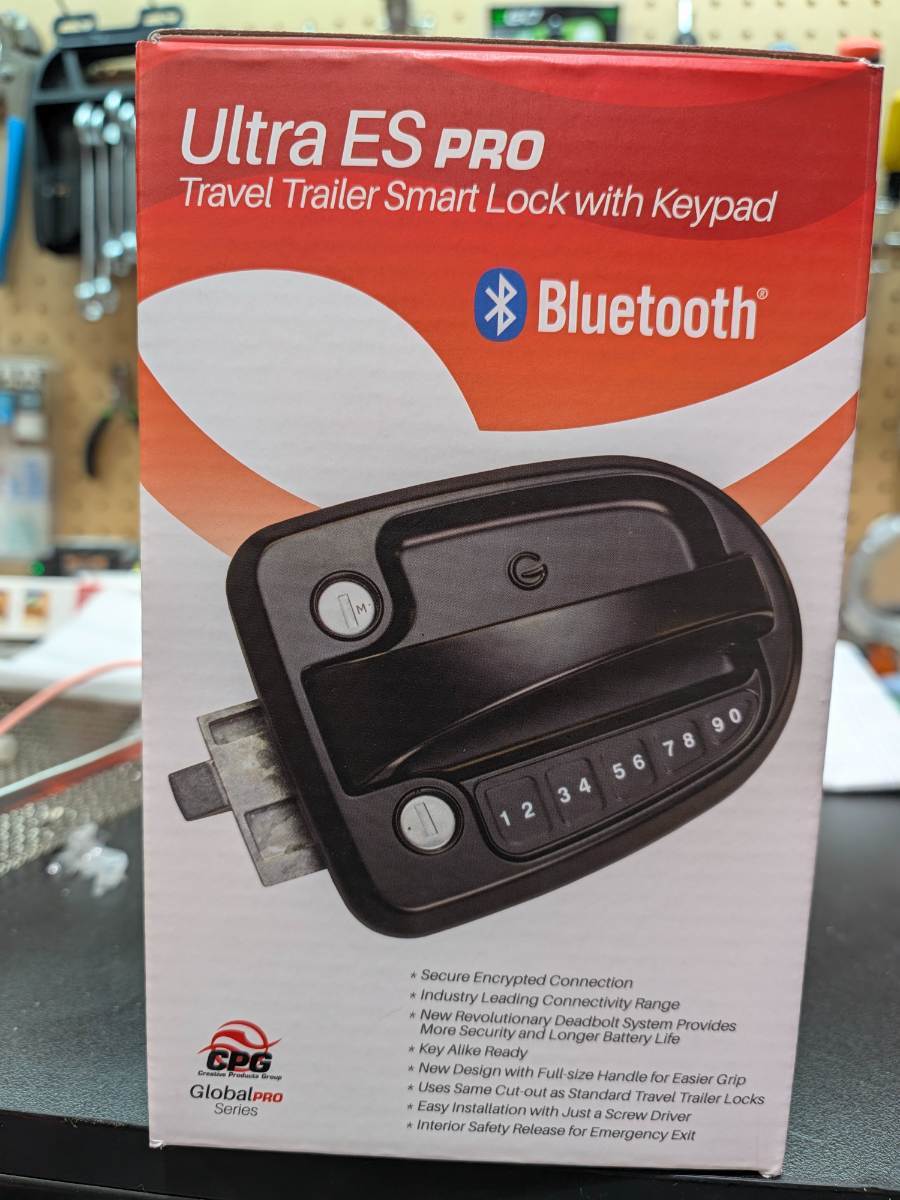
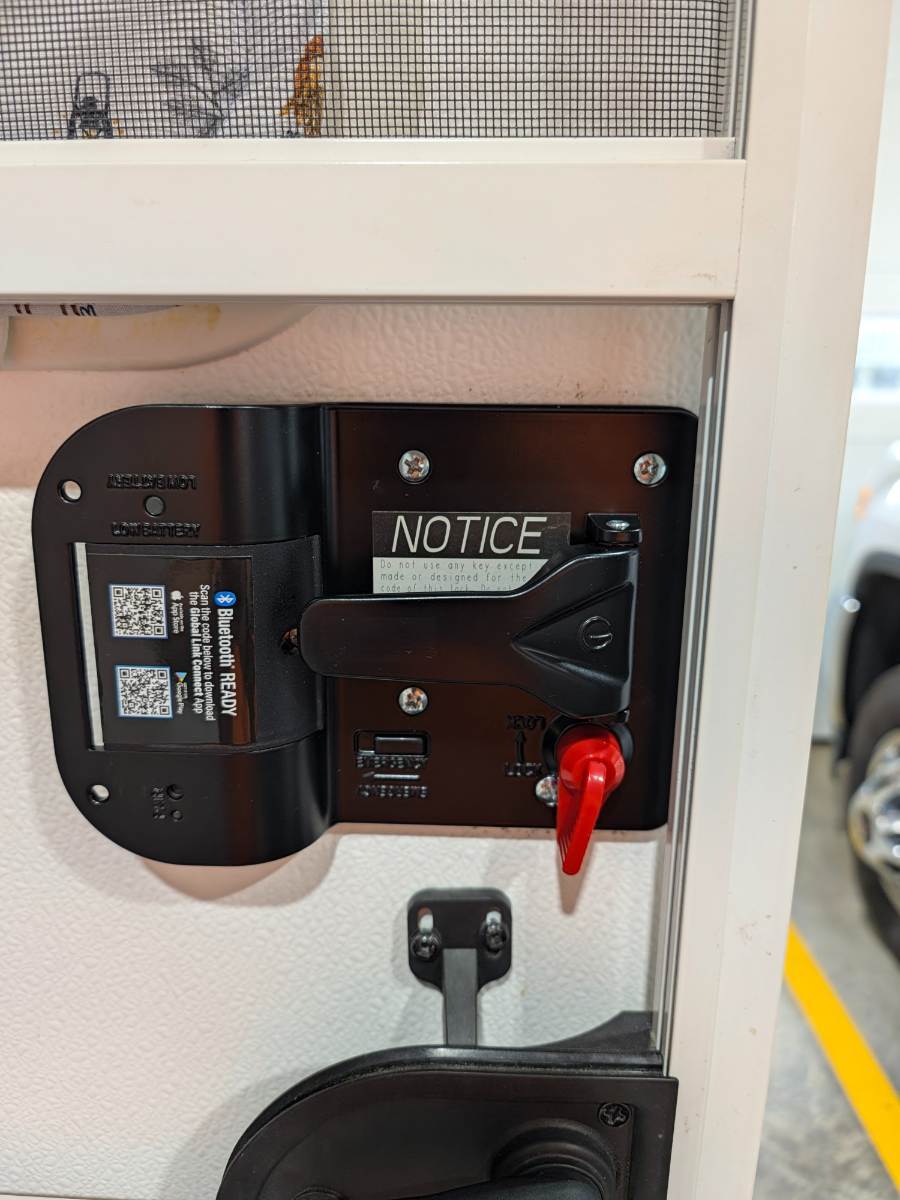
As mentioned earlier, we've had 2 RV Lock keyless locks on our 2022. Both failed, one possibly due to water intrusion because Oliver cut the latch hole in the door too big, leaving a gap next to the exterior portion of the lock where water could get in. OTT sent us a replacement and I caulked around it. Even so, the replacement failed after 3 years for unknown reasons, so we gave up on RV Locks. We were just at the Hershey RV Show and met a rep from Global Products Group who showed us their Ultra ES Pro lock. The first thing I noticed was that it was very substantial, all metal construction. It also uses a different handle configuration inside and out. We talked him down to a price we could accept and bought one. I just installed it with no issues. The first thing I noticed was that the exterior portion was larger than the RV Lock, so it covered the gap left in the door by OTT nicely. It also included a large neoprene gasket, which was nice. Installation was easy and it functions well. One interesting note: there is no separate deadbolt. The deadbolt function simply locks the single bolt in place, rather than extending a second bolt. It would still stop someone from jimmying it open, though. The second thing I noticed is significant for us. Even with the striker plate all the way out, our door never latched easily. We had to really slam it to get the RV Lock to engage (perhaps the cause of the demise of lock #2). This latch closes cleanly and easily using the original striker plate. Our sleeping neighbors will be much happier. OTOH, the Bluetooth app for the lock seems glitchy. It has trouble staying paired to my Pixel phone. Not a huge deal for me, but maybe for someone else. Time will tell if this lock holds up. Will update here if things change. Here's an Amazon link: https://a.co/d/0bzR8SDZ
5 points
-
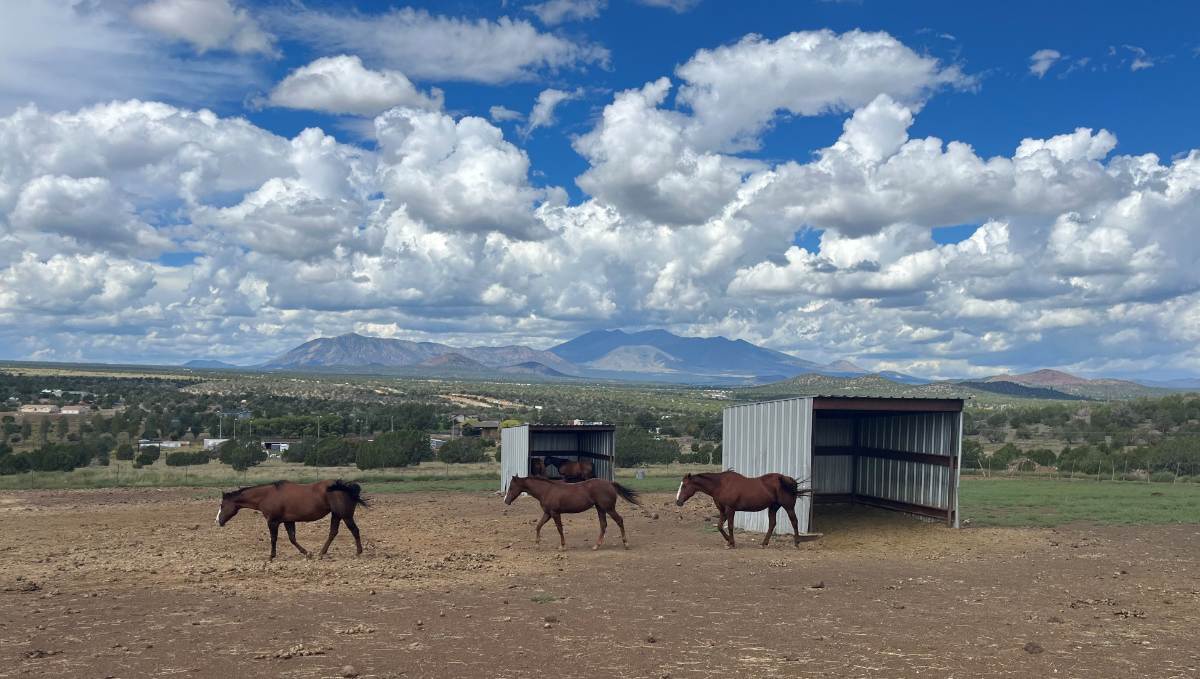
Almost forgot! Check out this horse ranch at the start of Winona Ranch Rd with views of the San Francisco Peaks! Flagstaff sits below the left end of this mountain range. Picture taken when leaving camp the next morning. Home in under 2 hours. “I’ll be back!” 🤠 Where are you camping or have recently visited? Please post!
5 points
-
I've always hated the step down wet bolts. After installing a couple of dozen sets of springs using these, I will attest that easier installation is NOT the reason. They are a PIA to get that second shoulder to slip into the far side of the hangers. @Boudicca908 is delivering a complete set of new Alcan hardware to me at the Rally. Anyone who wants to see how this is done is welcome to come and watch (or help) as I plan to install them during the Rally.5 points
-
Welcome! Soon we need to find Ollie in an Ollie! 😎5 points
-
We don't have Oliver's factory solar system and inverter. When away from shore power, use a similar switch mounted in Ollie's battery box with our system. Installed two Epoch 105AH lithium batteries, using up to 2 solar suitcase panels for charging or gen-set on poor solar days. Stole @Snackchaser ideal (Thanks Geoff) converting the TV cable inlet to the Starlink Mini power outlet using a 12V/24V to 48V step up DC to DC converter. Need to install a small interior switch so turning the system on/off can be done from inside Ollie, too.5 points
-
I just went back and read the early posts from 2016. Interesting some of the names that were on the forum a lot and now are not. Lots of old timers still here though! Mike5 points
-
Thread passed 1,000 replies! Congrats to everyone on such a great thread!5 points
-
Box Creek This is one of my favorites! It's a decommissioned Forest Service campground with pit toilet, non-potable water and no dump. Also, it is free. Box Creek is located off Buffalo Valley Road, West of Moran Junction, WY. PM me for GPS. Note that the campground was decommissioned due to bear activity. Even though I've only observed one black bear in camp I never venture outside the Oliver without some type of protection.
5 points
-
Trail Lake Road, East of Dubois, WY Note that this is a free boondocking site with decent pit toilet but no dump or water (other than what is in the lake/stream.
5 points
-
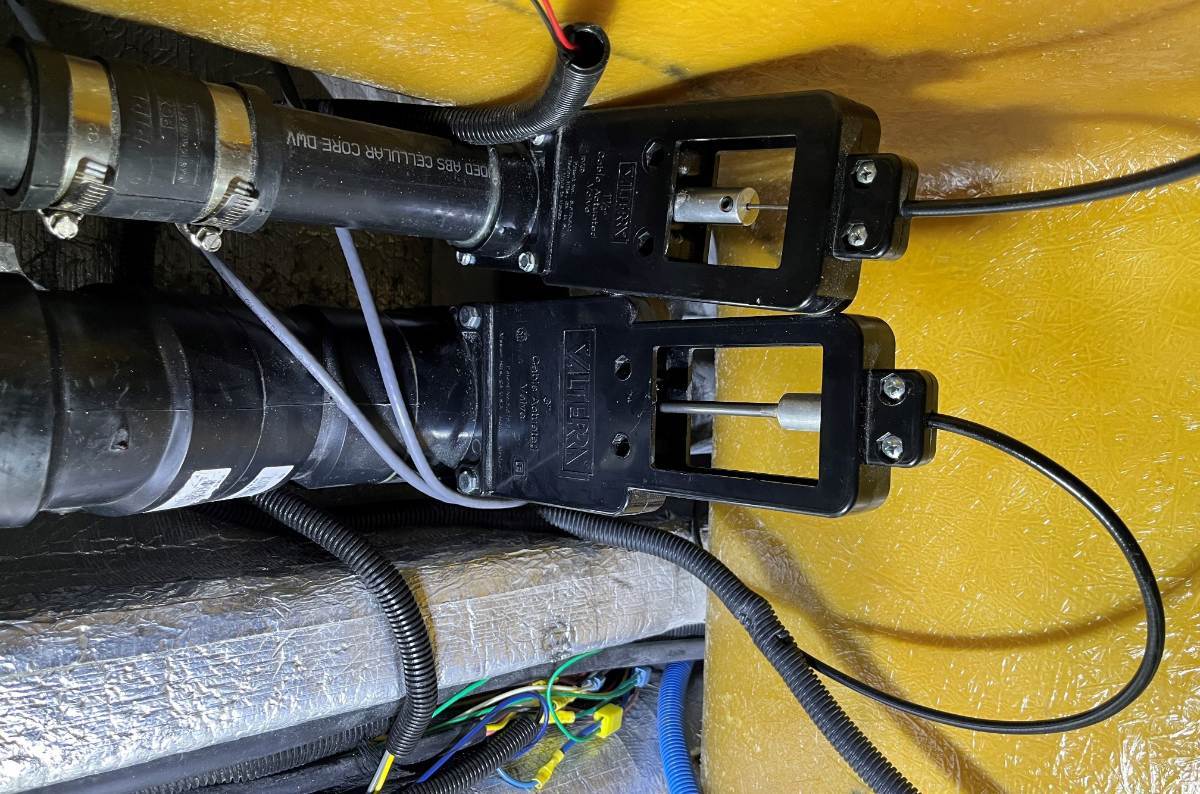
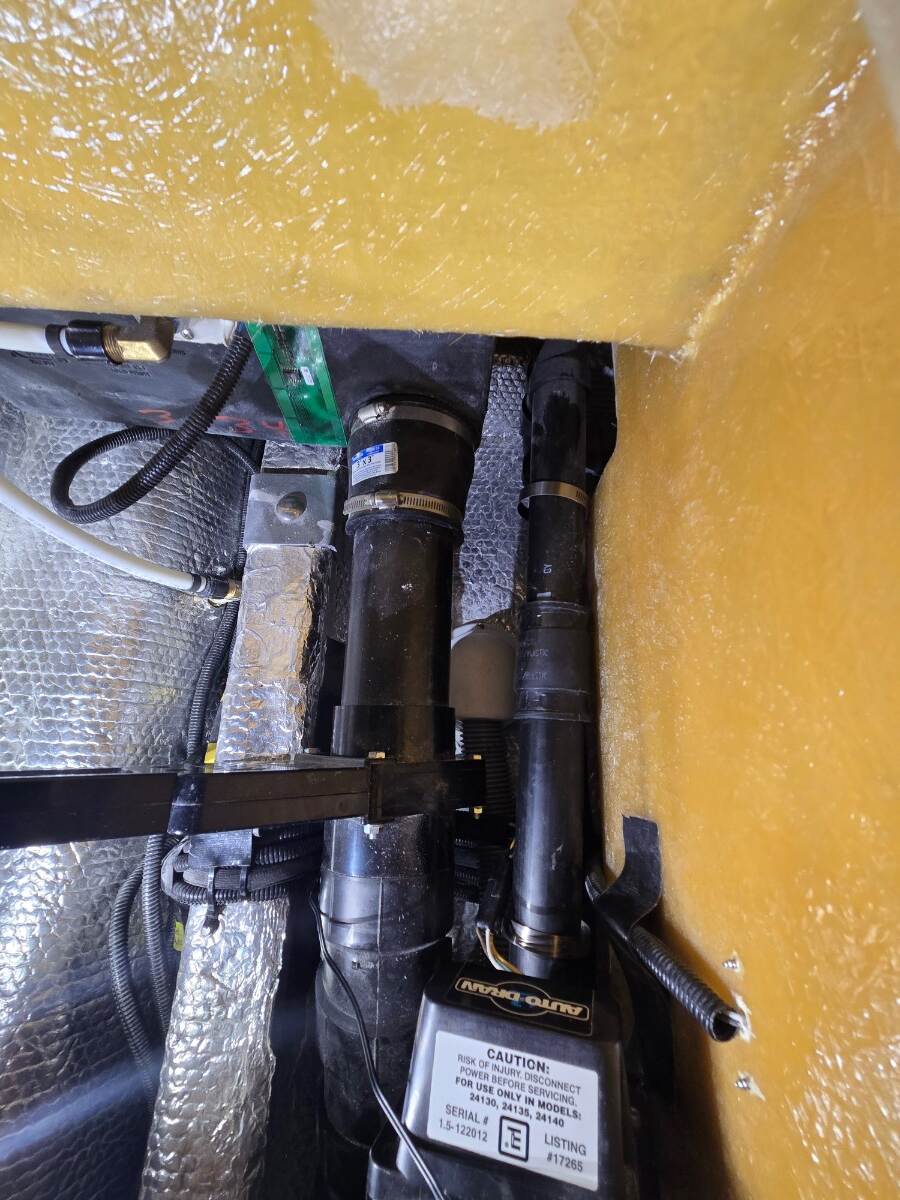
Hello Ron, with the 2015 hull #99, very nice! 😎 There's not a plumbing diagram that would help. My understanding is if the waste valve is closed the pop-up shower floor valve really doesn't matter. If you want to replace it anyway, maybe somebody here knows the make and part number or inquire with OTT. You know, if you close the "back flow" valve when the Oliver nose is down, there would be grey water in the plumbing that would then come out when towing. Make sure your front jack is lifted when you're closing. We use the LevelMatePRO and always have our front up 1/2" or more when camped. We close the bathroom valve before releasing the jacks to tow. During travel, I use the kitchen sink to wash my hands to leave that valve alone. If you open the valve with the nose down with Grey Tank on the full side, water can back up to the plumbing under the shower that you may see later. Given all this, if it's still leaking on the shower floor, your waste valve could be jammed up, not closing fully. With the tanks empty, remove the valve and give it a good cleaning and lube. Under the front dinette seat, it's the 2" line at the top of the picture. The 4" is the black water drain and you might want to service that at the same time. The main Grey waste valve is under streetside bed, jammed against the floor where the two lower screws are VERY difficult to remove. I serviced ours last year since the pull handles were getting very hard to pull. This thread may be of interest. Best wishes, JD https://olivertraveltrailers.com/forums/topic/10711-waste-valves-restoration-and-upgrade/
5 points
-
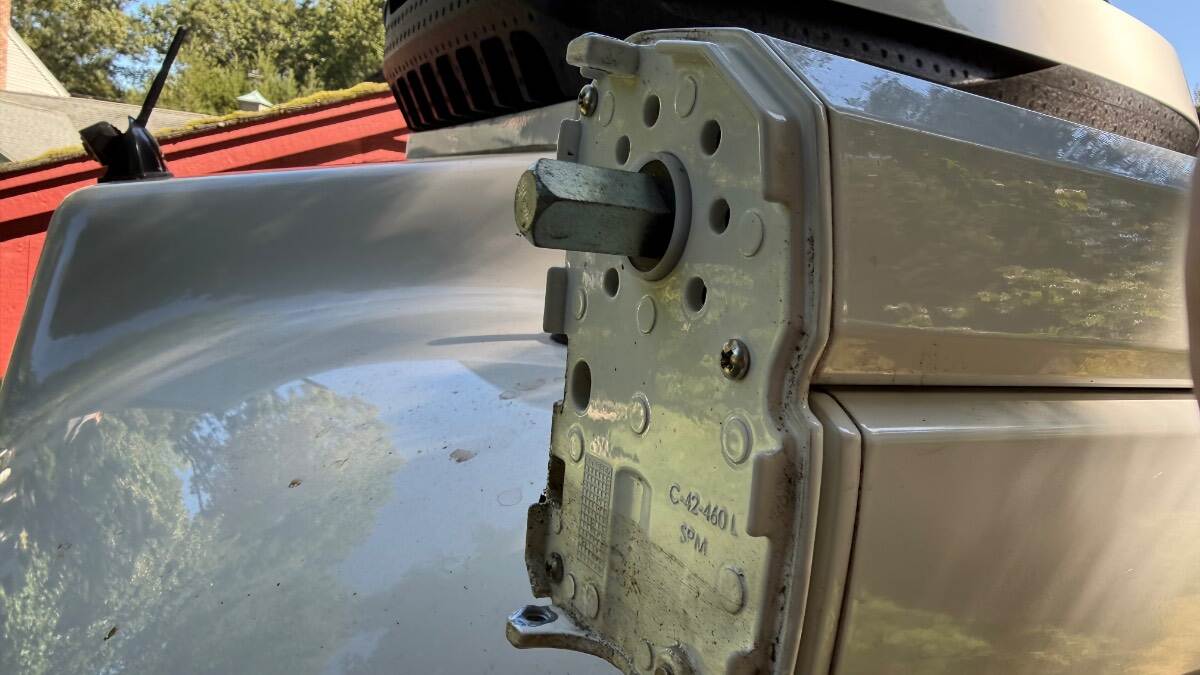
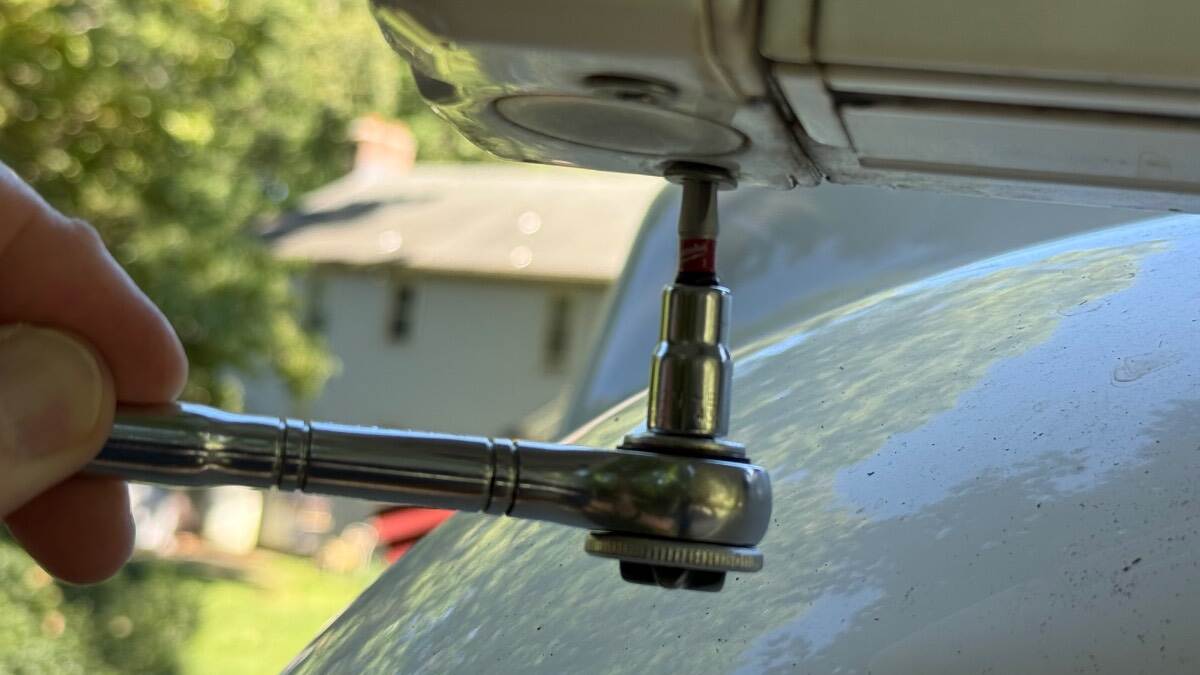
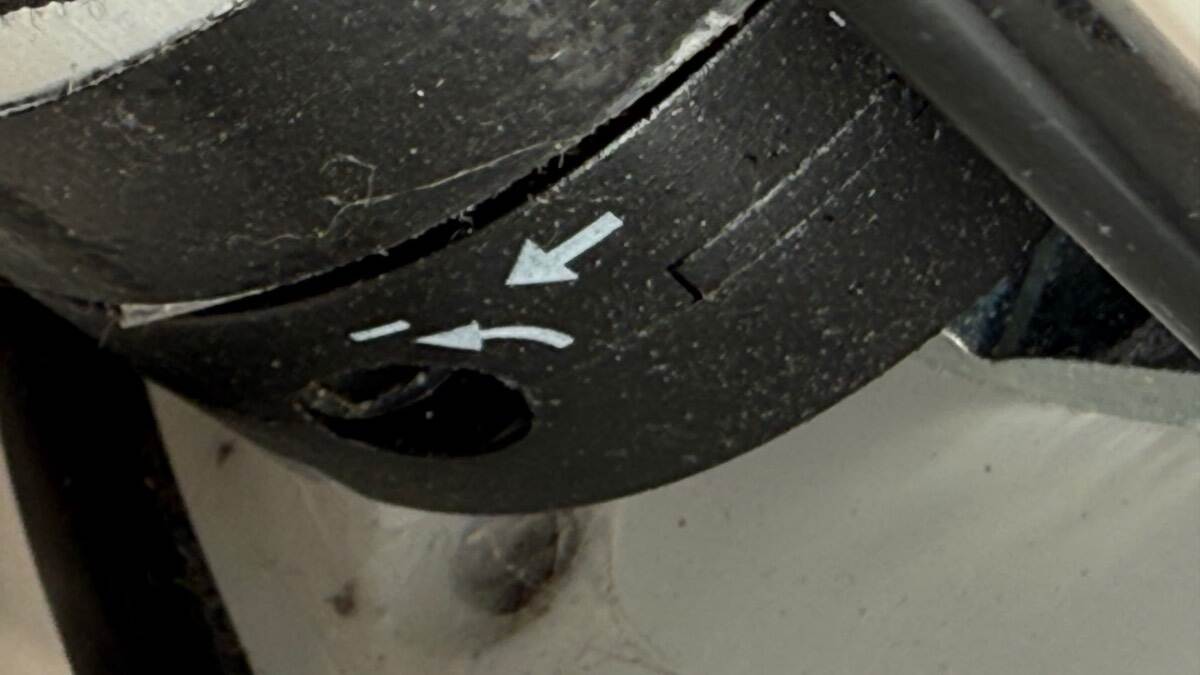
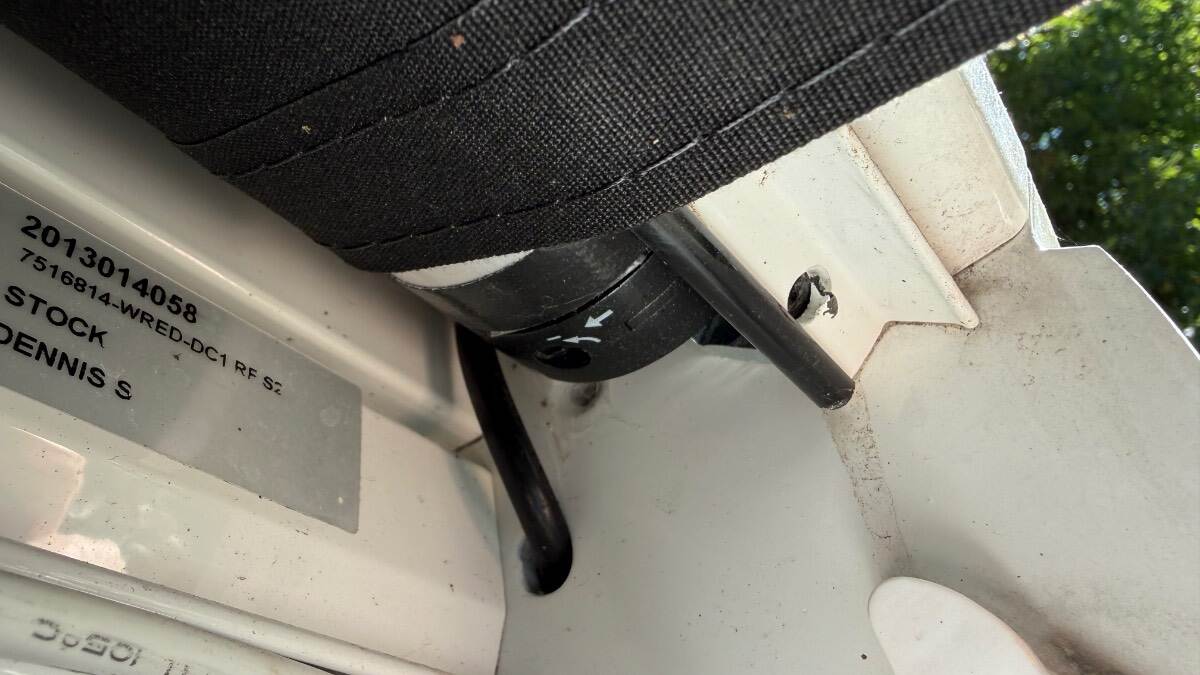
Girard uses #3 Phillips screws to secure the end caps to the awning, over time these screws can oxidize and become difficult to remove which may result in cam-out of the screws. Additionally the location of the bottom end cap screw closest to the hull prevents a normal sized screwdriver from positively engaging the screw head due to its proximity to hull roof. To aide in removing the screws a short right-angle screw driver or a #3 Phillips bit with a 1/4" socket wrench allows sufficient force to be applied and clearance to break the screws loose. Once out a coating of anti-seize on the screws will prevent future problems. My awning has only a single limit adjustment screw which is quite different than the illustration included in my Girard manual. I'll include a picture for reference. A little prevention goes a long way when your batteries in the remote go dead or the remote fails and you have no other choice than to pull the end cap off the awning and manually retract the awning. Notes: The limit screw requires a 4mm Allen wrench ( 1/4 turn = 1" of travel ) The retraction bolt requires a 13mm wrench
5 points
-
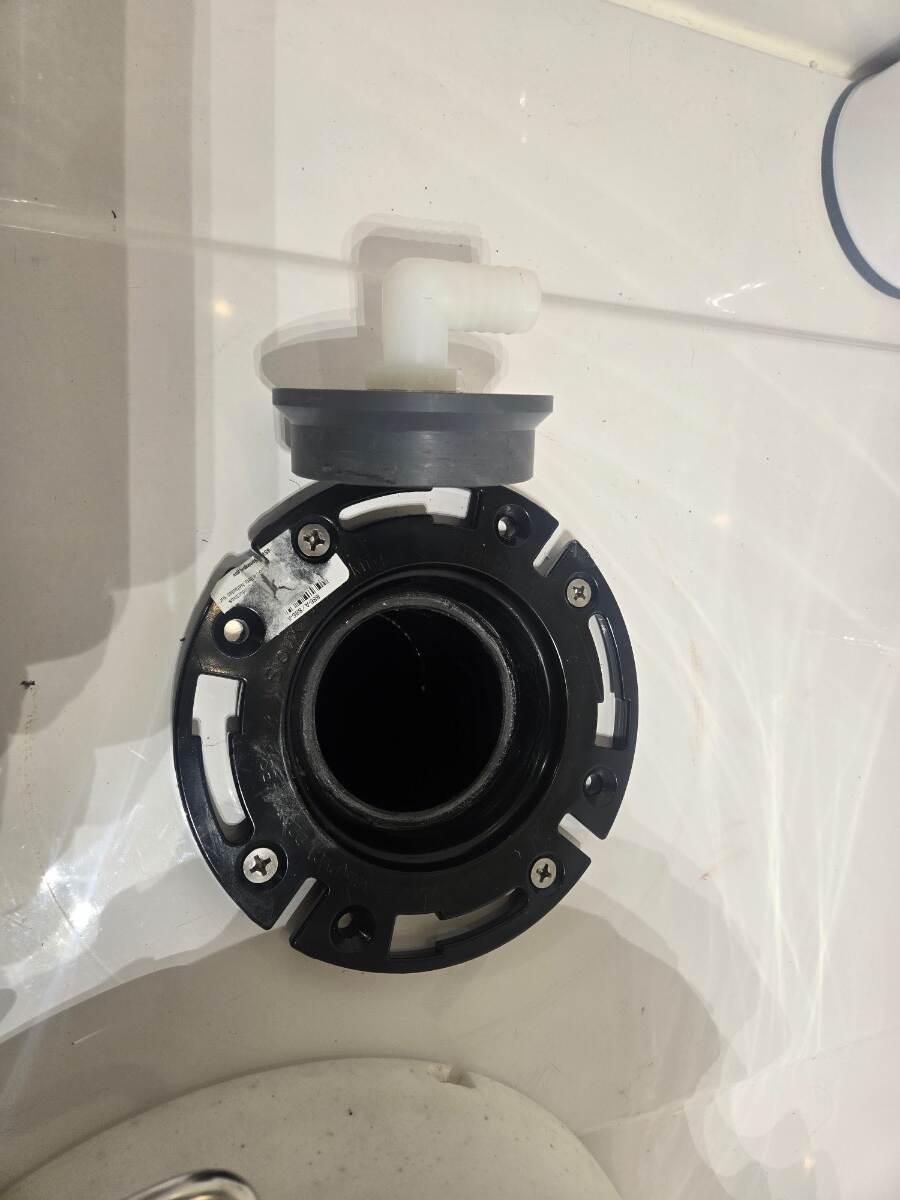
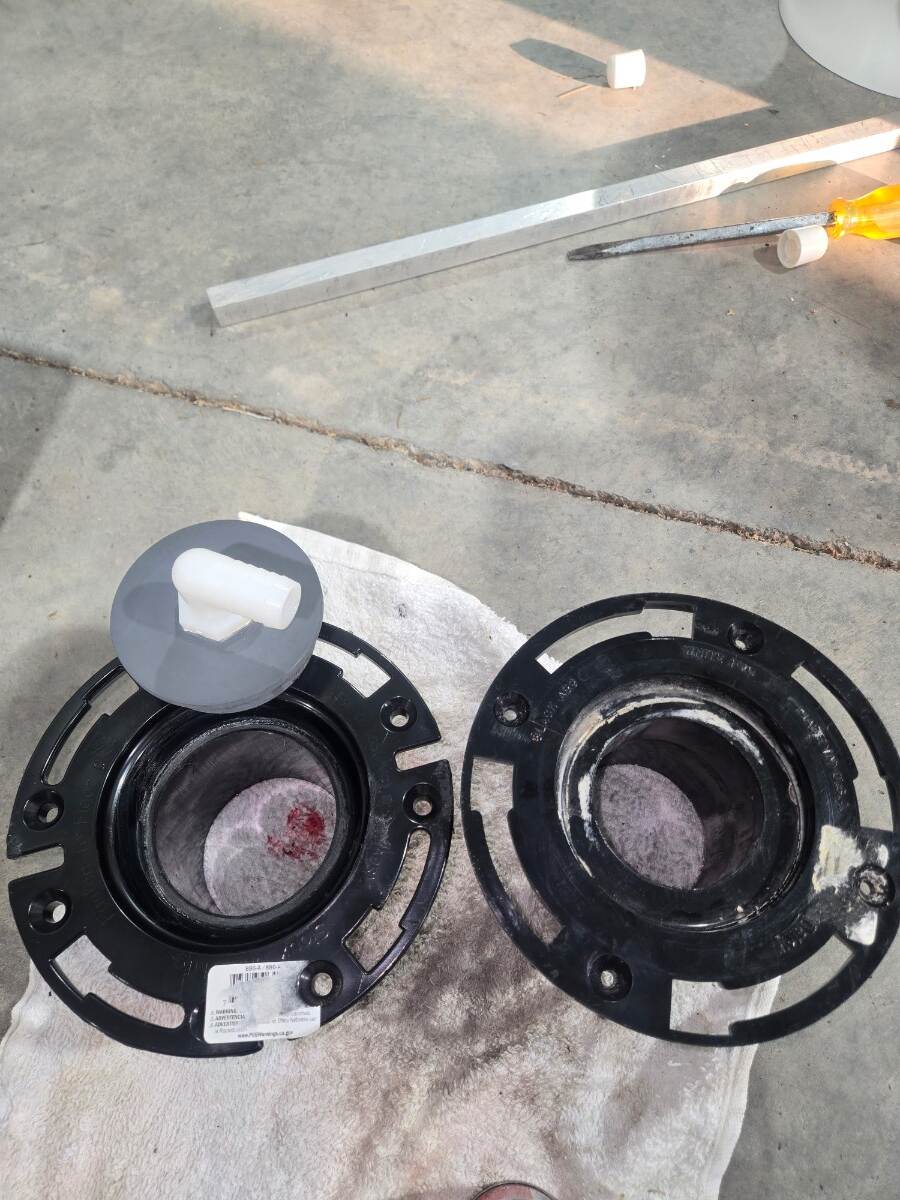
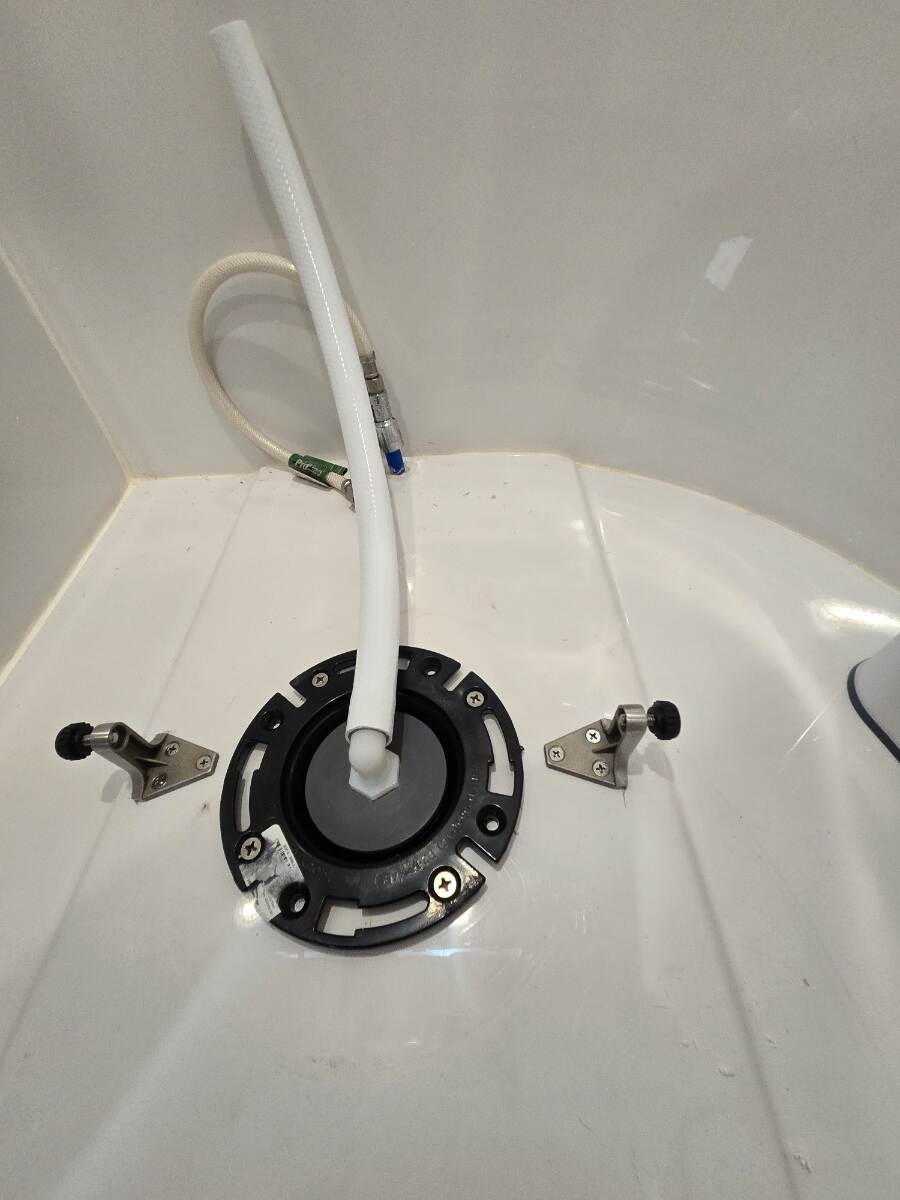
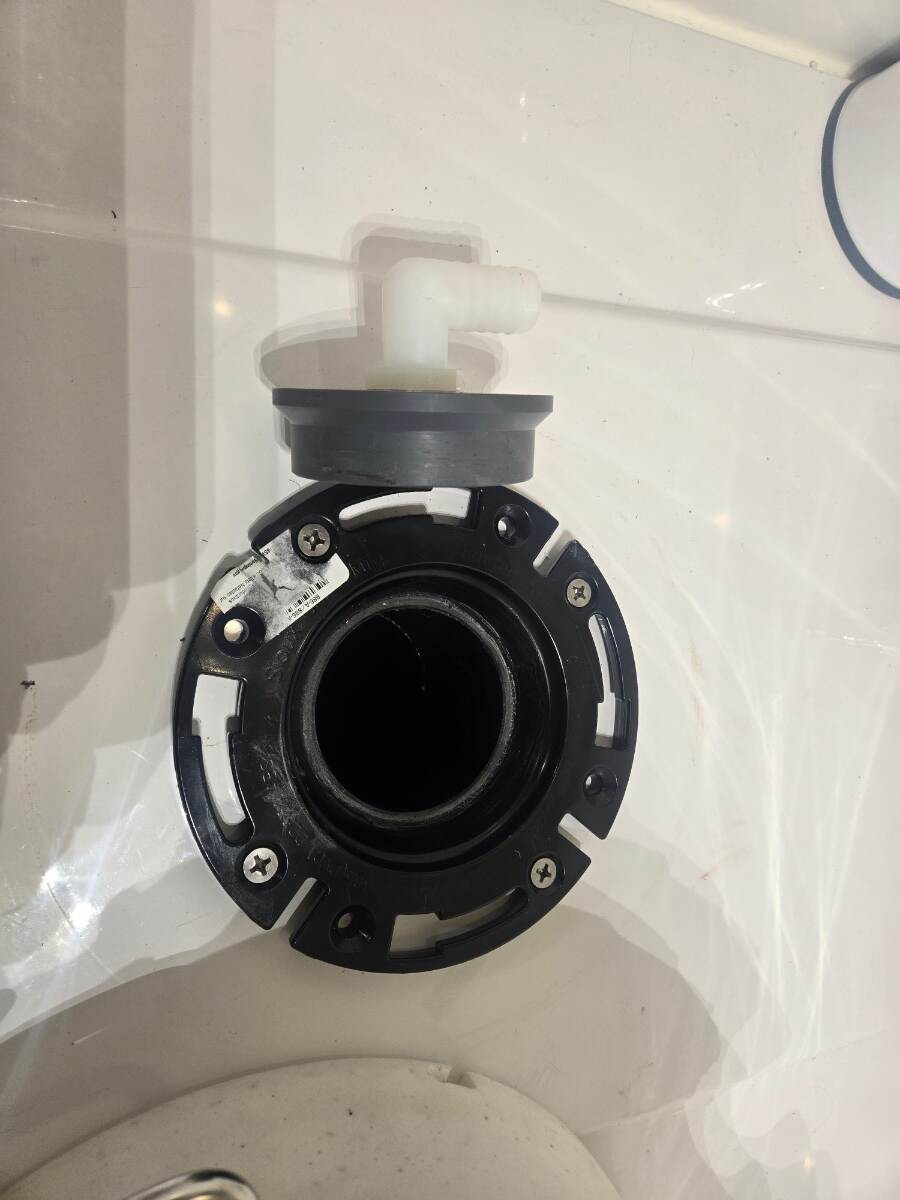
We finally decided to get rid of the flush toilet after much agonizing internal debates. I looked at all the various models and decided on the Air Head Tejo which doesn't have a urine bottle and dumps right into the black tank through the toilet flange with a supplied fitting. This version is not yet on there website so you will have to call if you want this specific version that has clearance to sit over the toilet flange. It is still possible to use a urine bottle behind the tank with some possible ingenuity as there is a quick disconnect for the urine line. I'll try and keep the pictures in somewhat of an order so you can see the progress but feel free to ask with any questions. This is on our 2021 Legacy Elite II. If you're taking the plunge, the biggest hurdle you'll have is getting the old toilet flange out. It can be a pain but it will twist out with some lifting at the same time. The existing toilet flange will not work as it had too small of an internal diameter as the 3" waste pipe is glued on the outside of the male flange. You will need to swap out the toilet flange for a female flange that the pipe will fit inside which isn't a big deal nor is it costly. You will need to bevel the end of the pipe so that is slides fairly easily into the black tank. I also shortened it up a bit as it dropped down a few inches lower into the tank than seemed necessary. The supplied urine house fitting will be glued into the toilet flange facing the rear of the toilet and the hose will be connected to the urine outlet on the upper left rear. Mounting the toilet is pretty much dictated by the toilet flange mounted to the floor. I kind of did it by feel and moving the toilet side to side and centering it along with a few rough measurements. It worked just fine. I put the toilet in place where I wanted it, slid the brackets into each side and penciled around them so I knew where to go back and drill holes for the brackets. I used six stainless steel #10 - 3/4" long screws to secure it. Be careful not to drill to deep and go through the top of the black tank! I drilled one hole for each bracket and test fit the toilet before finishing drilling and it worked just fine. The biggest concern for me was venting. The Air Head has the fan at the exit point to the exterior so I wanted to be able to take advantage of that rather than having to install an inline fan or something of the sort. My first consideration was to vent into the existing vent pipe in the vanity but that was not recommended by Air Head and they had even mentioned that they had discussed that with Oliver at some point. My next consideration was through the front wall and into the propane box which would have been really easy as well. However, I did read a lot about that not being acceptable for a whole host of reasons. I did consider running it into the box with the hose continuing down underneath the trailer so it vented below the open box. After poking around inside the trailer. I opted to mount the fan housing below the gray and black lines underneath the forward seat of the dinette. The gray line comes off super easy and it was pretty simple area to get to both inside and outside of the trailer. The hose connects to the housing and loops around and through the left side bathroom wall which keeps the vent hose visibility to a minimum as well. As you'll see in the pictures, I haven't caulked it all in yet and buttoned it up but I had a couple people as if I was done yet so I though I would post where I'm at. I like that it vents underneath with minimal bends in the hose and it is towards the outside of the trailer so I don't believe fumes will be an issue.You can place the vent hose on either the center hole in the back or the hole in the right side. I opted for the back since the hose was going out the left side anyhow and it gave it more clearance for the internal mechanism of the toilet and less hose length. They have an inline screen that will also be used in a coupler behind the toilet. I also used a heat gun to give the hose a slight bend but be careful as if you let it get a little too hot it will separate at the corrugations. All in all is was a pretty simple install once I figured out how I wanted to do it and had all the miscellaneous parts ready to go. Now for a test run in a few weeks!
5 points
-
Bosker - Wow - that surely is tight in there. No way your Dad could have gotten that thing in there. Thank goodness he had Larry around to help him.😇4 points
-
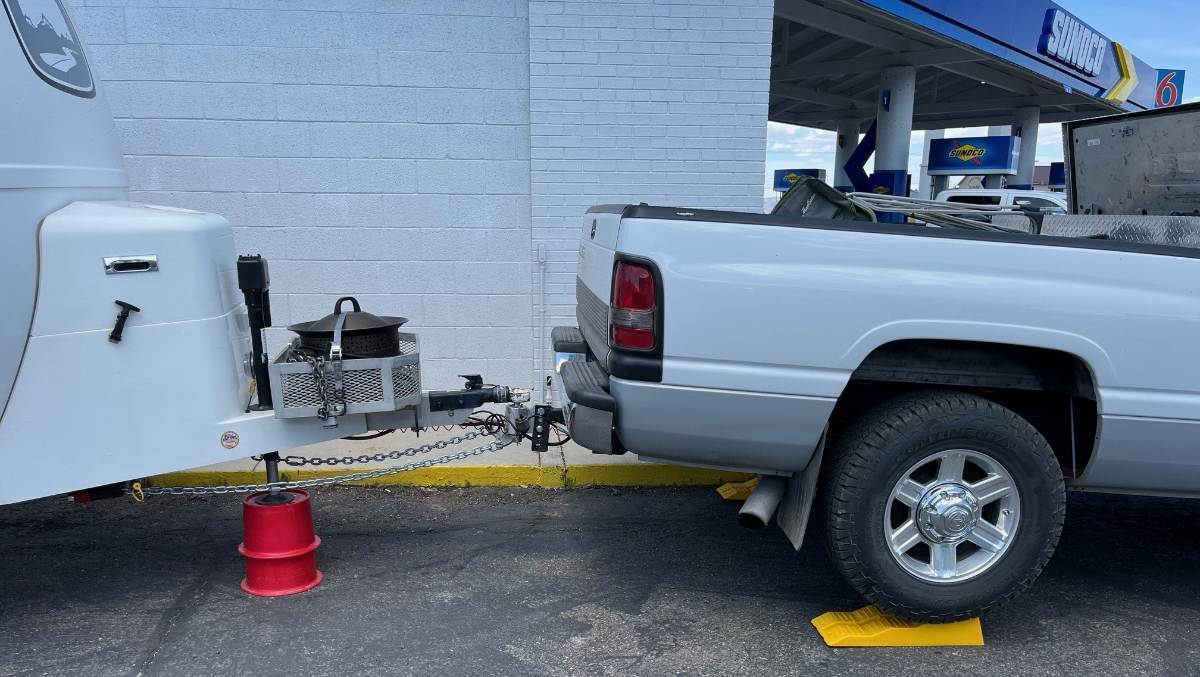
Lifting the front jack is a MUST at least 2-3" high. We read the LevelMatePRO app to know. If there are two ways you can pull into a dump station, enter to be driving uphill whenever possible. This should get the black tank 98% empty. The black tank is a taller tank and if nose up it should empty fully. The grey tank is another story. Besides nose up the grey will only fully empty when the curbside is also up 1-2". This is because the 4" waste line exiting the grey tank heads out from the rear of the tank towards the streetside (pic1). If the curbside is very low, the grey tank could be half full and not able to empty. Every time we dump, I'm taking our two 8" Andersen Blocks out of the truck bed, one under the front jack and one under the curbside jack, often lifting the curbside wheels up in the air. I lift the front up first and then pull the black valve, then I raise the curbside and pull the grey valve in this same order every time! Lift before you open the valves so that the waste water runs out most quickly. We had an extreme situation at the Sunoco in Cedar City UT. You had to back into the dump station which was uphill. It took all this lifting to dump effectively! 😎 (pic2)
4 points
-
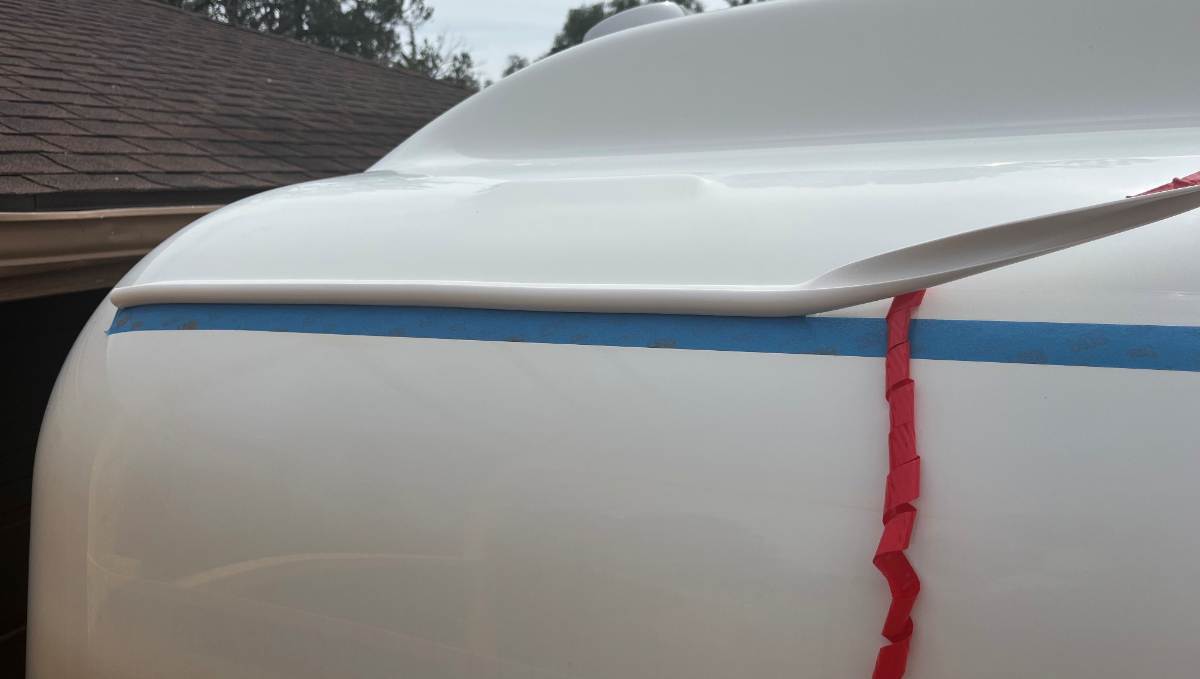
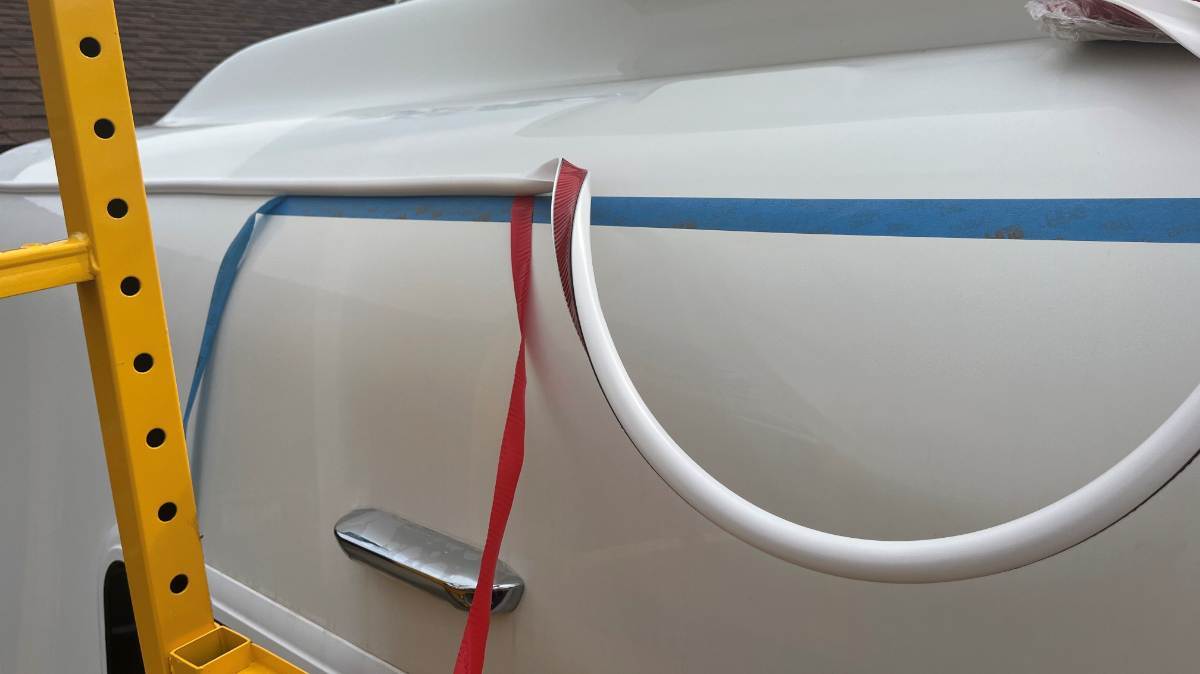
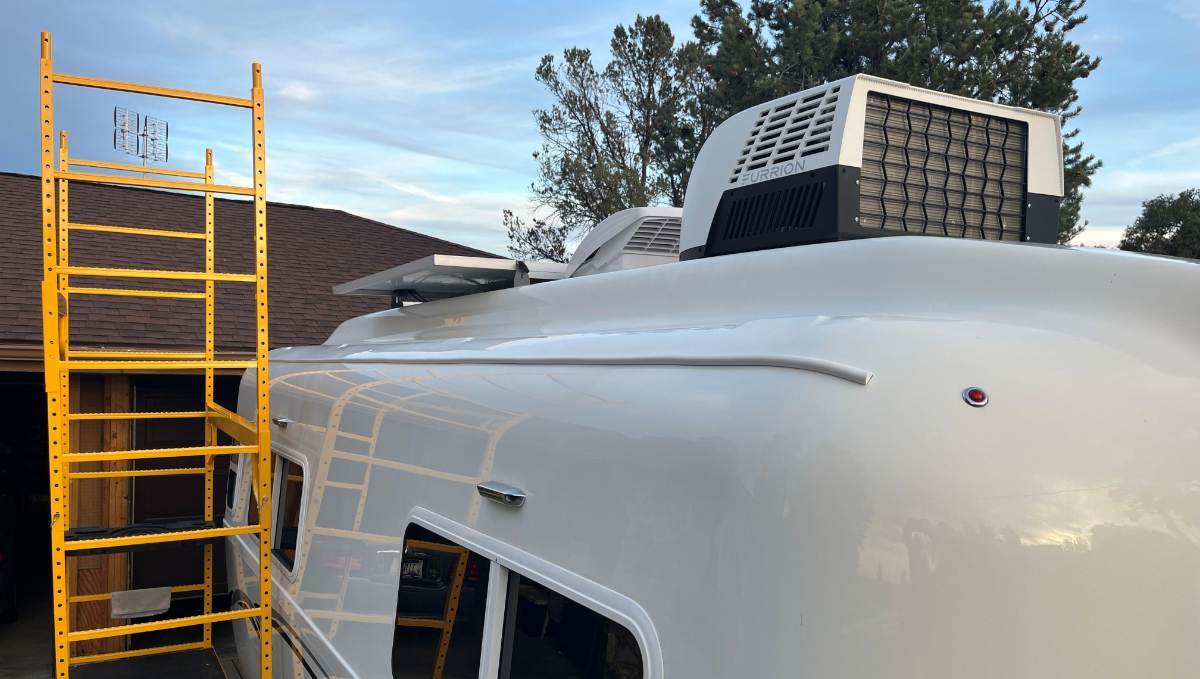
First step was to talk to my ceramic coating guy. I knew that 3M VHB tape will not stick well to ceramic coating. It's 39" from the bottom of hull belly seam to the bottom of the drip rail in the original installation. On the scaffolding, the floor set only 3 ft high to work at eye level, I measured 39" up about every 18" left to right and placed a 1" piece painter's blue tape just where the new drip rail will be (this step not pictured). Then I ran the masking tape the entire length of the hull. Next step was to sand off the ceramic coating. I carefully hand sanded just <1" above the masking tape, first using a worn sanding sponge and then 400 and 800 grit paper. Smoothing it with acetone you could see the yellow ceramic residue on the rags. Final clean with 90% rubbing alcohol. I was careful, but should have been more anal, laid a second line of masking tape so to sand exactly a 7/8" strip. Then, game on, VHB tape doesn't fool around! I cut the ends angled back using a hose cutter. Stuck down the first few inches just above the masking tape. You pull the red backing tape off only for the next length. You keep the 25 ft length coiled ahead of you. With an 8 ft scaffold, you also move it 3x as you work left to right. The product is a very soft PVC that can bend in any direction and stretch. You have to stretch it to get it in a straight line and then you have to let some tension off as you lay it down. It's not that easy keeping a straight line that long. I think it came out pretty good. I'm happy. From the ground it looks straight as an arrow! I took the final picture from up on a ladder so we can see the line. It is straighter than the "professional" who did the there other side and it's a good product which allows for a straight installation. 😎
4 points
-
@topgun2 Interesting museum in Dubois WY https://nmmv.org/ Bill 3134 points
-
I totally agree I had the same problem. Having the opposite side down I noticed that the axles were slanted side to side, but also skewed a little front to back. If I had to do it over I would have raise the whole trailer up and level with no pressure on all 4 hubs/tires. I did buy 2 cheap scissor jacks from Amazon to fine tune the height of the axle I was working on helped a lot. I could adjust the height of the scissor jack by hand and get things exactly where I needed them. here is the jack I bought https://www.amazon.com/TCE-AST10202SU-Torin-Cross-Scissor/dp/B0CP78MZMK/ref=sr_1_1?crid=2H17OYSVYKERR&dib=eyJ2IjoiMSJ9.bwqlOzBbCSEQIvYLwTJphg.4A7CLcc1r9OBfO4aqVO_k8xMRyWPESElnwC8J8uQsm4&dib_tag=se&keywords=TCE%2BAST10202SU%2BTorin%2BWide%2BBase%2BCross%2BCar%2BScissor&nsdOptOutParam=true&qid=1789315759&s=automotive&sprefix=tce%2Bast10202su%2Btorin%2Bwide%2Bbase%2Bcross%2Bcar%2Bscissor%2Cautomotive%2C238&sr=1-1&th=14 points
-
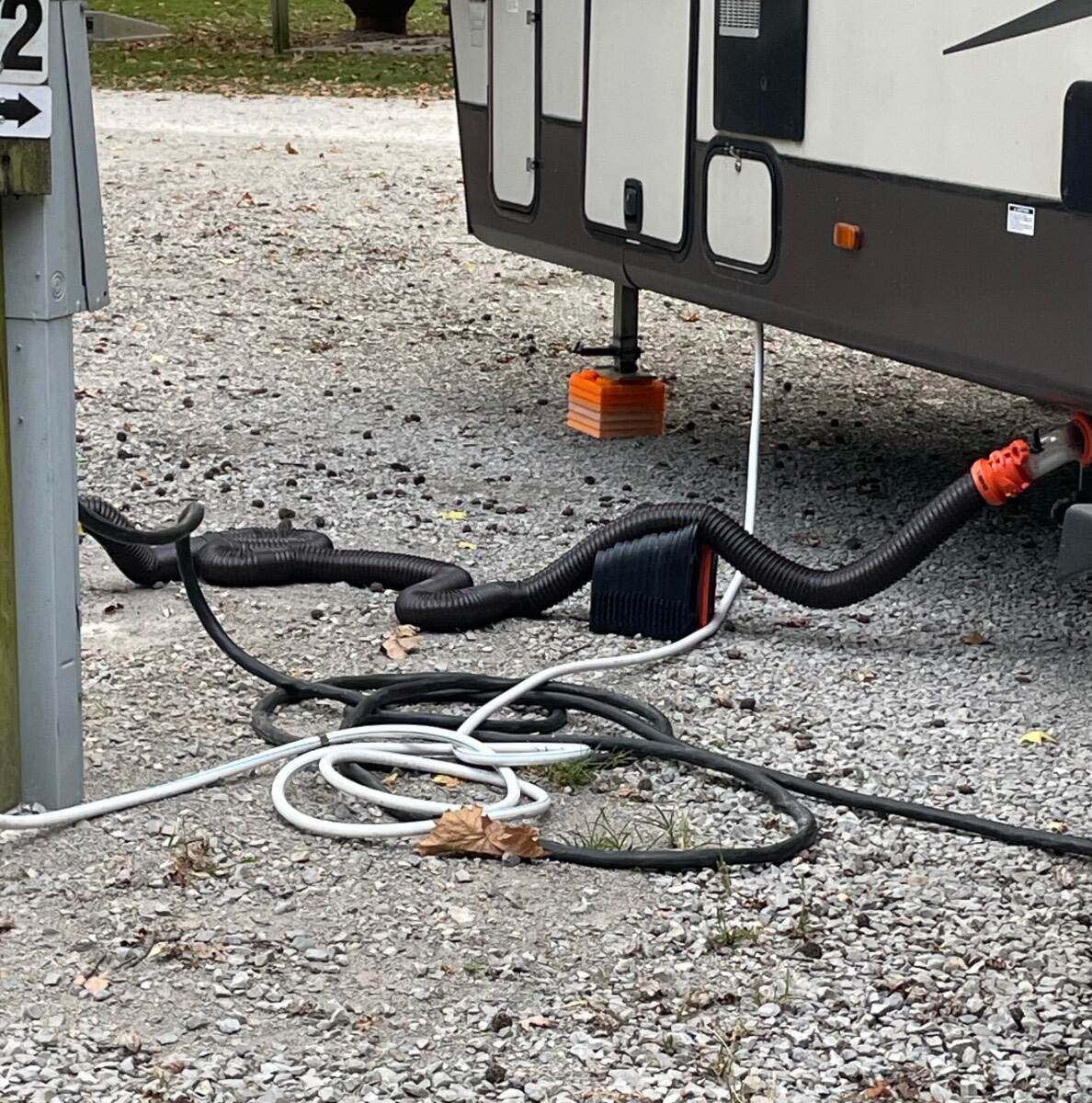
Apparently this is how you’re supposed to set up a sewer hose support EDITED 2 weeks later: I now understand that the owner has intentionally created a P trap in his sewer hose to hold water in the dip to seal off sewer gases because he keeps the grey drain open all of the time. @topgun2 alluded to this in his post but I didn’t catch on until 2 weeks later. Bill 313
4 points


























-
Recent Achievements
-