
Hoosier
-
Posts
12 -
Joined
-
Last visited
Hoosier's Achievements






-
I like the hatch mod. Is that sized to go where the towel bar goes? Do I have to remove any fiberglass to fit, if so I'd probably wait until spring.
-
I’m looking for a sanity check from other Oliver owners. I’m attending evening classes in Clemson (Tue–Thu, 6–10 pm) and have a long-term spot at an RV park during the week. My home base is ~90 minutes away on winding, wildlife-heavy roads, so I head home Friday mornings and return Tuesday afternoons. That means the trailer will often sit unattended for ~4 days at a time during February. My concern is avoiding repeated winterize/de-winterize cycles (likely 15–16 times) while still protecting plumbing during what’s shaping up to be a colder-than-usual stretch. Here’s the approach I’m leaning toward: Plan Leave the Oliver “wet” (water system active, not winterized) Use the propane furnace as the primary freeze protection Thermostat set around 45–48°F Furnace on continuously when unattended Use the Houghton heat pump only when occupied (not relying on it for freeze protection) When leaving for multiple days: Disconnect the exterior water hose Blow out the hose and city-water inlet (trailer plumbing remains live) Cabinet doors open under sinks Fresh propane tanks topped off Batteries in good condition (furnace blower dependency) What I’m avoiding Space heaters while unattended Relying on heat tape (only partial coverage) Heat pump alone below freezing Full winterization every week (wear on fittings and check valves) Added insurance Remote temperature sensors inside the cabin and near plumbing/underbelly Propane level monitoring The thinking is that the Oliver’s furnace-heated plumbing spaces + a modest thermostat setting should keep everything above freezing, while disconnecting the exterior hose removes the most failure-prone component. I’d appreciate feedback from anyone who has done something similar, especially during prolonged cold snaps. Anything I’m overlooking specific to the Oliver layout? Thanks in advance — trying to balance realism, safety, and not crawling under the trailer 16 times this winter.
-
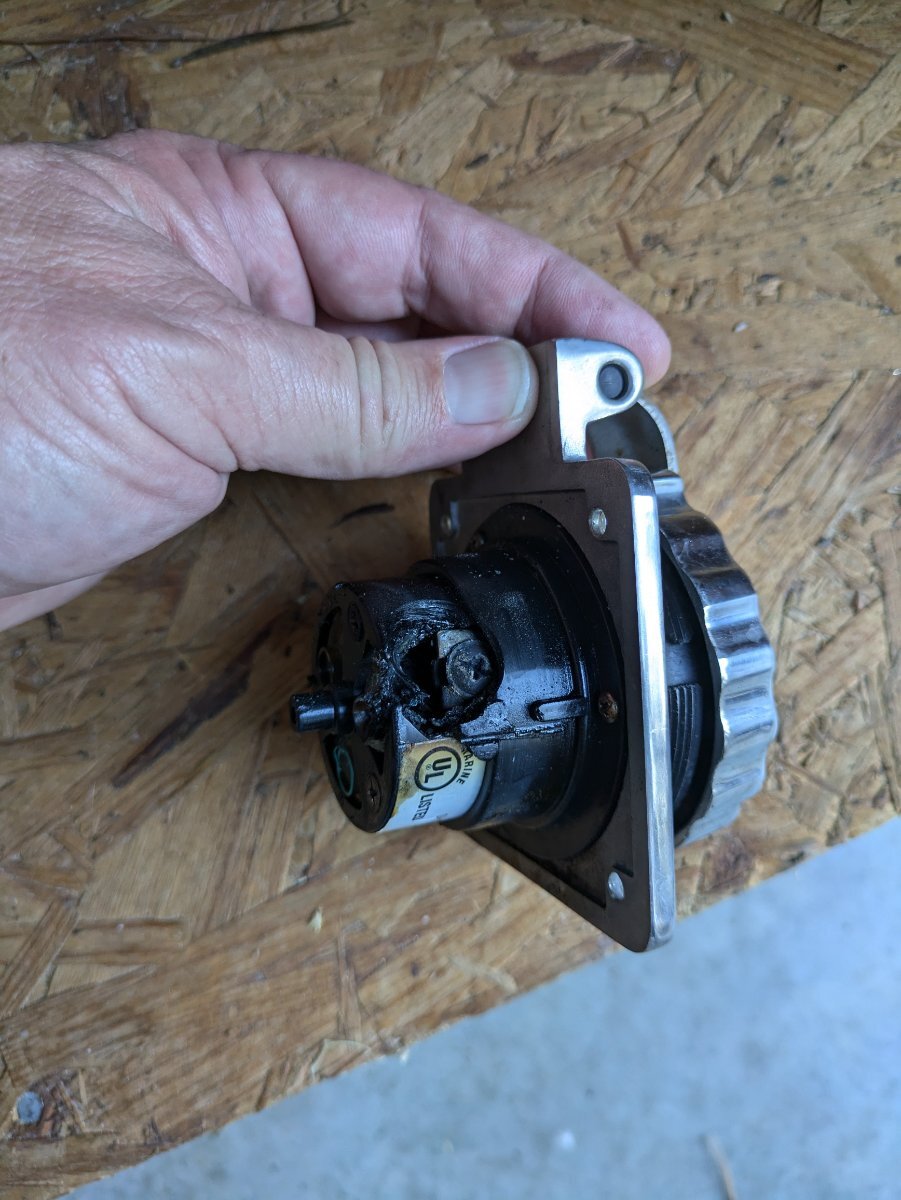
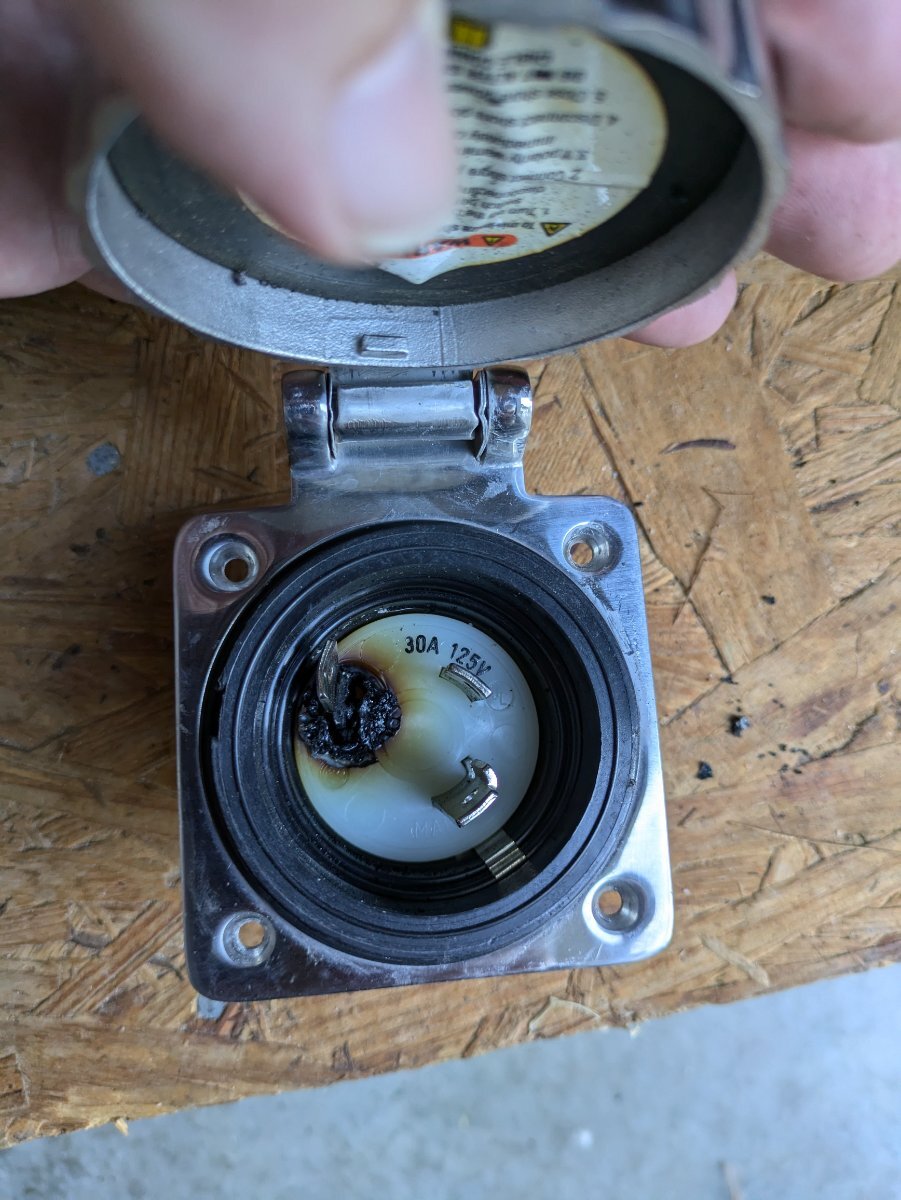
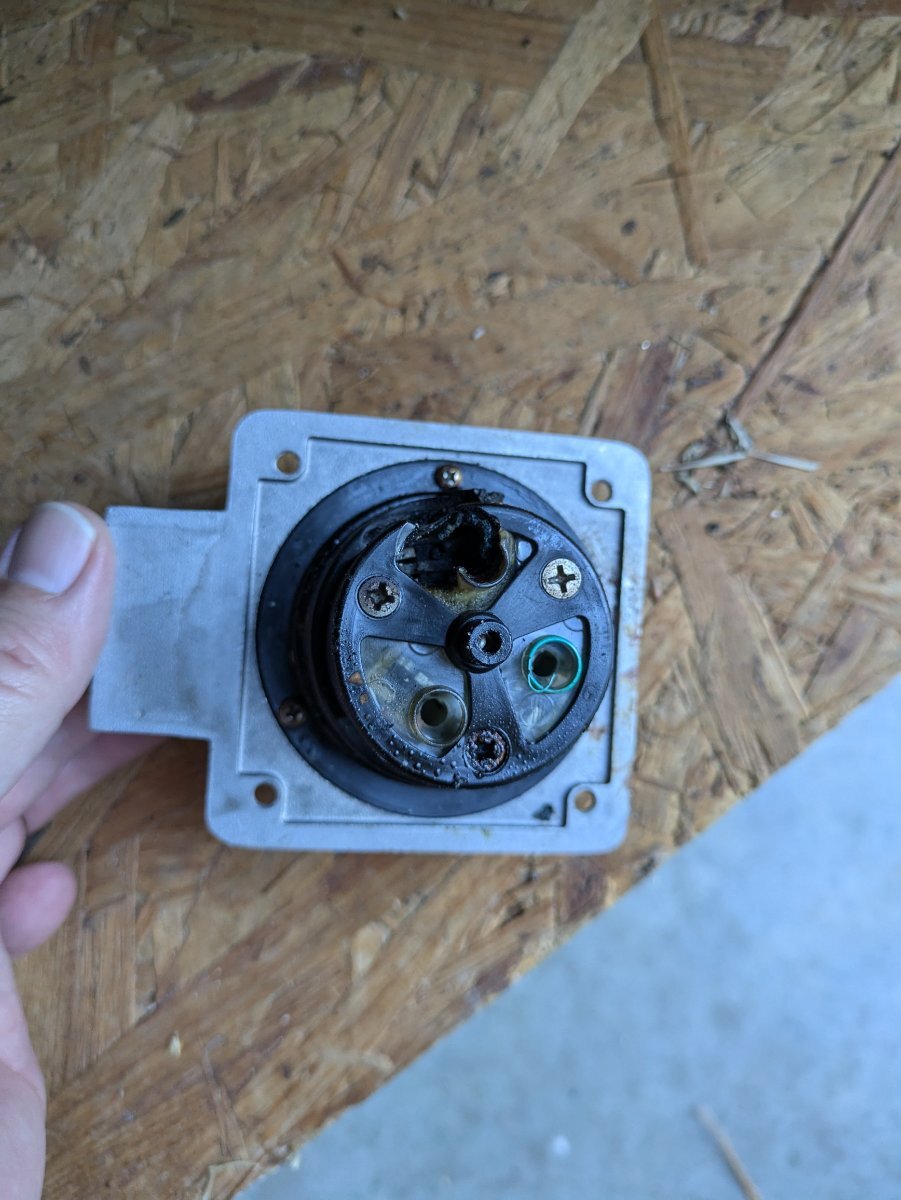
While camping in SW Florida right before Helene arrived my wife smelled a faint burning smell and 30 seconds later the carbon monoxide alarm started to alarm and we looked and looked but could not source the smoke. The alarm went off with furious fanning and opening all the windows in 92* weather. Just in case we moved the sentimental items out of the Oliver and after 90 minutes sitting in our idling TV we went back in. Nothing seemed wrong and wife was pointing at me because I recently swapped the Demonic for a Houghton. Anyways 3 days go by, nothing happens, then AC power is fluctuating then goes completely out. Smoke smell is really evident now and when I went to remove the power from the trailer I almost burned my hand it was so hot. Turns out the white cable was loose and creating a short that eventually melted the whole assembly. The shore power cord was equally compromised. I was able to find a replacement inlet at West Marine for about $125 and a new shore cord from Campers World 60 miles down the road (it was Sunday). So I will be adding opening and inspecting for proper torque on the wires leading to the cabin on our annual inspection list. Thanks Shane

-
On my TV I tried about 10 times and then I did a factory reset. It was after doing a few updates. Then it has been fine since.
-
I wanted a diagram for the Oliver manual using the solid state relay with neg. trigger. Disclaimer: The wire colors in your hull may differ use a DVM to figure it out, Thanks to bhncb for the info, The diagram took longer to make than this mod.
-
Thank you kindly.
-
Add me to the list of new Rec-Pro conversions. Yes it is a game changer, Working on heater now, Can you share the model of SSR you used? The ones I am looking are are probably overkill and has heatsinks. The wire coming out of my thermostat are Red, White and greenish probably doesnt matter. Thanks in advance. Shane
-
I'm with you Albert. I had a Ford 150 on order since November. its still not built or delivered but we all know why. I was very hesitant in the F150 for the reasons you picked out. Choosing between bringing the wife or the dogs with the spare capacity was somewhat laying heavily on my mind. when I told the Admiral that she could go and the extra 6 suitcases that comes with it, she was all in for the the +$25,000 for the F250. So when one came in at the dealership (F250) I got a call from sales rep and i went home with it a day later. She drove from our property in Ft Lauderdale to Punta Gorda like a champ. Looking forward to her dragging the trailer for awhile.
-
perfect , thank you!
-
Picking up my trailer in about 5 weeks. I have searched high and low. Would someone please measure the distance from the tip of the Bulldog hitch to the front of the jack on the tongue. I'm thinking of putting a bike rack on my Bulletproof hitch and wanted to know the clearance. Thanks in advance.
-
I just had my new TV ceramic coated (Star White Ford 250 Tremor 7.3) and the installer made a deal I could not refuse to coat the Oliver. I showed him the OTT website and he was immediately interested. I might get my first Ambassador stipend before I even take delivery of mine! I'll keep everyone posted. From what I have observed this is not something you should buy from Amazon and brush it on in your driveway. My installer has environmental controls like hepa filters, UV light curing and he goes though about 30 microfiber applicators. This is after he strips and de-waxes, clay bar out the impurities and then buff out swirl marks for prep. Around 20 hours of work.
-
I know ceramic coating works well for boats once the surface is prepped properly. Has anyone added a coating to their Oliver? I'm thinking about this one. http://www.modesta.co/product-bc-04-nano-titanium-glass-coating.html I have done a few cars through my local installer in this product, and he seems to think it will make a huge difference in keeping it look as delivered. I have had it on one of my cars for 3 years and it literally looks brand new, sitting outside all day, all year long, in Florida sun. Its not cheep, about $3000 for the Oliver II. It's not like money is no object but time is.