What is a 4-season travel trailer?
A 4-season travel trailer is built to stay comfortable and usable whether you are camping through a January blizzard or a triple-digit August afternoon. The difference from a standard RV is thermal performance: more insulation, protected plumbing, and climate systems sized for temperature extremes. Most 4-season trailers also use dual pane windows and ducted heating.
What features make an RV all-weather capable?
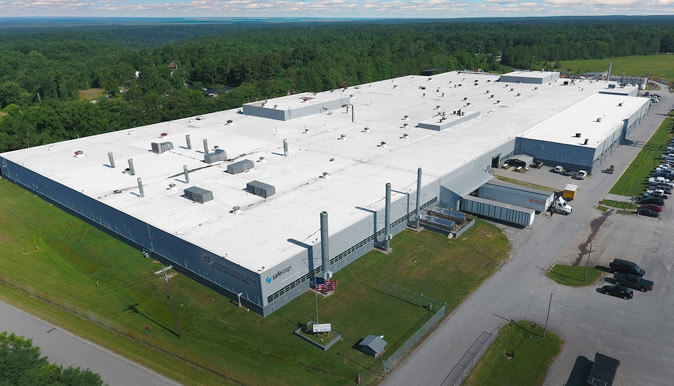
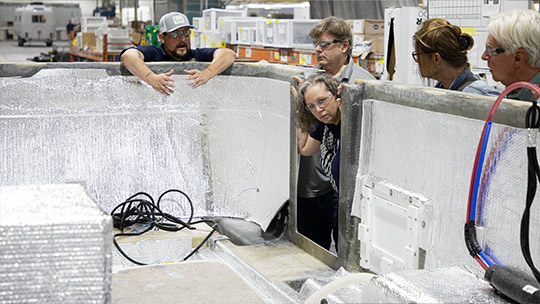
The outer shell matters most. Oliver uses a double-hull fiberglass design: two hand-laid layers bonded into one shell with insulation and an air gap between them, which works the way a double-pane window does and slows heat transfer in both directions. Add dual pane windows, enclosed plumbing and holding tanks, and a ducted propane furnace, and the trailer holds interior temperature with less work from the heating and cooling systems.
What makes an Oliver suited to all-season camping?
The shell is two hand-laid fiberglass hulls bonded into one piece, with insulation and an air gap between them, sitting on an aircraft-grade aluminum frame with a galvanized steel sub-assembly. The holding tanks, plumbing and drain lines are enclosed inside the shell instead of hanging underneath it. Dual pane windows, a ducted propane furnace and roof air conditioning are standard on every 2027 build, so the four-season equipment comes with the trailer.
Where do owners take Oliver trailers in extreme weather?
Owners post trip reports from Alaska, the upper Midwest and the desert Southwest in the Oliver owner forums, covering sub-zero nights and summer heat. Those reports are public, and they are the most direct account available of how the trailers behave in the field. The four-season equipment described above is standard on every build, so it is the same equipment in every trailer those owners are towing.
How is Oliver’s cold-weather protection different?
Cold-weather capability is often sold as an optional package: heated tank pads, added insulation, aftermarket weatherproofing. Oliver builds the protection into the structure. The insulation sits between the two bonded fiberglass hulls, and the holding tanks, plumbing and drain lines are enclosed inside the shell instead of hanging underneath and depending on a heating element to stay above freezing.
Do you have to winterize an Oliver travel trailer?
It depends on whether you are camping or storing. While you are camping in freezing weather there is nothing extra to buy: the holding tanks, plumbing and drain lines sit enclosed inside the shell rather than hanging underneath, so running the furnace keeps them inside the heated envelope. People get this wrong on every brand, Oliver included: the heat has to be running, and a trailer left cold for a few days in a hard freeze will freeze its enclosed plumbing like any other. For storing it unheated through winter, yes, winterize it, the same as any RV with water in its lines. Oliver publishes a step-by-step winterization guide for exactly that.
What is the best travel trailer for winter camping?
The right answer depends on what winter camping means for you. For sustained below-zero temperatures, remote sites, or shoulder-season camping without hookups, you want enclosed plumbing, a ducted propane furnace, and a shell that holds heat. In the 2027 Oliver lineup, the Legacy Elite II and the Apex X23 carry that equipment as standard on every build. The Legacy Elite is fully booked for 2026 production.
Tips for extended off-grid camping in cold weather?
A few things make a difference on long cold-weather stays. Every Legacy Elite II and Apex X23 comes with lithium batteries, which handle low temperatures better than AGM, and solar is standard on the Apex X23 and on the Legacy Elite II from the Premium trim up. Run the propane furnace at a lower, steady setting instead of cycling it on and off, which wastes fuel. If you skirt the trailer in sustained freezing temperatures, keep the furnace intake and exhaust vents clear and check them again after any snowfall: a blocked vent risks carbon monoxide entering the trailer. Watch your propane level closely, because consumption climbs sharply in the cold and running out overnight in sub-zero conditions is dangerous.


 Most Popular