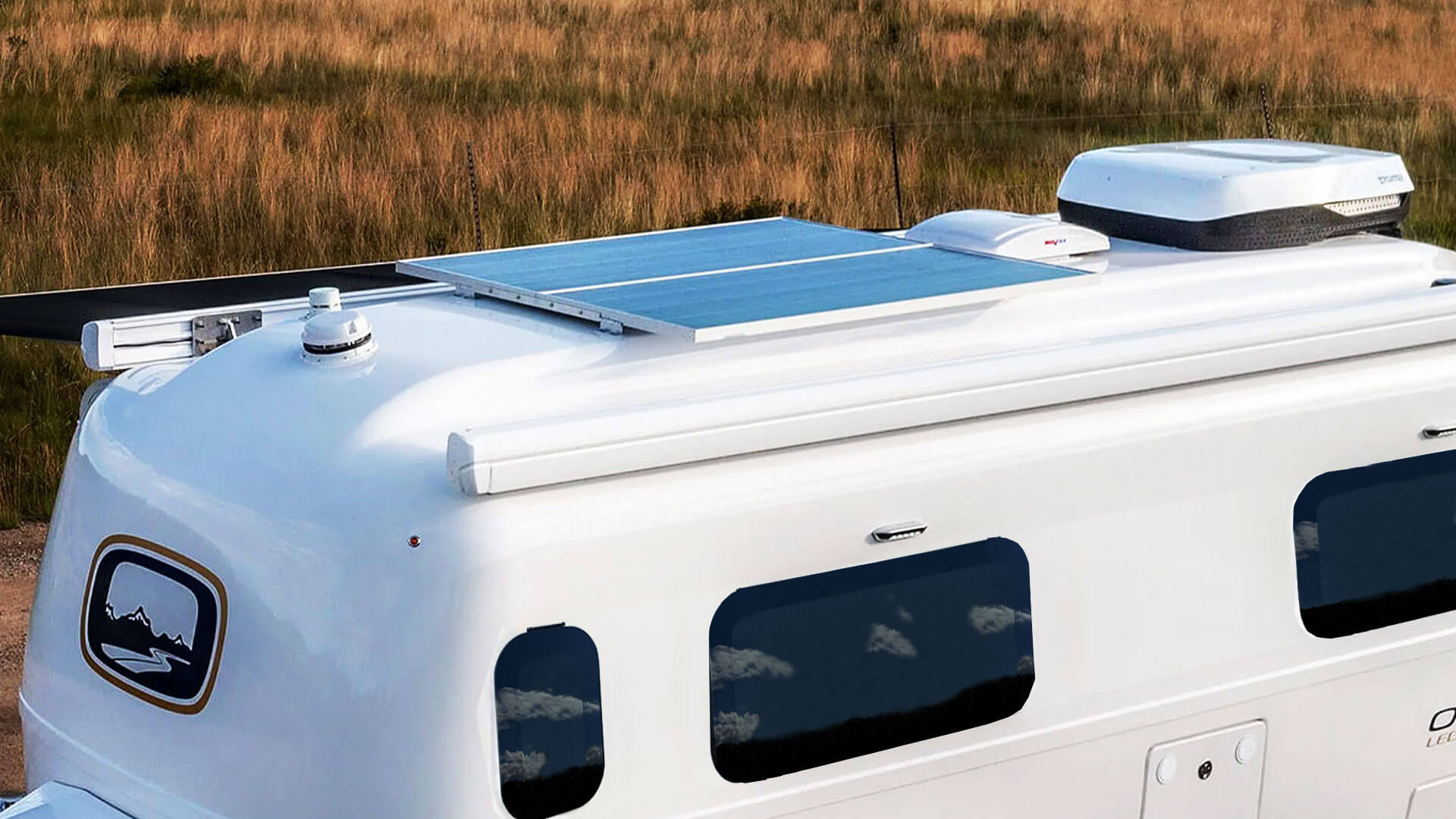
Oliver Travel Trailer roof showing rooftop solar panel, Truma air conditioner, and antenna, with a grass field behind

Power of Oliver

Oliver Power Configurations
Power is set by trim. Every Legacy Elite II runs lithium, from 100Ah on the Standard through 200Ah on the Premium and 400Ah on the Platinum to 640Ah on the Platinum Pro. Roof solar is 400W from the Premium up, and 1,360W on the Platinum Pro, with inverters at 2,000W and 3,000W. The Apex X23 runs a 48 volt EcoFlow system with an integrated 3,600W inverter. On the Legacy Elite, lithium and solar are available rather than standard. Match the package to how far off-hookups you plan to go.
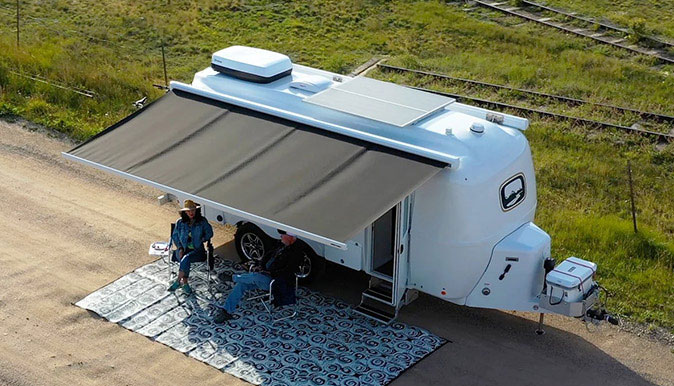
Aerial view of an Oliver Travel Trailer at a dispersed campsite with the awning extended, outdoor rug, and two people seated in camp chairs
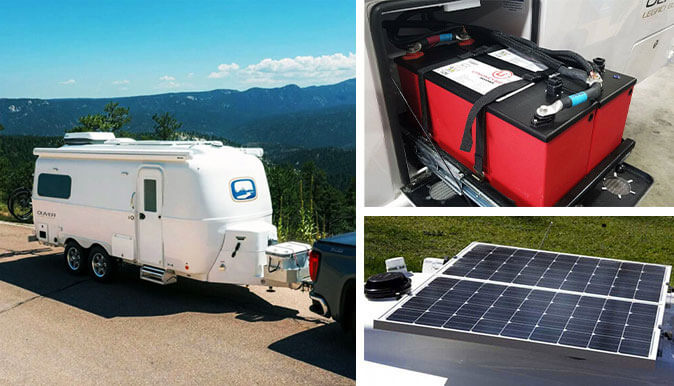
Oliver Travel Trailer parked at a mountain overlook, with detail shots of the lithium battery bank and a portable solar panel

Off-Grid Power Systems

Oliver off-grid power systems combine lithium batteries up to 640Ah, rooftop solar up to 1,360W, and inverters up to 3,000W, with the Apex X23 on an integrated 48 volt EcoFlow system. Configure the setup for weekend trips or longer stays away from hookups.

Power Options and Packages

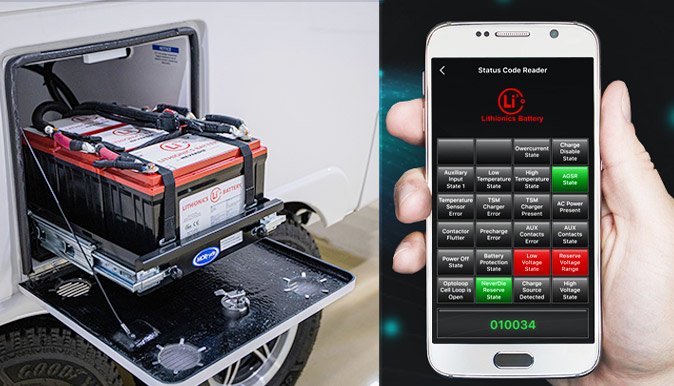
Lithionics Battery® lithium battery bank installed in an Oliver Travel Trailer, with NeverDie® Battery Management System cabling

Battery Power

Every Legacy Elite II and Apex X23 leaves the factory on lithium, up to 640Ah of Lithionics Battery® on the Platinum Pro, and lithium is available on the Legacy Elite.
Lithium-Ion Iron Phosphate battery system with NeverDie® Battery Management System technology
Lithium battery systems provide weight savings, higher energy density, and less maintenance cost
Protection: Reserve, Pack Over and Under Voltage, Cell Over and Under Voltage, Cell Over and Under Temperature, Contactor Over-Temperature, Contactor State, Short Circuit, Over Current, Pre-charge
The Neverdie® Power Reserve: On-battery + Remote Control Push-button Access to 10% Extra Energy
High Energy Density, Compact Footprint per Cubic Inch
In-the-field BMS Firmware Upgrades for Life via the Bluetooth® app
Long Warranty with Daily Tracking and a User-Friendly Interface
Bluetooth® APP Tracks State of Charge, State of Health, Battery Life and Diagnostics
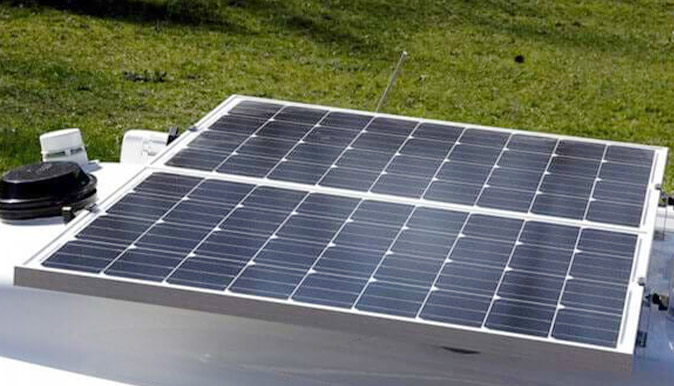
Roof-mounted Newpowa solar panels on an Oliver Travel Trailer

Roof-Mounted Solar Panels

Roof solar is standard on the Legacy Elite II from the Premium trim up, at 400 watts, and 1,360 watts on the Platinum Pro.
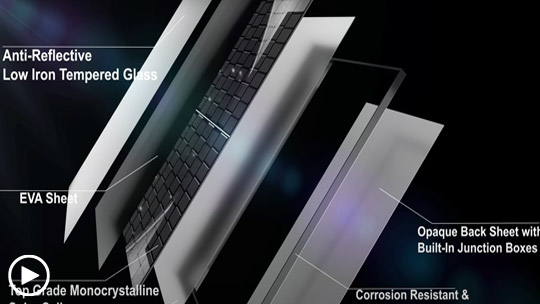
Multi-Busbar M6 mono half-cell uplifted with PERC technology to guarantee higher output power and up to 22% maximum module efficiency.
High-performance cells encapsulated in EVA (ethylene-vinyl-acetate).
Rugged design to withstand high winds up to 2,400Pa negative load, 1 inch diameter hailstones, and snow loads up to 5,400Pa.
Standardized cell efficiency testing to identify and mitigate against damaged, color-deviating, or chipped cells to ensure optimal PV output.
TFT back sheet dissipates heat, which improves panel performance and lifespan.
Rated for temperatures from below 0°F to 149°F, with heavy-duty encapsulation and diffusion barriers that provide long-term protection against PID damage.
Pre-installed bypass diodes inside junction box that minimize power drops caused by shading.
Newpowa Warranty: 10 years product warranty and 25 years power warranty.
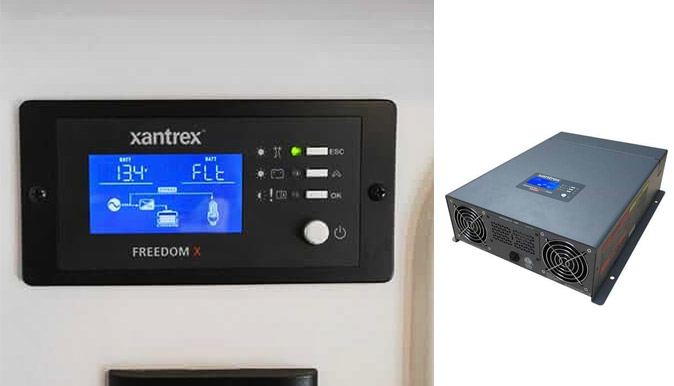
Xantrex Freedom XC Pro inverter and control panel installed inside an Oliver Travel Trailer

Xantrex Freedom XC Pro Inverter

The Legacy Elite II carries a Xantrex Freedom XC Pro inverter from the Premium trim up, rated at 2,000 watts and 3,000 watts of DC-to-AC output depending on trim. The Apex X23 uses an integrated 48 volt EcoFlow inverter instead.
True sine wave 120 Vac inverter/charger with built-in transfer switch.
The Freedom XC inverter/charger is compact and weighs less than comparable RV inverters.
Upgrade firmware or apply OEM-configured settings through the built-in USB port.
Monitor and configure your Freedom X inverter using the optional Bluetooth remote panel.
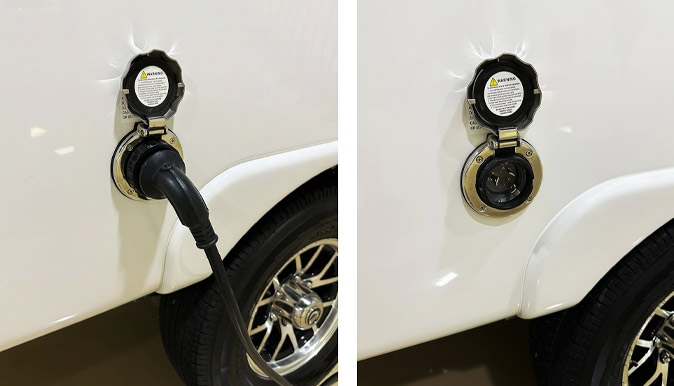
Oliver Travel Trailer 30-amp shore power inlet, shown with the cord connected and with the protective cover closed

Shore Power Connection

Oliver's outdoor package includes shore power connectivity, so you can tap into 30-amp service at campgrounds or RV parks. That lets you run high-demand appliances like air conditioners and heaters without draining your house batteries.
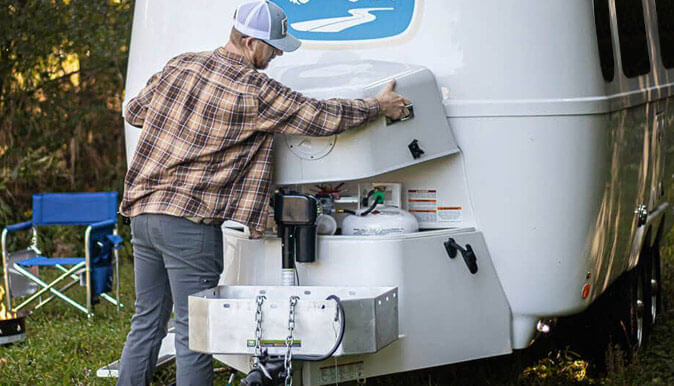
Man accessing the front propane compartment of an Oliver Travel Trailer at dusk, with propane tanks visible inside

Propane-Powered Systems

Oliver trailers come standard with propane for heating, hot water, and cooking, which works off-grid without drawing on the battery bank. The propane system and electrical system are integrated, so you can run hot meals, hot showers, and furnace heat even far from hookups. Upgrade to 30-pound tanks for longer trips between refills.

Lithium Battery, Solar, and Inverter Power Videos

Video thumbnail: Lithionics Battery® BMS Technology, showing the Li³+ battery logo

Lithionics Battery® BMS Technology

Video thumbnail: Newpowa solar panel construction detail, showing anti-reflective low-iron tempered glass and monocrystalline cells

Newpowa Solar Power

Video thumbnail: Xantrex Freedom XC PRO Inverter, from the Oliver Educational Shorts series

Freedom XC PRO Inverter

Lithium and solar, answered

What lithium batteries and roof solar actually do on a travel trailer, how they compare with lead acid, and what to check before you camp off grid.

What are lithium batteries?

Lithium batteries are rechargeable batteries that use lithium ions as the primary component of their electrochemistry.

Why should I choose lithium batteries for my RV?

Lithium batteries have many advantages over traditional batteries, including longer life spans, faster charging, lighter weight, improved efficiency, better performance, and deeper discharge capabilities.

What is the lifespan difference between lithium and lead-acid batteries?

Lithium batteries can last up to 15 years, while lead-acid batteries typically last up to 5 years. This translates to fewer replacements and lower long-term costs with lithium batteries.

Can lithium batteries be charged in freezing temperatures?

Most lithium batteries should not be charged below about 32°F (0°C), since charging cold cells causes lithium plating and permanent damage. The Lithionics batteries Oliver fits use a NeverDie Battery Management System that blocks charging when the cells are too cold, so the pack is protected rather than damaged. If you plan to camp below freezing, ask what cold-weather charging protection is included on the build you are quoted.

Can lithium batteries be discharged more deeply than lead-acid batteries?

Yes, lithium batteries can be discharged up to 80-90% of their capacity without damaging them, while lead-acid batteries should typically only be discharged to about 50% to avoid shortening their lifespan.

How quickly do lithium batteries charge compared to lead-acid batteries?

Lithium batteries charge significantly faster than lead-acid batteries. Lithium batteries can be fully charged in a few hours, while lead-acid batteries can take much longer, sometimes overnight or more, depending on their size and charging method.

What weight benefits do lithium batteries offer for RVs?

Lithium batteries with the same capacity typically weigh about 30-40% less than lead-acid batteries. This lighter weight can improve an RV's handling and fuel efficiency, plus it allows for more cargo weight.

Are lithium batteries more efficient when it comes to energy use?

Lithium batteries exhibit higher efficiency rates, with up to 95% of the stored energy being usable compared to around 70-80% for lead-acid options.

What safety features do lithium batteries have?

Modern lithium batteries have built-in Battery Management Systems (BMS) that protect against overcharging, overheating, and excessive discharging.

Can I install lithium batteries in my existing RV setup without modifications?

Lithium batteries can often be installed in existing RV setups, but some modifications may be necessary, especially regarding the charging system. Be sure to speak with a professional to ensure compatibility and optimal performance.

What is the cost difference between lithium and lead-acid batteries?

While lithium batteries typically have a higher upfront cost, their longer lifespan and lower maintenance costs can make them a more economical choice over time. The total cost of ownership, including replacement intervals and performance, should be considered.

How do I maintain lithium batteries in my RV?

Maintenance is minimal for lithium batteries compared to lead-acid batteries. Regularly check connections and ensure the BMS is functioning correctly. Avoid deep discharges frequently and keep them charged within the optimal range.

Can I use lithium batteries with solar power systems?

Yes, Lithium Batteries can be used with RV solar power systems. They charge quickly and provide reliable power storage for nighttime use.

What is solar power for an RV?

Solar power for an RV involves using solar panels to capture sunlight and convert it into electricity, which can be used to power various appliances and devices while traveling or camping.

What are the benefits of using solar power in an RV?

Solar power lets RVers create electricity, which means they depend less on campgrounds and generators.
Solar energy is a clean, renewable resource compared to fossil fuels.
Solar systems operate silently, unlike gas generators, allowing for a more peaceful camping experience.
Solar panels require minimal maintenance, typically just occasional cleaning.

How much power can solar panels generate for my RV?

The amount of power generated depends on the size and number of solar panels, the efficiency of the system, and factors such as sunlight exposure. A typical setup might generate anywhere from 100 to 600 watts.

Can solar power fully meet my RV's energy needs?

Yes, it can, especially for essential power needs like lights, fans, and charging small devices. However, you may need a larger system or supplemental power sources to run high-energy appliances (like an air conditioner or microwave).

What types of appliances can I power with solar energy in my RV?

You can power a variety of appliances, including:
LED lights
Refrigerators (especially 12V DC models)
Water pumps
Fans and ventilation systems
Electronics (laptops, phones, tablets)
Small kitchen appliances (coffee makers, microwaves, etc., with sufficient capacity)

Do I need a battery system with solar panels?

Using a battery system to store energy from your solar panels is a good idea. This way, you can use electricity when the sun isn't shining, like at night or on cloudy days.

Is solar power suitable for all types of RVs?

Yes, solar power can be used in any type of RV, including motorhomes, travel trailers, and campervans.

How do I maintain a solar power system in my RV?

Maintenance is minimal, but you should regularly clean the solar panels to ensure optimal sunlight absorption and check the wiring and connections for wear.

What should I do during winter or less sunny seasons?

You can still use solar panels in winter, though their efficiency may decrease. Ensure your system has adequate battery storage, and consider using a generator as a backup if needed.