Oliver Apex all-season travel trailer parked at sunrise in a red rock desert canyon, demonstrating extreme heat year-round camping capability
Oliver Legacy Elite II four season travel trailer parked in deep snow under the aurora borealis with a couple stargazing through a telescope at a subarctic clearing
Extreme Heat Extreme Cold
Built in Hohenwald, Tennessee

Four Season Travel Trailers Engineered For Year-Round Camping

Double-hull fiberglass, enclosed holding tanks, dual-pane windows, ducted furnace standard. The Oliver lineup covers every season across all 50 states and Canada.

Double Hull Fiberglass Enclosed Tanks Dual-Pane Windows Ducted Furnace
Why It Holds Temperature

Insulation for All-Season Travel Trailers

Oliver's four-season travel trailer came out of years of camping with other brands. That experience pushed us to build something better: higher quality, more efficient, easier to maintain. See how that shows up in every Oliver we build.

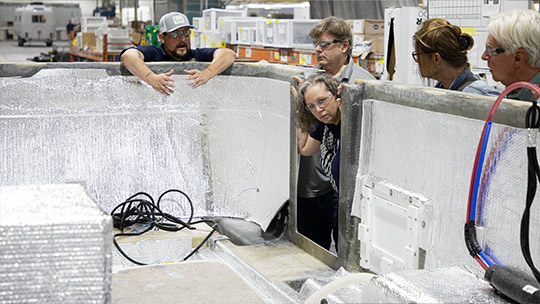
Customers taking the Oliver factory tour and learning about the fiberglass double hull camper and how the insulation keeps you comfy in all four seasons
On the factory floor. Radiant barrier going into a hull before the second shell is bonded on.

Year-Round Comfort and Efficiency

Oliver's double-hull fiberglass shell and radiant-barrier insulation hold interior temperatures stable from sub-zero nights to triple-digit summer days, while cutting the energy load on the furnace and AC.

See More

Wall Cross-Section

◄ Outside Inside ►
01

Outer fiberglass hull

02

Air gap

03

Radiant barrier

04

Inner fiberglass hull

Hand-laid gelcoat fiberglass, formed as one piece instead of panels fastened to a frame.

Dead air between the hulls slows heat moving in either direction.

Double-sided, so it reflects heat back out in summer and back in during winter.

Bonded to the outer shell, so the two move as a single structure.

Heat travels three ways: conduction, convection, and radiation. This wall interrupts all three, in both directions.

How to Judge One

What separates a true four season RV from a winter package

Plenty of travel trailers advertise cold-weather capability. The difference usually comes down to whether the trailer was engineered for it or fitted with parts to compensate. Here is what to check before you buy, on any brand.

What to check Oliver double hull Typical framed trailer with a winter package
Wall construction Two hand-laid fiberglass hulls bonded into one shell Aluminum or wood frame with panels laminated to it
Heat transfer addressed Conductive, convective, and radiant, in the same wall Usually conductive only, through added foam or batting
Structure Fiberglass shell on an aircraft-grade aluminum frame ×Wood framing in floors, walls, and roof decking
Plumbing and holding tanks Enclosed, standard Often exposed underneath, heat pads sold as an option
Cold-weather capability Built in, no package to select ×An upgrade added to a three-season trailer
Heating and airflow Ducted propane furnace, dual 20-lb tanks with auto switch-over, MaxxAir Fan Deluxe Varies by trim; single tank and basic vent are common
Summer performance Same shell works in reverse; roof-mounted A/C, optional Houghton A/C for lower noise Winter packages rarely improve hot-weather performance
Where it is built Hohenwald, Tennessee, and you can come for a factory tour. Factory access is uncommon

The right-hand column describes construction methods that are standard across much of the towable RV industry. Specifications vary by manufacturer and model year, so confirm details on any trailer you are considering.

Two Ways to Get One

Four season campers for sale, built to order

Both models carry the same double-hull shell and the same standard climate equipment. The difference is size, power, and how far off-grid you plan to get. Every Oliver is built to order in Hohenwald and sold factory outlet direct.

2027 Oliver Legacy Elite II twin-axle four season fiberglass travel trailer Most Popular

2027 Oliver Legacy Elite II

Twin Axle · Sleeps 3

  • Length24 ft
  • GVWR7,000 lb
  • Dry weight4,900 lb
  • Floor plans2
  • ClimateDucted furnace + AC standard
Starting at $85,000 USD, factory outlet direct
2027 Oliver Apex X23 all-season off-grid fiberglass travel trailer Off-Grid Build

2027 Oliver Apex X23

Quad Double-Hull · Sleeps 3

  • Length24 ft
  • GVWR7,000 lb
  • Power48V lithium, solar standard
  • Inverter3,600 W pure sine
  • ClimateDucted furnace + AC standard
Starting at $107,000 USD, factor outlet direct

Looking for one ready now? Build slots and finished units change week to week, and a few are usually available without the full build wait.

See Current Inventory
Engineering

Built Different From a Typical RV

01

The Shell

Insulation Technology

Most RV manufacturers never publish insulation data. Oliver's wall system layers three types of protection: conductive fiberglass shells, a convective air gap, and a double-sided radiant barrier. Aluminum-framed "arctic package" trailers can't match that thermal stack.

02

Winter and Summer

Year-Round Comfort

Oliver's enclosed plumbing, ducted propane furnace, and A/C handle sub-zero winters and scorching summers straight from the factory. No add-on packages required. Blizzards, heatwaves, and everything between: your Ollie is ready.

03 Exterior of Oliver Elite II travel trailer featuring two 20-lb propane tanks, roof-mounted Dometic air conditioner, and MaxxAir fan for four season climate control

Standard Equipment

Climate Control Technology

Every Oliver ships with dual 20-lb propane tanks with auto switch-over, a ducted propane furnace, roof-mounted A/C, and a MaxxAir Fan Deluxe, all standard. Upgrade to the Houghton A/C for quieter operation at lower decibel levels. Heat, airflow, and cooling are covered in any season.

04

Owners

Why Owners Stay With Oliver

Ask Oliver owners why they chose their trailer and two answers come up every time: four-season freedom and a bug-free interior. The double-hull fiberglass construction keeps you camping comfortably whether it's July in the desert or January in the Rockies.

Watch

Four-Season Camping Videos

A full walkthrough, how the climate control holds up in real heat, and an owner on why he chose one.

Full Walkthrough

2026 Oliver Legacy Elite II: Four-Season Walkthrough

Summer Heat

How Oliver's Climate Control Handles Summer Heat

Owner Testimonial

Chris on Why He Chose an Oliver Four-Season Travel Trailer

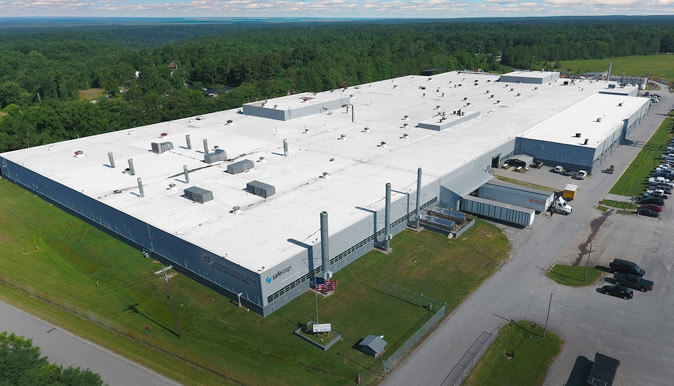
Oliver travel trailer factory floor in Hohenwald, Tennessee, where every four season trailer is hand-built
Hohenwald, Tennessee

Come watch an Oliver get built

Most travel trailers are built behind closed doors. Oliver invites you in. Walk the floor where two fiberglass hulls are laid up by hand and bonded into one shell, see the plumbing get enclosed before the second hull goes on, and meet the people doing it. It is the fastest way to understand why an Oliver lasts.

Hohenwald, TN Where every Oliver is built
Factory Outlet Direct No dealer markup
Built to Order Your build, your options

Frequently Asked Questions

What is a four-season travel trailer?

A four-season travel trailer is built to stay comfortable and usable whether you are camping through a January blizzard or a triple-digit August afternoon. The difference from a standard RV is thermal performance: more insulation, protected plumbing, and climate systems sized for temperature extremes. Most four-season trailers also use dual pane windows and ducted heating.

What features make an RV all-weather capable?

The outer shell matters most. Oliver uses a double-hull fiberglass design: two hand-laid layers bonded into one shell with insulation and an air gap between them, which works the way a double-pane window does and slows heat transfer in both directions. Add dual pane windows, enclosed plumbing and holding tanks, and a ducted propane furnace, and the trailer holds interior temperature with less work from the heating and cooling systems.

What makes an Oliver suited to all-season camping?

The shell is two hand-laid fiberglass hulls bonded into one piece, with insulation and an air gap between them, sitting on an aircraft-grade aluminum frame with a galvanized steel sub-assembly. The holding tanks, plumbing and drain lines are enclosed inside the shell instead of hanging underneath it. Dual pane windows, a ducted propane furnace and roof air conditioning are standard on every 2027 build, so the four-season equipment comes with the trailer instead of arriving as a package you add later.

Where do owners take Oliver trailers in extreme weather?

Owners post trip reports from Alaska, the upper Midwest and the desert Southwest in the Oliver owner forums, covering sub-zero nights and summer heat. Those reports are public, and they are the most direct account available of how the trailers behave in the field. The four-season equipment described above is standard on every build, so it is the same equipment in every trailer those owners are towing.

How is Oliver’s cold-weather protection different?

Cold-weather capability is often sold as an optional package: heated tank pads, added insulation, aftermarket weatherproofing. Oliver builds the protection into the structure. The insulation sits between the two bonded fiberglass hulls, and the holding tanks, plumbing and drain lines are enclosed inside the shell instead of hanging underneath and depending on a heating element to stay above freezing.

What is the best travel trailer for winter camping?

The right answer depends on what winter camping means for you. For sustained below-zero temperatures, remote sites, or shoulder-season camping without hookups, you want enclosed plumbing, a ducted propane furnace, and a shell that holds heat. In the 2027 Oliver lineup, the Legacy Elite II and the Apex X23 carry that equipment as standard on every build. The Legacy Elite is fully booked for 2026 production.

Tips for extended off-grid camping in cold weather?

A few things make a difference on long cold-weather stays. Pair your Oliver with the optional lithium battery bank and solar, since lithium handles low temperatures better than AGM. Run the propane furnace at a lower, steady setting instead of cycling it on and off, which wastes fuel. If you skirt the trailer in sustained freezing temperatures, keep the furnace intake and exhaust vents completely clear and check them again after any snowfall. Watch your propane level closely, because consumption climbs sharply in the cold.