Leaderboard



Popular Content
Showing content with the highest reputation on 07/27/2018 in Posts
-
I think that 18 inch comment is hyperbole, based on frustration about the booster signal not extending to the back of the trailer. WeBoost, manufacturer of the cell phone booster, says it has a range of 30 feet, with disclaimers about obstacles limiting signal range. My experience is that the booster works well when seated at the dinette, and that appears to be the experience of most posters, like John's comment above. Will it work outside? I don't know. An experiment can be done: Set a phone up in Field Test mode (link in Sherry's post) and test the signal at various distances from the dinette, including outside the trailer. Unfortunately Field Test mode no longer works on my current iPhone, so I cannot do this test. One suggestion for people with the WiFi Booster. Set your phone to use calling over WiFi. I think most phones and providers can do this. I do this at work where the cell signal is very bad, but the WiFi is dynamite. The WiFi Booster has a range of 1000 feet (with disclaimers about obstacles), so you can be a distance away from the trailer and still get a WiFi signal and hence calling over WiFi.2 points
-
As some additional food for thought, I just had my LE2 weighed. Oliver shows a weight on their site of approximately 4,600 lbs. Mine, with a full fresh water tank, empty grey and black tanks, weighs 5,600 lbs. We do not have an excessive amount of gear, just a well stocked pantry, food in the fridge, some bottled water, normal amount of clothes, cooking utensils, blankets, etc. That weight did not include the slinky, fresh water hose, tools or shore tie power cord. We have the 30 lb propane tanks. One full and one about 1/2. No Anderson hitch. I was surprised at the weight. I'm also carrying about 1,000 lbs of gear and passengers in the truck. That is more than it has to be, but not really excessive. Four chairs, floor mats, small folding aluminum table, wheel chocks, leveling jack stands and blocks, extra fuel, jumper cables, inverter and small compressor, bicycles, propane fire pit with 30' of hose, case of drinking water, bucket and bag of tools, small aluminum floor jack and various spare parts and equipment. This trip I had no outdoor stove, outdoor cooking gear or firewood which could easily add another 100 lbs. and I only had about a half tank of fuel. So by the time you figure a 5600 lb trailer, that would be more with water in the holding tanks, 1,000 to 1,300 lbs of gear, passengers, etc, you're looking at 6,600 to 6,900 lbs. I need a truck that can easily handle a 5,600 lb trailer and a GCVWR that includes the truck and 6,900 lbs. My truck is a Ram 3500 diesel. I weighed it when I weighed the trailer. It has a weight of 9,000 lbs all loaded and ready to go, including passengers. It's rated for 11,500 GVWR. The truck and trailer combined is rated for 17,380 lbs total and mine came out at 14,600. This seems like a lot of weight, but the margin of safety is comforting and noticeable as the truck feels planted all the time. It also helps me appreciate the simplicity of the 13' Cassita that folks can tow with a small vehicle. I didn't choose the Ram to match the Oliver, I already had it for other purposes, but it turns out to be a very good match except for it's rough ride. The rough ride shows up mainly on rocky roads, but highways are fine. Washboard roads are a problem for the Oliver anyway and just as rough on the trailer as the Ram. 3/4 and 1 ton Rams have very capable brakes and diesels have engine brakes too. So even though the truck seems like overkill, it has no trouble, ever, keeping the speed under control or stopping. It also makes towing a lot less stressful to be able to easily pass slower vehicles on the steepest of highway grades.2 points
-
If you have both the wifi and cellular boosters, here is a nice trick when there is no external wifi available. Turn on the cellular booster, and then boot up your hotspot or jetpack, placing it on the dinette for maximal signal boost. Then have your wifi booster log into your hotspot. Now have your devices connect to the wifi booster. They should now have good signal throughout the trailer as well as outside. David2 points
-
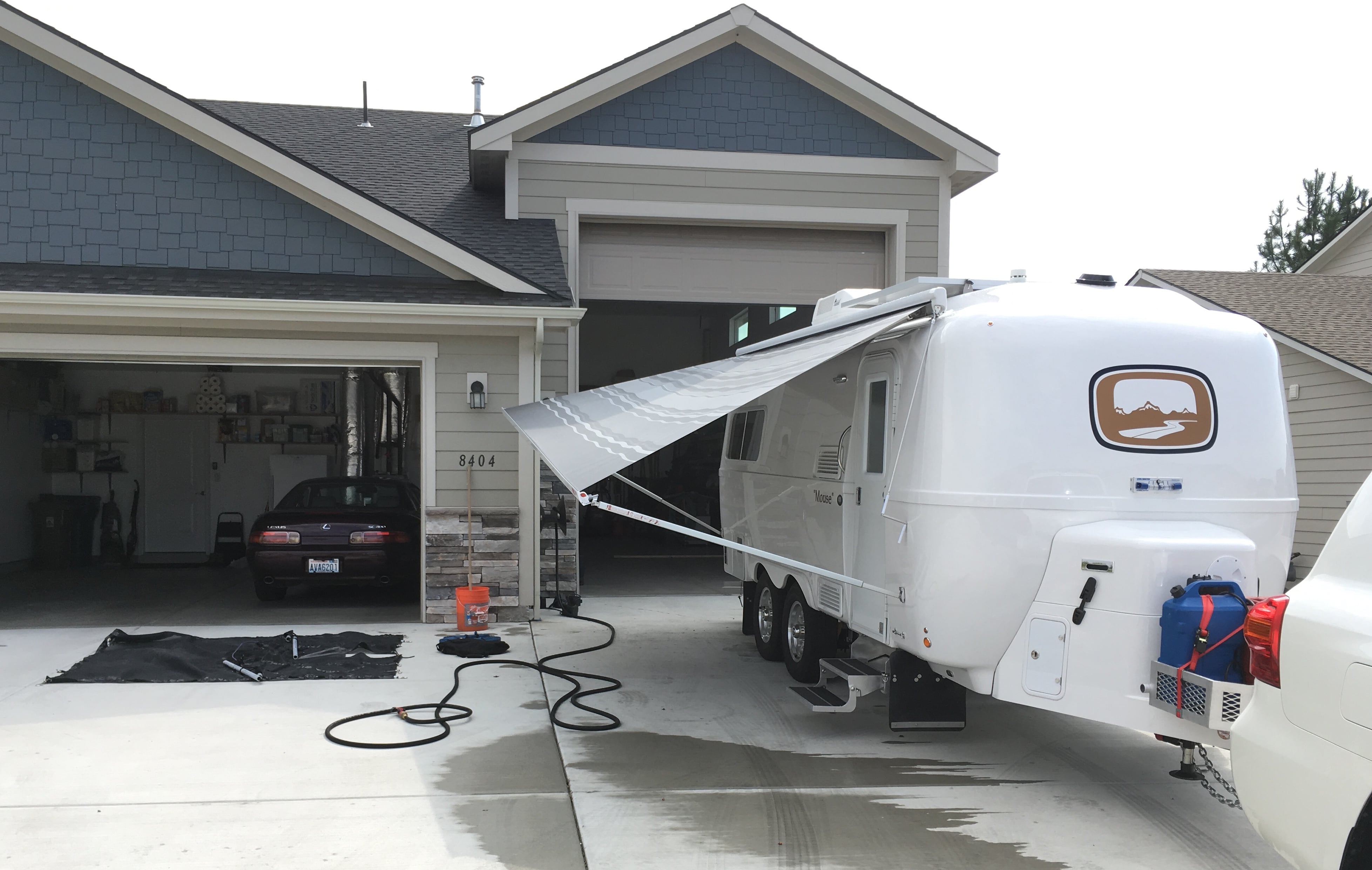
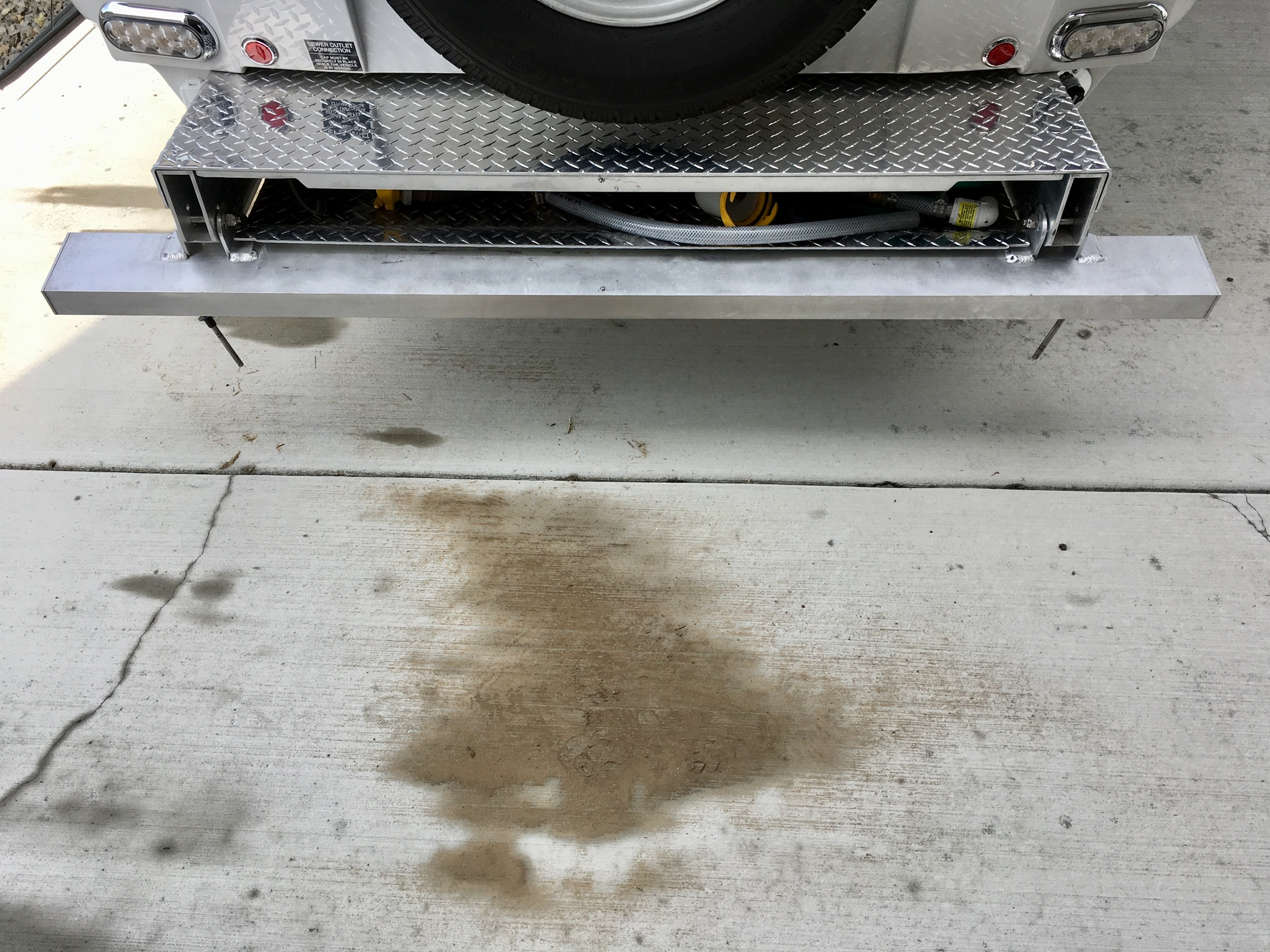
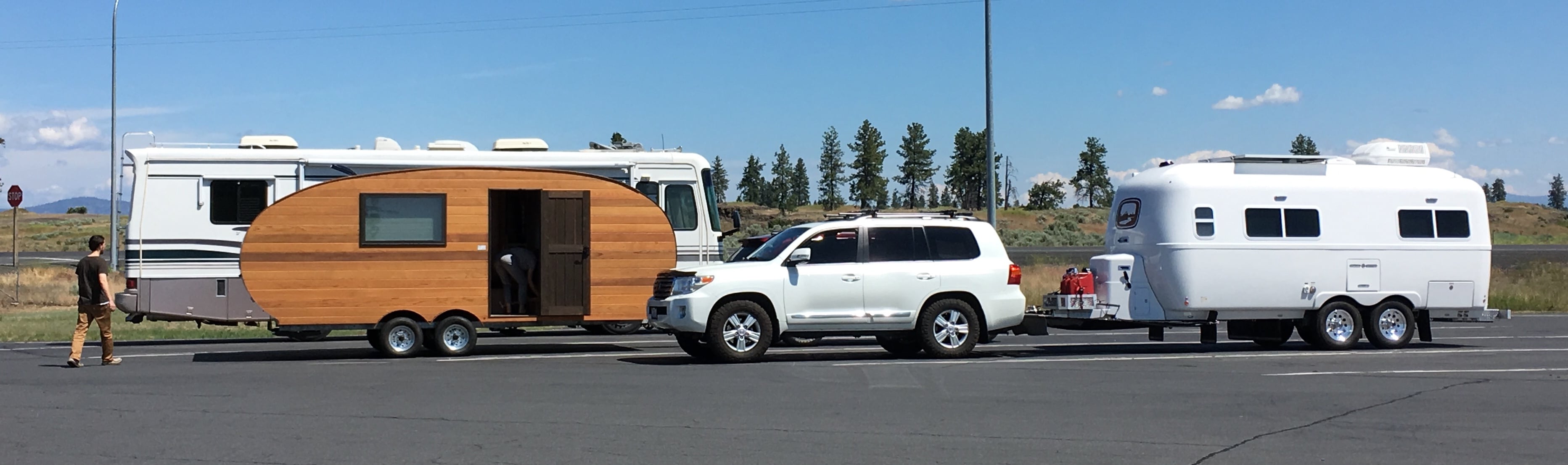
I hope we can continue to post feel-good pictures of our Olivers here. No special subjects, just pics you want to share with the forum. You can post links to your videos too. I have started a collection of time lapse videos, some of which include “Mouse” in the foreground. My YouTube videos: .... https://m.youtube.com/my_videos?disable_polymer=true&csn=4GZbW-OHFMr2-gOLmJrwAw I washed the Ollie today after towing 3600 miles, the RejeX did great and the bugs came off with minimal labor. I used a gas leaf blower for the frst time, to blow off the water. It did great. I followed up with an easy wipe down with cotton rags and the trailer is shiny again.... I emptied the rear bumper bay and this is what the pressure washer drove out: I wish there were an effective way to seal that space off from the dust. Here is a Homegrown wood trailer (Kirkland Washington builder) we spotted at a rest stop. Post your random Ollie pics please. John Davies Spokane WA
 1 point
 -
The trailer should be level with all the gear you will be taking already loaded in the TV and the trailer all geared up with water, propane and supplies, ready to go. It does not have to be exactly level and an inch high or low will not matter. But if it's low, there is more of a chance you'll scrape the jack or the bottom of the hitch. Coming home, the trailer might be abit lighter and ride a bit high in the front. No problem. So hook it up and see where it comes out, with all your gear and supplies aboard. If it's 3" low, get a stinger that raises it 3" and you are good to go. If it's about an inch low, get a tall ball. I have a 3" drop stinger on my TV and a sandard ball. The trailer rides slightly low in front when fully laden and ready to go. This corrects slightly as we come home with less water, firewood and propane, etc. It also means that if we stop for at a rest stop, I can simply lift the front a bit with the tongue jack, without disconnecting, to level it out. I just weighed my LE2 and it came out at 5,600 lbs. So, in theory, a 560 lb tongue weight. Mine measured out at 570 and was probably 30 lbs lighter than when we left home. Maybe I should move the cases of water and other drinks out of the closet and into the truck. Of course, lightening the tongue and adding weight to the truck won't change the ball height much. It's hard to lighten the tongue on an Oliver unless you add weight at the rear bumper, or extend the tongue.1 point
-
A thing about the WiFi booster that you should know is that it does not increase the available band width - only the campground or supplier of the WiFi signal can do that. So, if you want to download something big - a bunch of pictures or a movie - you will have a stronger connection to the source but it will still take forever to do your download. In popular large campgrounds from about 4 pm to 11 pm it seems that people want to download movies and/or there are simply too many people trying to use the available band width at the same time. Bill1 point
-
Recent Achievements
-