
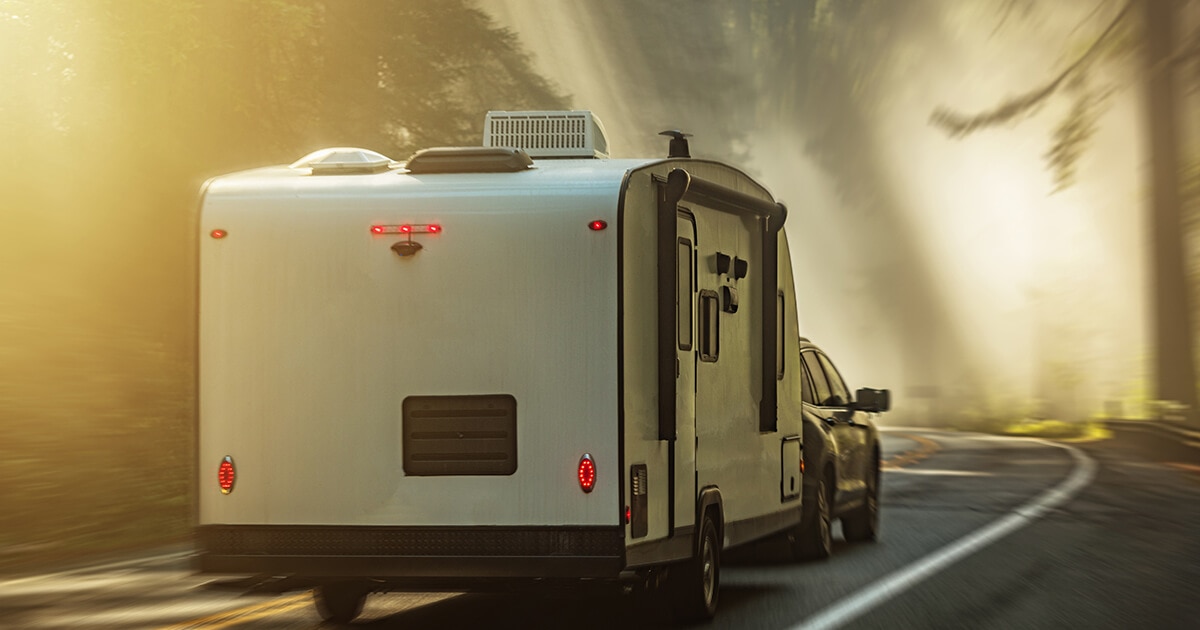
A small pull-behind camper is ideal for outdoor adventures and off-road exploration. These compact trailers offer comfort and convenience for your trips. Here are some insights on off-road campers, key considerations, and tips for choosing the right one for your adventures.
Size Really Does Matter
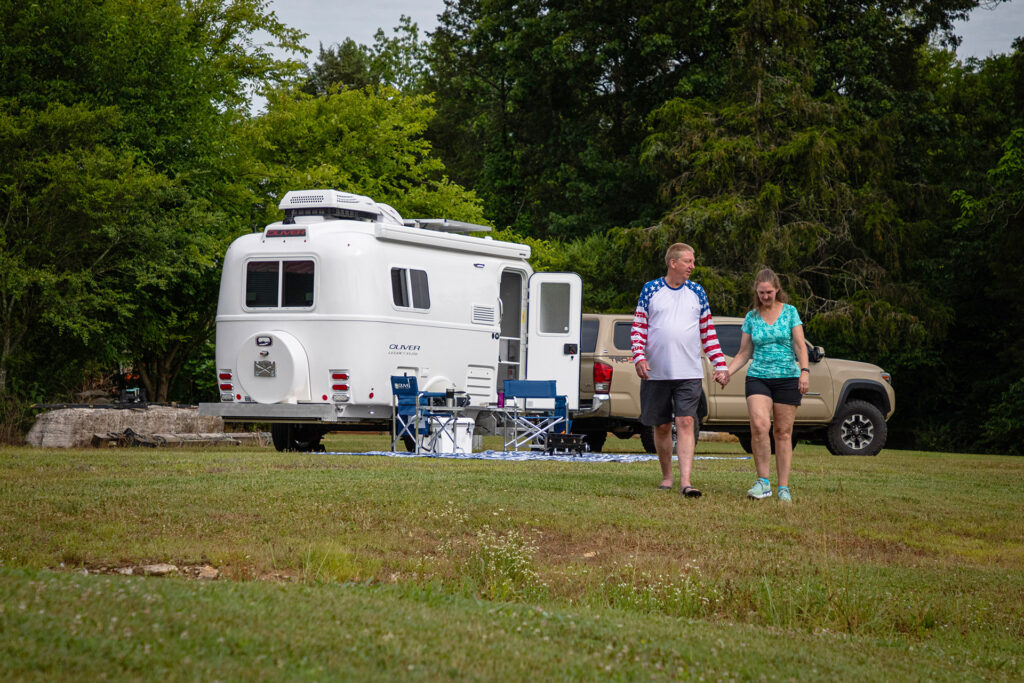
“Off-road camper” means different things to different buyers. If you’re planning to crawl rocks in Moab, you’re shopping for a Black Series or Patriot Camper at $80k+ with portal axles and an articulating hitch. If you’re planning to camp at national forest sites, fish-camp at the end of a gravel road, or run the back loops at state parks where the 35-ft fifth wheels can’t fit, you’re shopping for something different: a small, well-built pull-behind that can handle dirt access and rough campground roads without falling apart.
This guide is for the second buyer.
What “off-road” actually means for a pull-behind
Realistic off-road use for a pull-behind camper includes:
- Forest service roads (graded gravel, washboard, occasional ruts)
- National park backcountry sites with weight or length restrictions
- State park loops with tight turns and overhanging trees
- Boondocking on BLM land down dirt access roads
- Beach camping where access roads have soft sand and weight limits
Not on the realistic list: rock crawling, water crossings deeper than a few inches, technical 4×4 trails, or anything you’d actually need a Jeep for. A pull-behind is still a trailer, and even the rugged off-road brands have ground clearance and approach-angle limits.
Size and weight matter more than badging
The single biggest factor in whether a pull-behind handles backcountry roads is its size. A 35-foot fifth wheel can’t physically fit down most forest service roads. A 30-foot bumper-pull will struggle on tight switchbacks. A 23-foot trailer fits most places. An 18-foot trailer fits almost everywhere.
Weight matters too. A 9,000-pound trailer pushed by a wind gust on a narrow grade feels very different from a 3,700-pound trailer. The lighter trailer also tows with a half-ton truck instead of needing a heavy-duty, which expands where you can actually go.
The Oliver Legacy Elite is 18’5″ long, 6’6″ wide, and 3,700 pounds dry. It tows with an F-150 or a capable SUV, fits down most forest roads, and parks in sites that exclude bigger rigs.
Construction is what survives the road
Rough roads punish weak construction. Wood-framed stick-and-tin trailers (the majority of mass-market RVs) flex on washboard, develop water leaks at seams, and start showing wall delamination within 5 to 10 years of regular off-pavement use.
Fiberglass shell construction holds up much better. Two molded fiberglass layers with insulation between them and no wood framing means nothing inside the walls can rot, flex, or delaminate. Oliver’s double-hull build is the reason 2008 hulls are still on the road and still water-tight. For a pull-behind that’s going to see actual backcountry use, the construction matters more than the floor plan.
Suspension, brakes, and tires
What to check on any pull-behind you’re considering for off-road use:
- Underbelly protection. An enclosed, insulated underbelly protects tanks, plumbing, and wiring from rocks and debris.
- Axle and suspension type. Leaf springs with dual shocks (like the Oliver Legacy Elite’s Dexter setup) absorb washboard better than basic torsion axles. Independent suspension is best for rough roads but adds cost.
- Brake type. Electric brakes with self-adjusters (Oliver uses “Nev-R-Adjust” 12″ brakes) hold up under repeated heat cycles from steep descents.
- Tire spec. Light truck (LT) tires handle dirt roads better than standard ST trailer tires. Check the load rating against your loaded weight.
- Ground clearance. Most pull-behinds sit low. Anything under 12″ of clearance struggles on rutted roads.
Four-season capability for backcountry use
Backcountry sites tend to open later and close earlier than developed campgrounds. If you want to camp in the shoulder seasons or in winter, the trailer needs to handle it:
- Insulation between the walls, not just a fabric-wrapped frame
- Enclosed, heated holding tanks and plumbing
- Double-pane thermal windows
- A furnace sized to the interior volume (not a wall-mount space heater)
- A double-hull shell so the AC and furnace can actually keep up
The Oliver Legacy Elite and Legacy Elite II both check those boxes. That’s why owners camp them in Colorado mountains in October and Maine coast in March without freezing pipes.
Where Oliver fits
Oliver isn’t a Black Series or a Patriot Camper. It’s not designed for rock crawling or for taking down trails that need a 4Runner. What it IS designed for: small enough to fit anywhere a half-ton can go, built tough enough to handle the rough roads that get you to the good campsites, and insulated well enough to camp in for four seasons.
Two models:
- Legacy Elite (18’5″) — single axle, 3,700 lbs dry, sleeps 3, tows with a half-ton. The most capable Oliver for the tightest sites.
- Legacy Elite II (23’6″) — tandem axle, 4,900 lbs dry, sleeps 3, more interior space. Still fits most forest roads, just not the tightest backcountry loops.
What to ask before buying
- What’s the realistic ground clearance, loaded?
- Is the underbelly enclosed and insulated?
- What’s the tire spec and load rating?
- What’s the brake type and warranty?
- How are the tanks protected from rocks?
- What’s the build construction, and how does it handle washboard roads over time?
- What does the warranty cover, and for how long?
Talk to Oliver
If you want to talk through whether an Oliver fits the kind of backcountry use you have in mind, the team in Hohenwald can answer specific questions about clearance, capability, and what owners report after years of off-pavement use. Call 1-888-526-3978 (Mon to Fri, 8AM to 5PM CST) or send a message.
A: Yes, with the right trailer. Small lightweight trailers with leaf-spring suspension, dual shocks, light truck tires, and an enclosed underbelly handle graded gravel and forest service roads without issue. Larger trailers with low clearance or basic suspension don’t.
A: Small fiberglass travel trailers like the 18’5″ Oliver Legacy Elite include a full wet bath, kitchen, and AC in a trailer that tows with a half-ton truck. See the Legacy Elite specs.
A: Oliver trailers handle forest service roads, dirt access, and backcountry campground loops better than full-size RVs, but they aren’t designed for rock crawling or technical 4×4 trails. For dedicated rock-crawling capability, look at Black Series or Patriot Campers. For backcountry sites at the end of dirt roads, Oliver fits.
A: It depends on what “off-road” means. For graded forest roads and backcountry campgrounds, small fiberglass trailers like the Oliver Legacy Elite are the right answer.
A: 12 inches or more for confident dirt road and forest service road use. Less than that and you’ll bottom out on ruts and washboard. Always check the loaded ground clearance, not the empty spec, because most trailers sit lower under load.