All Activity
- Past hour
-
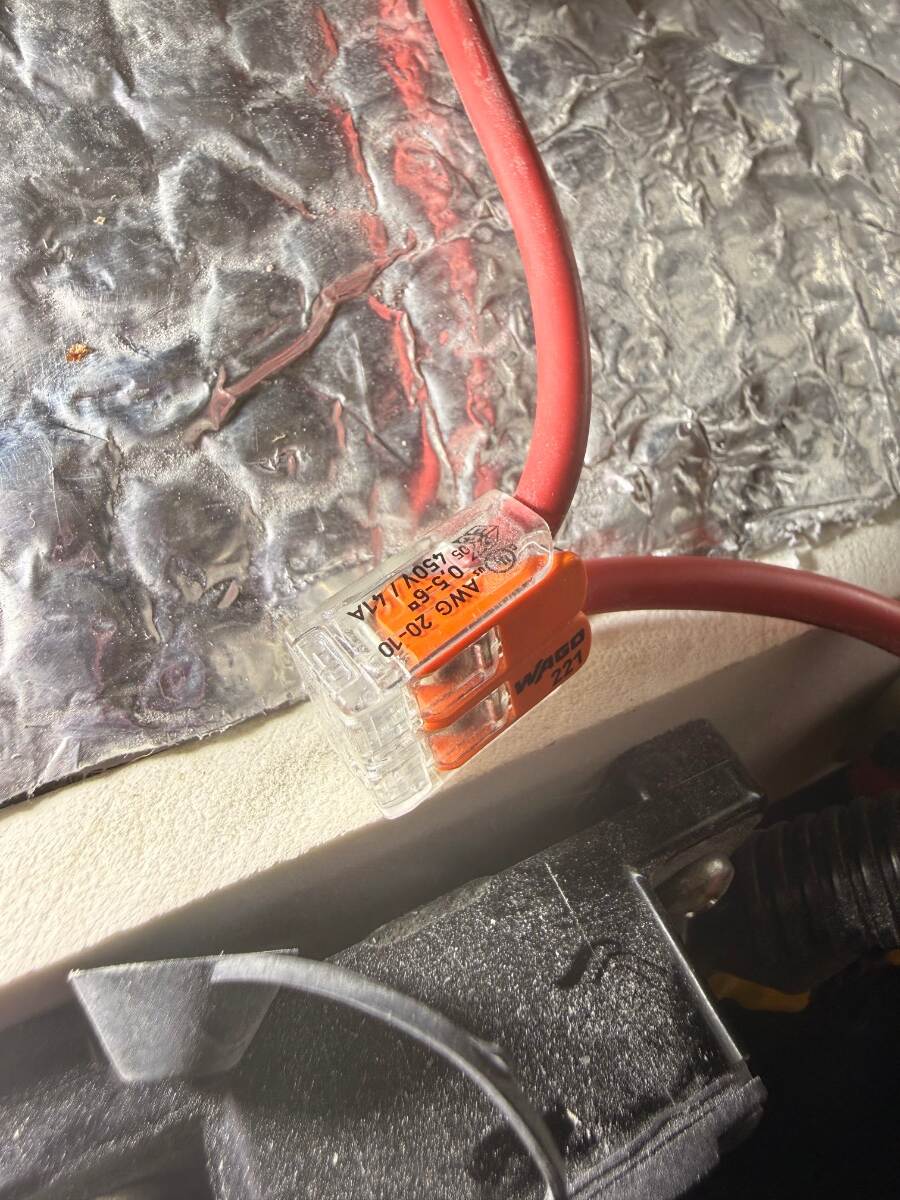
No worries! It gives us something to do! That is a Wago connector to splice two wires together. It has little levers on it so that you can pull the wires out. Other connectors might look similar, but without the lever, and the wires won't come out! Glad you found it! Happy camping!
-
All I had to see was a truck hauling a U-Haul trailer down the road with sparks flying from the driver side tire that had blown out. He was going down the road passing people having no idea he was tireless with rim grinding on the road. He kept going for miles down the road before we finally saw him pulled over. Convinced me to always have TPMS.
-
All i found the problem. a loose battery connection. i feel like an idiotic not checking it first. sorry i wasted a lot of your time. i am good to go now.
- Today
-
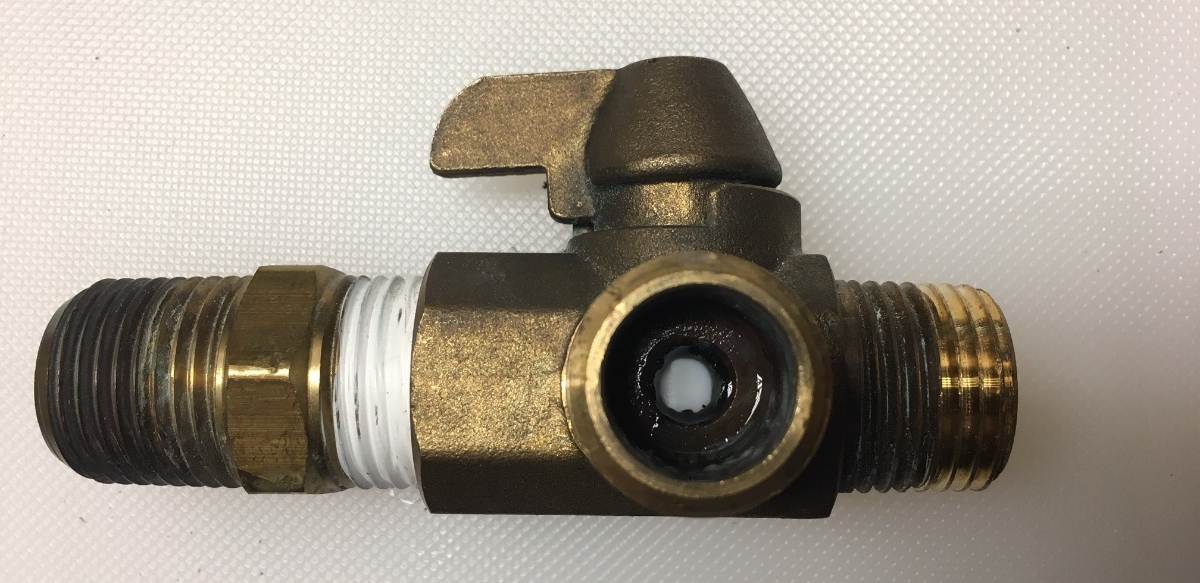
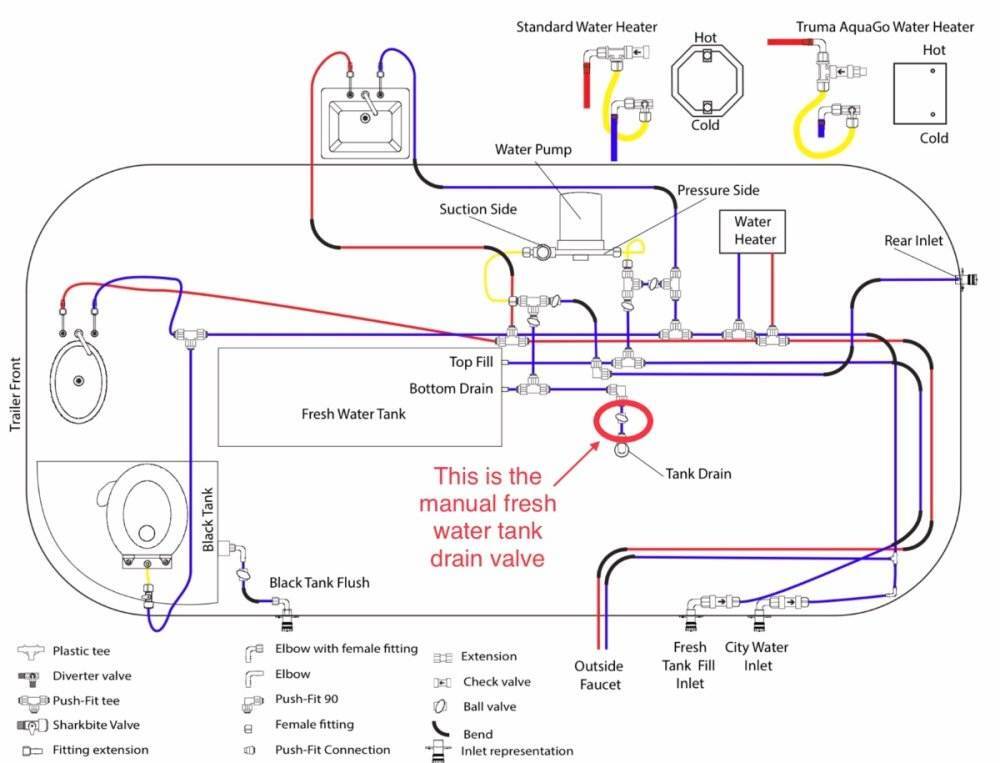
Yes, at some point OTT replaced two (2) brass two-way valves with four (4) basic open/shut valves. Both configurations achieve the same end result of three (3) plumbing configurations, 1) Normal Camping, 2) Sanitation/Winterization or 3) Boondocking positions. Maybe the change was due to the higher cost of lead-free brass or the 1/4" flow restriction in the OEM brass valves (see pic). I replaced ours with 2-way motorized ball valves with 12mm ID. I've never seen inside the basement of an LEI, but both models have similar kitchen sinks, wet baths, outdoor showers, 3 water inlets, etc. Of course things are more cramped and some things are mounted in different locations.

-
 Bob R joined the community
 -
Well, looking at the diagram posted by Topgun2, I am unsure what to say! Looks to be 4 valves on the newer models! I have no idea how they configure. Glad to only have two! Mine are three way valves by the way, and they have been simple and effective. Curious to hear how AKPilot's hull is configured as its 3 hulls newer than Topgun's. Maybe the E1's are plumbed a little differently because of space constraints....
-
i think i checked all the fuses on the 12V line and they appear good but there is this connector on both the positive and negative wires coming from the batteries to the fuses and i wonder if they are open circuit. I have never seen this type of component before. is it a connector or fuse or what but it goes to the fuses where i cannot get any voltage reading of any kind even though the fuses test good what is this type of connector for?
-
 i think i checked all the fuses on the 12V line and they appear good but there is this connector on both the positive and negative wires coming from the batteries to the fuses and i wonder if they are open circuit. I have never seen this type of component before. is it a connector or fuse or what but it goes to the fuses where i cannot get any voltage reading of any kind even though the fuses test good what is this type of connector for?
-
Yeah, I missed that too. Dave has the older EI along with a couple of others who frequent our Forum. Oh, and there are no plumbing schematics older than 2019 as far as I know. Maybe @DavePhelps could review the 2019 diagram and comment re older EI differences. The plumbing should be similar. EI and EII have 3 water inlets with similar (same) valving configurations. They likely install water line restrictors on both models. I forgot to mention, there's no restrictor on the boondocking line since the Oliver water pump supplies the suction there's no need.
-

Used Oliver advertisements Return to the Oliver Forum
jd1923 replied to dewdev's topic in General Discussion
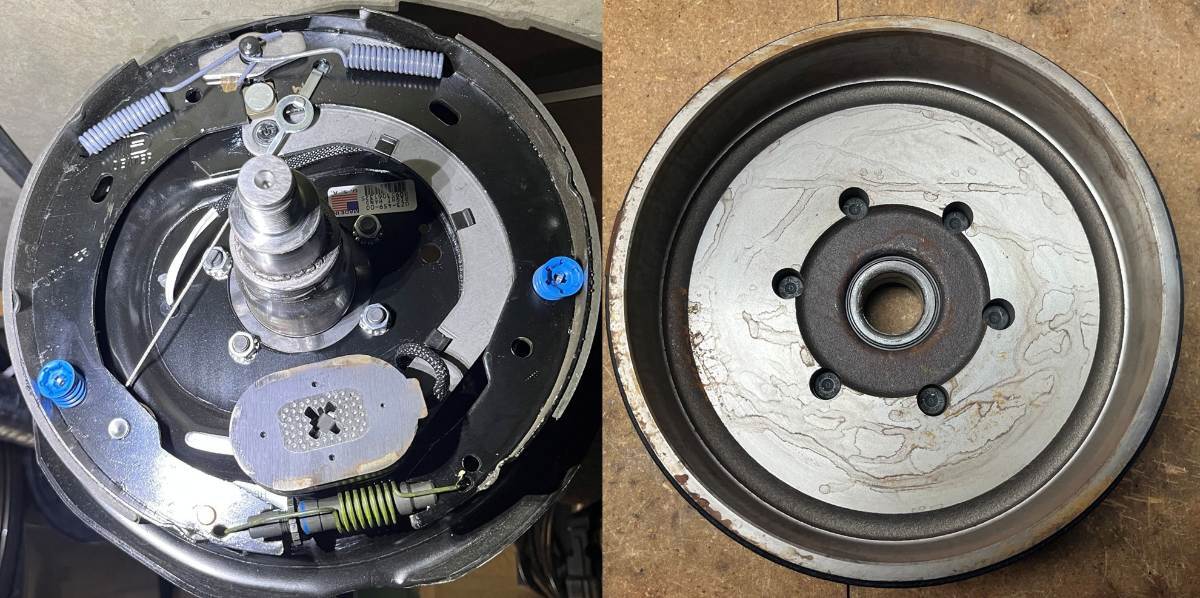
Turns out these parts as pictured will be at The Rally next week 4-Sale. A good traveling spare set would include a left and right hand set to cover a full axle rebuild. Anybody who can change a trailer tire can mount this hardware on roadside if necessary (think Alaska trip). The hubs come off with a small circlip and one large nut. The brake backing plates connect with 5 nuts on the axle studs (you can see 4 of 5 nuts in the picture). These parts are listed on eTrailer to see their retail value. These are brand new parts to be sold at a very good cash price. Please PM me if interested. You could pick up the parts pictured at the Rally and I would ship a like set for the other side to you free shipping.
-
My apologies! I simply neglected to notice that what you were requesting was information on the Elite I NOT the ELITE II as I posted above. Bill
-
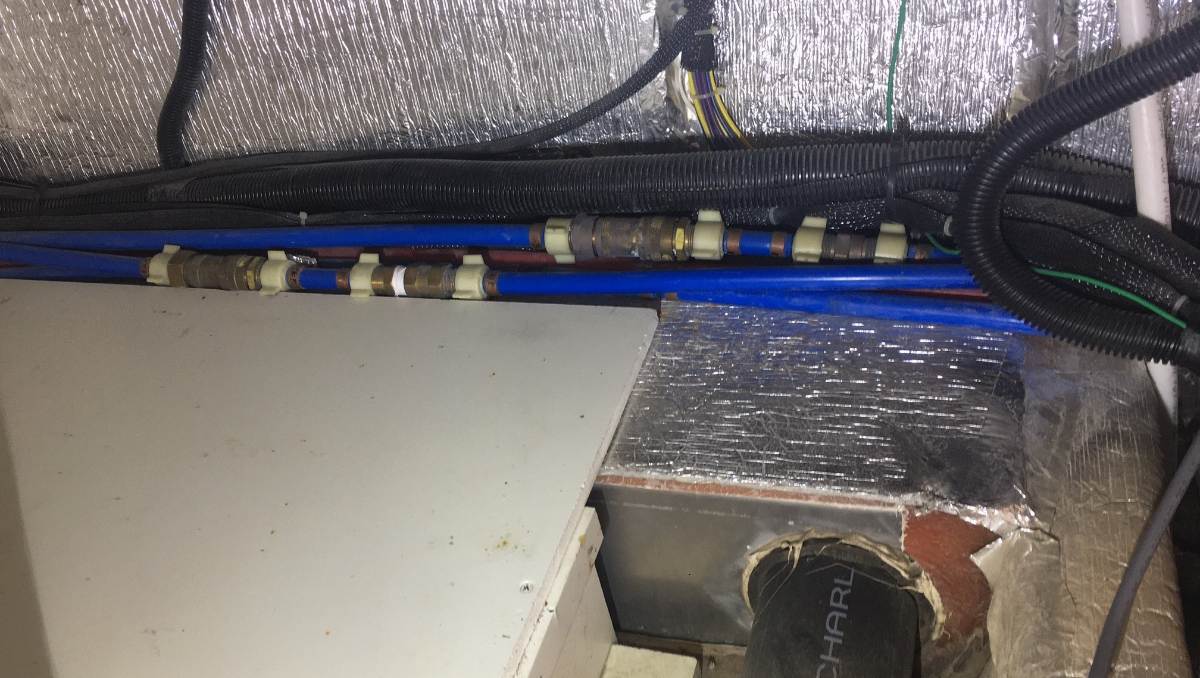
Welcome @AKPilot and congratulations! Btw, there are quite a few of us who feel OTT built a darn good Oliver back in the day! I've been restoring our for 3 years and finally all the major stuff is done! 😎 I would start with Dave's suggestion, meaning first be certain your valves are set correctly. There is another reason the boondocking port may work and the others do not. If you look closely at the OTT plumbing diagram at the City and Fresh Water inlets it shows backflow prevention aka check-valves on both lines. What the schematic does not show is that OTT also installed water flow restrictors next in line (see pic, rear wall of basement, Hull #113). This statement had me thinking. Perhaps hard water left in the plumbing over a long period of time would evaporate leaving heavy calcium deposits in these waterline devices. I say heavy because there is a bit of water upstream. Our check-valves always leak a little when unpressurized. With ample water uphill and basically an opening downstream, more and more evaporation over time could lead to calcium buildup that would eventually close the openings. This may well be your use case. I've had it on my long list to REMOVE these restrictors. A true pressure regulator on the fill hose is superior to an inline restrictor, since limiting pressure vs. restricting GPM flow rate are not the same (the former is good, the latter no so). I believe removing them is best. At the same time, the check-valves could be cleaned with CLR but most owners when getting in there have replaced them. They're a relatively inexpensive part and yours are likely to crusty to clean anyway. Hope this helps! Please post your maintenance, repairs and modifications here as you work through them and of course ask questions for anything you need!
-
There must be a direct positive (+) battery connection to the Optifuse. Geoff ask you to retest, but when you're certain there is no power on the battery side of the breaker (or both sides) then the +battery cable feeding the Optifuse is either 1) disconnected, 2) switched OFF or 3) has an added inline fuse that is blown. You must have an open circuit for there ot be no power on "either side of the optifuse." OTT in their OEM build did NOT add a switch or redundant inline fuse in this circuit. The Optifuse is the breaker that protects your batteries from shorts in ALL DC lighting and appliances (all DC loads). If you have anything but a solid stretch of 6 or 4 AWG between the Optifuse and your batteries it must be an aftermarket installation, perhaps something was added during April 2025 when you had LiTime batteries installed. Your solution is simple. Just follow the battery cable from the Optifuse to the batteries. Given your Optifuse is under the streetside bed, the cable will run a whole 5 ft total, first under the pantry area, then up through a drilled hole/grommet into the battery bay, then connected to a positive battery terminal. Your "Tech" could have added a +bus somewhere interior, if so test for +13V there. But if the retest shows +13V on the battery side, but NOT on the load side of the Optifuse, then replace the Optifuse with a 60A ANL Fuse. There are no other possible causes for the full loss of DC power in the Oliver. You either have an open circuit in the battery cable or a bad Optifuse breaker.
-
My Legacy 1 is close in age to yours, 2015 hull 107. I'm wondering if your water valves are configured correctly. Mine has only 2 valves. At some point Oliver went to three. If you have the two valve system, the "handles" on both should be oriented front to back of trailer. This would be the general use setup, which would include using the water pump while boondocking, or city water hookup. If you turn both valves 90 degrees (side to side of trailer), then the siphon inlet at the rear curbside will be engaged. You would then siphon water from an external canister or whatever and fill your fresh water tank. Turn the valves back when ready to use the system. That's how it works for me anyway. Dave
-
I'm a little confused because you've said there is no power on either side of the optifuse, but you've also said that it tests good? Also, you mention a 2000 watt inverter, where you talked about a converter before. These are different things and wired differently. BTW, a 2000 watt inverter should have another ~200 amp breaker or fuse between the inverter and battery. That's not the problem, but you should be aware of it. Mine is mounted on the vertical wall above the inverter. At any rate, the battery and/or the inverter both feed the 12 volt panel (and jacks) via the 60 amp optifuse breaker. Re-check it for 12v from each terminal to ground. There are grounds all over the place in that area, the jack post, trailer frame, or the inverter chassis will work. If there is voltage on the line side, but no voltage on the load side, then you have a bad breaker. These breakers are readily available, and the failure rate is pretty low for the millions of them out there.
-

Used Oliver advertisements Return to the Oliver Forum
carpenter replied to dewdev's topic in General Discussion
I am just up the road in cheyenne and would also be willing to come down and purchase the front tray if you are interested. Going full time in my 22 is going to be an adventure and I think storing the generator and gas can outside my truck topper would be ideal. -
i got back home fine and with a voltmeter i did some more checking and there is 13V coming out of the batteries, I checked but there’s no 12 V on either size side of the optifuse. The fuse is good as i checked with ohmmeter. There is a one amp in line fuse I also checked it’s good also. the 2000 inverter is turning on fine and turning on the microwave and all the stuff that runs off the AC so it’s puzzling why there is no 12V DC power in the trailer. there has to be a bad fuse or switch somewhere. I am going to try to reach out to OTT but it usually takes them a while to get back to me. any other ideas? could a fuse be blown in the inverter.
-
Thank you very much Bill. much appreciated
-
Below is a diagram for a 2017 Elite II which is the same as my 2016 hull #116. Bill p.s. included are a couple of others that you might need at some point.
-
Apologize in advance for my lack of experience searching this forum. I am a new owner of Hull 119 a 2016 Legacy Elite. Trailer was purchased from an estate and sat for a bit. i am troubleshooting my water supply system. Works fine from “Boondocker” supply if hooked to external tank. when connected to Municipal or Freshwater Tank…barely a trickle. I found a user augmented plumbing supply diagram for newer Elite II, Do not know if current system is same as older ones, but would appreciate if someone could kindly point me in right direction for a solution. I have found the Alternative Plumbing diagram for 2019 Legacy Elite II. are the plumbing diagrams similar to older Elite models?
-
Apologize in advance for my lack of experience searching this forum. I am a new owner of Hull 119 a 2016 Legacy Elite. Trailer was purchased from an estate and sat for a bit. i am troubleshooting my water supply system. Works fine from “Boondocker” supply if hooked to external tank. when connected to Municipal or Freshwater Tank…barely a trickle. I found a user augmented plumbing supply diagram for newer Elite II, Do not know if current system is same as older ones, but would appreciate if someone could kindly point me in right direction for a solution.
-
 AKPilot joined the community
 -

Used Oliver advertisements Return to the Oliver Forum
HDRider replied to dewdev's topic in General Discussion
Nothing yet, but I'd like a large cabinet in its place. The microwave is still in place. -

Used Oliver advertisements Return to the Oliver Forum
Dennis and Melissa replied to dewdev's topic in General Discussion
What did you put in the hole when you took out the microwave? -
With a tandem axle trailer and a heavy truck you can have a catastrophic trailer tire failure and not even know it. You won't feel it. With the TPMS you know right away and can start reacting, minimizing damage to your rim and trailer and reducing overloading of the remaining tire on that side. That's what happened to us. Our TPMS went off and we got away with only a broken mud flap and cosmetic damage because we stopped with most of the tire still on the rim. You could also have a fast leak from road debris. It could go flat without you feeling it, then chew itself to bits on the rim before you knew you had a problem. Our TPMS also alerted us to a catastrophic trailer brake failure. One wheel started running much hotter than normal. We pulled over and heard noise from that wheel. Turned out the brake assembly had come apart inside the drum. So, yes, I consider TPMS a crucial safety feature.
- Yesterday
-
This makes alot of sense. It is far easier to grease and visually observe how the chassis is functioning/wearing with wheels off. But it is a royal pain as every time i take the wheels off the ez-flex inverts on me and then in addition to remounting, and retorquing, there is the jacking to correct the linkage inversion, once on each side. I guess no pain, no gain.
-
Prefer not to have that experience and thus lean toward the complete replacement route so share your cautious approach. But in all of this it is not obvious to me how the tire pressure monitor helps prevent a catastrophic blow out versus frequently visually checking inflation and watching for bulges or tire issues at every stop - only takes a minute. Seems like tire temperature might be a more important indicator. So do you see TPMS more as a convenient way to watch your tires or an actual safety feature? Obviously before a blowout the pressure is a number and after a blowout its zero.