Leaderboard


Popular Content
Showing content with the highest reputation on 03/16/2017 in Posts
-
That's exactly why we went with the Oliver, to run Karen's CPAP off of the solar. Depending on which machine you guys run, will make a big difference in the amount of power needed for the CPAP. I made a video a couple of years ago on CPAP camping that has really helped a lot of people. Right now, as long as there's sun, you may have to charge up with a generator once a week with the 4 battery set up. I have a Honda 2000i Generator and then a golf cart charger that maxes it out and charges the batteries pretty fast. In our experience the Phillips Respironics uses a lot less electricity then some others, so the brand of CPAP makes a difference also and you may be able to run without a generator ever, depending on the brand of machine. Here's our old video -2 points
-
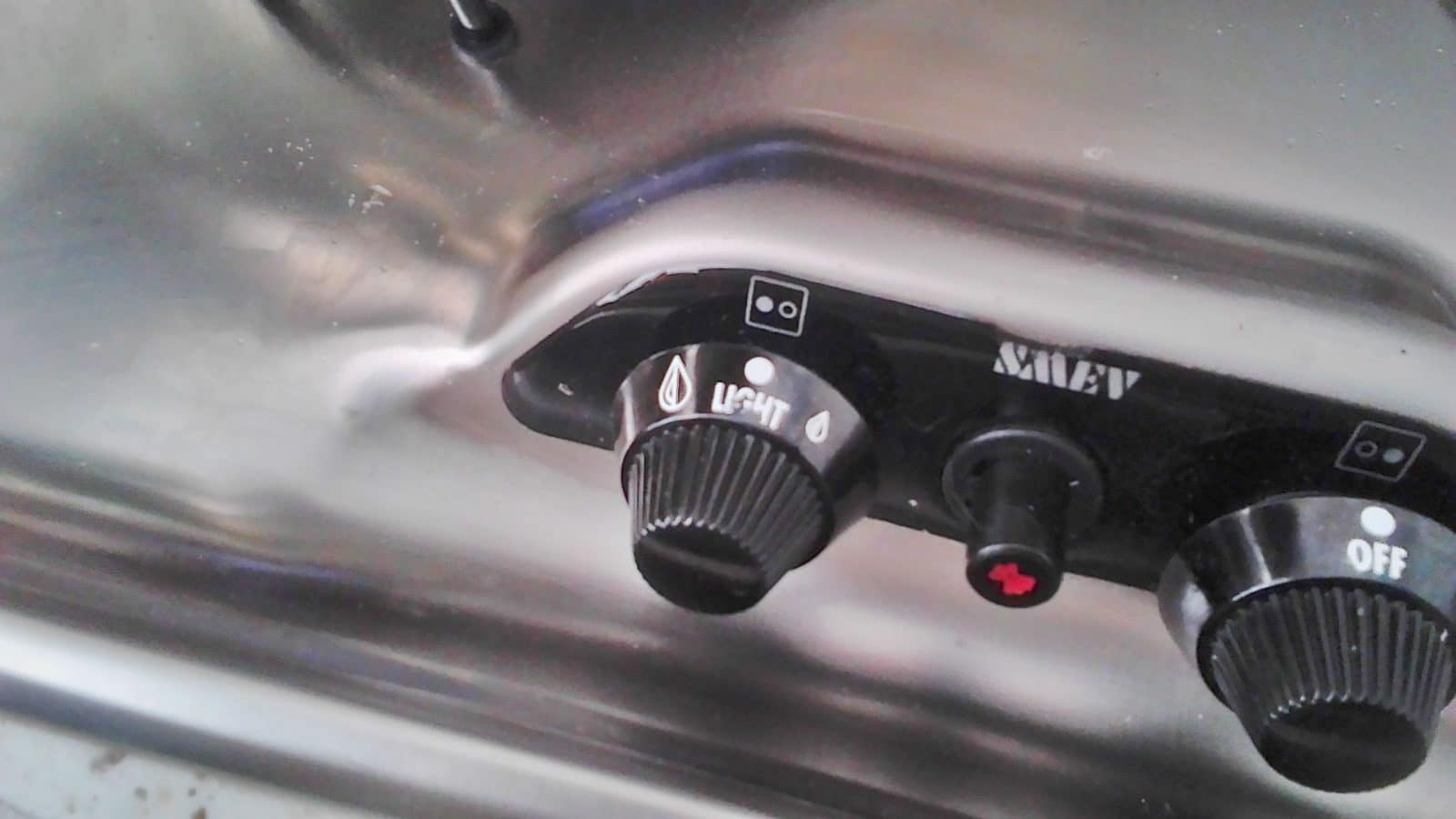
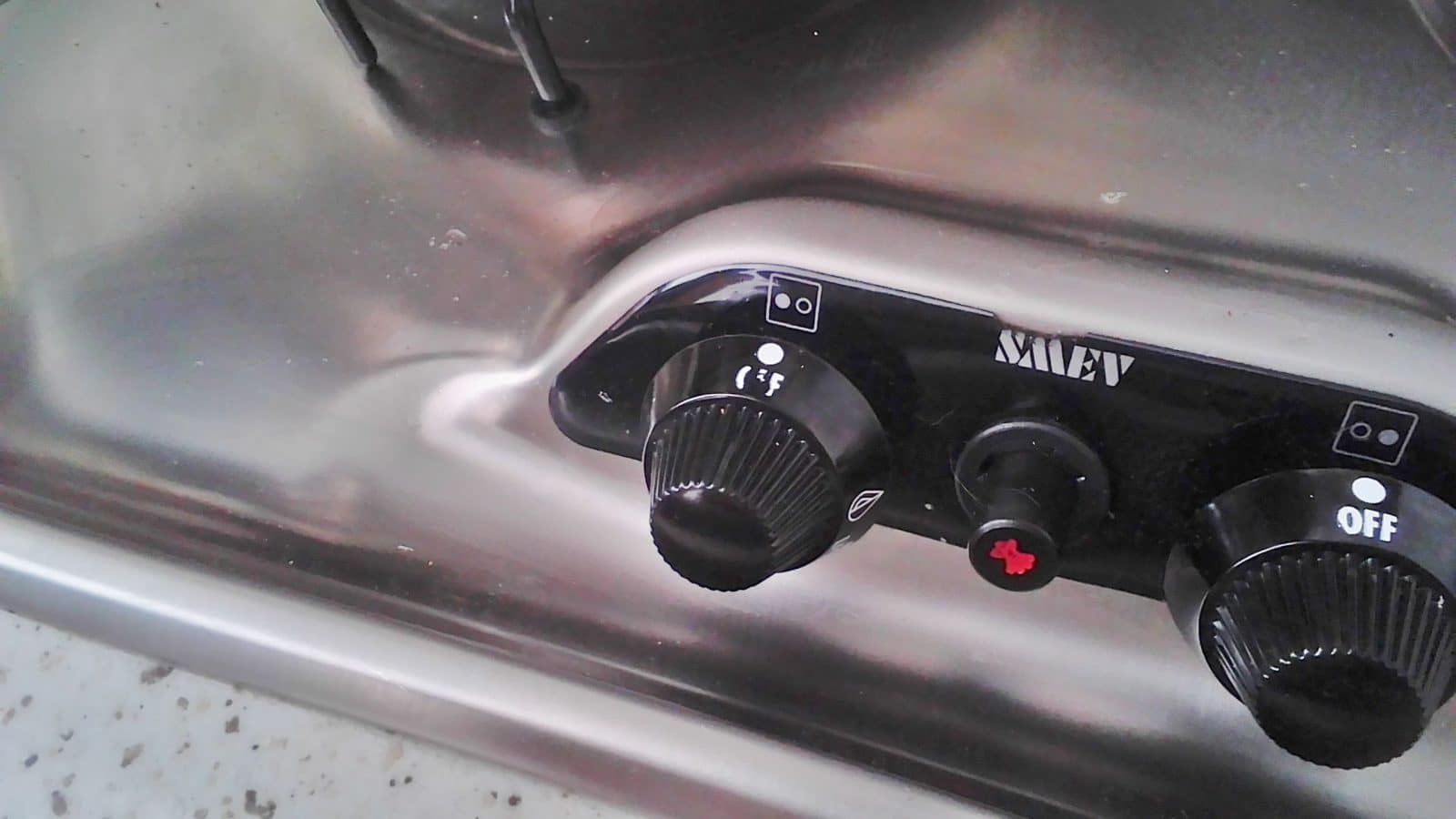
As time passes at just over a month now, we have found that some clear coat on the stove knobs might help the paint last a bit longer. Then I still haven't covered that little green light at night yet, it sure makes a great reflection. Counting the dots instead of sheep some nights :)
 2 points
 -
I remember when I first arrived back home in June of 2016 making a commitment to myself to understand the Blue Sky gear in detail. The reason being, I wanted to become a boondocking camper! When I mentioned this back at the factory on delivery day, Tommy and Jason both seemed surprised. When I asked Tommy, why do you seem surprised he said, “Most Ollie owners use shore power. You would be the first to focus on dry camping exclusively.” I began a process of digging into the Blue Sky controller and monitor. I happen to enjoy reading technical manuals. In various postings, here on our Forum, I attempted to document the highlights of my journey. My postings did not elicit a reaction. At the time, Steve (ScubaRX) appeared to be the only owner who shared my “enthusiasm” for the journey ahead. Keep in mind, the learning curve was steep at best. I contacted a Blue Sky technician, Boz, in California who was superb. However, he possessed a level of knowledge which was struggling to find common ground during our email and phone conversations. I remember vividly how he asked me to pop the face plate on the controller and connect a voltmeter to the terminal identified in the technical manual for the wire from the array. He stressed, the importance of not getting electrocuted in the process. My reply, “What is a voltmeter?” Long silence on the phone! LOL! I asked Boz, please hang in there, I will get this problem solved! At the time the knowledge base within the factory was limited. I began a search within the New England region for a service center with Blue Sky knowledge as a back-up to Boz. I located a technician in a wealthy section of the Maine coastline who services very large sailboats. The reply was stunning, “We do not service RVs of any type!” Boz and I were on my own. LOL! My message to our Forum community of owners, think twice about owning Blue Sky gear if you do not possess a love for acquiring technical knowledge in detail. It is not the day-to-day operation of the Blue Sky gear, it is the problem-solving abilities you will need to possess should a problem arise. In my case, I had a loose wire running from the controller to the monitor which I needed to repair. I also had to re-boot the controller which necessitated the manipulation of multiple parameters. There was no user guide or individual to help with these operations. Now I am curious, are there any future, prospective or recent owners who see value in a journey like mine? I would guess not, after all aren’t we suppose to just enjoy camping! Buzzy PS - For the last 2 days my array has been 90% covered with a thick layer of snow and yet my Blue Sky controller is pulling in power and recharging my batteries. Amazing! I LOVE my Blue Sky gear!!2 points
-
I'll interject this in the Zamp vs Blue Sky discussion. Both brands have two components: controller and display. The controllers are merely the piece of equipment that is located under the bed and reduce the incoming voltage to a level that will not destroy your battery's. The displays are surface mounted somewhere inside the cabin and tell you what's going on behind the scenes between your panels and battery's. We have the Blue Sky setup. Our controller is the Blue Sky 2512iX-HV. Our display is the Blue Sky IPN PRO. This piece of equipment is very complex and it acts as both a programmer for the controller and a display for the system. The manual will show that it has over 40 different parameters to deal with contained in 4 ever-deepening levels of menus and for myself, I considered this to have a pretty steep learning curve. You do have the capability to see, modify and control way more things than with the Zamp display, but does (as I believe someone previously stated) the "average user" want to deal with all that. To say all that's "better" is definitely in the eye of the beholder because, in the Blue Sky system, many of these parameters have to be set up. Be it the ultimate consumer (you) or the factory personnel someone has to do it for this system to operate properly.2 points
-
Honestly, I don't know if it's inferior but it is different then what I'm used to. On my other Solar systems you could set it to show the actual amps that the pannel was putting out, not counting the battery. So that was throwing me off. I've seen the Zamp hit 17amps and you have to remember that the 320watt 3 pannel system is still just a 26.67amp service. 320watt ÷ 12vdc = 26.67, so here in the desert, if they are saying that I may see 18vdc max then we're losing out on another possible 8 amps or 33%. In the article that Randy put on here for us, it says that you don't need a larger system for a 320watt to 20 amp system, so that would be fine, here's a pasted section - PWM and MPPT solar charge controllers come in two basic styles: flush mount and wall mount. The style that’s best for you is usually determined by how much space you have in your rig and the size of your solar power system. Flush mount PWM and MPPT controllers are typically smaller, are better suited for smaller systems of around 340 watts (20 amps) or less, and are ideal for those situations when space is limited like in a truck camper. On the other hand, if you have a large solar power system, of say, 960 watts (50 amps), and you are planning on installing an MPPT type of controller, then you’ll need to mount it in either a large storage compartment or a large closet because of the controller’s physical size. Whatever you decide, whether it’s a flush mount or wall mount, PWM or MPPT, you’ll want to make sure that the controller is mounted in a location that is dry, has access to wiring, and can easily be viewed and accessed for maintenance. Because I prefer to be off of the grid all of the time, it sounds like the Blue Star System would have been ideal for me because as it stands right now, I've seen the Zamp controller only hit 17 out of a possible 26amp system... And out of an entire month being basically in the sun, our batteries only reached a full charge once, just yesterday. And this was the kicker for me because I should have been seeing 20amps+ in the full desert sun and having it showing only 15.5 caused me to think that it was overcharging my batteries instead because I was expecting a larger amp reading coming from just the pannels. Maybe I did bring my generator for a reason, but I haven't had any reason to use it yet. If you have read the Zamp manual, it just gives you the basic charge reading and the amperage is lowered to protect the batteries. They will protect my batteries if they run dry supposedly but I don't see that ever happening. So I'm going to read all about the blue sky unless BUZZY!!! does a video all about it for us :)2 points
-
Canoe12, You will love the field testing with your Ollie. It can truly challenge your analytical skills. I might recommend a few guidelines to help weigh your trips toward success. Like yourself, I need to provide a continuous supply of power for a family member who is on life sustaining oxygen therapy. The medical equipment requires AC power. I have come to categorize equipment and/or actions as either essential or non-essential. At the same time I aim for high levels of enjoyment and not a feeling of making do with less. I do not use my microwave. I pop my popcorn over a campfire. I do not use my TV, I play Bananagrams at the dinette. I do not use the porch lights. I prefer to admire the fireflies. I run the furnace, but I love to snuggle under a comforter. My suggestion, is to try and bring joy to camping without utilities. I typically book five days and four night with an understanding we may need to break camp if the power levels drop to near 50% of my AGM capacity. Even while dry camping in mostly shaded sites, I was able to power my Ollie for the duration of my trips. And we had a blast each and every time! Buzzy1 point
-
Congratulations Reed on feeling free!1 point
-
Spike, Welcome and congratulations on your Ollie! There are certain items we always take while camping, one is a step ladder. We only use a 4' step ladder while camping at this time, but appreciate seeing the information shared here, we need upgrade our camping ladder, too. Hope to see y'all camping!1 point
-
A point of clarification. 90% of my array is covered with snow. The 10% not covered is providing the power. When I purchased my Ollie, it was delivered with Zamp solar panels with a Blue Sky controller and a Blue Sky monitor. Zamp controllers were not being installed by OTT back in June of 2016. Yes, the panels are the main reason for the recharging of my batteries. However, the Blue Sky controller appears to be doing a fine job taking limited power and recharging my batteries. It might be useful to know, since last June I have only connected my Ollie to shore power on three occasions. One was to re-boot my controller after it had shut down and the other two times was to complete demos for prospective buyers who wanted to see the AC in operation. For me, camping is all about understanding my solar gear. :) Buzzy1 point
-
Thanks to everyone for their posts. I've done quite a bit of research since my original post, I've come to the conclusion that the zamp gear would be sufficient for our needs.it seems that the differences between the two types of controllers is minimal at the wattages of our panels, so I'm willing to trade off the extra power for the benefits of the pwm charging profile and ease of use.1 point
-
This post disappeared... But I have learned to back up everything when posting to this forum these days :) I read through the Blue Sky manual again as this is the controller that I had originally thought we were getting before we ordered our Olli. Oliver sure made a bunch of changes for 2017 and going to the Zamp controller was for ease of use. I've been using Solar to keep my RV's batteries charged for about 12 years, starting with the little single pannel Coleman that simply clamped to the battery back in the day that I still have and use on my trucks. According to Blue Sky, their pannel being an mppt, will give you 30% more power... Right now, I'm missing 30% of the power that I was use to seeing with my Renogy Solar Suitcase which also has a bunch of parameters that can be set. I was pulling close to 10volts with that 100watt Suitcase, so I was expecting 3 times that with the 320watt system from Oliver. But I'm only getting 15.5volts max average right now and basically with the Zamp being a simple controller, my hands are tied, there are no adjustments that can be made... https://www.renogy.com/renogy-100-watt-12-volt-monocrystalline-foldable-solar-suitcase-back-order/#tab_prd-specs But in order to know how many volts that the Blue Sky is actually putting out, let's all chime in with what we are seeing usually as the normal output. My Zamp is pushing 15.5vdc most of the day, what's yours? Please list your controller, Zamp, Blue Sky, etc. and the average charging voltage, then let's compare the results. I may end up using both the Solar Suitcase coupled with the Zamp system if I can't get the batteries to fully charge every day. Having an incomplete charge every day can change the values that the controller monitors with, so we need to research this a bit more. Here's a couple shots from the Blue Sky manual. I'm also wondering what the cost difference is? Reed Zamp/ 15.5vdc/ 320watt pannels Renogy/ 9.8vdc/ 100watt pannels [attachment file=47559] [attachment file=47562]1 point
-
geO, By far the best idea is to never sit in one place long enough to need them... Let's get out there and go CAMPING!!!! Hope you have a wonderful season.1 point
-
On most vehicles the voltage drop is too great over that distance to get much charge. You can try running a heavier gauge set of cables with a separate connector to see if that works. But back when I was looking into it, there was also the problem that the alternator will sense the vehicle battery charge and cut the alternator output even if you run heavier cables. That's the point I stopped off my research but I do think there were ways around it all. The Victron system that I was looking at had a separate thingamajammer that dealt with charging from the vehicle. I also remember that Super Duty owners had an advantage here, in that those trucks are factory ready for a second alternator and a separate voltage sense cable back to the trailer.1 point
-
I have the canvas and haven't had an issue with them. They're currently covered in snow. They're there to protect against UV rays, for the most part, so you don't really need to put them on or have then on when raining or too wet, just my experience.1 point
-
Here's to your Ollie, your family, and your new Ollie family. I am a fairly new owner of a used Ollie, still experimenting and still learning (aren't those part of the enjoyment?). There are huge lists of things I might want to buy to add to our enjoyment of camping, especially as our trips become longer excursions. A ladder is on that list...about midway. Still, our approach is that we'd rather wait to experience a need for each item before we lug it with us, as opposed to buying a ton of stuff to head off expected needs that never materialize. Perhaps, I will need a travel ladder on the road at some point, but so far...not. (after only 6,500 miles or so- and perhaps 60 nights). Of course I have ladders and other methods of roof access at home. To ScubaRX's point, I also watched the crew walking on Ollie Rooftop while doing the plant tour. I asked that particular question and they said it is no problem. I have spent a few brief moments on mine..and it did not collapse. Perhaps this is a question that should be asked at the Rally. Congratulations on your purchase. See you on the road!1 point
-
Down the center of the roof it is 2 inches thick. I have seen two men at the factory carrying an air-conditioner while walking on the roof. The greatest danger of getting on the roof is an accidental fall. There is not a whole lot of available real estate up there and it would be easy to trip. In answer to your original question, we carry a 12 foot extend and climb collapsible ladder. When I purchased that ladder back in 2013 my original idea was to store it in the basement. It will not fit in that area but I discovered that it nicely stood against the wall separating the closet from the bathroom and that's where it has been for the past three years. We do not use it often but when you need to access your roof, nothing will substitute for a sturdy ladder. After meeting you in Sierra Vista, Tali and I felt sure you and your wife would soon be joining the family of Oliver owners. It is good to know you have made the jump. We plan to come back to the west in about a month or so and spend some time up in the north west.1 point





-
Recent Achievements
-