Leaderboard



Popular Content
Showing content with the highest reputation on 11/30/2018 in Posts
-
I am really excited to see that Technomadia (Chris and Cherie) will be hosting part of a new rv series on PBS, The RVers, Loving snd Living. Their segments will focus on RV tech.</p> Though no longer Oliver owners, they're still eorking technical nomads... fulltiming this year on their boat, but also found traveling in their vintage bus. They've provided a lot of people with great info, and their original solar setup for an Elite is still used by a number if people... including us. You'll also be able to watch their segments on Amazon, itunes, and a few other venues. Always generous with their time and knowledge, this is yet another unpaid labor of love for the RV comminity from Technomadia... Technomadia.com Our best wishes to them! Sherry and Paul4 points
-
The capillary wick material can actually help the drainage. The weep holes by themselves can sometimes not drain because of surface tension of the water. And given that the windows are tilted inwards, the tracks won’t drain completely because the outer weep hole is actually a little higher than the bottom inside track surface. A capillary wick material can actually get liquid to flow uphill (just like it does in a wick lantern) to help drain water out of the track. Just have to position the outside end of the wick a bit lower than the end inside the track. As mossemi mentioned, the pipe cleaner works as a pretty good wick as well. I just went a little further and figured I’d try a fiberglass lantern wick material as an experiment, just because I like tinkering. No metal wire to rust. ?2 points
-
Thanks for bringing up the post wisdom from Chris and Cherie (technomadia). Though they've moved on from their Oliver, they are still a great technical resource. Btw. I'm starting a new post about it, but technomadia is going to be on pbs (and Amazon, itunes, and other formats) next year. I'm totally excited to see my old friends on TV in a few months, discssing rv tech... Sherry2 points
-
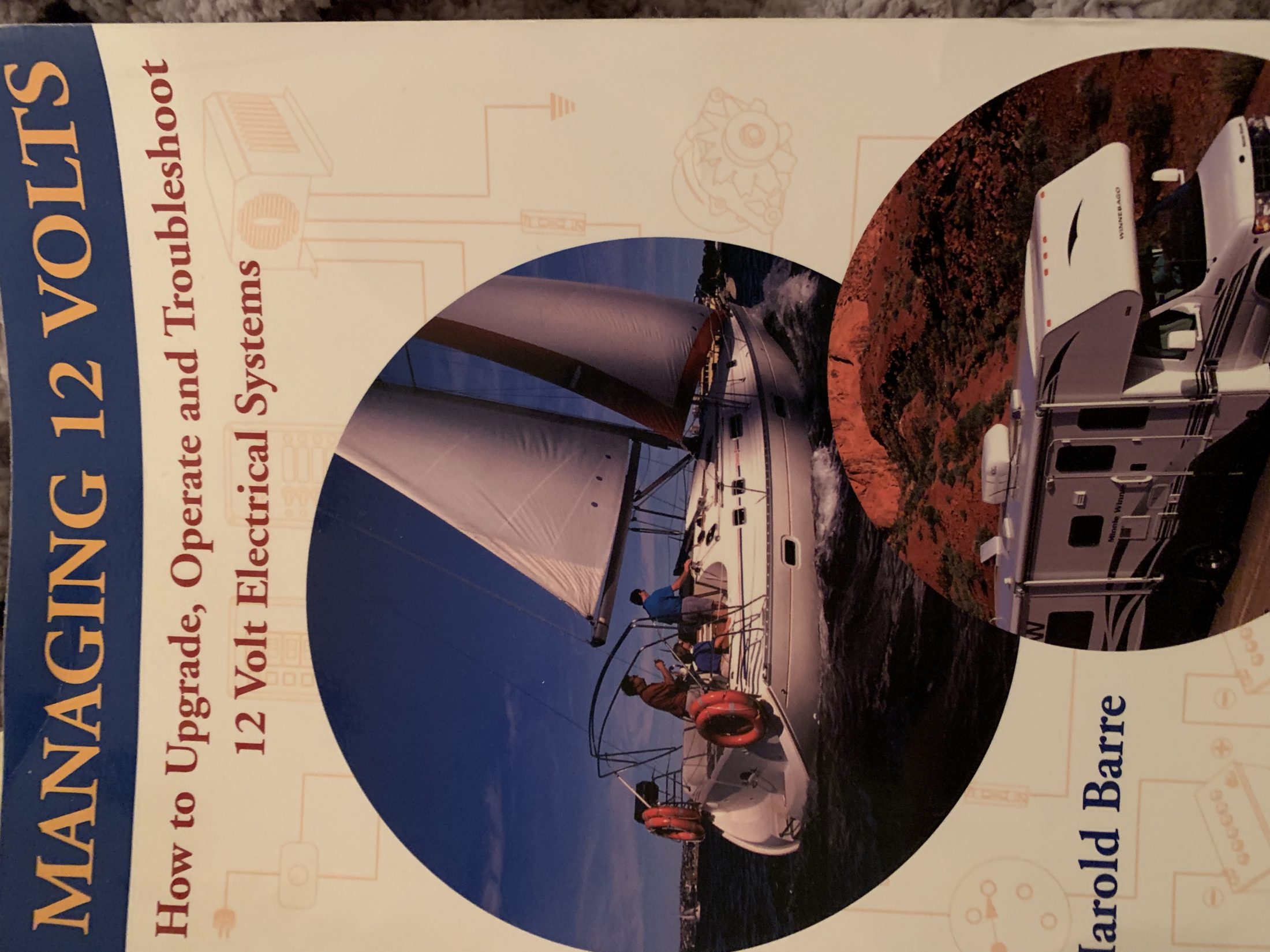
A 6 volt battery has 3 cells in series @ ~2 volts. A 12 volt battery has 6 cells in series. Same as hooking 2 6 volt batteries in series. The voltage adds as cells are added in series. The amp-hour capacity stays the same. Two 6 volt 100 amp-hour batteries in series will be 12 volts 100 amp-hours. Two 6 volt 100 amp- hour batteries in parallel will be 6 volts 200 amp-hours. I say ~ 2 volts per cell because at full charge and rested a 6 volt battery is really closer to 6.3 volts and a 12 volt battery is closer to 12.6 volts or ~ 2.1 volt per cell. A good resource is Harold Barre’s book <u>Managing 12 Volts - How to Upgrade, Operate and Troubleshoot 12 Volt Electrical Systems.</u> -Randy
 2 points
 -
Hopefully I'm not stepping on anyone's copyright toes but I found this over on the Fiberglass RV Forum: http://www.marxrv.com/12volt/12volt.htm http://www.marxrv.com/12volt/12volta.htm Bill1 point
-
Guess we're old school. We don't have any fancy plastic blocks or levelers. Though the Anderson rocker type levelers are tempting... We carry a stack of 2x 6 and or 2 x 8 cutoffs from projects. Mostly free, but a 2 x 6 pt board is about 75 cents a foot here... if you have to buy them. Lowe's or depot will even cut them, if you don't have a saw... We run the low side tire up on a board or two, and use 6 or 8 inch chunks stacked under the levelers and tongue jack to spread the weight. To not sink into soft ground. We also have a ft by ft piece of plywood, if it's really wet, for under the tongue jack, to stack the other blocks on top of it... <p style="text-align: left;">I like to reduce the throw (length of travel) of all the jacks to conserve power. And, reduce efforts if the jack fails, or the battery dies, and we should have to use the manual crank option. We did have that happen once, years ago...</p> I also don't like jacking a tire in the air to level, so we will place extra board chunks under a tire in a badly uneven spot, to give the tire more support than just the jack. You'll see a lot of ideas and systems once you start camping. In the meantime, buy good heavy chocks ( harbor freight is a great source), and figure out what works for you. I like biodegradable/ burnable wood, v plastic. But, my sisters legos are pretty cool... Sherry1 point
-
Hobo - See this post - http://olivertraveltrailers.com/topic/levelingsupport-blocks/ And do a search for Andersen leveler. As Overland comments - they are expensive hunks of plastic - but they are easy to work with. Once you have done this do some online research for other types/brands of levelers that are similar to the Andersens. Within the past two weeks I remember seeing an ad for these things - possibly at Camping World - and they sure were a bunch less expensive. In using "blocks" (legos or wood or ??) under the Oliver jacks, another benefit is that by reducing the length of the jacks that are deployed, you save a bit of time, save a bit of battery juice (as per Mainiac above) and reduce the amount of torque that the deployed jack must handle. Mine you that the Andersen levelers that I'm referring to are placed under the tires while the blocks are placed under the onboard Oliver jacks. Of course, "legos" of lengths of 2 x 6 lumber can be used under both the tires and jacks but the putting together of the "legos" for under the tires can be a bit of a guessing game and carrying enough of the correct size 2 x 6 lumber can also be a bit interesting. When I first started RV camping I did the 2 x 6 lumber thing until I learned what I thought I needed. Now I carry two Andersen levelers, three of the blocks referenced in the post above and two fairly short pieces of 2 x 6 lumber and one stack of ten of the legos. I can't remember the last time I actually used the legos. But the blocks and the Andersens get used every trip. Hope this helps. Bill1 point
-
We made some (2) blocks out of a 6 X 6 X 11". We use these under the rear stabilizers. The stabilizers are power hogs, so this just saves some juice. If I get into a real uneven site I can lay it sideways and still save some power. I did drill a hole about 1 1/2" from one end and spliced a short line (rope) to give me a handle. We do carry some of those 'Lego' type blocks, because we had some, and have only used a few once. We have a block for under the front stabilizer, just so it doesn't sink into soft soil.1 point
-
That’s correct, though battery monitors and chargers don’t really care how the batteries are connected. Some are more advanced, but in general they just look at the voltage of the system as a whole to determine the state of charge.1 point
-
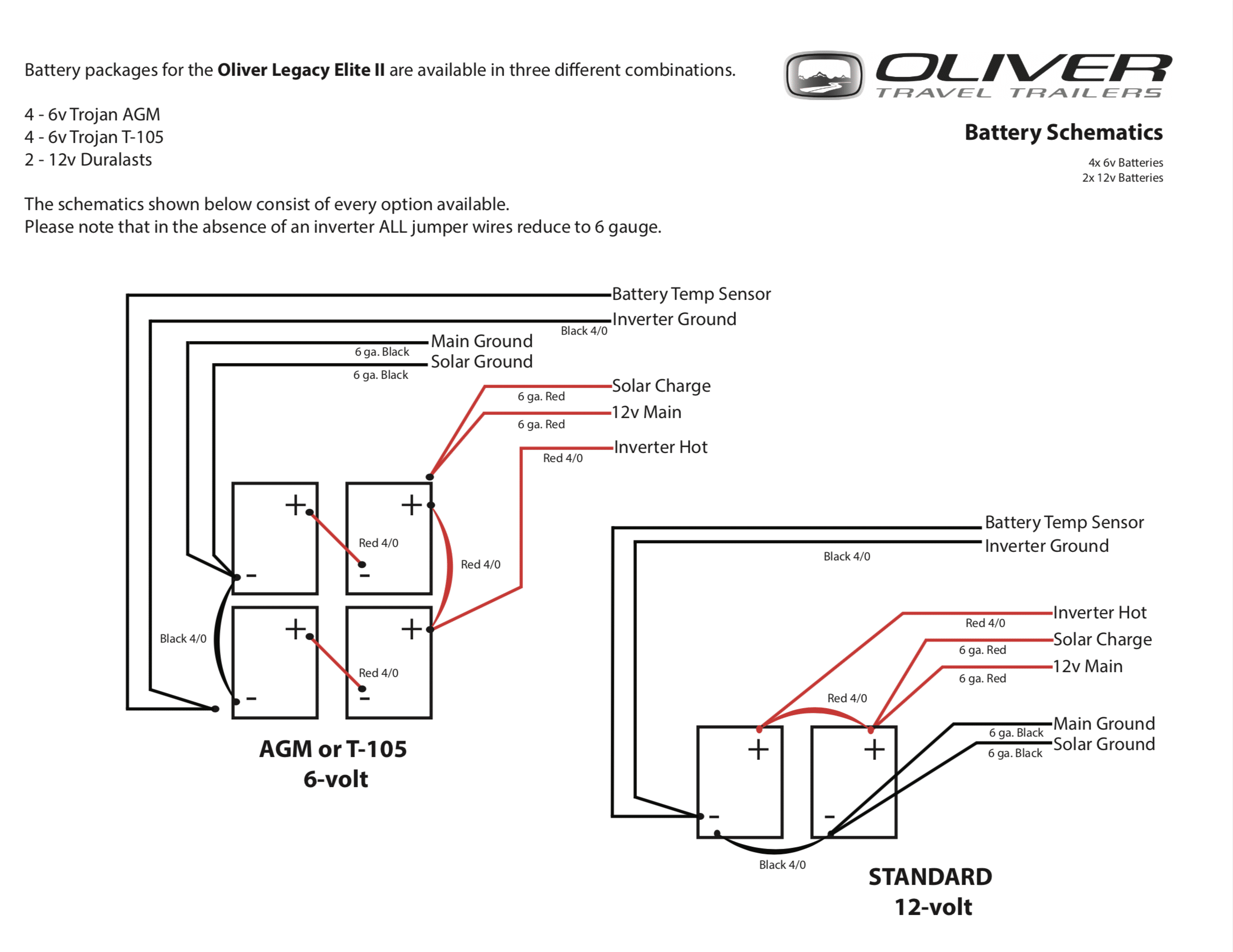
Parallel for 12 volt. But to make sure that it's confusing, if you get the AGMs, then they're 6-volt and will be paired, two each in series then the two sets are paralleled. There's a diagram in the back of the manual that shows exactly how they should be connected. [attachment file=Screen Shot 2018-11-26 at 6.11.38 PM.png]
1 point


-
Recent Achievements
-