
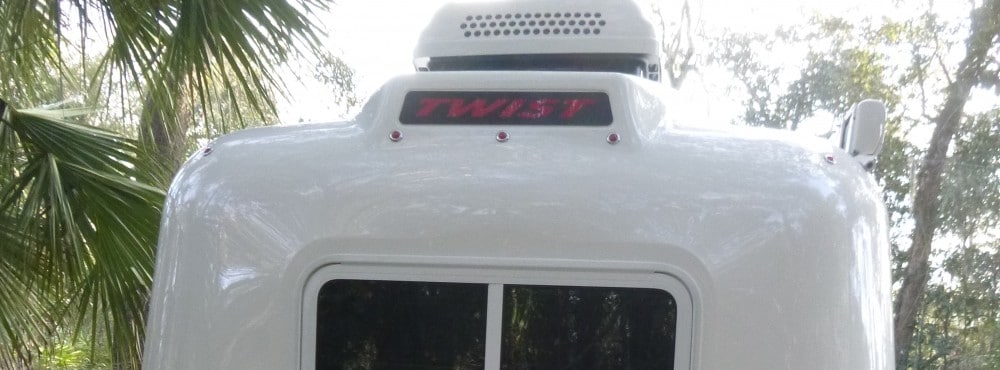

topgun2
-
Posts
6,878 -
Joined
-
Last visited
-
Days Won
390
Posts posted by topgun2
-
-
Don't know who is responsible for coming up with the idea of a "reset" but it looks like that was the ticket.
Good on you for sticking with the problem and following through in order to get things back on track.
Bill
-
My wife (Sue) and I only have just short of 20 years on you two.
I have some of the same "problem" as you in that our anniversary is on November 30, her birthday is on December 9th and then we celebrate Christmas. Sure does take some "creative" gift thinking. However, I've never even thought about bringing home a "new" Oliver and since there is absolutely nothing wrong with the old Oliver, I'm guessing that it will stay that way. Frankly, as you seem to know, it really isn't the gift as much as it is the thought that is behind the gift.
Happy anniversary to you both! Enjoy every minute of it AND the great years to come!
Bill
-
 2
2
-
 1
1
-
-
Sadly, I'll not be going that far south - I'm staying in Wyoming again this year (mainly around the Cody area).
Have fun though - the mountains are always a great place to be.
Bill
-
3
-
-
3 hours ago, rideadeuce said:
the phenomena that I observed was this cyclical loss of solar input from max wattage to zero repeating itself every 5-10 seconds (see video above).
I must have missed that part - "every 5-10 seconds" - so, of course bridge/overpasses nor trees nor passing trucks happen THAT often.
Good job in finding the real problem.
Bill
-
 1
1
-
1
-
-
Mike -
this might be hard to remember - but -
did the solar "drop out" as you passed under a bridge or some sort of "shade" (i.e. shading the panels from a passing truck or trees)?
Bill
-
Back in the day - Captain Tolley's was used by many Ollie owners on those black "gaskets" under the porch lights to help get rid of the "black streaks".
At one of the early annual Owner's Rallies, Oliver gave everyone some aquarium sealant that the owner was to use to "seal" those gaskets so that they would not cause the black streaks. Shortly after this, Oliver eliminated the black gaskets and the source of the "problem" was simply eliminated.
Great to see Captain Tolley's has other uses - hope it works.
Bill
-
1
-
4
-
-
3 hours ago, Patriot said:
I keep a decent supply of oil, air, and both fuel filters in my shop and always carry a few spares when we are traveling.
WOW!
And I thought that I was a stocking up. You're certainly set for awhile.
Bill
-
1
-
1
-
1
-
-
1 hour ago, JRK said:
I am looking at a campground along the Blue Ridge Parkway, Mt. Pisgah.
If you are going to do that then you might want to think about the Davidson River Camp Ground near Brevard.
The Davidson River is one of Trout Unlimited's top 100 trout stream in the country, there is Looking Glass Falls right on the highway (route 276), there is a decent BBQ joint and Brewery on that same road as you exit the National Forest heading south and there is all sorts of stuff in the small town of Brevard, NC.
If you decide to stay at Mt. Pisgah then be sure to stop into the Pisgah Inn for a bite to eat- the pie is good as is the trout, pot pie and broasted chicken.
If you are a beer fan then Oscar Blues is located in Brevard while Sierra Nevada is up the road towards Asheville (route 280) just west of the airport - lovely grounds and good brewery tour while Oscar Blues is a bit more laid back.
If you are a water fall person then visit Dupont State Park south of Brevard.
Bill
p.s. If you are on the Blue Ridge Parkway and have the time, there is a parking area for "Looking Glass Rock" at mile post 417. Once you see the rock then turn around and cross the Parkway. You should easily find a trail which if you stay straight on this trail (i.e. do not turn onto any trail coming in from the left or the right) a short hike down hill will bring you to "Skinny Dip Falls". Don't ask how it got its name! 😁
-
4
-
-
6 minutes ago, Roger said:
When is next year's rally,
April 30 start May 4 finish
-
1
-
-
37 minutes ago, Sparkinson said:
Question: Reading throughout another Oliver forum I saw discussion about disconnecting the charge line from your TV to prevent damage to Lithium batteries or TV alternator.
Yes - because lithium batteries can charge at fairly high rates it is possible that they can overload either/or both your alternator or wiring in your tow vehicle. With Ford F-150 this is easy in simply pulling a single fuse in the engine compartment (#17 as I recall). There are also other way to disable the charging line from your tow vehicle to include disconnecting the charge line in the Oliver pigtail or in the tow vehicle or taking the charge line fuse out in the Oliver (if present).
Bill
-
Welcome to the Family!
A wealth of information exists here on the Forum AND in the Oliver University.
Consider downloading information about your Ollie from the University to a memory stick (or if your phone/tablet has enough memory directly there).
If something doesn't make sense or if you can't find it here on the Forum (our "Search Function is not the best), please, do not hesitate to ask.
Bill
-
For years I resisted carrying a vacuum in the Ollie - simply it was too small of a space to justify carrying yet another piece of equipment. I went with a couple of 6 foot throw rugs thinking that I could just pick them up, carry them outside, shake them out and put them back. Surely this would be enough to keep the Ollie clean!
Sadly - not to be. My method was kind of OK for quick tidying up but it really didn't get my Ollie clean. So, I too resorted to carrying a re-chargeable small vacuum. Yes, I still do the "take the carpets outside thing", but the small vacuum makes cleaning the rest so much easier.
Bill
-
3
-
-
I really kike that garbage bag holder - neat, small and easy.
Thanks!
Bill
p.s. assume that you found it on Amazon?
-
Handy indeed.
A couple of years ago, Mossemi posted a similar device for use with an outdoor shower curtain he had designed. I've used mine a number of times.
Bill
-
1
-
-
Many of us now use this mod but all users should remember to check the condition of those chains beneath the wire loom every so often.
Thanks Foy for coming up with the idea.
Bill
-
1
-
2
-
-
I've watched a number of YouTube vids on how to lessen the A/C noise of RV A/C units.
Your approach looks similar to many - a combination of sound deadening materials plus smoothing the airflow inside the unit.
Nice job with nice results. Thanks for posting this.
Bil
-
3
-
-
The pic below might not help you too much, but, if you count the number of chain links that Oliver added to the basic Andersen setup you will then know how many to add (assuming that the Andersen you bought simply comes with the standard amount of chain.
From there you can then simply use the chains to measure off for the placement of the brackets. Remember, once the brackets are installed, you should normally have between 4 and 7 threads showing after the nut when the chains are properly tightened.
Hope this helps!
Bill
p.s. I've also added a pic showing the placement of the brackets on my Ollie which should help give you a reference point.

-
1
-
-
56 minutes ago, skalywag said:
Is it really a CO2 or just a CO detector?
For the most part -
Jason (W) makes and/or posts these types of posts by copying them from other sources. Therefore, the specific brands, models, and other details contained in any specific post of this sort is not necessarily Oliver specific and are generally meant for "general" reminders or "general" information.
In this specific example - we are being reminded to change the batteries in our installed safety devices - no matter which devices they really are.
Bill
-
1
-
2
-
-
From time to time members of the Forum have asked how they can "bookmark" a particular thread for future reference.
DavidS did a post several years ago that basically suggested using Apple Notes for this purpose.
Another way of doing this basically within the Forum is to "follow" the thread (click on the dark blue box at the upper right of the thread and then click on
-
"Do not send me any notifications" After that all you have to do is follow Wandering Sagebrush's advice posted above and you can see all the "bookmarks" that you have created.
-
Bill
-
-
Thanks to WS for starting us down this road and another thanks to Jason (W) for basically suggesting this method.
-
1
-
3
-
-
1 hour ago, jd1923 said:
Other items I will replace at that time:
Furrion RV Outdoor Receptacle Cover - 15 Amp - White Furrion Accessories and Parts F15RCSPSAM (etrailer.com) (not sure this is the correct part#)Instead of replacing this cover and then a few years down the road when it "yellows" again, I took mine off hull #117, cleaned it up (very well) and used Krylon gloss white rattle can paint. It still looks new after three years.
Bill
p.s. of course with the cost of a single rattle can these days and the work involved in cleaning the cover up .......
-
Glad to hear that the trip was a success! The first of many to come.
And, it sure was nice meeting the two of you in person at the Rally. Wish that we could have spent more time together.
Certainly you are no longer "Newbies". However, into my 9th year I'm still learning new things about the Oliver company and the fine product they make.
Bill
-
1
-
2
-
-
Those rubber "cushions" look like they are a bit better than the Monroe's too.
I really like the attention to detail by facing the Bulldog label to the exterior - assume that four all were installed that way. Nice job!
Bill
-
1
-
-
During the "Open House" at this Year's Rally there were a number of people who asked me what I used to keep the interior of Twist clean and shiny. Actually, I can take no credit for the product nor the formulation, but former owners of an Oliver (Cheryl and Bruce) showed me this product several years ago, and I've mentioned it a few times here on the Forum since:
"The fan was then wiped down with the same mixture I use on the interior of the Oliver – 4 parts Duragloss detailer (product #923) with 1 part Duragloss liquid wax (product #951) – in order to give it a nice clean shine."
This mixture can be used on any surface on the interior with the exception of the floor - you wouldn't want the floor to be slick. Obviously all the white fiberglass, the counter tops mirrors, stainless, aluminum - everything. All it takes is a light spray with the mixture and then wipe with a microfiber cloth. Flip the cloth over and wipe again and you are done. No streaks (even on any mirrors) and it leaves a very light coating of wax that helps repel dust and dirt.
Bill
-
7
-
3
-
-
1 hour ago, ScubaRx said:
These are what I use for any holes larger than 1/2”.
WOW!

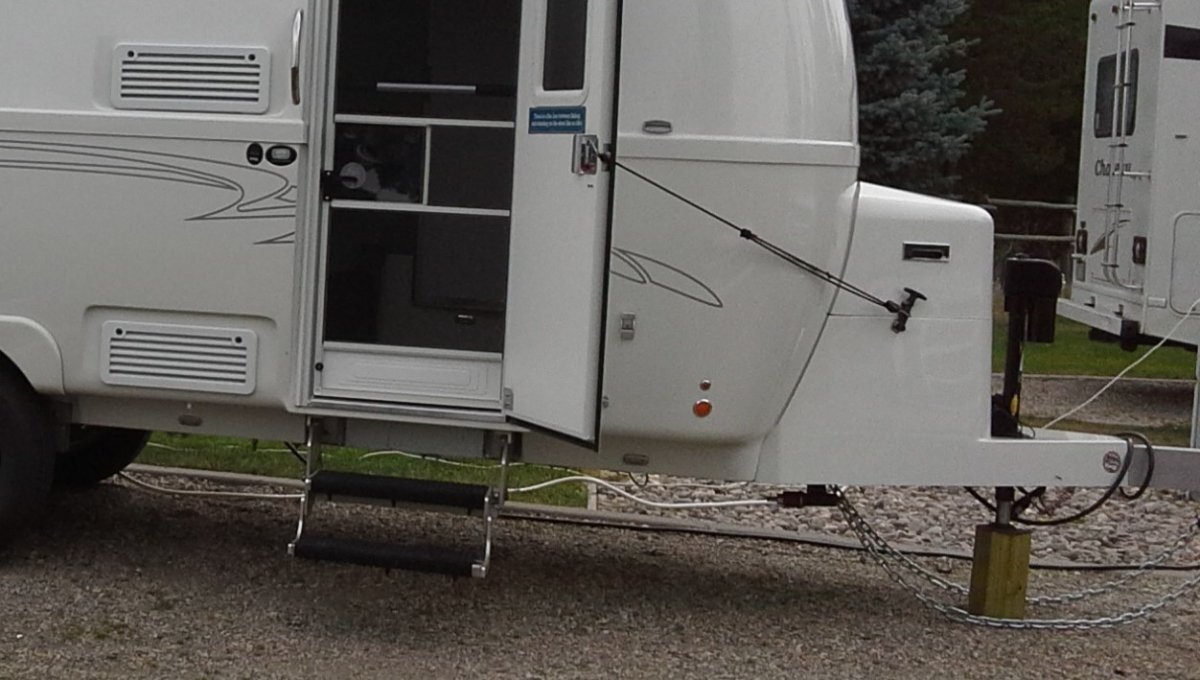
Where’s Ollie?
in Campgrounds & Parks
Posted
Carol has simply got to learn to relax - obviously, she is working way too hard!😁
Bill