All Activity
- Past hour
-
 I also like using 3M 4950 VHB tape for mounting to fiberglass. I tested several products and ended up preferring the tape. I used it to mount the solar panels on the roof of our Bigfoot camper, and it’s held strong for 18 years so far. I’ve been following your posts—and others—on the A/C upgrade and plan to tackle mine next spring. Right now, I’m leaning toward the Furrion Chill Cube, but I’ll keep researching over the winter and make a final decision in the spring. I may have questions for you then.
 -
Thanks DB - great overview and it helps. Thanks 2D, we can’t make the rally this year but hoping for next year. We are from Texas and currently in central Florida in a holding pattern due to the hurricane (but hoping to get home next week but I-10 and I-12 are going to be problematic) so we will see. We may crash the party 🙂 Yes on the Rec Pro water heater, use the hot water side to control the overall temp - same lesson we learned and I have also been removing our water pressure regulator to get the all important pressure for the water heater - that made a big difference as you stated. Thanks D&M for the notes - those are helpful in understanding what valve does what.
-
If you have Lithionic batteries, there is a round push button switch on top of each battery. If they energized the push button will have a light on. Try calling OTT before they close for the weekend. They may help.
-
Eric B .. remove btm drawer under the plywood hatch i think is were the refig is the 120 v outlet is ..loose plug?
-
Hello everyone, I'm a new owner of a 2022 Elite II, first camper for us. Having trouble with my refrigerator recognizing when hooked to shore power. Sometimes I can get it on shore power and if I move the camper it starts all over again. I checked fuses and made sure connections were good. Does sound like a control board going bad? The refrigerator works fine on propane and DC, and works great on AC power whenever it can recognize when it’s available.
- Today
-
Two weeks of feedback Apex #2 (Hull 1739)
Dean and Mary replied to Sentry62's topic in Getting Started
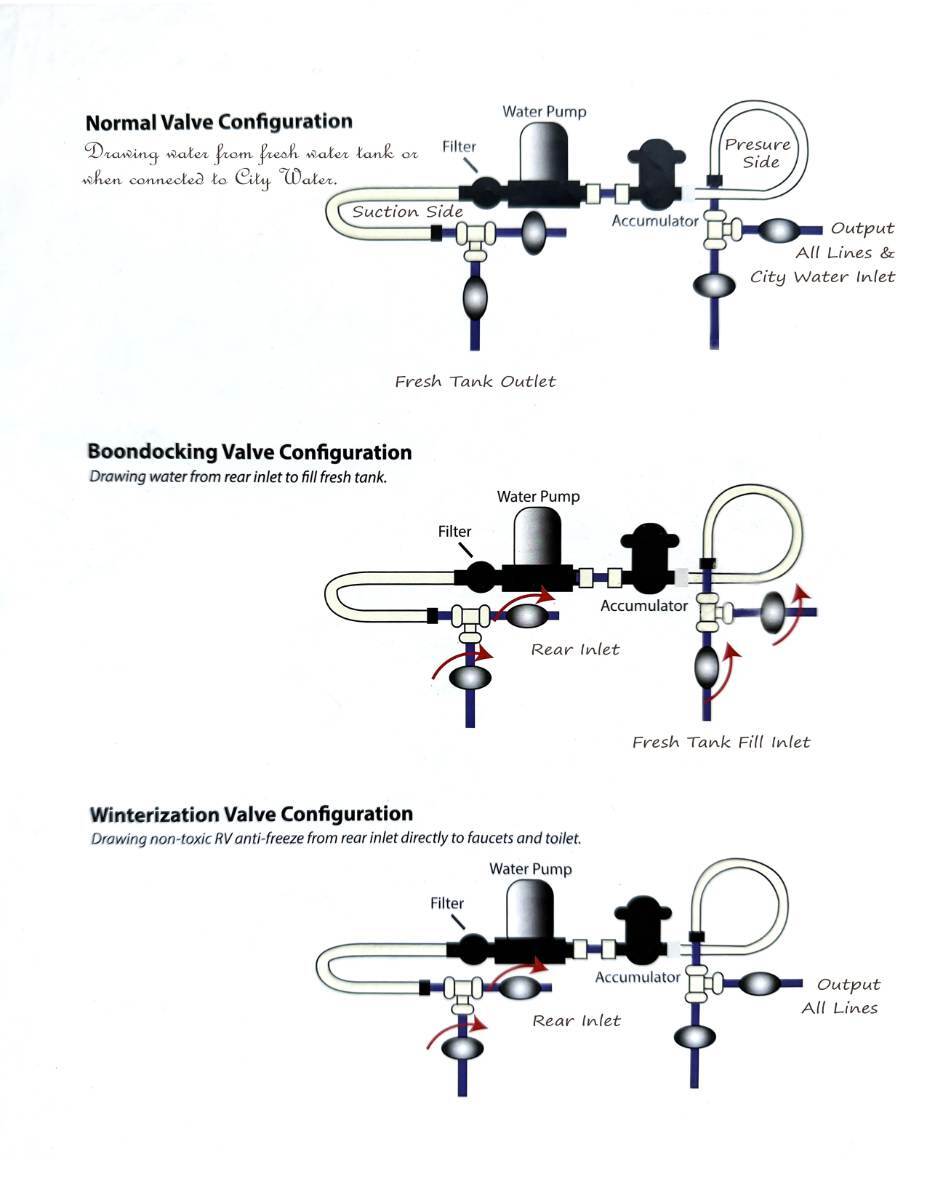
Our 2022 is new to us this year, and I shared the same initial confusion when looking at the water‑valve diagram. While it’s a great feature to have the valve positions shown based on the function you want, I also wanted to understand the actual start and end points of each line. So, I enhanced the diagram and placed a laminated copy under the bed next to the water pump. Below is that updated drawing. Please let me know if you spot any errors in it.
-
 Love the name! Watch out for any bird like woman with a good vocal range
 -
Hello Apex #2 from Apex #1, Hull #1738, 2Dreamin👋 Totally agree on the dinette cushion backs, it was annoying every time we got up from the dinette so I see a solution in our future. City water connection is on the curbside and Fresh water tank fill is on the street side. We got the compost toilet and are very happy with our decision, this was after months of contemplating it, then deciding not to do it and then changing our minds after talking with the Whitaker's at Denali National Park in Alaska earlier this summer. We did fill the fresh water tank to test out the pump and also testing out the pressure of the pump for the tankless hot water heater (THWH) and that worked great. To set our preferred THWH temperature, I hopped in the shower, turned on the faucet hot water only while DH was setting the temp to 107 which worked great for both of us actually. Using only the hot water side of the faucet eliminates cold spots with the tankless. The only time we experienced any issues was while at a campground that had 'low' water pressure which reduced how hot the water came out, the tankless also works on water pressure, this is where the fresh water pump came in handy. We find the EcoFlow to be a dream to manage, so much easier than our Airstream Interstate set-up, even after we had all the wiring ripped out, soft solar panels ripped off and an entire new battery system, inverter, etc and solar panels installed. We love the ease of operation with the EcoFlow. Enjoy your new Apex!!!!! Are you going to the rally? We are in site F20
-
Do Not Overfill Your Fresh Water Tank!
DanielBoondock replied to Rivernerd's topic in Mechanical & Technical Tips
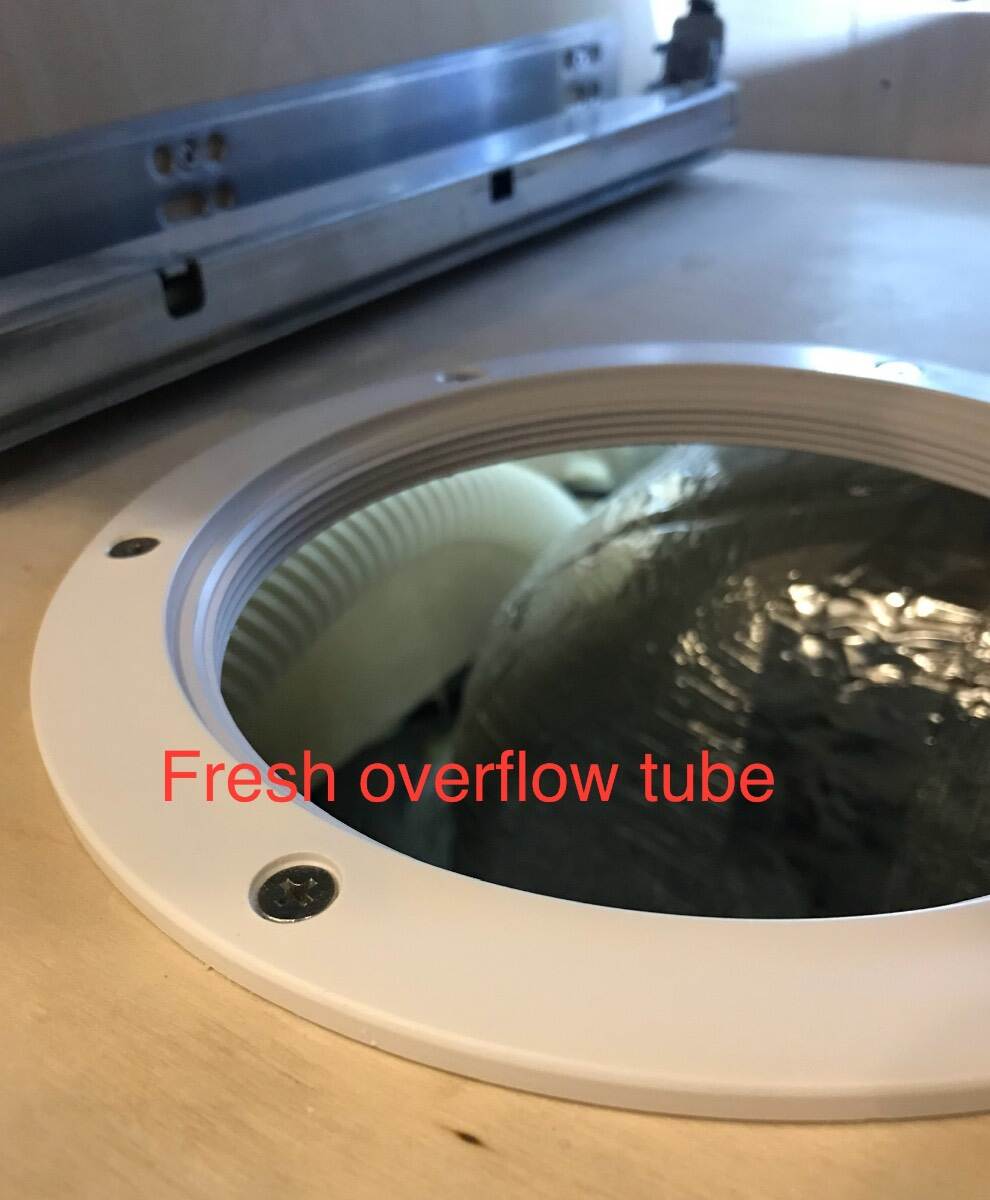
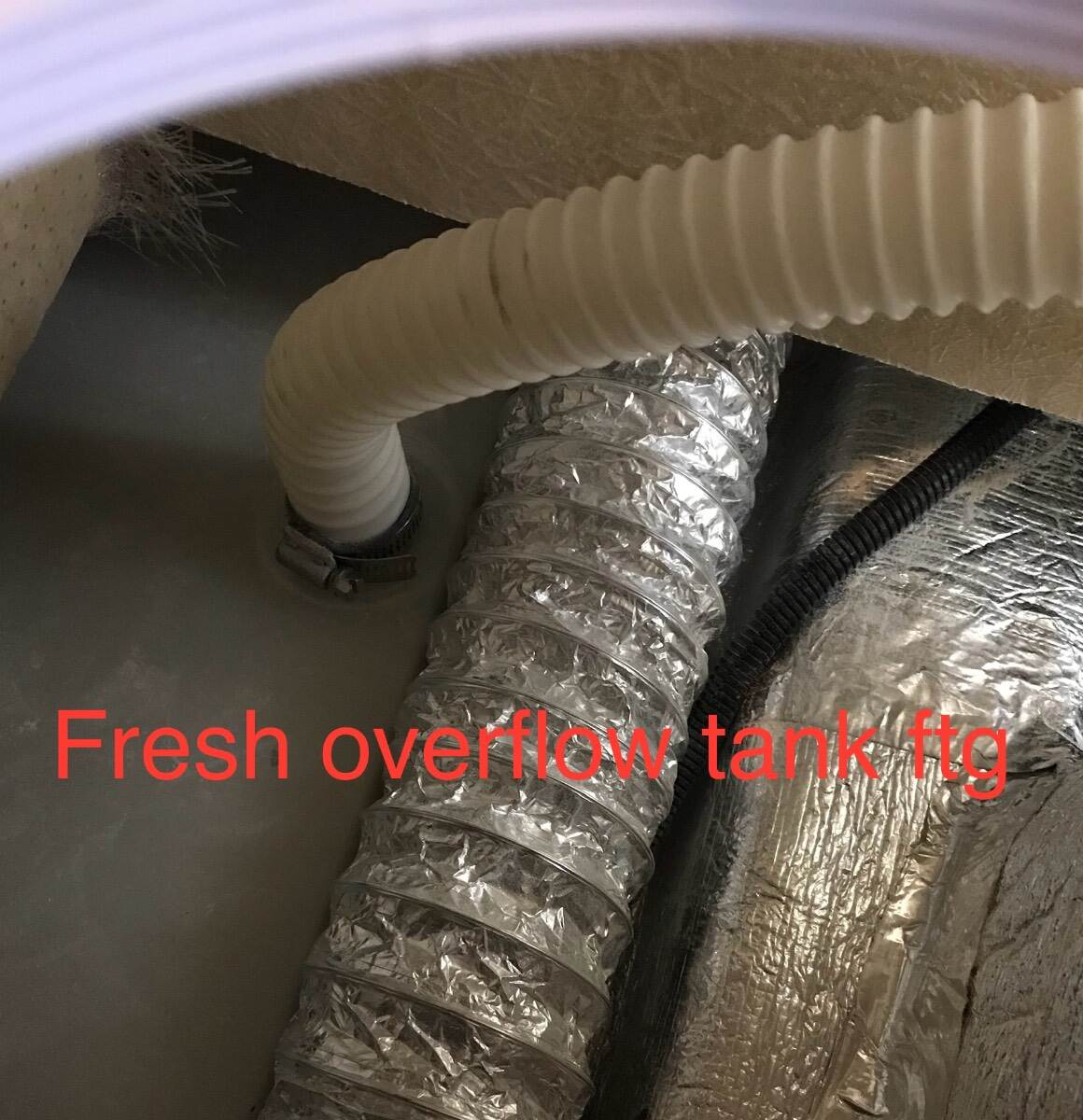
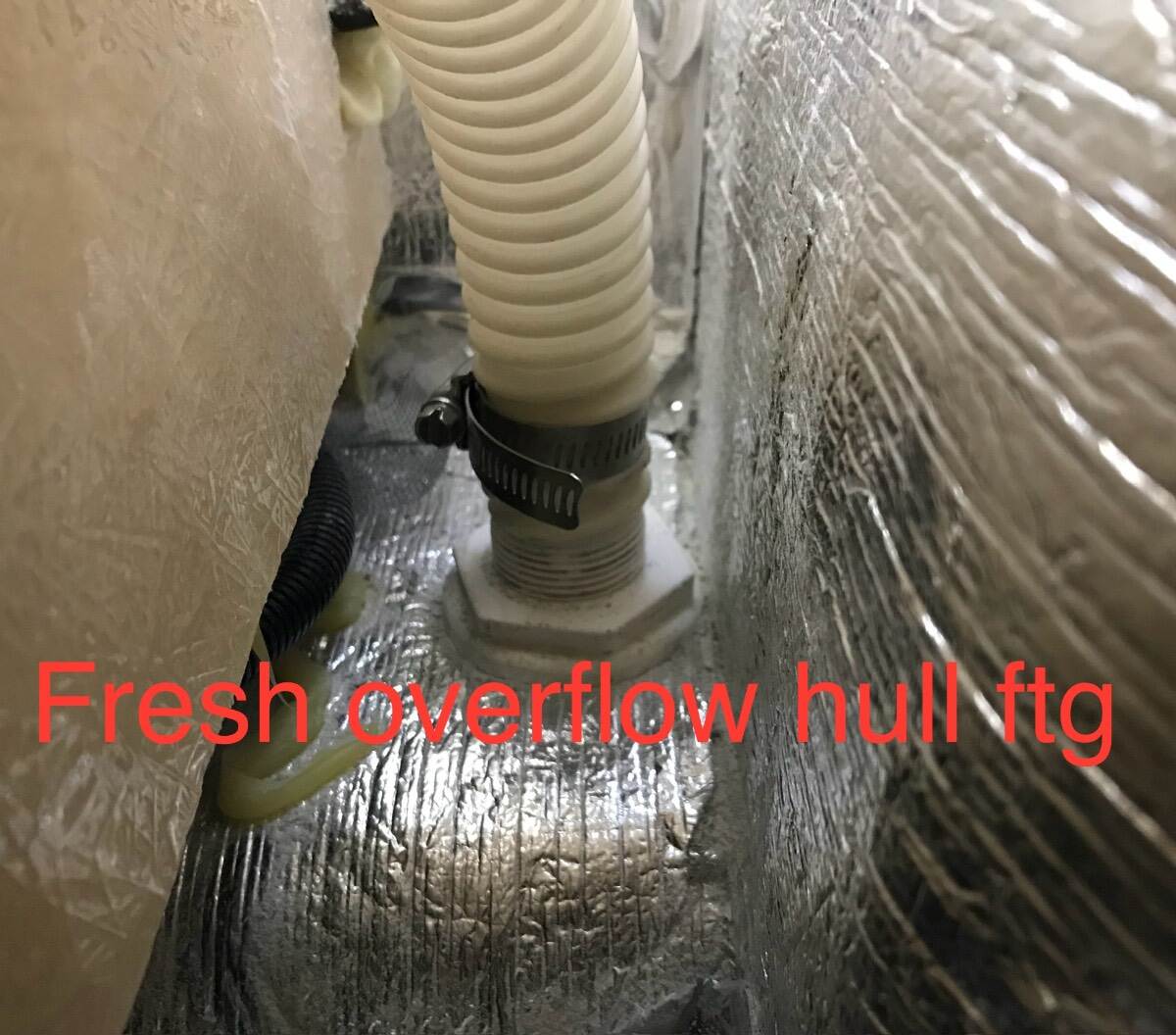
By MY2026 its now accessible from a hinged hatch under the outside table that replaced the older propane fridge vent and there's no port under the drawer. You've got access to the back of the fridge, the overflow tube and further back you'll even find a 120V for the induction that theoretically could be used for something. Problem with the monitors is they get inaccurate unless you're perfectly level, and generally aren't super accurate anyhow. There's a new system in the 27's apparently, don't know if its actually much better. -
I live in Wisconsin and camp mostly in Wisconsin, Michigan and Minnesota. We think of ourselves as 3-season campers and based on our experience consider the Oliver a 3-season camper. So for us it works just fine because we value our plumbing and hot water while we are camping. To be more technical, from our experience and what I have read, the Oliver is good down to about 20 degrees F. If that is full winter for you, then it is 4-season. It is not for us, and we don't want to be camping when it is less than 20 degrees F, so all is good!
-
Four season is a squishy topic as its not defined precisely. You can use a canvas tent four season (our boys did it in Korea in hard winters.) It just depends on how comfortable you want to be, and how much energy you have. I'll break it down Cabin heating. Most people focus on this; it just depends on how efficient you want it to be. The Oliver design (double hull with radiant barrier) is more optimized for the heat (desert) than the snow (mountains). But it handles both excellently. My last trip went from the hot desert to the snowy mountains in March, it just took some propane. If you want a more efficient trailer in snow the Bigfoot is probably the only one better, but you're just saving some propane and personally I found it a cramped trailer. Now which do you want to optimize? Actually for heat is better because you need power to cool it down, which is scarcer than propane (unless you have an electric truck bwahahaha 🙂). So I think the Ollie is an awesome choice as it optimizes on the most energy scarce side of cooling. But any small trailer with decent insulation I think is fine in very cold or hot conditions (not Airstreams! There's a reason why they have two AC's and you'd better have full hookups) Humidity This is the more important issue; humidity management is the critical issue. On the Bigfoot (for example), I think its merely OK. Just anecdotal but I followed a couple who had one on the East Coast and dealing with humidity was a big deal. The Oliver however deals with this extremely well. no wood, nothing that can get damaged for one thing. I took it to Lassen the first week it opened. We lived in a deep fog bank for a week. Thick - you couldn't see the rest of the campground at times and it was a cold humidity which is bad. But the condensation was absolutely not a problem. The windows watered up, but as they're the new flush mount its outside the gasket, I just opened in the morning and squeegeed off outside. In the cabinets all the clothes needed to be pulled off the walls - yes. But the condensation just dripped down into what must have been designed in on purpose which is a condensation trip 'tray'. Impressed the hell out of me, Oliver raises the cabinet bottoms with a (honeycomb probably) panel, with a channel along the sides. This means it just drips down and collects there, I would just go and soak it up once a day. Only other thing was keeping stuff off the closet walls. Anyhow when I got it back down it took a day to dry out 😅But there wasn't a single trace of humidity damage or anything inside. Conclusion IMO it truly is four season. No trailer is perfect for all conditions or use cases. The Ollie optimizes somewhat more for hot than cold, but the advantage of is it's cheaper/easier to heat a trailer than cool a trailer. In roasting hot conditions the walls are cool to the touch due to an air gap, no heat channeling and radiant barriers. For condensation (hot or cold) its probably best in the business.
-
I don't but I do check them regularly. Thanks for your suggestions - they make sense to me. Love your tag line by the way "die young - as late as possible".
-
Looking for input and real owner feedback on your thoughts of the Oliver being able to handle 4-season climates. Appreciate all the information and perspective on this forum.
-
Two weeks of feedback Apex #2 (Hull 1739)
DanielBoondock replied to Sentry62's topic in Getting Started
Assuming its the same as the 2026 its super easy, just remember there's basically two modes you use the majority of the time. Pump or city: For the back ports you either fill the tank directly (streetside) and use the onboard pump, or you get pressurized city water (curbside) with the pump off. Boondock fill: If you want to fill unpressurized from a container, use curbside, with all the valves reversed. Including the one that's far at the back of the trailer in the T. Reverse all the valves again to use the pump normally. That's it. The third configuration is for maintenance; winterize, sanitize or descale I (and others) only use the onboard pump and fill the tank with softened water. I have a small RV softener installed under the twin bedside table used during filling. I also have a few small inline bullet hose softeners I might use sometime for pressurized water, who knows. -

Do Not Overfill Your Fresh Water Tank!
Rivernerd replied to Rivernerd's topic in Mechanical & Technical Tips
Steph and Dud B: Good point re: using a pressure regulator when filling the fresh tank. I have both a filter and a pressure regulator set to 35 PSI on the "trailer" end of my fresh water hose. Both were in place when the event described above occurred. -

Do Not Overfill Your Fresh Water Tank!
Steph and Dud B replied to Rivernerd's topic in Mechanical & Technical Tips
Wow. Sorry you went through that! Hope everything's ok. Unfortunately for us, going by the tank monitor is ineffective. It reads full long before the tank is actually full. We will use a pressure regulator when filling and monitor closely, though. Thanks for the warning. -

Custom Mud Flaps for the Tow Vehicle and Oliver
BackofBeyond replied to jd1923's topic in Ollie Modifications
Nice Job. Interesting revisit John E did an amazing job- I did JD's mod - and was really happy with the results, but honestly the biggest bang is between the TV and the Ollie. I have a bunch of ideas for this - being a bit of a Macgyver myself but having gotten out the scene for a few years - went to the back burner. As that will soon change, I will have to revisit. Again, good to see another take on the issue. -
Do Not Overfill Your Fresh Water Tank!
Rivernerd replied to Rivernerd's topic in Mechanical & Technical Tips
Townesw: Thanks for the tip. I neglected to mention that water was actually flowing from the overflow tube when the trailer shifted, yet the bowing/damage still happened. Our 2022 hull #1291 has a 1/4" plywood cover over a hole in the location you described. I plan to remove it and verify if there is an obstruction of the overflow tube. That said, I still plan to monitor the fresh tank sensor when filling, regardless of what I find! -
I have seen that "rock" before. Well maybe its companion. So great to hear of the new adventures planned in your new Ollie. If you make it down to the rally and would like a spot on the way or after, we are just up the road, lot of space and a site if your so inclined. We would luv to have you -Just message me - I around. Enjoy.
-
Two weeks of feedback Apex #2 (Hull 1739)
BackofBeyond replied to Sentry62's topic in Getting Started
Great to hear the initial "break in" is going well. Honestly, it does take a little trial and error to get comfortable with the valve configurations. Interesting choice on the reg toilet, vs the composting toilet, as the APEX is skewed towards the non-facilities spots. Took a real hard look at the Apex, and really like the blacked-out style, although I don't understand the tire choice, it is a great looking rig overall. Seems the II is a better fit for our future RV needs. Hope your journey continues to be all that you imagianed. -
I would replace the one, put the spare on opposite side of the same axle. Put the other two best on the other axle. The most visible worn tire in as spare. Unless the tires have been in full sun, in the desert (say Phoenix), generally good until 6 - just inspect them regularly. Now the caveat - if I was headed out on a long-term trip - months, and headed up to AK, and beyond, different story. Do you run tire pressure monitors?
-
While camping this week I noticed a slight sidewall bulge on my streetside rear tire. I just replaced all my tow vehicle tires so was not excited about buying more tires right now, but a sidewall bulge is never a good thing. I have the Goodyear Endurance ST tires on my Oliver and with the trailer only 3 years old and less than 10,000 total miles on the trailer, I was disappointed in the tire longevity/durability. I have been running about 55 psi in the tires as a compromise on ride quality vs tread wear/mileage. I know some of you run even less pressure to save the springs, but lower pressures do stress the sidewalls more. I then looked closer and the date stamps on the tires are late 2021 so the tires are actually about 5 years old, not 3 and 5 years is about the life of a trailer tire. So despite low miles and inside storage, I am leaning toward replacing all 5 tires (including the spare) and increasing my running tire pressure some. I abhor the idea of changing a streetside tire along the road on a trip after a blow out. What would you do? And don't assume your tires are the same age as your trailer.
-
When I first saw the title of your post I thought you were fighting the dreaded No-see-ums that get past the screens. I would second, or third, the recommendation to get CGI to do a ceramic coating for you. They really are experts and outstanding young men with an awesome work ethic. The two products that I got from them for after care are 1.) Ceraglo - soap to wash and 2.) Shine & Shield - to use after washing... it helps to keep the ceramic coating fresh. CGI will be at the rally and would be happy to inspect your trailer and give you a quote on ceramic coating. Scotty
-

Do Not Overfill Your Fresh Water Tank!
Townesw replied to Rivernerd's topic in Mechanical & Technical Tips
@Rivernerd Remove the drawers on the left side of the drawer stack under the kitchen sink. Look for a hatch plate in the bottom of the cavity. If you have one you should be able to remove the overflow tube to check for and remove any obstructions. The service dept cut that hole and installed the hatch in May 2018 when I suspected that the hose clamp on the through-hull fitting was loose. I have on my to-do list (still) to enlarge that opening to allow easier access to that area between the hulls. I think the factory started placing that access hatch in trailers built after that. Bill 2018 Hull 313
-
Dean this is very helpful. unfortunately i left my volt meter that i normally carry in the trailer at home but i will try to manually raise the hitch jack with the hand crank tool and then go into town and buy a cheap voltmeter at an auto shop so I can check the batteries. i have lithium ion batteries. and then check voltages from there. i will check the manual and look for wiring diagram. maybe someone at this camp ground has a voltmeter.