All Activity
- Today
-

Nissan Titan XD - Our New Tow Vehicle.... WHY?
ScottyGS replied to ScottyGS's topic in Towing an Oliver
Another update for anyone stumbling onto this old post. You will not need the Anderson WDH with the Titan XD. The towing guide is confusing about "required" vs. "recommended" but does not mention the XD model except for mentioning that a goose neck trailer mounts are available for truck. On Page 10-38 of the manual in the asterisk footnotes for towing with the XD it states recommended when towing over 5,000 lbs. I am still using the Anderson because I am so used to it after 8 years of use with an F-150. But the manual clearly states it is only recommended. On another note... After upgrades to the 5 leaf Alcan springs and the larger Nev-R-Lube Axles, the trailer hits a bump and just settles right down. No bouncy bounce 4-5 times like it did with the ford. Happy Camping, Scotty -

Filtered valve stem cores
John Dorrer replied to Steph and Dud B's topic in Mechanical & Technical Tips
We had them vacuumed out, tires balanced, and metal valve stems put on to comply with TST tire monitors requirement of metal stems. We used the $25 gift card against the bill at the Truck Tire Shop. Work was done in 2023. - Yesterday
-
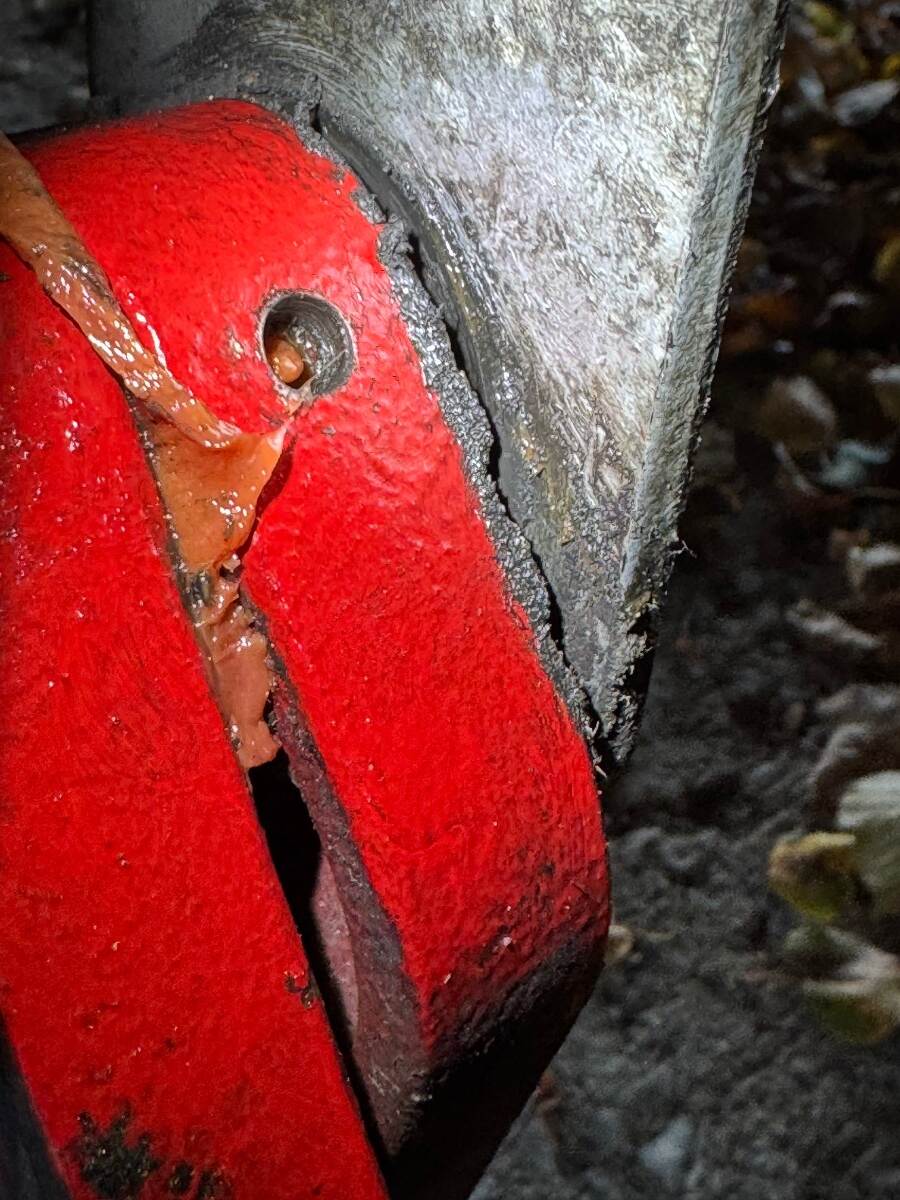
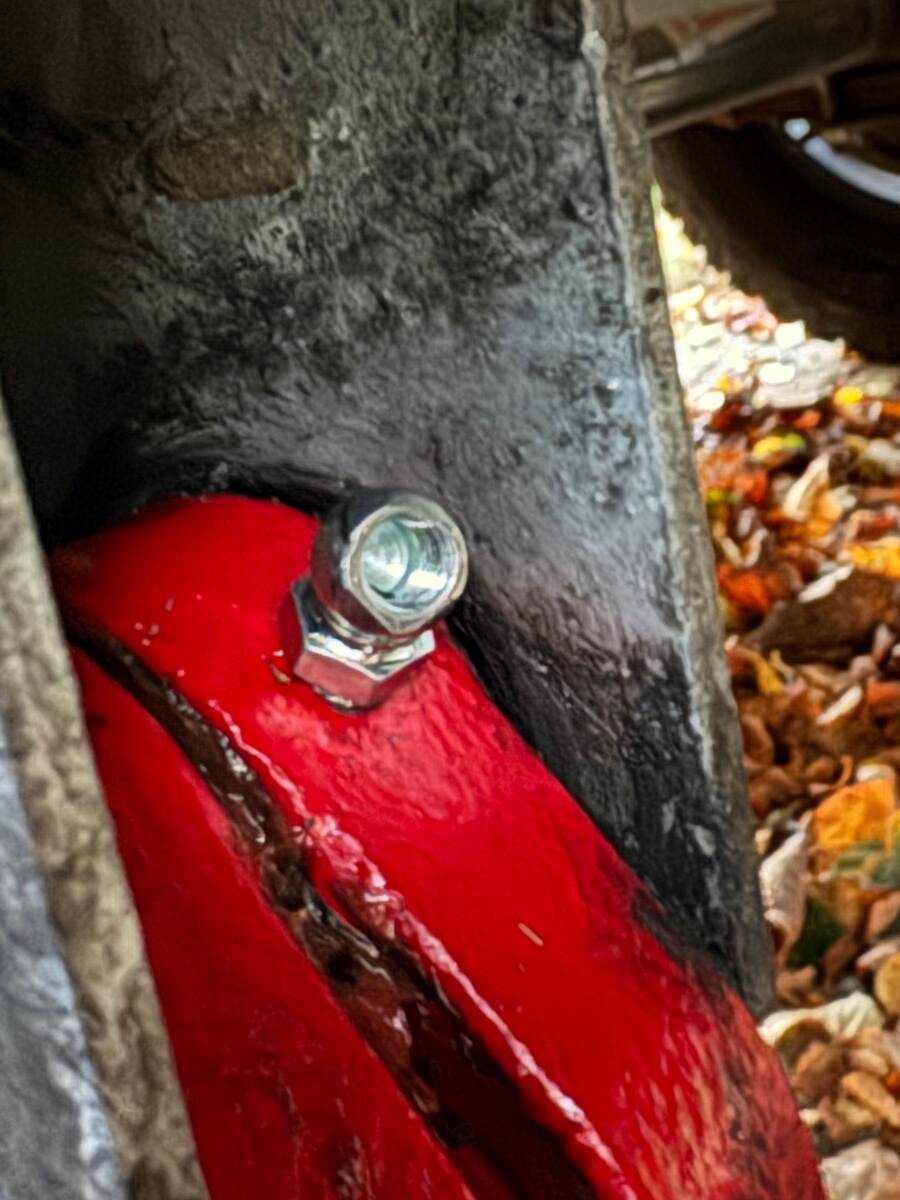
 Fixed! The threads in the hole looked pretty shallow. I suspect the wrong size drill was used, or a worn one that wobbled oversize. I found a good way to better a ces the hole on to of the EZ Flex. I removed the rear wheel, then lowered the trailer partially onto the front wheel. This pivoted the toggle for easier access. I didn’t go too far, because I didn’t want to flip the shackles. After trying a couple methods to get the M7 fitting started, I resorted to the tried and true method of pounding it in with a socket over the top. 😮 That’s never coming out! I put the nipple back on, greased it, and put the wheel back on. Ready to head to Florida in January! Thanks for the suggestions.

-
@Dean and Mary Please go back and read my edit on the previos post, it may shine a new light on things!
-
Thanks Geoff. Since I will have a switched positive signal available from the 7-pin connector whenever the vehicle is running, my plan was to use that signal to pull the H-pin high and turn the Orion XS on. While reading through the Victron documentation, I came across the statement: "Engine shutdown detection should be switched off in the Victron Connect app because physical control via the H-pin tells the charger explicitly when to turn on and off." Your above statement is correct and confirmed, so not sure I need to test it. Okay, I am now rethinking my installation choices. I asked AI to list the disadvantages of using the H-pin & came up with this: When you bypass the integrated Engine Shutdown Detection feature on the Victron Orion XS and instead use the Remote H-pin connected to an ignition source or a physical switch to turn the unit on and off, you introduce several distinct disadvantages: High Risk of Starter Battery Drain: If the vehicle's ignition is left in the "ON" or "Accessory" position without the engine actually running (e.g., listening to the radio, updating software, or running diagnostics), the H-pin will see voltage and force the Orion XS to start charging. At its full 50A capacity, it can rapidly drain or damage your starter battery in minutes. [1, 2, 3, 4] Increased Wiring and Installation Complexity: One of the core benefits of the Orion XS is that it can detect whether the engine is running purely by analyzing the voltage on the main heavy-gauge power lines. By turning detection off, you are required to physically fish and route a separate, auxiliary signal wire from your vehicle's fuse box or ignition circuit all the way to where the charger is mounted. [1, 2, 3] Loss of Alternator Overload Protection: When Engine Shutdown Detection is active, the Orion XS constantly monitors input voltage and can dynamically scale back or temporarily pause charging if the alternator's voltage dips below a safe threshold. Forcing the unit on via the H-pin and disabling detection strips away this intelligent automated cushion, meaning the charger could overwork a smart alternator at idle. This second bullet point does not really apply to my installation, since I already have a dedicated wire from the 7-pin connector terminated in the trailer. However, the other two bullet points have me reconsidering whether I want to use H-pin control at all. At this point, I don't believe I will use that option. That brings me back to my original plan of using a physical switch inside the trailer to enable or disable the L-pin-to-H-pin jumper. I would also have the option of controlling the charger through the GX device or simply unplugging the cable to the tow vehicle. My main concern is those situations when it is late, you pull into a place like Cracker Barrel for the night, and you do not unhitch. In that scenario, being able to flip a switch inside the camper provides peace of mind. It is a positive way to ensure the Orion cannot draw power overnight, regardless of any software settings, detection logic, or wiring configuration. I appreciate being able to use the forum members as a sounding board while I work through these options. Discussing the pros and cons with others often helps me think through scenarios I may not have considered and ultimately arrive at a solution that best fits how I actually use the trailer.
-
For anyone else with a 2022 that got tires with balance beads in them: We installed the filtered valve cores Oliver provided and run the tires with external tire pressure sensors. This year, when I removed the sensors for the winter, I found that 3 of the valve cores had loosened on their own and were leaking, while the 4th one failed altogether. Here are the replacements: https://a.co/d/0dIxCKgF I recommend you keep some on hand along with a valve core replacement tool.
-
The idea could work if you want additional assurance that the charger powers down. But use the H pin (remote on/off), not the L pin, and remove the L–H jumper, because a signal on L overrides the voltage detection and forces the Orion on, the opposite of what you want. Remote on/off on H acts as a permission where the Orion only charges if H is high (12 V) and the normal voltage conditions allow it. However, Victron’s manual says to turn the voltage detection off when using remote H signals. . . so it may not work as you intend. Test it to assure that both conditions (voltage detection and H pin) will work together. Verify that with the engine running and the 7-pin unplugged, the Orion powers down. Hope it works for you! Geoff I added an edit because this is hard to wrap one’s head around it, and when better explained you might change your mind. You can’t use the L pin for a redundant shutdown because L is only a trigger for “on”. When the L signal goes dead, the Orion just falls back to its voltage detection to turn off. The H pin is needed for shutdown. If the Orion fails to see that the engine is off because of incorrect settings, it could stay on. With the 7-pin wire on H, and the L–H jumper removed, the 7-pin goes dead when the engine is off, and that turns the Orion off . Victron suggests turning off voltage detection when using H. Either way, a dead H pin shuts the Orion off. What’s uncertain is whether the voltage detection also stays active as a backup if you leave it on, so test it. Having said that, I’d reconsider the idea altogether because I don’t believe there is a credible failure mechanism that necessitates using pin H. We forget that Orion has an “Input voltage Lockout” feature with default setting of 12.5 volts which would shut it down probably leaving enough TV battery for a start. We seemed to have digressed from the real benefit of using Pin L to turn on the Orion when quirky smart alternators fail to do so.
-

Curosity concerning Truma water heater straps
Snackchaser replied to FloraFauna's topic in Mechanical & Technical Tips
I remember a strap on our Truma was off because the hold holddown screw was stripped out. However, I think Oliver probably adds the straps as belts and suspenders. In my case, the screw was pulling the strap tight and the installer torqued it too much and stripped it. I replaced with the next size larger screw and the tension from that screw tightened the strap like a piano wire. I think that probably contributes to straps breaking in other installations. The Truma is designed to be mounted with the flange screws, so I wouldn't call it an urgent safety concern. But it is certainly worth repairing. -
I did for a story, and I had to complete a media release form. Nothing further though. I figured it to be a fishing expedition of sorts, to see if there was good content and interest.
-

Curosity concerning Truma water heater straps
Geronimo John replied to FloraFauna's topic in Mechanical & Technical Tips
OTT does react to significant issues, not with a mass mailing/email but rather targeted ones. What may appear to be a slow response to an issue I suspect is caused by their: A. Looking into the validity of the concern B. Assessing just how hazardous the concern could be. C. Then doing the research of the specific owners with that specific situtation. I too have not gotten such a notice. So I guess we are amoung large number of OTT owners that are the most lucky. GJ -
After some on-the-road use, you'll find that all that matters in a DC-DC charger is that it turns on to BULK charge and gives you 40 to 50Ah for every hour towing. Absorption and float are final charging modes used to bring SOC up to 100%. BTW, this was a lot more important for LA batteries vs. LiFePO4. Our solar charger will bring SOC up to 100% when parked at home. When traveling we are most often between 50% to 80% SOC, so the Orion is almost always in bulk charging mode when towing. My goal is tow a half day and add 200 Ah to battery SOC for when we get to our next campsite! 😎
-
Has anybody gotten a reply from OTT @Aaron Wolters after emailing a picture?
-

Curosity concerning Truma water heater straps
jd1923 replied to FloraFauna's topic in Mechanical & Technical Tips
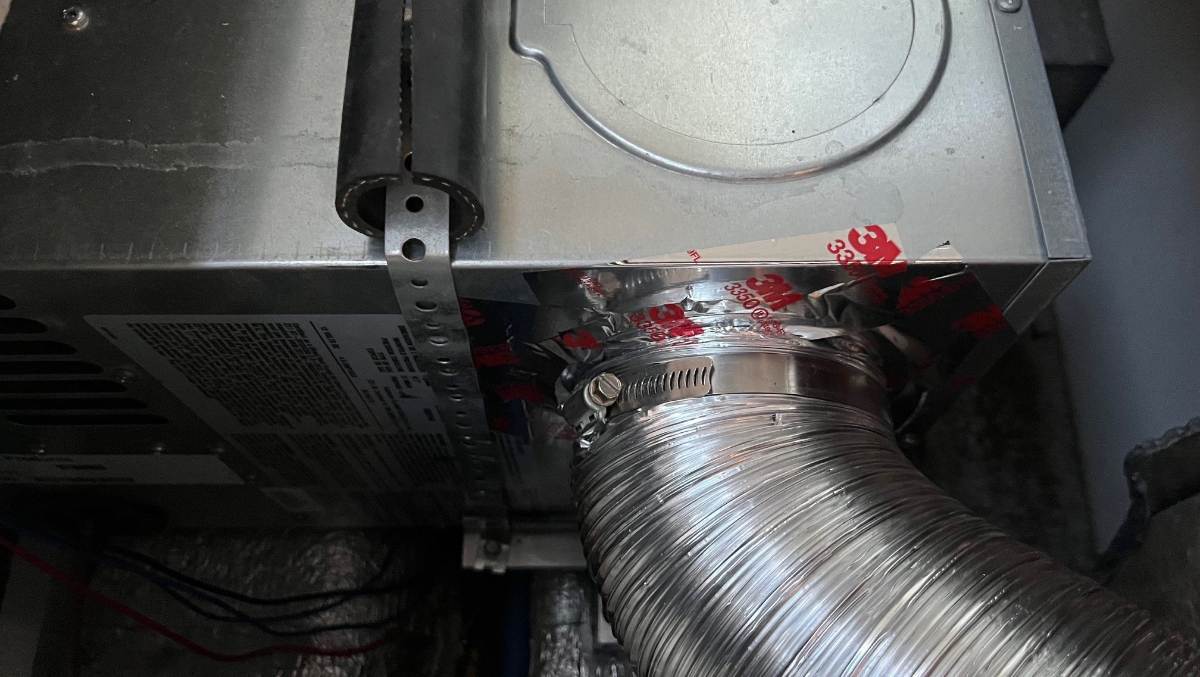
Our Suburban 6-gal HWH has a foam insulated casing and does not have hold-down straps. I'm uncertain in how it is secured besides the many screws holding the exterior plate, and the water and LP lines and electric. Our Suburban furnace was replaced by OTT in 2020 with an Atwood model. First owner brought it in during 2018 complaining about excessive noise. When they didn't fix the noise, he brought it back in 2020, the service ticket ordered the replacement furnace. I remembered this picture I had. It shows the furnace with the same kind of strapping holding it down to the platform below. The strapping was always a little loose and I put the section of heater hose on it years ago to add some cushion.
-
One hopefully final point regarding wire gauge. If the installed wiring produces a 1.2 volt loss when the charger is in absorption mode and drawing 50 amps, that voltage drop decreases to less than 0.10 volts when the charger is in float mode and drawing just a few amps. This wide variation in voltage drop can make programming the Orion more difficult because the charger sees different voltages depending on the charging current. Most voltage drop calculations focus on maximum current, but the Orion's charging current changes significantly as it transitions between bulk, absorption, and float stages. As a result, the voltage drop is constantly changing as well. Larger wire not only improves charging efficiency, it reduces the variation in voltage seen by the Orion across the different charging stages. That makes voltage-based engine detection and charging parameter adjustments much more predictable and easier to dial in.
-
 BerserkingYeti joined the community
-

Curosity concerning Truma water heater straps
FloraFauna replied to FloraFauna's topic in Mechanical & Technical Tips
Exactly! This will be my main question to OTT as well as how else is the water heater attached (as access and sight lines are difficult). -
Curosity concerning Truma water heater straps
FloraFauna replied to FloraFauna's topic in Mechanical & Technical Tips
Absolutely agree! I would like to see rubber bushings in there and am contemplating my options to add a bit of shock/vibration absorbing/dampening. -
John, Yes, I had already purchased the 50-amp Orion and have it mounted, although I haven't run any of the wiring yet. I also purchased the Mobile Solar fan because my installation requires the charger to be mounted horizontally. Had the 70-amp Orion been available before I made those purchases, I likely would have gone that route. At this point, however, I'm committed to the 50-amp setup. If the Orion 50 ever fails, I would probably replace it with the 70-amp version. I am curious how many changes Victron actually made between the 50-amp and 70-amp models. From the outside, it appears that much of the increase may come from the addition of active cooling and perhaps some upgraded output-stage components.
-
Yes, I agree. These wire reducers, shown below, may be a little too large to fit, but I'm going to give them a try. If they work, they should eliminate the additional connections and potential failure points you mentioned, which would make for a simpler and more reliable installation.
-
And I agree with everything you wrote in these posts. ”The tables” re voltage drop and real world measurements are showing the tables are (engineered on purpose) to be conservative. Maybe you already purchased the Orion 50 and if so perhaps it could be returned. I believe with 1/0 wire installed you can exceed 50A. I’m in the 40s in the Orion 50A with only 4 AWG and the Orion 70A could be getting over 60A. At the same time, I truly understand if you’re about done with sourcing parts, the hardest, longest part of any DIY effort!😎
-
Oh, my mistake. I thought I had read that somewhere and was trying to confirm it, but I found that it was not true. Sorry for the misinformation. My confusion came from the fact that when the door is open, the display panel only shows "Door Open." It does not display "Trailer Connected" until the door is closed, which led me to draw the wrong conclusion. The Anderson SB175 can be used with 1/0, 1, 2, 4, or 6 gauge wire. It does fit the hand better and I added the handle kit.
-
I appreciate the explanation of the potential issues that can arise when using the 7-pin tow harness to trigger the Orion. Those are important considerations and something I have spent a fair amount of time thinking about. My plan is to use the 7-pin connection as a redundant method to ensure the Orion is powered down when the vehicle is not running. At the same time, I intend to configure the Orion's voltage-sensing parameters as if no external ON/OFF control were present. That way, the charger should still operate properly based on voltage conditions, while the 7-pin trigger provides an additional layer of assurance that it remains off when the tow vehicle is shut down.
-

Curosity concerning Truma water heater straps
Ollie-Haus replied to FloraFauna's topic in Mechanical & Technical Tips
I’ll send a pm regarding my fix. -
Wow, I did not know about the Door Closed condition! I like it. Also good to know when you are sitting there in the front seat looking at the numbers and not seeing any current and wondering WHY??????? The lugs inside the housing of the SB175 can also support smaller cables.... such as our #4 AWG wires. The contact point of all the various lug sizes listed is the same. I like having oversize contact points so went with the larger SB175's contacts with the smaller #4 lugs. Besides the SB175 fits my hands better! GJ
-
Curosity concerning Truma water heater straps
Geronimo John replied to FloraFauna's topic in Mechanical & Technical Tips
The further back something is from the tongue, the rougher the ride is back there. An unknowing driver's rear utilities on a washboard road can easily see 2 to 5 G's of verticle acceleration back there. Which makes JD's statement that the wrong material used is on point. I add to that that it was not properly engineered. Hence care is needed in engineering a solution. Hence the need for OTT's involvement. The trailer axles and springs can help or hurt this issue. Stiffer suspensions genarally makes payload shocks worse. The exception is when the frame and axle slam together from having too soft a suspension. Compliant suspensons help things a bit. Having a heater hard mounted generally hurts. Allowing it the ability to float a litte ... is good.... so long as all the attachments (such as controls, water and gas lines) are engineered to accomodate such movement as well. Think about a wash board with bumps every 6" and 5 miles long. That's generation over 10,000 fatique cycles every time you pass on it. This is why so many people have trailer issues going to Alaska.... Bottom line is that the way your Truma's were secured was not up to the job. And that's a real problem. How big a one is TBD. How many trailers have this very same issue and don't have a clue about? I for one have never checked my Suburban hot water heater's attachment. Dittofor the 3,000 watt Renogy, the furnace, and everything else hidden below decks. Can I move the vertically? If so, how much? What's attached to that item and does it have the ability to flex enough not to become damaged. When doing so, I will pay a LOT of attention to anything with a gas connection first. Hence my "Safety John" approach to this topic. GJ