Geronimo John
-
Posts
2,411 -
Joined
-
Last visited
-
Days Won
68
9 Followers




Recent Profile Visitors



Geronimo John's Achievements






-
Here is a good E-rated one that I am considering for my TV next year or so:

-
 During our 2026 CONUS tour our hot water heater inside switch would not fire off the hot water heater. 120V worked fire via the outside switch. Checked for power at the water heater and there was none. Pulled the switch inside aft of the stovetop and found power on one side of it (Had to run a temp ground to do so). Jumped the wires as JD suggested and yep it made hot water. IE Bad switch. To my amazement the switch was not just a single throw/single throw, but a double pole single throw. IE there are two seperate sets of switching terminals and OTT was only using one. Moved the two wires to the other side of the switch and problem solved. Good thing to know when poking around our 2018 switches. All that said, I am wanting to get a replacement switch for my spare parts box. Any sourcing info would be appreciated. GJ
 -
Used Oliver advertisements Return to the Oliver Forum
Geronimo John replied to dewdev's topic in General Discussion
Well stated. I believe that OTT tries at all times to "Do What's Right". I wish many other firms would have their amazing integrity. GJ -
Used Oliver advertisements Return to the Oliver Forum
Geronimo John replied to dewdev's topic in General Discussion
Likely: 10+ / (the current number of OTT Owners) = a stastically insufficiant number of reasons However, if money grew on trees, many of our owners would like to have the "Gismology" of an all Victron Package. But likely more would not want the complexity of them. Keeping life simple is also a virture for many of us. Just the musing of an Ole Retired Fart! 🙂 GJ -
Outside Shower leaking into hull
Geronimo John replied to dfdouglas's topic in Mechanical & Technical Tips
Boondocking: Reasonably often an occasional hot shower is wonderful! RV Parks: Not too often. GJ -
Buffing and Waxing my Trailer
Geronimo John replied to Trainman's topic in Mechanical & Technical Tips
Our OE2 is in the sun out west in hot, dry and abrasive areas 3 to 5 months a year. The rest of the time it is stored covered in a dark barn. This year, our 9th season, I noted that I needed a finish tune-up, especially on the frontal facing areas. Was time to get out th Rupes dual action, and execute a full cut and polished. Used your method with great success. In retrospect, my annual Meguiars waxing has done the job well. For our use, I will endevour to repeat the Full Monte every five years vs. pushing a decade. The two products only cost $35 at Amazon.com and about the same at Super Walmart Centers. A good investment. GJ -
Fresh Water Tank Overflow Condition
Geronimo John replied to Wayfinder's topic in Mechanical & Technical Tips
Of course, that's were it should be. Having it poked up the tube is not ideal, but at least he has a screen. -
Fresh Water Tank Overflow Condition
Geronimo John replied to Wayfinder's topic in Mechanical & Technical Tips
keeps the bugs out of your water system. GH -
Shower drain pipe: Is this normal?
Geronimo John replied to John and Jodi's topic in Mechanical & Technical Tips
Assuming the tank is still secure in it's original position I have to agree. That is clearly a MFG Latent Defect. OTT needs to determine the obvious and fix your issure despite the warranty being out of play. In the past, they certainly would have. Suggest elevation of the above relivant posts to Jason E. GJ -
Do Not Overfill Your Fresh Water Tank!
Geronimo John replied to Rivernerd's topic in Mechanical & Technical Tips
It is quite possible that the tank openings were drilled and the shavings have partially bloced the tank overflow. Others have had such an issue with the fresh tank water drain tube. GJ -
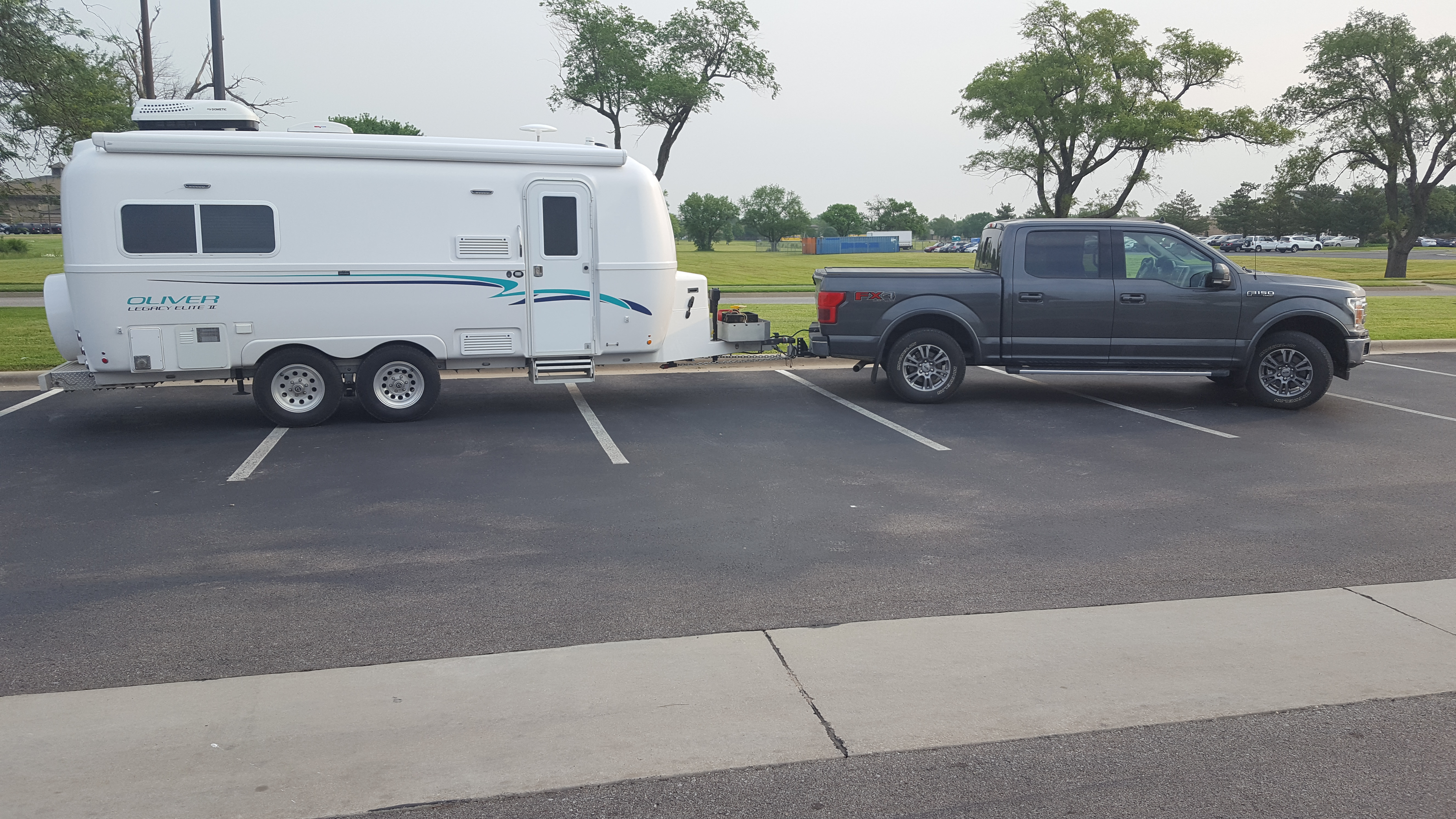
I have posted several times that a F-150 TV (Crew cab and 3.5 EB engine) and OE2 loaded at 50% of the rated tow capacity is a great match for many of us. Let me delve into this a bit deeper. With the Ecoboost (IE: False marketing by Ford as you get Economy (No Boost) or Boost (Power with no Economy) you have a great setup, especially for out west in the mountains. It does however need a set of Bilstein 5100's and air bags to be that ideal daily driver and a great TV for an OE2 combo under 12,000 pounds (That's a 6K Ollie and a 6K F-150). Unlike the Super Duty Team, I often take my truck off road , drive it daily. and accrew 60% of my miles with our OE2 in tow. Such a use mix would work well with any Super Duty truck. And such a statement does not even consider the fuel savings issue. In summary, if you can afford having two or three vehicles (Daily Driver, Off road, and TV) great for you as you can have the best of your wonderful world. But if you need to have a single vehicle for towing an OE2, occasional 4X4 off road(or winter snow use), and it is your daily driver..... then IMHO, the Super Duty is not going to be the optimal. GJ
-
Shower drain pan backup while towing
Geronimo John replied to DBL-R's topic in Mechanical & Technical Tips
I agree with JD's thoughts and recommendations. The rear gray water valve is a bear to take apart. But it appears that your problem likely is the vent valve up front. I would add that if the valve is not closing there could be two causes. The valve is partially clogged. That can turn into a mess for sure to also deal with. I would approach it this way: Step 1: First try servicing all your cables as in the below DIY. Such a DIY is long overdue for your hull 99. Mine was and it is 342. That process may result in the valve clog getting mushed and then flow down to the dump station. If that does not fix the try Step 2. Step 2: At a dump station, from inside, flood the gray water lines with a LOT of water. Use your pump hot water at both sinks. Then try max flow with the pump and a garden hosed flowing into the bathroom sink. Suggest having a watchful eyed helper. Step 3: Send a garden hose with the end cut off it from the rear of the trailer to see if you can clear it that way. Be sure to open the gray valve outside to clear the pathway. Step 4: Consider getting help with a camera inspection. Hope this helps. GJ DIY - Sanitary Drain Valve Cables.docx -
2022 elite 2 converter questions
Geronimo John replied to carpenter's topic in Mechanical & Technical Tips
does your OE2 have the progressive dynamics converter (charger)? if so you can charge it with a single Honda 2000 or 2200 eu inverter charger. No need to parallel two of them. those generators will also run your a/c, but not much else. you need to be sure to turn OFF the electrical switch on your hot water heater and not be on AC or DC for your refer if it is a three way. GJ -
I am working the same issue with my hot water heater. It works on 120V, but not on 12 volts. The light indicator on the switch does not work. It appears to have died the same time that the hot water heater would not work on gas. I'm thinking I have either one or two issues. Light Issue: My assumption is that all of the indicator switches need a yellow wire (ground) and in this case the orange and reds are the 12 volt power to the switch and then to the hot water heater. If this is the case, then the fact that there is not a yellow ground connected to the switch would for sure result in a no indicator light condition. Likely the ground is buried in the mess of wire up there. Will go snipe hunting on it later. Power to 12V Side of Heater: My second assumption is that the rocker switch red and orange wires are switched on/off by the rocker and provides power to the water heater mother board to turn on/off the gas heating. Does all the power for gas operation flow thru this switch? If so, a bad switch would either fail open or closed, causing the gas side of the heater to either run or not run accordingly. If this is the case, just jumpering the red and orange terminals at the switch should cause a light off of the gas side of the heater. Correct? Is the above logical? Thanks GJ
-
Another use for the fuse located at the jack is to make it more difficult for a thief. When leaving it in a sketchy situtation, I lower the tongue and remove that fuse. Want my Ollie, they will have more difficulty than planned for. GJ