Leaderboard

.thumb.jpg.780a61c48108d06558e15f745dfe9b5e.jpg)

Popular Content
Showing content with the highest reputation on 01/08/2018 in Posts
-
Yes, these are the correct fuses. The fuses that Oliver installed in our trailer was junk and were blown when we picked up the trailer. After purchasing and installing quality fuses like the Bussmann, we have had no additional problems. These are hard fuses to find in local hardware or electronic stores.3 points
-
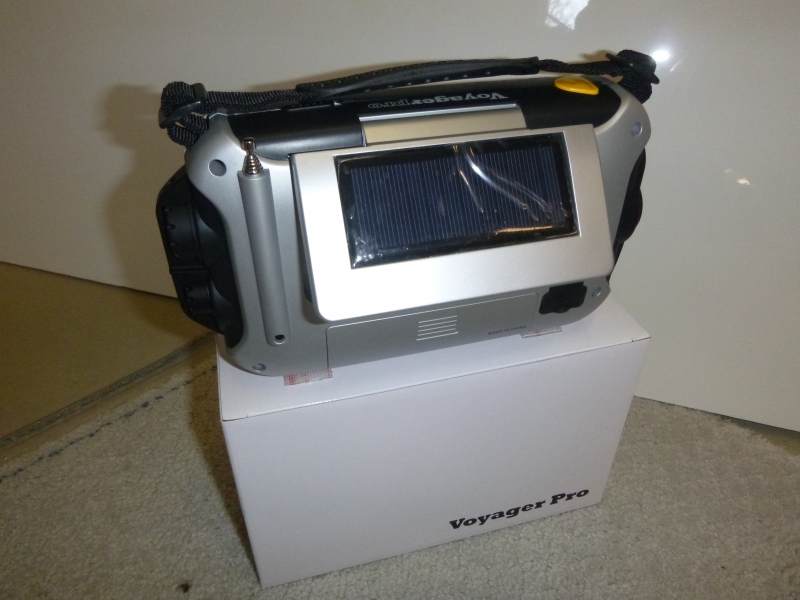
OK, time for that short term review on the KAITO Voyager Pro KA600L. The radio was about the size I expected - 4 1/2 inches tall, 5 1/2 inches long, 2 3/4 inches thick but it was a bit lighter than expected at 1 pound 2 oz. The lightness is probably part of the reason that my initial impression was that the radio is fairly cheaply constructed - certainly not made for "rugged" use like just pitching it into the back of the truck. I'm guessing that things would break if it is subjected to even relatively minor falls from a counter. However, one of the first things I did to it was to apply heavy duty "3M" Velcro to its bottom so that it will normally ride near the rear window on top of the night stand. But, with the Velcro I will be able to remove it to take outside if desired. Other than the fact that I think that the humidistat reads a touch too low, all the other functions work remarkably well. The thermometer is spot on, tuning is easy (either on automatic or via manual input) and the sound output is OK given the size of the speaker. I'll have to assume that the NOAA weather alert function works since the controls did what they were supposed to do but during the time that I tested it no alerts were issued. The radio comes with a short USB cord and my plan is to use this to power the radio from the USB port that I had installed in the rear of the nightstand. I charged up the battery and let the radio play all day. At the end of the day the battery charge indicator on the screen only showed a minor use of power. So, bottom line is that I'm happy. Given all of the things it can do this radio seems to be a bargain as opposed to the other brands I looked at. Bill
 2 points
 -
From my standpoint I believe that situations like this are one of if not the most important benefits of this Forum. Many people have said that our camping trailers are essentially a house on wheels. I agree, but, I didn't receive an owner's manual with any of the houses that I've bought over the years. And, I certainly don't expect to find all the answers to all possible questions in virtually any manual. Being of a certain age, I find it comforting and perhaps easier to have a "real" piece of paper in my hands where I can make notes, dog ear pages of interest and easily flip to where I think I'd like to be next. I also happen to like the portability and compactness of electronic media. But, I also know that I have a bunch of people here on the Forum that are more than willing to help, when and if I ever need it. Bill2 points
-
Something to consider. Propane When we started, used a Honda 7000is, converted to propane, (already had it as a house backup) rolled it in and cabled it down and it never moved. New tow vehicle, wife decided she wanted tonneau cover, so height restricted, got a Honda 2000i and converted it to propane. The advantages to propane: Fixed lowest generator weight, your fuel is always separate The whole carrying gas around, either in the generator or in a can to refuel I'm horrible about long term fuel storage and propane doesn't go bad. If necessary, it can be connected to the Olivers tanks to get through an emergency situation. Normally I just run it, them, off a standard gas grill tank. If concerned about high altitude use, you can get a higher flow adapter easy enough. The con is the initial cost of the alteration.2 points
-
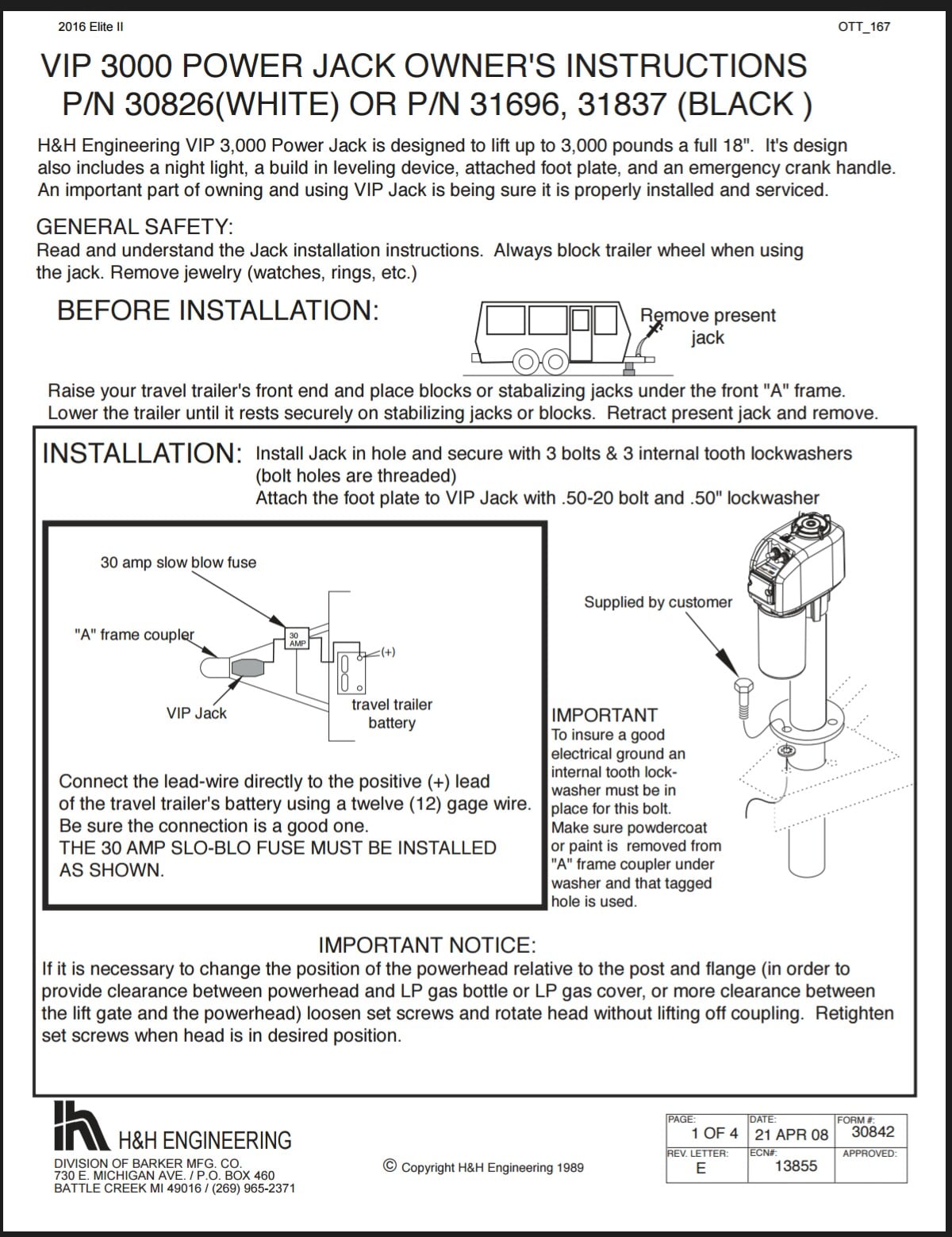
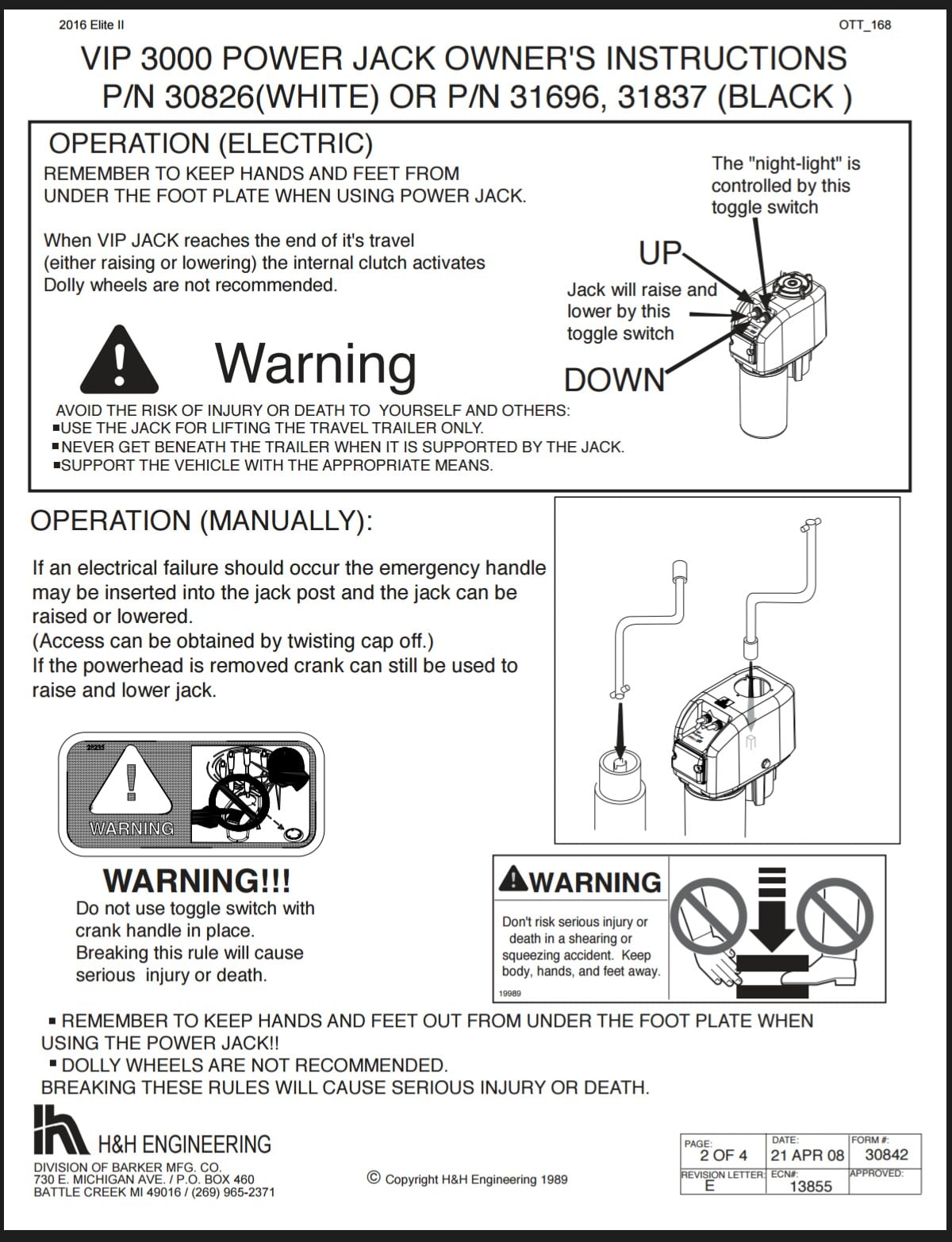
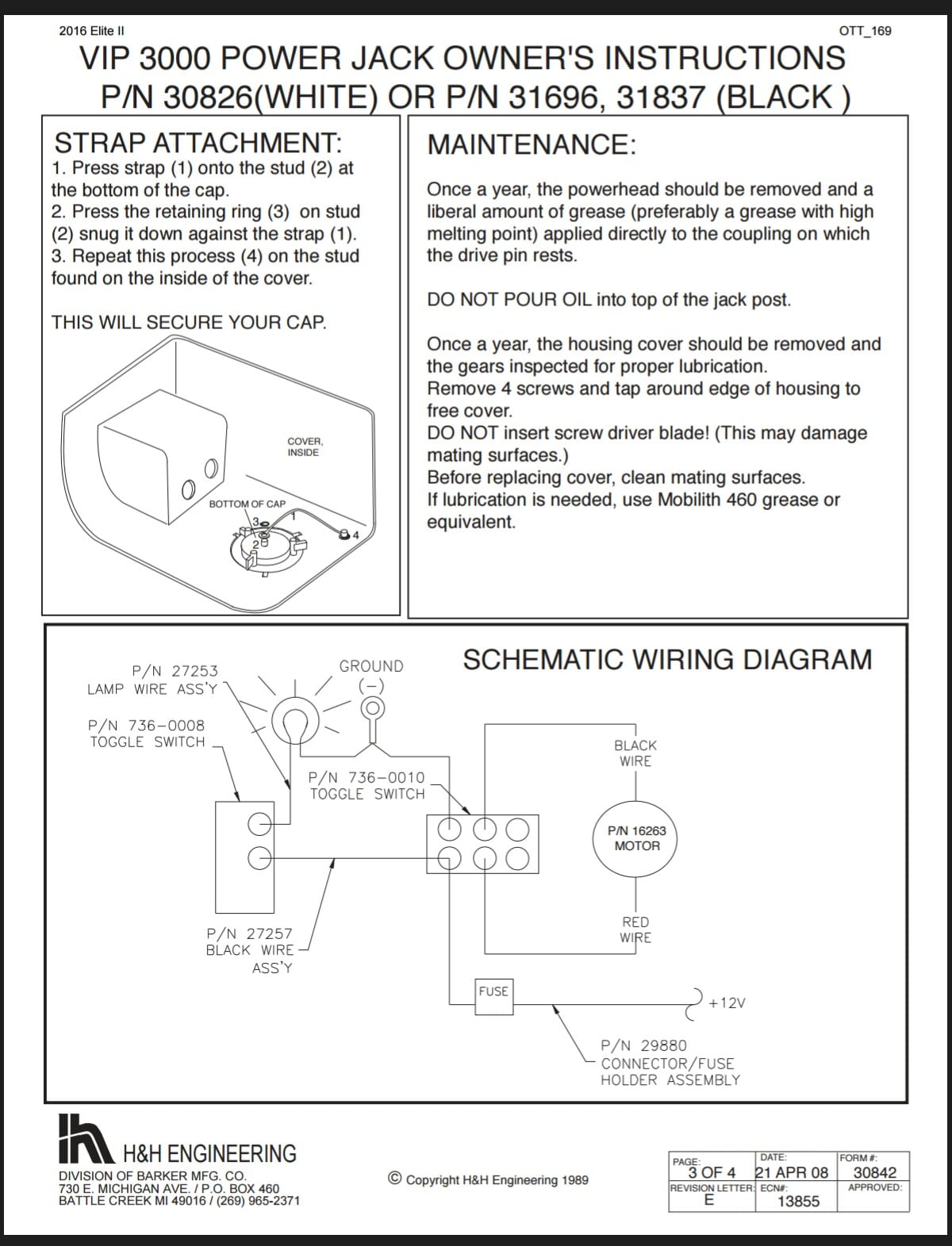
You need to have the 2016 owners manual also, that's what makes it complete... At least for me anyway. There's links to both online manuals in .pdf format on our Oliver Owners Face Book page. Both the front and rear jacks are the same. The only difference in the front is they put the plastic head cover over it that holds the light and the switch being that it's completely outside. Once you pull that off, it's the same as the rear jacks. Hey! A couple fuses was it! you're lucky :) My intermittent problem will be fixed some day... Lol. Here's the jack pages for future reference. I do agree with the 2017 manual being incomplete, but I won't go on about Oliver's corner cutting for increased profit margins on the 2017's here, these files are from the 2016 manual. They have the same interior design but the head cover of the front jack has been changed since then and needs to be pulled for access. Reed
2 points
-
1. Yes, even the 2000i will run it without the easy start. But it does max out the generator on start up for a few seconds. The easy start quiets down everything and can be ordered from Oliver or there is a thread on here. 2. Here's the link - https://www.microair.net/collections/easystart-soft-starters/products/easystart-364-3-ton-single-phase-soft-starter-for-air-conditioners?variant=30176048267 I bought the easy start because my old 2000i is 15 years old now. It starts and runs the a/c fine on its own but when ran maxed out, it's loud, so the easy start cuts it back to about 3/4 throttle on the a/c compressor start up. Technically, the easy start isn't needed but it sure makes everything run so smooth... The Micro-Air Easy Start shouldn't be an option, it should be standard because it's flat out great! I love my old Honda 2000i, it has thousands of hours on it, it's easy to work on, and if you run Mobile 1 Synthetic oil in it, it will last decades! Here's a link to the specs - http://m.powerequipment.honda.com/generators/models/eu2000i The reason that I wouldn't buy the Yamaha, is the difference in weight... At 45lbs, I can pick up the Honda easily with one hand and carry it to wherever it's needed easily by myself. Anything bigger, isn't needed... I'm not going by things I've read online... I'm going by actual hands on experience with my Honda over the last 15 years of running my house on it for over 30 days when the power goes out in the winter many times, to running my old 32' Pace Arrow motor home on it all day long for the a/c in the summer. When set to Eco mode, it runs for 8+ hours on less than a gallon of gas, it charges or tops off my 4 batteries in our Elite II in about 20 minutes. Reed1 point
-
This is what we have. Run it on propane. Quiet. It is heavier than the Honda. Mike1 point
-
Just a FYI Honda is replacing the 2000 with a 2200 this spring.1 point
-
Great advise SeaDawg. We have the Yamaha 3000. I like the unit, but if I were to do it over again I would probably go with a Honda or Yamaha 2000, that’s capable of adding a companion unit. The 3000 takes two very fit guys to load and unload. I now just leave it in the basket covered and locked down when it's in the storage yard. I will say that the weight of the 3000 does not seem to affect the towing with our Silverado 1500. Having said that I would like to add that we stay in a lot of off-grid places during our travels and having the ability to use or AC is a must for us. This year with the hurricanes and evacuations it was invaluable. Hap1 point
-
Scotty, I hear you about reading the manuals. I am definitely an RTFM kinda guy. I met with the head of the service department at the local Audi dealership, who regularly pulls trailers with a truck. He did not know about the Audi prohibition on WDH hitches. I learned about that from the online owners manual. Don, I pick up the trailer in September, so I won't be able to test the Weber grill until then. I saved web links from my research on the Weber and quick connect. The Weber is designed to hook directly to a propane tank, which is high pressure LP, and it has a regulator to step down the pressure. The quick connect is low pressure propane. The solution is to remove the regulator from the Weber. Here are some how-to videos from you tube: The videos mention parts, but here are some other sources. The first one also has a how-to video http://propanegear.com/weber-q-rv-quick-connect-kit/ http://caloreequipment.com/products/cl/weber-q-1-20-conversion-kit-for-travel-trailers.html Hope you can get the Weber working! David1 point






-
Recent Achievements
-