
Rivernerd
-
Posts
962 -
Joined
-
Last visited
-
Days Won
18
2 Followers

Rivernerd's Achievements






-
When parking our Elite II on a crowned roadway, we use camper levelers for the jack, like those available through the link below, but upside down. We put the curved side down, with the larger end toward the curb, to create a fairly level platform for the jack. Ours came as a set of two. We use one red/black pair to raise one wheel on the curb side, and the other pair, inverted, under the jack on that side. https://www.lowes.com/pd/VEVOR-Camper-Levelers-2-Pcs-RV-Leveling-Blocks-up-to-8818-5lbs-Camper-Wheel-Chocks-Max-4in-Leveling-Height-Heavy-Duty-Curved-Levelers-RV-Camper-Leveler-Kit-with-Anti-Slip-Mat-Carrying-Bag-Level/7519497 The Snap Pads increase the surface area of the jack foot plate, so it is less likely to slip off a support block.
-
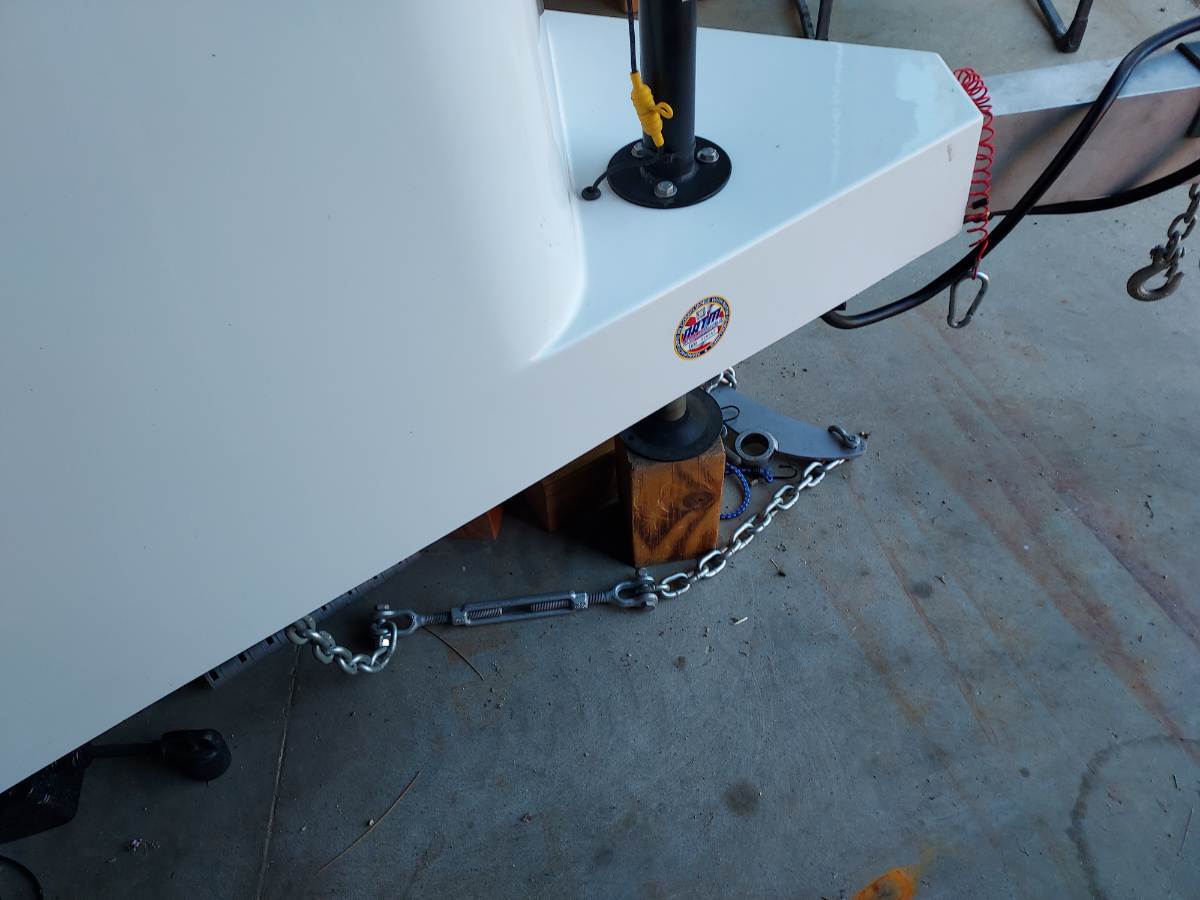
We, too, level and raise our Hull #1291 (2022) with the jacks. But, we always use support blocks for two reasons: (1) to avoid jack damage if we forget to raise the jacks before driving off and (2) to shorten jack travel distance. See photo below of one of our three support blocks in place under the front jack. Since that photo was taken, we have added Snap Pads, as recommended by Patriot, above. We like 'em. One caution: ensure that the jack foot is placed on level ground, or the foot plate can be bent, requiring replacement. If using the jack on a slope (such as on the side of significantly crowned roadway), place tapered levelers under the jack foot to provide a level platform. Don't ask me how I know...

-
I agree with, and second, the comments posted above by Rolind. We also have the factory-installed Truma system with the CP Plus wall control. Although there was a definite learning curve, we now find the CP Plus wall control fairly easy to use, and would not be without it. In your shoes, I would grit my teeth (yes, Truma stuff is expensive) and buy the CP Plus wall control. I expect you will not regret it once your are using your new Truma Aventa AC.
-
Good to know. Mine is more than 20 years old. Probably time to replace it.
-
John: I am curious about your reasons for such a strong dislike of rubber torsion axles. My raft trailer came with 3500 lb. leaf springs. One of them broke after about 7 years, at a bad time and in a bad place. I was told that rubber torsion axles have a much longer life span than leaf spring axles, so I swapped that sprung axle for a 5200 lb. rubber torsion axle about 23 years ago. No issues, and of course, no leaf spring replacement, since.
-
Good questions. We have the Lithium Pro package installed by Oliver in 2022. It includes three 130Ah Lithionics batteries. This 390 Ah battery bank is protected from freezing by an external, switched, battery warming mat, installed by Oliver as part of the package. When storing our Hull #1291 during the cold Idaho mountain winters, I follow Lithionics Storage Procedure Rev. 7.1, a copy of which is attached. As I read it, that procedure recommends: (1) leaving shore power connected, with the warmer switch on, to keep the battery warmer operating, but (2) doing a drawdown/recharge cycle every 6 months when in storage. I am now in the middle of the fourth winter following this protocol. If I didn't have shore power in the detached garage where I store our Elite II, I would remove the batteries in the fall, reduce State of Charge (SOC) to 50% and store them in my temperature-controlled attached garage, per the attached protocol. Leaving the trailer connected to shore power, but with periodic discharge/recharge, is easier, so that is what I do. As Lithium Iron Phosphate (LiFePO4) batteries usually have at least a 10-year life when properly used and maintained, I may not know how effective my winter storage battery practices have been for another 6 years. But, so far, so good. As a footnote, if we had chosen AGM batteries when ordering our Elite II, now is when those lead acid-based AGMs could be nearing the end of their useful life. Years of working with Sealed Lead Acid (SLA) AGM batteries to power my CPAP machine on wilderness river trips persuaded me to pay the substantial premium for the Lithionics LiFPo4 battery package. No regrets. Lithionics Storage Procedure Rev.7-1.pdf
-
Good questions. Answer? You don't. If below-freezing temps are possible when in storage, you must have power connected to ensure the 12V battery heaters can protect the batteries. And, when power is connected, you don't need to keep SOC at 50-60%, just when no power is connected. Dropping SOC to 50-60% applies when storing the batteries for long periods in a temperature-controlled environment, like when the batteries are removed from the trailer and stored inside a home.
-

Pebble Flow trailer and Rivian in the wild
Rivernerd replied to taylor.coyote's topic in General Discussion
Thanks for providing your view on towing with an EV. I have three questions: (1) what, if any, hardware is needed to "fill up" (recharge) your F150 EV from a 50A RV pedestal; (2) how long does it take and (3) how long does a "fill up" (recharge) take from a dedicated EV charging station? -
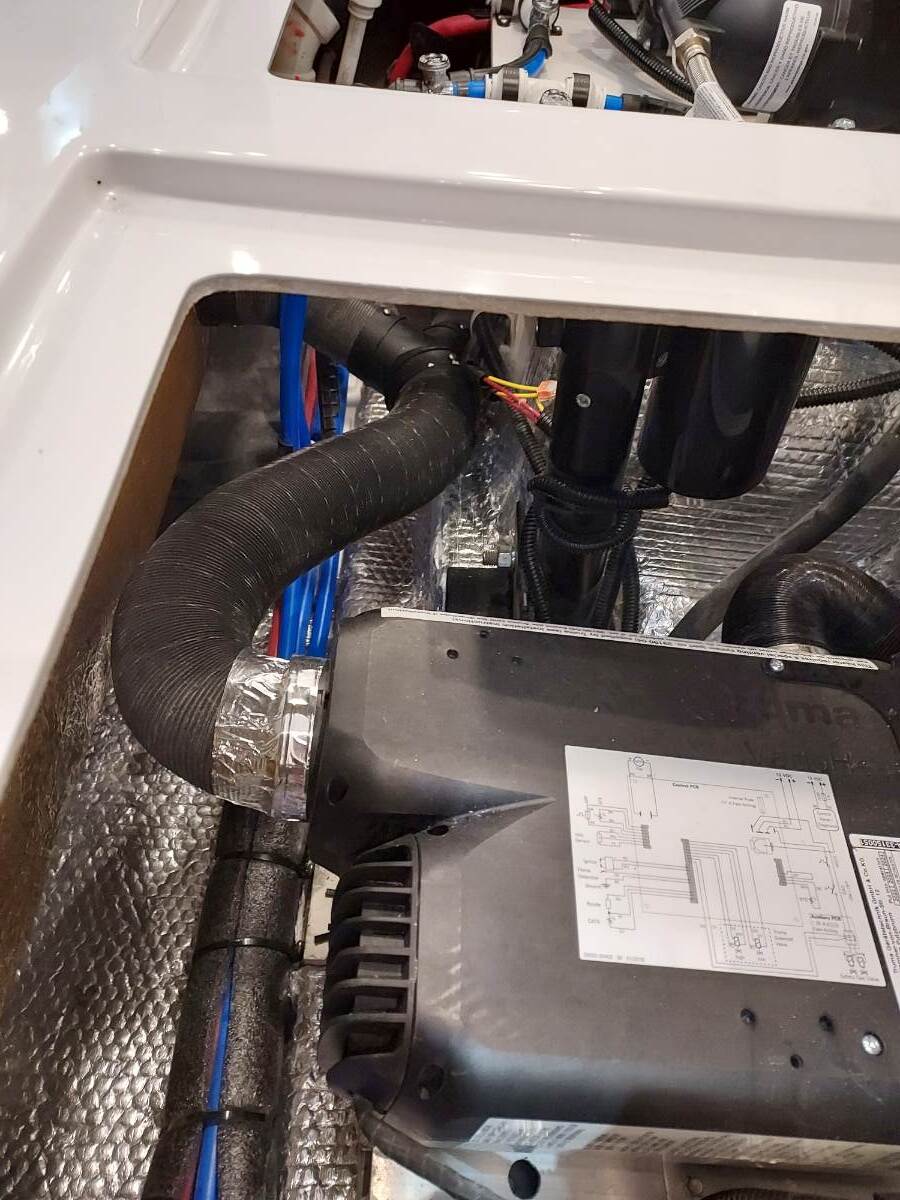
Good point with regard to older Oliver trailers. Our Hull #1291, late 2022, came with the Truma Varioheat furnace, which includes semi-rigid ducting throughout. It is much more durable than the flimsy ducting shown in the manufacturing photo posted by Steve & MA. See photo below.
-
It seems to me that the Andersen weight distribution hitch should supplement the ability of the safety chains to keep the trailer connected to the tow vehicle, in the event of an accident. Does anyone know if this has been tested, intentionally or unitentionally?
-
I expect the challenge is ensuring your batteries and your charging system are turned off every time temps drop down to freezing. The easier solution is what we have: a switched external warming mat placed under the batteries and wired to our Oliver 12V system. Ours was installed by Oliver with our 390 Ah Lithionics battery package. One similar option now available is from Lion Energy: https://shopsolarkits.com/products/lion-energy-battery-warmer?srsltid=AfmBOoo5_6ceyboAQUUVw1CNe_jCPeADkLbtop6B-CC3Z-THhq2OC5zhaDI
-
Agreed. The ratio of tow vehicle weight to trailer weight is critical to stability, to avoid having the "tail wag the dog." Jeeps are not quite heavy enough to tow an Elite II as safely as I prefer.
-
Changing tires in the wild - lessons learned
Rivernerd replied to John and Jodi's topic in General Discussion
Was the aluminum wheel bonded to the steel hub on your Oliver, even though the photo shows a tire change on your truck? -
Our tow vehicle for our 2022 Oliver Elite II is a Toyota Tundra, also a 1/2 ton truck like your Yukon Denali 1500. The key limitation for our trucks is cargo capacity, not towing capacity. There are threads on this forum thoroughly discussing whether a 1/2 ton pickup is an adequate tow vehicle for an Elite II. This one is informative: The bottom line: your Yukon Denali 1500 with 1547 lb. cargo capacity should be adequate, but not optimal, to tow an Oliver Elite II. That said, you should verify whether your owners manual requires a weight distribution hitch when towing over 5K lbs. (which an Oliver Elite II will be). The Andersen weight distribution hitch is the one recommended by Oliver. It may be the only one that works with the Oliver design. We have found our 2019 Tundra with a 5.8L V8 engine and tow package, which we owned before buying our Elite II, to be adequate with an Andersen WD hitch. I know the trailer is there, but it is manageable. Yet, whenever we replace the Tundra, we will buy a 3/4 ton or 1 ton truck, which many Oliver owners who post on this forum verify will make towing an Elite II much less stressful.
-
Propane/CO alarm quick-disconnect?
Rivernerd replied to GlacierGirl's topic in Mechanical & Technical Tips
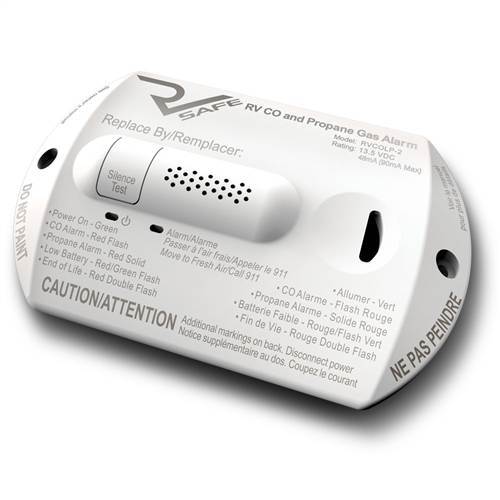
Our factory-installed RVSafe propane/CO alarm has a "Silence/Test" button, which enables us to shut down false alarms without a quick disconnect. It looks like the one in the photo below. It has gone off when my wife uses hair spray in the trailer!