
Steph and Dud B
-
Posts
1,379 -
Joined
-
Last visited
-
Days Won
13
Everything posted by Steph and Dud B
-
If you extend it, you have a safety net.
-
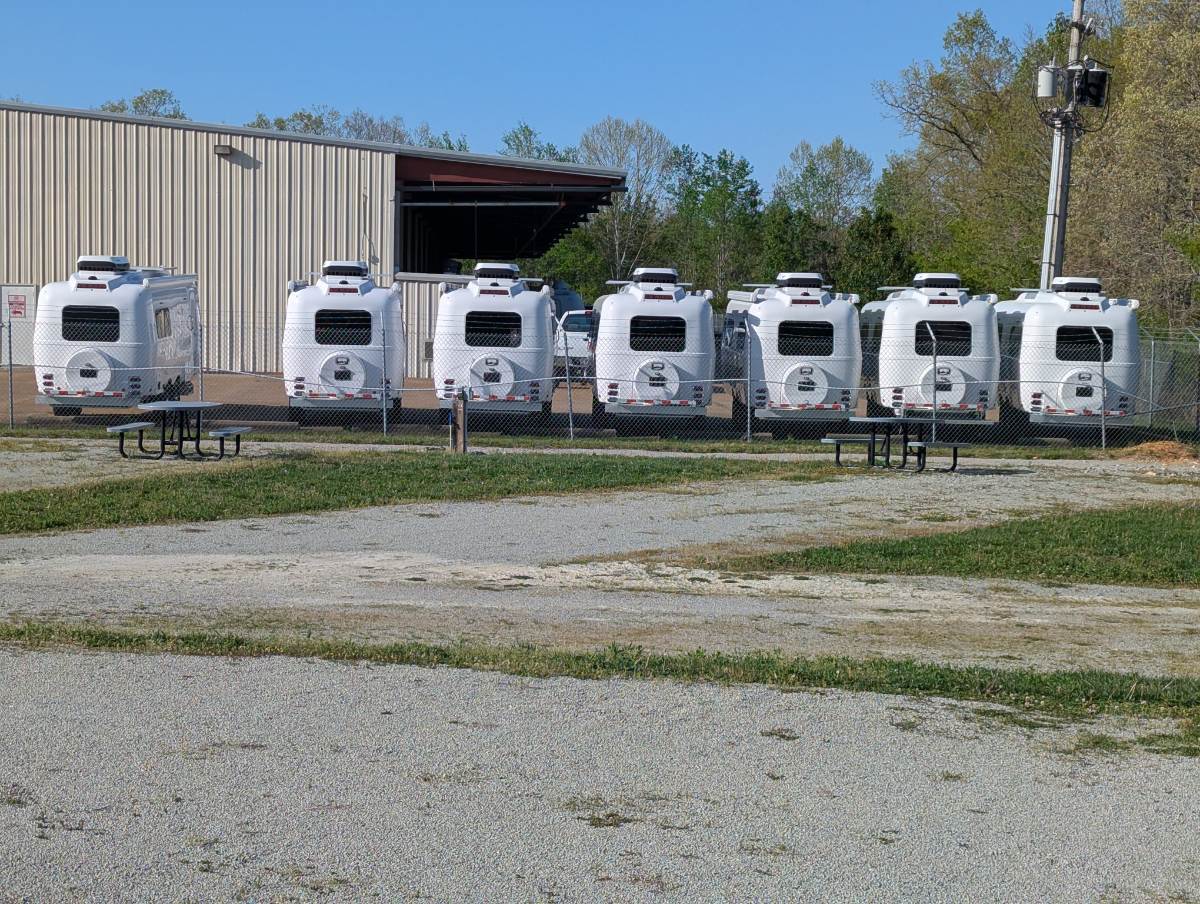
Looking at new trailers in the lot at the mother ship. There are 7 of them. 3 have the second awning. Not exactly scientific, but maybe that gives some indication of the overall popularity of the option?

-
Hello to the Oliver being towed by a black GMC that was behind us on I-81 South in northern Tennessee today! Beautiful travel day.
-
We love our second awning and use it all the time when camping in Connecticut. We do a lot of dry camping at the beach, where there's plenty of sun for our solar. I often park the trailer oriented north/south and we put one awning out in the morning, then the other out in the afternoon when the sun crosses over the trailer. Gives us shade to sit in all day and keeps the trailer cooler inside. If you plan dry camping frequently in sunny, open spaces, even up north, it might be worth it for you.
-
Well played, sir!
-
My headphones keeping dropping the Bluetooth connection. This could be worse. I think I'd install Token Ring safety chains, just in case.
-
Congratulations and welcome.
-
 Several people have reported that the o-ring was missing where the pre-pump filter screws onto the suction side of the pump. Ours was, and we had problems with losing prime and air in the lines. To check, disconnect the flex water line, then unscrew the filter assembly from the suction side of the pump. Super easy. The o-ring is size 9/16 x 3/4 x 3/32".
 -
New pump, not building pressure
Steph and Dud B replied to DWR's topic in Mechanical & Technical Tips
Also a late follow-up: Like others, our filter assembly was missing the o-ring where it connects to the pump inlet. -
Lithionics large phantom draw
Steph and Dud B replied to DaveAndBecky_NorthernMI's topic in Mechanical & Technical Tips
Check your brakes. Extended run time like that can cause damage to the magnets or wiring. Not always, but sometimes. -
Maximizing amp hours for boondocking
Steph and Dud B replied to Olive2Roam's topic in General Discussion
Camping in the Northeast, with the foliage, low sun angle and long shoulder seasons can change the generator calculus. That said, we never needed our generator with this trailer until my wife got her ebike. -
Maximizing amp hours for boondocking
Steph and Dud B replied to Olive2Roam's topic in General Discussion
Your list looks good. I'd definitely look into bigger batteries. I know a generator is at the bottom of your list, but a little 1- or 2kW Honda would be more efficient than idling your truck and can be handy for other things, like charging ebikes, and isn't sun-dependent. -
Suburban Hot Water Tank Repair
Steph and Dud B replied to Mike and Carol's topic in Mechanical & Technical Tips
Something very similar happened to us, except they used Wago connectors in the j-box instead of wire nuts. One came loose and the Wago melted. -
I'm aware of swing out roller style awnings opening while traveling but I've never heard of this type of box awning doing that. The mechanisms are very different.
-
Greetings to the two Olivers we saw on i-95 South today, one near Savannah, one near the Florida Georgia line.
-
Brinkley makes excellent trailers and fifth wheels, probably the best conventional RVs on the market today. The company was started by two guys who left management at Grand Design, which was the top dog prior. Here's what usually happens: someone starts a new RV company with better quality than the rest and they build up a reputation. A bigger RV conglomerate comes along and buys them out, then guts the quality to maximize profits. Then the original guys (or girls) start a new company - now the new best-quality king - and the cycle repeats. If we were in the market for another fifth wheel today, it would be a Brinkley.
-
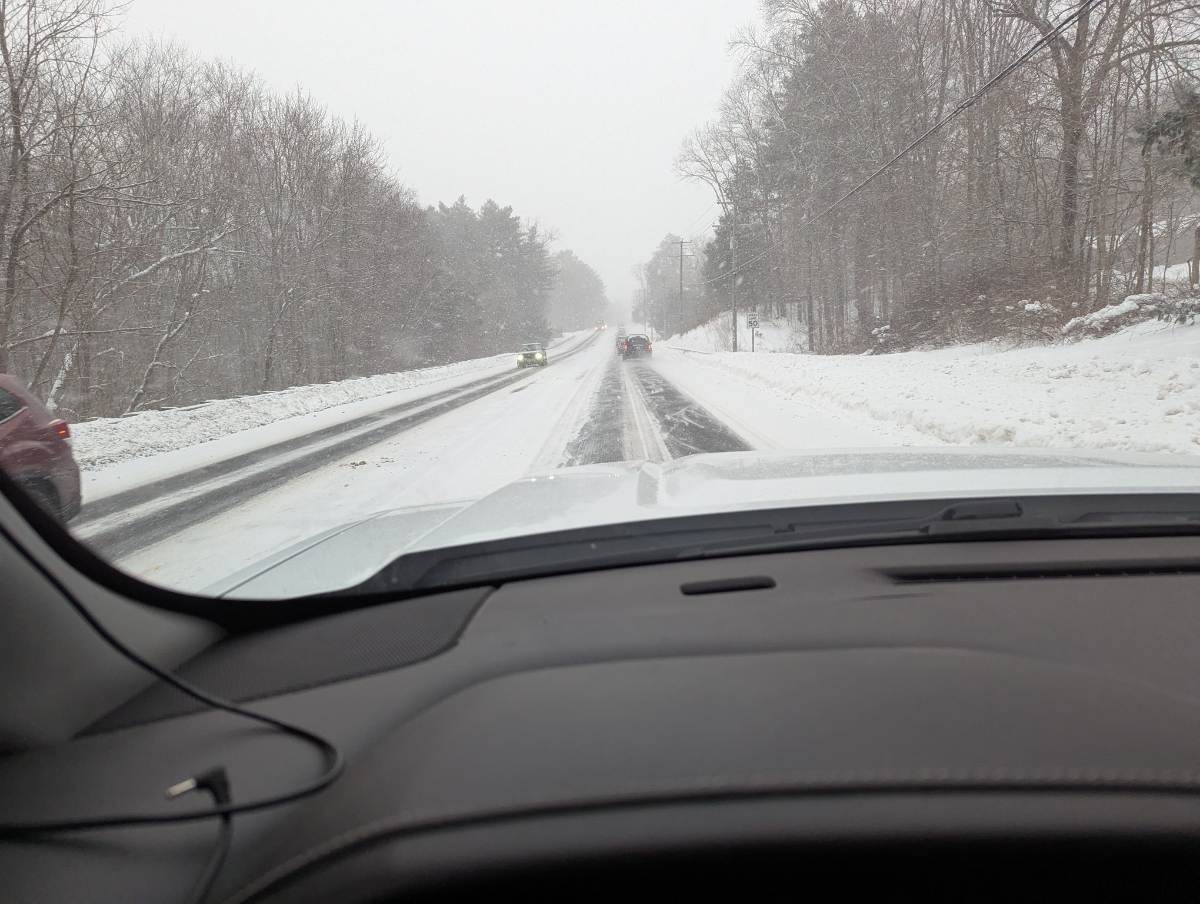
I just finished cleaning up after the blizzard and this is what I was looking at this morning. It's getting old. On a serious note, there was a fatal accident after the storm when someone was trying to pull out a stuck snow plow with a tow strap attached to a hitch. The hitch broke off and whipped into the cab of the truck from the tension on the tow strap. Most hitches aren't designed to handle the forces involved in a hard pull between two large vehicles. Just a reminder to be careful out there.
-
If the previous owner accidentally connected the batteries backwards, even for a second, the reverse polarity fuses will blow and your converter won't charge the batteries. So, first, verify that your batteries are connected properly: positive cable (usually red) connected to the positive battery terminal. Just to be sure. Next: Those 2 green 30 Amp fuses at the bottom of your photo appear to be the reverse polarity fuses that are suspect. Pull them and test them. If you don't know how to test them, just buy 2 new 30 Amp fuses and replace them. See if that solves your problem.
-
As others have said, it sounds like your converter isn't charging the batteries. Could be a failed converter or blown fuse. Question for the hive mind: does the converter in a 2015 have reverse polarity fuses between the batteries and converter?
-
Hi. Go to Google and search for "Oliver trailers lithium upgrade." Several relevant threads pop up, including this one: Lead Acid to Lithium - Ollie Modifications - Oliver Owner Forums https://share.google/oayGb76nRTfLxwQnx Lots of good information in those threads that can help you.
-
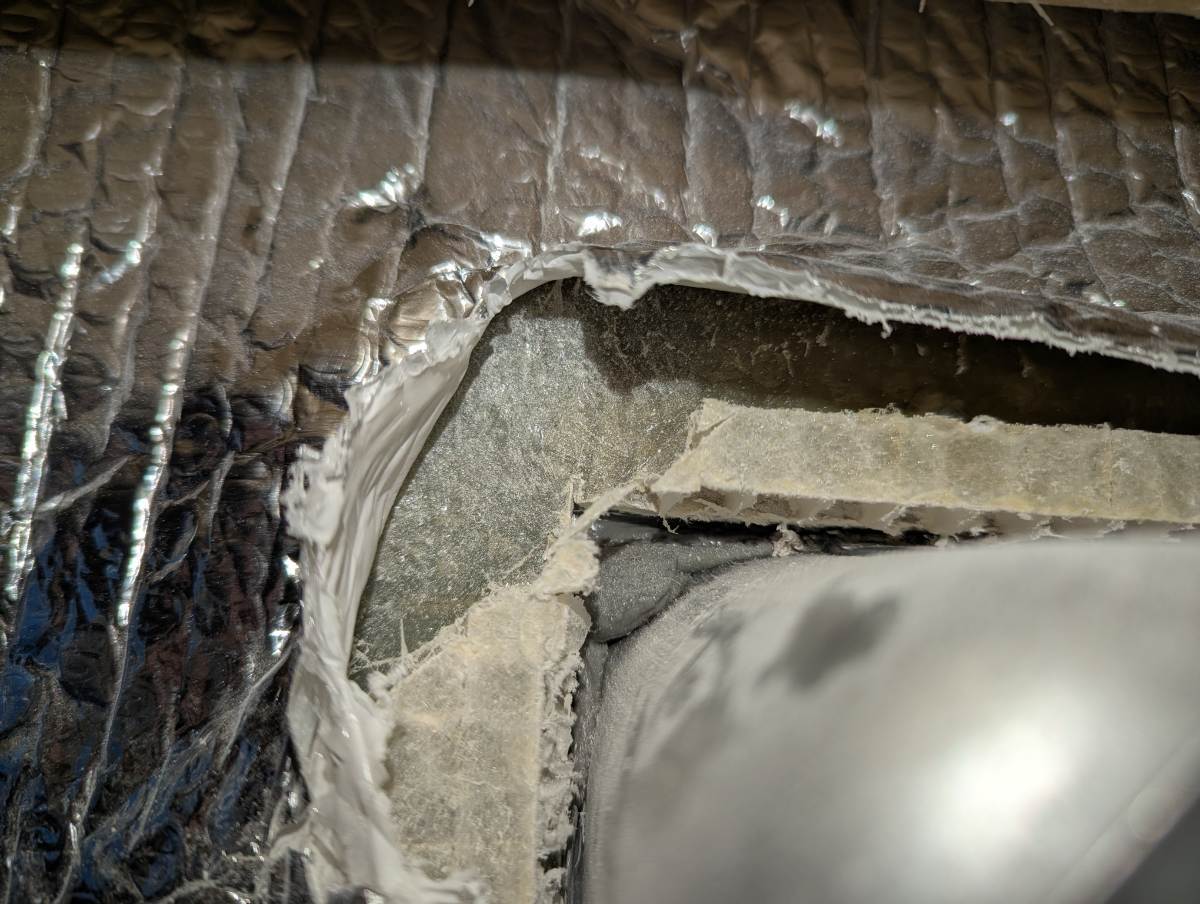
Update to our situation: I found a good fiberglass tech here, someone who's worked on Corvettes for many years. He wants to determine whether this is just a gelcoat crack or if the underlying fiberglass is damaged as well. To that end, he wants to grind off the gelcoat and inspect the fiberglass beneath. If the underlying fiberglass is damaged he thinks we should take it back to Oliver to have the water heater removed and the fiberglass repaired. I did get a better picture of the back side of the cracked area.
-
We've had the 640Ah Lithionics from the start with a 3-way fridge. More battery power than we've ever needed. I think the lowest we ever got was 63% after a week camping in full shade during rainy weather. It's funny. We were used to camping with a single lead acid deep cycle battery in our old trailers so I still find myself going around turning off lights and watching the battery SOC like a hawk. I have to learn to relax. Like @Steve and MA said, holding tanks are the limiting factor now.
-
Stabilizing versus leveling
Steph and Dud B replied to ripple963's topic in Mechanical & Technical Tips
We never lift the tires completely off the ground when setting up at a campsite. We usually level with "Lego" blocks under the tires first, then use the jacks to take most of the load off the tires, so there's no tire bulge at the bottom. Sometimes I will also use a jack to help level side to side, maybe an inch. -
No voltage to CO/LP detector?
Steph and Dud B replied to Dave and Kimberly's topic in Mechanical & Technical Tips
For all those bright LEDs: https://a.co/d/02j1OZft -
No voltage to CO/LP detector?
Steph and Dud B replied to Dave and Kimberly's topic in Mechanical & Technical Tips
We replaced our 2022 detector last fall for the same problem: hypersensitive, going off for no apparent reason. I also used Wago connectors to make the next replacement easier. I think the RV environment is especially hard on these detectors, especially in small campers like ours, where they're often exposed to low levels of various chemicals: propane from the stove, exhaust from the fridge coming in the screen door, even hair spray. Not to mention temperature extremes while in storage. On another note, always disconnect power before cutting or splicing wires. It's easier to find and pull the fuse than to repair whatever damage you might cause with a short.