All Activity
- Past hour
-
That’s exactly what I used to think!. However, equalization requires a constant outdoor temperature, but that never occurs in a natural day/night cycle. The 57% swing shows that the insulation is effective enough that the interior can't track outdoor changes fast enough to equalize. You're right, it could be better, but it's way better than some drafty old trailers that I used to own.
-

Automatic Leveling for the Oliver Trailer — DIY style!
Snackchaser replied to Snackchaser's topic in Ollie Modifications
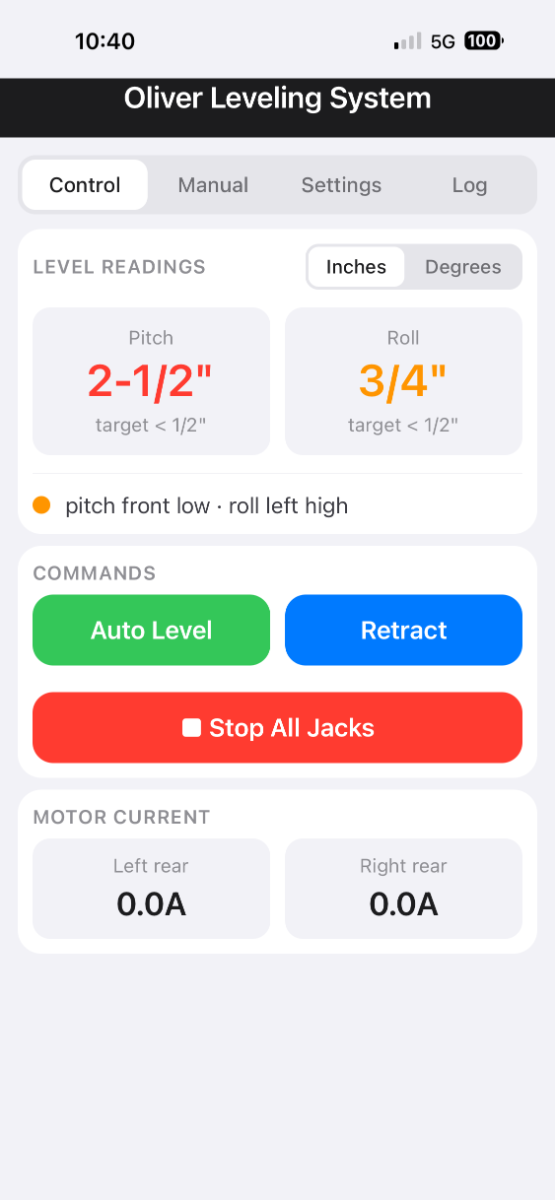
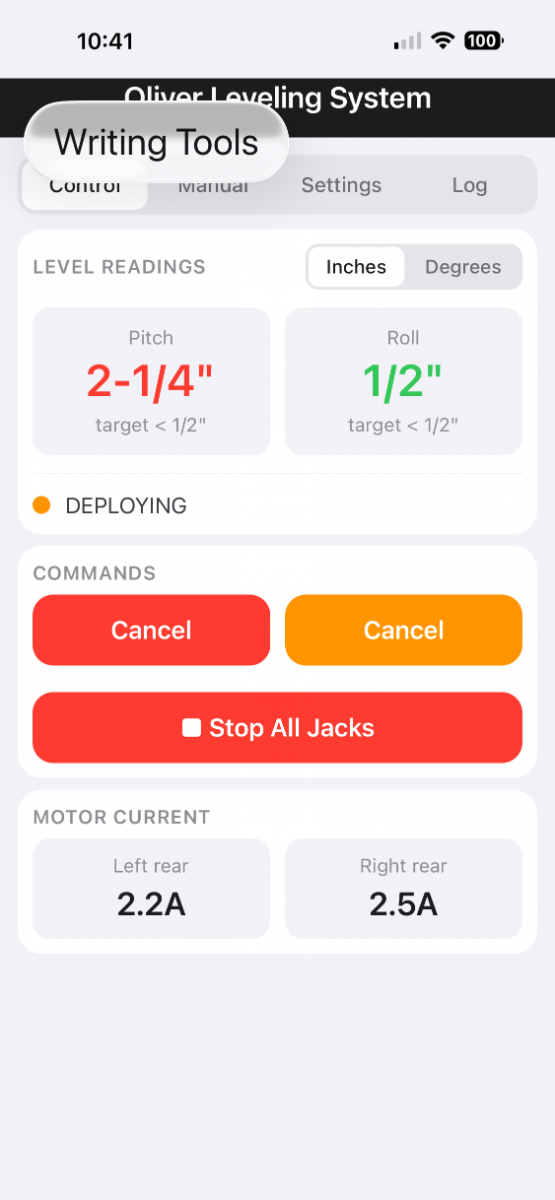
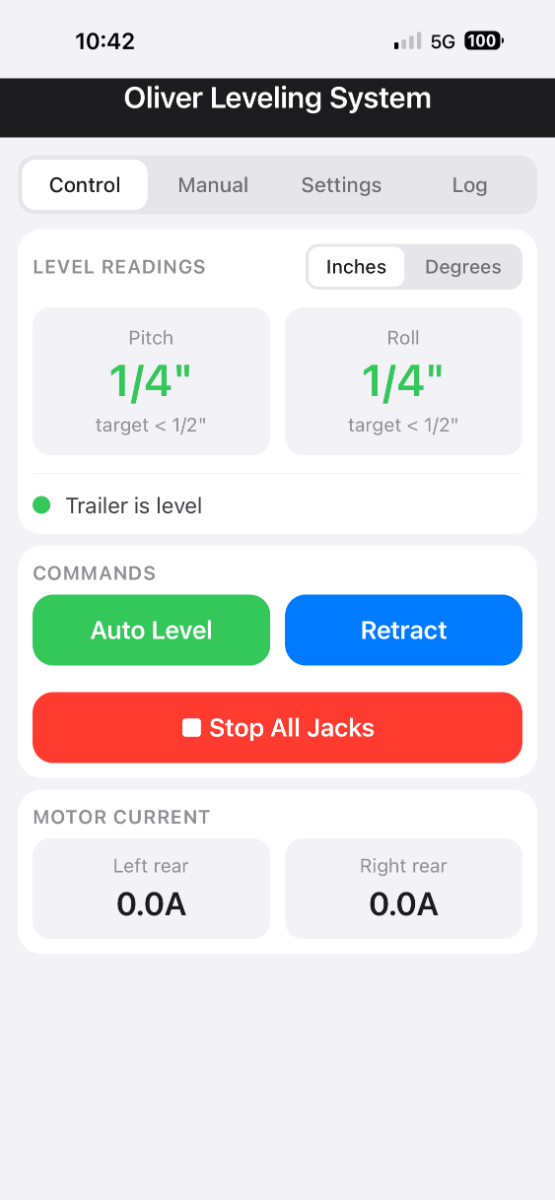
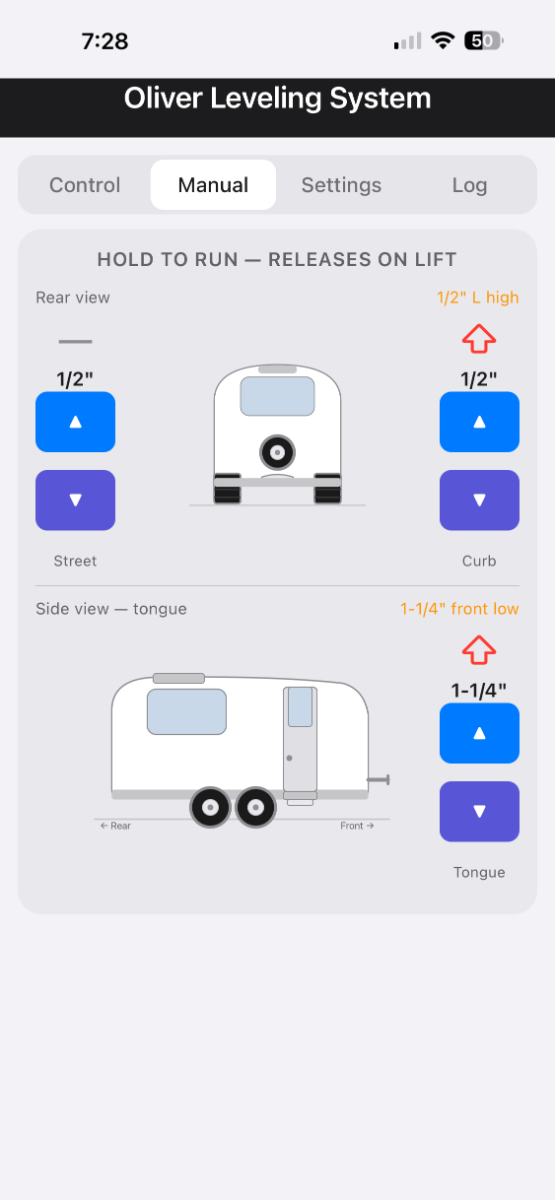
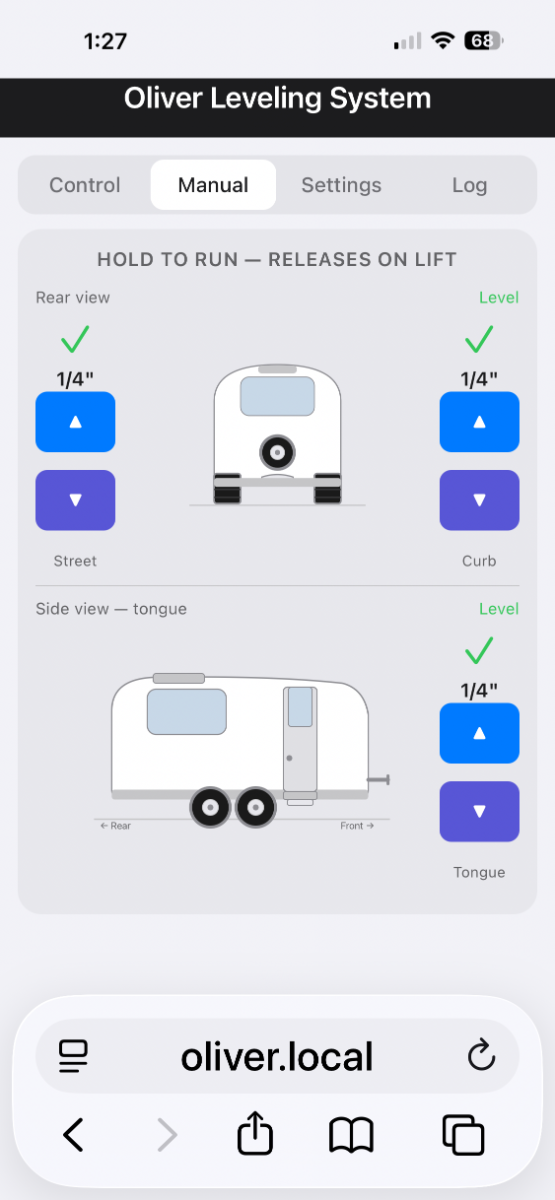
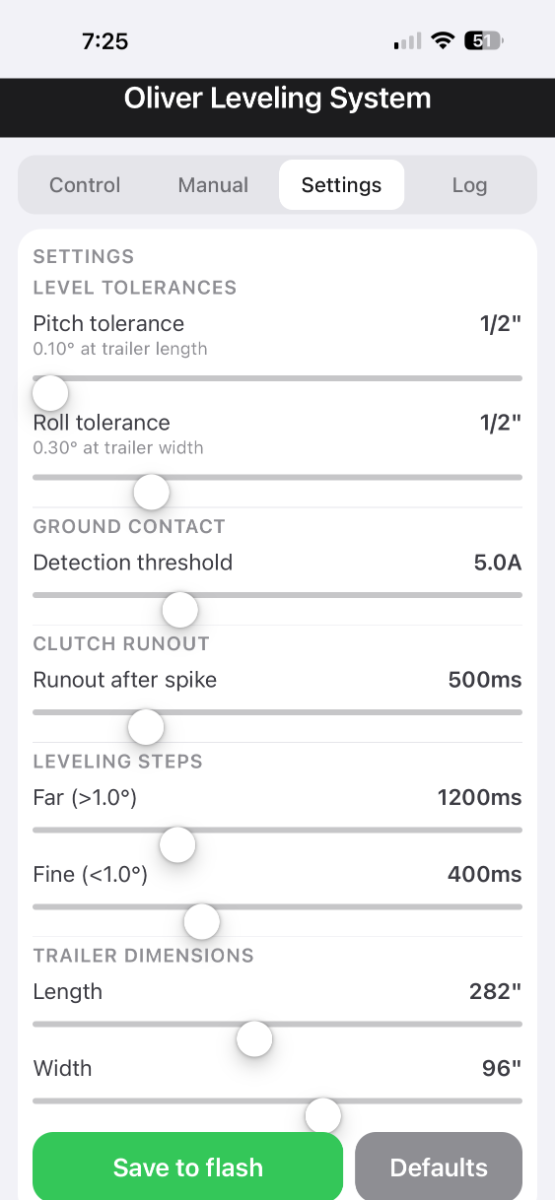
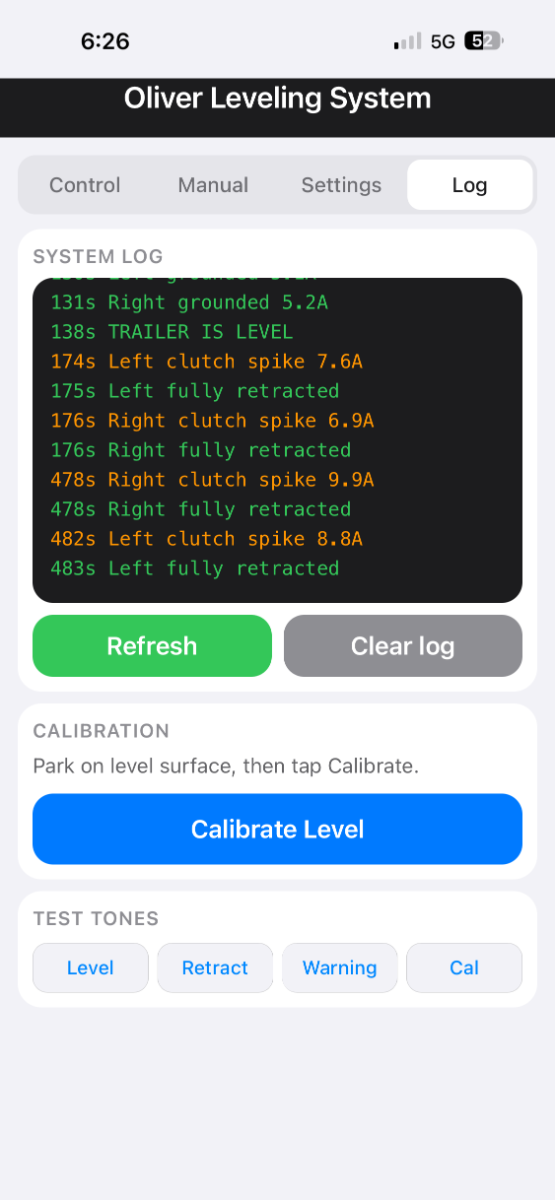
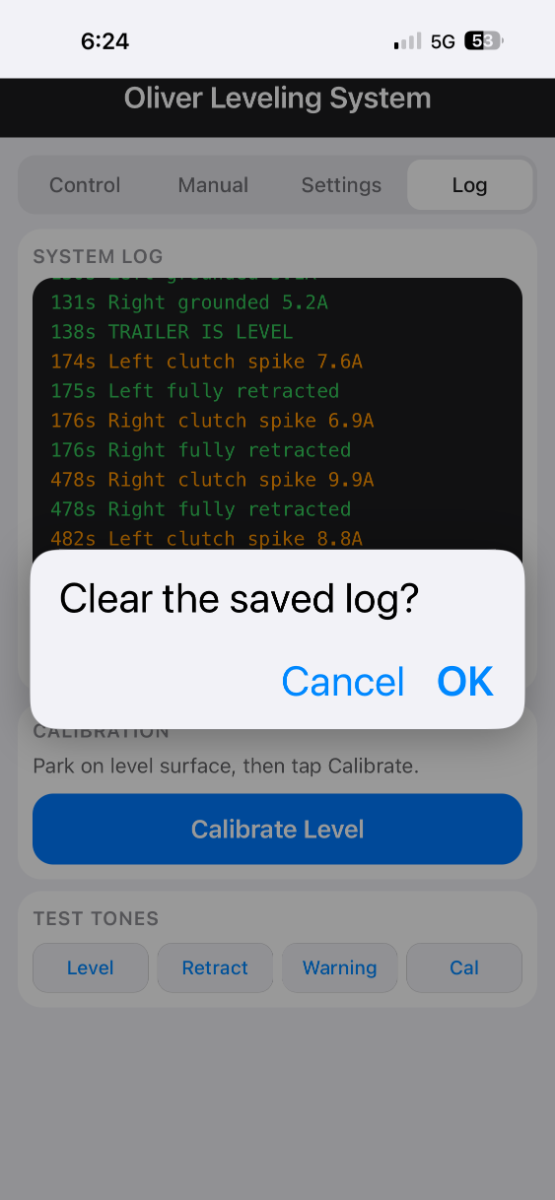
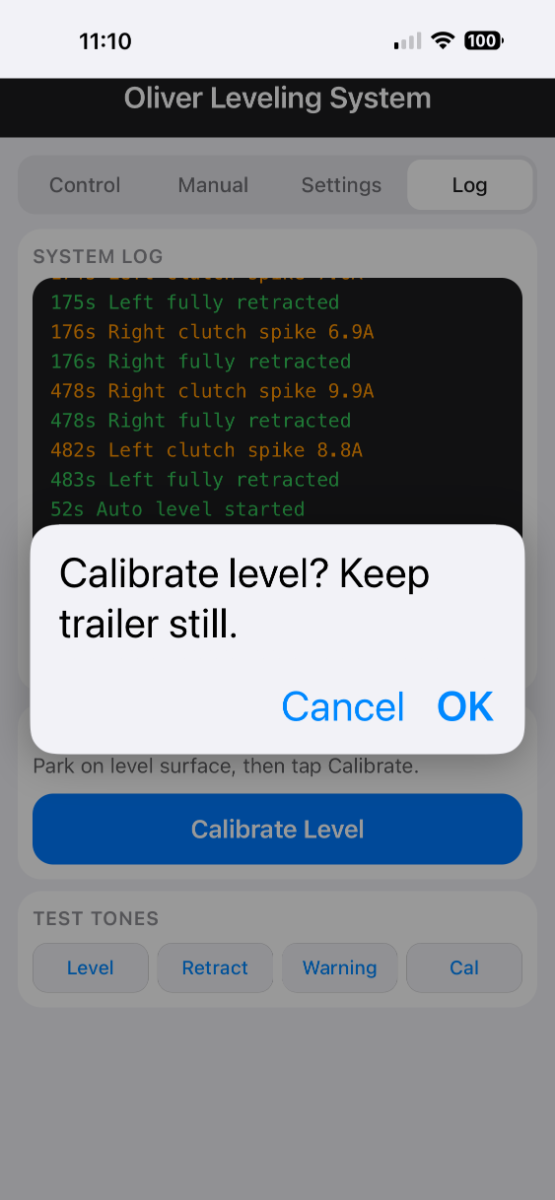
Part 4, Custom Automatic Leveling — now with a phone app! The automatic leveling system is finally done, and it works fantastic! Although it was convenient and satisfying with just the control board switches, I made it even better with a phone app. The app works with the ESP32 microprocessor’s built-in WiFi, rather than Bluetooth, and the range is excellent. Besides better range, there were advantages of using WiFi over Bluetooth. Primarily for ease of development. An iPhone Bluetooth app must be developed with 3rd party software and managed through the app store. It’s tough for a hobbyist, especially with custom graphics and controls. With a WiFi app, it lives in the ESP32 firmware and it’s fully customizable with AI help, and easily revised. The app consists of 4 tabs, or pages, with the primary controls on the main page. Extra controls and features are in the other 3 pages. The pages are laid out as follows: Control — This page has the main Auto Leveling, Retract, and All Stop buttons. To prevent accidental activation, the buttons must be touched and held for 3/4 of a second (except the All Stop which is instant). The as-left readings (variance from target level) can be viewed in either inches or degrees, and the tolerance can be adjusted on page 3. The jacks motor current is also displayed with the idea that it could indicate jack degradation, but that feature is going away in the next revision because it’s too hard to correlate. Manual — This is an awesome feature on its own! The screen is similar to a LevelMate with graphics of the Olivers back and side, only it has manual jack controls too! The touch and hold buttons will raise and lower the jacks while showing the distance from level. I’ll probably use this feature a lot, especially for uneven terrain or if messing around with leveling blocks. Settings — This page contains settings for fine tuning. Any changes are temporary for the current session, but they can be flashed to the memory. There is also a reset to defaults button with a protective confirmation step: Pitch and Roll Tolerance — when set to 1/2” tolerance, the level usually gets to within 1/4” Ground Contact Detection Threshold — this determines how firmly the jacks are footed on the ground for stabilization. Default is 5 amps which closely matches where I used to set it by ear Retract - Clutch Runout — this shut-off delay determines how many clack-clacks are heard when jacks are parked. It’s set at 1/2 second, which is two clacks Leveling Step Durations — sets the jack’s incremental run time during leveling. It has 2 adjustable steps that decrease as the trailer nears level. This is important for accurate level sampling and coasting. Too little time increases timeout risk, while too much impacts accuracy. Finally there is the trailer width and length setting that’s used in the conversion formula for level degrees to inches. The longer pitch default distance from bumper to ball requires a wider tolerance than the width. Log — A summarized log of the Serial Monitor shows which jacks were activated and the different steps of automation. A Test Tone legend plays examples of tones for successful leveling, retraction, unsuccessful leveling, and calibration, although the tones are obvious and don’t really require a legend. This information has limited value and may get cut in next revision. The most important feature of this page is the calibration button. It has a secondary confirmation to prevent unintentional calibrations. This is used to reset the target level after maintenance, or if the front needs to be higher for tank drainage, etc. This concludes this project and I hope you found it interesting! Cheers! Geoff
-
Regardless of the R-value of insulation, interior and exterior temps will become equal over time. Also, when temps are in the 50s it's not the same test as when ambient temps are in the 20s, the teens or worse. What matters most is when we add furnace heat, will the temp rear of basement by the water lines be kept above freezing? Say it's consistently below freezing outside, what should interior temp be set at to keep the rear basement above freezing? We also keep a Ruuvi sensor in the same rear basement location (and 5 other locations), including one outdoors. Rear basement temps will not drop below freezing while camping, with our thermostat set to 63F. The rear basement temps is always above freezing a good +10 over outdoor temps. Generally we do not store and winterize, since we "winter" camp often (but no real winter down here). Winter overnights are often down to low-mid 20s by dawn, but then it will always warm up to 50F +/- in the sunny afternoons. If it's cold just a night or two, I do not worry. If we are to have multiple consecutive cold nights, I'll set the furnace to 50F if I had not blown the water lines clear. The Oliver could have better insulation, but it is certainly sufficient for our use. I like how it's thin so that we have room in the basement for mods. I would add more if we lived north. I did the battery bay door already. Good reminder to add some to our basement access door. 😂
- Today
-
Of course, when towing fully loaded, run the specified PSI listed on the DOT label which is calculated to be safe at the full GVWR. But for example, when driving a pickup around town, no cap installed and empty bed, and I know I won't be towing or carrying a load for days on-end, I’m certainly not running the rears at 80 PSI! I'll bring them down to 60-65 PSI so the rear axle won't be bouncing down the street without a load to carry! On my sports cars, I run higher pressures, because I like a slight skid into a hard turn! I owned a 1975 Alfa Spyder during my 20s, through my 40s and learned over many miles. Now I run my 1992 Lexus SC400 a few LBS over spec and the car handles like a dream. 😎 There is a reason tire pressure is adjustable! And Yep, we air down our AWD GX470 when we have a bit of weather or washboard dirt to travel. But on this truck, I upgraded the OEM P-rated tires to LT tires C-Load Range. (didn't want the harshness of E-Load tires for this application). The DOT label states 32 PSI, but LT tires don't stand up nicely at pressure this low (also 32 PSI is below the lowest level on the Cooper load table for this A/T tire). For around town and highway driving, I chose to run 44 PSI, but we air down as low as 24 PSI for a day out playing in the dirt. I put a bit of thinking in what works best for the situation. Engineers and manufactures often wrongly use the "one size fits all" approach, and when lawyers get into the mix, they just throw physics right out the window in lieu of Indemnification! 😒 The DOT label on our relatively light TV, a 2WD long-bed capless truck is 55/80 PSI at 8800 GVWR. Our 2WD truck is hundreds of LBS lighter than its 4WD counterpart. After we setup camp, the truck is only 6800 LBS with all passengers and tools. Add all our camping stuff, the 35-gal tank full of fresh water, the bed fridge pretty full, plus 580 LBS measured tongue weight and we’re still 500 under the GVWR, fully packed for a long trip! I regularly run slightly lower than the GVWR at 52/72 PSI for our combination of state and county highways, dirt and gravel roads. At 80 PSI, when our TV rears hit the bottom of a dirt wash (think 2WD), they could spin some, but less likely with a little less pressure. When we traveled more on Interstates, like our Minnesota trip last summer, I increased the rears to 78 PSI, while 80 PSI is the stated MAX. Dan, I do agree that engineers should speak their mind. I too often get accused! 😎
-
Interesting data! I ran the numbers through AI trying to get an R value, but there's not enough information. However, it determined the swing insulating value was 57%, which is about right for Olivers claimed R-18 value. Most RV's are lower than R-10, 20 to 30%. Good stuff!
-
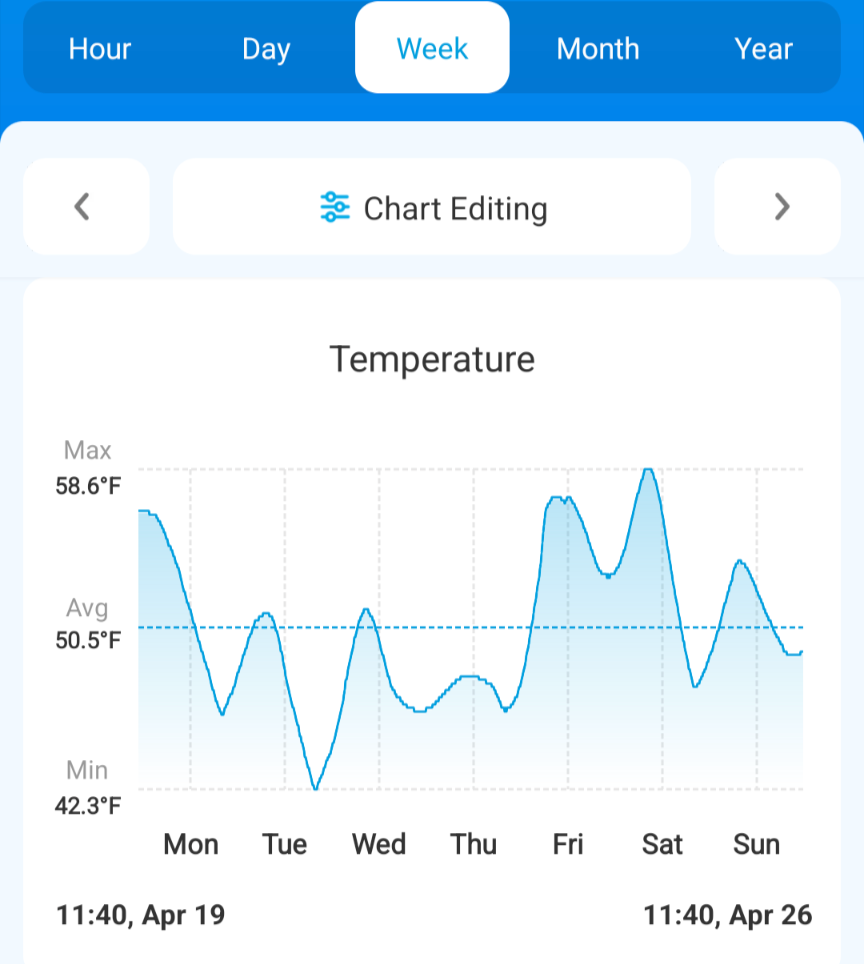
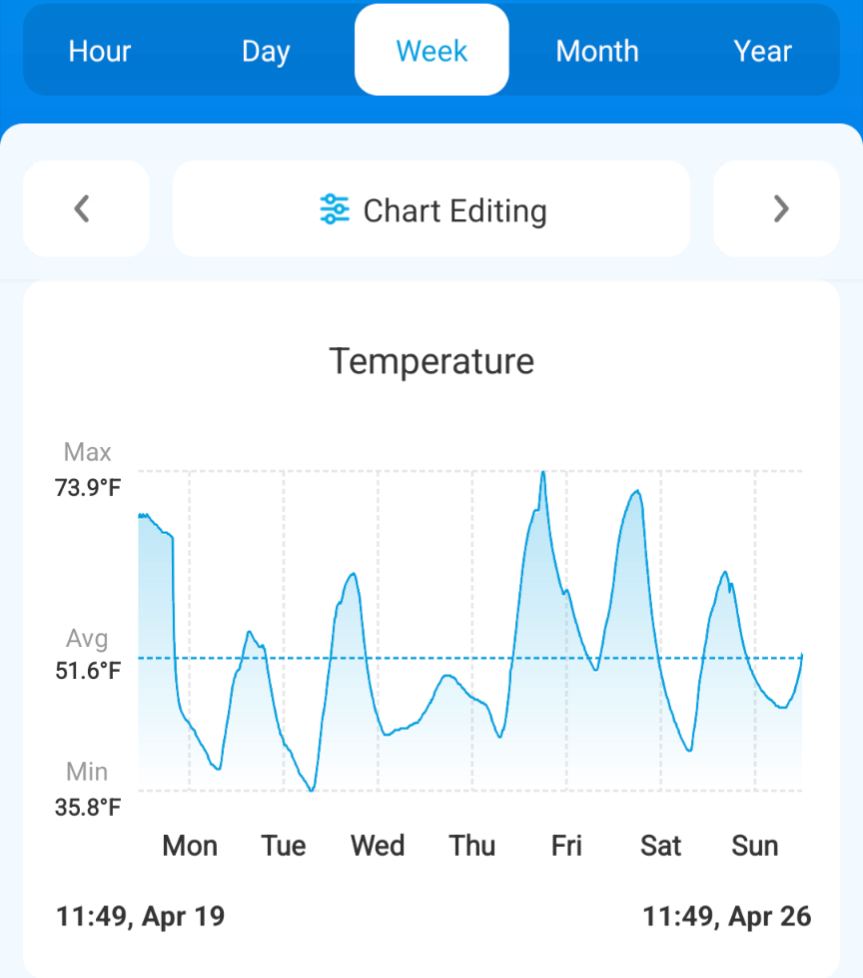
Here's some data that I found interesting. Our Oliver is mostly stock, with only a little extra Reflectix insulation added to the external basement door. I have a remote thermometer in the Oliver belly, near the fresh and city water inlet lines, and another thermometer hanging inside the garage near the Oliver. I collected data from a week from both thermometers. The was no heat running in the Oliver. You can see that the average temperatures were only different by 1.1 degrees. There was a difference of 38.1 degrees from the highest temperature to the lowest temperature recorded in the garage: and only a 16.3 degree difference recorded in the belly of the trailer: I couldn't tell you if that's any better or worse than any other RV would perform, but those are the numbers from an unheated Oliver sitting in an unheated garage.
-
The towel rack/soap dish on our 2015 LE2 was originally installed with silicone sealant. Don't know what year Ollie you have, later model LE2s towel rack/soap dish is installed with screws, but we had to remove sealant to get to the loose heat outlet hose and water pump LED where the shower hose is also located under the sink. We installed a U seal around the towel rack/soap dish and four screws when the towelrack/soap dish was reinstalled without using silicone sealant.
-
Thanks all for your tips!
-
I had the same problem after lengthening my hose to reach the toilet for better rinsing. This was done by sliding the hose return weight further down, but it also caused kinks. I used a spring from ACE hardware to prevent the kinks and haven't had a problem since. The spring was 1/2" x 10", not a perfect fit but just narrower that the width of the kink, That modification is described here: Cheers, Geoff
-
The hose is kinking under the sink when you pull it out. Be careful not to pull it out too far. It only just barely reaches our shower holder. I find it best to turn the faucet toward the shower holder before pulling the hose out.
-
Has anyone had this issue: When the faucet is in sink mode, the water pressure is fine. But when I place the faucet on the shower hook, the flow sometimes reduces significantly or shuts off completely until I pull the hose in and out a little. Is there an easy fix or do I need Oliver service?
-

Missing screws on cabinet cabinet drawers
Gliddenwoods replied to Gliddenwoods's topic in Mechanical & Technical Tips
I do like your idea of small bolts and Nico nuts. Thanks. -
Good to know To be fair - says the forum (Disclaimer: see blow). The manufacturer says differently. Handwaving arguments about Oliver having been wrong before, went overboard initially with 80 psi, this and that are not evidence that their recommendation today is wrong. I spent an hour looking for current documentation from Goodyear and couldn’t find it - have a link? There’s an old 2017 pdf, and a couple tables of indeterminant provenance that get reposted. I suspect Goodyear is not posting this information anymore and leaving to OEM’s. So having some tables isn’t convincing to me. I did find a lot of engineering common practice information which warns against too low a pressure for safety reasons, not too high. Low pressures are commonly used for low speed offroad traction use cases. I’m not seeing it done to avoid jounce. Does anybody here lower their TV pressures? Why not? I don’t understand why it’s OK for our trucks to be at specified pressures, but not our trailers. Or our cars. If your wife complained about a bumpy ride would you drop her pressures in half? Think about that for a second, now it becomes a safety issue. But this is me handwaving now. As it happens, today I’m mooch camping for a family thing (poor me writing from my Ollie tonight 😅). I didn’t take measurements because I needed my phone on the way out. One the way back I’ll definately be taking measurements and analyzing. Specifically doing a spectral power density and comparing it to some example charts. This won’t be definitive - nothing is definitive. But it will be a demonstration of how much of the road rumble makes it past the suspension. Little point discussing it more until we have data - that’s for sticking with me *********** Disclaimer: I’m an engineer and for 40 years have been arguing technical points with others as a part of the job, just business as usual and no feelings involved. Take this discussion in that spirit - a search for best practices and not a keyboard warrior food fight. I’m happy when others disagree, I don’t claim to be always right, but through a healthy discussion can perhaps get somewhere. Reality is the final arbiter as my EV 6k trip proved, and I’m planning on doing the same here and will be delighted to find if I’m dead wrong. With the springs discussion for example you saw me switch sides (pending data) ***********
-

Missing screws on cabinet cabinet drawers
Geronimo John replied to Gliddenwoods's topic in Mechanical & Technical Tips
Since two of the screw holes are compromised, two new ones in the other locations will likely work another four years for you. All depends on how heavy you load those drawers, and how rough and long your roads to boondocking camp sites. Personally I try to do things once and done. We load our pantry very heavy. Had to install stiff legs under those shelves and 3 the number of shelf strap hangers. I understand that OTT improved the setup in later year OE2's. But keep an eye on those shelves as well. Good luck GJ -
Missing screws on cabinet cabinet drawers
Gliddenwoods replied to Gliddenwoods's topic in Mechanical & Technical Tips
GJ The problem is simply Oliver failed to install four screws (only two) as required. Nothing more complicated and easy to resolve with two more screws. Just disappointed in Oliver Inc. -

Missing screws on cabinet cabinet drawers
jd1923 replied to Gliddenwoods's topic in Mechanical & Technical Tips
Four screws would certain hold it tight, but does a light-duty latch need such strength? I looked around my kitchen at home and all the cabinet latches have only 2 screws. I've complained about several of OTT installation practices, but for me not this one. They use the slotted hole to allow for adjustment. Easy enough to add two more in the round holes, if your sure the adjustment is exactly correct and it will stay that way. I would add, when I did maintenance of our Oliver kitchen drawers that the drawer slides ONLY had 3 thin short screws each. These are holding the weight of the drawer, so I added three more per slide, using beefier screws too. 😎 -
Missing screws on cabinet cabinet drawers
Geronimo John replied to Gliddenwoods's topic in Mechanical & Technical Tips
I think you are talking about the kitchen cabinet drawers. If so, the below applies: It is a PITA to have to pick up the stuff that was in the drawers and you find it in the isle rolling around after a long day of travel. I KNOW your pain. The under drawer hardware attachment is great until it is not. Basically the screws into the drawer bottom come under shear when you hit a bump and turn towards the right. Over time the connection fails when you hit a bit bump or turn. I had two of my launch the contents. Good news is there are three things you can do, and I have done all three of them: A. Add a John Davies drawer strap to the two sets of kitchen drawers. My DIY of his idea is below. B. Pull the drawers and thru drill a hole and use really small bolts with washers and Nico's to thru bolt the hardware in place. I used four per drawer bottom. I put the nylocks and washer below, and the smal head and washer above in the drawer. C. Tightbond the underside drawer bottom to the side walls. Granted I have never heard of the OTT drawers coming apart as they are well made. But I figured while I had the drawers out and upside down, why not armor plate the edge to bottom seams. A little summer sunshine dried them for reinstall in less than an hour. Hope this helps. GJ DIY - Galley Drawers Straps by John E. Davies.docx - Yesterday
-

Missing screws on cabinet cabinet drawers
topgun2 replied to Gliddenwoods's topic in Mechanical & Technical Tips
Unfortunately, no Oliver staff is "assigned" to read or monitor the Forum. Therefore, if you really want Oliver to see this post, fill out a Service Ticket or send an email directly to Jason Essary. Bill -
Missing screws on cabinet cabinet drawers
Gliddenwoods posted a topic in Mechanical & Technical Tips
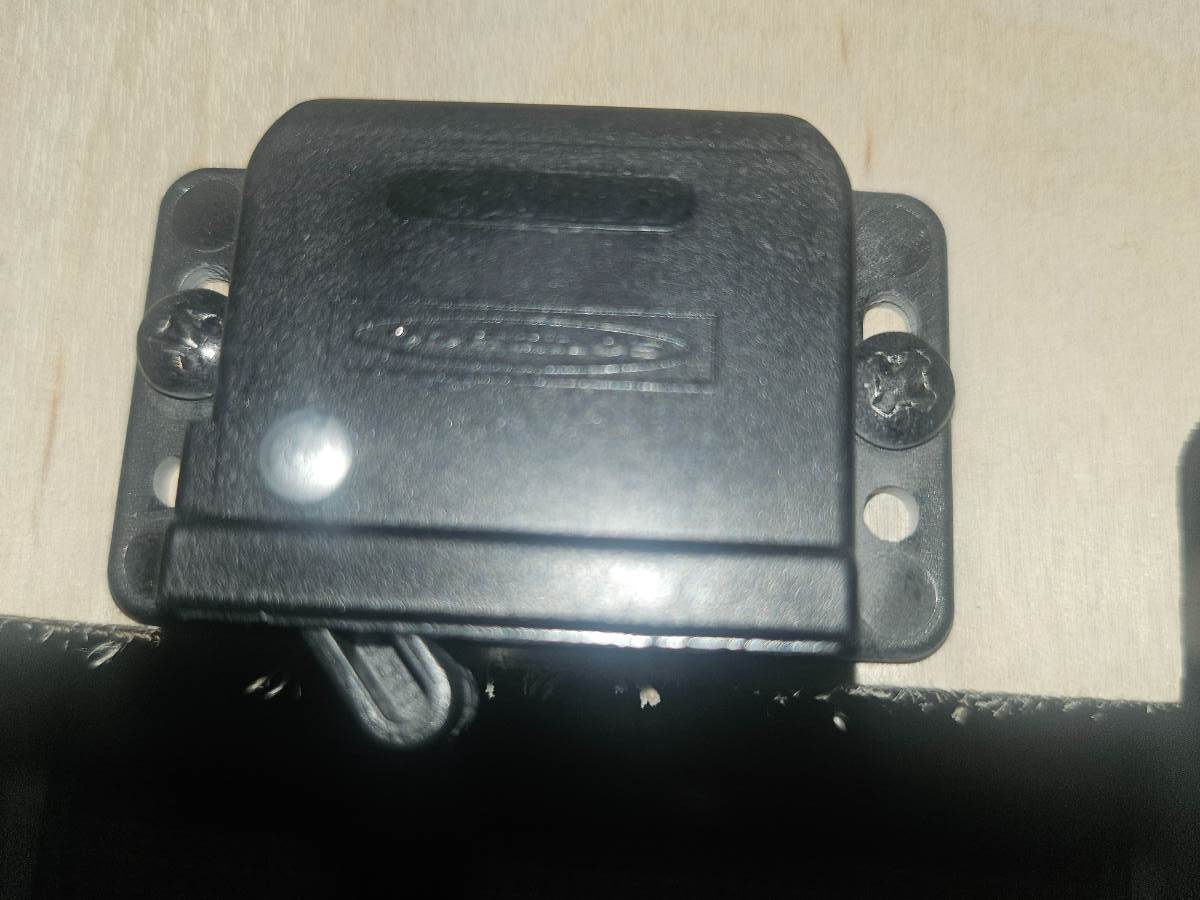
The four upper cabinet drawers of the six have a latch/bracket (wrong words?) underneath in the front that should have four screws in each. Two of the screws go in the side slots and one tightens them after correctly adjusting. After that two more screws should go in the single hole on each side to "lock" in the bracket. On my Oliver the second two screws were never installed and the bracket after months of use moves and drawer closing fails somewhat. Maybe check yours and fix the Oliver construction error. Hope Oliver Management reads this and speaks to the staff.
-
I had the same issue with my Honda 2000 generator blowing. Like @Tom and Doreen said you can change the setting on your Xantrex to lower the draw. Here is a link to the generator topic with instructions on how to adjust the setting.
-
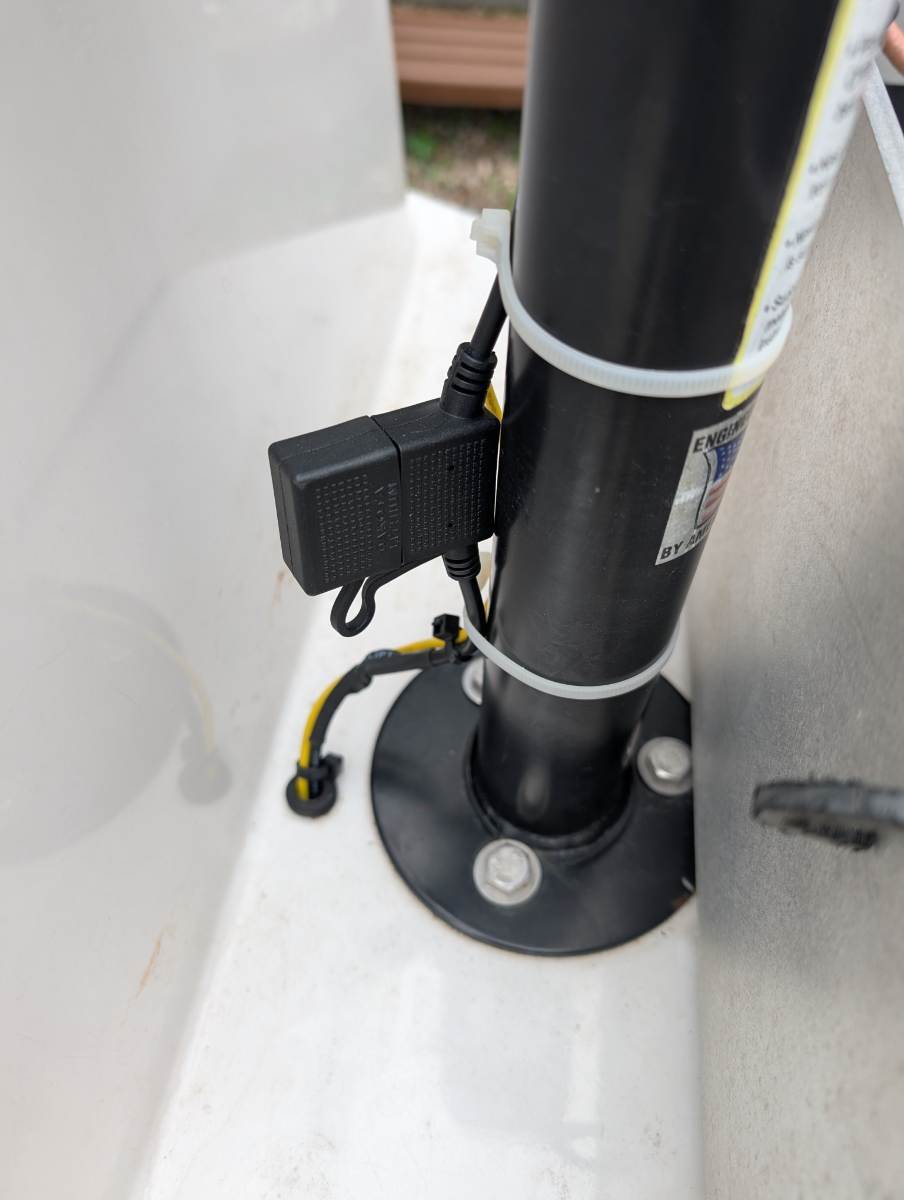
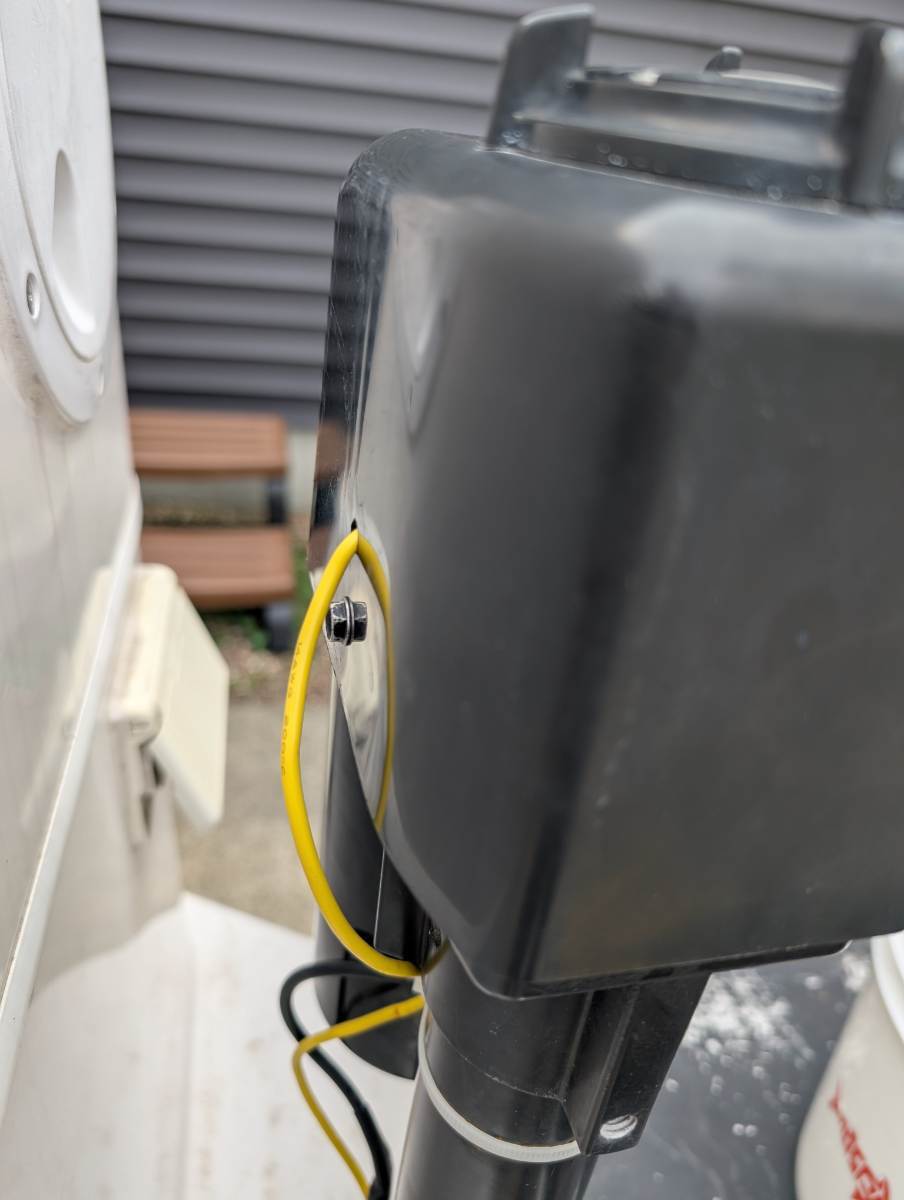
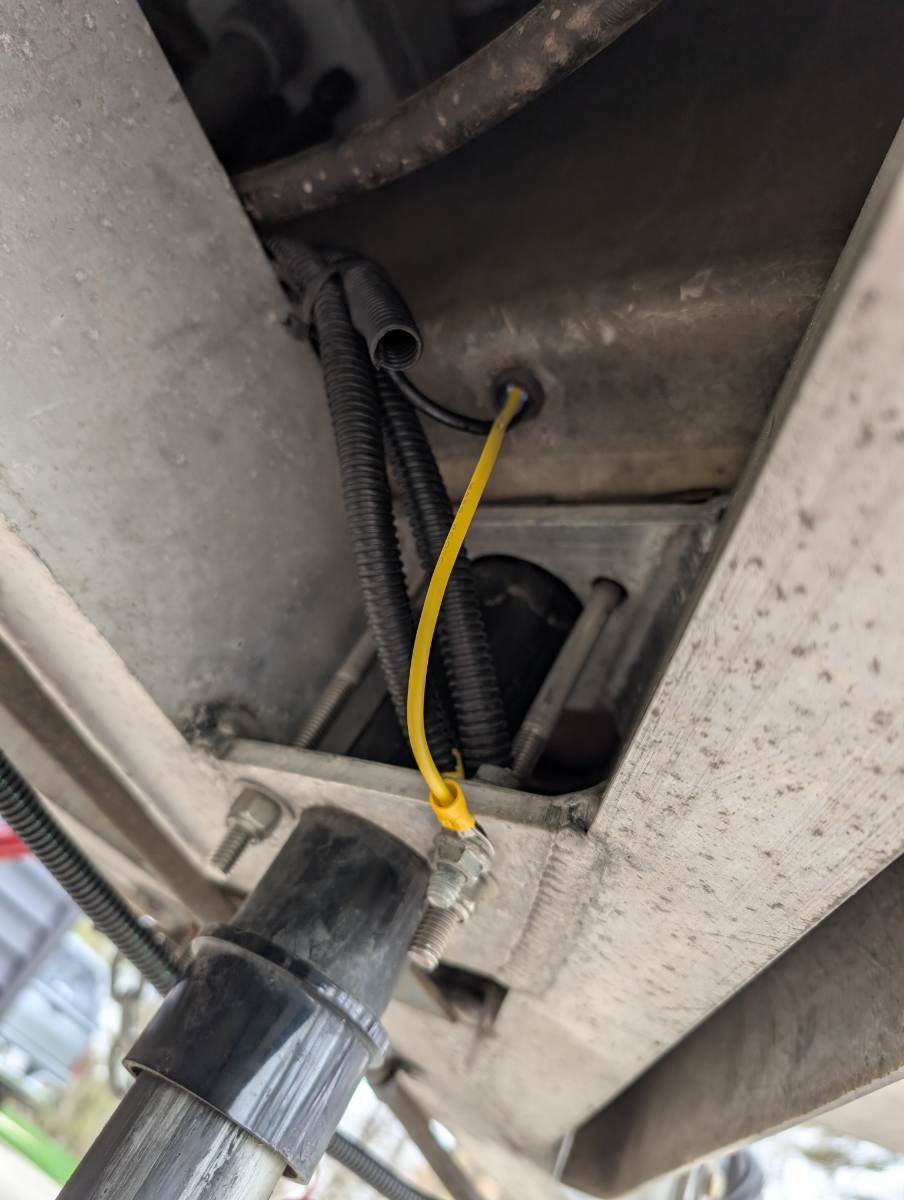
Hull #435: I have had intermittent power issues with my front tongue jack. Many times getting ready to leave a campground and the darn thing just doesn't have power. It always started working again?? It seemed like after manually raising or lowering it all the sudden it was working again. I have checked the fuse, changed the switch, and still kept getting the intermittent issue. I assumed it must be an electrical short issue (which is always hard to find). With some help from my nephew who is an electrician I have finally solved the problem. The whole time it was a poor ground connection. I believe the ground connection was made through the metal tongue jack being bolted to the frame as the ground wire was coming from the top of the motor assembly. I ran a new ground wire and it now works perfectly. In fact the motor runs better than ever and the light is brighter! My last step will be to weather proof the hole I drilled for the wire to keep water out of the motor.
-
FYI those with later model 16” Sumec wheels. I checked an older photo I had from my 2021 E2 and can see weight rating is 3300 lbs. I cannot see the max pressure rating on the photo but will check next time I have the wheels off. Although not as beefy as the older 16” Sendel wheels, it’s re-assuring that they are more than adequate.
-
Sorry JD, I'm not even going to bite on that one..... Maybe you should re-read all 27? pages of that thread. LOL GJ
- Last week
-

Claremore, Will Rogers and 1536 Hello
Tom and Doreen replied to Gliddenwoods's topic in Submit Your Story
The Will Rogers museum is excellent and a terrific Harvest Host location as well! We were there last year around this time. Really enjoyed the museum, Will had quite the personality; we learned a lot! We had full use of the grounds after hours while overnighting there.- 1 reply
-
- 2
-

-
The OEM springs will keep you "soft and bouncy" and it will get worse with more miles. Running with more tire pressure, than the tire load tables spec, just isn't smart towing. Terrible roads in most states, NM worse than AZ! We traveled to Minnesota and back last year (still had D35 axles and OEM 1750 springs), headed east and a big loop NW and back. Kansas highways were amazing in excellent condition. Western Colorado surprised me as being very nice roads. Texas roads are good in most places. Most other places, you bouncy around, potholes and bridge seems that will bottom out the Oliver (if still on OEM springs). @Geronimo John went with Dexter 2400 LB rated springs to save $$$, not sure why else? My take, they're made with the same China steel and heavier weight does not mean they cannot fail structurally in the same way as the lighter model. Go with the Alcan 4-pack if you're OK with spending some more and want less spring. The Alcan 5-pack is perfect for us and I would NEVER go back! 😎 Like your last comment! I've had issues with the sanity of Design Engineers my entire life! 🤣