All Activity
- Past hour
-

True Induction Stove Top will not turn on
Lamar replied to Lamar's topic in Mechanical & Technical Tips
Steve and MA, you are probably right. This is our 4th camper and with all of them (30 amp models), you made choices such as running a microwave vs the AC. We manage battery power, water, tanks, and propane. When you made the wrong choice, you learned and didn't do it again or you prepared for it. The induction stovetop is a new one for us and @jd1923 broke the info down in such a helpful way. Thanks for your comments. - Today
-
True Induction Stove Top will not turn on
Lamar replied to Lamar's topic in Mechanical & Technical Tips
JD1923...What a great explanation based on your experiment and knowledge. This makes sense to me. We do not cook full meals or use a stove top for very long in our camper. Big stuff like meats, grilled veggies and such are outside on our griddle and that is only a handful of times when we camp. Hot water for coffee, eggs, pancakes, is more like what we make on the stove top; and it is just the two of us. This is so helpful. We are experienced campers and are good at conserving energy and water. We certainly don't live in the camper or even spend much of the day in the camper. Time to share information with Oliver. THANKS. These forums are GOLD. -
The journey has been fun😊
-

True Induction Stove Top will not turn on
Steve and MA replied to Lamar's topic in Mechanical & Technical Tips
@jd1923, excellent explanation about the power an induction cooktop actually draws. I have to think that the reason Oliver doesn't wire it through the inverter 120v AC sub panel is to protect inexperienced campers from themselves. The 2kw inverter may be plenty for the induction cooktop by itself, but the microwave is already on the inverter circuit, as well as the wall outlets. Imagine someone trying to use the cooktop, microwave and a coffee maker concurrently. Even when on shore power, one should be careful running multiple electrical appliances. Many of Oliver's customers are first time RVers who have little to no experience with power management. It seems to me that a 3kw inverter would be more appropriate as standard equipment for an induction cooktop equipped trailer since the demand could easily exceed 2kw. Maybe Oliver should just avoid wiring the air conditioner to the inverter since the battery bank doesn't have capacity for an extended run time. Steve -
Thanks @rideadeuce will give that a try today.
-
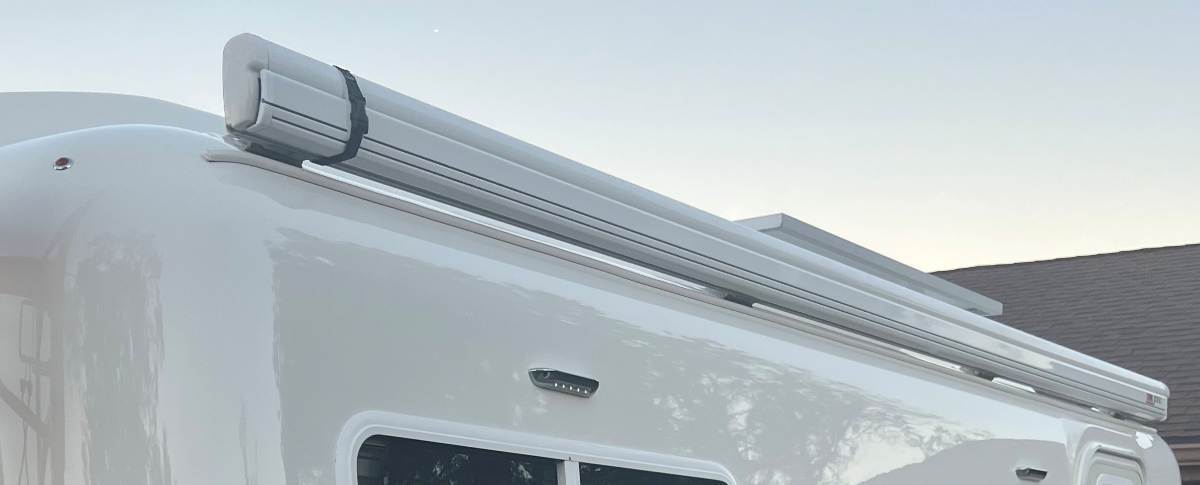
I used this method to adjust mine and it worked perfectly. Really like this model awning for its simplicity and ruggedness in windy conditions. It is a good idea to keep a spare gearbox for it on hand, though.. Mine last one went bad and took almost 2 weeks to source another. Nice job on the install!
-
We will see how long the perfect closure lasts but there is an adjustment you can try.
-

True Induction Stove Top will not turn on
jd1923 replied to Lamar's topic in Mechanical & Technical Tips
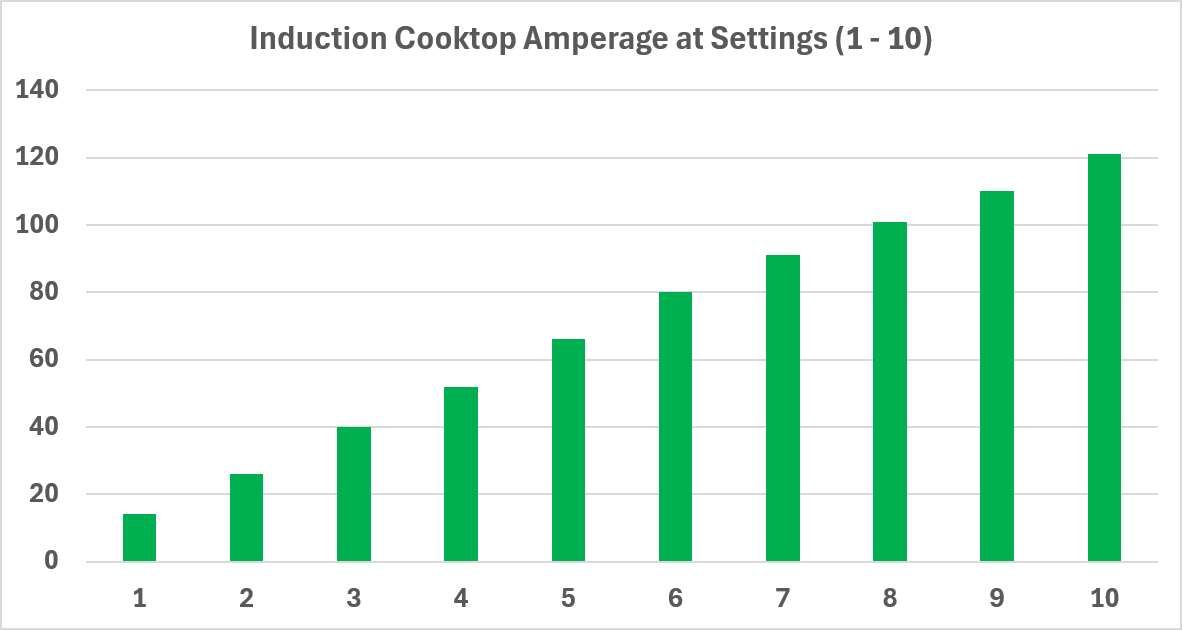
Oh, boy... I'm going to attempt to explain how "the engineers" in drawing this conclusion are naive! A trained and experienced engineer should know there is much more to this than a simple comparison of data sheet specs. 🙃 Please allow me to explain. You could have used your True Induction cooktop every day on your trip, if only they had wired it correctly to the inverter. Your system is just fine for occasional induction cooking. I was hoping you would have rewired it on the road, it's what I would have done, but I do understand the warranty ramifications. I cooked bacon and eggs for breakfast this morning using a 10" Smithey skillet on our 1800W DUXTOP induction cooktop. It cannot be much different than your 1750W built-in unit, meaning the numbers I will present will be relative to your True Induction cooktop, 2KW inverter and 260 Ah batteries setup (your solar may vary). This induction burner starts at the medium #5 setting and within seconds the bacon started sizzling, so I turned it down to 3.0. After the bacon was done, I increased the setting to 4.0 and cooked a batch of scrambled eggs. I did not measure cooking time but maybe about 12 minutes total, I'll use 15 minutes to be conservative. You'll be amazed how many actual Ahs it takes to cook a simple bacon-n-egg breakfast or boil a pot of water (wait for the punchline). 😎 Reading such nonsense from "the engineers," the engineer in me had to prove them wrong! So tonight, I went out and plugged in another DUXTOP that we keep in the Oliver to run an amperage use test. When it turns on at the 5.0 setting it quickly ramped up to 68A (DC amps) which comes to 816W (W = 12V x A). Your Xantrex 2KW inverter can handle this with just a low hum. I tested the induction cooktop at all settings (1 - 10). Here are the results! (I'm an IE and used to do this kind of reporting professionally for 30 years.) The first row shows the induction cooktop settings (1 - 10). The second row shows Amps produced by our Victron MP2 inverter, read from the Victron Connect app. The third row shows Watts calculated (amps x 12V). The fourth row titled %Spec is the actual Watts used divided by the 1800W maximum. Note on FULL this induction burner pulls watts at ~80% of spec. We call that a 1.25x engineering margin, therefore... Your inverter will NEVER use 1750W! The actual maximum will be closer to 1400W on FULL which can boil a 5-qt pot of water in just minutes. I could not read actual amps out of the inverter for any setting less than 5.0. For example, at the 3.0 setting the amp reading ramped up to about 60A for a second and then wound down, then repeated this pattern. I believe the heating element is not capable of a lower amp setting, so it would turn ON and quickly OFF to some timed algorithm. More OFF time than ON as the settings go lower. This is likely why the unit starts up at the 5.0 setting. In the table above, the amp readings in BOLD are actual readings, the lower numbers calculated. There is an obvious linear relationship, so I used a graphical extrapolation method to calculate amps for settings 1.0 through 4.0 which looks like this: Let me tell you how many Ahs I used to cook breakfast this morning! Estimating 15 minutes cook time, half of that at setting 3.0 (40A) and half at 4.0 (52A), so on average I used 46A for 15 minutes. Isn't it amazing, the technology where it is today, that I used only 12 Ahs to cook breakfast! (46A x .25hr = 11.5 Ah) On the #10 setting, you cook boil a large pot of water for pasta in say 10 minutes. This would use 20 Ah of your 260 Ah batteries. You could simmer a red sauce, chili or any fresh made soup for 2 hours on the 1.0 setting using 28 Ah. Sorry, you're under powered to get into the food truck business, but quick meals 2-3 times a day, np. Our 10-year-old less efficient 320W rooftop solar nets +12A when mostly sunning. This means an hour after breakfast in our hull SOC / Total Ahs would be back to where it was just before we cooked breakfast. Your 2K inverter and 260 Ah is just fine for your "Baby Ollie." We couldn't live on it, but I demand induction cooking while Chris toasts bread in the Emeril Oven and we stay cool running the Chill Cube A/C, on our 3KW inverter and 900 Ah. Please don't retrofit to an LP burner. Induction cooking is FAST, well measured, it's just GREAT! In our home kitchen, Chris now uses a single-burner induction cooktop regularly while our GE 4-burner natural gas cooktop sits idly by! 🤣 She can't be without it, now that she knows it. Just ask @Ollie-Haus, who convinced me to buy ours! Just get OTT to rewire your circuit breakers so that induction cooking and everything else is on the inverter circuit except for air conditioning (or have any electrician do it). Thanks for allowing me to learn with you tonight. It was fun "engineering" again! Going into this study, I had no idea the numbers would be this good! 😎 When we need advice, our forum is the place, great collective knowledge here! We thank OTT for providing us this platform. We should expect the company to continue manufacturing the best fiberglass hulls in the travel trailer marketplace, no doubt! 🤗
-
True Induction Stove Top will not turn on
Lamar replied to Lamar's topic in Mechanical & Technical Tips
FYI, I did speak with the sales person at B&B RV. As I anticipated, he was not aware that on this build unit the induction stove top was not routed through the inverter and wouldn't work when boon docking. He will also be contacting Oliver to discuss a remedy. So far, everyone I spoke with have been unaware of this issue and are hoping to find a way to resolve. That is a good thing. -
True Induction Stove Top will not turn on
Lamar replied to Lamar's topic in Mechanical & Technical Tips
I feel like I'm giving them an opportunity to step up. Those that I'm currently talking to are likely not ones who can make some Company decisions. I'm hopeful as the conversation progresses with Oliver and within Oliver that we can find a resolution. -
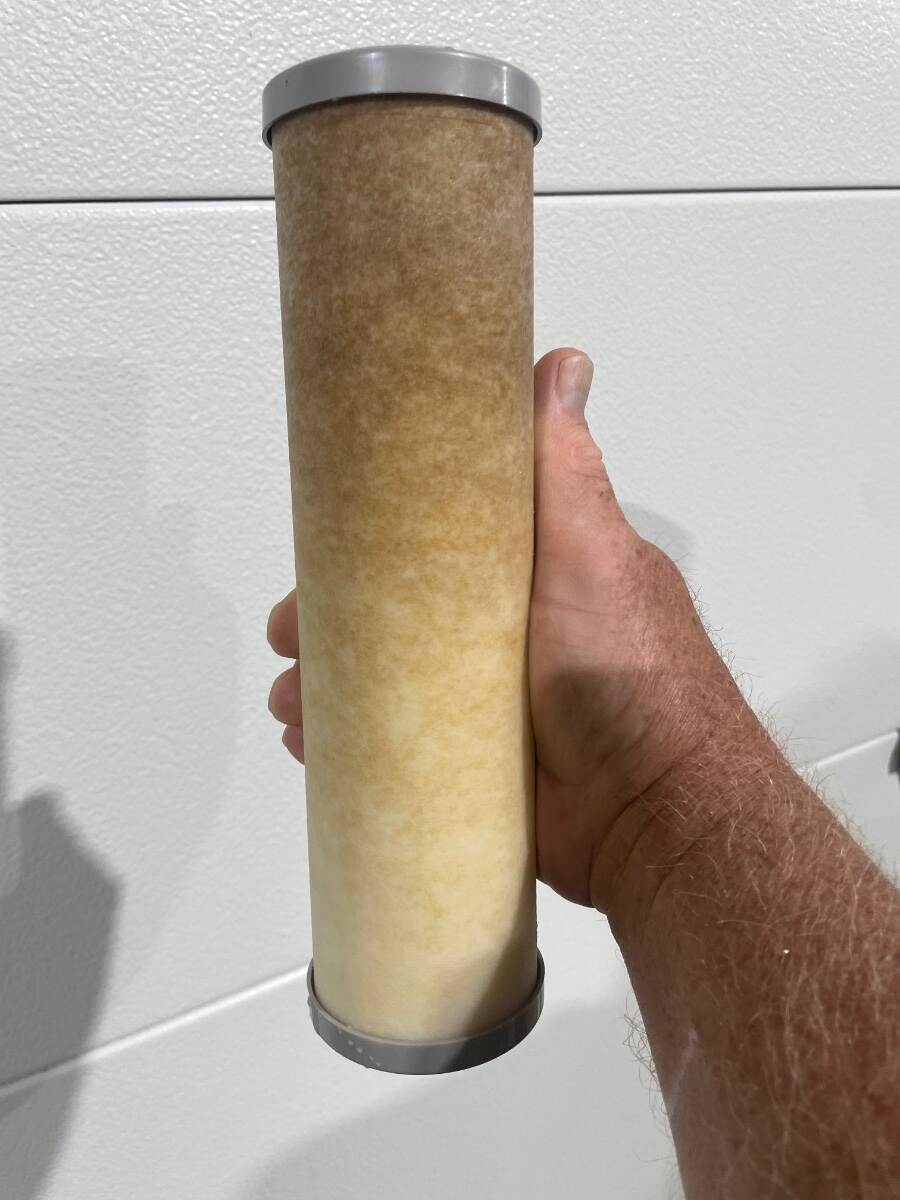
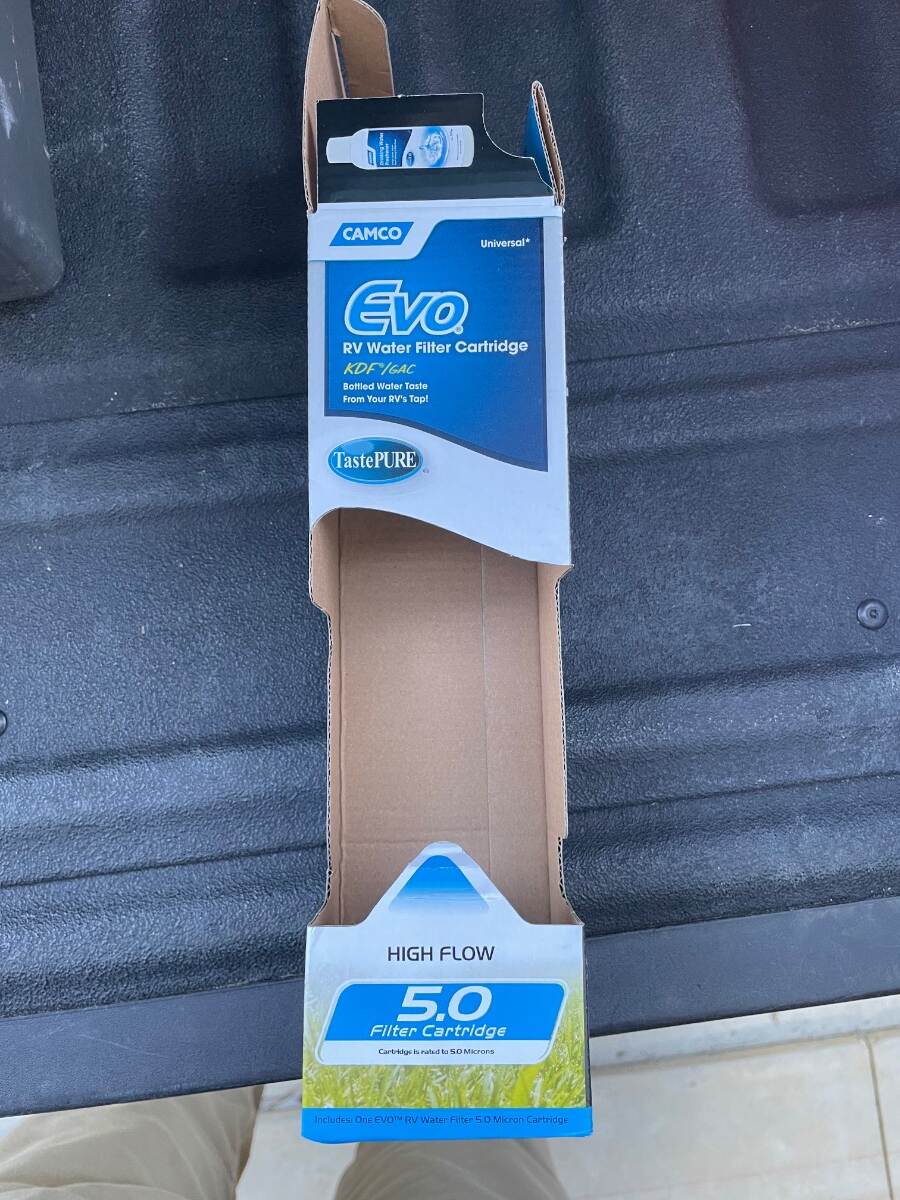
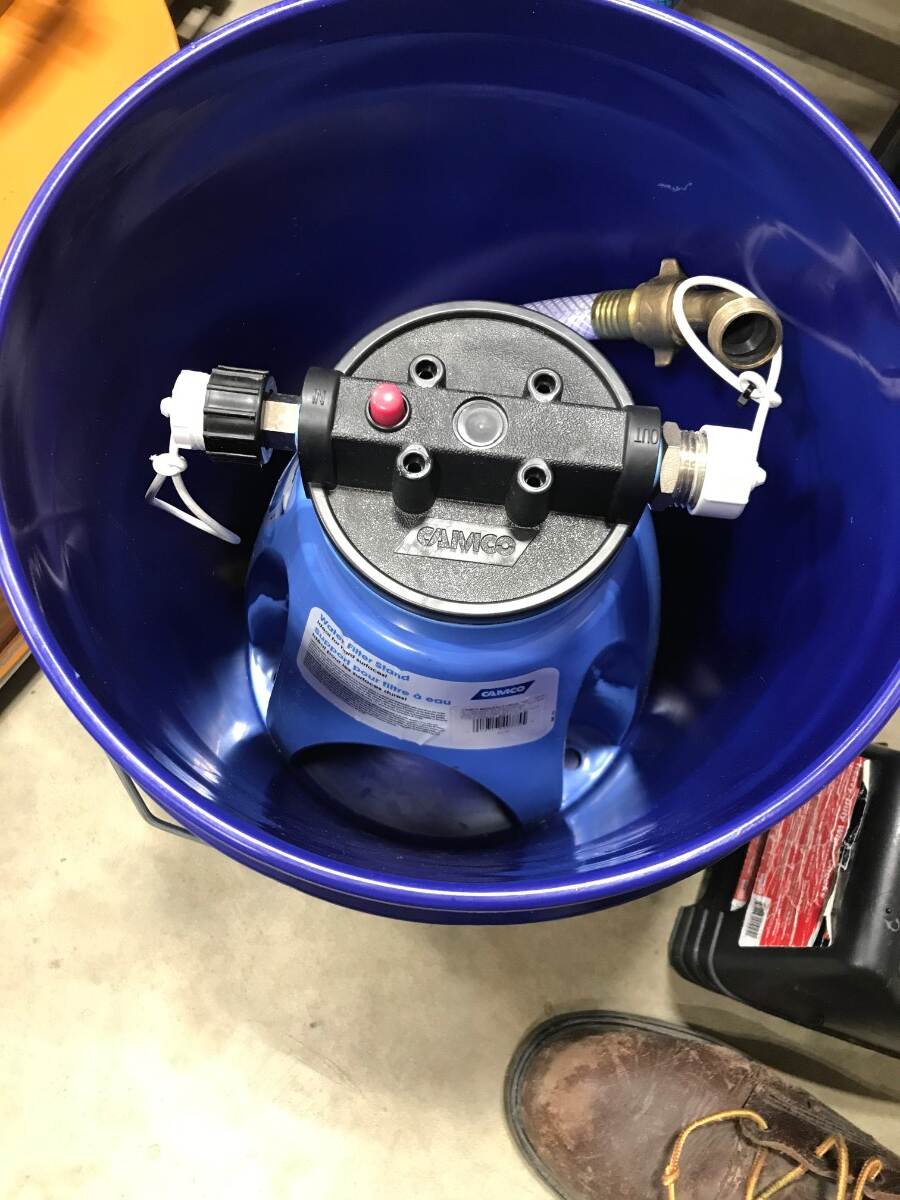
This is a Camco Evo water filter cartridge that has been used on one trip for 20 nights in 6 different campgrounds in 5 different states. We set up for 3 additional single nights in 3 more CGs where we didn’t hook up to the water. I don’t know which CG water caused it to look like this. We don’t drink campground water and sometimes we can’t even shower with it. This is not the worst we’ve seen. The worst case was near Leech Lake MN a few years ago where I had to change the cartridge after 1 night. Those of you using the blue bullet water filters should probably be changing them every few days. Water with high mineral or organic tannins content will stain your plumbing fixtures and certainly your clothes if you wash in it. Bill
-
- 3
-

-

-
Here is a data point. We have done 34 states in the last 22 months. Just over 20,000 miles, 125 nights in the Ollie. We hope to complete the lower 48 next year.
-
Exactly like ours but not sure for how long. Don't think I used it the first year we had our Oliver and once I did it would not close completely on the rear. We use a rear strap as pictured. Anybody know it there is an adjustment? Mike, good work as usual. You've been first on many great Oliver Mods! 😎
-
 Those two were LOOSE when the “last” diesel auto mechanic opened that access panel. He tightened them. And he taped the wires underneath, near the hole in the axle. And he connected the ground wire on one of the truck batteries (all mentioned in my original post). The issue resolved for 3 days. Then driving over aged highway macadam and it started again. My brother mentioned the potential for the slightest bit of low voltage to mess with computer components in the truck. Today I reopened the vanity access panel, looked around, took photos, buttoned it up again. Didn’t change anything. Noticed there are actually two junction boxes in there, street side one much harder to access; I opened the curbside junction box. Those two black ground wires still looked tight. Tomorrow morning I move to new location (more rural). Confidence level is low. Two mechanics looked at the ground bus bar under the dinette, after I pointed out where it is located, but I don’t know if anyone was certain about which wires on it were/are associated with the 7-pin cable and/or the brake wiring. And I shared the wiring diagrams (such as they are) in the manual. One tested the individual elements of the 7 pin head (trailer side) and said he didn’t think the issue was there, it was functioning. Will do this in Cimarron, where my friend can help me.
 -

Reset 2.0 has started squeeking when backing up
DunnYet replied to DunnYet's topic in Mechanical & Technical Tips
I can relate to that. My one for the flattop is yellow, now that you mention it looks awfully like a taser. 🙄 - Yesterday
-

True Induction Stove Top will not turn on
Steph and Dud B replied to Lamar's topic in Mechanical & Technical Tips
Passing the buck. Oliver should be better than this. They built it. Again, for what you paid for your trailer (and what Oliver expects others to pay, based largely on their reputation) they should make this right. Building and selling an RV with no working stove in boondocking mode might be acceptable for an entry-level brand, but it's unacceptable for an allegedly top-tier brand. C'mon Oliver, what happened to you? -
True Induction Stove Top will not turn on
Lamar replied to Lamar's topic in Mechanical & Technical Tips
We have returned from a 3,000+ mile trip through CO, Utah, AZ, and NM. Very much enjoyed our Oliver Elite I, except for this issue. I have been in contact with technical support and now service at Oliver. Here is the update. 1. As many of you suggested, the induction stovetop is NOT wired through the inverter. The engineers did not do so because of the electrical needs of the induction stovetop -- 1750 watts with a 2000 watt inverter and the batteries at 260 AH. The tech told me that they only made 4 Elite 1 Platinum units in 2026 that were wired this way. 2. If we put a 3000 watt inverter in, the batteries would be drained after 90 min of stovetop use. While we would never use that much at one time, it would be cumulative as long as we are boondocking. During a cloudy period and other use, the drain on the batteries could be a problem. So it isn't recommended to replace the 2000 watt inverter with a 3000+ inverter. BTW, they would be unable to increase the batter size to accommodate. 3. Since we ordered the camper through B&B RV in Denver, service suggested B&B Rv would be responsible for selling us this unit and telling us the stovetop would work during boondocking. I do have a call into them and waiting on a return. 4. Oliver service is checking on switching out the induction stove for a propane stove. In addition, they are checking with manufacturing regarding the production of these units with this limitation. Currently, waiting to hear back from Oliver and also from B&B RV in Denver. We now know what the problem is, but we don't have a way forward yet to resolve the issue. Oliver is currently suggesting a fix would be an upgrade but they are checking with manufacturing. I'm suggesting it is fixing a poor design decision. More to come on that. Stay tuned. -
 I don’t want to offend anyone, but I have an entirely different view on this issue. It might be time to pull in the reins on the piece-meal fixes and take a fresh look. At lot of the advice provided is based on conventional auto electrics and trailer wiring. But things are much different with today's vehicles. There is changing technology with Pulse Width Modulation (PWM) switching, and the way it interfaces with modern LED lighting, and the low-to-ground switching of your Chevy that requires solid grounding. High resistance grounds and shorts can be hard to locate, and they can cause ultra low currents that will be detected by digital systems of new vehicles. These include grounds and shorts that might only appear under heavy loads, such as from your brakes. The heavy loads can cause insulation breakdown and arcing that might not be otherwise detected. The flickering lights you mentioned might be an artifact of your 2023 truck’s older PWM system and a separate issue, or it could be caused from a poor ground. It could also be caused from a failing brake controller for example. I agree that it’s most likely a trailer wiring issue, but I wouldn’t go rewiring the 7-pin or axle wiring just yet, or renting a u-haul with a 4-pin adapter because you will not get definitive answers. Unfortunately, new grommets will not help at this point either, the wires were already taped. The breakaway switch amperage will be ambiguous too. A direct short would smoke the wire, a high resistance short would be lost within the range of 9-12 amps for the 4 brake coils. But there are enough clues to point to a potential ground issue, so a ground check would a good start for most DIY folks. The trailer is grounded to the TV in 2-ways. Through the hitch ball, and via the 7-pin ground wire. The ball ground can be iffy, so the wire ground is important! You can see the black ground wires in your junction box picture, they are connected to studs that are grounded to the trailer chassis. A good place to start checking. Use a multimeter on ohm’s setting. Find a good ground on the TV for grounding one of the meter leads, and then start checking ground points on the trailer with the other lead while jiggling wires, including those on the axle. You will need two people, and maybe jumper cables to extend the test lead length. You should have fairly consistent low ohms readings. You might get lucky and find a loose connection. However, it sounds like various technicians have already checked for obvious problems, so at this point you are really in the territory of an Auto Electric specialist with proper logging instruments to test for intermittent problems and the ability to accurately trace circuit continuity. Auto electrics is a field of it’s own, and they are far more knowledgable that the dealers and regular mechanics. Just my two-cents. Good luck! Geoff
 -
@TimD
-
TimD - This looks great, and it's definitely on my to-do list! Did you have to take any precautions to prevent corrosion between the aluminum and the steel hitch? You mentioned zinc washers, but did you also use a dielectric barrier, something like a non-conductive EPDM rubber gasket or heavy-duty closed-cell neoprene tape?
-
Hopefully you have better luck with your Fiamma than we have had with ours. Within a couple of years the rear part of our Fiamma would not completely shut or close and thus we tend to use strap on the rear of the unit to keep it closed. Nice looking installation on yours! Really good job.
-
Yes good thought, but 3 1/2 years OK, not your issue.
-
Well…. My Oliver and TV played well together for 3 1/2 years before this issue started. But I will keep this in mind. Thanks @ScottyGS for the additional input.
-
What a scare that must have been. Glad you are ok. I wonder if it helps that attaching an Andersen anti-sway hitch requires me to lock the coupler on the ball and then raise the ball quite a ways in order to get the hitch attached? If the coupler were not secure on the ball I would never be able to connect the Andersen,.
-
Reset 2.0 has started squeeking when backing up
Steph and Dud B replied to DunnYet's topic in Mechanical & Technical Tips
Yes! I have a tiny pocket IR thermometer I got at Harbor Freight. Not super accurate, but you're only really interested in the relative temperatures between wheels - looking for one running significantly/unusually hotter than the others (every trailer we've had had one wheel that consistently ran slightly hotter than the others for some reason). HF doesn't sell it anymore, but they have similar pocket IR thermometers on Amazon. I prefer the pocket size to the gun because I can grab it at a rest stop, check my wheels, then drop it in my pocket while I head to the rest room. (You look kinda funny carrying a IR gun into a restroom...)


.thumb.jpg.e34bf01ef7f7d5e99ad31856d45afbeb.jpg)





.thumb.jpg.67391e1a94f5581b888b97e86ab40ff4.jpg)