Leaderboard




Popular Content
Showing content with the highest reputation on 09/01/2016 in all areas
-
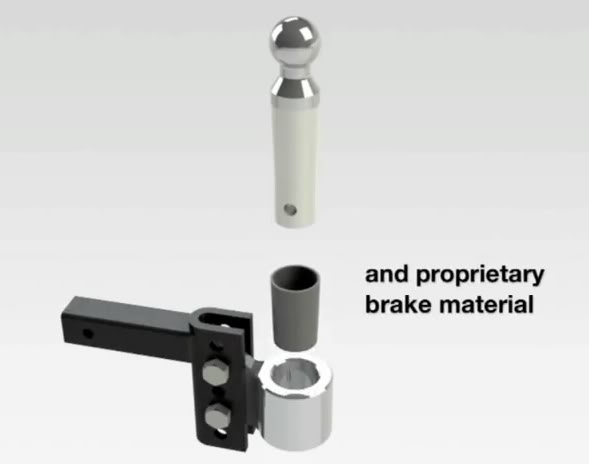
As a factory rep for Andersen Hitches I have joined the forum to help inform, educate, and assist in any way possible with our products. As for the Weight Distribution hitch (WD) it is very unique in the industry and designed to not only distribute the tongue weight of the trailer but also reduce sway and bucking. Oliver does a great job of installing this hitch on their trailers utilizing our chain extensions. By understanding how the hitch works will help you use it properly and tow safer. Weight Distribution The weight distribution is accomplished by the force of the chains pulling the triangle plate backward and the coupler of the trailer pushing the ball forward. This works very similar to a cable suspension bridge. We have to build the bridge between the truck and trailer and then put the weight down so the hitch can do its job. If the hitch is installed properly, hooking up is a cinch. Simply lock the coupler on the ball, then using the trailer tongue jack lift the tongue a couple inches. The triangle plate should be attached to both chains and easily swing up and attach to the bottom of the ball assembly with one pin, insert the pin on the triangle plate then tighten the nuts on the back of the chains. The number of threads showing is not as important as them being equal on each side, having both chains tensioned with an equal number of threads showing is desired. Once the chains have been tensioned retract the trailer tongue jack to transfer the weight to the vehicle. With the full tongue weight on the tow vehicle the red urethane bushings should have a slight bulge to them and the chains should be very tight. (The bigger the bulge the more weight is displaced) When the trailer is straight the tringle plate should also be straight. Anti-Sway The design of this hitch allows for an active sway control which is accomplished through the ball assembly. Once the trailer is hooked up with a slight bulge in the red bushings the ainti-sway can function properly. When the trailer turns, the chains will pull and rotate the tringle plate with the ball it is pined to inside the ball housing. This housing and ball have a slight cone shape that prevents the ball from coming out of the bottom of the housing. There is a friction material sandwiched between the ball and the housing that provides a smooth quiet ride. (If yours is making noise when turning see the known issue thread for warranty info.) The best part is you don’t have to worry about doing anything once it is hooked up properly, the aint-sway will do its job. Oh Yah, because of the ball turning in the housing instead of in the coupler there is no need to grease the ball or to unhook anything when you back up, it will not damage the hitch or trailer. With any hitch it is possible to jackknife a trailer so please don’t turn so sharp in reverse that the trailer contacts the bumper of the tow vehicle. Anti-Bounce Normally when pulling a trailer when the vehicle hits a bump in the road it bounces then the trailer hits the same bump and bounces causing more bouncing in the vehicle, this back and forth bouncing can continue for quite a distance after the bump. This is known as bucking and chucking which creates extra wear and tear on everything and often discomfort and fatigue to the passengers. With a traditional WD hitch they utilize tempered steel bars (AKA giant springs) to distribute weight. When driving over bumps these spring bars act like a diving board and exaggerate the bucking and chucking even longer than having just a ball. That is the Job of the red urethane bushings on your Andersen Hitch they work like shock absorbers dampening the bums and bounces between the trailer and vehicle. Disconnecting To unhook try to get the vehicle and trailer straight, then raise the tongue enough to release the weight from the tow vehicle, loosen the nuts on back of the chains, pull the pin on the triangle plate and let the plate swing down. Now you can raise the trailer off the ball and you are good to go.
 4 points
 -
These are a few of the common issues and questions we get about our WD Hitch. Most of the issues experienced are due to improper installation or hook up. See the Andersen WD Hitch thread for general information about our WD. Q. How do I get my triangle plate straight? A. Often times when someone discovers their plate is crooked is when they are trying to hook the trailer up again and can’t get a chain to reach. Why this happens is the trailer is unhooked when it is turned and then they back straight into the trailer to hook up. It will be practically impossible to move the tringle plate by hand at this point (Don't hammer or try to pry it straight), hook the coupler on the ball and release the short chain from the triangle plate. Once the short chain is released, pin the triangle plate in place, retract the tongue jack and drive forward perhaps even turning the other direction to get the attached chain to straighten the triangle plate. Once it is straight raise the tongue, reattach the chain and hook up as normal. To prevent this issue, try to unhook and hookup as straight as possible. Q. Why is my WD making an awful noise? A. This is the unfortunate side effect of doing all of our R&D testing out West where it is very dry. What is happening is the quietest WD on the market is getting moisture in the friction material and it sounds like the spawn of the underworld has manifest in your RV. For this we sincerely apologize, it does not affect safety but it can be uncomfortable and embarrassing. The good news is there is an easy cure; Send me and email: Sage@Anderseninc.com with “ Noisy WD Warranty” in the subject line, include your name and shipping information and we will send you a new friction cone with an updated material that handles moisture much better. If you are changing this the easiest way to get the ball out is to remove the retainer clip from the bottom of the ball assembly, then reinstall the rack in your receiver hitch and use a jack to lift the ball out of the housing. After inserting the new friction material you can turn the drop rack upside down in your receiver hitch and jack the ball in so the retainer clip will go on. Q. Can I back up without unhooking? A. Yes you can. Because of the ball turning in the housing there is no need to unhook anything when you back up, it will not damage the hitch or trailer. With any hitch it is possible to jackknife a trailer so please don’t turn so sharp in reverse that the trailer contacts the bumper of the tow vehicle. Q. When I get to about 40 MPH my trailer starts swaying bad. What should I do? A. This is a conflict of two great systems and is not exclusive to Andersen WD. Many of the newer vehicles are coming with a trailer sway protection on them. This is a system that applies slight braking inputs to the opposite sides of the vehicle to minimize and correct trailer sway. The newer F-150 is the most common vehicle with this feature. This system fights against anti-sway hitches of any manufacturer. If this is something you are experiencing just turn that feature off in your vehicle each time you start it. Q. Can I turn my drop rack over and use it in the rise position? A. Yes you can. The rack is safe to use in the drop or rise position, the important thing is to get your trailer riding level. Q. I have a class 5 receiver will this hitch work? A. Yes, we have two options; there is a reduction sleeve 2.5” to 2” but this can create extra movement in the receiver. We also build the drop rack in in the 4” and 8” drop that has a 2.5” receiver for the class 5 tow package. Have your dealer order the appropriate receiver when buying the hitch to avoid shipping and restock charges. Q. I have the rack in the rise position and can’t open the back of my SUV. A. We build the racks with a custom 3” extension on the shank to get you a little better clearance, this also works well for spare tire interference. Q. My truck is lifted will this hitch still work? A. Most likely, we can do a 4” and an 8” adjustment on the rack. The 4” works on most vehicles and the 8” gets you a little more reach. See our fit guide at AndersenHitches.com. Have your dealer order the appropriate receiver when buying the hitch to avoid shipping and restock charges. Q. How is this a greaseless system? A. The way the ball turns in the housing eliminates any friction between the coupler and ball, they turn together so there is no friction and no need for grease.3 points
-
Thoughts and prayers for my new friends in Florida, Hap and Trumpet Guy. Wishing you well through the storm.2 points
-
Grayson, I must apologize, I seem to have forgotten the order I did things. When I first got the trailer from Ron I wanted to throughly clean it and see if I could do something about the cream colored frames and it was during the period that I had the frames off already, that I removed and replaced the screens and completely cleaned all the window gutters and the black plastic tracks they run on (thus I didn't remember having to remove anything to do it) I just tested on the trailer and found they can be removed with the frame installed, but is not worth the effort and possible damage to the blinds in doing so. The frames come off easy enough, they are held on by two metal squeeze clips on the top and bottom and on my trailer they had applied some sort of contact adhesive to where the clips attach to ensure they didn't "fall off" so they might be reluctant to let go, if yours is the same.2 points
-
I replaced mine with aluminium cat proof screens. You should not need to remove the frames or anything else, just open window to have more room to work with. The screens only have those curved metal tabs to hold them in with pressure. I will take some photos of it and post once I'm back near the trailer later.2 points
-
Bill, Thanks so much for the information. I'm just starting my search for a new TV and I try to temper all the claims made by each of the manufacturers. Since I do not put a bunch of miles on any of my vehicles a difference of a mile or two on MPG really doesn't matter to me that much. Unfortunately, I believe that the towing capacity of the Tacoma is right on the margin for the Elite II. Therefore, basically I'm "forced" into considering 1/2 ton trucks (yes, I know that there are other vehicles other than trucks out there) and the Tundra has always been near the top of my list. Bill1 point
-
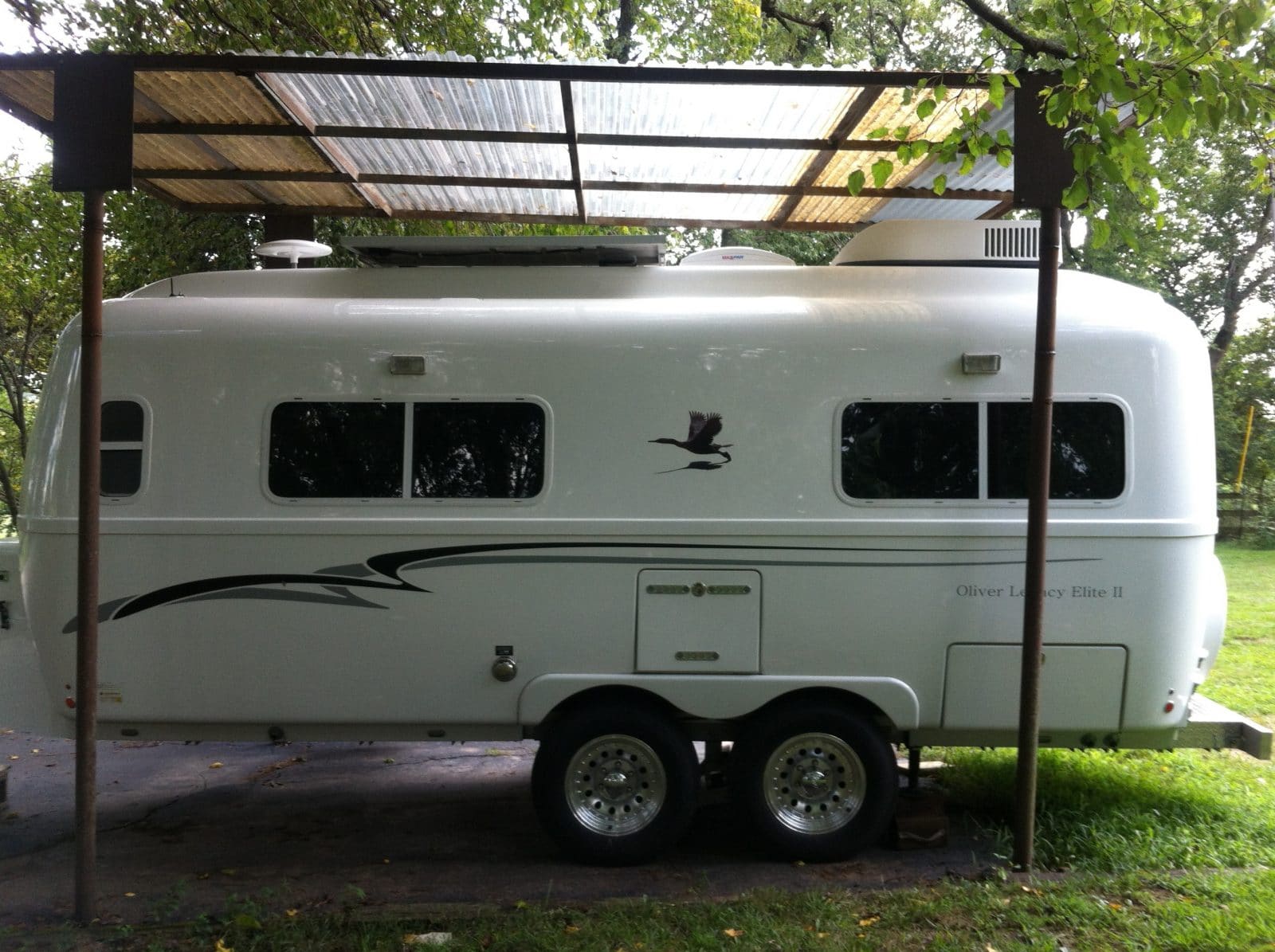
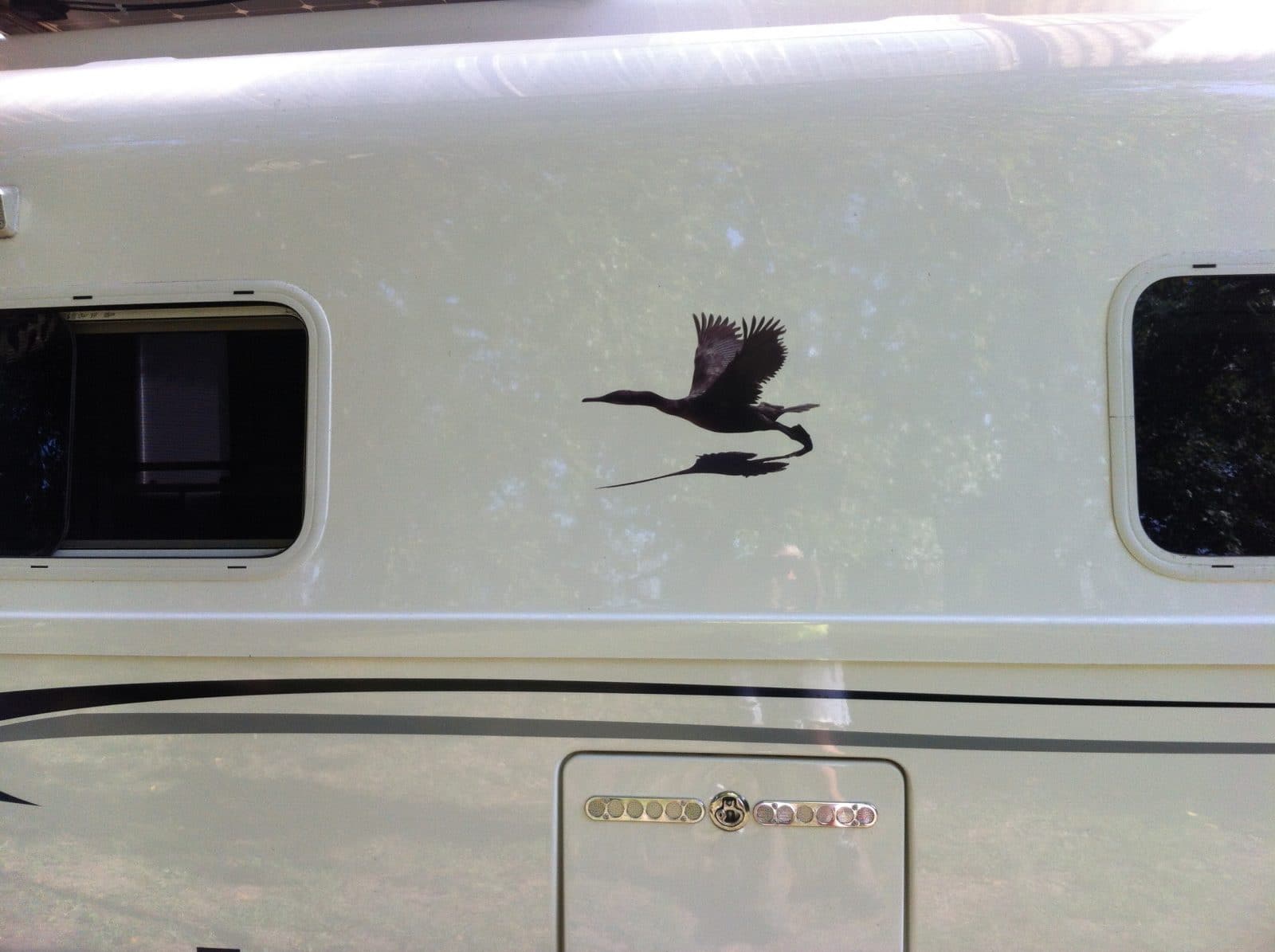
Our son took this picture of a Cormorant, just taking off, while we were on a trip to Mexico for our 50th anniversary, which the kids paid for. (our kids are the best) A week in Mexico with the 3 kids and their families was a fun time. Carol thought the picture of that bird taking off was appropriate for that open space between the windows. We had a local sign shop make the decals from the picture we emailed them and they also applied it to the trailer. We are pleased with the end result. I have another idea to display the number 6314 or 1463 in script maybe on 2 lines on the back of the trailer, at a slant. The 63 is the hull number and the 14 is the year of manufacture. Still considering the options, but I think the sign shop could make a nice decal. Stan
1 point
-
Bill, It's a 2016 SR5 4x4 5.7L Tundra built 7/16, the 2016 SR5 5.7L is equipped with tow package. It weighs in at 6120 pounds with two people on board, full 38 gallon tank, and 50 pounds of stuff, I call this unloaded. When checking MPG I'm light on the gas pedal, allowing speed to slow down 5MPH going up & allowing speed to increase 5 MPH going down hill. Unloaded not towing, best fuel economy so far is 20.6MPG during a round trip of 480 miles to VA using 23 1/4 gallons. With less than 1000 miles on the Tundra. Ran the Tundra with the tow-haul mode ON with tranny in Drive to the NC foothills. The Tundra with the tow mode on has a very responsive throttle and stays in gear longer without hunting gears, assume this is how most modern manufacturer's tow-haul modes are set up. Did not get to top off with the Tundra before & after the last camping trip, but took photos of the Tundra on board MPG display when arriving at the campground and arriving home after the camping trip with less than 2000 total miles on the Tundra. Towing the Ollie, 13.1MPG on this 135 mile round trip to the NC foothills. First leg of trip: Second leg of trip:1 point
-
Grayson, Once you get on the road with getting this done, please post pictures and details (prices and materials). On this year's trip out West I'd either be watching a DVD or reading at night. In both cases , when it came time to go to bed, there would be a couple of different kinds of insects buzzing around the ceiling. Bill1 point



-
Recent Achievements
-