Leaderboard




Popular Content
Showing content with the highest reputation since 08/15/2026 in all areas
-
This video will give you a basic outline to some of the upgrades we had done earlier this summer on the Outlaw Oliver.16 points
-
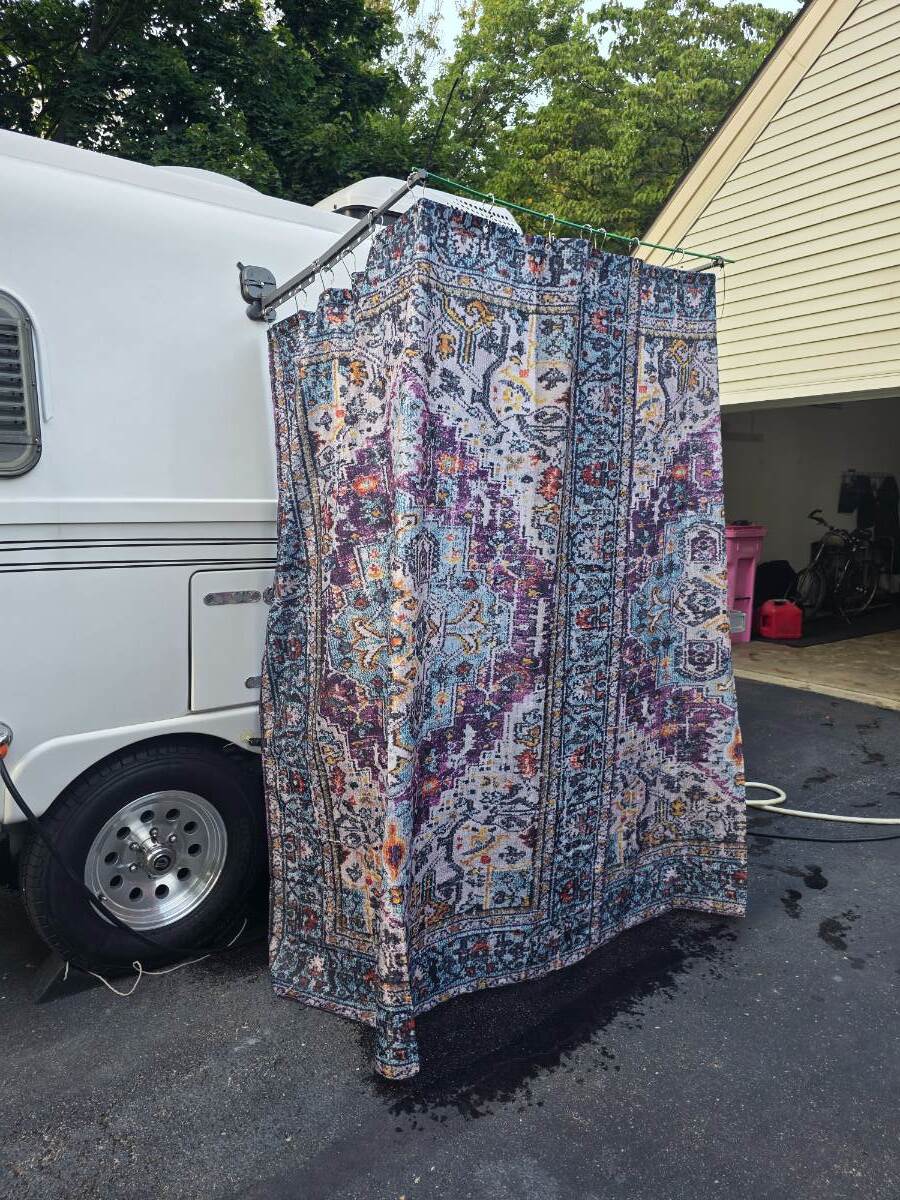
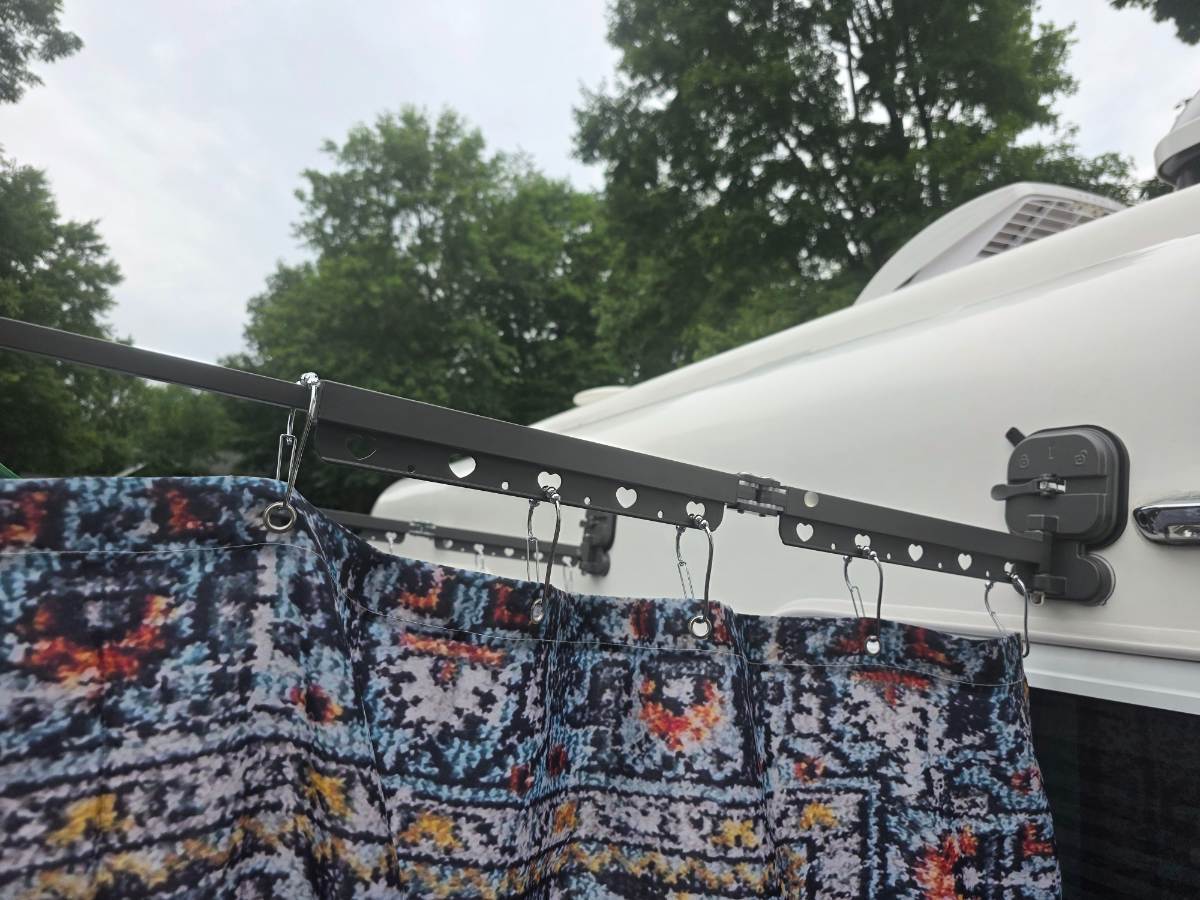
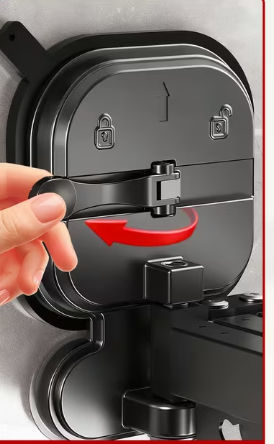
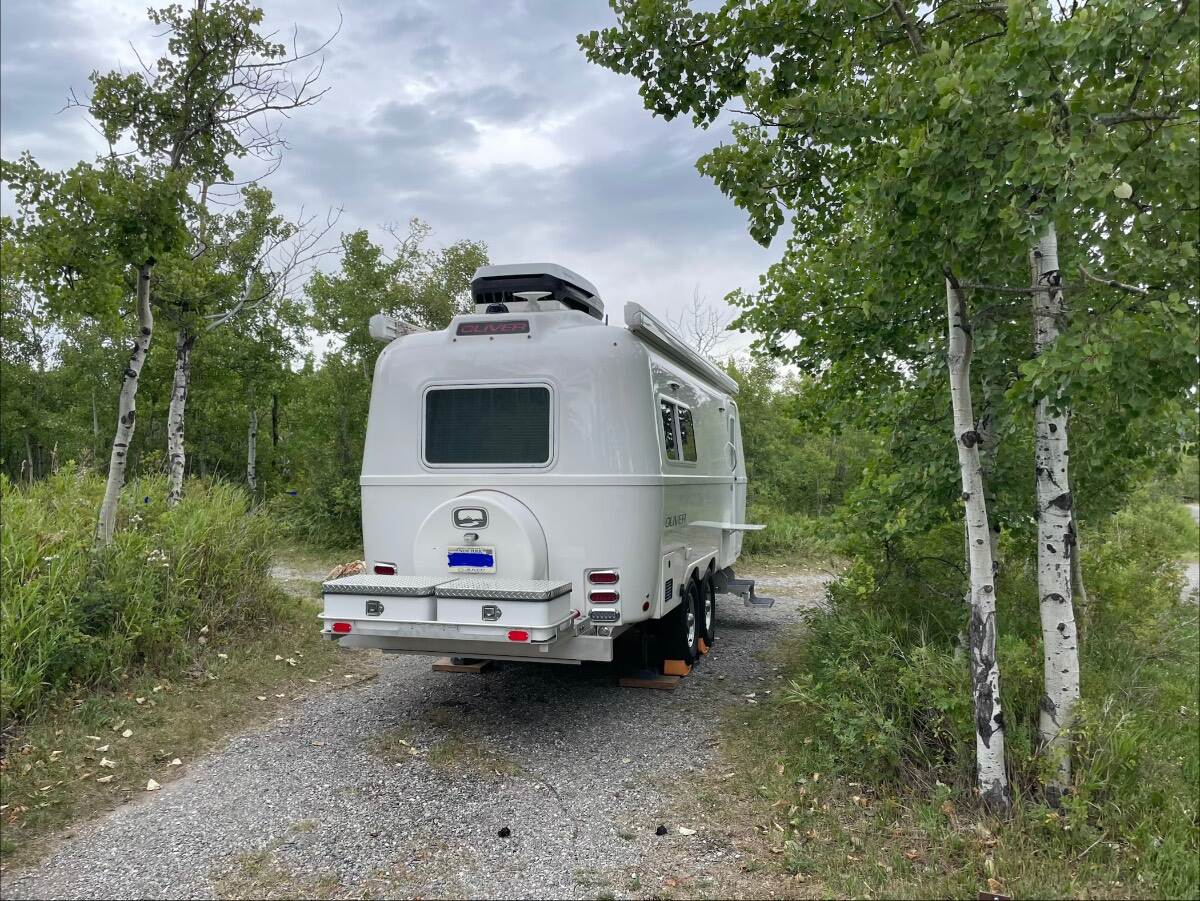
Hi Oliver Family.. It’s been quite a while since I last posted around here, but I just finished a quick little mod for the exterior shower station on the ILOVHER. I do use and absolutely love my wet bath inside the trailer! But before the forum gray-water police sound the sirens: having managed a National Forest campground for five years, I promise I know the rules about gray water and where it belongs. I know there are plenty of places out West that actually permit surface gray-water disposal (and, funny enough, with the wildfire season we're having, the ground could probably use every stray drop). For this upcoming trip, I'll be boondocking in a private field for 12 days, and the owner doesn't mind me showering outside. I'll be using organic, biodegradable shampoo, and with no dump station for miles, keeping gray tank fill to an absolute minimum is the primary mission here. I considered one of the standard pop-up privacy tents, but having used a bicycle tent for camping, I could already envision the poles, stakes, folding/unfolding and general tent wrestling that would be involved. I was looking for something much simpler — something I could put up in a couple of minutes and take down just as quickly. I also wanted to avoid the usual problem of routing the shower hose into a privacy tent. You either have to run the wand through the main zipper opening, which can make the entrance/exit awkward, or start modifying the tent itself. Then I stumbled across these ratchet-style suction arms, and I immediately started thinking, "Oh, I can do something with these!" They reminded me of the SeaSucker-style mounting systems, and the Oliver's smooth, gelcoat fiberglass seemed like the perfect surface for them. I was so excited about the idea that I put the whole thing together and actually showered in my driveway last night just to test it out. 😂 And honestly, I think these are going to work perfectly! The Setup: Ratchet-style suction arms: I found these folding rack arms on Temu. Say what you will about ordering direct from China, but the mechanical ratchet suction on these things locks onto the fiberglass extremely well. They’re designed to hold weight and, so far, they’ve been remarkably solid. DM me if you want the link to the product. Curtains & rings: I used standard shower rings through the cutouts and repurposed heavy shower curtains I already had from a previous project and the bar that goes between the mounts is a simple tomato stake zip-tied tight to the ends. (I may reconfigure that at a later date with tool clips) No modifications to the Oliver: Nothing is drilled, screwed, glued or permanently attached to the trailer. The whole thing takes less than two minutes to set up, packs down flat, provides total privacy (other than wind, LOL) and gives me direct access to the Oliver’s outdoor shower faucets without having to wrestle with a tent or poles. I even have a suction mount for the shower wand. Please note that I have replaced the original ss shower hose with one that is 120" on my ILOVHER. Attached are the suction arms mounted to the Oliver and the full enclosure deployed. I’m pretty pleased with how simple this turned out!
 13 points
 -
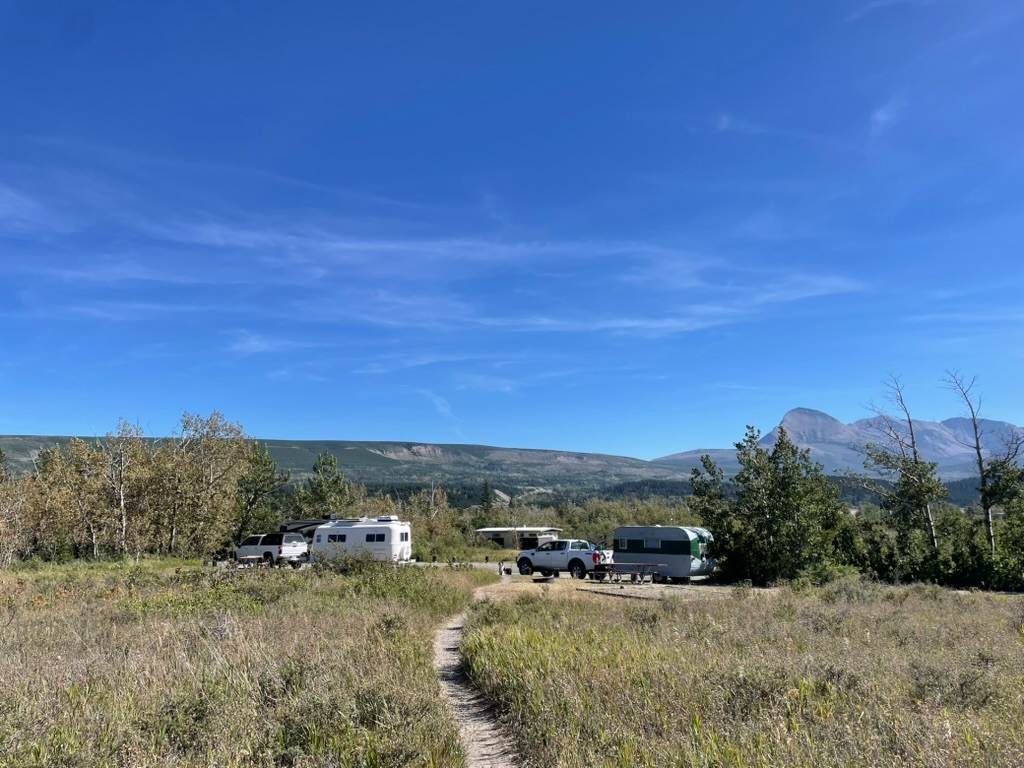
Glacier National Park, Saint Mary Campground near eastern entrance to the park. The campground amenities vary a bit depending on the loop, but they have hot showers (free) as well as fresh water spigots, waste water dump station (for gray water from dish washing) and an RV dump near the entrance. Full of berries and full of bears; maybe that's why the campground isn't full! The sites cannot be reserved before the day-of-arrival, but it wasn't a problem to find space. I'm so glad I took the opportunity to come here this year, at the suggestion of a friend. The weather has been perfect camping weather; cold enough to want a camp fire, and damp enough to be allowed to have a camp fire.
8 points
-
8 points
-
Hi all, First off, thanks to all of the Oliver forum members who post comments and Q&As. The info we’ve gained from periodically checking the forum activity was incredibly helpful in our decision to buy an Oliver, and in figuring out which model and options would work best for us. Although it took more than a year of research, we finally made the leap this past June! We will be picking up our 2027 Oliver Legacy Elite II (Twin Bed floorplan) on September 8th — Hull #1735. We were tent campers for about 40 years and spent the last 8 years camping throughout the Carolinas and Virginia in a 15-foot Taxa Cricket. We are really looking forward to the next chapter of traveling and exploring the country in our Ollie. If anyone is around Hohenwald during our pickup week, say hello! Chuck and Beth Lexington, NC8 points
-
Just to circle back, I got to field-test my design on my trip, and I’m super happy with how it worked! So much so that it even survived a random weather microburst and the suction cups remained planted! 😂 Not only was I able to camp in extremely hot weather and use the shower often, but after eleven days I still had 25% capacity left in the gray tank. There’s honestly nothing I would change, except possibly adding a wooden bath mat to keep my feet clean. I used one of those inexpensive folding stools to keep my shampoo and soap at an easy-to-reach height, and added another suction hook for my towel. I also attached a tarp clip to a suction cup on the side of ILOVHER to keep the shower curtain pulled in and prevent any unwanted exposure. 😉 I’m really happy with how it turned out. It’s compact, works extremely well, and will travel with me for future camping where gray-water discharge is allowed!7 points
-
Good day all! Wanted to share my hull number and the selected name of my Apex 23 that I’ll be picking up Oct 7th at the Mothership if all goes according to plans. In honor of the hull number I’m choosing a name taken from the writings of Thomas Jefferson (who was born in 1743) along with a “tongue in cheek” nod to part of military career as an Infantry Officer. His “Cannons of Conduct” contain 12 wonderful recommendations about how we should live our lives that I wholeheartedly agree with. So hopefully all will welcome myself, my pups and “Cannon Fodder” to the group. Cheers! Douglas7 points
-
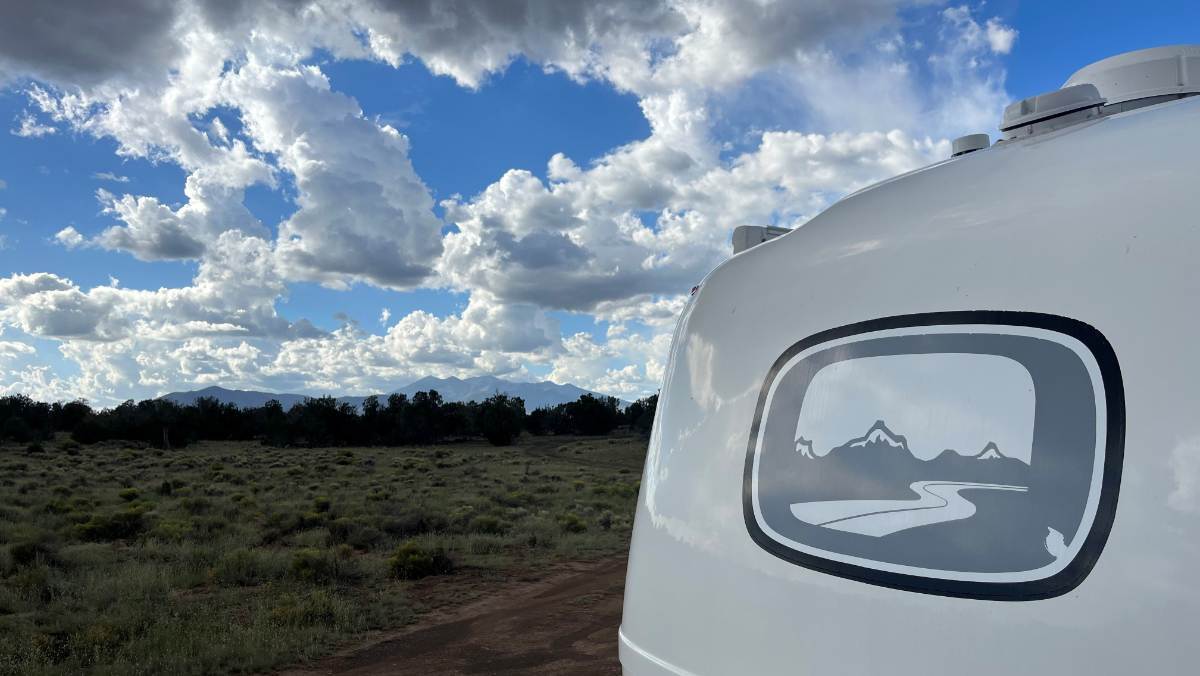
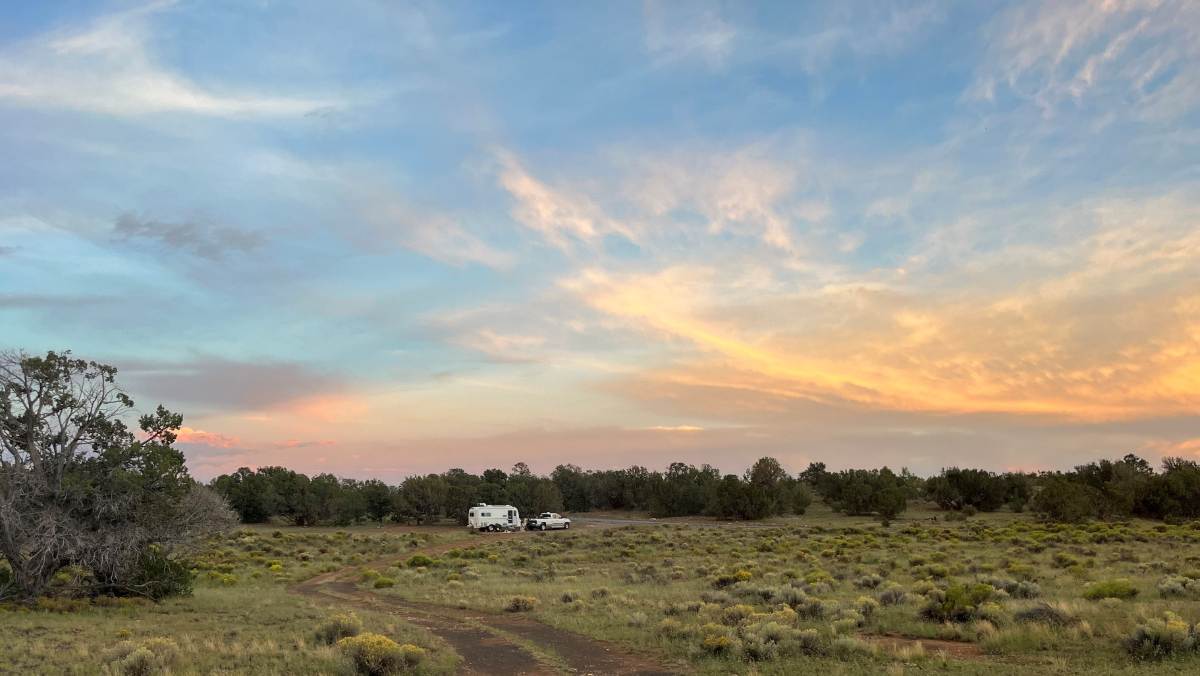
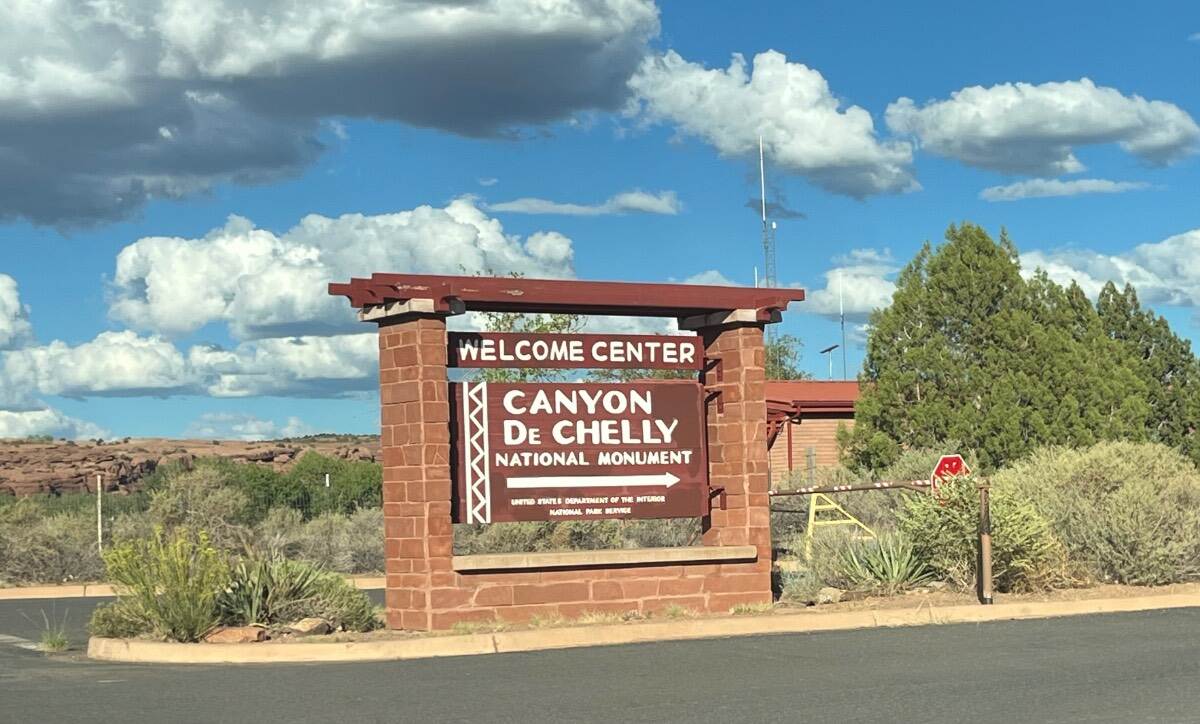
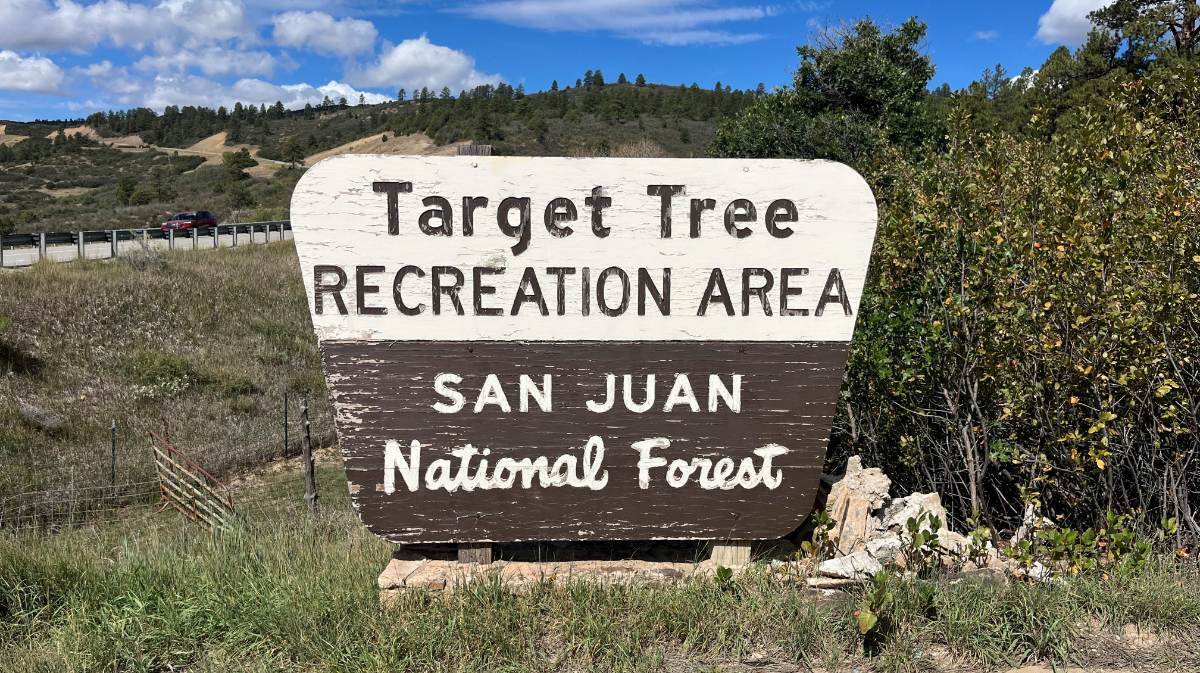
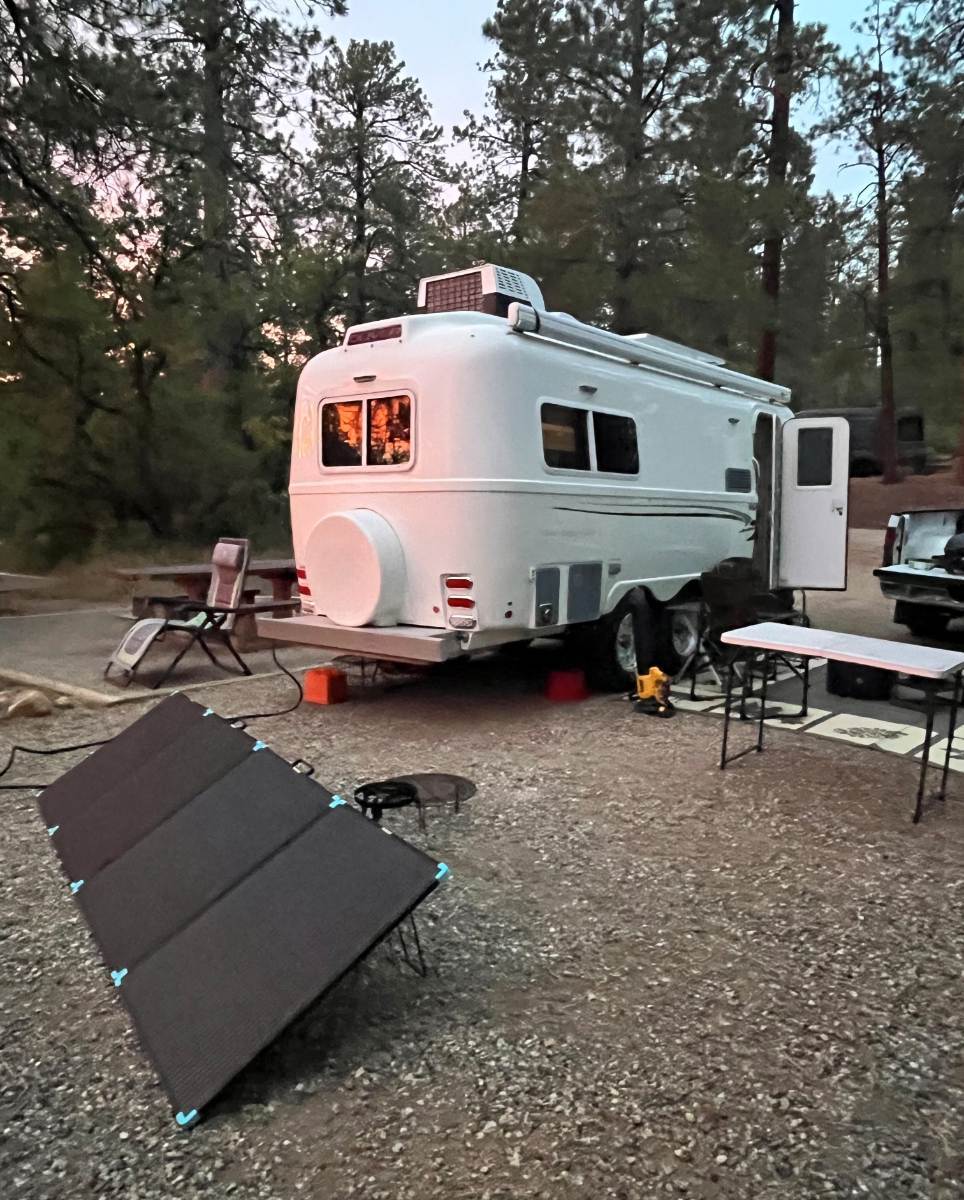
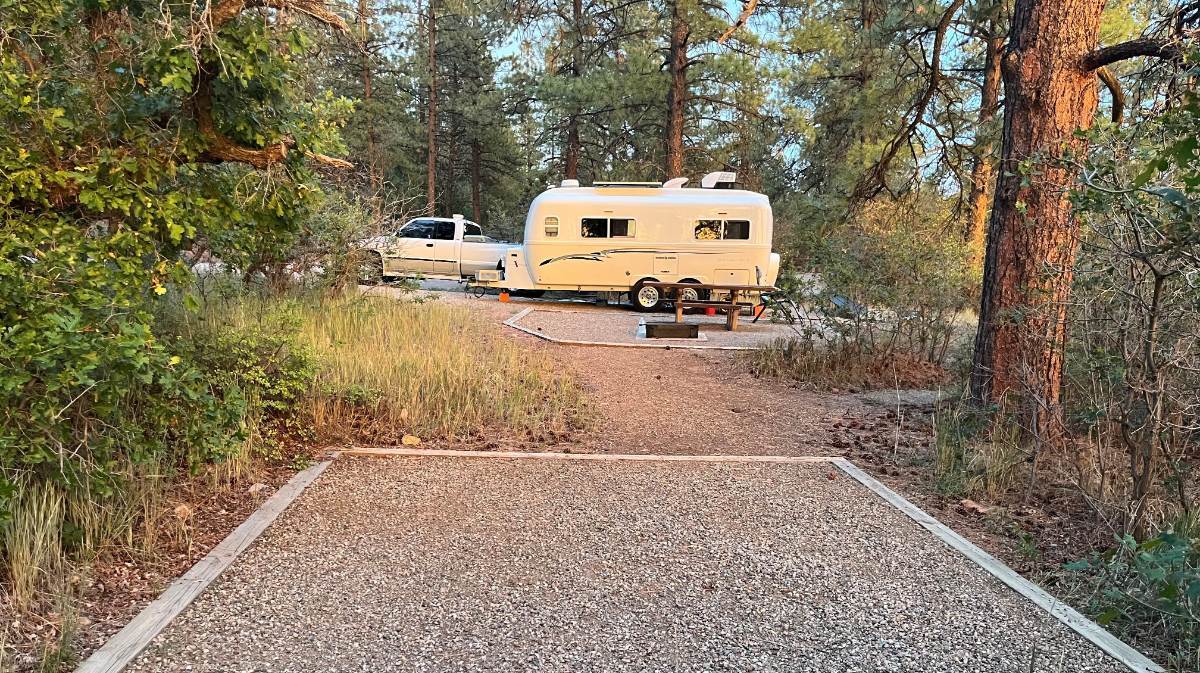
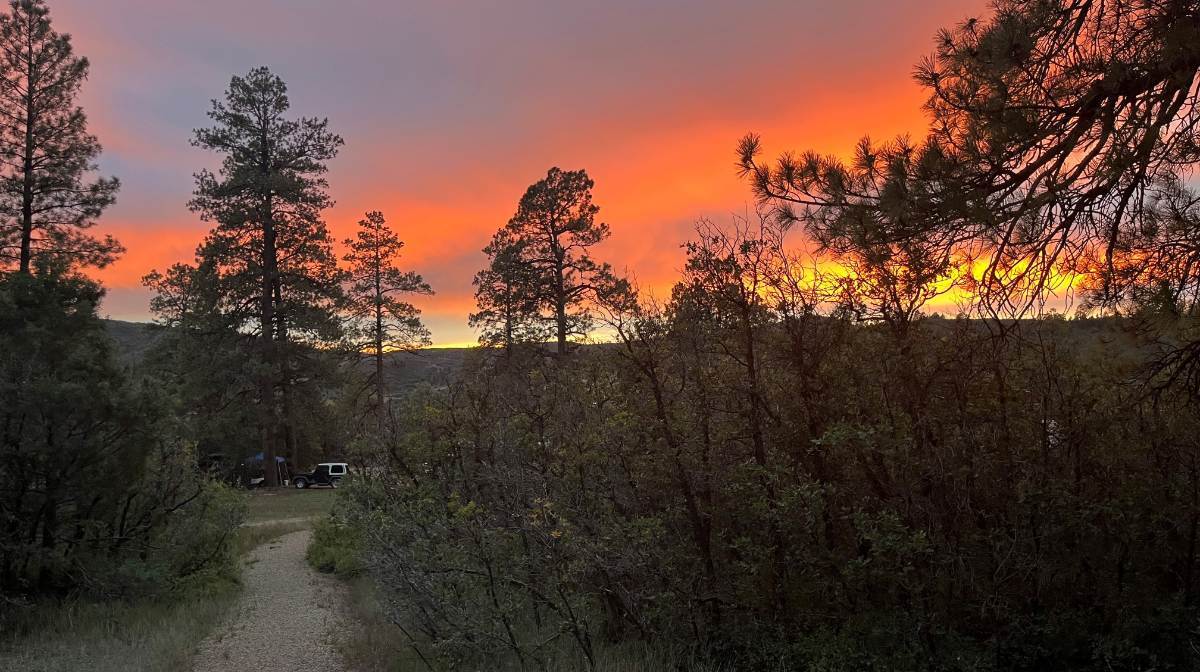
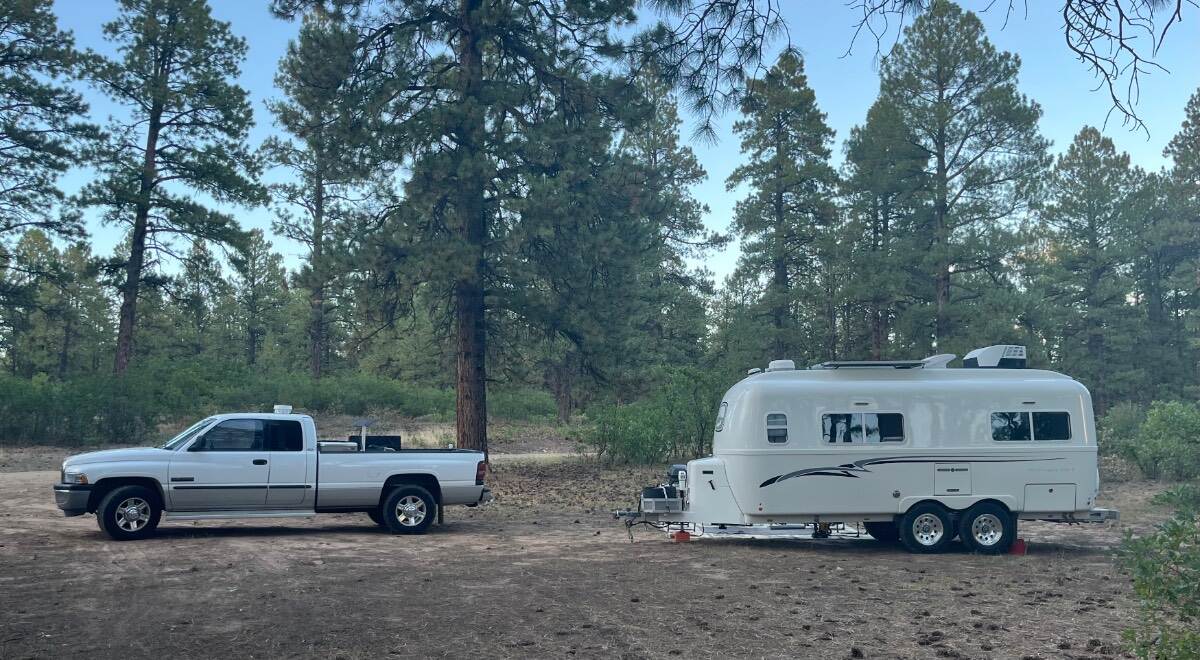
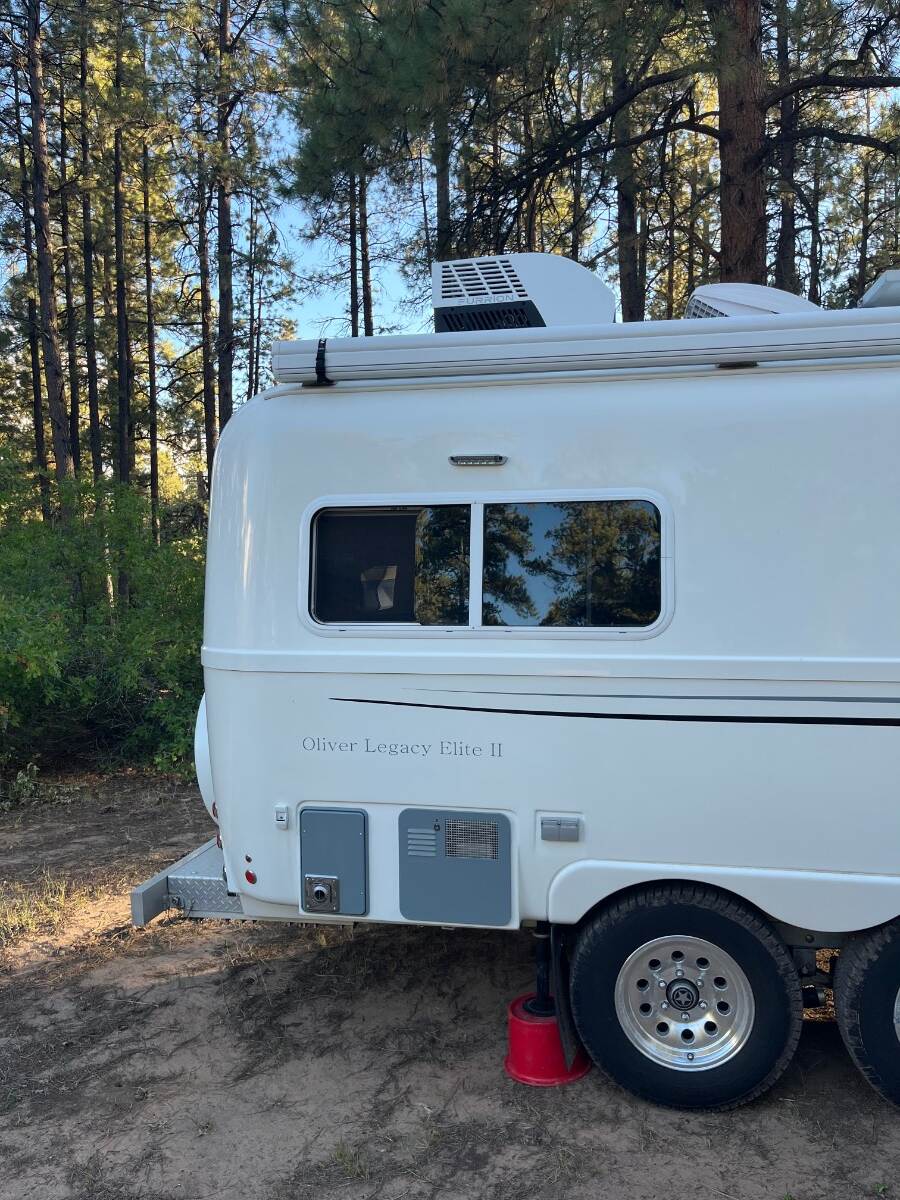
First thing I would do is call up the new owners of hull #359 and get her back! A quick search on RV trader shows 7 Olivers for sale from $46.5K to $74K. Buy at the low range if you are the DIY type to have money left over for your upgrades. This was my plan and with a whole lot of work hull #113 is more capable than most of them out there. If you’re not the DIY type or not wanting to do the work to upgrade, RV labor cost a lot, and “professional installations” are rarely what they’re cracked up to be! 😉 If so, then get one at the high range in EC with options you could live with. Or just dive in and buy new! Yes, they’re now $100K min plus new vehicle sales taxes. I've fought to avoid crowds most of my life, being raised in Chicagoland when my heart was always in the mountains. I don't wait in lines, period. You won't find me at a theme park, my last stadium concert was back in the 80s, gave up on airports, I could go on and on! Prescott is the Yavapai County AZ seat. It’s the size of New Jersey in area with only 250K people. Why did we move here? Think about that (though people are moving here in droves). There was recently a Where's Ollie post on Glacier. Yes, it’s truly a one-of-a-kind beautiful place! It's so unique that almost everybody wants to go there, like Yellowstone, the Tetons and Yosemite to name just one of the great NPs in CA. I went to Glacier in 1986, the 100th anniversary of the state of Montana. There were so many tour buses, Chinese tourists many and others, after a quick chase up a trail to try to catch up to a mountain goat, we left asap and tent-camped after hiking into the Bob Marshall Wilderness. There we didn’t observe another human all week. The NF and Lake Flathead were great! I lived East most of my life, besides IL 10 years in VA (both Tidewater and NoVa). Eastern Tennessee is beautiful but the entire east coast is so highly populated. It's certainly more difficult to boondock somewhere East vs. West. BLM land is only in western states and I believe there are about 8 National Forests in Arizona alone. Then we have Utah and SW CO within a days drive. Just finishing a 10 day trip to SW Colorado. Last night we arrived at a boondocking site off I-40 in Winona AZ, two hours from home. I found it using the Motor Vehicle Use Map (MVUM) for the Coconino NF and then I use OnX Offroad to navigate the FS roads. We are on a ranch road, so there’s ranch traffic which I mind less than tourist traffic. You can tell when at 5 PM 6-8 work trucks were heading out and this morning at 4:45 AM they all returned to work. I got back to sleep. Take a look at our campsite, not bad with views of the San Francisco Peaks! Last night I walked down the short dirt road next to us. There was a Casita pull by a Honda SUV. They are 200 yards behind us but we haven’t talked, each keeping to ourselves (behind where I took the second picture). After a few nights boondocking in another great spot north of Dolores CO, we tried some locations east of Mancos, west of Durango. We found too many modern homeless types. Those who camp in their vans, trucks or cars. It was Labor Day weekend making campsites busier. Not feeling good about camping there, we stayed at Target Tree a US FS campgrounds. Check in on Labor Day and the grounds were about 2/3 full. The next morning everybody left except us, the very nice host and one other. Yeah, a view of the Grand Tetons would be great, but don’t go in season unless you want the traffic and the lines. This place is not bad to have to ourselves. What a site the Casita guy has, far enough off the road. We’ll come back here again. There is a huge network of roads with literally 100s of boondocking sites. If you want this kind of experience don’t cheap out on batteries/inverter/solar and install a new efficient A/C (yay Chill Cube)! We just finished 10 days without hookups. Our 900 Ah batteries are now down to 30% SOC. We ran the A/C for 2 full days plus lunches on the road and a couple days just late afternoon. We ran the fridge and hot water heater on LP when camped. Our DC-DC charger is always attached when towing. By the time we get home, SOC should be up to 45%. Keep in mind that these numbers are % of 900 and if they are to get done to 25% our reserve would be equal to 4 large AGMs. Yeah, for us having an Oliver is worth it. It’s what you make it to be. We love ours!
6 points
-
6 points
-
Reminds me of the pictures you get after a colonoscopy. Bill6 points
-
I have been very unhappy with the Dexter leaf springs. I have towed my trailer 15-20,000 miles since purchase in 2021, 99% of the time on pavement. Last year 2 of the leaf springs broke and were replaced along with the shocks, since they bent the shaft on the shock when the leaf springs broke. This year I had another leaf spring break. I contacted Oliver and they told me they are now using Alcan leaf springs, starting with the 2027 models. I am thinking that's because they have had a lot of problems with the Dexter leaf springs. Reading through this thread it seems like many have had problems with the Dexter leaf springs. I have ordered Alcan leaf springs so we will see how they do when I get them installed.6 points
-
In June we had our Dexter OEM axles upgraded to 5200's. Our replacement 2400 pound rated Dexters were retained. No reason to replace them after just a couple of seasons. What I did learn of interest follows: As of that time, Alcan has replace abut 300 sets of OEII springs at their shop. They have also sent to other Oliver owners about 450 sets of springs. Both 4 and 5 leaf. They have also sent a bunch of 5 leaf springs to Oliver for use in the new Heavy Duty suspension, and sent four leaf springs for the other 90% of their customers. I specifically discussed with Alcan the repair method for spun spline bolts. He stated that the Hex Head Washer approach IS the best solution. He also stated that the second best solution is to weld a spacer washer and try to create a new splins. I asked if it was his trailer which he wouldl do: He stated the Hex Head Washer approach is how he would do it. I asked what he thought about the Dexter 1750 rated springs: He stated they are too light for a 6K trailer full time loaded. I am glad to hear that OTT has gone with the suggestions made about 30 pages ago..... GJ6 points
-
It's not a complicated job to do on your own but will take a bit of time and it helps if you have someone to help. I replaced all of my springs and associated hardware as well as the shocks last spring by myself out of necessity, (one of my springs broke on my previous trip). It helps to have a good impact wrench with associated impact rated sockets. In addition to using the Olivers jacks it helps to have a couple of bottle jacks for supporting and manipulating the axles (when lining things up). I also had a couple of jack stands on hand for additional security but luckily didn't need them. Just take your time and you'll be fine.6 points
-
Not bad for $12/night! I think going forward, besides boondocking we'll focus on National Forest Service or Army Corps of Engineers sites that give half off with the senior pass. But kind of a bummer that now on recreation.gov the next 4 nights cannot be reserved online. But you can go online to see what is reserved or FF (first come-first serve). Our campsite #7 is shown, all sites no hookups, some pit toilets, water spigots in 5 spots around the campgrounds but without hose connections. All the campsites inside of the loop are setup in the wrong direction (curbside away from picnic table). A little road noise being right off US Hwy-160 but always quiet in an Oliver! Just east of Mancos CO, Target Tree is within a half hour of Cortez to the west and Durango to the east, with Dolores nearby and Mesa Verde NP. Beautiful roads with beautiful mountain views, forest service access trails everywhere! 🤠
5 points
-
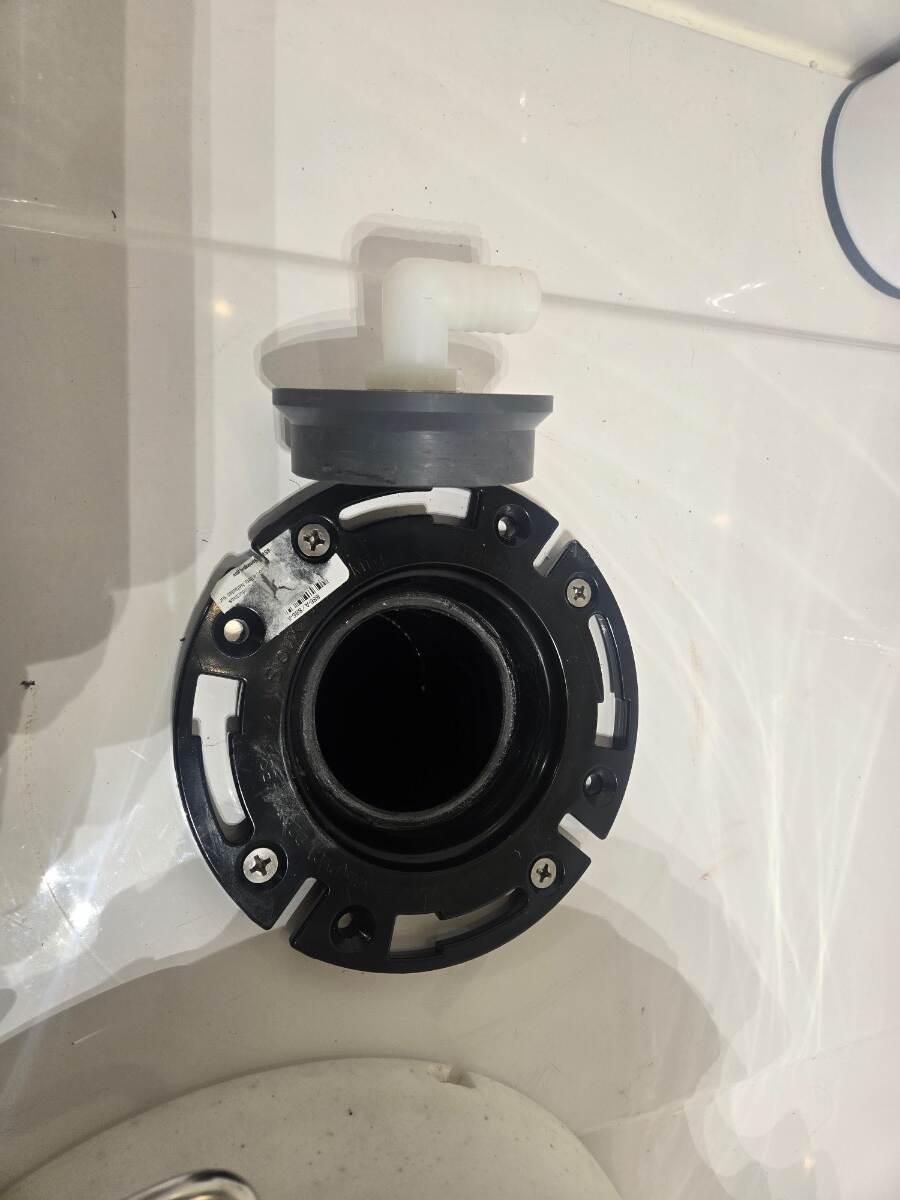
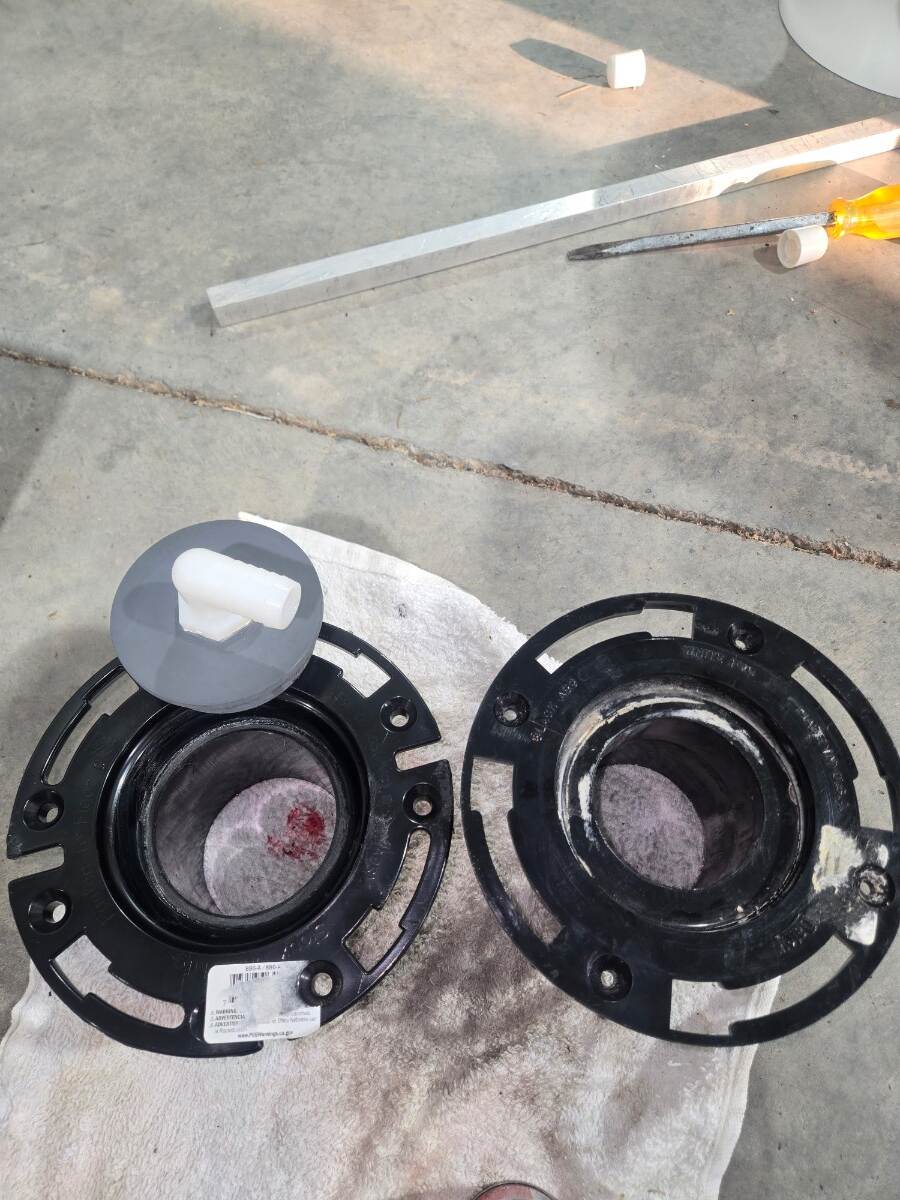
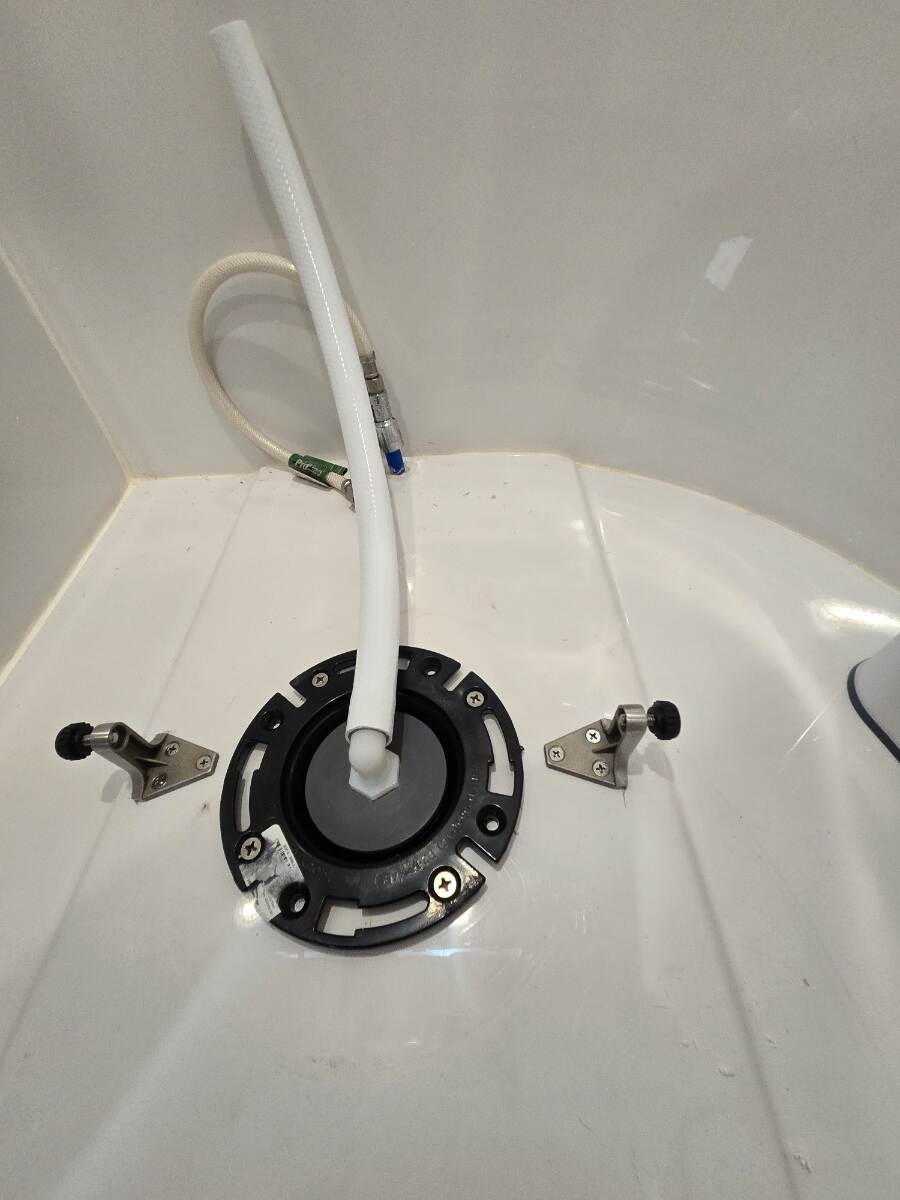
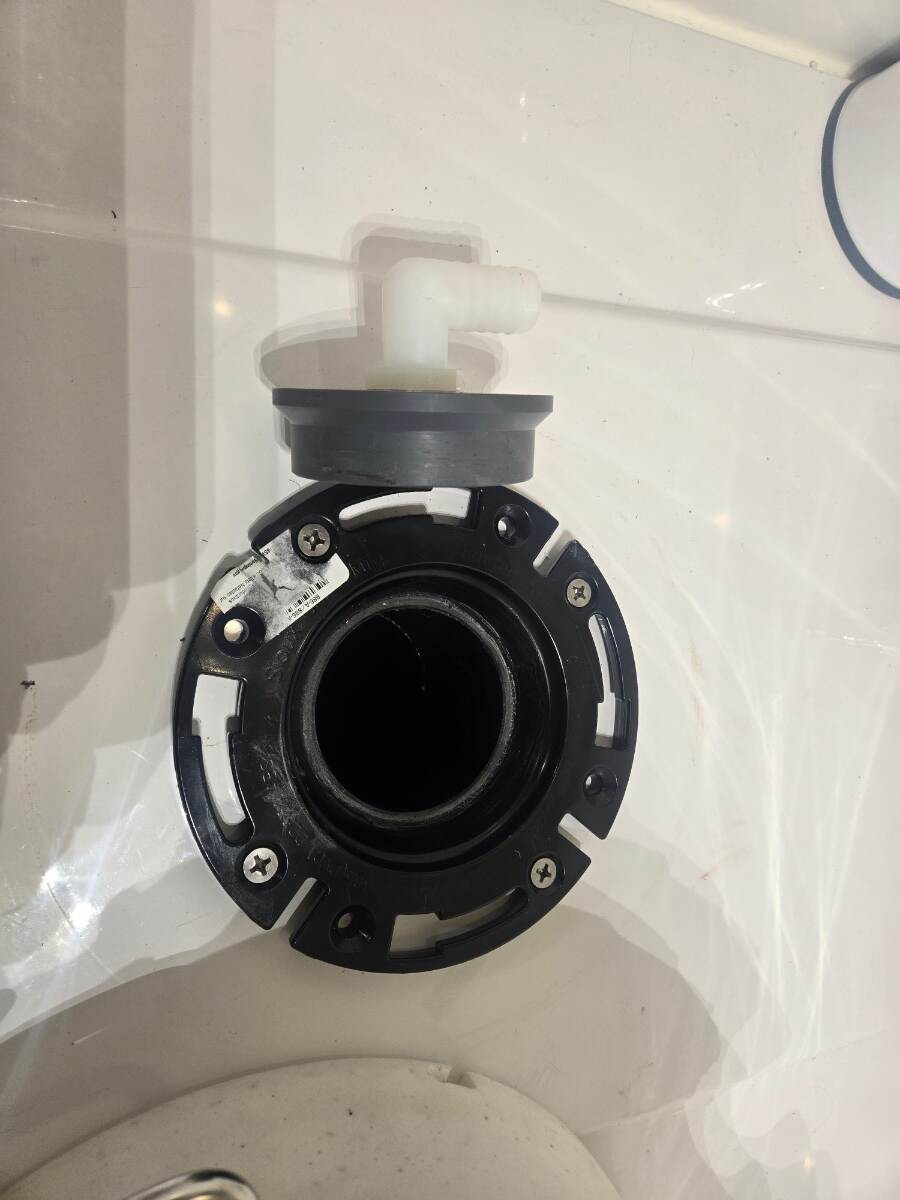
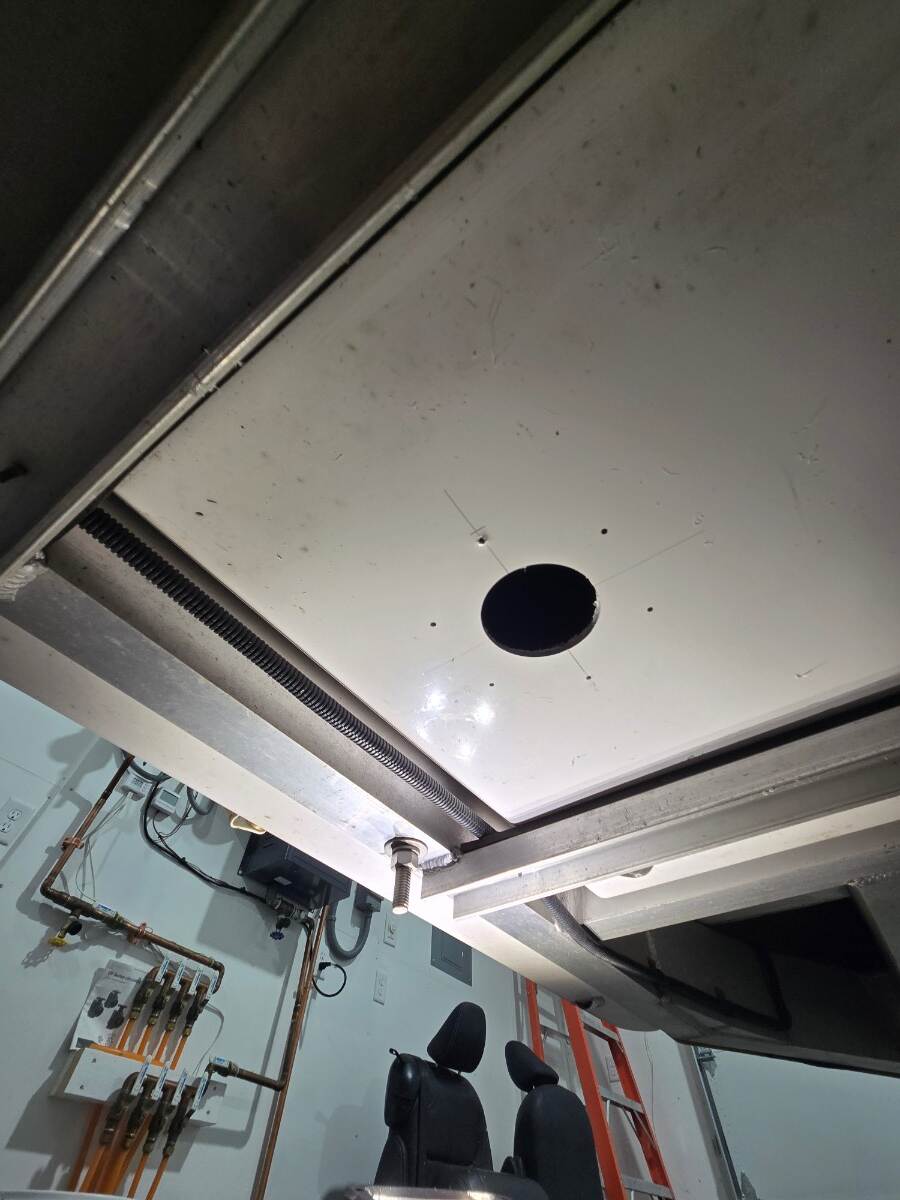
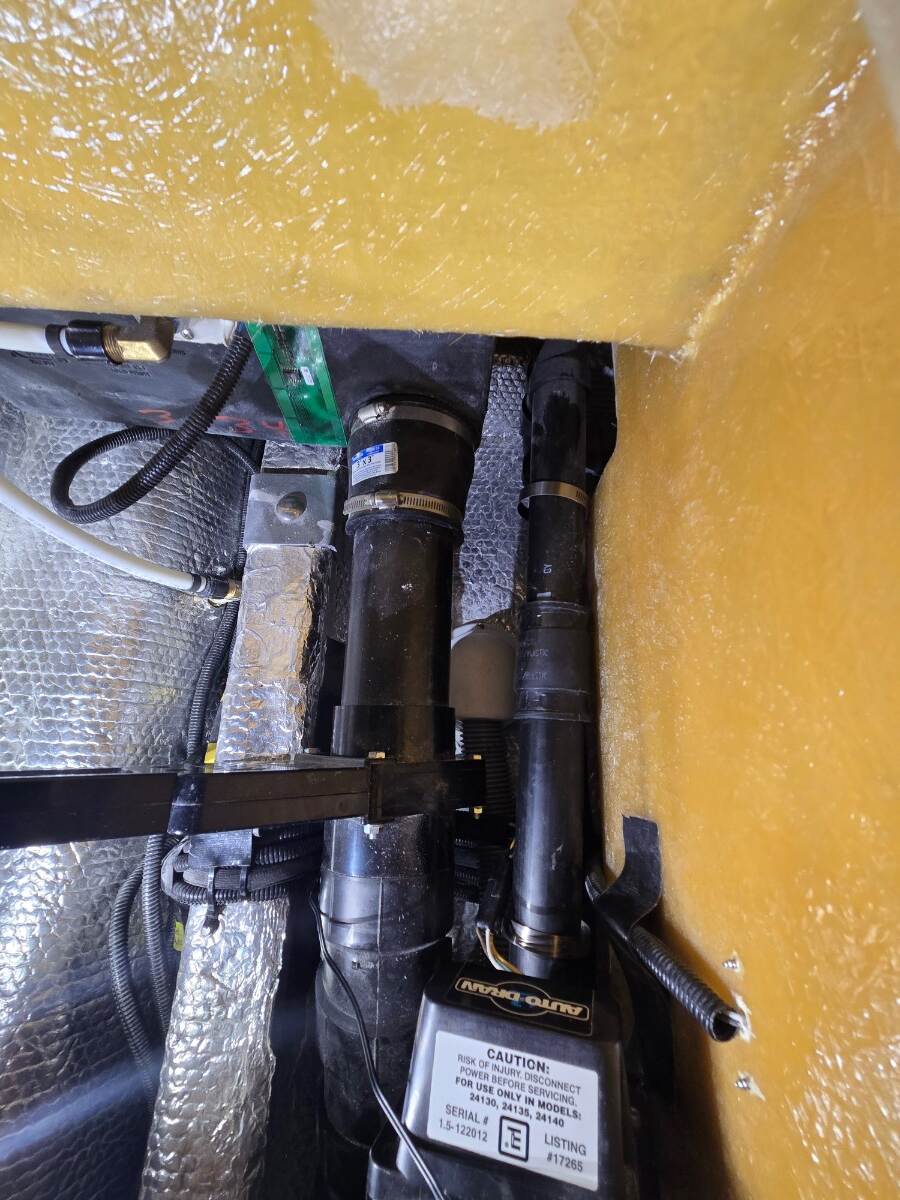
We finally decided to get rid of the flush toilet after much agonizing internal debates. I looked at all the various models and decided on the Air Head Tejo which doesn't have a urine bottle and dumps right into the black tank through the toilet flange with a supplied fitting. This version is not yet on there website so you will have to call if you want this specific version that has clearance to sit over the toilet flange. It is still possible to use a urine bottle behind the tank with some possible ingenuity as there is a quick disconnect for the urine line. I'll try and keep the pictures in somewhat of an order so you can see the progress but feel free to ask with any questions. This is on our 2021 Legacy Elite II. If you're taking the plunge, the biggest hurdle you'll have is getting the old toilet flange out. It can be a pain but it will twist out with some lifting at the same time. The existing toilet flange will not work as it had too small of an internal diameter as the 3" waste pipe is glued on the outside of the male flange. You will need to swap out the toilet flange for a female flange that the pipe will fit inside which isn't a big deal nor is it costly. You will need to bevel the end of the pipe so that is slides fairly easily into the black tank. I also shortened it up a bit as it dropped down a few inches lower into the tank than seemed necessary. The supplied urine house fitting will be glued into the toilet flange facing the rear of the toilet and the hose will be connected to the urine outlet on the upper left rear. Mounting the toilet is pretty much dictated by the toilet flange mounted to the floor. I kind of did it by feel and moving the toilet side to side and centering it along with a few rough measurements. It worked just fine. I put the toilet in place where I wanted it, slid the brackets into each side and penciled around them so I knew where to go back and drill holes for the brackets. I used six stainless steel #10 - 3/4" long screws to secure it. Be careful not to drill to deep and go through the top of the black tank! I drilled one hole for each bracket and test fit the toilet before finishing drilling and it worked just fine. The biggest concern for me was venting. The Air Head has the fan at the exit point to the exterior so I wanted to be able to take advantage of that rather than having to install an inline fan or something of the sort. My first consideration was to vent into the existing vent pipe in the vanity but that was not recommended by Air Head and they had even mentioned that they had discussed that with Oliver at some point. My next consideration was through the front wall and into the propane box which would have been really easy as well. However, I did read a lot about that not being acceptable for a whole host of reasons. I did consider running it into the box with the hose continuing down underneath the trailer so it vented below the open box. After poking around inside the trailer. I opted to mount the fan housing below the gray and black lines underneath the forward seat of the dinette. The gray line comes off super easy and it was pretty simple area to get to both inside and outside of the trailer. The hose connects to the housing and loops around and through the left side bathroom wall which keeps the vent hose visibility to a minimum as well. As you'll see in the pictures, I haven't caulked it all in yet and buttoned it up but I had a couple people as if I was done yet so I though I would post where I'm at. I like that it vents underneath with minimal bends in the hose and it is towards the outside of the trailer so I don't believe fumes will be an issue.You can place the vent hose on either the center hole in the back or the hole in the right side. I opted for the back since the hose was going out the left side anyhow and it gave it more clearance for the internal mechanism of the toilet and less hose length. They have an inline screen that will also be used in a coupler behind the toilet. I also used a heat gun to give the hose a slight bend but be careful as if you let it get a little too hot it will separate at the corrugations. All in all is was a pretty simple install once I figured out how I wanted to do it and had all the miscellaneous parts ready to go. Now for a test run in a few weeks!
5 points
-
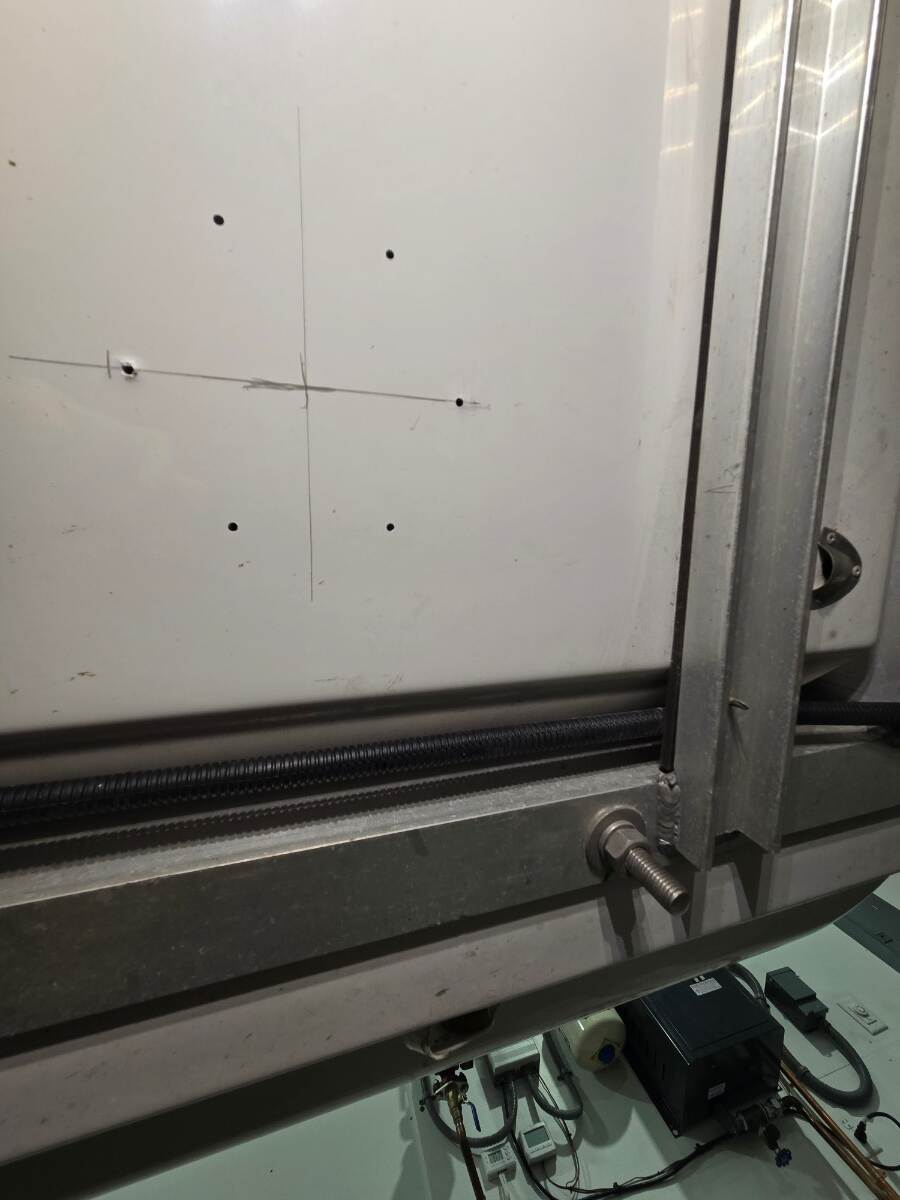
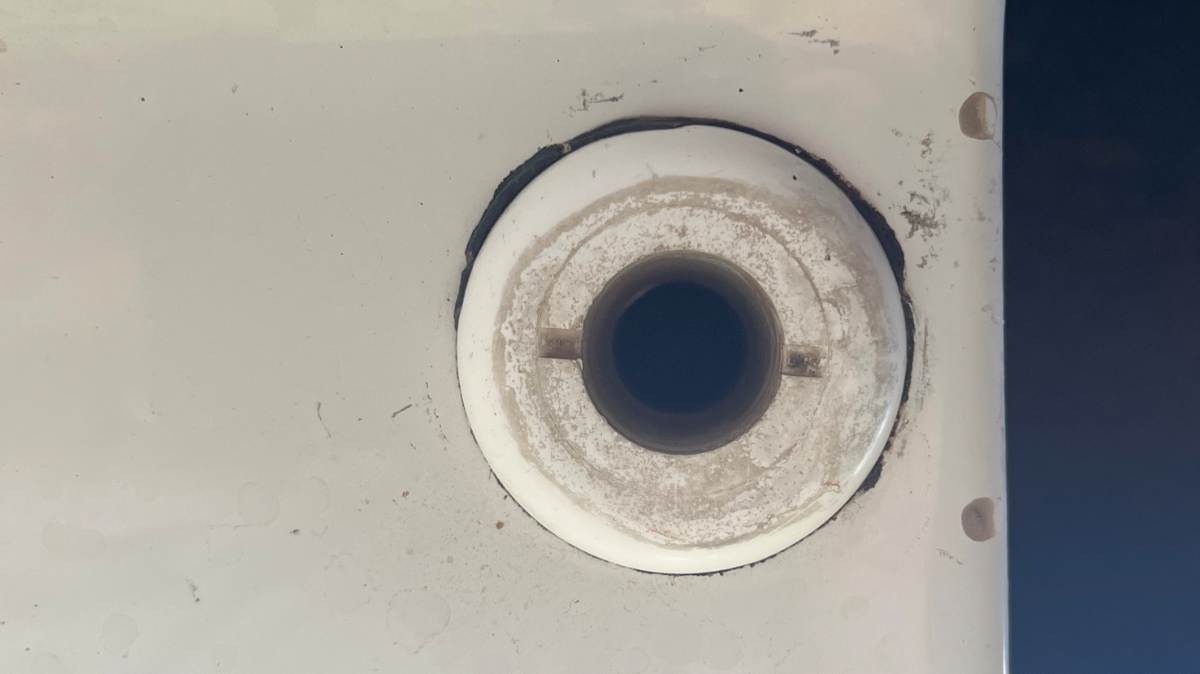
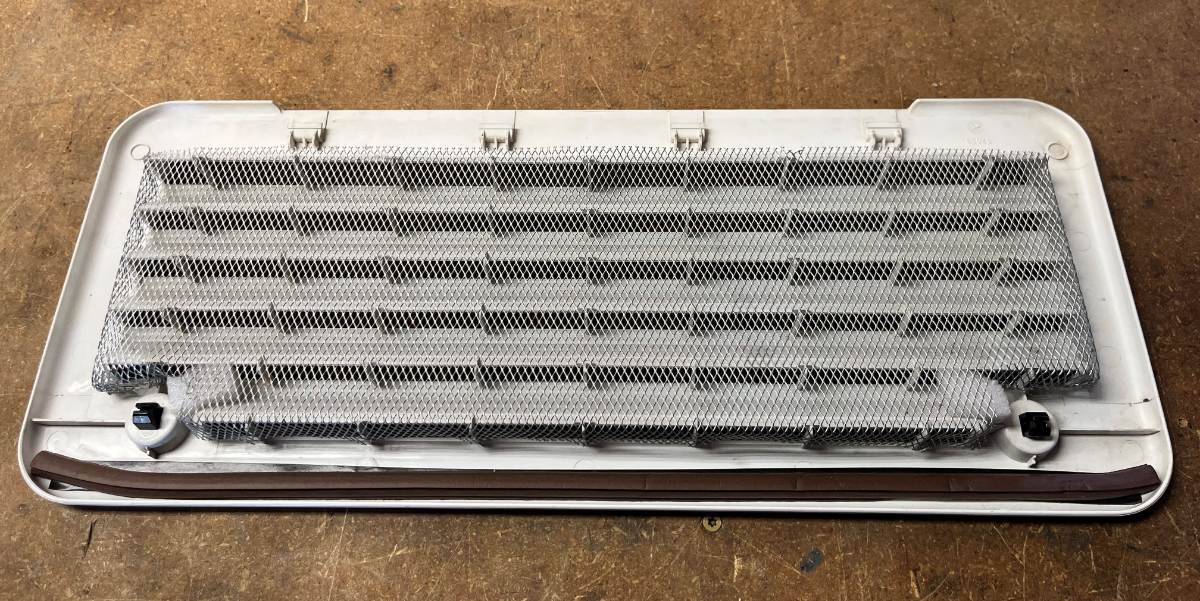
Thank you Chris, for bring this to our attention! 😂 Every time a forum member brings up a maintenance issue, next thing I'm outside checking ours. That's for sure! Ours has no screen at all and no rust. I can stick the full length of my index finger all the up into the opening. Thought I better secure our drain to keep mice and bugs out. I cut a circle about 2 1/2" dia. Then cut a radius line to shape a cone. Then crushed the screen over a 3/8" socket extension and pushed it up into the opening. Same screening I used in the fridge vents.
5 points
-
The shower hose I purchased was a stainless steel hose on Amazon: https://a.co/d/0dgsEMfQ It was very straightforward..open the street side access hatch and a little teflon and you're golden! I have had it on there for five years and it fits just fine and hasn't bound up inside the compartment. Here are a couple shots of the suction mount. It's a ratchet style with two additional suction cups below it for some added strength.
5 points
-
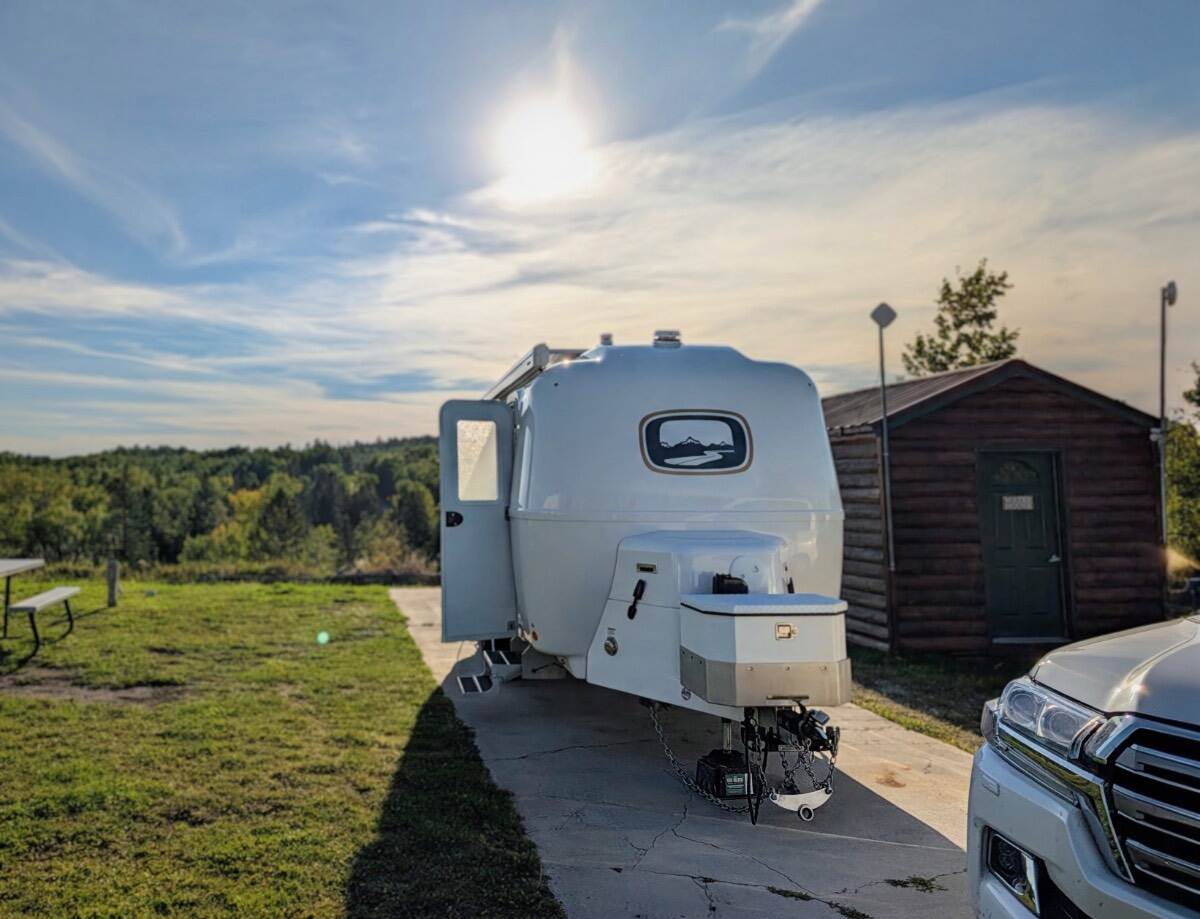
The Pines of Kabetogama! The other Oliver! Charlie 1607 2025 LEII 2021 Landcruiser 200
4 points
-
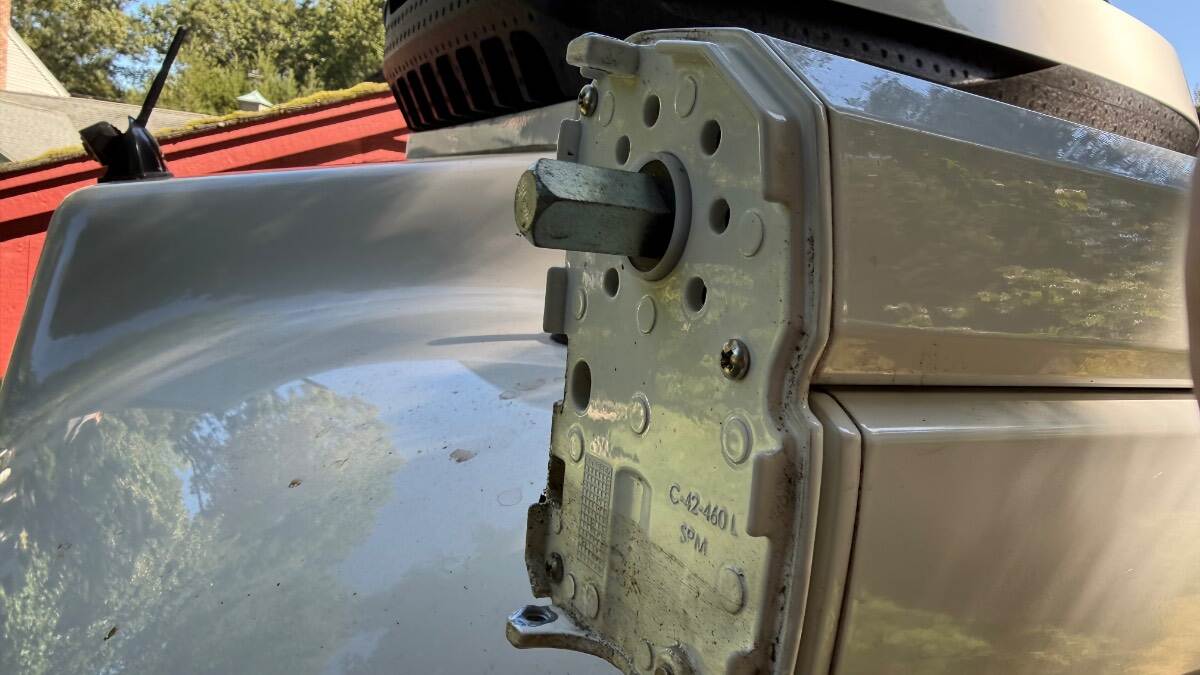
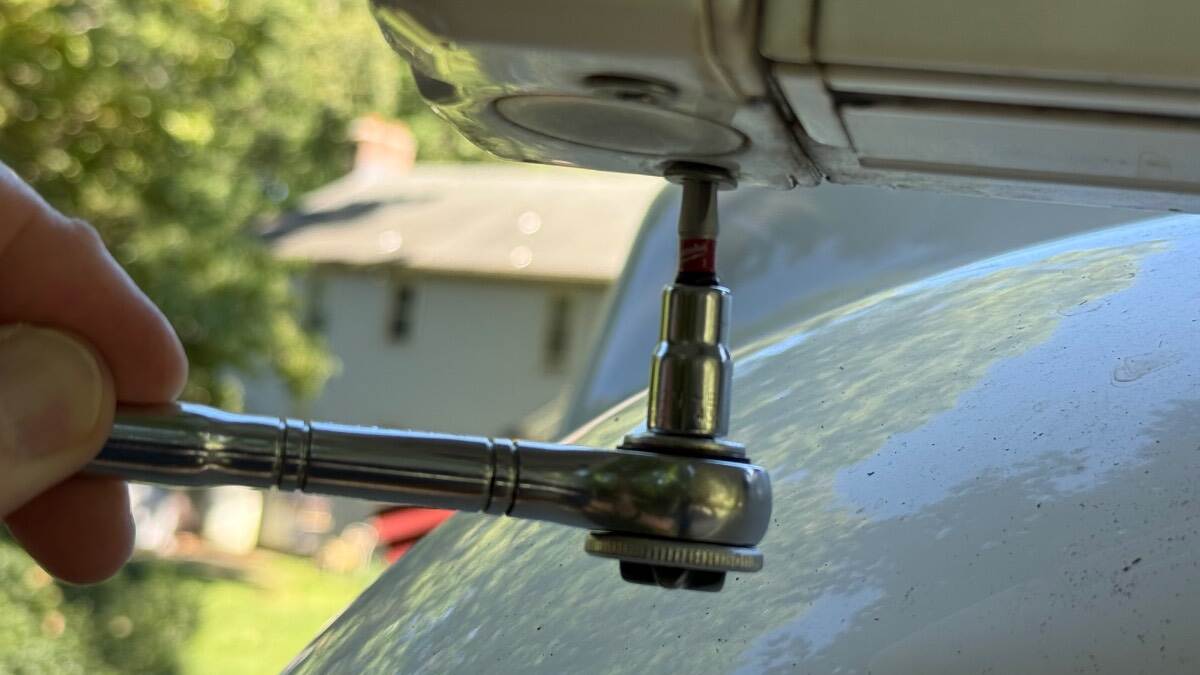
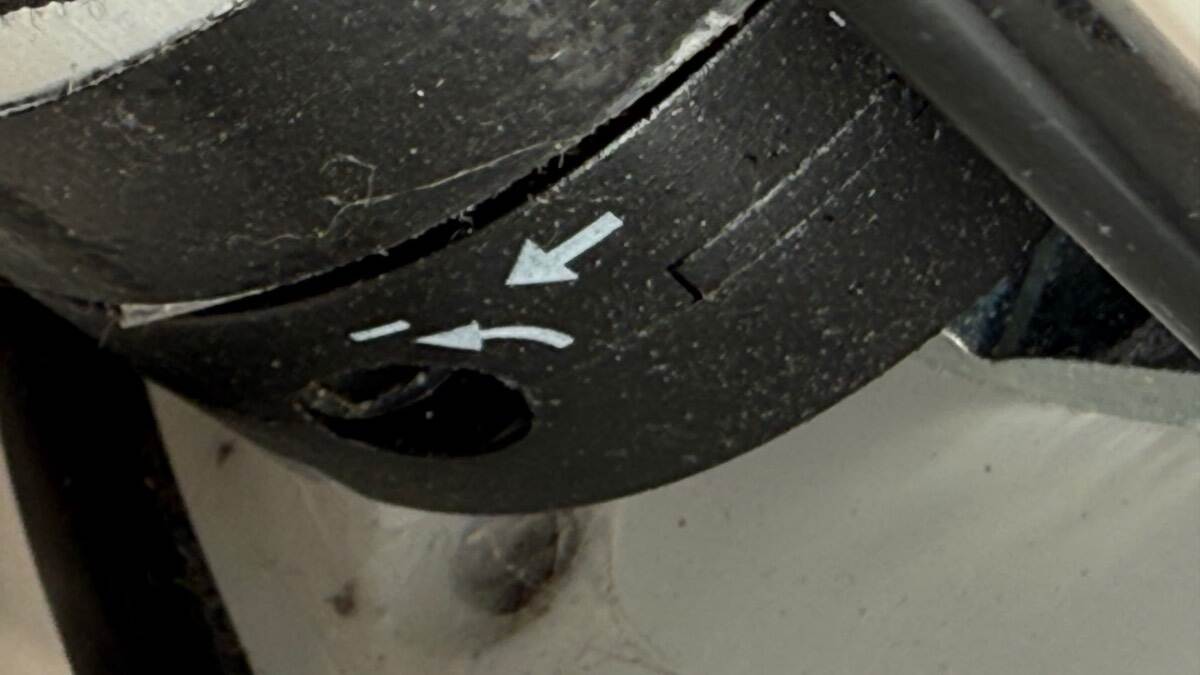
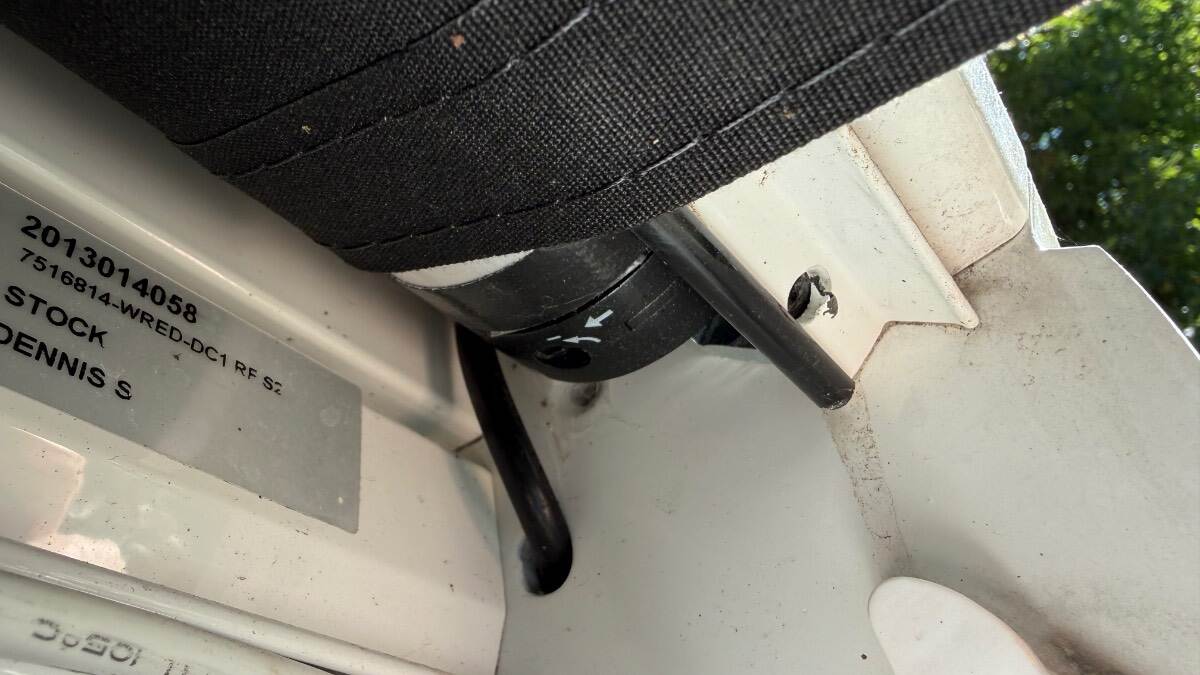
Girard uses #3 Phillips screws to secure the end caps to the awning, over time these screws can oxidize and become difficult to remove which may result in cam-out of the screws. Additionally the location of the bottom end cap screw closest to the hull prevents a normal sized screwdriver from positively engaging the screw head due to its proximity to hull roof. To aide in removing the screws a short right-angle screw driver or a #3 Phillips bit with a 1/4" socket wrench allows sufficient force to be applied and clearance to break the screws loose. Once out a coating of anti-seize on the screws will prevent future problems. My awning has only a single limit adjustment screw which is quite different than the illustration included in my Girard manual. I'll include a picture for reference. A little prevention goes a long way when your batteries in the remote go dead or the remote fails and you have no other choice than to pull the end cap off the awning and manually retract the awning. Notes: The limit screw requires a 4mm Allen wrench ( 1/4 turn = 1" of travel ) The retraction bolt requires a 13mm wrench
4 points
-
We find it reasonably easy to escape crowds but it depends on your style and setup. A few of our rules that have led to success. We almost never camp on friday and saturday nights. We rarely hook up to anything ( water, electricity, etc). With these two alone we find crowds are easy to avoid. We purchased in 2023 and it was pricey then but its all a matter of perspective. Alot less than a class a, b or c and we already had our tow vehicle. So all in all the quality and manufacturer support structure make it worthwhile for us.4 points
-
We got our trailer in 2019 and feel like the crush of people in the outdoors was and is still significant. Our solution has been to spend most of our time off the grid, off paved roads and away from the national parks except for the off season. We have had fantastic trips Nov through Jan in the southwest the last couple of years. Count us out for mainstream campgrounds, state and national parks May through August. We must work to avoid crowds but have always found wide open space in the west side of the USA. Lots of BLM and other remote space to explore. If you are opposed to gravel roads and off-season travels, you will likely be crushed by the crowds. Yep, 100k for new trailer is a big bite. We found ours used in great shape. We did have to upgrade solar / batteries and few other things but got great value buying used. Water is the gating item for extended off the grid travel. We equipped our truck with an additional 30 gallon water tank enabling extend time off the grid. Best of luck. Hope to cross paths in the open spaces out west.4 points
-
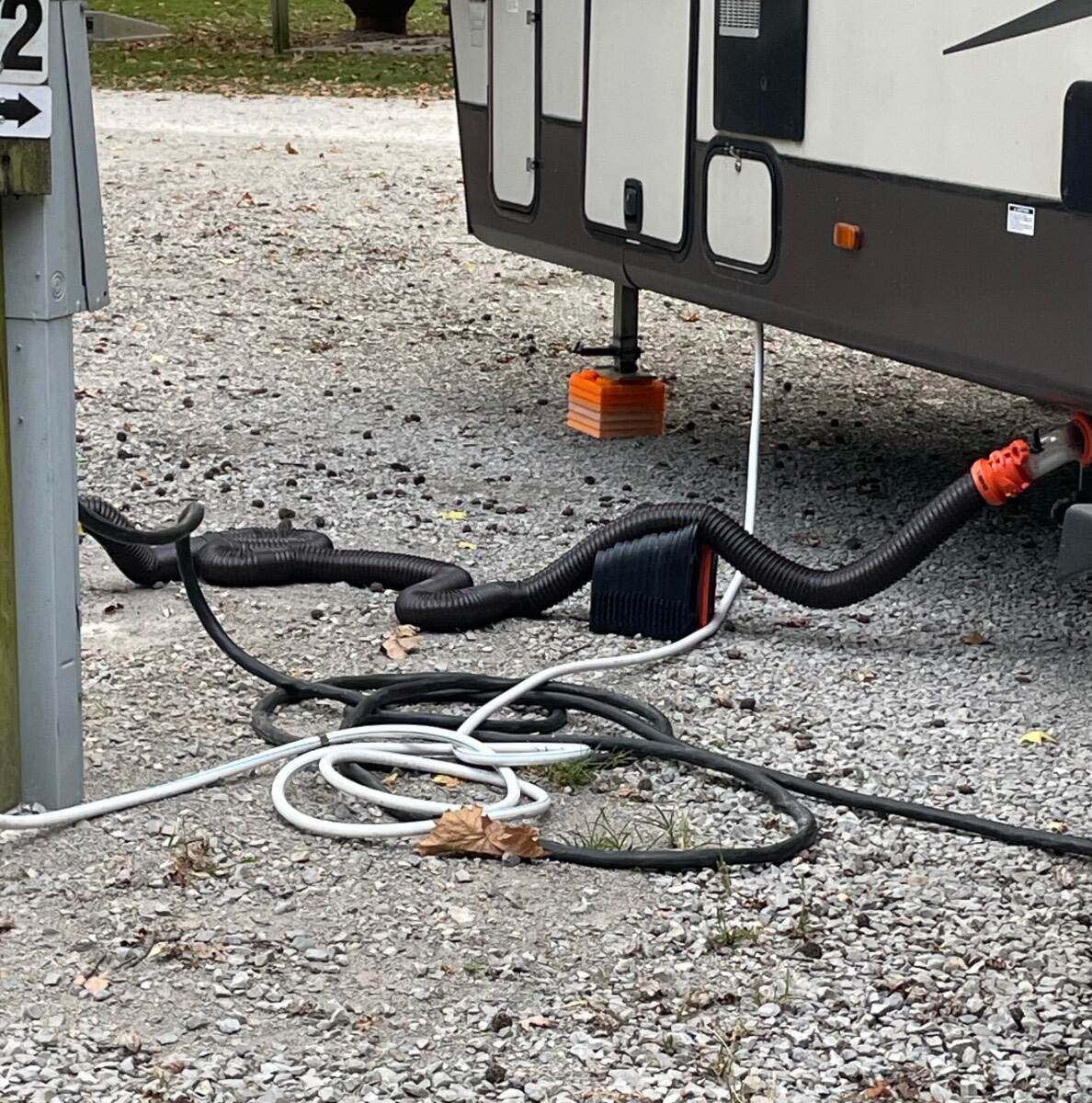
Apparently this is how you’re supposed to set up a sewer hose support Bill 313
4 points
-
Steve, cool vid. So glad to refer you to Easton at Inverter Services and he got you all taken care of. He handled all your upgrades exceptionally well. As previously post, Easton installed the same outstanding and comprehensive Victron system on XPLOR Hull # 634 after we returned from our 54-day trip to Maine last fall. Nothing like a super clean professional upgrade/install. I highly recommend Inverter Services and Mr. Easton sure knows his way around Olivers!4 points
-
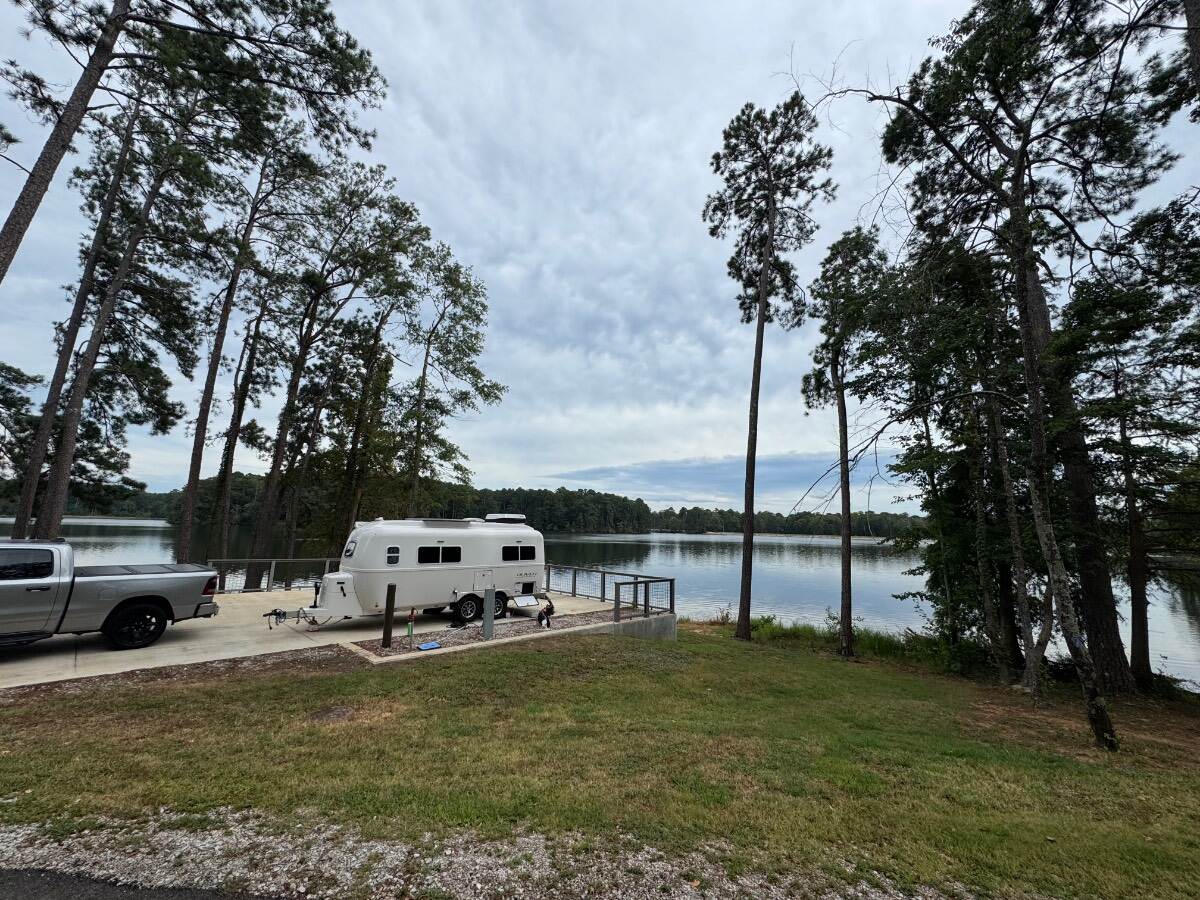
Pulled the truck up for Starlink to be centered between the trees! 😎
4 points
-
4 points
-
IMG_0062.mov We had our Oliver ceramic coated by Blake, owner of Triple B Detailing near Lake Norman, NC. He did an outstanding job and was absolutely incredible to work with! His reviews were stellar and making the 3 hour trip to see him was more than worth it! He is knowledgeable, passionate, and takes pride in every step of the process! Our Oliver looks better than when we took delivery a month ago. I wanted to share Blake’s information and an honest review in case anyone is looking for someone in the area and wants someone who does exceptional work with Olivers.
4 points
-
We get 100s of hummingbirds in Prescott, with the peak season during August. It just cooled off and the hot summer temps are gone 'til next season, thank goodness. They all know Chris as the bird lady. She puts out seed, water in the bird bath and gallons of sugar water in 4 feeders. She even had a couple hummers drink from a hand feeder! The hummers will start to migrate south in the next few days/weeks. We do have some winter hummers, but only a few. We spend an hour or so on the deck each evening. Soon we'll be wearing winter clothes and have the fire ring going! 😆 Hummers in Prescott v2.MOV4 points
-
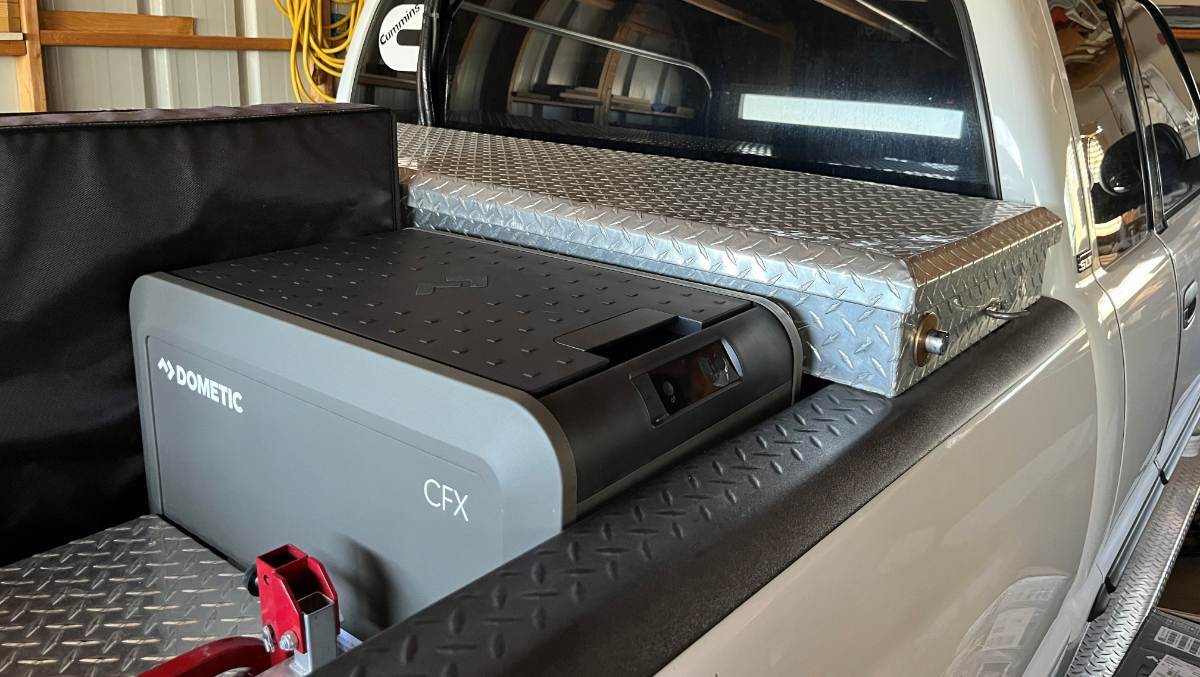
Better stay with a 3-way fridge, unless you're plugged in. Running on DC overnight takes too much power for AGM batteries. We do, and it must stay below 10F to keep my Qt of ice cream cold! Glampin' right?! 😎 We also make ice! Two of these fit in one corner of the Dometic freezer, taking very little room. I refill one each night so we always have ice available for those adult beverages! https://www.amazon.com/Molds-Silicone-Trays-Large-Square/dp/B0771YDNCY/ @Ronbrink was first to have one of these in his TV. Like you, he has the dual-zone CFX which is great! At first, I didn't want to use the space, but I went with the single compartment CFX5 45L which just fits in this space by the passenger door. It's so nice always having cold water with us, and not only in the cabin. Often when traveling, we buy a load of meat from a local farm or butcher shop. I'll remove the drinking water, set the CFX5 down to freezer temps to carry the box full of frozen meats, yum! Some people go to museums. That's not us. We shop the great local food markets. Leaving to SW Colorado this Wednesday! With both fridges half empty, our first stop is always the Delores Market! 😍
4 points
-
About noon today on Interstate 80 I was headed East and a white truck towing a white LE 2 was headed West near Laramie, WY. And, a wonderful couple paid for dinner tonight as both of us are overnighting at Cabela's, Sidney, NB. 2 in less than 12 hours!4 points
-
Interesting story: I actually had fixed the problem before I got the official description from Truma due to the time of day that I had the failure. I had been driving through a raging rain storm during the day, ended up at a campground near Allentown PA in early January 2024. Temperatures dipped to freezing , set up late evening at 4 County RV Park that night and could not get the furnace to run. Because I had driven all day in the pouring rain I suspected that water may have entered the exhaust / inlet port of the furnace. I could find no description for the error that I was getting in the documentation or on line. I decided to take a hair dryer and blow warm air into the furnace exhaust / inlet port and after several minutes I was able to get the furnace to fire up ( luckily ). Called Oliver the next day and they had no listing for the error. I then put in a ticket with Truma and I got an email a day later explaining what the cause may be. I haven't had the problem since.4 points
-
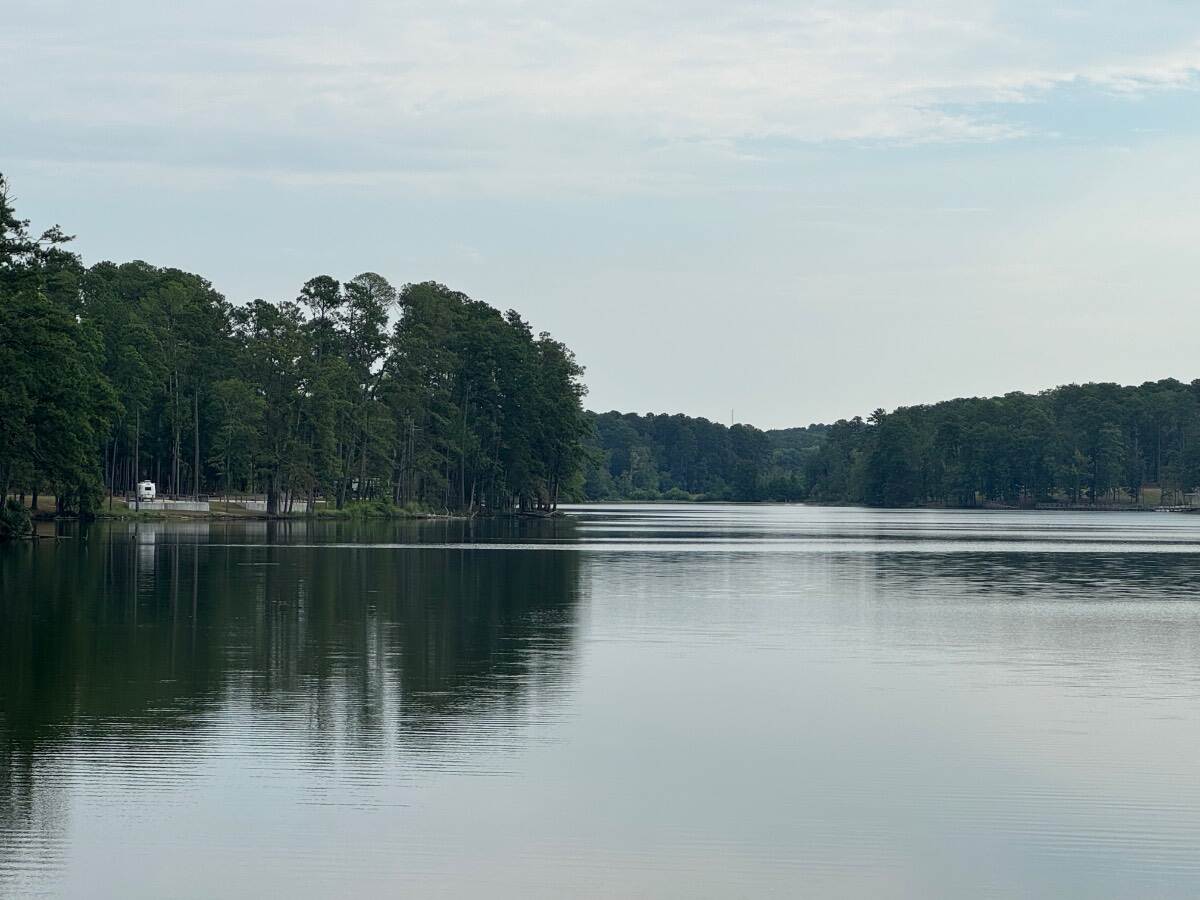
From across the lake
4 points
-
4 points
-
Appreciate your feedback Chris. I recall reading that too, but several owners in your post report otherwise. Please explain. Apparently Oliver is satisfied with Dexter parts durability as that is what they are using on new Apex model. Perhaps you misunderstood my comments. I would never suggest re-using old and/or worn parts. @DanielBoondock has a 2026 model, and has said he lubricated his wet bolts. They should be inspected of course, but there should be essentially no wear on the bolts or shackles. If any wear, it will be the bronze bushings in the springs, which of course are being replaced. I’m not knocking Alcan, I am a customer, just haven't received my springs yet. I’m only summarizing what I’ve read. All of these reported shortcomings are not deal breakers, they are just not ”optimal”. Working together, we can do better, but it’s important to get the facts straight and pay attention to the details on our running gear. We are moving in the right direction, and have Oliver’s attention.4 points
-
Thought some might get a kick out of this video clip my wife shot in our back yard and set to music last rutting season. 4 bucks.mp44 points
-
Hi all. Finally signed up in the forum. Looking forward to traveling more and meeting Oliver owners. 😃 Hope everyone had a wonderful day. 😃 Tim & Courtney. East Albany Vermont.3 points
-
I totally agree I had the same problem. Having the opposite side down I noticed that the axles were slanted side to side, but also skewed a little front to back. If I had to do it over I would have raise the whole trailer up and level with no pressure on all 4 hubs/tires. I did buy 2 cheap scissor jacks from Amazon to fine tune the height of the axle I was working on helped a lot. I could adjust the height of the scissor jack by hand and get things exactly where I needed them. here is the jack I bought https://www.amazon.com/TCE-AST10202SU-Torin-Cross-Scissor/dp/B0CP78MZMK/ref=sr_1_1?crid=2H17OYSVYKERR&dib=eyJ2IjoiMSJ9.bwqlOzBbCSEQIvYLwTJphg.4A7CLcc1r9OBfO4aqVO_k8xMRyWPESElnwC8J8uQsm4&dib_tag=se&keywords=TCE%2BAST10202SU%2BTorin%2BWide%2BBase%2BCross%2BCar%2BScissor&nsdOptOutParam=true&qid=1789315759&s=automotive&sprefix=tce%2Bast10202su%2Btorin%2Bwide%2Bbase%2Bcross%2Bcar%2Bscissor%2Cautomotive%2C238&sr=1-1&th=13 points
-
Charlie, Based on your measured values, I’d first look at the battery cable to battery post connection(s): 1. If the 12.7 volt measurement was taken directly from the battery posts, then the battery is not dead. 2. The solar directly feeds the battery via the Zamp controller. It does not pass through the inverter or the main battery breaker. So the 11.7 voltage read from the Zamp controller is more likely a voltage drop through the battery post connection(s), not the main breaker. 3. The inverter also shows 11.7 volts, with no load, so it could also be reading a voltage drop through the battery post connection(s). That’s a reasonable analysis, and battery post corrosion is a common problem with AGM batteries. Sometimes the lead battery posts become oxidized. Although they appear fine, oxidization is a poor conductor. Having said all that, you possibly have a different setup or a poor main ground connection. Some simple voltage tests at various connection points would quickly isolate the problem if cleaning the battery posts does not fix the issue. Hope that helps. Cheers, Geoff3 points
-
You've lost a ground connection! There are several yellow "home-run" ground conductors in the space behind the master switch panel. Each of them splits off to feed various circuits including a ground wire to each of the switches for the LED indicators. It's a tangled mess of yellow wires and splices in that space, and the loss of one of those ground connections could cause all the symptoms you described. Start from a switch where the LED is not working, and trace its yellow wire to the multi wire splice. Use the ohm or continuity setting on your multimeter to verify there is continuity to ground. See the post titled "I was awakened by flashing blue lights!" to see a picture of those ground splices, and to see how each switch has a yellow ground wire for the LED indicator. Also note that some of those ground splices are jumpered together. If you fed your LevelMate (+) from the hot side of the awning switch, then I assume that you probably tapped into one of those grounds for the (-). If that's true, then that splice would be a prime suspect! Hope that helps! Cheers, Geoff3 points
-
For those that have never had the chance to see the interior of the Outlaw Oliver, be sure to look around during this short video. Steve and Tali have switches for switches and extra "lifts" for the beds that increase storage room a bunch. Bill3 points
-
Greetings to the Oliver from NY — camping in St Mary’s Campground, Glacier National Park! I didn’t see you arrive, but left a note at your door this morning. You’re my first Oliver sighting after months on the road. I hope to see you later in the campground. Update: I was happy to meet my neighbors Larry & Gracie, and look forward to seeing them again at the rally, if not sooner. Happy Trails!
3 points
-
I purchased and picked up my Nova Kool 5810 from a dealer in Miami, FL. It was a day of travel, but what's a retired guy going to do on a Tuesday? Mossey3 points
-
I did get under my rig with my creeper and a bright flashlight. I took some pics too, but they are not really worth loading up here. So far, everything looks good and things appear to be moving as they should. However, when I put my springs on, I was a bit "anal" and even added a finger size of grease on the shackles where the springs would be touching and rubbing. I knew the 65 ft lbs may be an issue, so I gave everything a fighting chance to move freely. LOL Seems to have worked. I do have grease pushed out to the far side of the wet bolt/shackle area, but then again I used a Ryobi battery powered grease gun, which seem quite powerful, and FAST.3 points
-
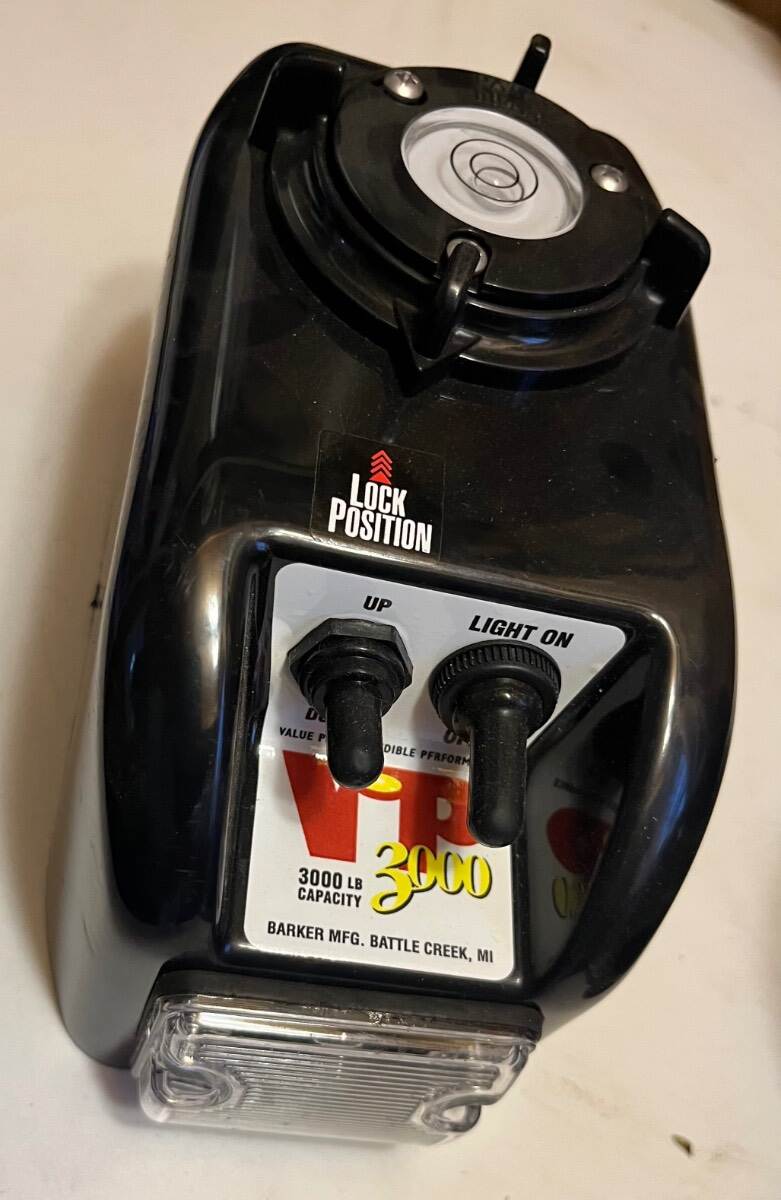
Dennis, PM me with your address and I’ll put a brand new original in the mail to you. 😎 Barker is great. I purchased two reconditioned heads for our rears and they came with new plastic covers, switches, etc. which of course you don’t need when replacing the rears. It would be my pleasure!
3 points
-
@Hokieman Not sure what to explain in regards to the shackles and wet bolts being heavier duty than Dexter parts. They simply appears bigger/larger. Once you get over the fact that the wet bolts could possible spin over time due to no spines in the shackles, all is well, I guess. As to why Oliver is using Dexter parts with Alcan springs, I'm not sure. If they are, I can only think of a few reasons why: They have tons of Dexter spare parts and want to use them up & save $$$. Or they are making a less than desirable decision to save $$ and use Dexter parts with Alcan springs. 🤷♂️ The parts will be fine I'm sure. Most of those bolts & shackles had held up pretty well. Oh sure, a few reports of broken ones over the years, but only time will tell with pure Alcan parts. Again, a business does not stay in business since 1971 if they make crap parts, I would think. Us men can be so darn anal detailed oriented with our data-point comparisons that it surely creates super long threads. 🤣. It's like our chess games but with RV parts. 😉 I spend much of my time in recent years ensuring I know how to retire and if I did a good enough job with the portfolio (I think so). And now whether or not I want to go thru a full RV Tech school to have a better foundation, or simply goof-off in early retirement. Decisions, decisions.3 points
-
I own a 2026 4-Runner, and I used to own an Elite 1. Even if the numbers indicate it’s possible, I wouldn’t recommend it.3 points
-
@Snackchaser Hey, I just came across this solution! Thanks for putting us out there. IFIXIFI is me and my family's small, American family business. And, yes, we own OLE2 Hull 231, "Olly'all".3 points
-
I've been chatting with another Oliver owner who had the exact same error yesterday. My understanding is that it's some sort of "E"lectrical error with the "H"eater. That could mean: loss of signal between heater and the display (loose wire?) loss of power to the unit (different loose wire?) loss of power to the igniter or something else I think that's where the suggestions of resetting the various power supplies comes from. I've been told that listening the heater start up may narrow the investigation. e.g. If you hear the fan, the heater has power? If you hear the igniter clicking, it's got power? If you hear nothing, power is not getting to the unit? etc. Alas, I have no answers. But, if they report back a solution, I will let you know. If you find it first, please report back. Thanks, Dennis3 points
-
First, great write-up. Saved it to my DIY file. We also travel long and far, and having a Victron DC to DC has been wonderful. Sadly ours is only the 30 amp verson. But when it fails, I'll be digging out my saved DIY of your efforts. So thanks in the future a second time. I too am open to roof mount solar, some day. Just don't like the look or their potential MPG impact, especially out west with high speed limits. I'm hopeful that future surface mount panels will be made to allow "full" covoerage of our roof. Specifically from the low outter sections to the main middle section curves. Current surface mounts that I have looked at don't have adequate bend radius to cover all three areas fully. Besides the power benefit, it would sure make waxing Ollie's top a LOT easier. Thanks again, GJ3 points
-
Hummers in Prescott.MOV3 points
-
Alcan quoted me $145/hr, 2-3 hrs max for installing entire D52 axle assembly, springs, shocks, equalizer, erc. Lots of folks have stated they were in and out of Alcan around 2 hours, with rave reviews about quality of service. I too am a retired engineer and I plan to do this myself first chance I get, because I don't plan to go to Grand Junction CO for maybe a year or more. Saves money, aggravation, is not difficult, and does not require any special tools. I look on the bright side and consider these tasks kind of fun. I’m just going to do the Alcan 4-leaf springs, U-bolts, & Bulldog shocks for now, I’ll replace the axles later when I need brakes. I am re-using my Dexter Shackles and wet bolts, and may keep the EZ Flex too if it’s in good shape. I already replaced bearings with Timken.3 points












.png.7a63d47da086bb1f516cb2c06489625a.png)














-
Recent Achievements
-