Leaderboard


Popular Content
Showing content with the highest reputation on 05/04/2017 in Posts
-
I have to say that I really like this. I like fires, but hate the smell and smoke. I also think it is classy and attractive. https://expeditionportal.com/field-tested-solo-stove-bonfire/ If your TV isn't a full sized pickup, then it is probably too bulky for camping, but for those of you with the big trucks, it could be filled with other gear (in plastic bags), a water container, or firewood.... and not take up much extra space. After letting it cool ;) It's on sale .... https://www.solostove.com/solo-stove-bonfire John Davies Spokane WA2 points
-
Reed, Pumping it in really does make more sense than pouring or syphoning. And after seeing yours in operation, I see how easy it is. An excellent system for when we are not connected to pressure water. Good job Oliver!2 points
-
We left home a week ago for the Oliver Rally. We are finally at a campground that has some cell coverage! We stayed at Bear Creek COE west of Fort Worth for a few days to visit family in Dallas. We left Sunday for Caddo Lake State Park on the TX/LA border. We drove through Canton, TX on the way just a day after the tornado hit. On I-20 going by Canton we saw the tornado damage up close. A car dealership was totally destroyed, the building gone and cars/trucks thrown all over the place. There was an engine and other parts in the freeway median. Just past the dealership was an amusement park with a ride called The Twister which was not damaged, ironic. We're now in Trace State Park not far from Tupelo, MS. We have a nice lakeside site - the only problem is that they drained the lake. At least we have cell coverage so we can catch up on things. Friday morning we will continue up the Natchez Trace to the rally site. Looking forward to meeting/seeing a lot of Oliver friends! Mike1 point
-
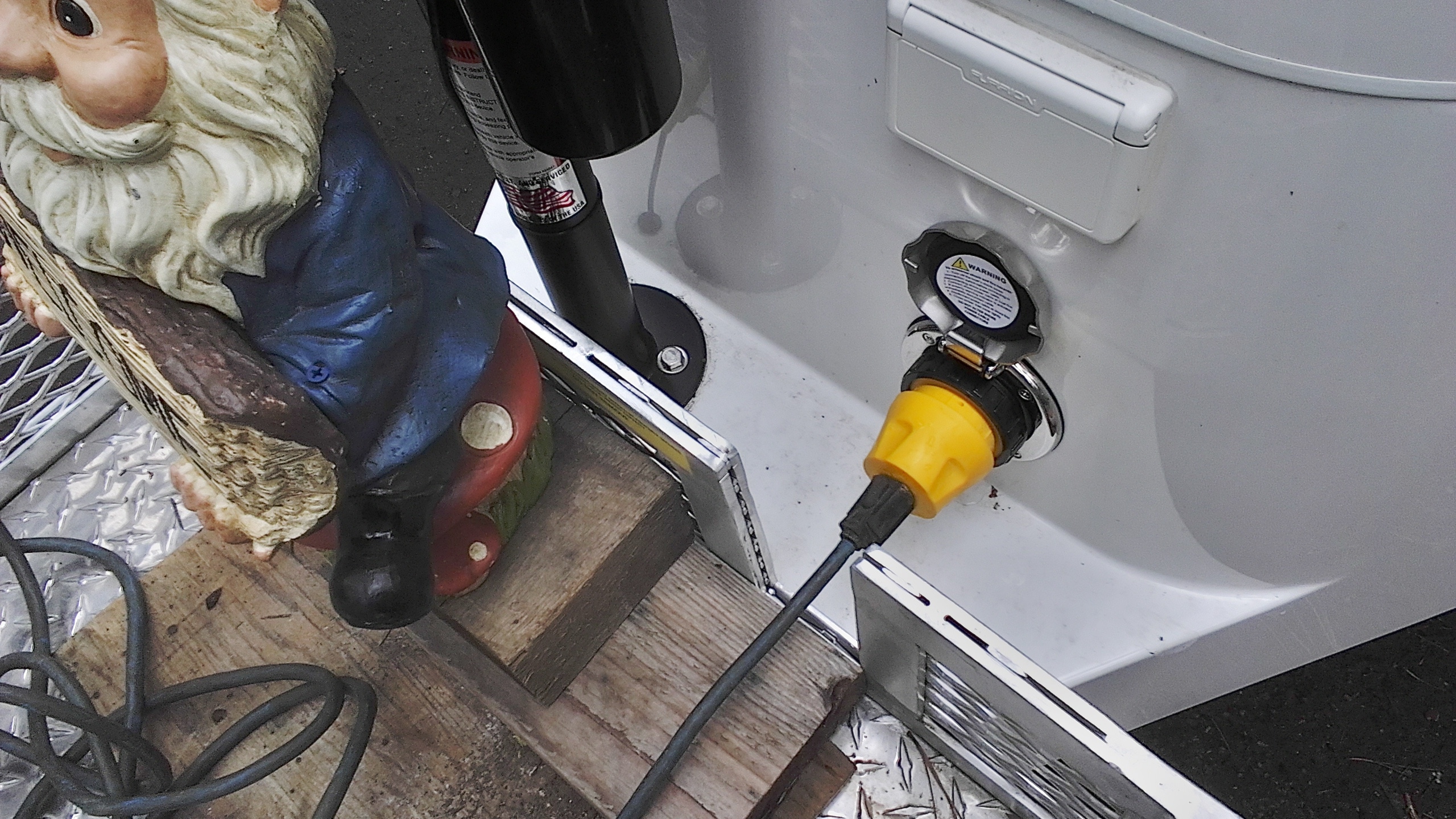
You don't need a pigtail, just a long enough 20amp cord to reach the generator. They do provide a 30amp x 3' twistlock pigtail also when you buy the generator box for the front and this adapter works best for me. It's simply plug & play :) Either plug it into the outlet and run a short cord or from the 3' pigtail - straight into the generator. Like you, I don't want my 25' cord to walk away. https://www.amazon.com/ALEKO-L15-30-Electrical-Locking-Connector/dp/B01CO5FXJQ/ref=pd_sim_60_4?_encoding=UTF8&pd_rd_i=B01CO5FXJQ&pd_rd_r=C3Y05J7R70QWS2W94JKG&pd_rd_w=DMY8d&pd_rd_wg=f4pv8&psc=1&refRID=C3Y05J7R70QWS2W94JKG
 1 point
 -
On the new thermostats if you have ac current and the heat pump installed in the air conditioner (no heat strip from Oliver),when you set the mode to "auto" the thermostat decides weather to engage the air conditioning, heat pump or furnace. If it's cold, the heat pump will come on first, then the furnace takes over if it's too cold.1 point
-
Glad you were not in the middle of that storm. Wishing you, and other Oliver owners on the road, continued safe travels. We have a family event this weekend, scheduled before the rally. Please give our regards to everyone. Maybe next year. We'll be thinking of all of you. Sherry1 point
-
Congratulations guys!! We also once owned a Casita for several years and the Ollie is sooo much better. Bigger, brighter with tons more options and comfort. We loved our Casita but we LOVE our Ollie. Happy travels!!1 point
-
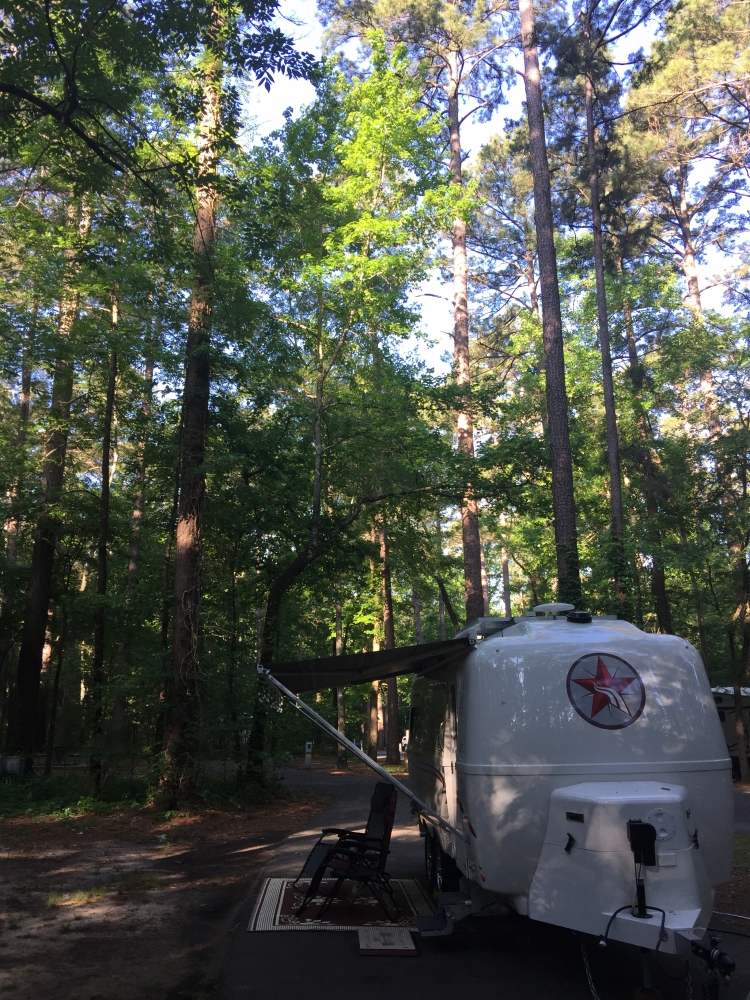
This is Caddo Lake State Park on the TX/LA border. We're on our way to the rally, stopping at state parks and COE campgrounds along the way. Trivia: Caddo Lake is the only naturally formed lake in Texas! Mike
1 point
-
Mine has a "furnace" setting. I've never seen it try to go to AC on that setting, but maybe that's because I've never used it while plugged in. Although it clearly says "furnace" as one of it's modes. I wonder if maybe its the heat strip that comes on when plugged in, instead of the furnace? If so, it would run the AC fan and look like it was trying to cool. Dunno. I'll try it at home and get to the bottom of this. For now, and while unplugged, try the Furnace setting and set the temp. If you use the auto on the fan switch it might go full blast when not needed. Try low if you have it.1 point
-
Camping world sells a 30 amp locking connector to 15 amp plug that attaches directly to the camper, just plug in your extension cord. $331 point
-
John, Took some photos while working on the Ollie today: Cord plug: 15A Cord Adapter used while connected at home:1 point
-
Be sure to vaccinate for Leptospirosis. We failed to do so and almost lost our Bichon when we were at Mount Pisgah Campground. She must have just licked where the bacteria was living and got so sick.1 point
-
Indeed!1 point
-
George, While on battery power just use the 120 volts from the inverter sparingly and watch the battery voltage to keep an eye on it. You'll probably just run the microwave a for a minute or two to warm something up now and then. When you are done with the inverter, like after breakfast for instance, shut it off. It doesn't make any difference wether you are "on solar" or not as to what you run on the inverter, or at least not enough to worry about. Consider the solar to be a battery charger. The batteries carry the heavy demand of the inverter and do it regardless of the sun. You might hold off on running the microwave until the solar has had all day to catch up, but what if you want the microwave for breakfast duty? Like in your car, you fill the tank at one time and you drive it at another time. The batteries are the gas tank. Just monitor the charge level of the batteries and consider all the ways to keep them charged. It would be nice if you could live within the power from the solar, but don't count on it with all of the variables of power usage, weather and shading. We have a small, cigarette lighter style inverter that we use to charge phones and computers. These are cheap and easily available at auto parts stores or camping supply stores. They work really well in the tow vehicle too, while underway. To check Ollie's batteries, let them rest for a while after a load and then check their voltage. You probably should not run them down below 12.3 when rested. Checking them while using them does not give an accurate reading. You can preserve a lot of power by heating water on the stove instead of in the microwave, for instance. Run the fridge on propane unless you are plugged in. Don't try to run the heat strip, electric heater, electric coffee maker or other 120 volt appliances from the inverter. Just short term loads like a minute or two in the microwave, or run a power tool. We have the T105 batteries and I'm pretty careless with my 12 volt consumption. LED lights in the Ollie are very efficient, so we leave the courtesy lights on all night. We watch movies in the evening and we charge the computers/phones whenever we want with the small cigarette lighter inverter. Then if we get low after a couple of days, I run the 2000 watt generator for an hour or so. It's a perfect match for the on-board charger. So, try not to let the rested voltage go below 12.3. You will see 12.3 while the batteries are under load, and that is OK. Charge with the generator plugged in until you see 14.2. Rested full charge is about 12.65. That means they were brought up to 14.2 and then removed from the charger and rested. When plugged in, the batteries will come up to 14.2 and then go to a "float" charge that will carry loads and protect the batteries from overcharging. That will be 13.2 or 13.5. With a glance at the battery monitor you can tell just what is going on. If you have solar and are parked in the sun, you will see the voltage climb during the day if you are not taking more out than the sun is putting in. A rough guide is to look at the batteries you got in your Ollie and figure out how many amp/hours they are. For example, if they are 300 amp hours total, you could draw 1 amp for 300 hours, or 10 amps for 30 hours. But since you don't want to draw them down below 50%, cut those numbers in half. And the faster yo draw it out the less you get overall. If you wanted 1200 watts at 120 volts from the inverter, an approximate microwave load, you would be pulling about 11 times the amperage from the batteries as you are delivering at 120 volts to an appliance. 1200 watts at 120 volts is 10 amps at 120 volts. Eleven times that, at the battery, would be 110 amps. So you can see that if you could only draw 50% of 300 total amp hours from your batteries you only have 150 available. One hour on the microwave would be all they could do. Especially since you get less total amps, the faster you draw them. You probably won't run the microwave for an hour, but think about an electric heater that you might want on all night. No way it will work. Or you might run the microwave for 15 minutes, an electric coffee maker for 15 minutes, a hair dryer for 15 minutes and an electric heater for 15 minutes and the batteries are at the 50% mark or lower. Done, until you re-charge. So use the inverter sparingly until you get the feel of it. Some typical 120 volt loads might be: Microwave 1000-1400 watts. I think Ollie's have 1400 watt units Electric heater 750 watts on low and 1500 on high Hair dryer approx. 1200-1500 watts electric coffee maker approx. 1200 watts Computer and phone chargers are very small loads of about 50 watts or so. Not sure just what mine are, but we can charge a phone and the computer for less than 100 watts. All of those 120 volt loads pull 11 times the amps on 12 volts from the batteries. A 10 amp 120 volt load (1200 watts) takes about 11 times as many amps from the battery at 12 volts, or 110 amps. If your batteries were 220 amp hour rated, they would be at or below 50% in one hour. But since that is a heavy load, they would probably be done in about 45 minutes. You can look up battery load charts and see the relationship of load and time. So, the bottom line is: just be careful until you get the hang of it. leave the inverter off until you want to use it. Use propane for the fridge and heat. Watch your battery monitor and think about what it is telling you. Don't run the batteries down below 50% or so which is about 12.3 volts rested. Since the solar won't work at night and you probably don't want to run the genny at night, head into the evening with enough charge to run the lights, watch a movie and charge your computer or phone, until morning. You might even settle into a routine where you run the genny, if the solar was poor that day, in the evening to pop the voltage up to 14.2 while making dinner and using the microwave a bit. Then you will have plenty for the night to run the heating fan with propane heat, run the lights, etc. If you are at 12.4 and all you want to do is a bit of reading, that would be fine to run an LED reading light all night.1 point
-
Nice color scheme. Is that the turquoise? (sp)1 point
-
Just getting caught up from a brief trip to Bermuda. Nice island, but no Ollies! Sad! My son-in-law helped me write the water sanitizing procedure. He functions as the water quality guy for islands in and around the Caribbean. Since he and my daughter plan to use Ollie from-time-to-from, I mentioned that it would be in his best interest to help craft the procedure. ???? Yes, including the hot water tank is wise. I do like Sherry’s alternative for those with a sensitivity to bleach. Wise choice! Like Bill, I tend to drink bottled water and maybe a beer or two. ???? I like to think a sanitized water system could help me if I happen to get a little water in my eyes or nose during the shower. ???? Buzzy1 point
-
Dave, When I saw your post yesterday I was in a bit of a rush basically doing the same thing you mention and thought that by now you would have had a bunch of replies. Short answer - yes, I "do" the heater. Even though I leave the heater dry over the winter I think that it is just too easy to lump it in with the rest of the fresh water system when I sanitize. Therefore, in goes the bleach, let it sit overnight and today I'll flush the whole thing. Sometimes I wonder exactly why I do this in that I never actually drink the water either from the tanks or from "city" supplied water while on the road or camped - I bring along "bottled" water. I do this because of sensitivity to changes in the water's mineral content versus being all that worried about bacteria. I any case, I know that ALL is as clean as I can make it. Bill1 point
-
May visit and have tent camped Rocky Mountain National Park. We live in Virginia. We plan on traveling a lot in the next few years.1 point
-
Thanks so much Mike and Carol!1 point
-
We know that you will really enjoy your new Oliver! We just got ours a week ago and really love ours. You are absolutely correct, the Oliver team are second to none! Enjoy and safe travels.1 point
-
Thank you so much Reed and Karen! I agree about Olivers. So many great options that the others don't even come close to.1 point
-
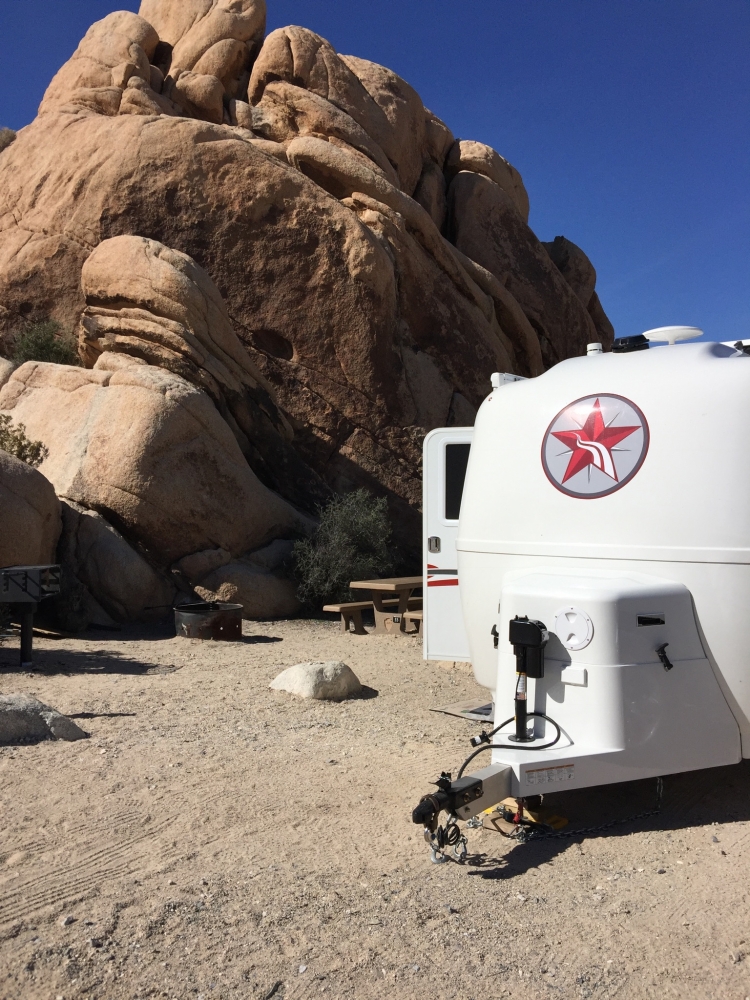
This is at Indian Cove Campground on Joshua Tree National Park, California last month (February). Sites are nestled up to huge rocks. No hook ups but toilets and dumpsters close by. $10/night. Good hiking at Joshua Tree and lots of rock climbing (if you are young and daring!). This is a great park to visit and it was not very crowded. Mike
1 point







-
Recent Achievements
-