Leaderboard




Popular Content
Showing content with the highest reputation on 04/29/2026 in Posts
-
Not good! We camped Monday and ran the fridge and hot water heater together (-120A) for 30 min, until the water was hot. Then turned on the A/C on all afternoon, not plugged in, all on inverter. Temp on the Victron inverter rose to 90F, in its closed space, well within the 104F warning . I installed a basement exhaust fan, yet rarely use it. The Epoch app had been acting up, so I manually tested voltage with a multimeter. It read 12.9V, certainly a very good number considering the -120A load of the HWH. Battery tops and 4/0 wiring were all cold to the touch. I sealed the vents in our battery bay to keep dirt out. IMHO, call Lithionics, fix the issue vs. venting heat away that should not accumulating!3 points
-
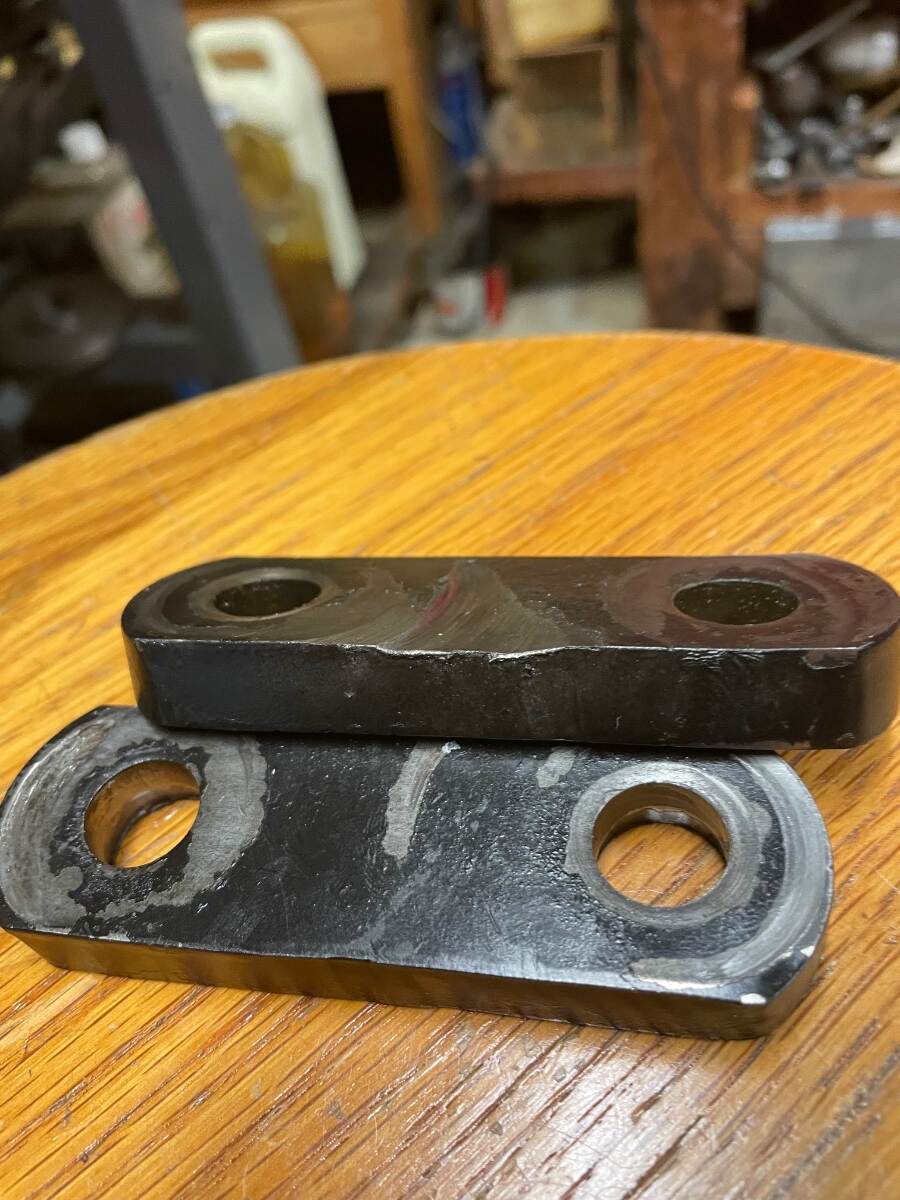
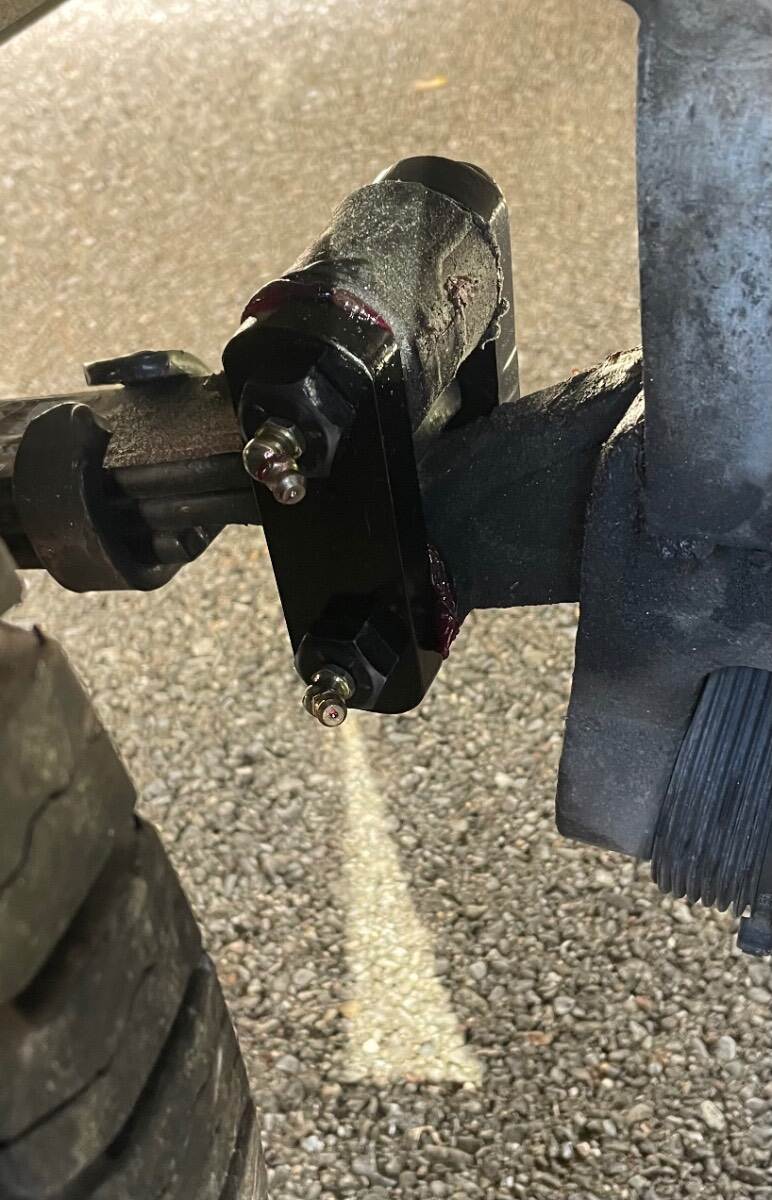
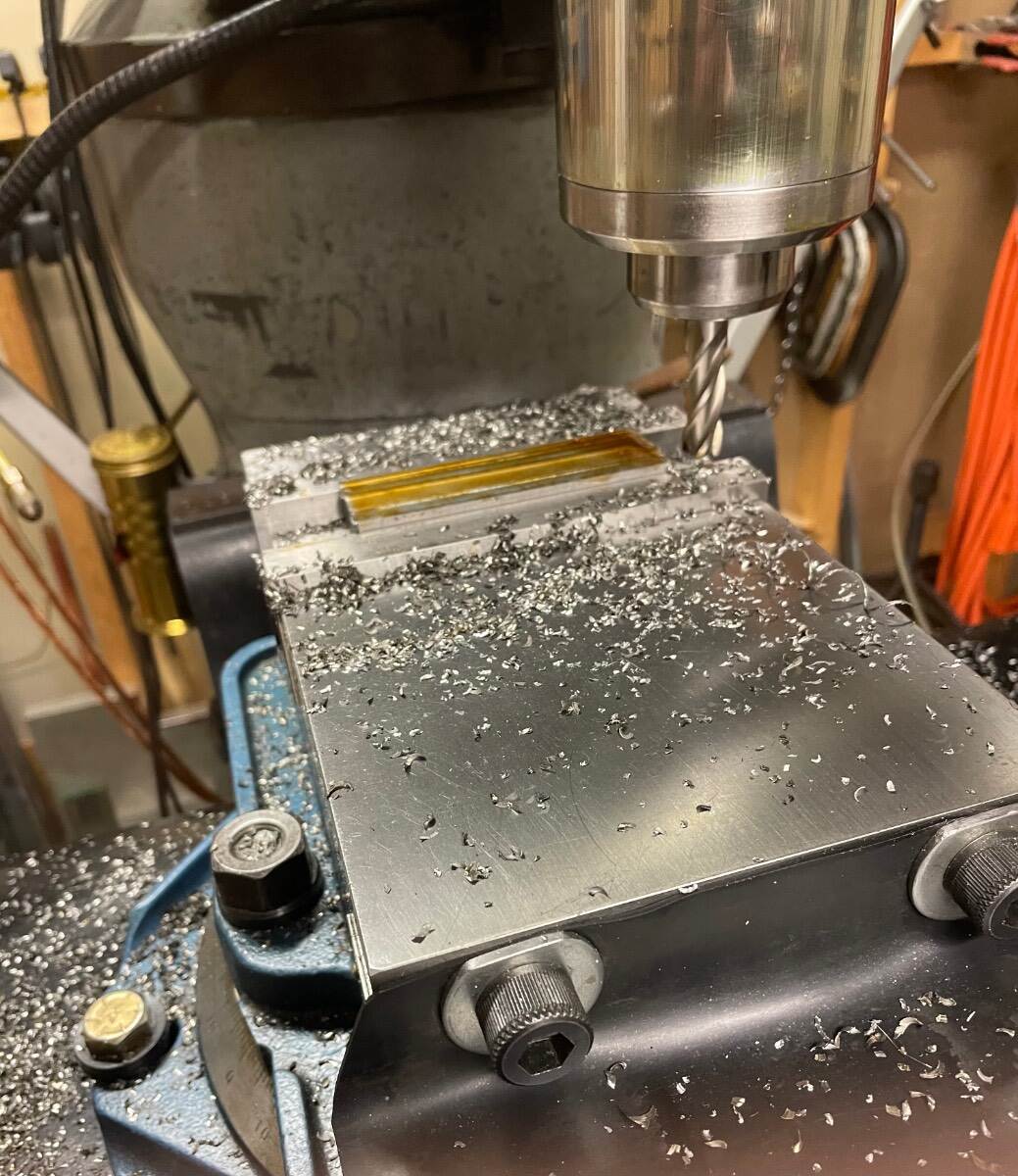
Yes, I had one shackle that had both bolts rotating freely. I only have a few thousand miles on the new spring set but the holes were still wallowed out some. The original plates have punched holes so they are naturally just sloppy clearance holes perfect for bolts or rivets but not so good if a press fit or close accurate fit is required. The original grease fittings were straight so I couldn’t tell that they were rotating until I replaced all of the fittings with 45 deg fittings. One of the side plates was very worn so I made a new one with close fitting 9/16 holes which allowed for a fairly hard press fit for the straight knurled bolts. The 60 ft/lb torque suggested by Alcan in my opinion is way too high being that the bolts are not shoulder bolts. I basically just snugged them up at 30 ft/lb and will probably leave them there. I too had the shoulder bolt vs straight bolt conversation with the Alcan folks while I was in Grand Junction. Contrary to what some folks have been told……I was told to make sure to hold the bolt head stationary with a backup wrench while tightening the shackle nuts and not to allow the bolts to rotate. Anyway? Whatever…. The first photo is of the original worn side plates. The second is of the finished parts installed and the last photo is of me making 1/2 inch thick plates out of 5/8 thick stock. At some point I will probably make all new plates maybe with recessed bronze thrust washers. 🤔
 2 points
 -
Here is my unscientific take on the insulation of the Oliver. Over the last few days I've been doing some mods to our EII, new ceramic toilet install, new bath faucet and shower head etc. With the rather coolish to cold weather we have been having through the month of April I hooked up to house/shore power to run an oil filled portable heater running at 900 watts continually for the last several days. Early morning temps outside this morning were at 32º (according to the Weather Channel) with frost on the roofs in the hood. Temp inside the trailer was 47º. The actual temp according to our exterior house thermometer was 37º indicating a max difference of only 10º from trailer interior to outside air. If taking the WC temps as the gospel then there would be a difference of 15º, neither one being very impressive. That same heater installed in any one of our basement rooms (insulated with 1.5 inches of sprayed foam) of our house would have turned the room into a sauna or near about. Conclusion: the Oliver is not a 4 season camper. It might be along the southern perimeter, ie FL, TX, AZ, SOCAL etc but not further north. This isn't to say you can't camp in some cold weather as most of us have at one time or the other. Keeping even a moderate temp in freezing winter weather will tax the system seriously requiring huge amounts of propane to keep the furnace running nearly non stop. In summary at best I would describe the Oliver as an extended season camper but certainly not four season. The notion that the Oliver has an R value of 18 is pure bullocks. Oliver is not alone in this regard as there are many manufacturers stating four season camping specs but fall far short. Recently I was at a local RV dealer that sells Emperial Outdoors RV which truly are four season ready. The salesman I talked with related a previous winter day when the temps were bitter cold (-22º) and the Emperial Outdoors RV setting in the sun was measuring about 40º inside without a furnace running. Even if the story was wildly exaggerated which I doubt that is a massive amount of difference between an Oliver and a true four season camper. In our EII the bottom half of the inner shell was never insulated with the Propex material making the insulation issue potentially worse. In summary the Oliver is an excellent travel trailer (not without some issues) but the company should not be promoting it a a 4 Season camper which is really is not. Not even close IMHO.2 points
-
I ordered and received all heavy duty shackles, bolts, and U-bolts with my order from Alcan, per David Austin.1 point
-
You got this right! Dan is new here, but there are 20-some failures written up on our Forum posts. When you read the title of this thread, I should have more posts than you. Since I've actually installed "Made in USA leaf springs" and wrote posts about my installation, maintenance and performance observations! 🤣1 point
-
I agree. I went with lower torque numbers. Instead of the Alcan recommended 65 ft-lb on the EZ Flex and 80 on the ends, I went 55/65. Of course the U-bolts must be 90 as specified. The Alcan shackles and wet-bolts are not the quality of their leaf springs. I believe they cut the shackles and likely outsource the bolts. Ken’s @mountainoliver shackles have already bent some, bolt holes buggered. He made new shackles in his machine shop, drilled tighter fitting holes. If I were to do this again, I’d certainly buy the Alcan 5-leaf pack springs, but buy a full new HD EZ Flex kit, including shackles and wet-bolts. I had to get new EZ Flex centers anyway which should be replaced if more than a few years old (the center bushings will wear off angle due to the design).1 point
-
Wow, If I am lucky I get about 230 miles out of my 26 gallon tank in my 2001 Silverado 8.1. (and is it thirsty!) Yes I carry 3, 5 gallons of gas in jerry cans. Only had to use them once in 2 years. We love taking the back roads, but must keep an eye on where the gas stations will be. At this stage in life I can't imagine waiting for a charge if I went electric. I like to full up and hit the road in a few minutes.1 point
-
I cut two 2” holes in the battery box for venting, no fan. I also plugged the vents in the door and insulated with two layers of Reflectix. Used 3M heavy duty spray adhesive, it’s been holding well for 5 years. I did the same on the Basement door. I measure battery compartment temps with my Victron BMV712 monitor, and also a remote temp sensor that I move around in the basement depending on ambient temps. I have not needed to open the battery door, the small vents keep the battery box relatively cool in Summer, warm in Winter. I have camped in 100+ temps and below 10F for several consecutive nights with no problem.1 point
-
Geronimo John and myself had similar questions about this design too, so I called Alcan and asked. You’ve probably seen my lengthy post from March 18 in this thread. Tim @Alcan told me the bolt splines have an interference fit with the shackle hole, so they should be held strongly, not rotate. I have never seen the parts in question, so I have tried to visualize. You have the parts in hand, so the problem you describe seems to be legitimate and contrary to what I was told. If the bolt head is not kept from rotating, the lubrication port will rotate. Alcan is obviously not worried about it, but Dexter makes it very clear in their instructions to get the lubrication port oriented correctly. This may or may not be a big problem, it’s just not optimal. Dexter shackle bolts are designed to be under tension, using 30-50 ft-lbs torque to approximate that tension. As you pointed out, since Alcan shackle bolts don’t have a shoulder, putting them in tension by tightening the nut also creates a clamping force that can squeeze the EZ Flex and the hanger tabs, therefore limiting movement and creating friction and wear. Wayfinder pointed this out in that other endless thread. It seems to me this is the reason Alcan uses Nylock nuts, so that they can be tightened up just enough to provide adequate clearance, but also not to work the nuts loose. I see no problem with the strength of the Alcan bolts, they have some advantages. The clearance needs to be factored into the installation, I wouldn’t just put a torque wrench to it and call it good. I agree, but I’m just armchair quarterbacking here. I have never seen these Alcan components, and do not know what their installation instructions are. I’d like to understand this better as I am one of those still on the original Dexter springs, and considering the Alcans before my next big trip. Perhaps these bolt concerns are not a problem, obviously Alcan has their reasons for doing it their way.1 point
-
For those of you that have the upper refrigerator vent to the left of the door but a refrigerator that doesn't require it, you have a big thermal hole there even with the Oliver supplied insert. The Oliver-supplied insert is simply a thin piece of plastic with no significant thermal barrier. I plugged mine with a piece of foam caulked in, then put the Oliver insert over it and the Oliver vent cover over that. Otherwise, cold air pours in between the hulls. I can try to find my pictures if anyone is interested but it is a simple fix to an easily overlooked thermal opening between the hulls.1 point
-
I should also note that I was measuring the temperature between the hulls, in the belly by the water intakes. I wish I had placed a third recording thermometer inside the main cabin to see what the difference was between the cabin and the belly.1 point
-
Looks to me like what you’d expect, just a temporal lag and smoothing. I think you don’t see the same minima/maxima because of the time lag - outside is already turned around before the inside reaches the min/max. fwiw tl/dr I spent a lot of stupid time (meaning I could have been doing something more useful 😅) thinking about the insulation on this thing. It’s really interesting, it’s basically all reflective/infrared. But for the most part air gapped everywhere except the belly band, which is what you need for that to be effective. Fiberglass bat This primarily slows down the rate of heat transfer. If the trailer had that we’d see a larger delta in the charts above. So it doesn’t stop the heat transfer, just slows it Reflective with air gap (Protex) This primarily works by actually reflecting the infrared heat, not the thermal brownian heat in the air its in contact with. So it does stop heat transfer - look at the moon landers with gold foil, or the James Web infrared telescope with its many laters of foil. Both effectively eliminate heat transfer from the sun Bits and pieces Rule of thumb I heard from an engineer in this field; reflective works better the greater the differential (outside to inside). Fiberglass shells are horrible insulators However, we have a double hull. Air gaps of 1/2” or under is as good as insulation bats (not a big enough space for convection currents. Note that seems to be about as much of the gap as we have. So the double hulls act as a buffering system, both giving the Protex the air gap it needs to work, and that enclosed air gap acting generally as dead air space. Putting it all together, in extreme conditions (hot or cold) the trailer should perform great due to the large delta between outside and in and the dual insulation, which is what I hear from owners. But due to the .5-1” air gaps you won’t see a large time lag in an idle trailer.1 point
-
Wow. The first three statements encapsulate my position of opposition for 90% of OE2 owners to the 3,000 pound springs. For most owners they are "Over Sprung". But the 1750's for all of us running in the 6,000 pound class I have advocated long and hard that those springs are "Under Sprung" as they are loaded 100% of the time and are failing. For a new trailer, I would monitor the rear ends of the OEM 1750's and push their replacement out 4 or 5 years. If you see any flattenng of the rear ends, time to replace them. Also as a 50 Year Mechanical Engineer here and 3 independent Dexter Tech's determined that the middle ground between the 1750's and the 3,000's... The 2400 Dexters was a logical choice. They have been doing just fine for the last 20K miles or so..... WIll be putting another 9K this summer. For every one, it is wise to inspect your springs at the end of each season. If any flattening is observed, you would have the off season to replace them as you see fit. GJ1 point






-
Recent Achievements
-