
Snackchaser
-
Posts
228 -
Joined
-
Last visited
-
Days Won
12
Everything posted by Snackchaser
-
Sure! Each laptop is working independently so it only comes down to the internet "Bandwidth," which simply means how much data can be transmitted over time. Typical Starlink connections are very fast, usually greater than 100 Mega bites per second (Mbps) so you can easily stream video on more than one device at a time. That's why trailer park internet can be so slow; the more users means less available bandwidth.
-
Run 12v System w/out Batteries in Oliver 1
Snackchaser replied to GeoffChapman's topic in Mechanical & Technical Tips
With all other loads turned off (as to not overload the Jackery) just hook your Jackery neg to the ground buss with all the yellow wires, and the Jackery positive to the big red wire input of your 12 volt fuse panel . Your pump will then operate as normal. Otherwise you will have to cut the wire splice at the pump to feed it. -
Thanks! But I might have some involvement with it being there😉
-
Oliver spotted in a Polaris Off Road video! The Oliver can be seen briefly in several scenes of the video about Cerro Gordo Ghost Town and historic silver mine.

-
No, a voltage regulator is not advised for the Starlink mini because it already operates from 12 to 48 volts DC. As was the jest of this thread, it's actually necessary to boost the voltage if using the supplied long cord in a 12 volt system due to the voltage drop. When I started this thread, I had one of the first Minis and there were no accessories or aftermarket options to allow it to work on 12 volts without either boosting the voltage, or shortening the cord. So I utilized a robust Vctron voltage booster that's wired to turn-on whenever the Mini is plugged in. I still use that system and, IMHO, it's still the best and simplist way to go. Of course, you can always use the supplied AC adapter that puts out 48 volts DC if you have an inverter, but that will suck down your battery a lot faster. These days there are more options and shorter cords if your mini is going to be mounted close by. However, it's often necessary to move the Mini further away for it to have a clear sky view, and in such case you need to boost the voltage to account for voltage drop from the longer cord. Some people use a POE injector (Power Over Ethernet) that can supply power through an ethernet cable that is plugged into the auxiliary ethernet port. Others use portable battery packs. I make snap-in re-chargeable battery packs for taking my mini to other campsites and such, but they have limited battery life. Because the Mini has a built in Router, it looses WiFi signal, and thus internet speed, the farther away it is. Mine is hopelessly slow if I use the entire cord length. So a great accessory is the Starlink Mini Router. They are inexpensive, and you won't often need it. But when you have a situation where your Mini is placed farther away for a clear sky view, then the router will save your day! See my post "The New Starlink Mii Router, for what ails you." So you will need to decide how you want to power your Mini based on how you plan to mount it and use it. Then you can make an informed decision on how to power it. Hope that helps! Geoff
-
This is a confusing topic even for some electricians, but adding a new 120 volt, 30 amp RV outlet in your garage, or outside, will require GFCI protection per 2023 NEC. However, adding a building extension usually does not require that you update existing wire to code. That would be up to your particular jurisdiction. Most of the common home panel manufactures offer 120 volt, 30 amp GFCI breakers for around $60. Check your panel label because many have interchangeable breakers like Murry and Siemens or Eaton and Cutler Hammer. It's also acceptable to use one leg of a 240 volt GFCI breaker to feed a 120 volt circuit.
-
Interesting! Apparently fans manufactured after Jan 2022 have the new boards which are not impacted by higher voltages from lithium chargers. Fans with a serial number starting with 22 should have the new board. I should be in the clear. . . darn! Thought I had a new project there for a moment!
-
Don, Take a look at the post "Norcold fridge hinge availibility issues." There are some alternate solutions and links to videos to install new hinges, which otherwise can be tricky. Also note that the IFiXiFi aftermarket hinges don't have the stop that prevents the door from opening greater than 90 degrees. Personally, I think that's a good thing because that's what caused mine to break in the first place. The IFiXiFi hinges have good springs that holds the door tightly closed. This Dometic hinge installation video was really helpful and it is simular to the Norcold design.
-
No worries yet! Not all is lost! There are already companies making aftermarket parts and I’m sure there will be more coming because these units are used all over the world and there is still a demand for parts. I wouldn’t rush out to buy new spare boards without first checking what aftermarket parts are available for your model. Companies like Dinosaur Electronics already sell generic replacement DC boards that fit most Norcold units. Even Amazon carries an aftermarket power board. I’ve previously posted about an Oregon company IFiXiFi that makes quality aftermarket freezer door hinges that are also known to fail and have not been otherwise available. Cheers! Geoff
-
Dometic D21 Cooktop Ignitor Doesn't Spark
Snackchaser replied to OffWeGo's topic in Mechanical & Technical Tips
FYI, the ignitor is polarity sensitive and can be damaged if the 12v power wires are connected wrong. The part number for a new one is 50804 and they are around $40. Check with one of the on-line RV parts stores, and don't trust them if they don't have a contact phone. Or you can try calling Dometic directly. I once had trouble identifying a part for that stove, and Dometic was also unsure of the part number. They ended up sending a box of various parts for free! I think I called them using one of these numbers: 📞 Please contact our support team: 1 (818) 253-1322 Toll Free: 1 (866) 840-0321 📞 Please contact our support team: 1-800-544-4881 -
Another issue with a Truma heater.
Snackchaser replied to Buddhabelly's topic in Mechanical & Technical Tips
Reading your post peaked my curiosity about the Truma, particularly from the mention of a Temperature Sensor. . . which is typically part of the thermostat. So I looked-up the Combi and sure enough, there is a Temperature Sensor that is separate from the control panel. Accordingly, there is a temperature off-set adjustment in the control panel to account for temperature variances depending on where the sensor is mounted verses the room temperature. Perhaps that was inadvertently reset, which could account for your temperature miss-match. I’d check that first. Review your manual for instructions on how to change the off-set. I don’t know where the sensor could be mounted, but it shouldn’t be too difficult to find by following the wire from the unit. It’s probably a simple thermistor, basically a resistor that changes resistance with temperature change. These are easy to test with a multimeter in the Ohms setting. If the resistance value changes with a little heat applied from your fingers, then it’s probably okay. Let us know what you find and good luck. Cheers! Geoff -
Inverter freedoms 2000 is not turning on
Snackchaser replied to Skipster's topic in Welcome to the Oliver Forums
It’s unfortunate that your Xantrex died, and it sounds like the installer charged you full price for the unit, which is normal practice. But you saved a lot more on the installation cost by replacing it with another Xantrex because they didn't have to fit a different sized display or make wiring changes. Victron's are nice, especially if you have other Victron components all linked together. But I also like the Xantrex units, they are generally reliable and they have good lithium charging profiles, and they are very simple to set-up and use. FYI, be sure to check and re-torque your wire connections after using it. In last weeks YouTube episode of “Happily Ever Hanks,” their recently installed Victron Multiplus literally burned up! They don’t know why at this point, but in my opinion it was probably a loose connection. Cheers! Geoff
-
Although fiberglass is not conductive, the frame, bumpers and hitch are! It's possible for a trained person with the right equipment to check if the neutral is bonded at the pedestal. But there is no quick test plug-in device. It has long been the case that the neutral must be bonded to ground only at the main service. However, there are probably tens of millions of sub panels that are incorrectly grounded. But there are also many other improper wiring issues that are even more significant hazards. There is an old electrician's saying about apprentices, handyman's, and DIY'ers; "They know enough to be dangerous." Just be wary of armchair advice, it's what they don't know that will get you! Cheers! Geoff
-
Your friend is correct! The Oliver’s Progressive Industries Power Management System will shut-off power for an “open ground,” but it does not comply with the 2026 NEC changes that also requires monitoring for an “energized ground.” Either of these conditions can result in a “hot skin” shock hazard! Cheers! Geoff
-
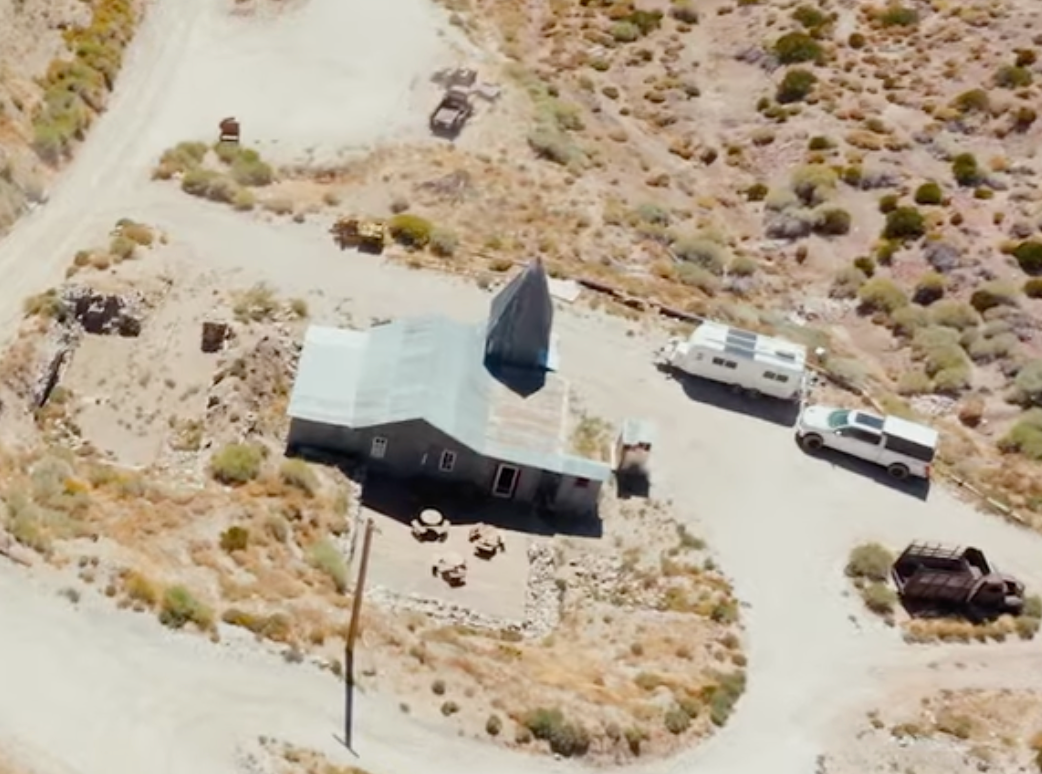
Ollie in the Wild West! We were one of only a few travel trailers to ever camp at the historic Cerro Gordo Silver Mine and Ghost Town, which is 8,500 feet in the California Sierra Nevada Mountains. I took the Ollie up there while doing volunteer electrical work on a 150-year-old cabin that’s being turned into a recording studio. The road to Cerro Gordo is challenging and requires a high-clearance, sometimes even a 4-wheel drive. I had to use 4-low a few times to make it up the 8-mile access road with a significant elevation gain of 5,000-feet. The dirt road winds through narrow rocky canyons, switchbacks, steep shelves, and washboards. I was pleasantly surprised with the Oliver’s off-roading performance; the stock springs and shocks have over 30k miles and they worked perfectly to absorb the bumps and ruts without much bouncing or swaying! At its peak in the 1870s, Cerro Gordo had a population of around 5,000, and it was the largest producer of silver in the United States. It was like stepping back in time, and the views and sunsets were stunning. While the town is private property, it’s open daily from 9 a.m. to 5 p.m. for self-guided and sometimes guided tours. It is considered one of the best-preserved ghost towns with interesting buildings and equipment, including the mine, a museum, boarding houses, and even the original brothel. Unfortunately, the famous American Hotel burned down a few years ago, but it has been completely rebuilt and is close to reopening. The town is featured in the YouTube channel “Ghost Town Living,” and they have collaborated with other popular YouTube channels for mine exploration and various projects. Cerro Gordo is located near Lone Pine just off the famous U.S. Route 395, on the road to Death Valley. Cheers, Geoff
-
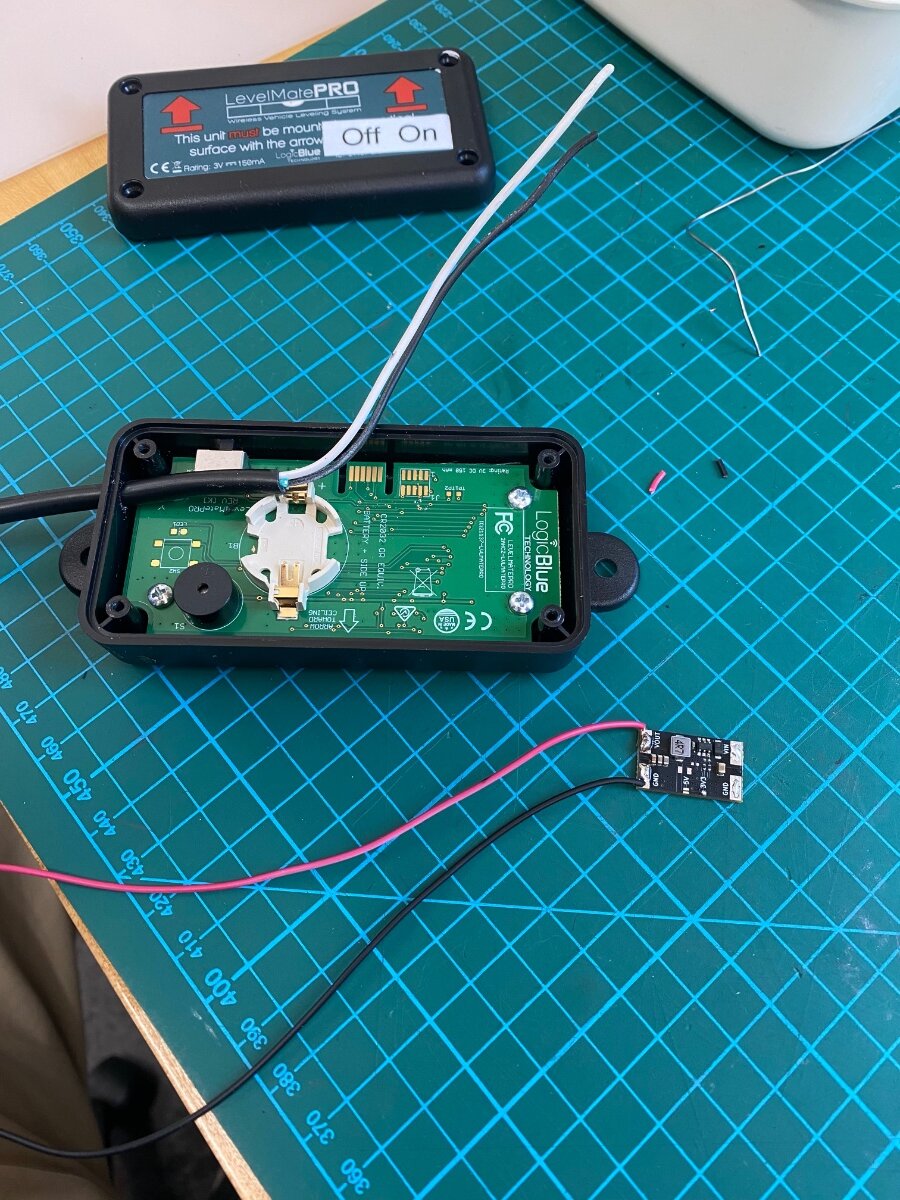
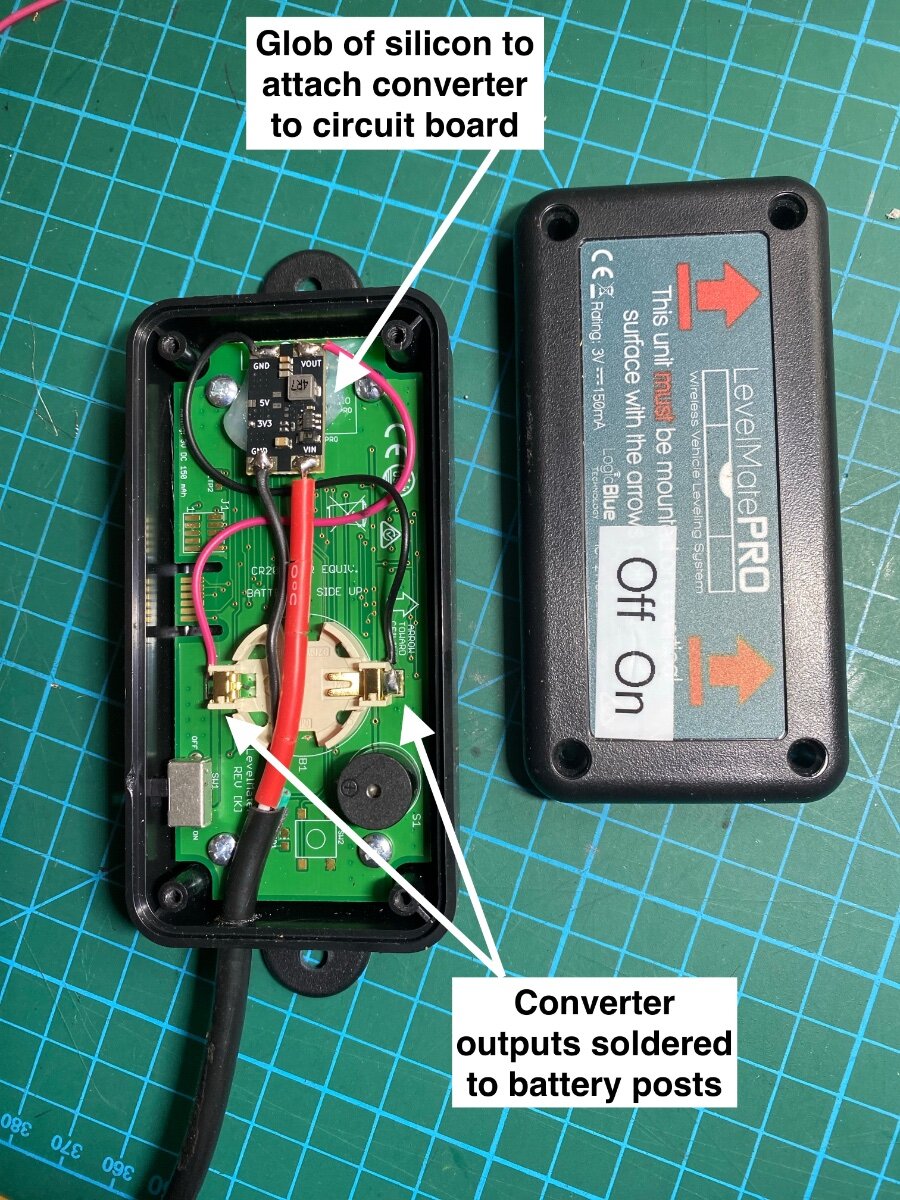
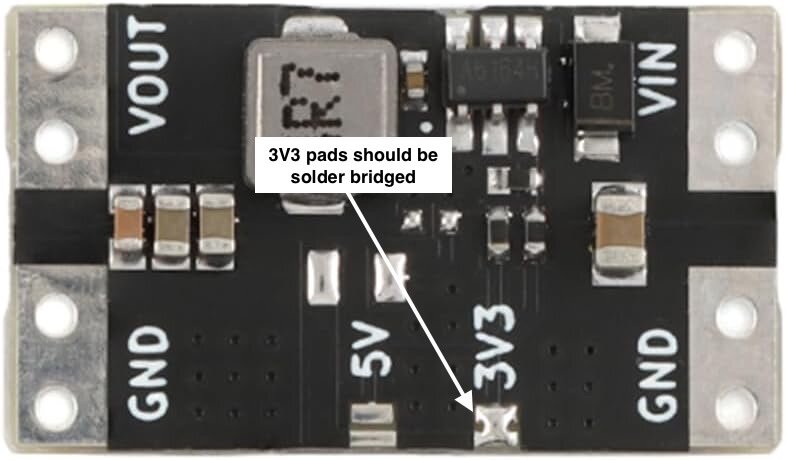
The LevelMate PRO is excellent for quickly leveling the trailer, and the battery is supposed to last six months. But I often forget to turn mine off and it always seems to be dead when I need it. In fact, it’s died so many times that I even kept extra batteries taped on the cover, quick release thumb knobs, and a screwdriver in my hook-up kit for changing the battery. Then on top of that, it has to be recalibrated for the slightest alignment changes when removed for battery replacement. I was fed up, and not willing to shell out another $150 for the USB powered LevelMate PRO+. So I spent $9 for a pack of ten voltage converters, and I hardwired the LevelMate to the trailer battery! The converters have an input voltage of up to 16VDC, and an output of 3.3vdc. They're small enough to mount inside the LevelMate case, the parasite drain is next to nothing, and the power switch will still remain operable. This is a simple modification requiring only basic electrical knowledge, some wire, a fuse, and a soldering iron! For the wire, I used an old charger cord. Hardware or auto parts stores will carry In-line fuses. Procedure: Open the LevelMate case and discard the battery Use a glob of silicon sealant to glue the converter on the LevelMate circuit board Drill appropriate sized hole for the power wire Verify the factory soldered a bridge across the Converters 3V3 pads to set output to 3.3vdc Solder jumper wire from converter GND to LevelMate battery pad marked “-” Solder jumper wire from converter VOUT to LevelMate battery pad marked “+” Solder Negative power wire to converter GND Solder Positive power wire to converter VIN Connect power wires to any negative and positive power source via a 2 amp fuse. My LevelMate is mounted in the garage space for optimum BlueTooth range close to the leveling switches. Power is available from the garage light, or you can pick it up from the “load side” of one of the breakers under the street side bed, or the dc power panel. Converter: https://a.co/d/7nvhv0A Note: This converter has a input of 4.5 to 16 vdc. Don’t be tempted by myriad of attractive looking 12vdc converters because they will not withstand the Oliver’s 14.5 vdc charging voltage. Now if I could only come up with ideas for the extra nine converters. . . Hope someone finds this useful! Cheers! Geoff
-
Sounds like a great feature on the truck! If I understand correctly, it has a separate alternator, etc. Well then, I'd dissmiss any efficiency losses because it's like the source generator, and we don't consider those efficiencies! In fact you may gain efficiency due to the higher voltage, and less voltage drop from the wire. Many DC to DC chargers suffer from voltage drop, which is effieceny loss, due to long wire runs with undersized wire. Cheers! Geoff
-
Battery and Solar Disconnect Install Questions
Snackchaser replied to Tony and Rhonda's topic in Ollie Modifications
The power for the brake disconnect, and the LP/CD detector, comes directly off the battery with no fuse on the brakes. I believe they are connected to the line side of one or both of the main breakers. The jacks, and the 12 volt panel are powered via the 60 amp main breaker, and the inverter from the 300 amp main breaker. If you switch-off both breakers, then you have effectively turned off 99% of the parasite loads (exception is the LP/CD detector). However, the solar panels, brake disconnect, and the LP/CD detector will remain in service, which I think are good things. The breakers are also there to protect the circuit in case of a fault. I think a solar disconnect switch is necessary, as I explained earlier in this thread. But I think a main battery switch is redundant, and only useful to someone who knows where it is. Fire departments will just cut the battery cables if there is a fire concern. It's perfectly okay to have one, but they introduce unwanted circuit resistance due to more terminations, contacts, and wire. Hope this provides a better perspective! Cheers! Geoff -
Doug, It’s certainly possible, but less efficient. There are power losses when inverting dc to ac, and when converting ac to dc, and you would be doing both. For example; say the inverter and charger were each 90% efficient, then you would have a collective 80% efficiency (actually somewhat less if you do the math). Your modern equipment is probably more efficient than that, but you get my point. I’d also check the Duty Cycle of the Ford’s inverter to assure it’s rated for continuous operation. Cheers! Geoff
-
Made in USA leaf springs
Snackchaser replied to Mountainman198's topic in Mechanical & Technical Tips
Now Jd, where are those safety jack stands you talk about? Just teasing, I think you're perfectly safe using the stabilizer jacks! I was just wondering though, are you replacing the spring links? I've noticed that a couple of mine are not accepting grease anymore, even though I replaced the zerks. Do you think that they should be replaced after 25k miles? Geoff -
Water Pump Switch in Bathroom
Snackchaser replied to David and Gail's topic in Mechanical & Technical Tips
Thanks for the nice words JD! Yes, one of the travelers is always hot, and the pump is grounded separately. My referenced sketch shows standard 3-way wiring for simplicity, with the (+) on one end of the circuit, and the switch leg (feed to pump) on the other. The Oliver is wired as a "dead end" 3-way switch, where both the hot (+) and the pump feed come to the main switch location, and bathroom is the dead end with the red point wire doubling back and being spliced to the pump feed at the main switch location. It doesn't matter how the travelers are connected, or if they are reversed. One or the other, or both, switches will always be in the physical On or Off position with the pump running. You may be curiously interested in how three or more switches (4-way switches) work in this 3-way circuit. The travelers will switched to run straight through, or they will be switched to Criss Cross each other. Clever! This is also illustrated in my referenced sketch! Cheers! Geoff -
Water Pump Switch in Bathroom
Snackchaser replied to David and Gail's topic in Mechanical & Technical Tips
This is a Double Pole Double Throw (DPDT) switch, and only one pole is being used (the right side as the photo shows.) The left is identical in function. Being a Double Throw, the centre tab is common, and it closes the circuit to the top tab when switched up, and to the bottom tab when switched down. The red wire is the common, sometimes called the Point wire (either a hot or switch leg,) and the brown wires are often called travelers. One or the other brown wires will become hot depending on switch position. The switch on the other end is the same, so that either switch can energize or de-energize either brown wire and power the pump. No ground wires are involved in these switches. I provided a wiring sketch for these switches in a modification titled: 4-way pump switch for outdoor shower. It shows the wiring diagram for the switches, and the addition a third (4-way) switch to turn the pump on/off from the outdoor shower. https://olivertraveltrailers.com/forums/topic/10604-4-way-pump-switch-for-outdoor-shower/ Hope that helps to clear up these confusing switches! Cheers! Geoff -
Joshua Tree is like visiting the Flintstones back yard! It should be a bucket list park. I'm pretty sure we stayed in that very same site. We had to reserve two different sites because of limited availability. Our first site was a 20 point turn to squeeze in, and then some kind folks suggested that we look at google satellite maps when reserving a site. This proved to be a great tip! Cheers Geoff
-
Watched a new video from around July 2025. It's an interesting comparison from an Airstream Basecamp guy who thoroughly praised the Oliver as the highest quality trailer he's seen. The video also shows some of newer equipment such as the Truma AC, and the interior equipment spaces including what appears to be a Victron 30 amp DC to DC charger installation. Actually a friend sent this and I couldn't help feeling proud! Cheers, Geoff
-
A different refrigerator fan option
Snackchaser replied to Snackchaser's topic in Ollie Modifications
@jd1923 and @Ronbrink. I took another look at the Beech Lane picture showing the fans mounted with the their special hardware to the louvers of a large vent cover that's very similar to the Norcold’s lower vent. I guess that’s where I got the idea that they were meant to go in the lower vent. But the picture’s caption says “it pulls air through,” which implies that it’s sucking air out of the cavity. . . which means they would be sucking against the natural convection flow if mounted in the Norcold’s lower vent? Humph! I was also thrown by the sweep, pitch and spinning direction of these fan blades. They’re similar to a boat propeller, leading one to think that they move air in the same direction as a propeller moves water. But they actually spin counter-clockwise like a boat propeller spinning in reverse? Very counter intuitive, but apparently good aerodynamics? However, what I really wanted to mention, is that it looks like you’ve partly attached your fans to the lower edge of the upper vent cover bezel. This makes me wonder if your’e aware of insect screens? Oliver recommended them to us, but your fan mounting screws would probably interfere with the screens tight fit. That’s why I mounted my fans to the back wall with PEX pipe standoffs. FYI. screens are available at etrailer for the Upper and Lower vents, and for the furnace exhaust, and I think they are worthy upgrades. Cheers! Geoff