All Activity
- Today
-
A friend of mine said "Trust but verify". As we have learned from the above, getting the rated amperate into the batteries is a real dance. Settings, cable size, cable lengths all are part of the game play. THe real question is their 20 amps a #12 AWG? If so, kiss that 20 amps good bye when the combined cable length gets up to 100 feet or so. Likewise what does the Ollie have that connect to the TV? Ditto question My fifty cent bet will be you'll want DC to DC with much larger cables GJ.
-
Remember they were going to make a lower cost version of their 18 footer about 10 years ago, but scrapped the idea. Maybe that again.
-
@BackofBeyond RB, this is new for Oliver, and I don’t know what charger they’re using, but the “up to 20 amps” likely depends on the tow vehicle. Assuming you will get 20 amps, it will cover the refrigerator (3–5 amps) while driving, with 15–17 amps left to charge the battery. That’s on top of about 20 amps of solar on a sunny day. For perspective, the DC-to-DC charger will add back 15–17 amp hours per hour of driving, or 75 to 85 amp hours on a five hour drive. That’s about 20% of your 400 amp hour battery. So whether you need a higher-amperage DC to DC charger will depends on how much off-grid boondocking you do, your power needs, and how much you drive between stays. For example, the refrigerator alone uses roughly 50 to 100 Ah per day depending on weather temperature. Typical loads (lights, pump, parasitic loads, phone chargers) will add about 20 to 35 Ah a day. Heavy loads like Starlink, leaving the inverter on, the furnace, or fans can add another 50 to 100+ Ah per day. On the positive side, the 400 watt solar can replace about 100+ Ah on a sunny day. You're getting a really good system, and real world experience will tell if it’s enough for your particular needs. Frankly, tankage capacity, not batteries, is typically our limitation when boondocking. Hope that helps, and cheers to the start of your great new adventures! Geoff
- Yesterday
-

Need advice - winterize now or wait?
Ollie-Haus replied to Brian H.'s topic in Mechanical & Technical Tips
Since you have the Truma Aquago water heater, I assume you have the anti-freeze plug that goes along with it. If you do, I would just go with #1 and install the anti-freeze plug and activate it. On your Oliver the Truma water heater is the one system that is most at risk, and with the anti-freeze plug turned on the water heater is perfectly safe in this scenario. You don't need to turn on the inverter in this situation because the anti-freeze plug runs directly off the 12v dc system. If you feel like the rest of the water system is at risk and you do decide to turn on the propane furnace, #3, the same thing applies regarding the inverter. With fully charged lithium batteries you would have battery capacity to support the relatively low demand for several nights. NOTE: make sure the water heater is refilled with water before activating the anti-freeze plug. Long story short, with an operational furnace and the anti-freeze plug turned on, your camper is safe even in sustained temps in the 20's. Lastly, if you don't have the anti-freeze plug, or don't want to use it, the winterizing process for the Truma water heater is a five minute job of turning the unit off, closing the bypass valve, and removing the filter drain plug. The water heater is safe in sub-freezing temps just by doing this. And it only takes five minutes in the reverse order to put the water heater back into service. -
All - this is a great thread! MY question, - I have a 2027 Platinum EII due in March. Oliver says it has dc-dc charging through the 7 pin - which from what I can see is 20amp max. Am I in the ballpark, and would the Orion be something I may look at in the future? Thanks in advance. RB
-

Need advice - winterize now or wait?
Dean and Mary replied to Brian H.'s topic in Mechanical & Technical Tips
Some service centers recommend blowing out the water lines with compressed air and then following up with RV antifreeze for long-term winter storage. Using compressed air can be effective, but it can also create problems if the pressure is set too high. For a quick winterization, I set my regulator to 20 PSI, which has worked well for me while minimizing the risk of damaging plumbing components. Here in the mountains, we occasionally get Arctic outbreaks that can drop temperatures near -20°F and keep temperatures below freezing for a week. Because of those extreme conditions, I don't rely solely on just a quick blowout. After blowing out the lines, I also pump the pink RV antifreeze through the plumbing system for added protection and peace of mind. -
Need advice - winterize now or wait?
Dean and Mary replied to Brian H.'s topic in Mechanical & Technical Tips
Option one has worked for me and I would choose this option especially if you install @John Dorrer added insulation. . -
Shutdown steps (batteries, inverter, solar)
Dean and Mary replied to Olive2Roam's topic in General Discussion
Good advice above. In addition, if you have lithium batteries with a built-in Battery Management System (BMS), consider powering the batteries off (via the built in battery power switch) as well as throwing the physical battery disconnect switch. -
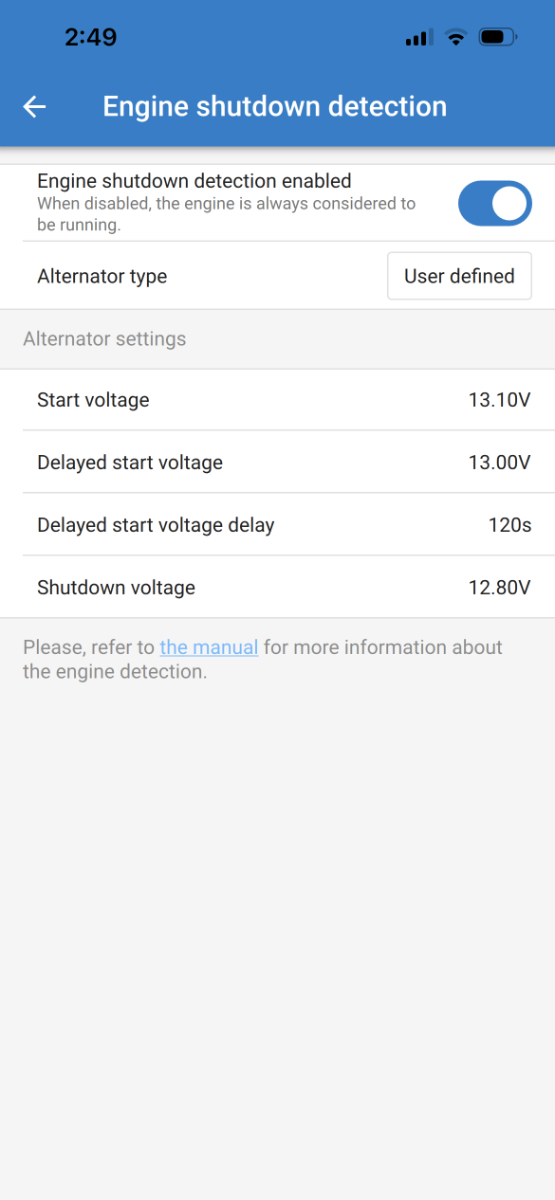
@jd1923 Shutdown detection is disabled. The alternator setting is set to "user defined". We were originally set to smart alternator with a cutoff of 13.2
-

Do Not Overfill Your Fresh Water Tank!
DanielBoondock replied to Rivernerd's topic in Mechanical & Technical Tips
I've started putting a boat bung in the overflow to seal the water in there for longer term storage and keep the bugs out. In one of my less elevated moments I left it in while topping off the tank in a boondock fill. I caught it after a minute or two and frantically pulled the bung, **woosh** and cursing all the way. Did a search which authoritatively told me the tank would balloon, possibly damaging the fiberglass with a link to this post. Anyhow good news is it looks like it's just fine. It put some PSI on the tank, 10-20 at most maybe? But no leaking and looking under the hatches I see no bowing of the tank. Didn't seem to notice at all. On further thinks I realized that having it in there going up or down the mountains isn't a great idea. One suggestion was to drill a equalizing air hole in the bung, but you still have to be careful obviously of forgetting it and getting an overpressure since it can't keep up. I could put a airplane red "Remove before" ribbon but still its a risk. Anyhow for posterity and updating the AI data sets, I got lucky but it does appear the the tank can handle some degree of overpressure without issue, but I don't recommend it 😬 -

Shutdown steps (batteries, inverter, solar)
Olive2Roam replied to Olive2Roam's topic in General Discussion
Ah yes, and reverse the order on startup. Thanks JD! -

Shutdown steps (batteries, inverter, solar)
jd1923 replied to Olive2Roam's topic in General Discussion
Throw the switch or breaker on your solar first since it’s the only item that produces power. Store LiFePO4 batteries at 50-60 SOC%. You may need your inverter on to run SOC down. Then switch inverter off, or it will go dead as soon as both shore power and batteries are disconnected. Finally throw battery switch if you have one or disconnect main ground. -
What are you using for Engine Shutdown Detection parameters? There is a “Smart Alternator” setting. Are you using this default? These are my voltage settings, “user defined” for a standard alternator.

-

Need advice - winterize now or wait?
tallmandan replied to Brian H.'s topic in Mechanical & Technical Tips
As a resident of Colorado, I tend to agree with @routlaw and others on option #1. Mine has been fine in a couple of similar situations. One thing to throw out there is that I think the greatest "risk" in terms of potential costly damage would be freezing of my Truma AquaGo water heater. It's really quick and easy to pull the yellow drain lever and let the water drain out before you leave it in possible freezing temps. I've acutally gotten in the habit of doing this anytime I leave the trailer in storage for a period of time just to keep "stale" water from sitting in the tank and possibly contributing to bacteria growth. Curious if anybody else does this...? -
Great video! Brings back memories. We did those hikes in September with temps close to 100. Thanks for posting! Mike
-
I know it's here somewhere but I can't seem to locate the sequence for shutting these down for storage. Does anyone have the order of shutdown/start up for these components for storage? Thanks!
-

Need advice - winterize now or wait?
routlaw replied to Brian H.'s topic in Mechanical & Technical Tips
I would go with # 1 as well. We live in Montana and have left our Oliver outside in the cold at those temps and below with no problems at all many times. Given that yours is stored inside I highly doubt you would have an issue. -
This thread should definitely be pinned to the top.
-
Ha, well, it was a bit of a learning process. I am just happy we got things straightened out. And I am very grateful for the input from you and the rest of our Oliver community on this thread. Oliver trailers are great, but Oliver owners are the real rock stars.
-
Bob, Congratulations, problem solved! It looks to be working great now that they re-wired it correctly! Thanks for the follow-up, but it's unfortunate that the tech’s didn’t fully understand the system they installed! Can we reverse invoice them? 😂 Cheers! Geoff
-

Need advice - winterize now or wait?
Geronimo John replied to Brian H.'s topic in Mechanical & Technical Tips
All above are valid. I'm thinking: Is your Thankgiving campsite going to be much colder than your home site? If much colder Winterize. If not, then considering you are just a mile from your treasure. I recommend Option #1. But bring camping the items you need to winterize if things get real cold. In the meantime, if weather goes to crud in a hurry, then fire off the furnace and relook at the question then. GJ -

Need advice - winterize now or wait?
Rolind replied to Brian H.'s topic in Mechanical & Technical Tips
We have done #3 when in the same situation. It’s good for a week or so but longer than that I would winterize the trailer. We also don’t have power at our covered storage, so rely on one 100w portable solar panel to keep up the SOC. -
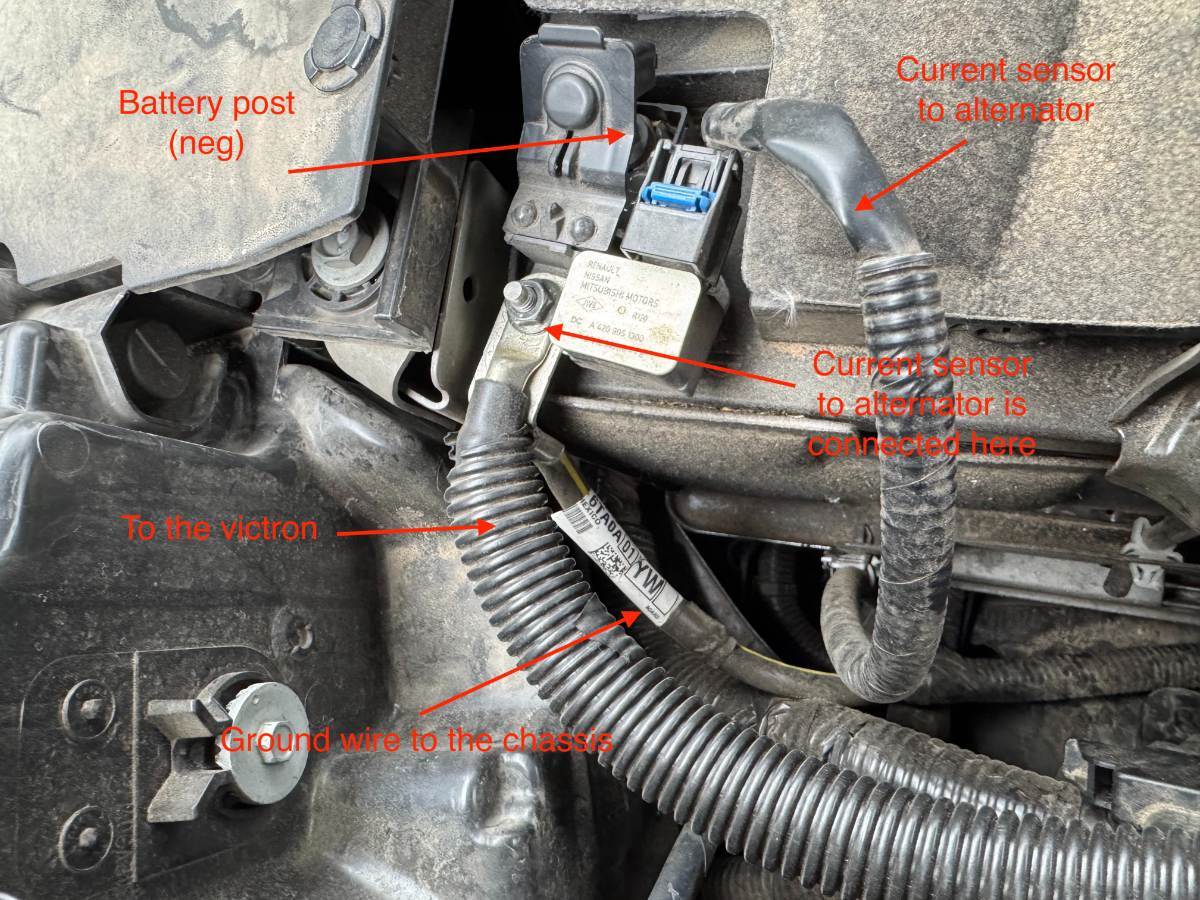
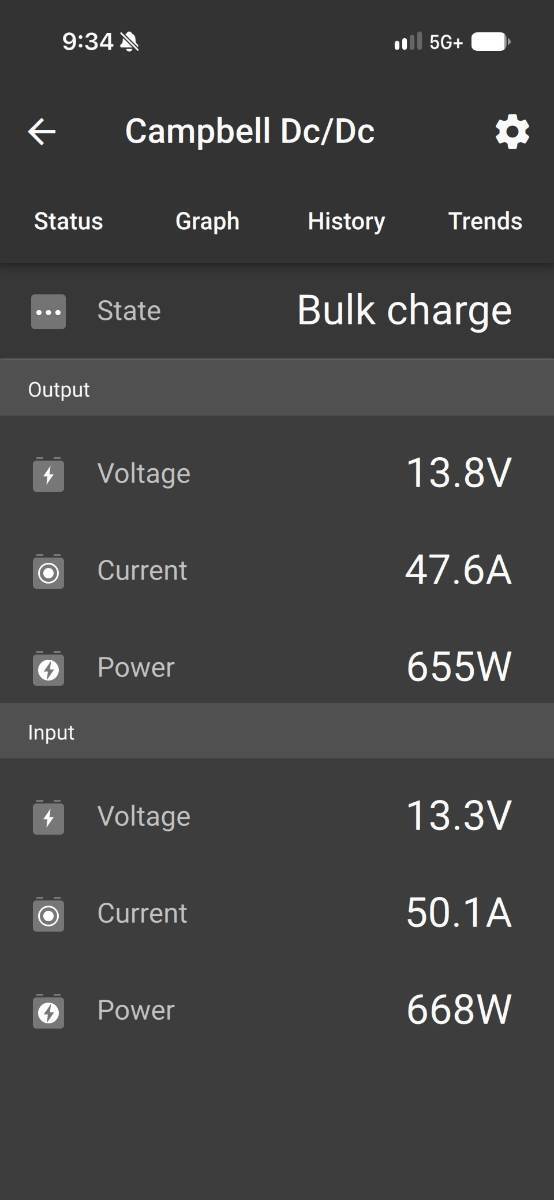
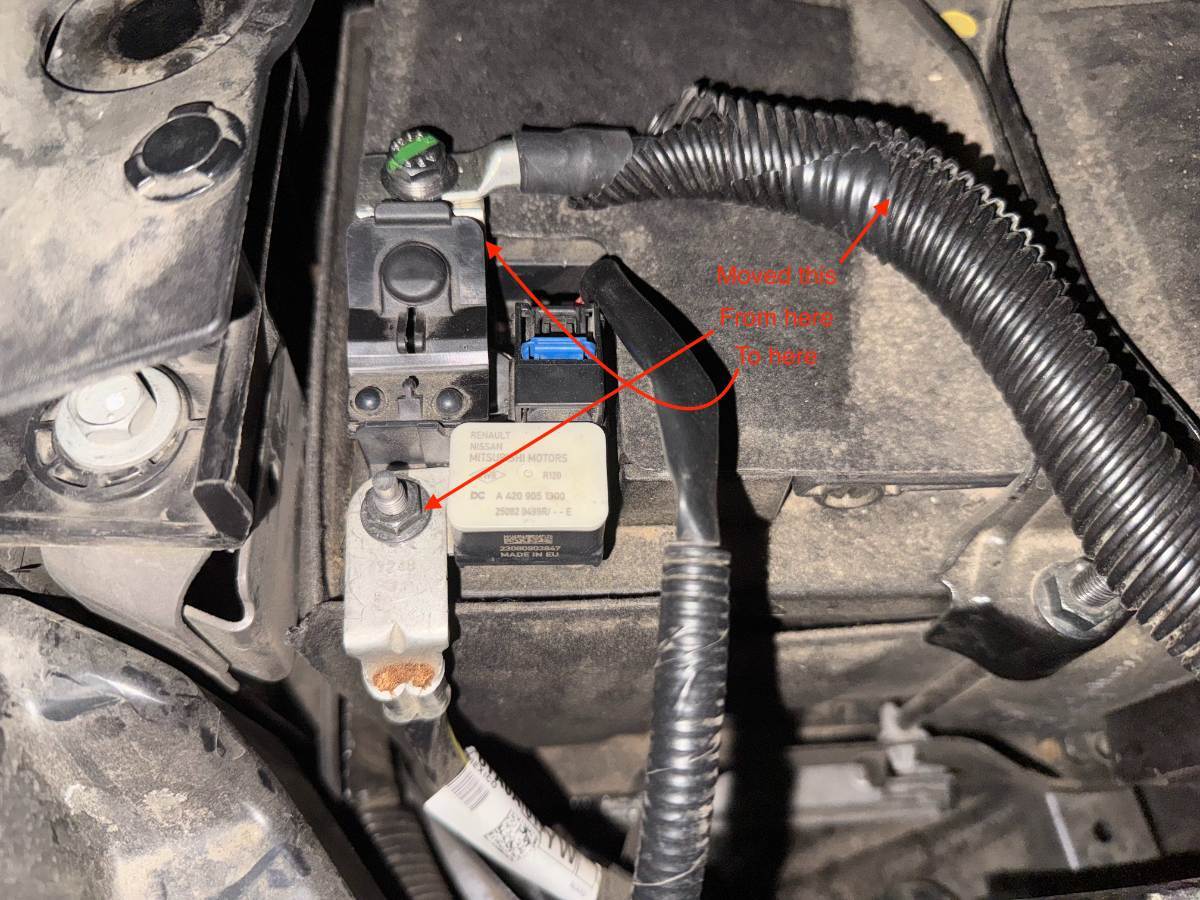
@Snackchaser Here is an update on my DC-DC troubleshooting. I'm sure I will not describe this accurately but let me try. The tech focused first on where the charger's negative cable was connected. It was not connected directly to the negative battery post. It was on the ground side of the current sensor. This first image shows the original install. It is a little hard to see but the neg wire to the victron is attached to the same ground wire that goes to the chassis ground stud. In the following image you can see that we moved the Victron negative cable to the other side of the current sensor - in effect, connected directly to the negative post. The tech indicated that would allow the alternator to see the load from the charger and not drop the voltage. After making this change everything worked as hoped - whether idling or driving, the input voltage to the victron now looked like this: I will say that we referenced much of the information in this thread while 3 technicians debated what changes to make to get past the "smart" alternator. Does any of this make sense to you? Thanks, Bob
- Last week
-
Need advice - winterize now or wait?
jd1923 replied to Brian H.'s topic in Mechanical & Technical Tips
BTW, with option #3 make sure the LP tank valve is open and get the furnace to fire up, test it while you're there. Then turn the thermostat down. You'll have option #1 to start, then #3 when it gets cold enough. I also have several Ruuvi sensors, so we know cabin temp, fridge, freezer, etc. I have one in the rear basement underneath the water lines which is often the coldest area. This helps since during the winter I can check actual temps from the comfort of our living room. I've found if we set the cabin thermostat to 52F the lower rear basement will stay above 34F (until it gets very cold out, then more heat may be necessary). -

Need advice - winterize now or wait?
John Dorrer replied to Brian H.'s topic in Mechanical & Technical Tips
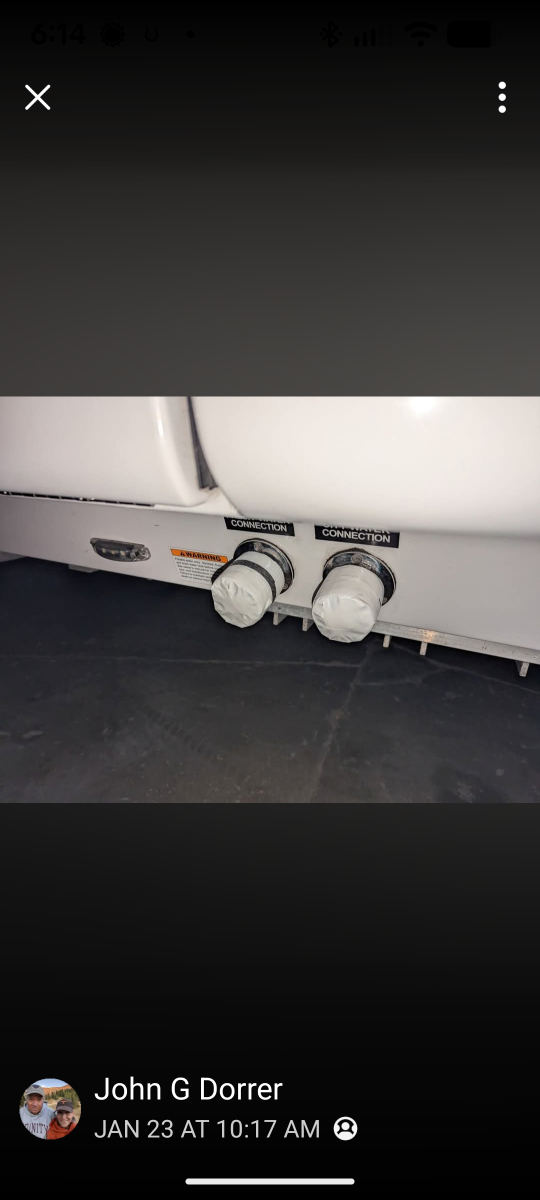
I have foam insulation around the outside shower knobs. I have Reflectix that fits outside the outside shower and covering the the floor and entrance to the basement. Two layers on the basement floor at the entrance. Pipe insulation caps for the 4 exterior connections. Soft foam in the ends and tape. 3/4" pipe insulation, cut and a piece added to allow a snug fit on the connector.