All Activity
- Past hour
-
John, I keep our Ollie on pavement most of the time except when a campground has dirt roads. To be honest I was thinking about refinishing the original 16" ION trailer wheels or replacing them with new 15" Sendel trailer wheels. I already have one 15" Sendel trailer wheel with a Goodyear Endurance ST225/75R/15 for the spare tire since the full size 16" LT225/75R/16 tire/wheel will not fit in the original spare tire housing, believe the Oliver spare tire housing was made larger during 2016 or 2017. I would lose about 1/2" trailer ground clearance by moving to the 15" tire/wheel using the same 15" Goodyear ST tires Oliver currently uses. Just a thought for now. I have another Ollie project in front of wheels/tires for next year. Here's the original spare with 16" wheel and passenger tire (not LT) that would fit in the spare tire housing on the left. The new 15" Goodyear ST tire and Sendel wheel is on the right that fits the original spare tire housing.
- Today
-
I haven’t made a decision, yet. I just said I’m thinking about it. No specific reason, just thought I’d be exploring all possibilities next time. I think I still have a couple years on my current Coopers. Mike
-
I'm sure the tires Gary originally ordered were fine, but... Discount Tire irks me in so many ways! I used to be a good customer of theirs but after so many know-it-all 20-somethings treated me like I was an ignorant newbe, and how they over-charge for "mount & balance" and overcharge for "hazard protection," I go anywhere else these days. 🤑 If they told me they would not mount LT tires I ordered on their website, but only ST tires, I would reply, "Sorry, not on mine! Please cancel my web order." (while walking out the door). For best overall price, I go with Tire Rack most of the time. If you're buying a wheel-tire set, they mount and balance, no additional charge. They include a 2-year hazard warranty, no additional charge. This add $200 +/- to the cost of a set of tires! The only benefit of going to DT is if you are the person who goes back for tire rotations or worries about service when out-of-town. They do have locations everywhere. Tire rotation on the Oliver is a 10-min job per side in my driveway. The Oliver stabilizer jack lifts both tires in a minute, grab the impact, run the air hose, and repeat on the other side. I always do the simple 'H' rotation vs. 'X' and the spare is a different profile tire. So in a way Gary got forced into his ST tire purchase and they are fine as designed. I purchased 15" ST tires for my flatbed trailer 5 years ago. I found there was ONLY one brand of ST tires NOT made in China, a Goodyear model, so be careful of this! We do enough on washboard dirt, so I'm always towing on LT tires. It's night and day with corner protection on these tires. If you're the Interstate driver heading to a campground with a paved pad, then ST tires are just fine, designed for towing on paved roads. Lastly, I'm wondering why Mike @Mike and Carol and Bill @rideandfly are both choosing to move to ST tires? What criteria makes you prefer ST tires?
-
Oh Lord but I love this group. On the way to have my new suspension fitted, I will have my newly programmed iPhone taped to the floor on the way to and from. Will post the data after. (Probably 4 weeks out...)
-
@DanielBoondock I would be interested in finding out what your vibration road test results will be. Please let us all know.
-

Made in USA leaf springs
DanielBoondock replied to Mountainman198's topic in Mechanical & Technical Tips
Great correction thanks, the post I got that from was misstating it Bingo, I talked about this above but kept it short so the post wouldn't get too confusing. Buffer is what I call margin, and exactly I mentioned that it's there for overloading (which happens) and impulse load (road conditions). As for the relationship between static and dynamic load, AI says (asking for cars as the models will be deeper on that topic, but its obviously the same) This lends me to think that the five spring, which I think Alcan suggests here, is the better choice. That's a 11k static load rating compared to 9k for the four spring. The axles are rated at 10k, but as the brunt of the dynamic force is taken by the sprung suspension, so being a bit overspec there isn't bad. So, five springs here I come ... tl/dr As for the counterargument that it will transmit more road shock and vibration, the true test is measuring it. Before/after vibration tests. Fortunately this is easy using your phone, Vibration Meter stores history and outputs CSV. Test procedure would be to Securely attach the phone to a hard surface in the trailer. 3M Velcro Command Strips to the floor Start measuring and drive Synchronizing before and after should be done ideally. Simplest is probably a 'clapboard marker' by just noting the time you pass a GPS coordinate or landmark Or don't be so precious, simply measure RMS I'll do this test by measuring on the same road(s) before/after -

Made in USA leaf springs
Mountainman198 replied to Mountainman198's topic in Mechanical & Technical Tips
Couple comments from your observations. Alcan weight rating (capacity) is 2,750 for 5 leaf and 2,250 for 4 leaf. Weight rating is the designed weight at which a spring pack fails. As the same top four leafs are utilized in both 4 and 5 leaf versions, spring rate (a.k.a. “Ride”) remains largely the same even though weight rating is different. Spring rate is amount of weight required to deflect spring 1” when at ride height. While unable to locate any documentation from Dexter as to “buffer” capacity for their springs I was able to locate documentation from LCI (Lippert) which states that there should be a 20% weight capacity buffer between the total weight capacity of a set of their leaf springs and the curb weight of a fully loaded trailer. Reason stated for maintaining this buffer is to accommodate travel over uneven roads, curbs, potholes, dips and other occurrences which could temporarily increase the actual weight on a spring pack. 7,000x .8= 5,600. My trailer weighs 6,200 ready to travel. I chose the 5 leaf Alcans for my trailer and have been quite happy with their performance. I know a few others have chosen the 4 leaf versions and they seem happy with their choice as well. Either choice is a huge upgrade from the RV industry standard (dexter). -
In my notes I have Alcan 5 leaf rated at 2,750 and 4 leaf at 2,250. Can anyone confirm these ratings?
-

Made in USA leaf springs
Mike and Carol replied to Mountainman198's topic in Mechanical & Technical Tips
No regrets here. Very happy with the ALCAN’s. -
Lithionics Battery Firmware Update
DanielBoondock replied to Snackchaser's topic in Mechanical & Technical Tips
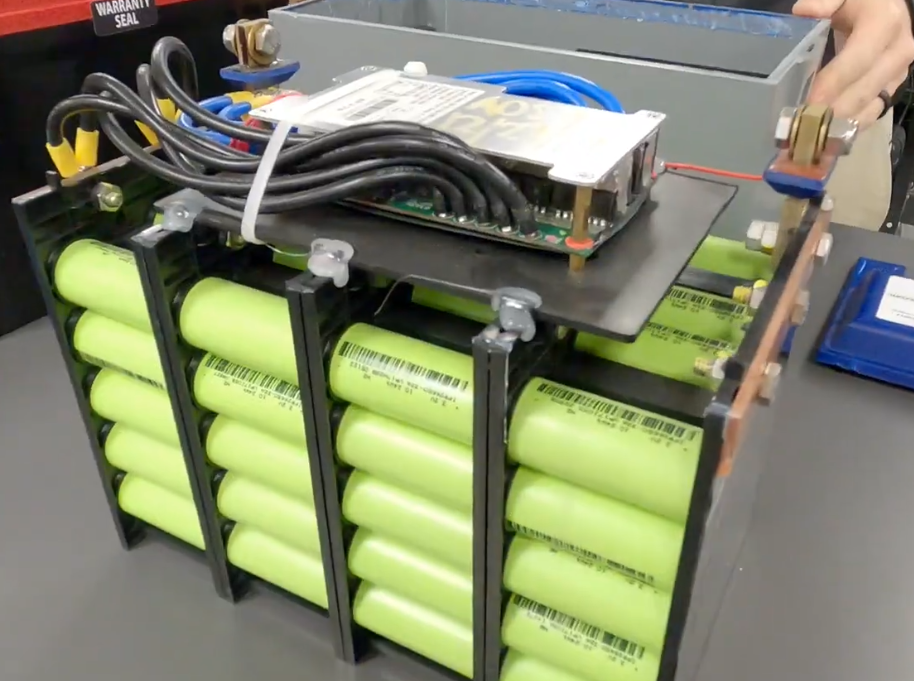
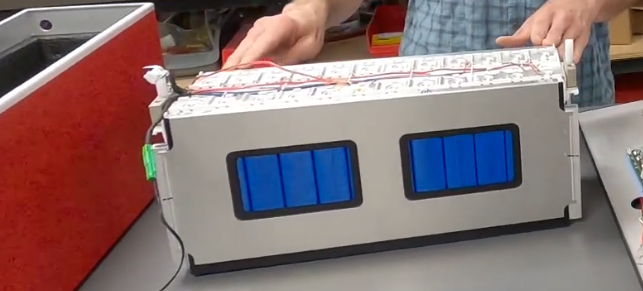
These Lithionics batteries are really top drawer, and priced to boot 😅I happened to come across a video yesterday showing why Generic Brand X: Typical cylindrical cell. Lots of plastic, zip tied and a BMS bolted on. Problem: Many weld points, many cells which need to be leveled, plastic construction can have heat issues and doesn't conduct heat. Glued tinker toy construction possibly more prone to issues in a trailer. Lithionics Large pouch cells for higher energy density, fewer welds and leveling. Aluminum for head conduction, integrated BMS which per OP has an app and firmware updates. Also they test and there's a lower internal battery impedance. Not to mention extra features like built in heating pad and on/off/status switch
-
Made in USA leaf springs
DanielBoondock replied to Mountainman198's topic in Mechanical & Technical Tips
For other newbs I went through about half the posts on this topic so you don’t have to. I think I captured the essence Summary Alcan are rated for 2k (8k total) vs 1750 (7k) for Dexter Spring rating depends on how well you do it (yes as an engineer this is the unvarnished truth). There’s no stock answer, they’re all approximations to the truth. Alcan is apparently known for using a well regarded approach (software I think) Alcan’s analysis of the 1750 Dexter is that they’re underrated for this trailer and the Alcan 2k is more appropriate One could surmise this is them ‘talking their book’, but so far the story has a ring of truth for a small shop that take their work seriously Alcans specialty is springs, OTT is trailers, I think Alcan has more authority here. In addition OTT has many considerations, supply chain being number one. Dexters are always available, easily replaced, come as a set with the axle, and if any owner wants an upgrade that’s available. So I think its entirely reasonable OTT is sticking with Dexter But in the matter of the best spring for the application I’ll go with Alcan The Alcan’s therefore have a better margin in case of overload and road stress - actually they have margin, the stock at rated for max with no margin And it’s only a (IIRC) ~15% stiffer spring, which isn’t a great difference For me, other than build quality the sell is that the springs provide margin without going into over engineered/overkill range. I was concerned that this is ‘bigger is better’ mentality but no, instead it’s just giving some extra room on top, which is generally a good idea. So I’m sold, I should be retired next year and will plan a trip to Colorado to have them installed. https://olivertraveltrailers.com/forums/topic/9996-made-in-usa-leaf-springs/page/2/?&_rid=8320#findComment-103428 https://olivertraveltrailers.com/forums/topic/9996-made-in-usa-leaf-springs/page/2/?&_rid=8320#findComment-103477 https://olivertraveltrailers.com/forums/topic/9996-made-in-usa-leaf-springs/page/2/?&_rid=8320#findComment-103486 https://olivertraveltrailers.com/forums/topic/9996-made-in-usa-leaf-springs/page/6/?&_rid=8320#findComment-103733 https://olivertraveltrailers.com/forums/topic/9996-made-in-usa-leaf-springs/page/7/?&_rid=8320#findComment-103752 https://olivertraveltrailers.com/forums/topic/9996-made-in-usa-leaf-springs/page/10/?&_rid=8320#findComment-104836 - Yesterday
-
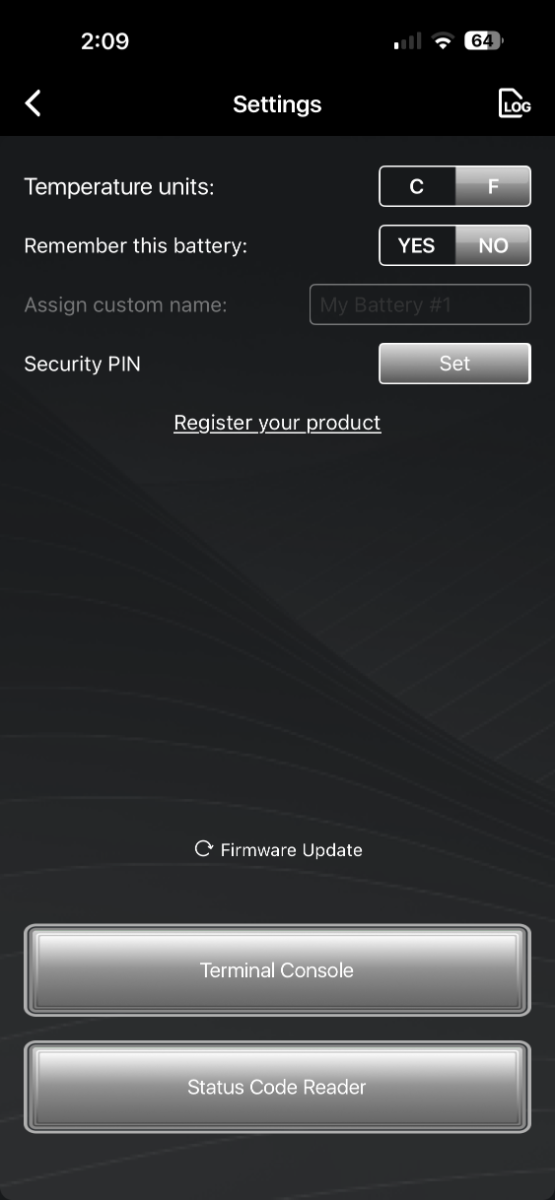
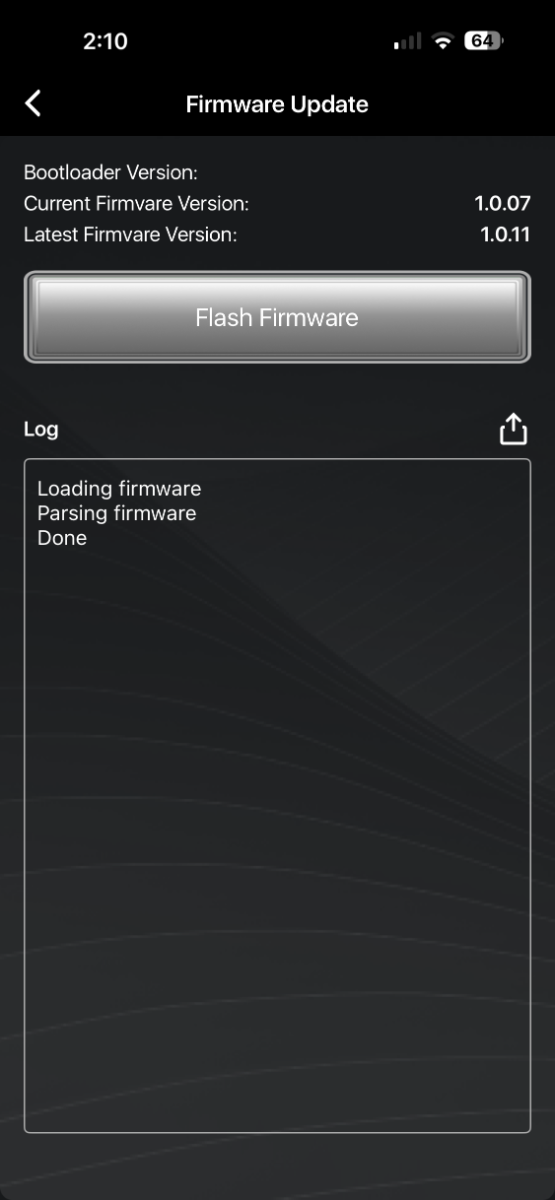
If you have Lithionics batteries, you should check their Firmware. Mine was three versions outdated! The latest version of Firmware includes upgrades and corrections to the Battery Management System (BMS) and State Of Charge (SOC) accuracy. The Firmware can be checked and updated with the Lithionics Application. Go to settings and pick “Firmware Update.” Then press the “Flash Firmware” button if you don't have the latest version. Be sure to up-date each battery.
- 1 reply
-
- 6
-

-

-
 Bill and Tammy joined the community
 -
First, every tow vehicle and load is different and everyone should be conservative and safe. Personally, I have been towing an 2018 Oliver Elite II without a WD system from day one (February 2018) with an 2016 Tundra and it has performed flawlessly. I did upgrade the TV brakes and rear leaf springs when I lifted the vehicle for even better performance. Alcan leaf springs for the OEII. I post just to say every truck is different and I am sure every lawyer will look at it differently. I enjoy towing with my 2016 5.7L Tundra keeping it simple, robust and safe. My only snafu was the undersized OEM coupler breaking coming up I-75 (upgraded to 12k). Whatever you are using; check the hitch, coupler, tires, wheels, load, WDS, etc. every time you head out onto the road. If you notice porpoising or tail wagging, etc. something is wrong i.e. Overloaded in the rear, tire pressure issue. DO you have trouble getting the TV and TT to sit level? If your vehicle manufacturer calls for it or if you experience towing issues as previously mentioned, maybe you need a WDS or to redistribute the load or a sway bar or upgraded suspension components, brakes, etc. I love this forum and all the information and smarter, more experienced people than I, but I don’t think it is necessary to be told you cannot do something. Cheers to everyone out there and be safe. Hopefully this adds to and does not confuse the conversation. Best, M Key 2016 Tundra Towing Details: Max Tongue Weight (Weight Distribution): Typically 1,200 lbs. Max Tongue Weight (Dead Weight): Typically limited to 600 lbs. Max Towing Capacity: Up to ~10,000+ lbs (5.7L V8), depending on configuration. Class IV Hitch: The standard integrated hitch receiver on the Tundra is rated to handle the high capacity.
-

Pebble Flow trailer and Rivian in the wild
jd1923 replied to taylor.coyote's topic in General Discussion
That's what we had when purchased Hull #113 June of 2023. Except for a trial weekend, we did not start camping 'til 2024. I needed time to restore truck and trailer. In a little over 2 years, we have 180 overnights in our Oliver! 😎 Epoch Essentials and the Victron Multiplus II was our first major upgrade, cleaned up most of the electrical wiring. We keep our Oliver outdoors always. With our recent Chill Cube upgrade we can run the A/C late afternoons into the evenings using only 2% SOC. Our inverter is always running (-1Ah standby). We do not store or winterize and are not connected to shore power 98% of the time. The rooftop solar keeps us up when parked. Our Orion 50A DC-to-DC charger adds +200 Ah every half day towing. Have a 400W suitcase but rarely need it since we don't often stay put for more than a few days. Charging your EV truck towing downhill and charging your Oliver from the EV sounds pretty cool. I sold 4 LA batteries for $300 to a local who runs solar and about 60 old LA batteries for his off-grid mountain property. This is no time for LA batteries except for starter batteries on a diesel truck! 🤣 -

Made in USA leaf springs
John Dorrer replied to Mountainman198's topic in Mechanical & Technical Tips
Sorry you had that happen. Oliver was probably correct with their assessment. People driving on washboard roads, chemically treated roads, and a bad Chinese spring, can all come into play. Not much Oliver can do as they just install the Dexter suspension There is a former Oliver owner that sold their Oliver and bought a different brand. On their first trip their springs flattened. They were replaced and flattened again. They upgraded to a 5th Wheel and I believe doing an Alcan upgrade. Unfortunately, things happen. We have a 3 week trip and then get them replaced June 1st.🤞 -
The TrailerSmith has a video on the Dexter Nev-R-Lube, notes He's only seen these in the case that the bearing cartridge has failed, nobody brings them in for inspection (big surprise) It truly is a zero maintenance drum, you can't perform any maintenance Read the owners manual - you have to inspect it every 12k miles or annually Jack the trailer and check for end play (wiggle the tire and spin, if you can wiggle it that's end play) If there's any end play, the cartridge needs to be replaced Assuming no premature failure (e.g. end play) it should perform just fine for ... It has a five year, 100k warranty Therefore, replace the cartridge and possibly the entire drum before every five years (or 100k) regardless of the end play "I will tell you, if the bearing cartridge keeps its grease and is maintained properly, you will get all your years of service out of it ... pretty much guaranteed" "The problem is, people don't do their service checks, even if you haven't driven it much, maybe some moisture has gotten in there, check it annually" A failure most common with these is with horse trailers which are heavy. If you overuse the brakes the heat transmits through the hub and can boil out the grease. If you see the paint peeling off or heat damaged, pop the cap, if you see grease then you have boiled it out and the cartridge needs replacing Unfortunately OTT doesn't have Dexter manuals in the university, but here's the flyer for Nev-R-Lube where it makes clear the maintenance free (not inspection free!) five year 100k service life. My take: as long as you're doing the regular maintenance (end play check) you should be fine on the road. Bringing along a tool kit is definitely 'belt and suspenders', but instead I'll just do the maintenance checks and replace in five years.
-
Yeah, they are expensive. I paid about $1800 for the pair delivered. Natural latex is significantly more expensive. I didn’t want to mess with cutting and sewing. I figured buy once, cry once.
-
Pebble Flow trailer and Rivian in the wild
DanielBoondock replied to taylor.coyote's topic in General Discussion
The nice thing with a big fat lithium in there is I am leaving it on while parked at the lot. Other trailers - with probably SLA's, have portable solar out to keep them topped. I'm mostly in the shade but get some sun at parts of the day which the top panel soaks up. Since I'm going over there frequently getting it cleaned and set up it's convenient. Not sure exactly but I think the inverter is the biggest vampire, I'm thinking of keeping that off while sitting rather than shutting the whole system down. Side pitch for the EV - it did get down low at one point, 10%, but it was an easy top off from the truck. Anyhow if I had lead acid I'd upgrade to lithium in a heartbeat. -
Pebble Flow trailer and Rivian in the wild
jd1923 replied to taylor.coyote's topic in General Discussion
Yes Sir, I'm with you on this one! 😂 In 2019, I was outfitting a Bigfoot Class-C with solar, inverter (it had none) and new batteries. I looked at Battleborn at the time and it would have been $3,500 for 300 Ah ($11.67/Ah). I went with 3 AGM 105 Ah batteries for $800 ($2.54/Ah, $5/Ah usable). It was a different day. Five years later (2024) I went with 600 Ah Epoch for $1,800 ($3/Ah). This was certainly worth it! Price has gone up some since. Last fall I added another for a total 900 Ah, all tucked into that Oliver battery bay (removed the tray to fit). 😎 If you need something more economical, check out the new LiTime 320 for $770 ($2.40/Ah), or get a 2-pack, 640 Ah for $1,494 (2.33/Ah)! Two won't fit in the tray, but 2 Epoch 300s do for quite a bit more $$$. Search for keywords Epoch or Litime to see several owner installations. LiTime batteries have been installed in a few Olivers. These appear to be good batteries at a very good price. https://www.litime.com/products/12v-320ah-mini-bluetooth-lithium-battery?variant=46648243912924 -
You're cracking me up, Scotty! 🤣 I swear when we had the OEM suspension, every time I stopped for fuel the top of the Oliver would pendulum 1-2 FT left and right, again and again. BTW, our shocks are under-engineered too. I've been looking for a stronger substitute but so far the specs are not lining up. The Bulldogs are likely somewhat better, but not heavier in rebound specs.
-
Only because of time! The older hulls have more miles, more failed leaf springs. They are the same spring, but on a heavier axle. When I replaced ours last year, the originals were still nicely arced. Steel from China is likely not getting any better.
-
Pebble Flow trailer and Rivian in the wild
DanielBoondock replied to taylor.coyote's topic in General Discussion
Past 2030, 2035 at the earliest I’d estimate. And then there’s a long rollout and it’ll be initially expensive. Before that other wet chemistries are coming out, namely LMR (Lithium Magnesium Rich) prismatic batteries. These will be in GM EV trucks in 2027. They offer higher energy density and equal cost to phosphate chemistry. But the kind of batteries we can get for trailers will be wet LIPO for at least a decade. Anyhow, in these sizes (a few kWh) I don’t think there’s any point in waiting, dry chemistries won’t give you any real benefit. I upgraded to the top battery, which might seem odd given the basically unlimited power available in the truck. “Pay once cry once”, and with electric cooking I think it was still a good choice. And - best part, it’s a more sophisticated battery with built in heating and especially, and on off switch. I don’t think the other options have that? When I had some kerfuffle with my Xantrex the Oliver tech kept telling me to start wrenching on the battery terminals. Took me several tries to get across that there’s a switch on it 😅 -
Well I was originally making the point that WD only comes from properly tensioned chains. My question is why do OTT techs install and recommend taut chains. At any rate there are also new options in trucks. My Sierra EV is interesting, despite the very heavy battery giving a total truck weight of 9k (which is a benefit as the truck weighs more than the trailer), but it still has a tongue max of 1k, and a payload capacity of over 1700 lbs. GM requires a WD hitch over 7k lbs and recommends it below that. So technically I don’t need WD, and as the truck has 785 HP and 885 ft-lb of electric torque it has full towing authority. On the leaf springs, we were discussing this on another thread. In my first 4k of towing I didn’t see an ounce of roll bounce, and little porpoising. Perhaps that’ll change as they age, or maybe not, but I’m still curious about these differences.
- Last week
-

Made in USA leaf springs
Tom and Doreen replied to Mountainman198's topic in Mechanical & Technical Tips
That's a smart move, John, I'm glad that you're replacing them! I was assured by the Oliver guys at the last rally that I didn't have to worry about my springs, 2023 build with D52 axles, because there were no problems with newer trailers with D52 axles. Well..... I have a broken spring set, passenger rear, with the remaining sets flattening. Needless to say I'm not a 'happy camper' regarding this. I have replacements from Alcan but haven't had time or decent weather to do the repair as yet. -
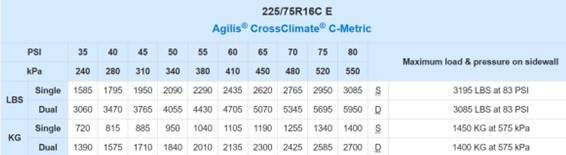
You can follow the 80 PSI MAX spec on the Load Range E LT tire, the 65 PSI rating OTT prints on their DOT label (they used to print 80), or the PSI recommended by the tire manufacturer, based on actual GTW on their load/pressure tables. I/we, most of us, follow the latter. I use any PSI over 45, less than 50, to set them all equal in that range. These numbers allow for 7,800 to 8,360 LBS GTW. On long trips, we carry max 6,600 LBS, so in this range we have spec plus a 20% safety margin. If you run at 65 or 80 PSI, you will cause internal damage to your Oliver. Regardless of brand, LT 225/75R16 tires will all be very close to the numbers you see here. I understand new hulls to have 15" wheels, so get a table for your size. I must have posted this table 6 times now...



.thumb.jpg.e34bf01ef7f7d5e99ad31856d45afbeb.jpg)