Leaderboard


Popular Content
Showing content with the highest reputation on 03/08/2018 in all areas
-
I don’t recall this being mentioned, it is pretty darned cool and will be very useful to anyone who camps west of the Black Hills. http://www.hogtimemusic.com/nomad/MultiYrCampsiteMap.htm Note that he has a truck camper, so with a trailer you should probably study the satellite maps before commtting to an isolated forest road.... more here: https://www.truckcampermagazine.com/camper-lifestyle/the-25-best-campgrounds-of-the-west/ John Davies Spokane WA3 points
-
Andersen Hitch Inc. has designed a new ball, cone and triangle plate for the weight distribution hitch. This new design was to create a ball that would not lock up inside the collar and/or cause noise when turning. For more information or data on results and testing you would need to speak directly with Andersen. Any customer who has an older Andersen Hitch setup can upgrade to the new design for $100 by contacting Andersen directly and asking about part# 3332 and explaining the issue that you are having with the current ball. The $100 upgrade is a discounted price but it will not last forever. Andersen Hitch Inc. 208-523-6460 800-635-61061 point
-
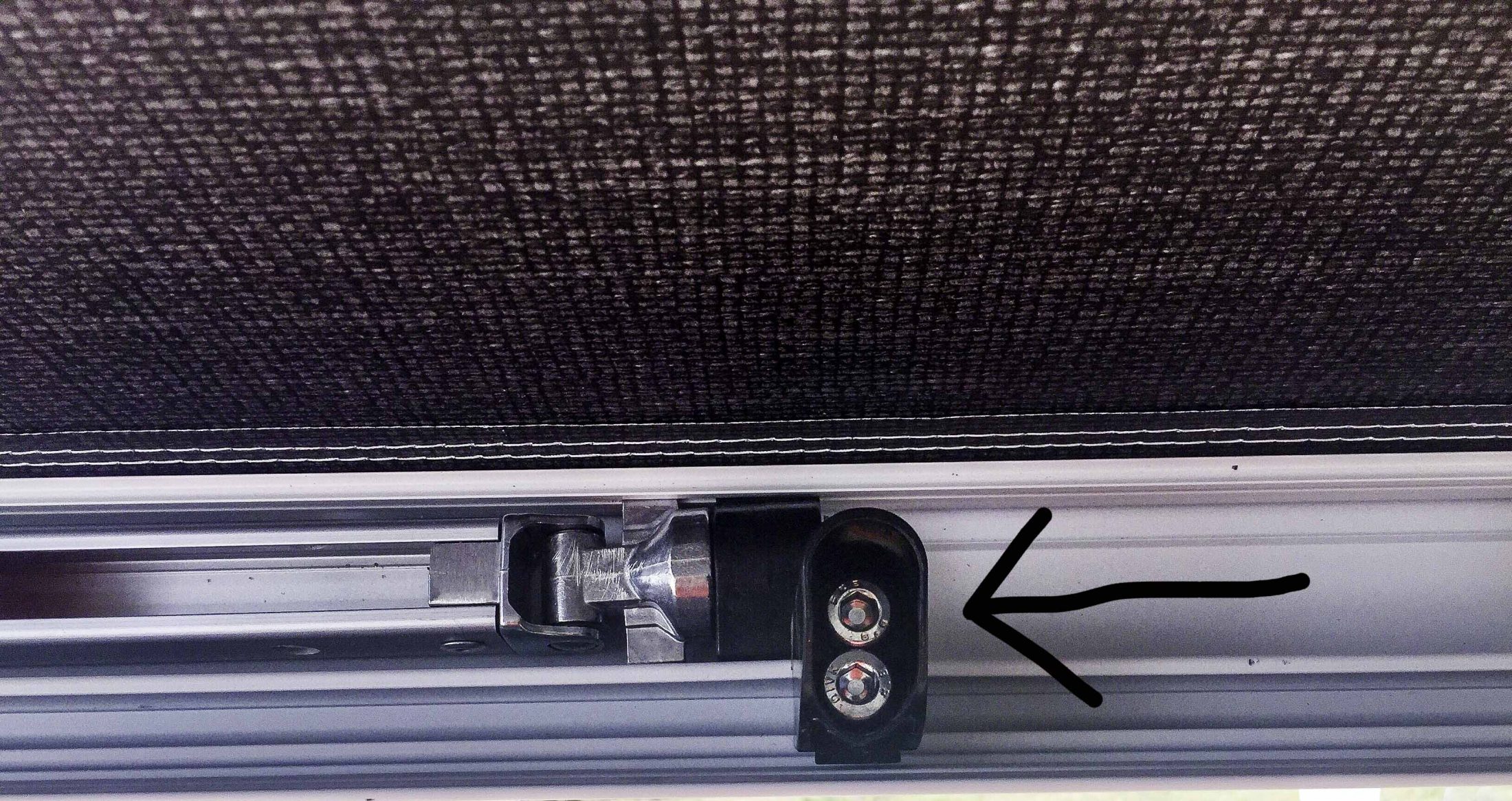
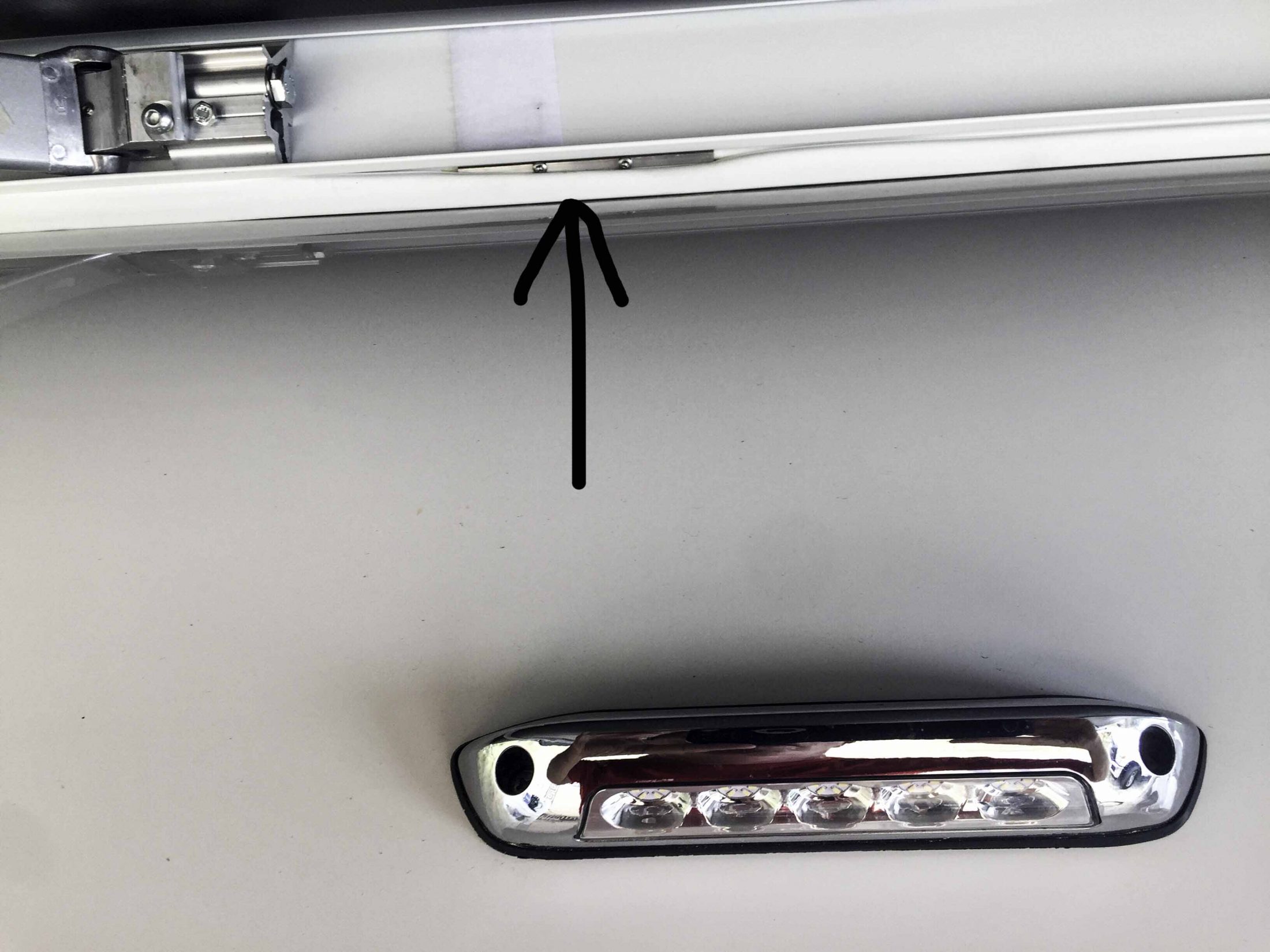
We are on our first trip in the Ollie since the acceptance and things are going great but I did notice what looks like an issue with the way the Care Free awning stows against the hull and is apparently damaging a seal. The outside part of the awning (metal part that extends away from the hull when deployed) has some heavy plastic pieces bolted to them that press against the seal above the door area (and all along that side). See attached photo. I am not sure what purpose they serve but there are a couple of them and they are both causing a problem. The damaged seal (also pictured) above the porch light is pushed down apparently by that plastic piece and is now exposing some screws. In addition to not looking good I am concerned that this may also result in additional problems. Has anyone else with the Care Free awning seen evidence of this problem? If so, has it been addressed by Oliver Travel Trailers yet? I left a voice message with Jason Essary this afternoon and am waiting for a return call now.
 1 point
 -
I will be in Hohenwald for service and a couple of upgrades April. 9th then plan to meander north to Sioux Narrows Ontario where we will turn west and slowly head for Alaska. My wife who doesn't like the slog across the country will fly into Edmonton, AB, Canada and meet me. This is our second trip in an OTT to Alaska. We almost never make reservations except for major holidays and have had very little trouble finding a place to stay. On our last trip, a couple that had RV'd to Alaska many times highly recommended Seward Alaska for the 4th of July. They recommended that we arrive at least five days in advance to get one of the first come first serve spots in the Waterfront Park Campground dry camping. I wouldn't even think about coming in at the last minute. The 4th is huge in Alaska. They do have a dump site and a place where you can take on fresh water. It was one of the best small town 4's that we've ever had. We liked the second second-tier sights for many reasons especially the view. Check out the Marathon Mountain, Alaska 4th race on Youtube. That's where we hope to be this year for the fourth. Alaska is the trip of a lifetime. Hope to see you in Alaska. Hap1 point
-
I mentioned the pet food, as many of us travel with pets. My cousin lost a couple large containers of prescription dog food years ago because she had taken the food out of the bags and placed it in airtight containers for the three month trip. Out of the original packaging, she had no way to show that her dog's food was indeed quality food, US origin. It was confiscated. Keep your pet food in original container, so you have label and proof. http://www.inspection.gc.ca/animals/terrestrial-animals/imports/policies/animal-products-and-by-products/pet-food/eng/1321129023397/13211295564261 point
-
WINTER STORAGE OF CAMPER When storing the camper for the winter you will want to ensure that it is done properly so you don't run into any issues when you get ready to get it out of storage. Winterize: Make sure you properly winterize the camper with an RV Antifreeze. Using air to blow out the lines will NOT remove all of the water in the system. There are valves throughout the camper that can hold the smallest amount of water, freeze and crack causing an unwanted repair. Make sure the filter or anode is removed from the water heater and it is empty. Batteries: The on-board batteries are susceptible to cold weather and can drain even when disconnected from the camper. It is best to leave the camper on a charge keeping the batteries topped off. This will prolong the battery life as well as ensure that the camper has 12v power when it comes out of storage. Tires: The tires on your camper may develop flat spots if left sitting on concrete/asphalt while being stored. This is okay as the flat spots should straighten out as you drive the camper down the road about 10 miles and the tires heat up. Even if the camper is being stored inside a building, if the building temperature is not regulated to stay above freezing and/or the building heat source fails, then you may have something freeze inside the camper causing damage. Winter Usage The camper is designed to be used during the winter months just as you use your stationary house. However, the biggest difference is that with your camper you may turn off the heat source and travel to your next destination. This trip might just be enough for the water left behind in your water lines, water filter, toilet, and or water heater to freeze and cause damage. Recommendations: While traveling in freezing temperature (32 degrees) it is recommended that you drain your water heater, cut off the water to the toilet and flush to remove as much as the water from the toilet as possible. Depending on the outside temperature and how long your drive will be, this may not fully protect against freezing. It is best to use RV Antifreeze to pump through the lines when in extreme temperatures to ensure that nothing freezes. What factors impact how quickly your water will freeze? Water Mass - 6gallons of water will take longer to freeze compared to 1ml of water. The valves inside your camper may have less than 1ml of water resting on them as you travel creating a potential freeze condition. Water Temperature - The starting temperature of the water before it loses its heat source. Water that is in the cold lines may already be at 50 degrees and it only has to drop to 32 degrees for it to freeze. Hot water in the lines requires even less time compared to cold water to freeze. Outside Temperature - If the outside temperature is 0 degrees then the inside temperature will fall faster than when traveling in 32 degree weather. Speed of Travel - When traveling down the roads at 70mph the wind chills across the camper can drop the temperature quicker. *When traveling during the winter months please keep up with each states laws for campers. Many states do not allow the propane system to be on while driving on roadways, bridges, and tunnels. Space heaters may keep the main cabin warm but may not provide a sufficient heat source for the water lines between the shells.1 point
-
Don’t forget the cast iron cookwear, firearms and ammo ..... they are pretty darned hefty. I haven’t bothered going to truck scales, but I am guessing that, for Mouse, 6ooo lbs is a typical towing weight. I actually try to keep the weight down, other than a full fresh tank always.... The folks that live months at a time in their trailers carry a LOT more stuff than those of use who take short trips. Merry Christmas. John Davies Spokane WA1 point
-
My Ollie weighs probably 5,500 lbs. when towing. I run my tires at 60 PSI and I set them there when cold before we leave. This is a good default pressure that will handle the trailer load just fine and keep the tires cool. It still has some flex and is not rock hard like it would be a 80 PSI. It also allows them to build pressure on hot desert highway runs where the asphalt might be at 140 degrees and the air at 100 or more. I can tell the temperature difference in the tires even at 55 PSI. They are warmer. Every fuel or grocery stop, I go around and touch each tire. They are always the same temp, if inflated the same, and they are just slightly above ambient air temperature. On the road, I don't use a gauge, I just touch each one and compare the felt temps. Every time you use a gauge you let some air out and run the risk of the valve leaking. It's not necessary to use a gauge when stopping for fuel, just use temperature. Warmer tires are under more stress and they make the trailer harder to tow. This is why I would never run them at 45 psi, for instance, even if the chart said they could handle the load at that pressure. The chart is more a minimum guide than a definite number that you must follow. And as John mentioned, you have no head room at the lower pressure in the event of a slow leak. Off road, or on secondary gravel roads, it's a different matter. I'm talking about droning down the highway at speed. That is when the higher pressure is a good policy. On back roads, it's a good idea to air down and travel slowly, but you have to factor in the difficulty of airing back up. This applies to the truck too as I like to air it down on rough roads or in the snow. When going into Death Valley I'm on gravel, or worse, for a hundred miles or more and when I come out, I can get back to town with limited speed on paved roads to air back up. I have a compressor, but it's for emergency use as it's not real easy to use. If we are only going five miles on a rough road, I'll just go slow and keep the pressure up. This is what we did at Sun Valley for the Eclipse. Just idled along for a few miles on a rocky road as we climbed to our spot out in the forest, then idled back out. No need to hurry in that situation.1 point
-
Most people won't be anywhere near 7,500lbs though, and a few have even said they weigh in under 5,000. I'd guess a lot of owners are in the 6,000lb range. Per Michelin's charts, 35 or 40psi may be fine for many. I think I set mine at 50 simply because I didn't have time to weigh it and I knew that pressure would cover me. This trip, I'm planning time on the first day to visit a CAT scale. I'll probably follow John's advice and run about 5psi higher than what Michelin recommends, at least until I have my tire pressure monitor set up.1 point
-
Actual load is more like 3150 lbs per axle (maxed out) on an Elite II, since some of the weight is carried by the TV, not the axles. It's up to you to decide what works for you, everybody has an opinion. If you have trailer TPMS and watch it (not rely on the warning alarm), you can run lower pressures. But if you run over a nail and the tire starts to slowly deflate, a tire set at 45 psi will quickly get hot and give problems. A higher "starting pressure" gives a bigger time leeway, and more miles down the highway, when things do go wrong. With tires set at 60, and your TPMS warning at 55, you have some driving time after you are alerted, before the tire is overloaded. I would not hesitate to deflate to 35 psi on rough forest roads to reduce jarring, if I kept the speed below 30 mph.... The final factor is how hot are the tires? They will tell you when they are unhappy. Overloaded tires at highway speeds are HOT. John Davies Spokane WA1 point



-
Recent Achievements
-