Leaderboard



Popular Content
Showing content with the highest reputation on 04/20/2026 in all areas
-
The TrailerSmith has a video on the Dexter Nev-R-Lube, notes He's only seen these in the case that the bearing cartridge has failed, nobody brings them in for inspection (big surprise) It truly is a zero maintenance drum, you can't perform any maintenance Read the owners manual - you have to inspect it every 12k miles or annually Jack the trailer and check for end play (wiggle the tire and spin, if you can wiggle it that's end play) If there's any end play, the cartridge needs to be replaced Assuming no premature failure (e.g. end play) it should perform just fine for ... It has a five year, 100k warranty Therefore, replace the cartridge and possibly the entire drum before every five years (or 100k) regardless of the end play "I will tell you, if the bearing cartridge keeps its grease and is maintained properly, you will get all your years of service out of it ... pretty much guaranteed" "The problem is, people don't do their service checks, even if you haven't driven it much, maybe some moisture has gotten in there, check it annually" A failure most common with these is with horse trailers which are heavy. If you overuse the brakes the heat transmits through the hub and can boil out the grease. If you see the paint peeling off or heat damaged, pop the cap, if you see grease then you have boiled it out and the cartridge needs replacing Unfortunately OTT doesn't have Dexter manuals in the university, but here's the flyer for Nev-R-Lube where it makes clear the maintenance free (not inspection free!) five year 100k service life. My take: as long as you're doing the regular maintenance (end play check) you should be fine on the road. Bringing along a tool kit is definitely 'belt and suspenders', but instead I'll just do the maintenance checks and replace in five years.4 points
-
First, every tow vehicle and load is different and everyone should be conservative and safe. Personally, I have been towing an 2018 Oliver Elite II without a WD system from day one (February 2018) with an 2016 Tundra and it has performed flawlessly. I did upgrade the TV brakes and rear leaf springs when I lifted the vehicle for even better performance. Alcan leaf springs for the OEII. I post just to say every truck is different and I am sure every lawyer will look at it differently. I enjoy towing with my 2016 5.7L Tundra keeping it simple, robust and safe. My only snafu was the undersized OEM coupler breaking coming up I-75 (upgraded to 12k). Whatever you are using; check the hitch, coupler, tires, wheels, load, WDS, etc. every time you head out onto the road. If you notice porpoising or tail wagging, etc. something is wrong i.e. Overloaded in the rear, tire pressure issue. DO you have trouble getting the TV and TT to sit level? If your vehicle manufacturer calls for it or if you experience towing issues as previously mentioned, maybe you need a WDS or to redistribute the load or a sway bar or upgraded suspension components, brakes, etc. I love this forum and all the information and smarter, more experienced people than I, but I don’t think it is necessary to be told you cannot do something. Cheers to everyone out there and be safe. Hopefully this adds to and does not confuse the conversation. Best, M Key 2016 Tundra Towing Details: Max Tongue Weight (Weight Distribution): Typically 1,200 lbs. Max Tongue Weight (Dead Weight): Typically limited to 600 lbs. Max Towing Capacity: Up to ~10,000+ lbs (5.7L V8), depending on configuration. Class IV Hitch: The standard integrated hitch receiver on the Tundra is rated to handle the high capacity.3 points
-
Sorry you had that happen. Oliver was probably correct with their assessment. People driving on washboard roads, chemically treated roads, and a bad Chinese spring, can all come into play. Not much Oliver can do as they just install the Dexter suspension There is a former Oliver owner that sold their Oliver and bought a different brand. On their first trip their springs flattened. They were replaced and flattened again. They upgraded to a 5th Wheel and I believe doing an Alcan upgrade. Unfortunately, things happen. We have a 3 week trip and then get them replaced June 1st.🤞2 points
-
Yes Sir, I'm with you on this one! 😂 In 2019, I was outfitting a Bigfoot Class-C with solar, inverter (it had none) and new batteries. I looked at Battleborn at the time and it would have been $3,500 for 300 Ah ($11.67/Ah). I went with 3 AGM 105 Ah batteries for $800 ($2.54/Ah, $5/Ah usable). It was a different day. Five years later (2024) I went with 600 Ah Epoch for $1,800 ($3/Ah). This was certainly worth it! Price has gone up some since. Last fall I added another for a total 900 Ah, all tucked into that Oliver battery bay (removed the tray to fit). 😎 If you need something more economical, check out the new LiTime 320 for $770 ($2.40/Ah), or get a 2-pack, 640 Ah for $1,494 (2.33/Ah)! Two won't fit in the tray, but 2 Epoch 300s do for quite a bit more $$$. Search for keywords Epoch or Litime to see several owner installations. LiTime batteries have been installed in a few Olivers. These appear to be good batteries at a very good price. https://www.litime.com/products/12v-320ah-mini-bluetooth-lithium-battery?variant=466482439129242 points
-
Only because of time! The older hulls have more miles, more failed leaf springs. They are the same spring, but on a heavier axle. When I replaced ours last year, the originals were still nicely arced. Steel from China is likely not getting any better.2 points
-
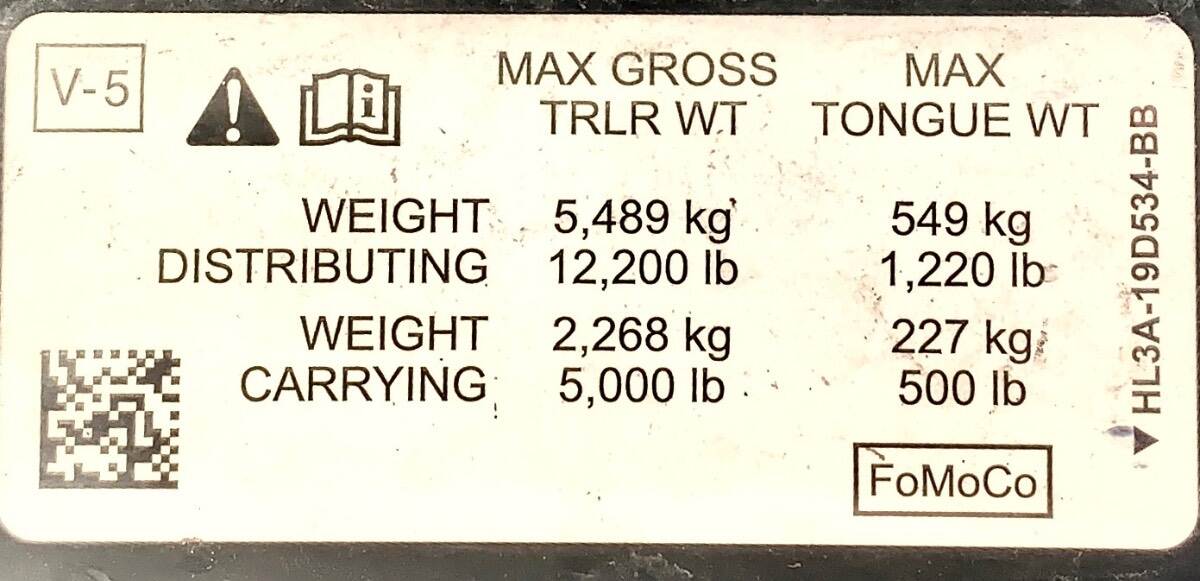
Usually the 1/2 Ton Trucks are limited by the 'dead weight" or weight carrying capability. The receiver unit on the truck you have should have a sticker like this one (from a 2018 F150) either on the actual receiver hitch or on the door frame. Notice that on this unit the max Tongue weight capacity is 500LB. (Weight carrying the case where you don't have a WDH and is essentially the dead weight from the trailer tongue down on the ball.) An Elite II tongue wt when loaded is easily above this 500lbs, and requires a weight distribution hitch to be safe and legal. In this F150 case, once a weight distribution hitch is applied, the F150 can then handle up to 1220 Lbs of direct tongue weight. The towing guides for most vehicles state the method for determining how much adjustment is needed from the WDH. Most have you: 1) Measure the unloaded truck's front wheel well height through the center of the front wheel. 2) Measure the wheel well height after loading the unit and attaching the trailer. In most cases the amount of weight distribution needed is set to bring the front end back down by at least 1/2 of the total difference in those two measured heights. Example: Unloaded measures 37" Loaded measures 41" (4' total rise). Apply enough WDH force to lower that front measurement by least 2" ....or 39" when loaded. Each manufacturers towing guide states specifics by vehicle make and model. CS
 2 points
 -
HERE is a new video from Oliver featuring Aaron Wolters. Bill1 point
-
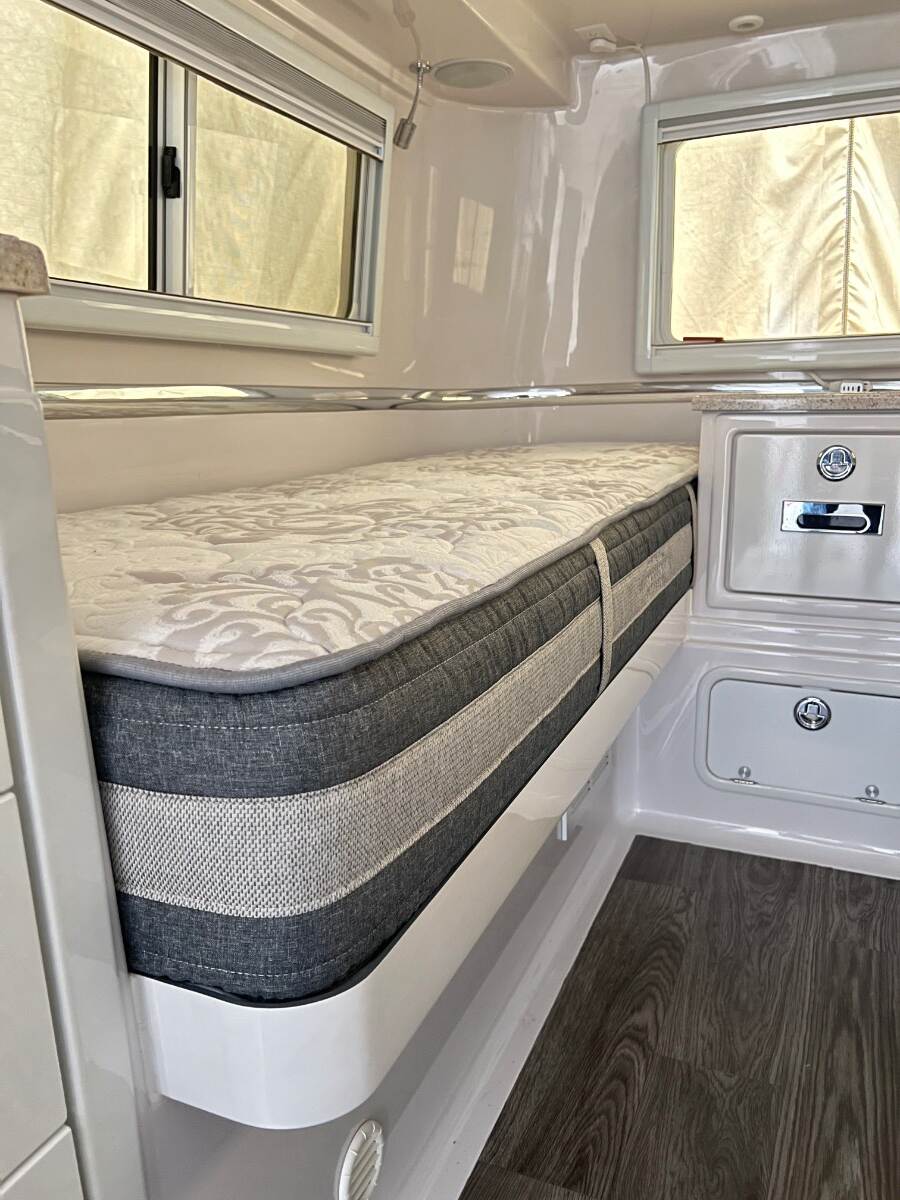
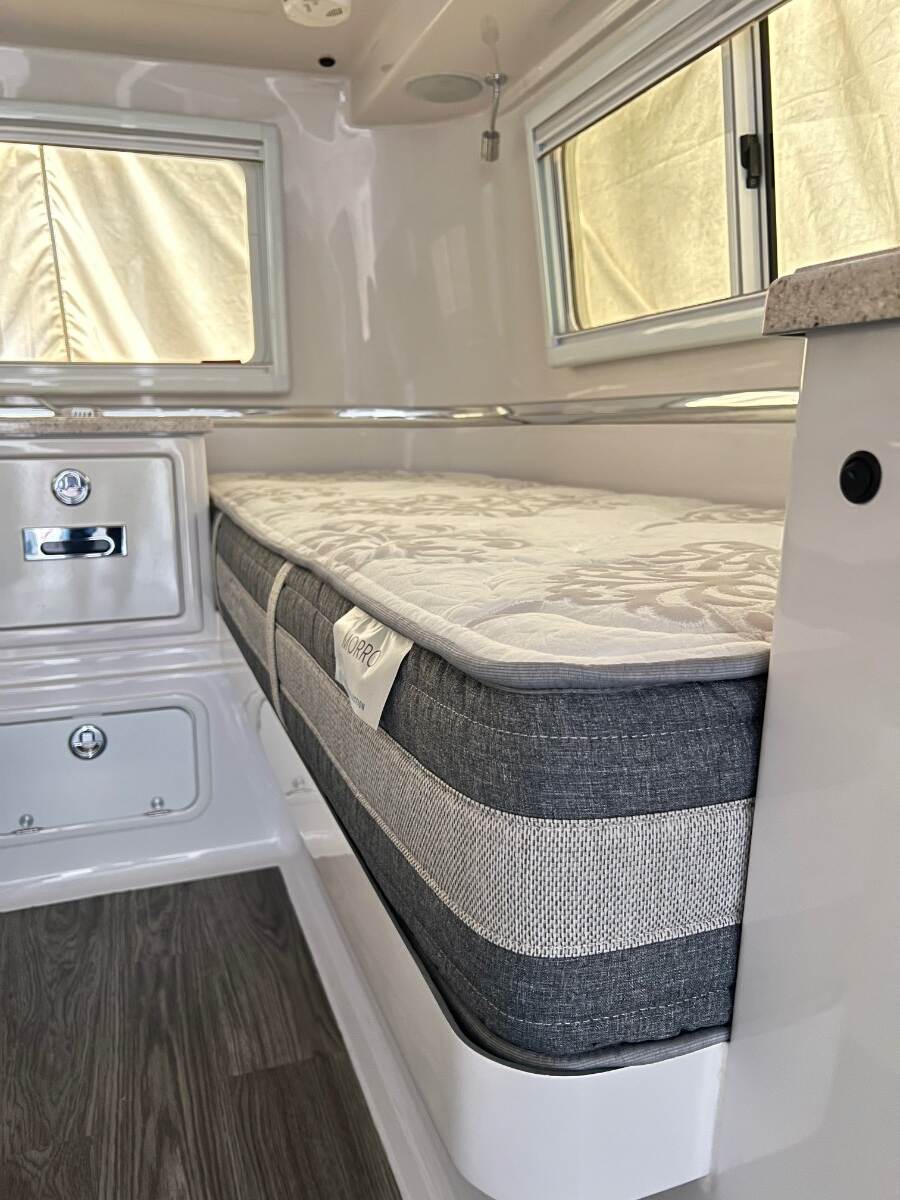
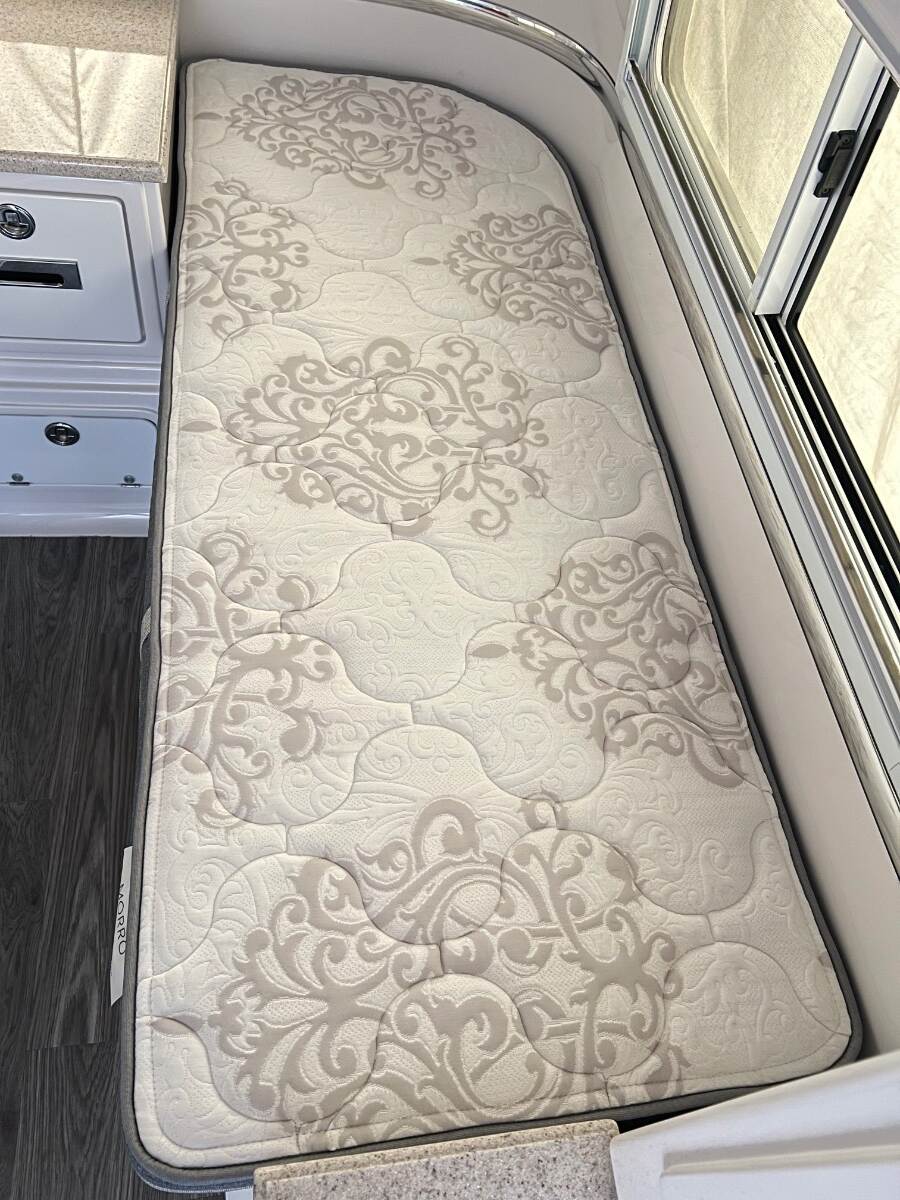
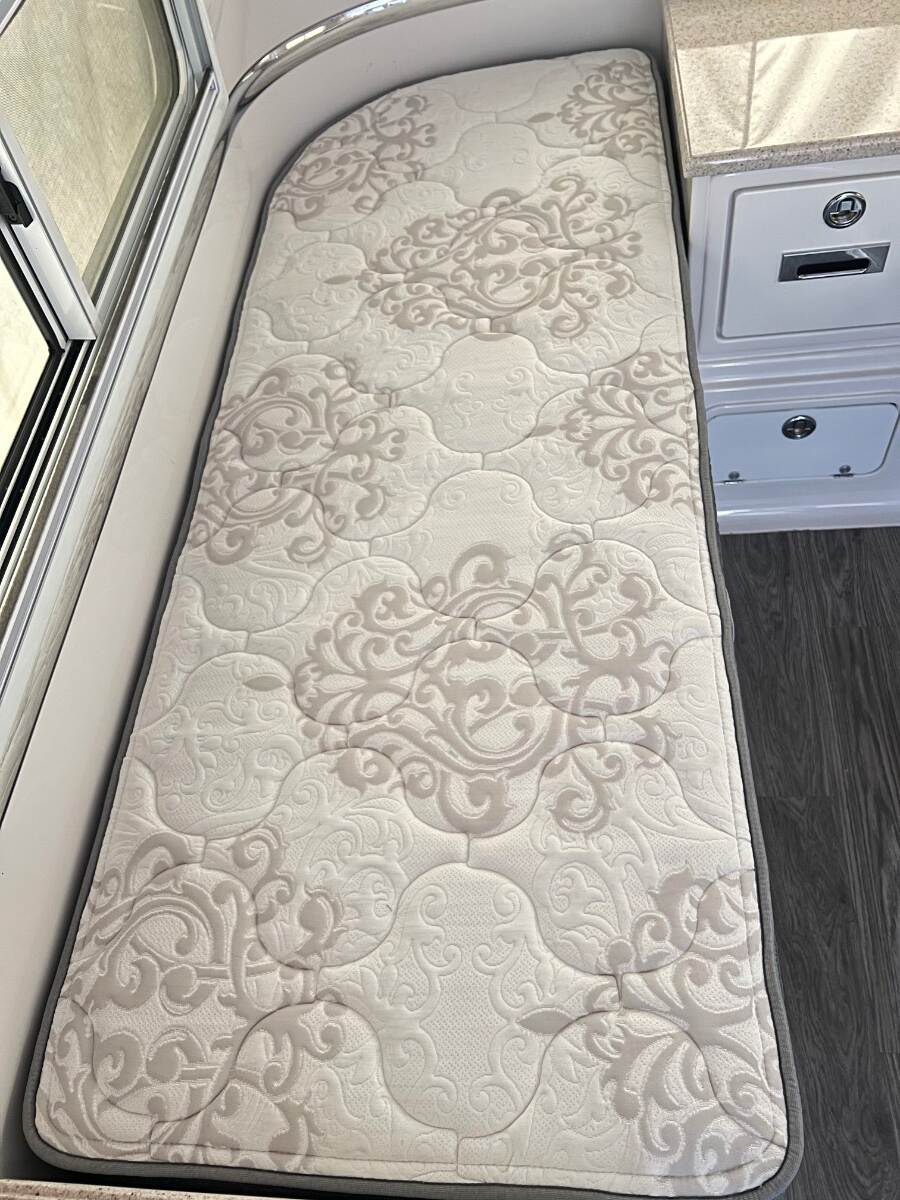
We got tired (pun intended) of sleeping on the stock cushions. We had some custom mattresses made. They are 9.5” thick, and very easy to move around when accessing plumbing/electrical. They are high density foam, so much lighter than latex. These are firm, and amazing. Custom Comfort Mattress in Southern California
1 point
-
Yeah, they are expensive. I paid about $1800 for the pair delivered. Natural latex is significantly more expensive. I didn’t want to mess with cutting and sewing. I figured buy once, cry once.1 point
-
You're cracking me up, Scotty! 🤣 I swear when we had the OEM suspension, every time I stopped for fuel the top of the Oliver would pendulum 1-2 FT left and right, again and again. BTW, our shocks are under-engineered too. I've been looking for a stronger substitute but so far the specs are not lining up. The Bulldogs are likely somewhat better, but not heavier in rebound specs.1 point
-
That's a smart move, John, I'm glad that you're replacing them! I was assured by the Oliver guys at the last rally that I didn't have to worry about my springs, 2023 build with D52 axles, because there were no problems with newer trailers with D52 axles. Well..... I have a broken spring set, passenger rear, with the remaining sets flattening. Needless to say I'm not a 'happy camper' regarding this. I have replacements from Alcan but haven't had time or decent weather to do the repair as yet.1 point
-
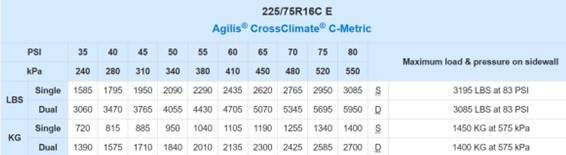
You can follow the 80 PSI MAX spec on the Load Range E LT tire, the 65 PSI rating OTT prints on their DOT label (they used to print 80), or the PSI recommended by the tire manufacturer, based on actual GTW on their load/pressure tables. I/we, most of us, follow the latter. I use any PSI over 45, less than 50, to set them all equal in that range. These numbers allow for 7,800 to 8,360 LBS GTW. On long trips, we carry max 6,600 LBS, so in this range we have spec plus a 20% safety margin. If you run at 65 or 80 PSI, you will cause internal damage to your Oliver. Regardless of brand, LT 225/75R16 tires will all be very close to the numbers you see here. I understand new hulls to have 15" wheels, so get a table for your size. I must have posted this table 6 times now...
1 point
-
Unaware of any issues on the 5200 lb. Axels since Oliver switched to the 5200 lb. axels. After 5 years we are replacing shocks and having Alcan 4-leaf springs installed. The place that services our suspension said they noticed a slight flattening of the springs. The Alcans just arrived.1 point
-
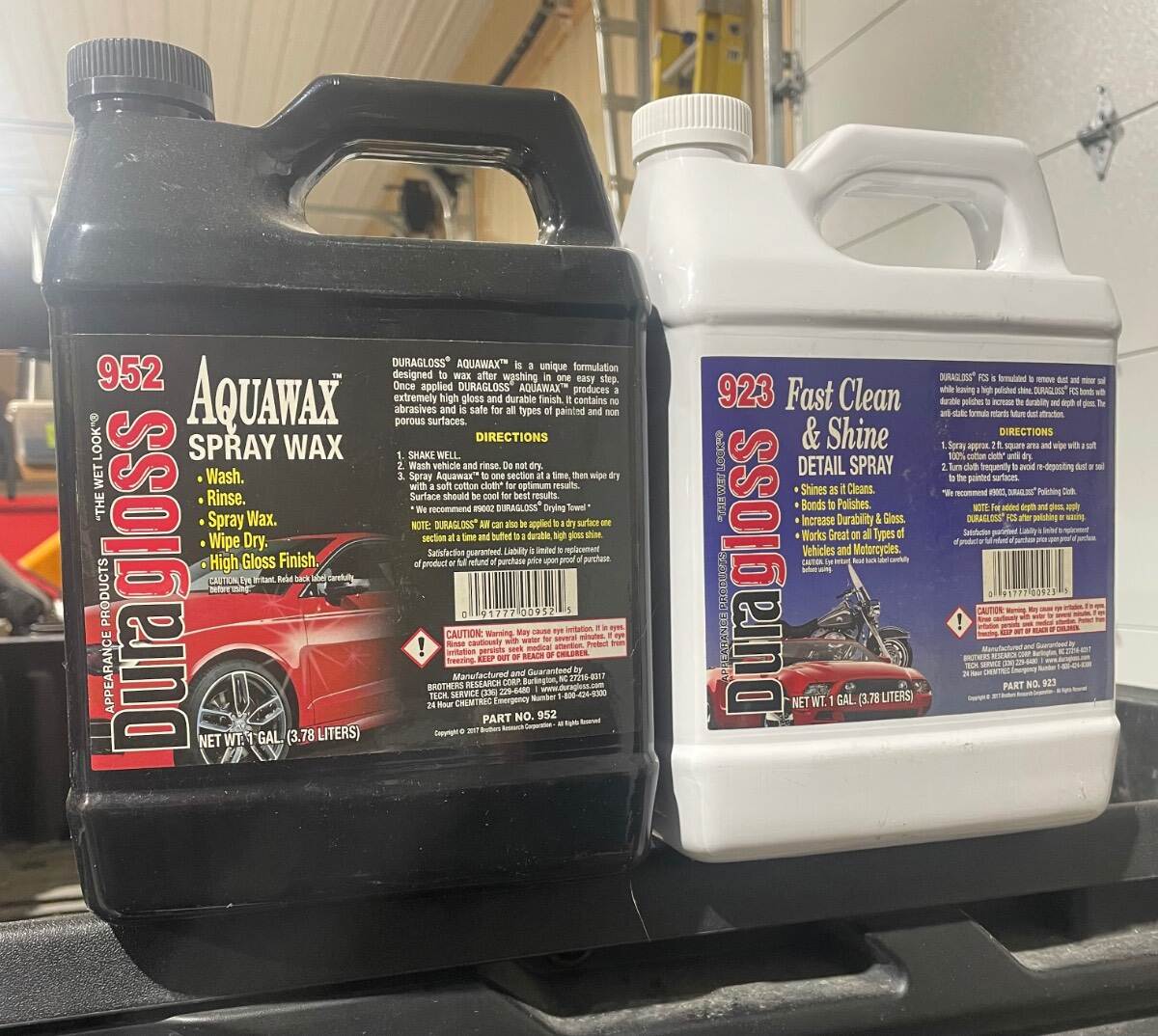
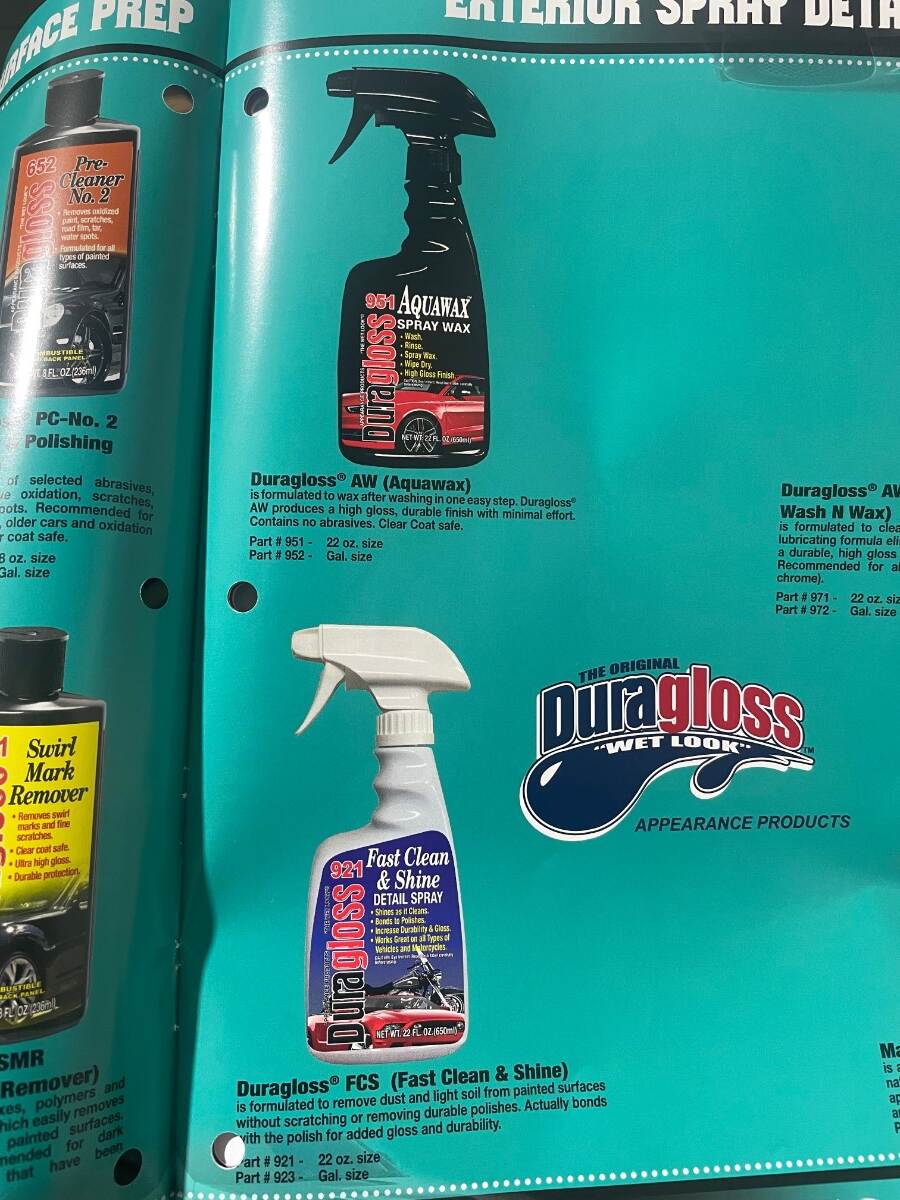
@Boudicca908 921 is 22 oz bottle, 923 is 1 gallon jug https://www.duragloss.com/wp-content/uploads/2021/07/921-DURAGLOSS-FAST-CLEAN-SHINE.pdf 951 is 22 ounce bottle, 952 is 1 gallon jug https://www.duragloss.com/wp-content/uploads/2021/07/951-DURAGLOSS-AQUAWAX-SPRAY-WAX.pdf
1 point
-
There are numerous videos on YouTube showing how to setup the Andersen Weight Distribution hitch - like THIS ONE FROM ANDERSEN. Bill1 point
-
What’s the name of the auto parts store and at what city location?1 point





-
Recent Achievements
-