Leaderboard

.thumb.jpg.e34bf01ef7f7d5e99ad31856d45afbeb.jpg)


Popular Content
Showing content with the highest reputation on 05/09/2026 in all areas
-
At your local Walmart for $10, I've been using Super Clean for years. Use it full strength on greasy parts. https://www.walmart.com/ip/Super-Clean-Tough-Task-Cleaner-Degreaser-1-Gallon-128-Fluid-Ounces/23752162/ But if you really want to clean greasy/grimy parts, you would not believe how a Go-Jo style mechanics hand soap cleans parts! Rub on patiently with a soft brush (toothbrush and/or larger brushes), then hose off and blow with compressed air! I've used this in many restoration projects. Can't beat the price on this item too and check how clean these parts came out! 😎 https://www.walmart.com/ip/Purple-Power-Heavy-Duty-Creme-Hand-Cleaner-14-oz/345407987/
 2 points
 -
I don't see any reason as to why most companies continue to manufacture standard single speed compressor AC units when inverter tech is so freely available. The prices are comparable and the power requirements are 50% or less. Makes no sense to me...2 points
-
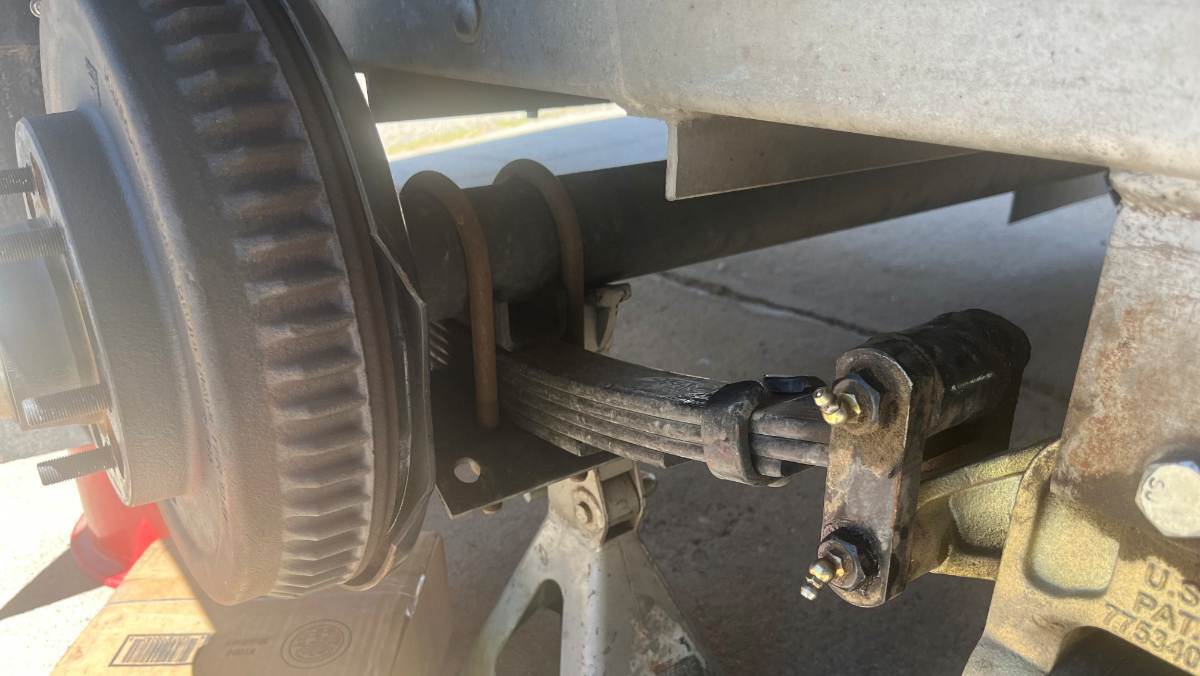
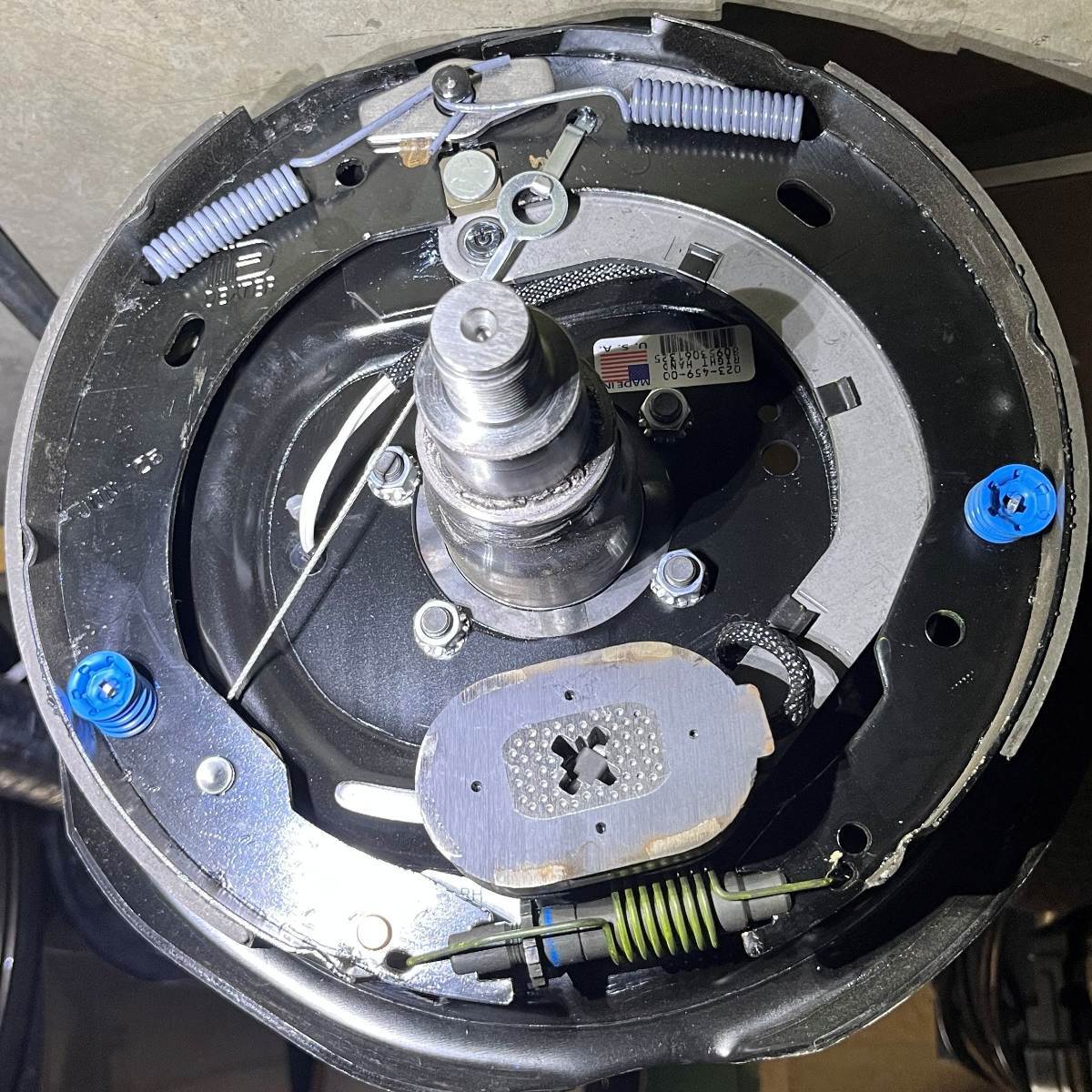
This maintenance can be completed in 2 hours (by the young experienced mechanic), or you could take most of the day! Have fun and pride in your Oliver! Take your time. I did the curbside yesterday and did the other side today (not young anymore, like splitting tasks across days). The second side went very fast today, done in only 90 min having the tools out and ready. This is just how I worked our suspension maintenance, in how it made sense to me, based on my automotive experience, not Dexter nor OTT approved! IMHO this maintenance should be conducted annually, or perhaps bi-annually for those who tow 10K +/- miles in a year. Some may work this routine every two years. Following is a suggested 10-Step Suspension Maintenance procedure: 1) On level ground, jack up one side of the trailer, using the rear leveler jack, while the Oliver is hitched to the tow vehicle (mandatory for safety). 2) Spin each tire to see if it rolls freely. Listen carefully for any unusual sounds. Try to wobble each wheel left to right (3-9 clock positions) and top to bottom (6 - 12) to observe any free-play. There should be no observable free-play with the Nev-R Lube bearings. 3) Remove the lug nuts on both wheels with impact (no impact, loosen with tires on ground). Place a jack stand under rear axle, close to wheel, for safety since your body will be under the trailer to do some of this work (see pic1). 4) Grease all six (6) wet bolts, plus two (2) grease fittings on the EZ Flex. Use a power grease gun if available with a LockNLube coupler attached. Add just enough grease to see some ooze from an edge. Wipe up all excess grease. A straight-blade screwdriver helps to remove old grease from recessed areas. Wipe grease fittings before and after and place caps back on (I don’t use caps). 5) Torque all suspension bolts to Alcan specs. 90 ft-lb for U-bolts, 80 ft-lb for the EZ Flex center bolt and both end-points, and 65 ft-lb on the shackle wet-bolts. The U-bolts will set at some point where they will not need further tightening. They rust into place and once this occurs, they’re done and you will not need to check again in future service (not true for the wet-bolts). I go lighter torque than Alcan specs on the wet-bolts, 70 and 58 ft-lbs which is an eighth (12%) lighter. The 80 and 65 numbers seem high to me. 6) Check drag on the drums. They should contact the shoes ON and OFF when spinning (shoes installed are not perfectly round). If they do not drag at all, the self-adjuster is not tightening properly (see pic2 brake assembly, adjuster at bottom). Mine were all dragging just right on like-new axles. There are two inspection ports on the backside. Unfortunately, there is no way to reach the gear to adjust it, due to the Oliver wide leaf/shock absorber plate. If adjusters are not working, the hub/drum must be removed (see step 8). 7) Pull the trailer emergency brake switch and turn the drums until they stop (to ground magnet). Check amperage draw at each wheel, placing amp meter clamp around ANY single wire behind wheel. Amperage should be 3A +/- without much difference between wheels. My LF wheel was 3.1A and the other three all read 2.8A, the two main brake wires coming out of the streetside Oliver hull read 6.1A front and 5.8A rear. These numbers look good enough to me! 8] Now the question is, do the brakes need a full inspection? I would say no for the first 2 years, then later with enough miles towed (>25K miles). Perhaps work a full inspection after 3 years. Then skip year 4 and do another full inspection year 5. Something like that! Clean brake dust without internal inspection: Use compressed air to blow through all openings of the braking plates to remove all shoe dust from the interior of the brake drums. Wear safety glasses and stay upwind from the cloud of brake dust. Blow throughout until you see only clean air. Full inspection of trailer brakes: Remove the bearing dust cap, the small outer circlip and spindle nut, then slide the drum off. Use compressed air to remove all brake dust (Brakleen spray unnecessary). Make sure shoes are clean, free of grease, clean if necessary (sand shoes lightly). Check shoe thickness, There is not much material there to begin with (Dexter shoes new have only 0.18" or 4.5mm material). They will look thin but when wearing evenly should be good for many more miles. Check the action of the shoes by pulling the magnet to see all is working as designed. Replace shoes if necessary, or replace the entire braking plate assembly, which is bolt-on and economical. If you have enough miles to replace shoes, the drums should be turned or replaced. Replacing shoes without doing so would result in poor trailer braking performance. Drum assemblies with new bearings are very expensive! The Nev-R Lube bearings are warranted for 5 years or 100K miles (our hull will not clock 100K mile in the next 10 years)! Some who tow a lot may replace bearings every 5 years. I will carry replacement bearings and tools with me to replace as needed, as they could fail at any time or last many, many years. Then replace the drum, washer and spindle nut. To retorque, mount the wheel, lower the tire to just touching the ground and torque to 155 ft-lb. Then replace the circlip and dust cap. Remove wheel again to mount center caps, though many of us go without center caps so that hub temps can be checked at stops while towing. 9) Remove gravel from the tread of both tires, using a thin flat-blade screwdriver, while inspecting for tread wear, tire defects and foreign objects. I do this with All of our vehicles, every time wheels are removed for any reason. I’ve found many screws and other sharp metal objects in tire treads, sometimes causing slow leaks that can be fixed now vs. getting worse on the highway. 10) Mount rims, lower hull to get rim close, making it easy to place wheel on studs. Use impact on light setting and snug up lug nuts evenly. Lower hull to sit on wheels, remove leveler blocks, and torque lugs to 90 ft-lbs. Repeat all 10 steps on the other side of the trailer. Let me know if I missed something or other suggestions! 😎
1 point
-
It appears as though I have some issues with my winterizing skills. That said we are chasing leaks, currently, this one out of the back of a Dometic (310/311, does the model number make a difference) for the "Water Valve Kit". The leak is coming out of the back of the "Water Valve Kit", just a slight dribble, but enough to be worrisome whilst spilling onto the shower floor. I watched the video provided by Craig and "I can do that!!!" I would like to remove the valve and examine it, to see if something on it is cracked or worse yet further up in the toilet. I am going to see if it can be found locally, if not the AMZN...1 point
-
That's for sure, Chris! All Dometic units (except a 230V/50 Hz Inverter model in non-US markets) and Truma, the Atmos/Tosot and all others made through the years, the compressor goes ON & Off and you hear it with a bang and a thump! Add a Soft-Start and then they take 3-5 minutes ferbling around to finally start cooling!1 point
-
Thank you, Bob! LOL, you and I both, have "done many vehicles over my years!" I've done 3 brake jobs this year alone and I want to quit having to do brake jobs around here, OMG! 🤣 Removing the drum is very easy on the Nev-R Lube axles, and no red grease mess! It's just not something to do when less than one year old with 3600 miles, as in my case. I will likely do so at 3rd inspection. Your question is a good one though, a GREAT addition to this post and soon I'll add this step to the above procedure. 😎 Remove the bearing cap, the small outer circlip and spindle nut is all it takes (more info in post linked below). One trick is retorquing the spindle nut afterwards. I got confirmation from Dexter (via Lew at Alcan), that these spindle nuts can be reused (should replace after 2-3 uses). To retorque, I would mount the wheel, lower the tire touching the ground and torque to 155 ft-lb (remove wheel again if you mount center caps). Then replace the circlip and dust cap and that's all there is to it.1 point
-
Bob, IMHO this is unnecessary. I assume your Oliver converter (charger) is setup or will be reprogrammed for LiFePO4 batteries with Epoch charging specs. Just install them (they come at 50% SOC), plug in and charge overnight to 100%. Want a portable charger for all battery types? I got this one 2 years ago and have used it on all our vehicles when needed. Keep in mind, this is only a 10A charger. But more amps means much more money! 🤣 https://www.amazon.com/NOCO-GENPRO10X1-Waterproof-Maintainer-Desulfator/dp/B08G3M697M/ Our Victron Inverter/Charger can charge up to 120A. It can add 20% SOC to a 600 Ah battery bank in one hour! The 10A portable charger will take 12 hours to add the same 20%.1 point
-
Thanks for the info. FWIW I’m only interested because I went through a battery recall on my Bolt EV. Very similar situation actually, like the water heater the affected cars was small, a few percent at best (same here according to the report), and fault too was with a supplier - LG in this case. They didn’t do quality control on the cell tab alignment. A couple cars caught on fire and rather than have a PR disaster GM took it on themselves to replace all the batteries. And there too there was a parts supply issue, not surprising when suddenly there’s an order for thousands of new batteries (or water heaters). GM took a write off of a few billion for that one. The best measurement of quiet is your ears in a side by side test. The RMS noise meters (I have one) are useless for this as they just measure overall averaged dB, not things like spikes or variation (very annoying) or frequency content (high frequencies are much more annoying compared to low). The ear knows what bothers it. Listening to my Truma now, the fan is just fine, wouldn’t mind a little slower blower to drop a few dB but it sounds like white noise you’d use to go to sleep to. The main thing is the roof compressor has a mid band edge to it (sounds like “urhhhhhhhh”, its around a G below middle C so not high around 200 Hz maybe). Not loud or super annoying but that’s the worst part, if that could be reduced it would be hard to argue with.1 point
-
See page 2 of THIS thread (i.e. back 1 page) and it is the 12th post down from the top. While I'm confident that your research regarding who actually pays for recalls, it should be noted that the original design work relative to Oliver using the Truma water heater was studied and approved by Truma. As I understand it, Truma refused to order a recall when the problems with the water heater became apparent and claimed that there were no similar issues with this water heater being installed in other RV's. Therefore, Oliver took it upon themselves to take care of the problem without any monetary assistance from Truma. Then, after Oliver took this step, repair parts availability from Truma became another source of issue (i.e. repair parts were very difficult to come by even though in the interim Truma redesigned the water heater in order to "correct" the very issue that was causing the recall. Bill1 point
-
My wife Chris said, "The sound on this A/C is soooo quiet! I can't see it any taller from inside, so who cares?" I think it looks just fine up top (function over form) and would not want any Dometic A/C product ever, or Truma for that matter, with no aftermarket support and warranty issues with something like owner installation of a Soft-Start. BTW, Soft-Start should be inherent to the design, like it is on variable-speed or inverter A/C units (not after-the-fact with Truma service costs). I've heard the quiet Atmos/Tosot and they are quiet. The Chill cube is quieter, while using half the power. It's the height of this unit with huge evaporator fan, that creates its efficiencies and allows for an air handler flush to the Oliver ceiling. She looks just fine! We love this product. 😎
1 point
-
OTT needs to get with it! Brinkley installs the Furrion Chill Cube. 😎 That’s 9 less than 3 feet from a freight train! 🤣1 point
-
I hope you all recognize this was tongue-in-cheek. Yep, but come to think of it... How nice it would be to have 2300A of solar available! Plus, you'd have have redundancy if (when?) one of them failed. Now we need a gray water storage carpet to put under the solar awning. And camp chairs that also hold fresh water. We could boondock forever!1 point
-
Thank you for the recommendation of using a 1/4” socket. It made my work much easier.1 point



-
Recent Achievements
-