Leaderboard




Popular Content
Showing content with the highest reputation on 11/23/2026 in all areas
-
We spent 8 days in Arches Campground in Valley of Fire State park. A very pretty area and great campground. We had a herd of big horn sheep come into the campground one day. We had an amazing site with only one downside. That amazing red rock hill behind us at this time of year blocks the sun starting at around noon! So with only about 4 hours of sun each day plus a few rainy days our batteries were spent at the end of 8 days (running inverter most the day for satellite, laptops and stuff so not taking it easy on them). We at least know what happens when you hit 10% of battery SOC 😁. Luckily that happened late the last night.
 5 points
-
I’ll have to check the underside of the flex tubing next time we take it back from storage to check for potential holes that you mention. We have a twin bed design and the ducting rums along one side with outlets under bed, kitchen, and bath. One duct supplies the bed and kitchen outlets and the other extends to the bath - although I should double check that arrangement. I guess I could remove a panel from the heater box and see if I could tighten the flange adapter itself but as long as the outlet is sealed I’m ok with it. I don’t know how adding a filter to the return air grill would increase airflow by “sucking more” from the belly. Any impedance on the return would reduce pressure on the intake side of the fan, unless you reduced resistance somewhere else, and reduce heater discharge cfm. Besides the return air is heated so I think the belly is ok with regard to freezing. I understand your desire to filter the return air though.3 points
-
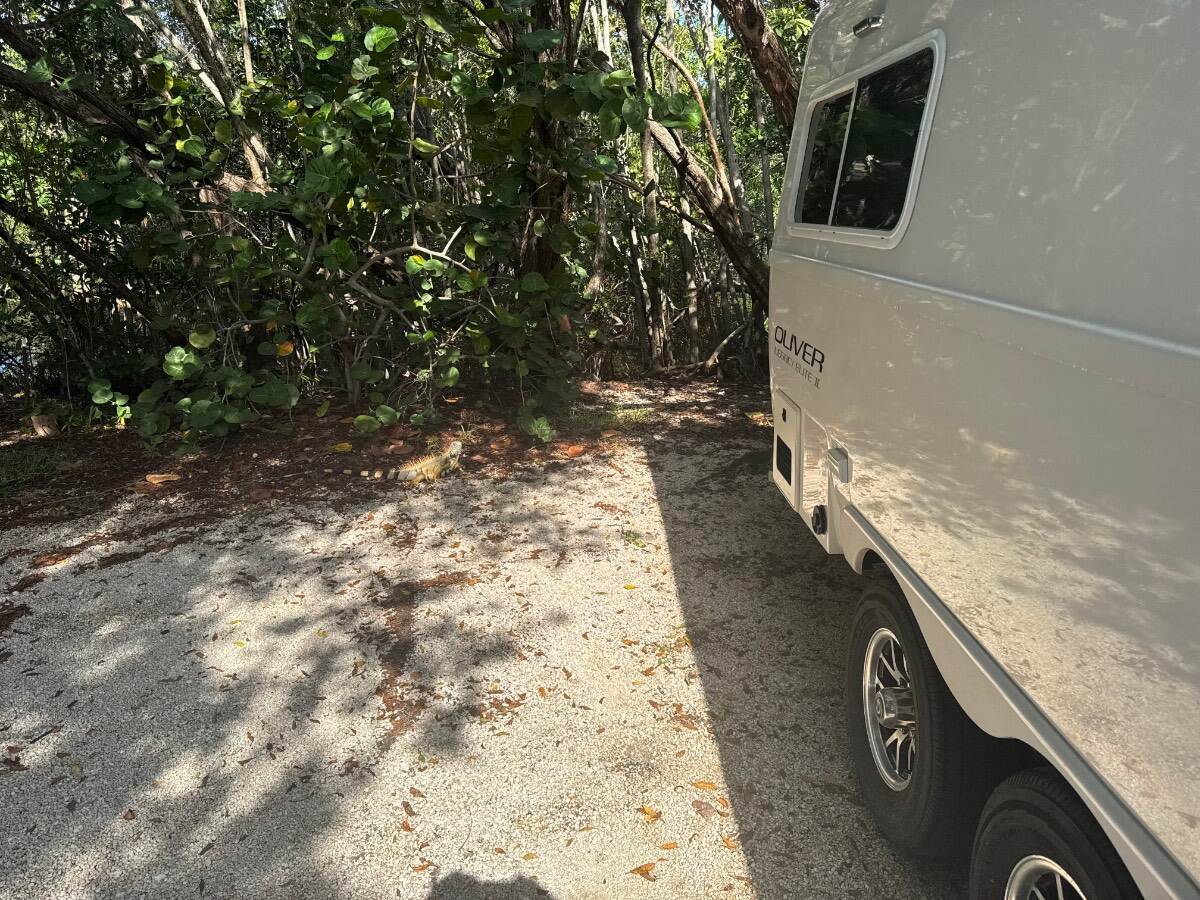
John Pennekamp SP, Key Largo, FL Notice who we are sharing our campsite with?
2 points
-
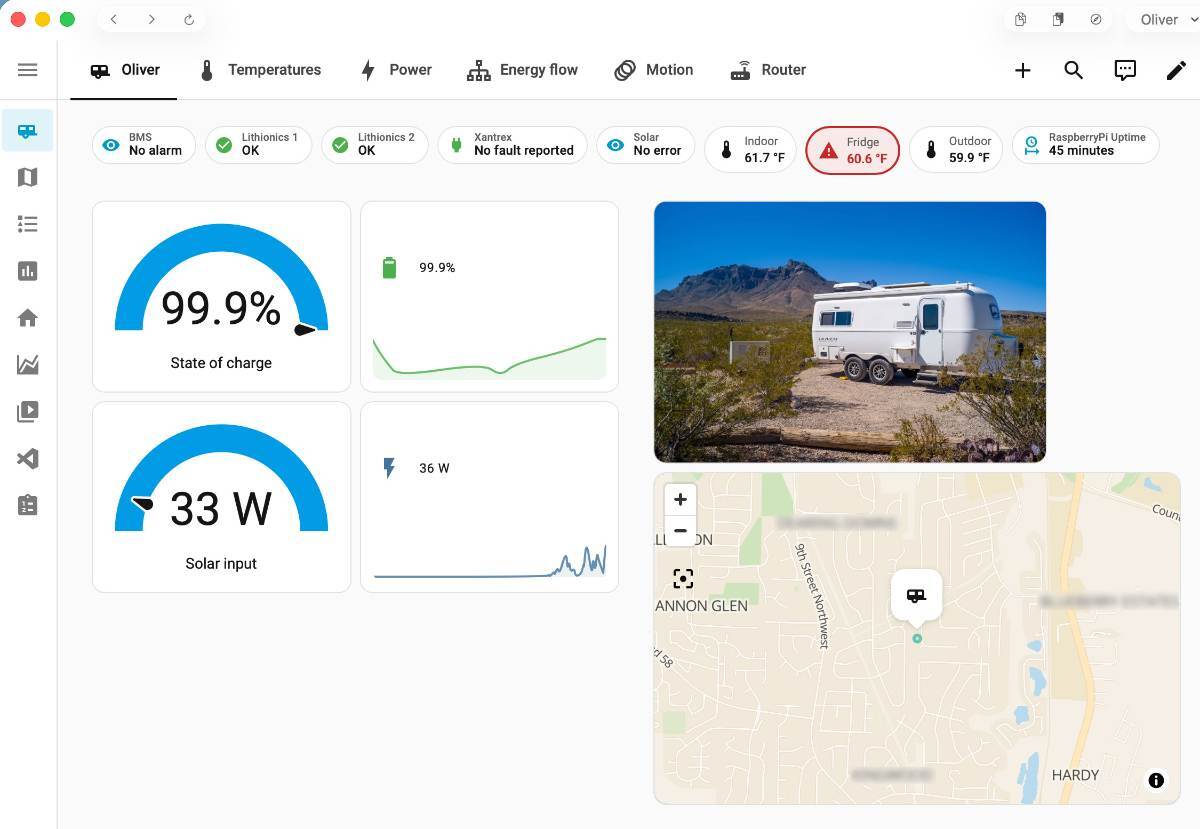
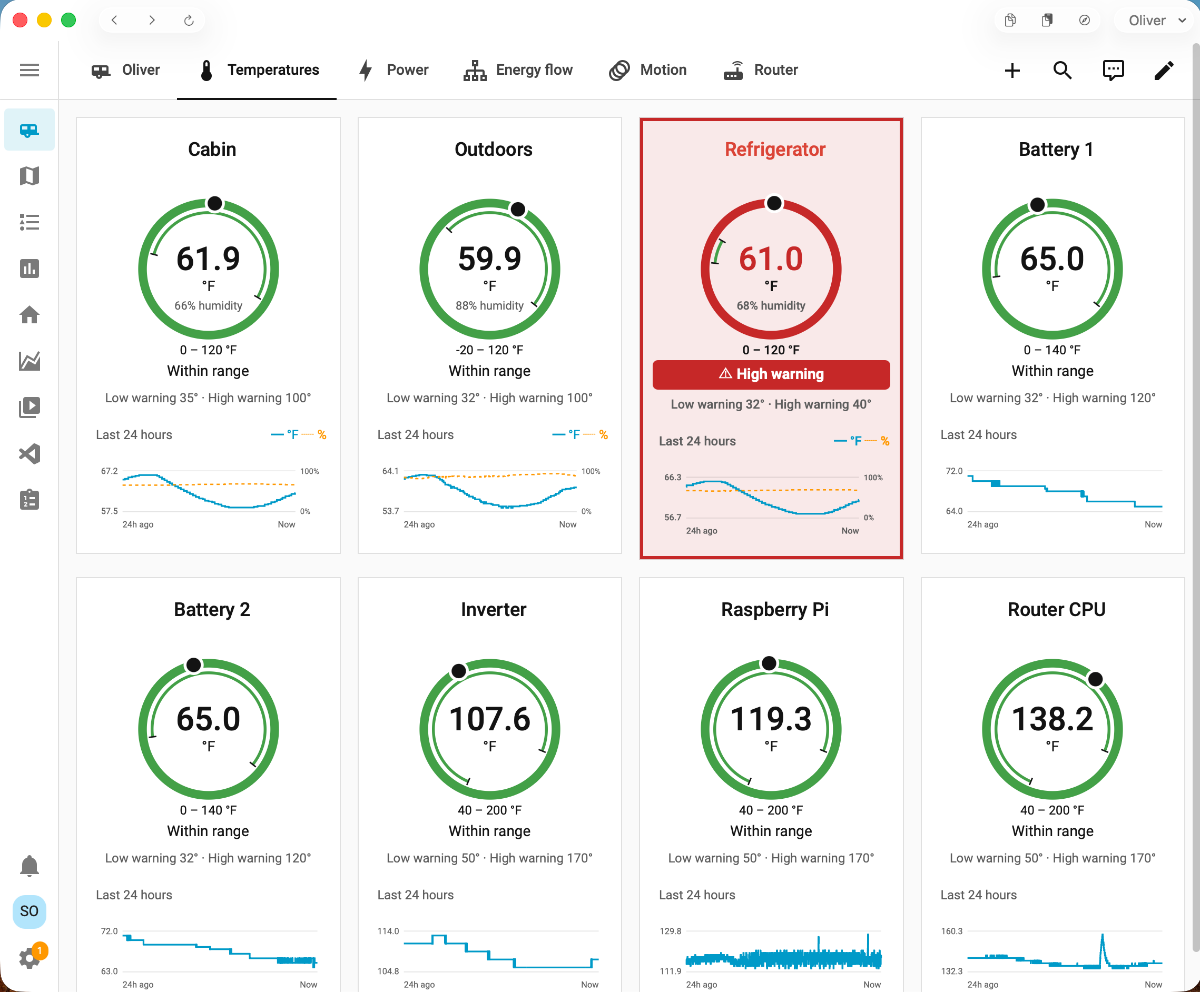
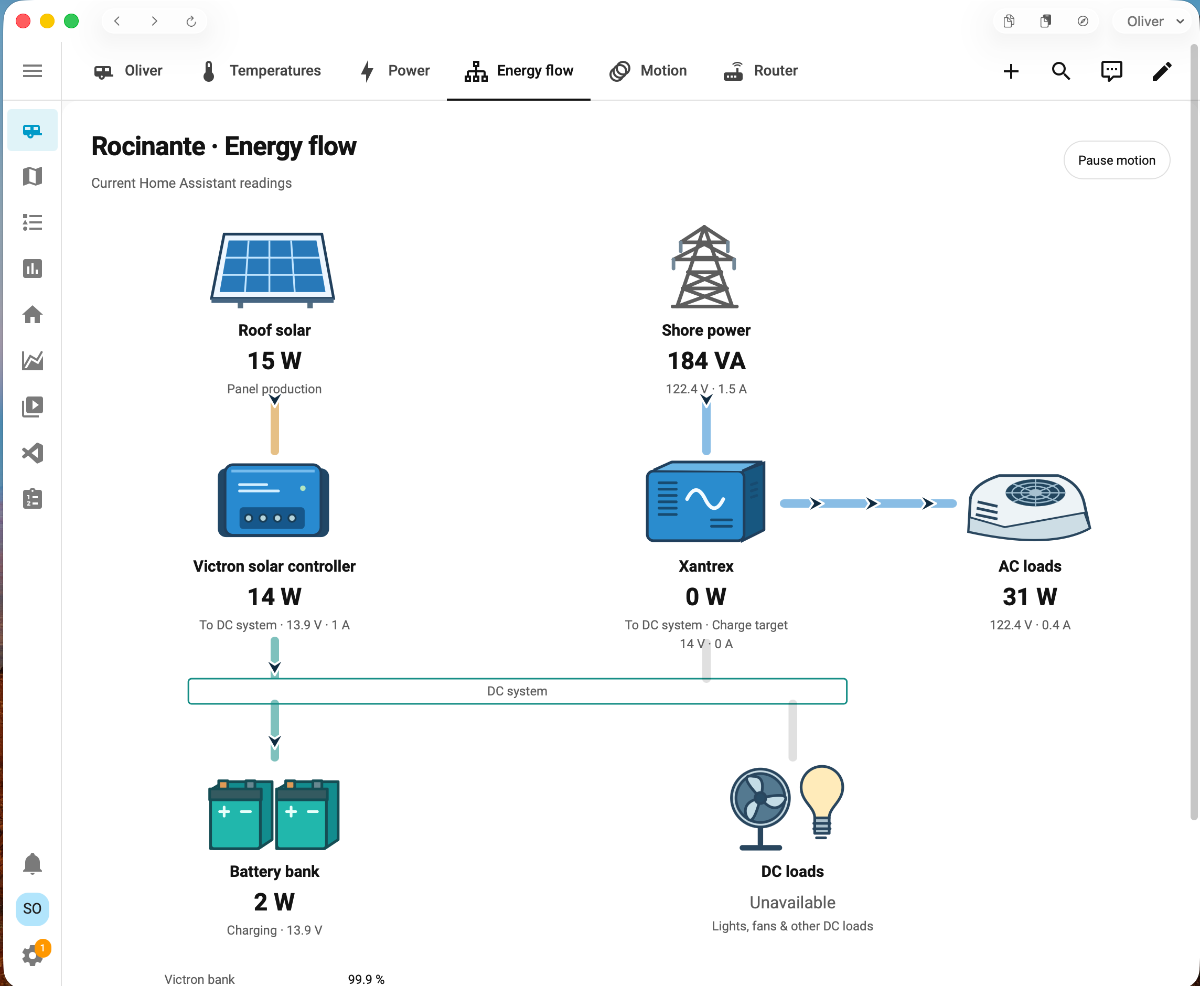
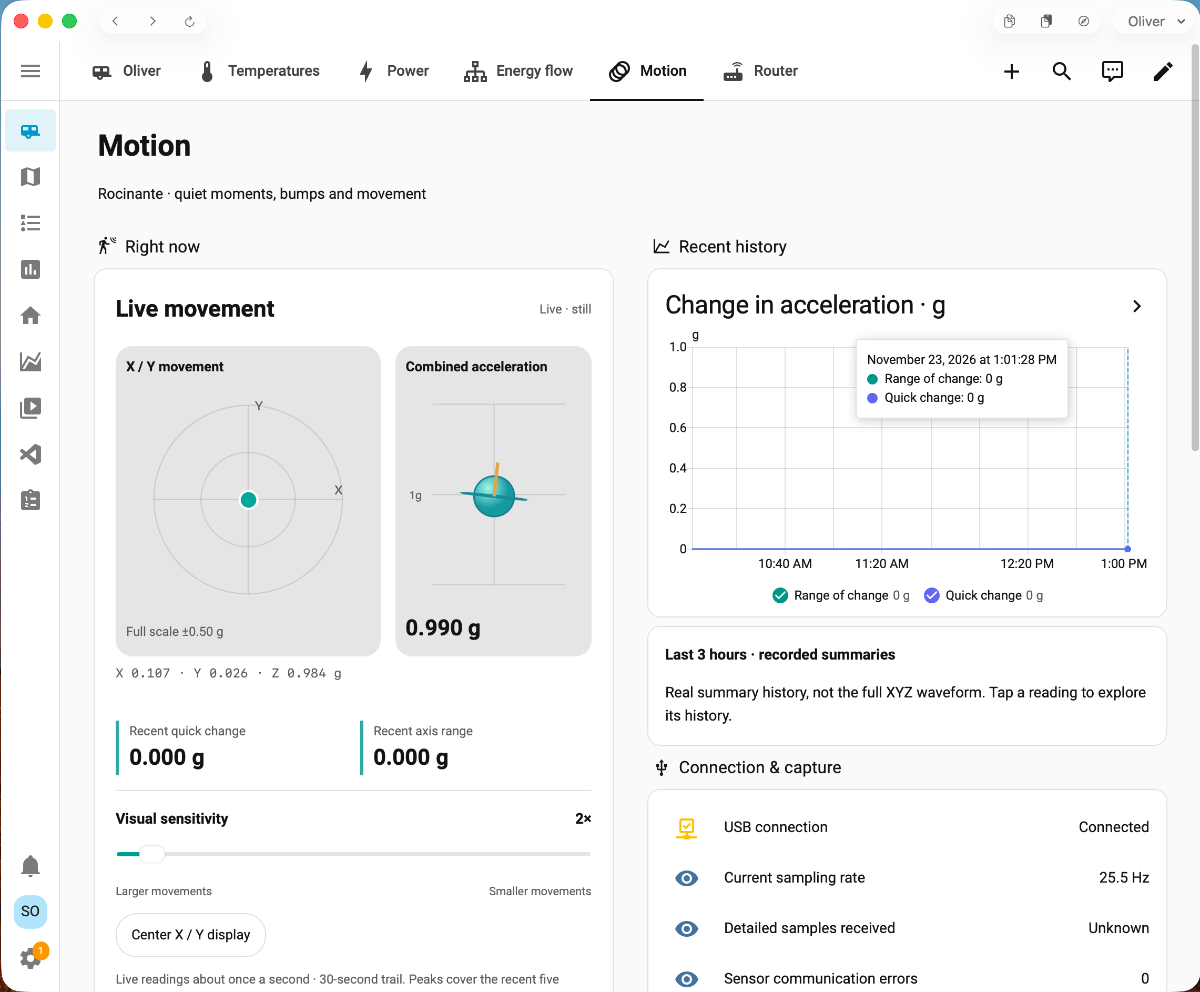
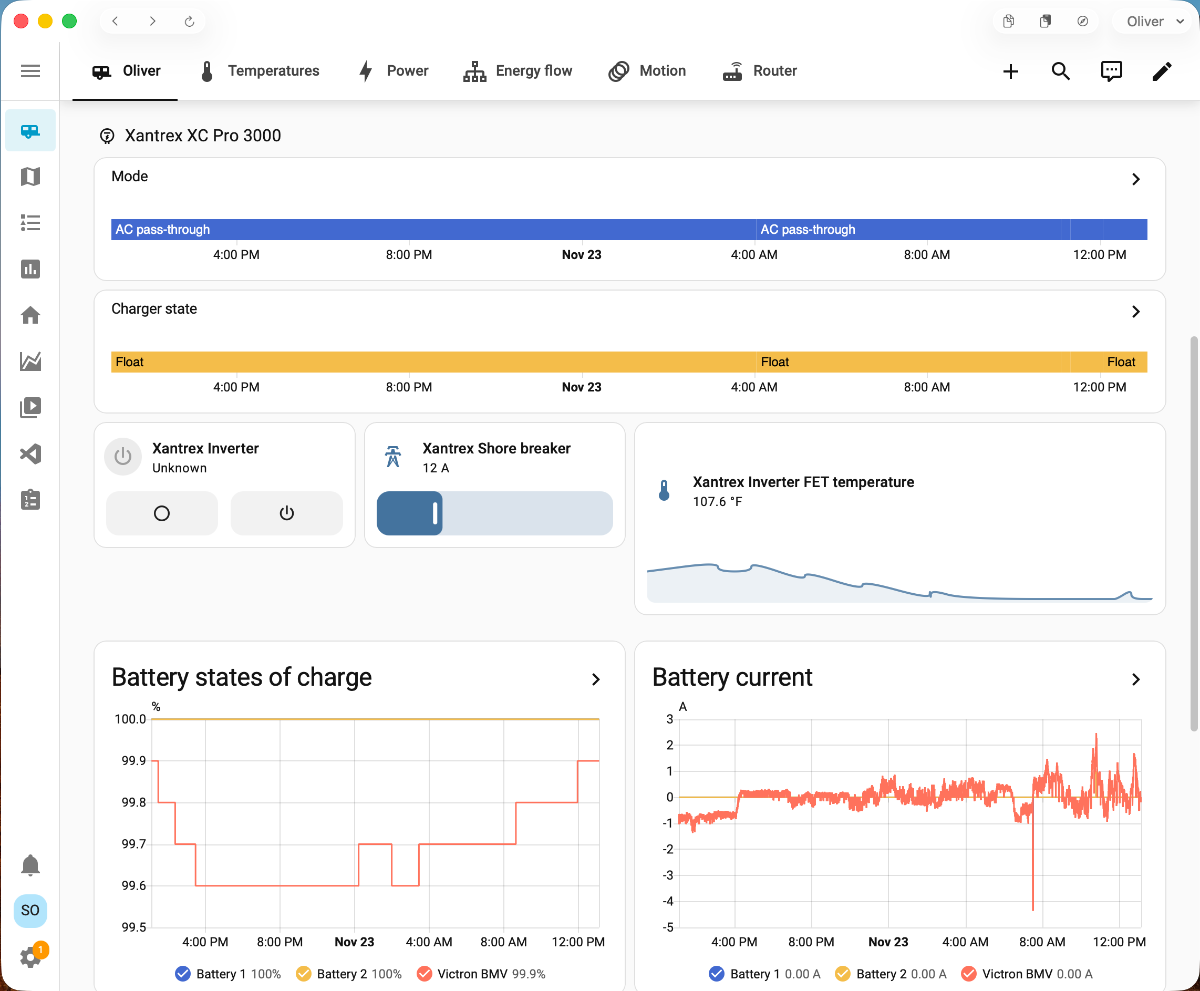
I recently added a small single-board computer (Raspberry Pi) to my Oliver and a few other doodads that integrated everything into a single application called "Home Assistant". This is meant for home automation and control. Open-source, completely free. Rather than go into the details, I'll just show a few screenshots here. If anyone is interested in how/why, let me know and I could also do a "mods" video and show all the details. I sort of went down the rabbit hole on Home Assistant 😂. Here's the main screen- it shows a group of alarms across the top, from Victron, batteries, Xantrex, etc. I also have some little bluetooth temperature/humdity probes. I bought a 3-pack from Amazon and they were pretty cheap. One is mounted in the cabin, one under the propane cover and one in the fridge. You can set warning for high/low temp, so that's why the fridge is showing an alert (since it's turned off). I added a USB GPS receiver to the Raspberry Pi and it will display a little map of where the Oliver is. The "Temperatures" screen has all the temp/humidity sensors on one page The "Energy Flow" page is pretty interesting: I also added a 3D-accelerometer, but it is still an experiment. I plan on fixing the sensor to the hull and then implementing some kind of helper for leveling. I also wanted to track the amount of bumps and swaying that happen while towing. Not showing much right now since it is parked. Still playing with this one: More stuff on the main page: All this stuff is wired in and installed beneath the aft dinette seat. All the stats are logged indefinitely for now on an SSD drive, so you can pick a date/time range and see what was going on. I'm a bit of a geek if you can't tell 😁 One the very best benefits of all this is that I can see it from the HA app on my phone. I can also control things with the phone- I can remotely turn on/off the inverter, which lets me set it up so that I can go out and then use my phone to turn on the inverter (and AC if it is turned on). I think the only thing that is not being monitored is the fault code from the Progressive Industries EMS box. Let me know if you have any questions! -Steve
1 point
-
I live in Wisconsin. I never take my two Lithionics 320 Ah batteries out of the camper and I leave the camper plugged in all winter. I have options for backup power if it would ever come to that. These batteries have an internal heating system. Although, the Oliver is indoors the building is unheated and there are a few times the internal building temp will drop as low as about 0F. I monitor the battery temperatures with the Lithionics app and they have never gotten close to freezing. I think I am ok. I suspect battery longevity would be improved with 50% soc and removal for the winter but that is a fair amount of work for undetermined advantage.1 point
-
Chicken of the trees! Grill him up!1 point
-
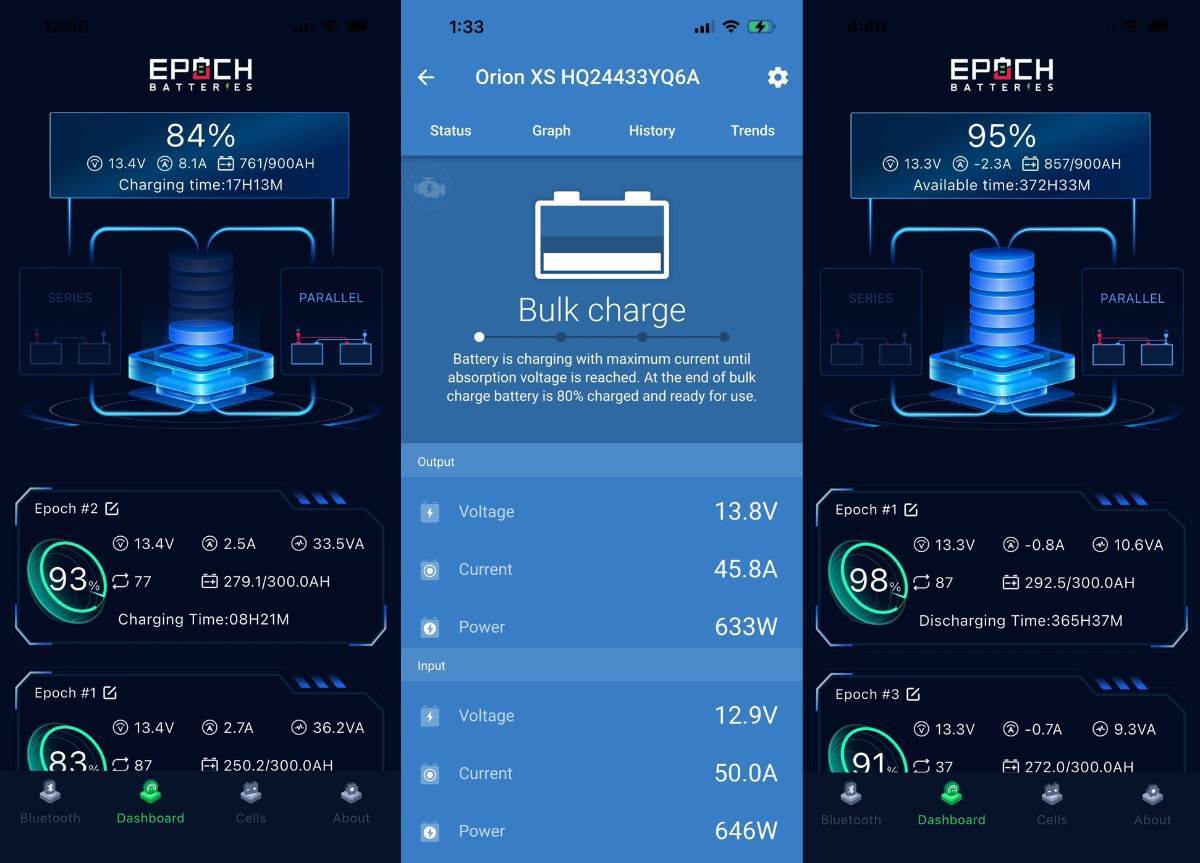
Turns out I had skipped an installation step. I didn't think to configure the Orion Engine Shutdown parameters and had left them on the default settings. The defaults were for a Smart Alternator and ours is an ol' school full voltage alternator. At first I was getting 40A+ on average and a year later only 29A which was due to the settings. I made mention of this fix and a setup video I found on a recent post titled DC to DC Troubleshooting. I'm still not sure why it was OK, then not so later. First day on our trip this week we had a short drive, 90 miles about 90 minutes, but with taking our time driving down the mountain and stopping for fuel with the engine idling, I'll call it 2 hours. These number are amazing! We gained net 96 Ah in 2 hours. We had rooftop solar always ON, on a sunny day, with the inverter ON, fridge on A/C (runs colder than using DC). There could have been a net +2 Ah, solar + over the fridge -draw, my best estimate. So we got 46Ah per hour out of the Orion, best ever number, with a full 50A (charger maximum) on the input side of the Orion! Also the Orion took in 646W with output of 633W (98%). 😎
1 point
-
I don't know about the 2021, but I don't believe the dometic thermostat in the 2020 is bluetooth capable since on my thermostat there is no bluetooth icon at the bottom of the thermostat. Dometic makes one that is bluetooth capable like in the manual, but it shows a bluetooth icon on the thermostat as in the drawing you reference above. The thermostat in mine has just a plain white face at the bottom of the thermostat.1 point
-
Thanks Mike! it can be brutally hot down there, for sure. Even at the end of October, it was still in the 90s during the day.0 points






-
Recent Achievements
-