Leaderboard




Popular Content
Showing content with the highest reputation on 01/12/2019 in all areas
-
https://www.youtube.com/embed/B2AEkfjc6-o?feature=player_detailpage Bill5 points
-
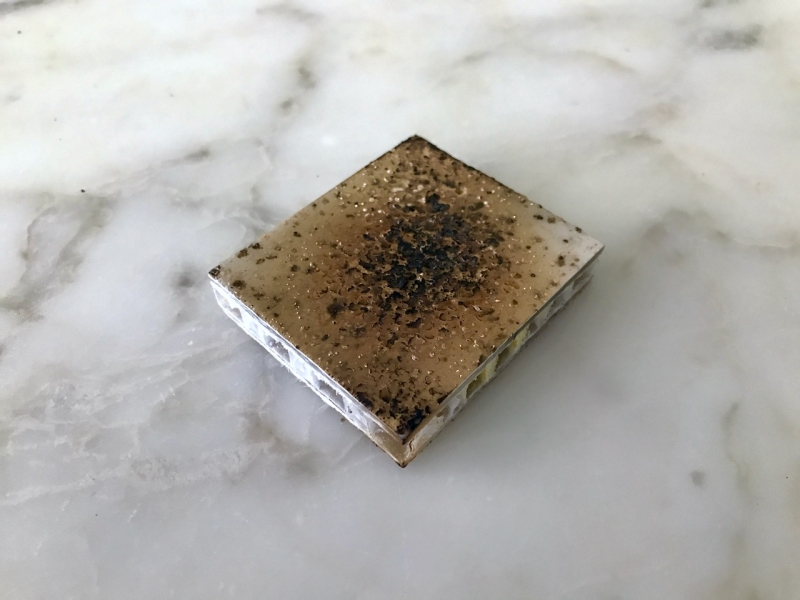
The rule in fiberglass boats is that if you have a fire, you jump; i.e., don't try to fight the fire. Yes, like the Ollie, boats come with little fire extinguishers, but really - just jump. The fumes that come from burning plastic (i.e., fiberglass resin) are pretty nasty as they can cause a lung spasm that prevents you from inhaling. That's not something you want. The RVIA has some minimum flame spread requirements, though I believe that those only apply to the exposed surface of the materials. So since the Ollie is RVIA certified, it's probably a safe bet that the surface gel coat throughout the inside contains a flame retardant of some sort. But, what about the bare resin between the hulls where my electrical or furnace fire is going to start? It would be nice to know if that material is also flame retardant or not since, in the unlikely event of a fire between the hulls, that knowledge would probably might make the difference between deciding to grab the fire extinguisher vs evacuating and watching Ollie burn. To the laboratory! To find out, I did some torture testing on one of the fiber granite samples that Oliver gave me. I held a torch to the sample for 10 seconds and then removed it so see if the sample had caught fire and if the fire continued to burn on it's own or if it died out. I did one test in the middle of the sample to test the gel coat surface, another on the edge of the sample to test the structural fiberglass within, and then a final surface test on the back side of the sample. On the first surface test, the sample blistered badly and did catch fire (slightly - it sort of sizzled and popped), but as expected, the flame died quickly when I removed the torch. Clearly, the gel coat contains a flame retardant of some sort, though the fumes were pretty nasty. On the edge test, however, the underlying resin quickly caught fire, and after removing the torch, a good steady flame with thick black soot remained and I had to blow it out. On the final surface test, the resin again caught fire, this time more of a steady flame than was produced on the gelcoat side, but as with the gelcoat side, the flame died after removing the torch. That side smoked a good bit afterward until it cooled. So if the fiber granite is any indication of the other fiberglass in the trailer, which I would think is safe to assume, then it would seem that Oliver does use a fire retardant resin for their gel coats but not in the structural fiberglass within. And it seems like they also do a coating on the inside surface that contains a flame retardant, though perhaps not as effective of one as they use in the gel coat. Verdict - If I have a small cooking fire or something similar within the trailer, I'll likely reach for the extinguisher. But if there's a fire within the hulls, then I guess it depends. If the fire is going strong enough to produce visible smoke in the cabin, then I would guess that the fire has already reached the inner core of the fiberglass and wouldn't easily be put out. In that case, we're getting out PDQ without a thought for saving the trailer. (And then we'll stand well upwind of the fire.) But if we were to catch a fire before the fiberglass began to burn, well I guess we might grab the extinguisher? It's hard to say - I'd have to call it when I see it, but I wouldn't hold a meeting to debate the question. That's probably common sense anyway, so I doubt if this thread is revelatory. But it is good to remind oneself occasionally not to mess about with things like this. I'm thinking that a handful of the tiny Atom smoke detectors placed strategically inside the access hatches might be a Very Smart Thing. I think you'd want to catch a fire between the hulls as quickly as possible and not wait until you get smoke inside the cabin. I'll probably ask Oliver to use one of those for the inside as well, since the one they use is so bonkers big. Oh, Verdict #2: Don't put anything hot on the fiber granite. It will leave a mark. Our victim test subject.
 2 points
 -
Another new fire extinguisher option is fire sticks - www.elementfire.com. They’ve just become available in the US in the last year or so. Expensive, but they’ll put out any fire, not damage wiring or anything, don’t have to be maintained, are super small, and last longer than other extinguishers. I bought two and keep one in the truck and another in the trailer.2 points
-
We tow our Oliver Legacy II with a 2018 Ford Expedition XLT with FX4 and heavy duty tow packages. It has a 3.73 rear end which I understand is important in towing. This is our first camper and our first towing experience. The Expedition/Legacy II combo is great. The Expedition has plenty of power to haul the Oliver around. My previous two vehicles were Toyota Highlanders and I was intimidated by the size of the Expedition initially, but it didn't take long to get used to it. It's very comfortable to ride in around town and on long trips. It seats 8 and honestly that third row seat is not bad to ride in. Our towing experience has been limited but it has been a lot easier than I thought it might be. We have the Ford back-up assist and the brake controller and they work wonderfully. The blind spot monitor extends back and covers the trailer when it is hooked up to the truck. I have the Ford safety suite although I haven't used the adaptive Cruise. The FX4 package got us 18 inch wheels and Michelin truck tires (no low profile tires for this truck). The backup camera in the truck is big enough to be useful (the one in the Highlander was way too small). My husband can back the truck up to the trailer and pretty much line the hitch ball up with the trailer tongue just by using the camera. We could easily take the Expedition on dirt/gravel roads. We're not doing Expedition Portal stuff--if we were we would have bought a raised teardrop-rooftop tent type thing and a 4Runner. But I'm confident that we can wander around on forest service roads, etc. One thing that I have not seen mentioned in this thread is vehicle payload. My Expedition is rated at 1600 lbs. When you are deciding which vehicle you want, you might want to consider that figure too. Think about how much stuff you'll travel with and whether your vehicle will be able to haul it. I think that being able to get your vehicle serviced anywhere is important and the Ford F150 is the largest selling vehicle in America. There are plenty of Ford dealers out there and that was important to us. I wanted an SUV for our day-to-day lives. My husband drives a regular cab Ford F150 so we have a truck for truck stuff. There will probably be a day when we're camping and towing when I'll wish I had a truck bed instead of an SUV. Dirty, wet, stinky stuff in the bed of a truck is better than that same stuff in the back of the SUV but so far that hasn't happened to us. Good luck with you choice and happy camping.2 points
-
<li style="text-align: left;"> Prepare to be astonished John, as Oliver does indeed make all of the fabric granite pieces in house and it is a pretty cool process to watch. In fact, there is very little, with the obvious exception of the appliances, that Oliver does not make onsite. Even the bathroom door is made right there in Hohenwald by those Oliver artisans.1 point
-
Recent Achievements
-