Leaderboard


Popular Content
Showing content with the highest reputation on 12/20/2016 in all areas
-
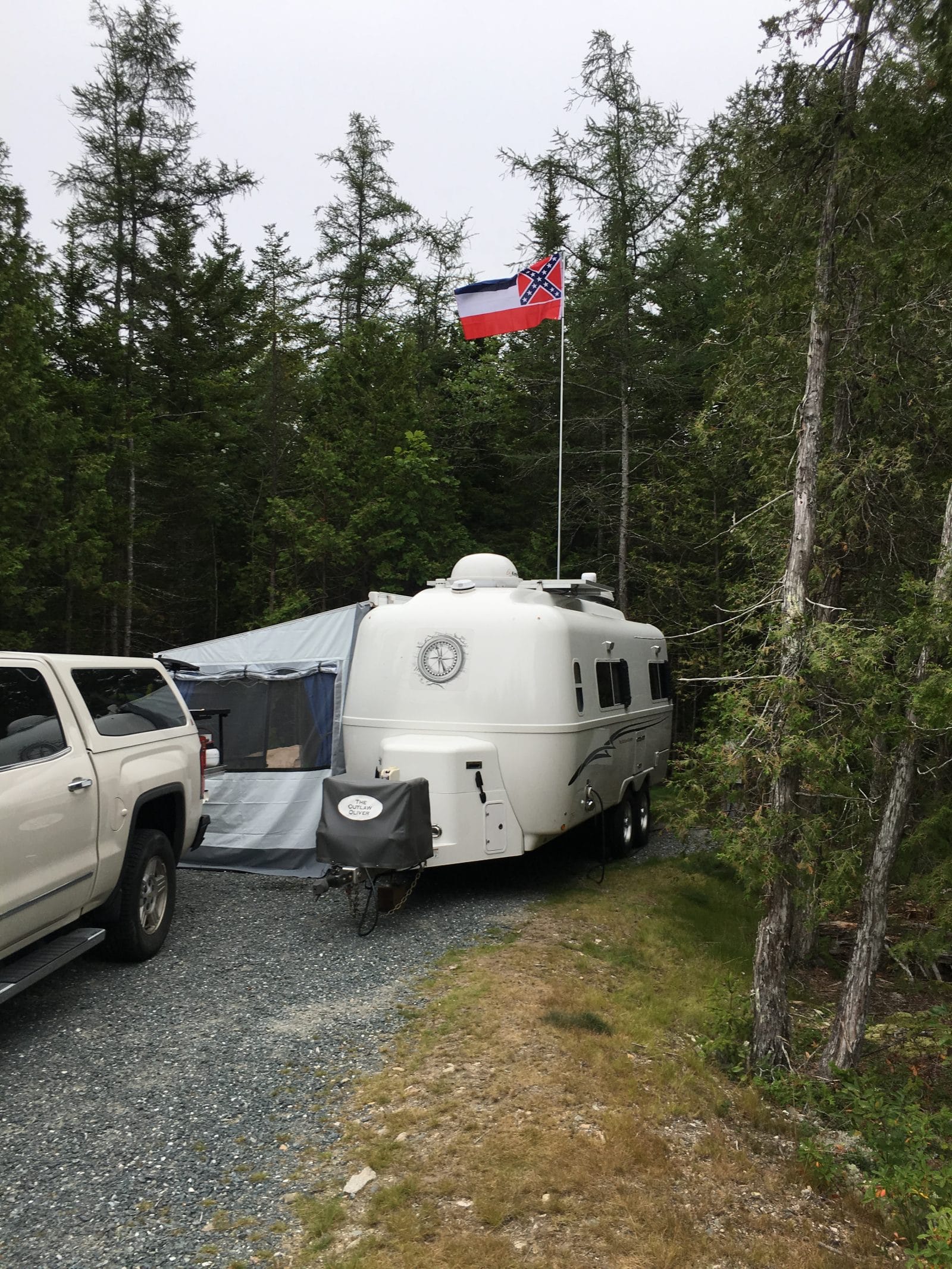
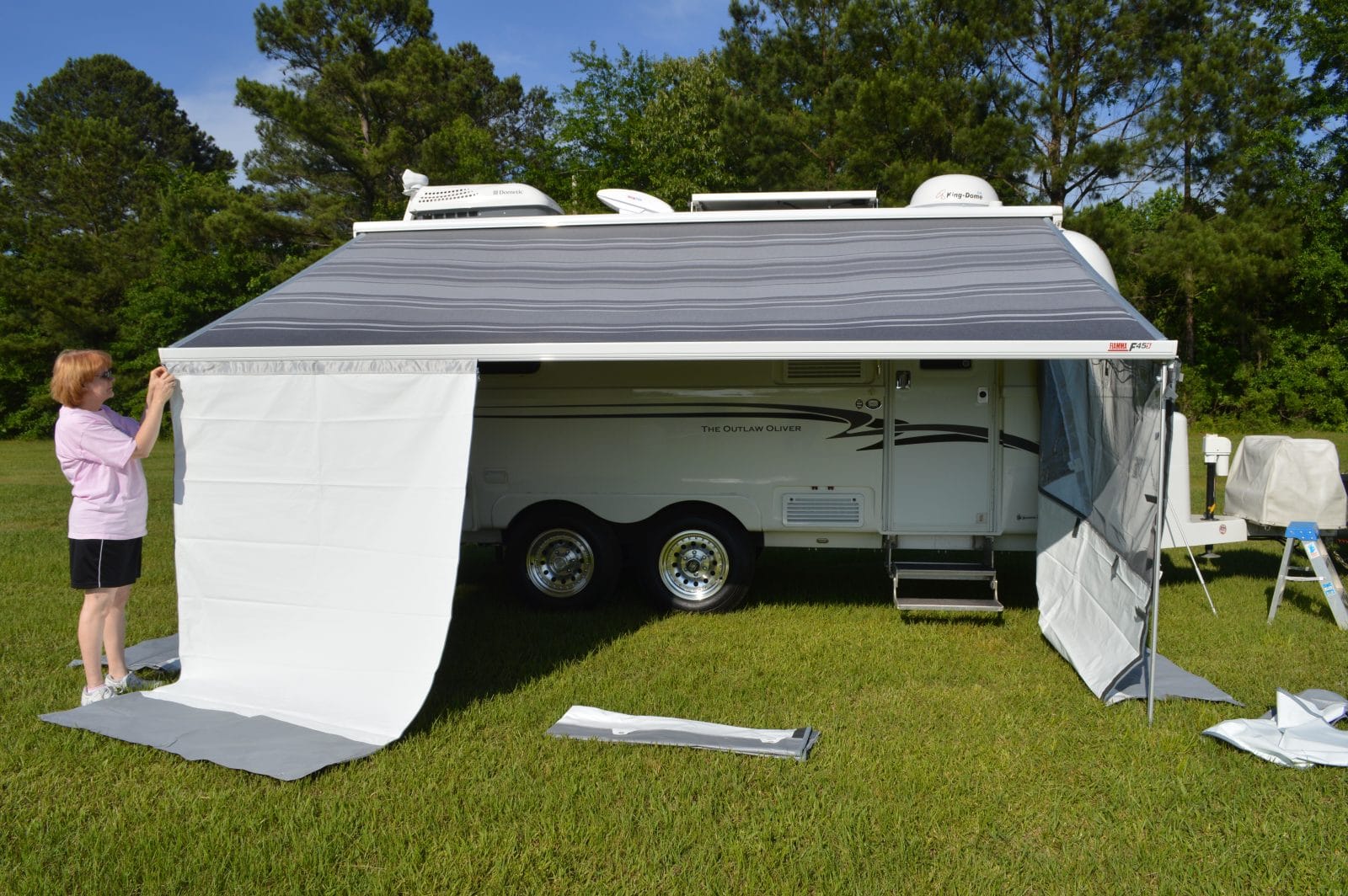
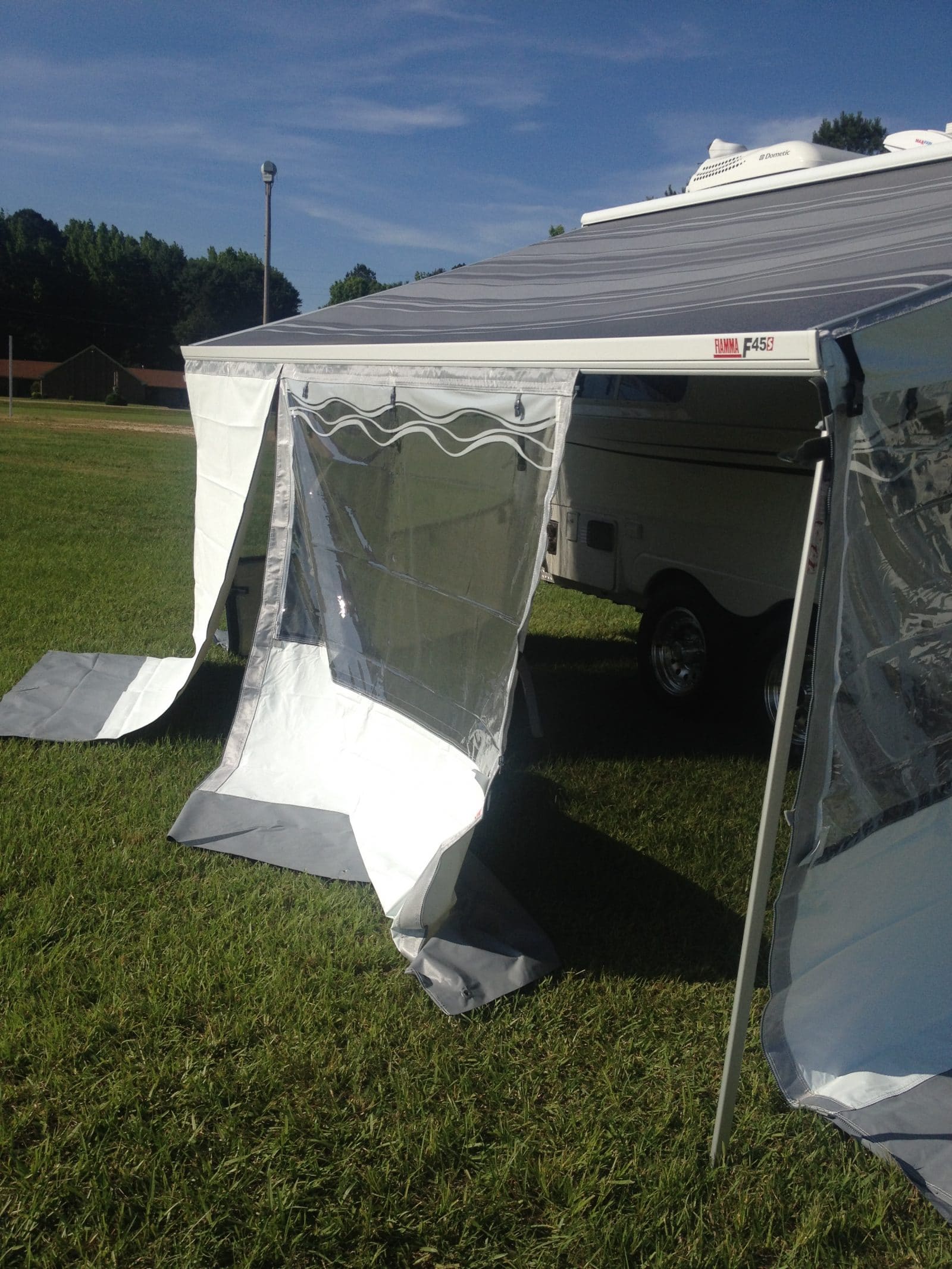
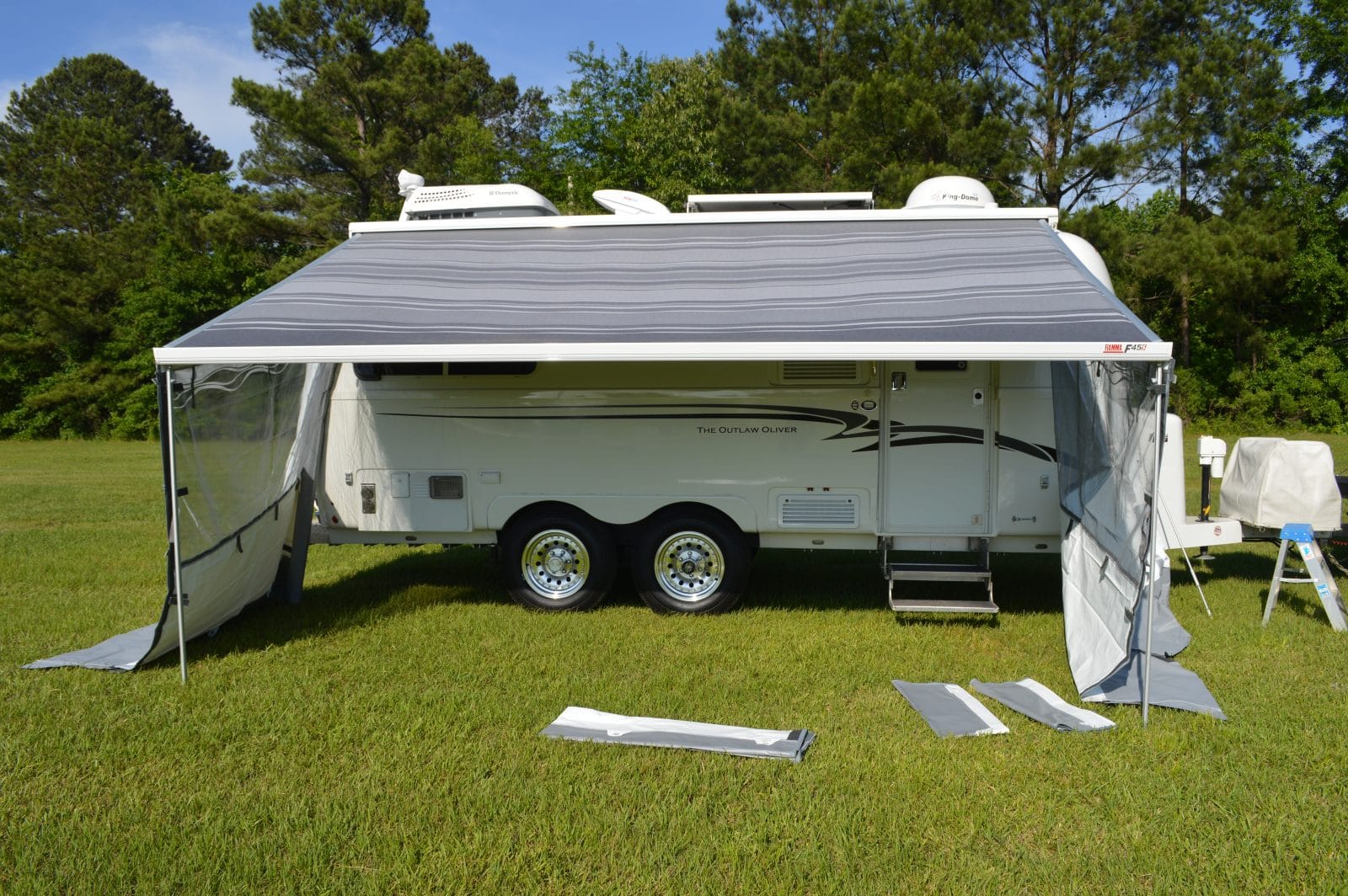
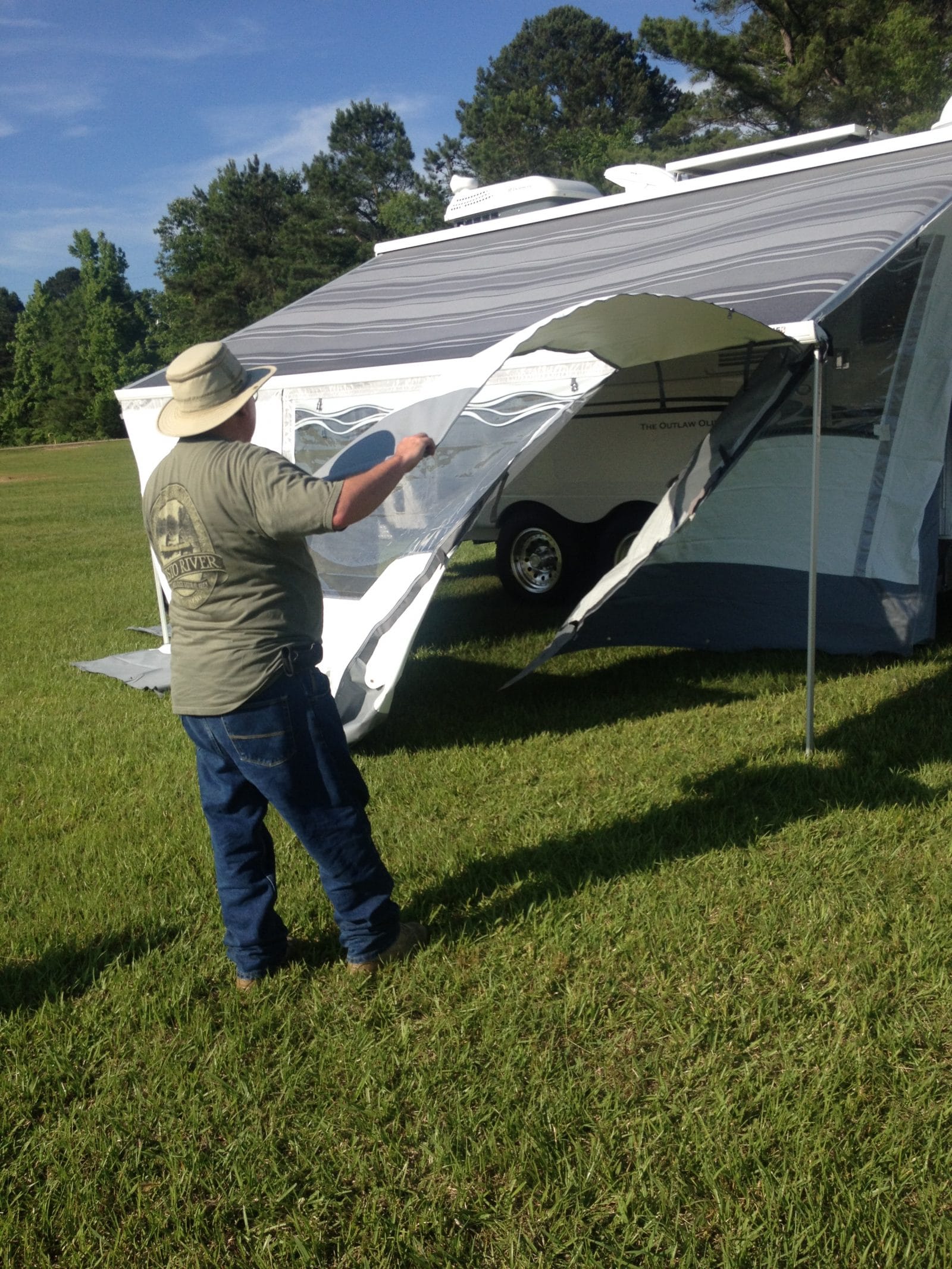
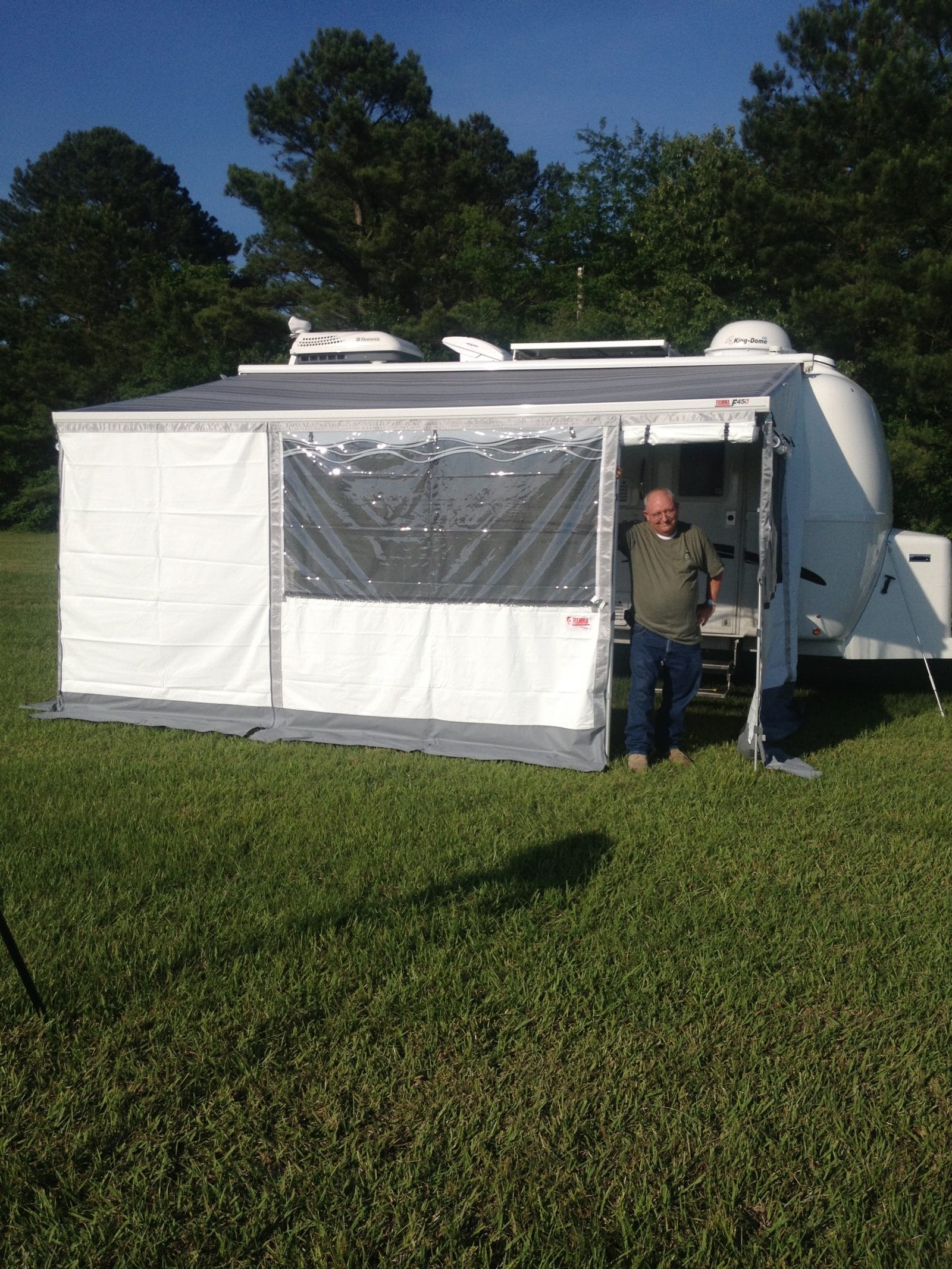
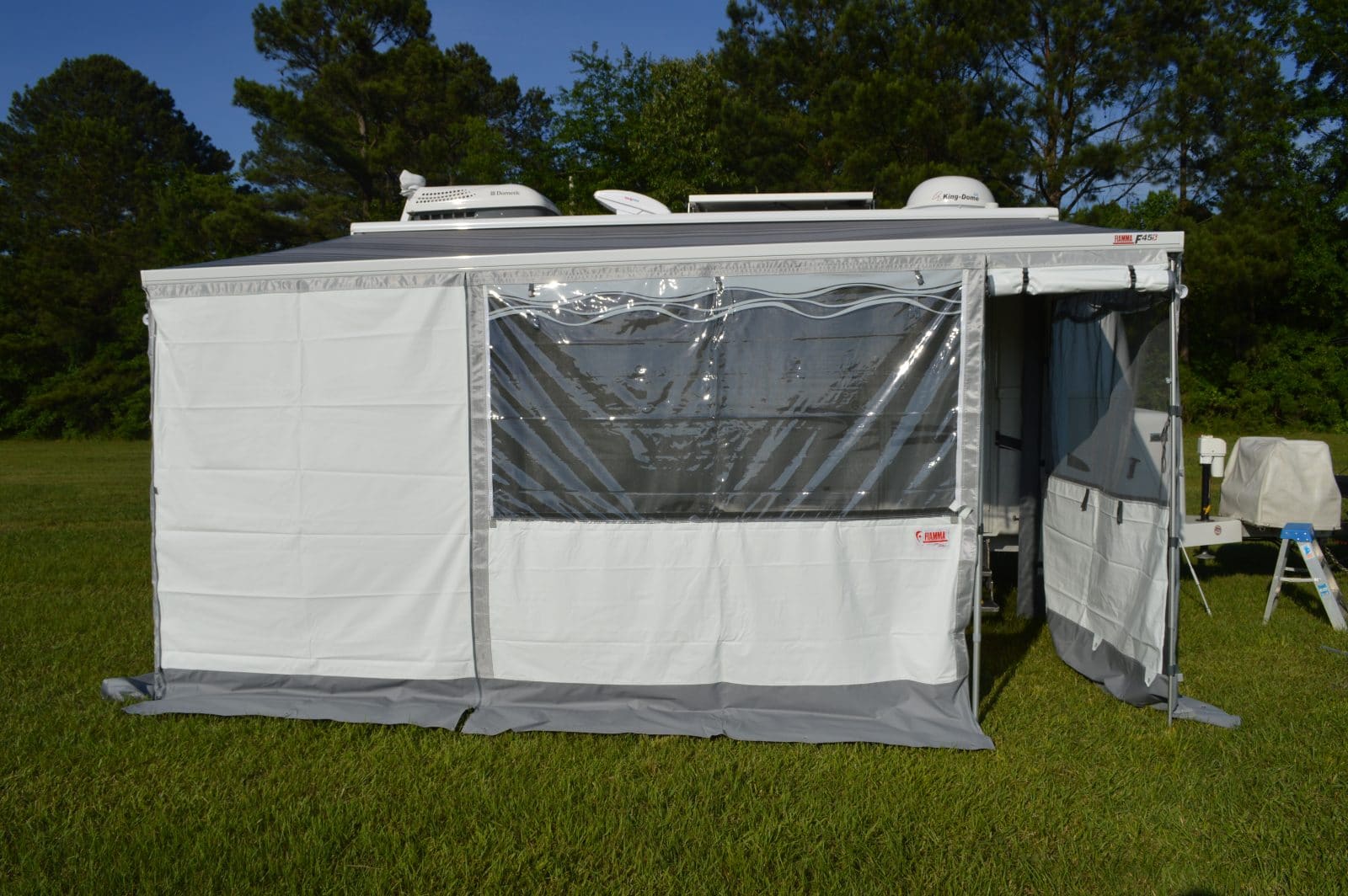
Reed & Karen: I hope you don't mind that I created a new thread for this and moved your post. This is what we have and it is made to fit the F45S awning that is installed on the Elite II. Setting it up takes about 15 minutes after you have done it the first time. There are a couple of accessories that have to be screwed into the awning and some assembling of other parts that only require being done once during the initial set up. The room's construction is top notch and it packs neatly away in its own (included) carrying case. It is heavy, weighing in at about 65 pounds. You do need to secure it to the ground in case of wind. I've included some pics of our initial set up and a couple taken during a recent trip to Maine.
 3 points
 -
Good point. What about running the heat strip plus the recirculating fan on the furnace?2 points
-
Paul and I spent the last two weeks camped on our property outside Asheville, NC. Among our chores, the "shabin" got a new coat of paint on three sides, Paul plumbed hot water into the bathroom, and we installed the EZE RV gutters over all the windows in the Oliver. Paul did a great job, I think, and they look really nice, as if they came with the trailer. We chose the UltraWhite color, which matches the white gelcoat really closely. In some of those heavy downpours (what Pete so poetically calls "frog drowning gully washers," ) our weepholes would become overwhelmed. Especially, when the rain washes off the sidemount solar panels, and runs like a wide open hose down the side of the big window over the dinette... overwhelming even super clean weep holes. So far, we're happy. The gutters should divert some of the rain away from the window. Haven't had one of those "frog drowners" yet since installation, though, so I'll let you know. Since it's monsoon season in Florida, I should know soon. I took a bunch of photos (Paul claimed editorial rights... probably wants to make sure I got him modeling the right beer tee shirt...) and I'll post those soon. He reported that the material was really easy to work with, after leaving it in the sun for thirty minutes or so. Sticks like crazy with 3m adhesive already applied. I think he did a very professional job. Under my supervision, of course. It's really a one person job, but he let me help. Hand me the alchohol, I need another paper towel, hand me the pvc cutters, please etc... Makes me feel useful. Probably would have been faster if he worked alone. Oh, well. Then I could get back to painting and building a campfire... Sherry1 point
-
We now have the, edit, reply, and quote buttons. Thank you...1 point
-
David, the white grommet is the one that came from the factory. I removed it from the factory hole and used it in the hole I cut. It fits a 2" hole. I covered the old hole with a white plastic door knob protector. When you get ready to do this I'll be available to answer any more questions you might have. Mike1 point
-
I recently told someone that although I have a 4 season camper, I'm a 3 1/2 season sort of camper. When the temp gets too low for too long, if I have an option I use some critical components of the trailer ... the wheels. I roll them south. If you break camp after breakfast, your camper will have residual heat that would last several hours before anything might get critical, temp-wise. Then you could pull over for a liesurely lunch and use the furnace for a while which would put more BTUs into the rig for your afternoon leg of the trip. No problem . . .1 point
-
We keep our fresh tank fairly full when out camping and traveling, so unhooking the water hose at night isn't a problem. Plus, where we're going we're only talking a few hours that would be an issue. It warms up pretty quickly during the day to 40s and 50s... maybe even 60s in southern AZ during January. I don't plan on driving in sub-30 degree weather. I was just wondering what the possibilities were if we did get caught in one of those west Texas weather changes. If the weather forecast is severe, we'll just hunker down and wait for it to warm up! We don't really get cold enough weather here to winterize. It seldom gets much below 30 and we rarely see 20s. Having said that, the arctic air that just moved south through the US did hit us. It was 28 Saturday night and 24 last night! I opened the access covers at the dinette and beds and left a space heater going at 65 with a temperature sensor under the dinette in front of the black tank. When I checked this morning it was 65 inside, 45 at the black tank and 25 outside. Thanks for all the great comments and suggestions. We've camped when it was low 30s at night and didn't have any issues. A few more degrees lower.... no problem! Mike1 point
-
Mike and Carol, these are good questions and I hope other more experienced Oliver folks will chime in as Winter can be a great time to be out traveling so long as the roads are in good shape. Driving home last March from Tenn. we encountered mid 20's temps between New Mexico and Eastern Oregon. At RV camps w/hookups, we always disconnected the water hose each night and switched to the on-board tank and pump. This is best all around as even with a heated hose, the base of the frost free spigot will freeze and that could potentially damage it. At night, I always left the water heater on as well as it is more exposed to the exterior. In fact, it is very well insulated on the interior side, by design, to prevent heat loss. But the flip side of that is that no interior heat from the trailer will keep it from freezing if it is turned off. The legality of driving with the propane turned on varies state to state. I tried it for a while but finally decided it just was not a safe practice. That's something you need to decide for yourself. When driving, I turn the fridge to DC and let the batteries keep it cold. Since you are driving, and not in the trailer opening it very often, and it is COLD outside, we had no issues. This worked well even in the summer when it was hot out. When driving, the DC power comes from the Tow Vehicle and we always arrived at our destination with full on board batteries. As far as the furnace goes, that's not an option for us, but it would have to be really cold out for a moving trailer to freeze up in a days worth of driving. What with everything sloshing around, the tanks being enclosed, and the trailer being somewhat insulated. How cold is really cold? HaHa! I suppose one of us will find out someday! But I would dare to say that you would have no problem with the temps you described. We had no troubles in the mid 20's at night. Although daytime temps did warm up to the mid 30's, so that is potentially warmer than what you will be experiencing. Use your laser temp sensor ( you have on right?) to spot check the tanks and vulnerable fittings like the brass backflow valves, etc.. Hopefully, the more experienced will have something to say about this because it's important to know the limits of your equipment. Chains??! Man, that would be awesome but I'm not quite there yet! Have a safe trip. Dave1 point
-
I think John's idea of the remote thermometer is very good. A friend of mine uses one in her refrigerator in hot weather. At least you would know what you're dealing with, allowing you to stop and run the furnace. My biggest concern would be the outdoor shower area, and the water heater. Sherry1 point
-
I'm interested in hearing some comments. I have never towed any kind of trailer in below freezing temperatures in winter, and plan not to, because here it means dealing with icy roads and frozen snow berms, and certainly it would mean driving on nasty road deicer chemicals, which are extremely destructive..... . In southern climes and low elevations like TX it is much more likely to be OK. But it would still have some added risk. Have you thought about installing a low wattage wall mounted 110 volt heater and running it on low off your inverter? As tight as the Ollie is sealed, it should be plenty adequate if you leave all the vents and windows closed tight. This is assuming that you have solar and adequate sunlight to keep the batteries topped up. A 400 or 500 watt heater cycling at say 45 degrees F isn't going to use huge amounts of power. In no way could I recommend using a free standing heater! Suburban says NO about running the furnace, but they are trying to cover their butt from lawsuits since many states prohibit using propane while moving. It will suck the propane but I would probably just do it. Make sure you know where to refill your tanks en route. Do some refill stations close down in bitter weather? I haven't a clue. Realistically it is probably best to just winterize your rig and rough it..... busted plumbing in winter is no fun at all. Oh yeah, a remote thermometer that shows the inside "below floor" temp of your Ollie while you are in your tow vehicle would provide great peace of mind. Be safe. John Davies Spokane WA1 point
-
Hi Linda, The USPS has a mail forwarding option that comes with a fee and may not work at some locations. If you know your neighbors very well, you might try my system. I'm great friends with my backdoor neighbor and side neighbors. As I head out for an extended time, I ask one of them (on a rotating basis) if they could collect my mail, trash the "buy me" flyers and anything marked as pre-sorted mail where the stamp should be. All my bills and financial issues are automated and do not involve the mail. On the very rare instance that I may need something that arrived at my mailbox, I hunker down at someplace for a spell, go the local Post Office, and sign up for a "General Delivery" box. Then my friends will place the item(s) in an envelope or box and mail it to me under my name at the local P.O. General Delivery. Hint: It helps to smooth the situation with the occasional box of chocolate covered strawberries sent to the Mrs. of the house if you are out for months on end. Good luck and happy camping!1 point
-
If you are getting a reading of 13.5 V you are fully charged. I understand your IPN-Pro is telling you you only have a 75% charge. That calculation is incorrect. If you could pull your trailer out into full sun for a few hours it would reset your IPN-Pro and it would read properly. My trailer has been under cover for the last 30 days or so and it is doing the same thing. I cannot tell you why it is like this, it seems to be some idiosyncrasy between the Progressive Dynamics charger and the Blue Sky system. I will let you know when I get this sorted out.1 point






-
Recent Achievements
-