Leaderboard

Popular Content
Showing content with the highest reputation on 09/29/2017 in Posts
-
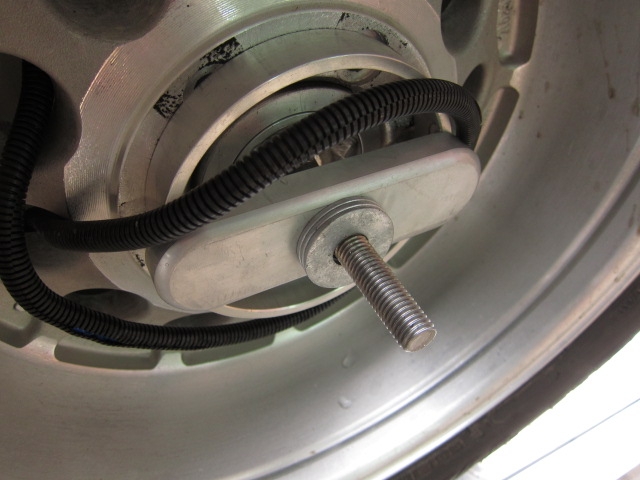
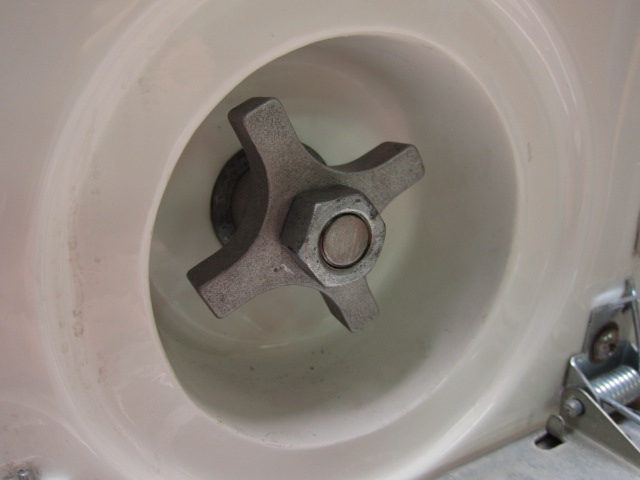
On our most recent trip, and after a long haul down a pretty rough gravel road, I noticed the spare tire cover was coming off. When I pulled down the license plate to inspect, I found the X-nut (?) used to secure the cover was hanging on by just one or two threads! Good thing I stopped to stretch when I did, as I still had some miles to go. So what I have done now is to pack out behind the cover with some 5/8" washers on the threaded rod. This fills the space between the back of the cover and the threaded aluminum bar that actually secures the tire. Then, with he cover back on, I have added a second 5/8-11 nut on top of the X-nut to secure it. If you travel rough roads often, I would recommend securing the cover in this way. Dave
 2 points
 -
A composting toilet handles solids just fine with zero water usage. Open the trap door and down they go.... It is important to remember to open it first. Just saying..... never mind. John Davies Spokane WA2 points
-
Aubrey, You Eagle drivers just can't stay out of afterburner, can you? Hog drivers don't have that problem. You're retired . . . relax! I have a cover over my fan and always have it pumping out air while traveling. I crack the side rear windows a smidgen to aid in the air exchange. Pete2 points
-
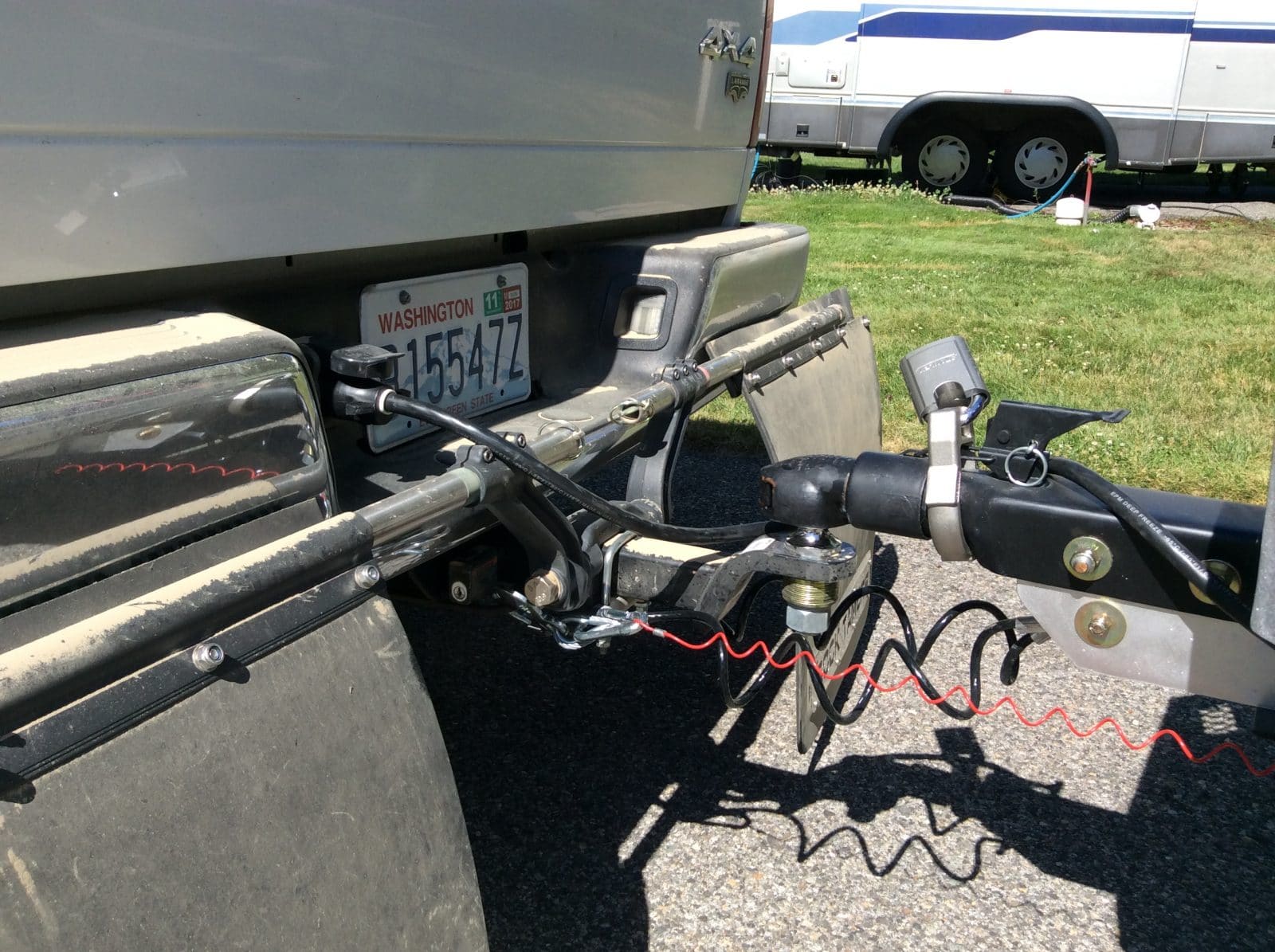
1 - You don’t need a WD hitch, any HD pickup will be fine with a regular 7500 pound rated, 2 inch ball with an appropriate drop to give you about a 24 inch height with a normal load in the bed. There are many folks here towing with big trucks and dead weight hitches. I towed with a Ram 3500 and it did not really notice the tongue weight. No noise either, but I used a clamp-on hitch quieter thing, to eliminate all the play in the receiver hole. Notice that I used an extended shank ball, intended to go through a bumper, and I added a stack of Grade 8 washers. I thought I might want to fine tune the tongue height by rearranging them, but in this instance it wasn’t needed. It is nice to be able to adjust the ball in approximately 1/8 inch increments to get it dialed in 100%... Don’t use plain washers, they need to be hardened. 2 - Backup assist - There are many options. I used an iPhone temporarily mounted to a Ram Mounts 1 inch ball that I screwed to my canopy window frame.I attached a cradle and phone to it and I just called myself using Facetime, and watched the video on my iPad. It worked great as long as you had cell service. And of course you could not drive around with it back there. An aftermarket camera would be a good choice, or go buy a newer truck;) I elected to not buy the factory back up camera. Instead I installed a Garmin BC30 in back of the trailer. If I need to I can install additional ones, since my GPS will accept up to four video inputs. Since I switched tow vehicles, I do not ned an extra one since my Land Cruiser has one, tho it is off center on the hatch, and thus gives wrong visual cues when aligning the ball to the coupler. Frustrating, but usable. If you decide to use a passenger for help, phones work great for communicating. I carry a set of handheld family sevice radios just in case there is no service. Either method sure beats arm waving, shouting and cursing. Especially in the dark or in inclement weather when your mirrors or camera are fogged up or dirty! There are clamp on or magnetic guide rods but I have never tried one. Did this help? John Davies Spokane WA
1 point
-
Darrell & Kathy, Obviously you enjoyed your plant tour. Certainly you know why most of here are very pleased with our Olivers. I'm guessing that you are fine pulling your Oliver without a WDH. However, keep in mind that there are two separate parts to that equation - 1 - what the tow vehicle (TV) can handle and - 2 - what the hitch can handle. With my F150 I can tow up to a little over 12,000 pounds. However, a hitch weight of over 500 pounds requires a WDH. Just to make sure - check your Ford Owner's manual. With my 2017 F150 I have an integrated backup camera with a seven inch on-board screen which allows me to back up to the Oliver's hitch solo - it works great. There are numerous after market cameras of this sort and even some that will transmit the camera signal to your cell phone or tablet via WiFi - I have one of these that I placed on the back of my Oliver instead of purchasing the system offered by Oliver as an option. These systems are fairly simple - pick a location on the rear of the truck (such as the license plate holder/frame, bumper, tailgate, etc.) place the camera there, complete the wiring (into the backup lights of the truck if you only want the camera to work while backing up), "pair" the camera's WiFi signal to the device you are using to view its output and start backing up. For the camera I placed on the back of my Oliver, I had the appropriate wiring and an on/off switch run by the guys at the plant during construction. Hope this helps you. Bill1 point
-
Hope you have seen the 2008 Elite that was just put on the forum. Welcome. We are picking our Oliver up on December 5th.1 point
-
Way at the bottom on my Android turbo . So far at the bottom that I would never look that far. Honestly. Sherry1 point
-
Liz and I (Jeff) may be a bit obsessive, but we have four lightweight clipboards with these checklists for setting up and breaking up camp with our Ollie. Liz starts in the inside while I start in on the outside. As MS Word documents, they can be modified to suit. We have found that, without actually checking things off, we can easily forget something--and forgetting some things can be very bad. (Note: References to "Stan" on the checklists are to our Toyota Tundra tow vehicle.) Breaking-Up-Camp-Checklist-OUTSIDE.docx Breaking-Up-Camp-Checklist-INSIDE.docx Setting-Up-Camp-Checklist-INSIDE.docx Setting-Up-Camp-Checklist-OUTSIDE.docx1 point
-
I've been doing it constantly for almost 9 years now. I never got a manual for my Ollie (#32) so never knew better. The only time I had a problem was when I left the push-up bath vent open and the fan powered. I doubt the poor little motor lasted more than a few minutes at the speeds I like to travel.1 point
-
Great write up, thanks. Talk about lemonade out of lemons... thanks for adding another bullet point on the list of why to own one.1 point
-
We just booked D8 for the rally. Maybe I will paint the Stream white so we fit in. LOL? Seriously, we just want to hook up with some really great friends. See you all there.1 point
-
Hi All, This will be our 2nd Oliver Rally. Our previous one was September, 2016. We missed the May, 2017 rally. We will be in site D4. Looking forward to the rally! Happy Travels, Dean1 point
-
We carry an old milk crate in the back of the truck with assorted cutoffs of 2x6 and 2x8 for leveling, freshwater hose, filter, and Harbor Freight heavy chocks. (I know, someone is saying yuck, hose with all that? We screw the ends together after draining. It's clean.) Many people carry a pressure regulator. If pressure is suspect, we just don't connect. And, we dry camp most of the time, so work from the tank, and 5 gallon containers. The stinky slinky resides in all its glory all alone, in a bag, in the bumper compartment, where it can contaminate nothing else. Other than what you think you'll really, really need to camp for whatever time it takes you to get home, keep the load light on the way in. You'll want bedding, a way to make coffee or tea, some dishes (maybe paper, maybe melmac...), a bit of silverware and a good knife, and pull out one small frypan and one small saucepan from your collection for starters. Then, add your clothes, some towels and toiletries. As you camp a bit more, you'll see what you really need. Stores are everywhere, including a nice Walmart in Hohenwald for just about any essential you forgot and need immediately . Have fun with it. And, congrats. You made a great decision when you decided to get an Oliver. Almost eight years now with ours, and it still looks and performs as it did when we got it. Awesome build and design, and awesome people. Happy camping.1 point
-
Hello just to add a few thoughts you should also use and have at pick up a water filter with the flex connection again at all walmarts and I always use a brass 45 degree angle but usually they have the 90 degree hose connection for on you water connection it makes it a lot easier to set up on any trailer. Remember to run water through it at the camp site first before connecting to the trailer to flush out the charcoal. The oliver also has a cable connection they do not supply a coax cable so I would have two 25 ft lengths usually one will do but we were just at Cherokee rally and another oliver had to run over a site to get a good connection and also needed a coupler to put the two lengths together and many people also get the slip connections on these to make it easier. I carry also several rags to wipe off my outside cables i.e. Power,coax,water hose before placing them away and use a couple totes in the cargo hold but probably get those after pick up and there is a walmart in Holenwald to hold these items for easier access. Just some ideas you will love and enjoy your Oliver and hope to see ya all on the road take care. Thanks Gary1 point
-
Linda, Congrats on the impending hatch of your new "baby". As far as the hoses go, Oliver will supply you with both the water and sewer hose. If you choose to supply additional ones of your own, potable water hoses are always white and are easily found in the (usually small and limited) RV section at most Wal-Marts. If you buy an additional sewer hose, pick the heaviest duty one you can find. We went for 5 years with our first Oliver without needing any more sewer hose than came with it. I did add a couple of extra lengths when I made a dump station at home. I've taken to carrying one of these with us in case we have a campsite that has "full" hookups (water, electric AND sewer). If you plan to camp where you will regularly have access to campsite sewer hookup you will usually need an additional length of hose and a sewer elbow will make the connection to it a lot more pleasant (think Robin Williams in the movie RV). Unless you are perpetually parked on concrete or some sort of pavement, you will probably have to have something to put under the feet on the leveling jacks. The Oliver is heavy and if you are parked for any length of time on anything other than solid ground they will tend to sink in somewhat. I use some 8 inch lengths of 4x6 treated wood stood on end under the back two jacks. This keeps me from having to extend/retract them their full length (this also saves on battery power if you are not hooked up to electricity). Also, if you forget to raise those rear jacks before pulling out of your campsite, having them already 8 inches off the ground will go a long way toward not discovering this error by immediately bending the jacks backward. I likewise use some 4x6 blocks under the front jack but not stood on end. If the trailer moves forward or backward more than a few inches it would topple off an upright block and, based on a tongue weight of over 500 pounds, the jack would hit the ground pretty hard. Which brings us to the subject of chocks. You need them. You didn't mention which Oliver model you are getting but for the single axle you need two chocks; for the twin axle, at least two, four would be better. Harbor Freight has some that are made of solid rubber for about $6-7 each. Put these in front of and in back of your tires BEFORE you unhitch. You never know if the site is just unlevel enough to make the trailer roll when you raise it off the ball. Even a few inches can be bad. Backwards usually not so much but it might get away from you and go down a hill someplace , forwards and you've got a nice ding in your tow vehicle. Not knowing your experience, I hope these little pearls of info are not redundant to you and will serve to enhance your camping adventures and help you avoid some of the pitfalls that await all of us. May your road go ever on..... Steve1 point





-
Recent Achievements
-