Leaderboard




Popular Content
Showing content with the highest reputation on 02/10/2019 in all areas
-
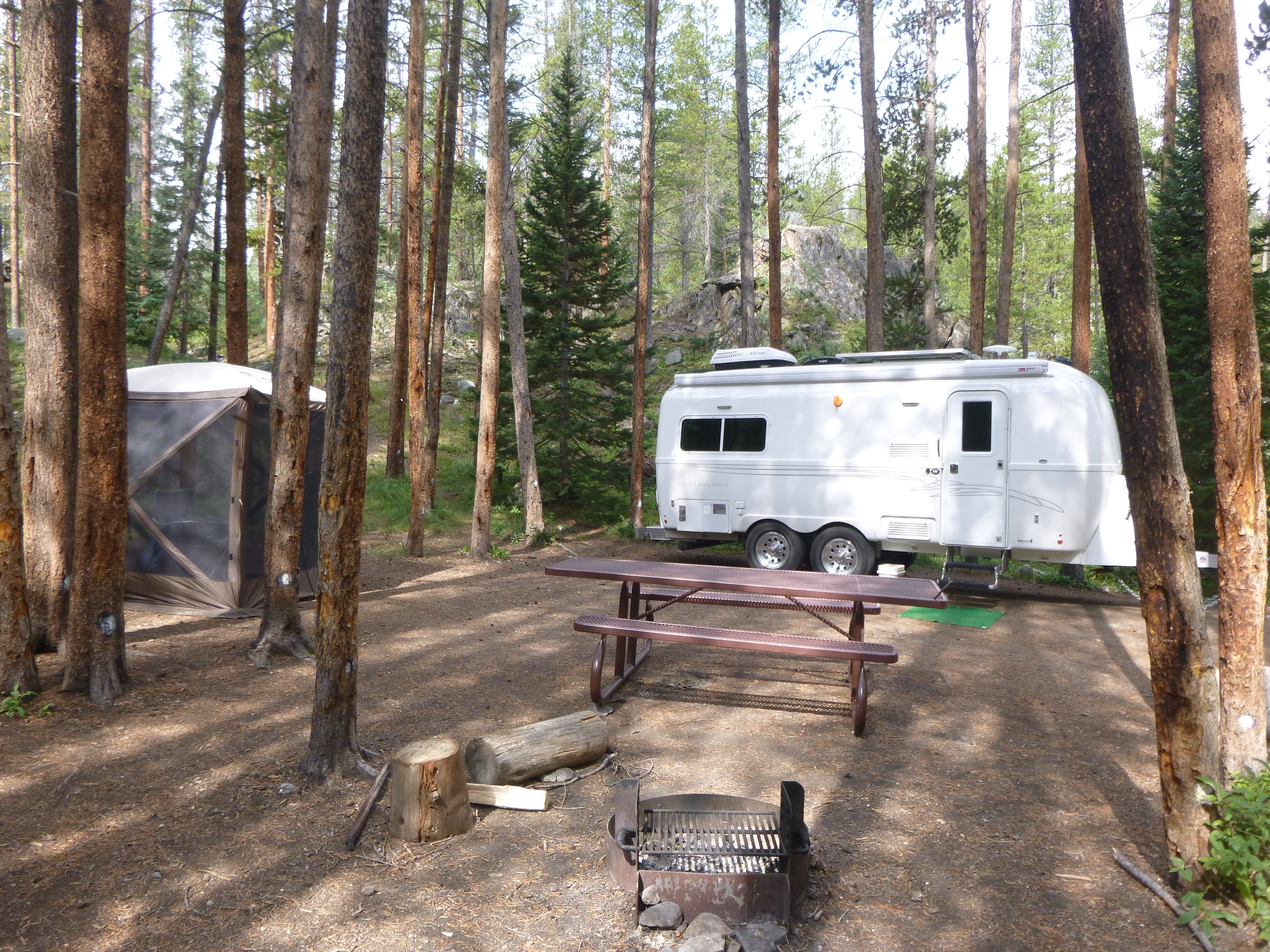
When we camp in the area where we live, we normally take bicycles or kayaks or motorcycle depending on the area and time of year. Next camping trip on the Blue Ridge Parkway, will probably drop off a motorcycle where we will be camping and tow the Ollie there later in the day. Plan to also install removable kayak and bicycle racks on our Diamondback cover on the Tundra, too. When we travel around the US and locally we also use Ollie as a base camp while exploring and photographing the beautiful places in our nation. We normally don't spend much time at campgrounds from 10:00AM to 6:00PM during day while out exploring. Here's photos taken during local camping trips Hunting Island SC Blue Ridge Parkway Eastern TN Photos taken on trips out West You meet the nicest folks in rest areas with Ollie Took this photo of brand new Ollie owners in New Mexico We have so many more beautiful places to visit and nice folks to meet during our Ollie adventures!2 points
-
RB - My major trip of the year is fly fishing out West. Usually I set off about the 1st of July and return to western North Carolina on or about September 1st. This is all about fly fishing. I will do some back packing to high streams and/or lakes but usually I'll fish three or four days in one spot and then move to another spot. On days when I get tired I restock, do laundry and hike a little. Other than that, I try to ask "locals" what there is to do in the area. I prefer something that is a bit off the normal radar. For instance - as a result of asking - I was directed to a wonderful Buffalo Bill Statue that is located just to the north, northwest of Oakley, KS. Its only about four miles south of Interstate 70, but, if I had never asked I would have never known it was there. On my shorter trips I usually have a main theme in mind - State Park for hiking, waterfall searching, bike riding, winery tour, museum tour and the like. It seems that there is always something to do and not enough time to do it all! Bill
 2 points
 -
Oliver owners, and other RVer's I am curious, once you have finally arrived to the desired location, what type of activities, other than just chillin, do you folks enjoy. For myself, I am not very good at "chillin" as the younger crowd calls it- seems I need to have done something with physical activity, before I can chill. As a couple we like to hike, ride bikes, swim, paddleboard, meet new folks, etc., and for me, some WW activities, perhaps get into fly fishing, and almost anything else that gets the heart rate up. My wife enjoys the sightseeing aspects more than I do, I'm more participatory. We would love to discover yall's interests. Thanks RB1 point
-
I would say that is the problem. This is off etrailer. Tow Ready Wiring - 20142 Designed for use with vehicles that have lamp-out sensors, this adapter ensures that your trailer with LED lights does not trigger any warnings or hyperflashing when hooked up to your vehicle's 7-way, blade-style connector. Features: Bypasses your vehicle's lamp-out sensor so that you can tow a trailer with LED lightsPrevents your vehicle's computer from sensing that a trailer light is burned out, which is how it would normally read the LED lights on the trailer Designed for use with vehicles with Lamp-Out sensors - such as Audi, Mercedes-Benz, Volkswagen, and Porsche Plugs into the 7-way, RV-style trailer connector on your vehicle Provides a new 7-way, RV-style trailer connector that works with trailers that have LED lights If you have a vehicle with a factory tow package that has a lamp-out sensor and you tow a trailer that has LED lights on it, then you've likely experienced hyperflashing and/or false computer errors. Because LEDs pull such a small amount of power, certain sensors are unable to detect them. The result is a warning in your vehicle that continuously tells you that the trailer lights are not functioning. In addition, the lights on your trailer may not illuminate properly because of your vehicle's inability to recognize LED lights. This can lead to either hyperflashing lights on the trailer or lights that will not illuminate at all. This adapter has a built-in bypass system that is designed to eliminate these problems. Just plug the adapter into your vehicle's 7-way, RV-style trailer connector and you're good to go. Plug the wiring connector from your LED-lit trailer into the adapter's 7-way, blade-style receptacle and the trailer's lights will illuminate as they're supposed to, without triggering errors in your car's computer. 20142 Tow Ready 7-Pole Blade to 7-Pole Blade Trailer Connector Adapter for VW, Audi, Mercedes-Benz, and Porsche Towing Trailers with LED Lights1 point
-
It's the Lansa handle, in I think the largest size. VHB Tape1 point
-
Misc. Stuff Since I'm carrying my impact driver, I thought a small work light that uses the same batteries would be useful to have. I keep one small tool roll with some brushes, picks and other do-dads that might come in handy. Most of these you could pick up at Harbor Freight since they don't need to be the highest quality: Craftsman Pick Set - just a small, cheap set that I had in the house. Any similar set would do. Craftsman Retaining Ring Pliers - these are cheaply made, but also very compact GearWrench Inspection Mirror GearWrench Telescoping Magnet - for retrieving all those bits Wire Brushes In the center console of the truck, I have one of these dividers (they make them for all makes and models), which allows me to carry these tools in addition to the normal center console stuff: Fluke 107 Multimeter - I think this is the smallest multimeter they make. I really like it. The case I use is this one. The bit driver, bit set, the Plano box of ¼" bits, and mini pliers that I mentioned above. Scissors Raptor Shears - when we travel, this goes in my backpack along with the first aid kit. Folding Utility Knife with spare blades Pocket Knife - no idea what brand X-Acto Knife with spare blades Tweezers An ancient Gerber Multi Tool, which I can't remember using last. I'm not a big multi-tool guy, but I can see how they'd be useful. I also keep my headlamp and a flashlight in there. I keep a set of work gloves stuffed in each driver side door, in hope that I'll remember to wear them, and one set for my wife in the glove box. I also have a wad of heavy rubber gloves for dirty work stuffed in the rear storage tray. For emergencies, I keep a set of warning triangles and some LED flares behind the back seat next to the jack. And you've got to have an ice scraper, and I like these frost scrapers, too - mine sees a lot more work than the actual ice scraper does. I keep a box of drill bits and a keyless chuck for my impact driver. Alternatively, you could get a set of bits like these, so you don't need the chuck. In a box in the bed of the truck, I keep a rubber mallet, which is useful for knocking loose chocks. In the trailer, I keep a PEX crimper for the few spots that might require one.1 point
-
Sockets Socket sets are a huge space hog. Worse than that, they can add a ton of weight to your toolkit. Not only do you have ¼", ⅜" and ½" sets, but you've got to carry both SAE and metric, plus both shallow and deep sockets. One strategy for lightening the load is to eliminate the overlap among your socket sets. In fact, sometimes you can eliminate the ⅜" drive sockets all together by just carrying a complete ¼" and ½" set. But of course, the ½" set is the bulkiest and heaviest of the three, so there's an argument to be made for keeping a full ¼" set and then eliminating the overlap as you go up in the two larger ones. Some people try to do without the deep sockets, but I've found that it's inevitable that I'll need one if I don't carry them. And of course if you only carry deeps, then you're bound to find a bolt without enough clearance for them. Fortunately now we have pass-thru socket sets, and to me, that's the way to go, as they have other advantages beyond their pass-thru feature. If you're not familiar with them, these sockets are hollow, with ratchets that connect around the outside of the sockets so that you can slide them over even the longest bolt. They're becoming more prevalent, and you can find lesser expensive sets in the big box stores, but you have to be careful to find a set that has a broad enough range that you don't find yourself having to carry along a standard set anyway just because you can't find a particular size socket. I zeroed in on the GearWrench sets for a number of reasons. First, here are the two sets I have: GearWrench Flex Head Pass-Thru Socket Sets - I have the ¼" set #891427, and the ⅜" set #893823 Generally, I trust GearWrench tools. I have a set of their ratcheting wrenches that I've owned for years and they've never given me a bit of trouble. I also know that a few of the mechanics at the garage I go to use GearWrench rather than Snap-On. They just seem to have a good balance of price to quality. The first things you'll notice about these sets are that they're small and they're light. Like, very small and light. I have the standard GearWrench sets for home use, and the ⅜" pass-thru set is both the same size and weight as the standard ¼" set. That's a huge difference. The next thing you'll notice is that the ratchets themselves are longer. In fact, the ⅜" ratchet is longer than GearWrench's standard ½" ratchet. The reason for this is simply that these sets, though lighter, are actually stronger than their standard counterparts, so GearWrench is comfortable giving you more leverage. You'll also find that both sets have a broader range of sockets than usual. For those last two reasons, I was comfortable not getting a ½" pass-thru set, which I'll discuss more below. Advantages: lighter and more compact by a significant amount over standard socket sets; broader range of sockets; stronger ratchets; slightly thinner head/sockets for tight access. I also find it easier to pop the sockets on and off the ratchets. Disadvantages: fewer accessories are available, like u-joints, spark plug sockets, and adapters; fewer storage options for sockets; sockets aren't easily adaptable to impact drivers. I think that the biggest disadvantage to overcome has to be the paucity of adapters and accessories. The accessory problem isn't too difficult, because each set includes two extensions and an adapter to go to either standard ¼" or ⅜" sockets. The adapter will allow you to use standard accessories like u-joints and extensions. The problem though is that they don't include an adapter to go back the other way. So if you use a standard u-joint, for example, you then have to use a standard socket, which defeats the whole reason you bought the set. What I discovered, however, is that GearWrench actually does make an adapter to go back the other way, but apparently they don't realize it. The part comes in their big tap and die set, which uses the same "vortex" connector. Fortunately, you can buy the part separately: GearWrench 82804 Female Adapter With that adapter, you can now drive your pass-thru sockets with an impact wrench, or with a standard ⅜" driver. Which of course means that you can carry along a standard ⅜" driver and any accessories you want, and then use your pass-thru sockets on the end. If you need to make a "deep" socket out of them, then just use the smaller pass-thru extension with the socket. Problem solved. Unfortunately, the same part doesn't exist for the ¼" set. A standard 12mm socket will hold those sockets, however; so that's a viable, if not ideal, workaround. So I bought a magnetic 12mm that I threw in the toolkit just in case. It doesn't hold the sockets as well as I'd like, but it's something: ¼" Drive 12mm Magnetic Socket The other disadvantage to overcome is storage. These sockets don't fit my favorite storage method, which is socket rails, so you're left either keeping them in the case they came in, or throwing them in a bag. The bag option is O.K., and most compact, but obviously you have to dig around for what you need, and GearWrench doesn't make the most clearly marked sockets in the world. The case option gives the easiest access, and the cases are compact enough should you decide to go that route. The drawbacks to that though are that 1) the sockets fit loosely in the cases and make a lot of racket, 2) those cases aren't really meant to take a lot of abuse so I don't know how long they'd last, and 3) I'm certain to knock the case off the hood of the truck or something, sending everything flying who knows where. Some internet sleuthing, however, led me to this: Socket Roll This is designed for regular sockets, but it works fine for the pass-thru sets. It's very well made, and the elastic loops are woven so they aren't the kind that will be stretched out in a year. The only drawback I found is that the loops are bit tight for the wider pass-thru sockets, so it takes a little work to get them in. Also the labels don't 100% correspond to my sockets, but that's no big deal. It rolls up tight enough that I can store it behind the fold down rear seat of the truck. O.K., so what about the ½" sockets then? Well, with the added strength and range of the ⅜" pass-thru set, I decided that I didn't need a complete set of ½" sockets. Instead, I just put together a small bag of the ½" sockets that aren't included in my ⅜" set, plus sockets for the lug nuts on both the truck and trailer. And instead of a standard ½" ratchet, I decided that I'd just carry my ½" torque wrench, since I only use it for the truck anyway. Despite its length, it fits well in the storage bin under the rear seat, in its case, so it's not a problem to carry. With that and a ⅜" to ½" adapter, I feel like I'm set for any ½" ratchet needs. I prefer the Precision Instruments torque wrenches because of their split beam design. Split beam wrenches don't have to be reset to zero after each use and can handle the vibrations and general abuse of being kept in the truck full time. Precision Instruments ½" Drive Split Beam Torque Wrench1 point
-
Screwdrivers I've found that screwdrivers can get out of hand pretty quickly. Trucks these days are full of torx and hex head screws and I've run across some square drive screws in the trailer - so if you carry a full set of each of those, with both Metric and SAE hex and then a decent set of Phillips and flat head drivers, you can end up with pretty bulky bag of screwdrivers. I think the easiest way to pare that down is to switch to hand held bit drivers, and then you can carry all the bits in the world pretty compactly. Advantages: you can carry dozens if not hundreds of bit types and spares in a box the size of your hand; the bits can be used with power drivers and ratchets; replacing a damaged bit is far cheaper than a screwdriver. Downsides: bits are easy to lose; the ones you typically find in big box stores are cheap, have a lose fit both in the driver and in the screw, and are prone to breaking; some bit drivers don't hold onto the bits well, so they tend to fall out; the bit connector on drivers can be bulky and limit access to screws; if you're dealing with multiple screw types, swapping out bits can be a pain. I combat the downsides by carrying spares of the most used bits, carrying multiple bit drivers in different sizes so that I can easily swap between them if needed, and of course buying quality bits that aren't likely to break and quality drivers that hold the bits well. I prefer the magnet bit holders. I've found that the locking type ones are too bulky and even the nicer ones are prone to jam. I also carry a regular 3/16" flat head screwdriver in case I need to pry on something. The bit drivers I have are from Wera and Wiha (pronounced Vera and Veeha - it's not a German tool unless it's pronounced weirdly). I prefer the handle style of the Wiha, but Wera makes some interesting bit holders so I've ended up with more of those: Wera Kraftform Kompakt 28 - I keep this one in the center console of my truck along with all my bits. It's very compact and the most versatile bit holder I have, since it's both a regular handle driver and a (large) stubby. As a bonus, the shaft can be removed and used with a power driver, or combine it with another driver to double its length Wera Kraftform Kompakt 27 - If I'm pulling out a bag of tools rather than just grabbing the one above from the console, then this is what I'll use. Once you use a ratcheting screwdriver, you're spoiled for life. This one is quality enough to not feel gimmicky. Wera 813 Bit Holder - This is a smaller and thinner driver that's good when you're working on electronics or some other detail work. Wiha 57mm Stubby - Just a good sized stubby with a nice grippy rubber handle. Wiha 125mm Bit Holder - I use this as a backup to my Wera bit holders, since both of those have features that could potentially break. This driver also has an interesting finish on the handle that maintains a good grip when either wet or oily. The bits I use are from Wera: Wera 30-Piece Bit Check Set - this is a good starter set and includes a locking bit holder if that's what you prefer. Misc. Wera Bits - KC Tools keeps just about anything you'd want in stock and at a good price. They ship pretty quickly, too. I've also found that some ratcheting "sticks" can be indispensable when getting to a screw in a tight spot. You could use a bit holding socket on a regular ratchet, but I've found that those won't always fit where you need them, whereas these will slip into almost any nook. Right now, these are the best ones I've found - they're super thin and I like the length and adjustable heads, but they aren't the best quality. Time will tell if they hold up: EZ Red Quarter Stick EZ Red Combination Stick Power drivers have also become compact enough that I don't mind including one and a couple of batteries in the toolkit. I have the Bosch below, but Milwaukee also makes a compact one, and that may be the better buy. If you prefer a non-impact version, I know that Bosch makes one so perhaps Milwaukee does as well. Here are links to each: Bosch PS42 Milwaukee M12 For bit storage, these will give you easy access without taking up a ton of space. I divide mine up by bit type and store the holders in one of these Plano boxes. I think I have something like 125 bits in that box. That's a lot of screwdrivers! One final extra that will come in handy when using bits is a magnetic holder to use when working. This can be one of those trays that they often give away for free at Harbor Freight, or you can try these wrist bands: Magnetic Wrist Band Magnetic Tray1 point



-
Recent Achievements
-