
Geronimo John
-
Posts
2,400 -
Joined
-
Last visited
-
Days Won
68
Everything posted by Geronimo John
-

Shower drain pan backup while towing
Geronimo John replied to DBL-R's topic in Mechanical & Technical Tips
I agree with JD's thoughts and recommendations. The rear gray water valve is a bear to take apart. But it appears that your problem likely is the vent valve up front. I would add that if the valve is not closing there could be two causes. The valve is partially clogged. That can turn into a mess for sure to also deal with. I would approach it this way: Step 1: First try servicing all your cables as in the below DIY. Such a DIY is long overdue for your hull 99. Mine was and it is 342. That process may result in the valve clog getting mushed and then flow down to the dump station. If that does not fix the try Step 2. Step 2: At a dump station, from inside, flood the gray water lines with a LOT of water. Use your pump hot water at both sinks. Then try max flow with the pump and a garden hosed flowing into the bathroom sink. Suggest having a watchful eyed helper. Step 3: Send a garden hose with the end cut off it from the rear of the trailer to see if you can clear it that way. Be sure to open the gray valve outside to clear the pathway. Step 4: Consider getting help with a camera inspection. Hope this helps. GJ DIY - Sanitary Drain Valve Cables.docx -
2022 elite 2 converter questions
Geronimo John replied to carpenter's topic in Mechanical & Technical Tips
does your OE2 have the progressive dynamics converter (charger)? if so you can charge it with a single Honda 2000 or 2200 eu inverter charger. No need to parallel two of them. those generators will also run your a/c, but not much else. you need to be sure to turn OFF the electrical switch on your hot water heater and not be on AC or DC for your refer if it is a three way. GJ -
I am working the same issue with my hot water heater. It works on 120V, but not on 12 volts. The light indicator on the switch does not work. It appears to have died the same time that the hot water heater would not work on gas. I'm thinking I have either one or two issues. Light Issue: My assumption is that all of the indicator switches need a yellow wire (ground) and in this case the orange and reds are the 12 volt power to the switch and then to the hot water heater. If this is the case, then the fact that there is not a yellow ground connected to the switch would for sure result in a no indicator light condition. Likely the ground is buried in the mess of wire up there. Will go snipe hunting on it later. Power to 12V Side of Heater: My second assumption is that the rocker switch red and orange wires are switched on/off by the rocker and provides power to the water heater mother board to turn on/off the gas heating. Does all the power for gas operation flow thru this switch? If so, a bad switch would either fail open or closed, causing the gas side of the heater to either run or not run accordingly. If this is the case, just jumpering the red and orange terminals at the switch should cause a light off of the gas side of the heater. Correct? Is the above logical? Thanks GJ
-
Another use for the fuse located at the jack is to make it more difficult for a thief. When leaving it in a sketchy situtation, I lower the tongue and remove that fuse. Want my Ollie, they will have more difficulty than planned for. GJ
-
Made in USA leaf springs
Geronimo John replied to Mountainman198's topic in Mechanical & Technical Tips
In June we had our Dexter OEM axles upgraded to 5200's. Our replacement 2400 pound rated Dexters were retained. No reason to replace them after just a couple of seasons. What I did learn of interest follows: As of that time, Alcan has replace abut 300 sets of OEII springs at their shop. They have also sent to other Oliver owners about 450 sets of springs. Both 4 and 5 leaf. They have also sent a bunch of 5 leaf springs to Oliver for use in the new Heavy Duty suspension, and sent four leaf springs for the other 90% of their customers. I specifically discussed with Alcan the repair method for spun spline bolts. He stated that the Hex Head Washer approach IS the best solution. He also stated that the second best solution is to weld a spacer washer and try to create a new splins. I asked if it was his trailer which he wouldl do: He stated the Hex Head Washer approach is how he would do it. I asked what he thought about the Dexter 1750 rated springs: He stated they are too light for a 6K trailer full time loaded. I am glad to hear that OTT has gone with the suggestions made about 30 pages ago..... GJ -
DC-DC Charger Installation - Oliver LE2 and RAM 1500
Geronimo John replied to Grizz000's topic in Ollie Modifications
First, great write-up. Saved it to my DIY file. We also travel long and far, and having a Victron DC to DC has been wonderful. Sadly ours is only the 30 amp verson. But when it fails, I'll be digging out my saved DIY of your efforts. So thanks in the future a second time. I too am open to roof mount solar, some day. Just don't like the look or their potential MPG impact, especially out west with high speed limits. I'm hopeful that future surface mount panels will be made to allow "full" covoerage of our roof. Specifically from the low outter sections to the main middle section curves. Current surface mounts that I have looked at don't have adequate bend radius to cover all three areas fully. Besides the power benefit, it would sure make waxing Ollie's top a LOT easier. Thanks again, GJ -
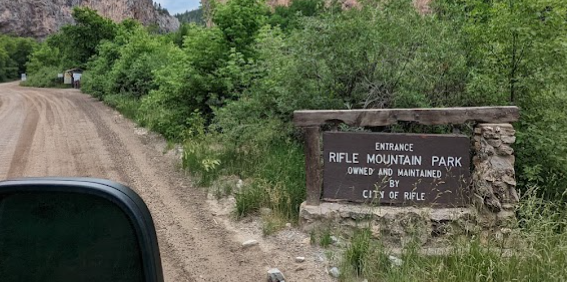
In Junei we enjoyed touring St. Elmo, Buena Vista, Leadville then up to Rifle CO. All were amazing. Oddly, the highlight was Rifle CO. For sure worth a few days to hike the Falls Trail and other smaller ones as well. Recommend staying at the Rifle City owned park for a couple of days. Not a bad drive to Grand Junction. Reservations recommend for weekends for sure. During the Monday to Thursday there are occasionally spaces. Primitive but nice camping for sure. It is full weekends by the rock climbers who call the area a meca for their sport. Be sure to hike down trail that follows the river to the Falls below. Explore the below falls areas for bear caves. Amazingly beautiful hike along the river. Takes about 90 minutes tops. GJ

-
Many owners with years of service of their Gray, Blalck and Vent valves find them more difficult to operate. Mine got to that point and I learned that the problem with mine and others on the internet is not with the cables, but with the slde valves themselves. I have attached a DIY for the effort that is a simple fix that can be done almost for just your time and likely tools and supplies you already have. Hope you find the below helpful. GJ DIY - Sanitary Drain Valve Cables.docx
-
All windows leaking except exit window when washing.
Geronimo John replied to 2008RN's topic in General Discussion
The wide outside seals can also cause issues. GJ -
I totally agree with SeaDawg. Many owners have had a gust of wind take out an awning. Having $5K invested in one would worry me a lot. We have a DC to DC, sadly the older 30 amp one. Best investment ever for those covering a lot of miles. Front gas port and plug in can be handy as well if they are not standard. One item that I really like is our 16" tires. OTT changing to 15's IMO was a rare step in the wrong direction. If you are going to be in the mountains a lot, get the 5200 pound dexter axles for the larger brakes. I, and others, don't recommend the larger propane tanks. When you get older their weight becomes prohibitive. GJ
-
All windows leaking except exit window when washing.
Geronimo John replied to 2008RN's topic in General Discussion
I rarely have access to a compressor with a tank large enough to be effective in blowing out the Ollie window tracks. But when I do, I use a LOT of air. Hence, if you are thinking of going the canned air route....... I suggest you get a case (or two) of them. GJ -
All windows leaking except exit window when washing.
Geronimo John replied to 2008RN's topic in General Discussion
Yep and Yep. At least for our older trailers, annual cleaning (or more often in some locations) and gutters are the only fixes that worked in our case. GJ -
Replacing white plastic pipe with pex...
Geronimo John replied to johnwen's topic in Ollie Modifications
I suggest using Riv-Nuts and bolt them down if you are having such a problem. GJ -
Trailer Separation from Tow Vehicle
Geronimo John replied to John Dorrer's topic in General Discussion
Yes you are correct, and that is for the VAST majority of trailers/TV's that use the Anderson. But.... The vast majority of OEII's just don't sway, even under extreme circumstances. Properly loaded they just don't sway. For that reason, many of us have no need for that great feature of the Anderson "system". Starting with John Davies, we lube the ball to reduce the wear. I am not suggesting that all new owners assume the same is for their setup. Get some experience and then decide how your rig handles under extreme conditions. If after a few years you figure it out, then join the "Don't lube your balls" team. LOL GJ -
Good info above. Many have found that dishwasher pods work very well, as well. They are near zero-suds and store well for a year or so. Regardless after cleaning and dumping I rinse at least once to clean off any residue from the valve seals. GJ
-
A different refrigerator fan option
Geronimo John replied to Snackchaser's topic in Ollie Modifications
As JD pointed out natural convection will be low to high. Adding the fan above to move that hot air out is from an engineering perspective logical. Doing so puts the refer cabinet into a slight negative pressure condition. On the flip side, for those of us with the three-way there is another more important reason that I feel needs to be considered. The three-way units may be used on gas. Burning gas can, and does, omit some by-products that can harm. Like CO for example. If you set your fans up as a pusher (Moving air into the refer cabinet, and your seals on the cabin side are not perfect (And NONE of them are), you would be in effect giving the bad stuff a direct powered path into the cabin. You and your traveling partners may not wake up as a result........ This is why mechancal rooms are properly designed to be negative air pressure to occupied spaces. If yours is pushing air into the refer cabinet, I emplore you to change it. GJ -
Sorry for the delay. Traveling myself. Short answer is: No. They have one with a long tail and without the male end. This one is like an extension with a male and female ends. Save the $$ and but it with just the female plug for the TV and a long cord to get well into your Ollie. GJ
-
Friction Hinges - Lippert - Another quick mod.
Geronimo John replied to Ty J's topic in Ollie Modifications
Many plastics exposed to the sun for long durations will harden, shrink a bit, and then when stressed crack. Could those doors cracking be more sun exposed than others not cracking? ???? GJ -
Or you have to replace your refer...... If so, then either you remove the door, or take a saws-all to the ole Dometic inside the cabin. What a mess. Not a good design decision..... GJ
-
Upgrading from a Bulldog 2” coupler to 2 5/16 BD coupler
Geronimo John replied to Patriot's topic in Ollie Modifications
Good point JD. When I leave our Ollie in a location where it could be at risk, I lower the tongue (via the jack) closer to the ground and remove the fuse. If not in use (think power to the frig.) I kill the master switch. The thief would need to pick up the 560 pound tongue or haul it away using the safety cables. Doing so makes our Ollie more of a PITA to relocate. A collar lock and other means is gravy to boot. GJ -
Seeking New Air Conditioner for Hull # 145
Geronimo John replied to ScottyGS's topic in Ollie Modifications
I was lulled by an OTT owner that condensate over the side of our hull was no issue. I went with the Houghton (no internal drain or evaporative solution such as a water wheel). My hull is now stained by the condensate. SO, I fully agree that an internal drain or a water wheel what works in humid conditions is a must. GJ +++++++++++++++++++++++++++++++++++++++++++++++++++ CORRECTION: The quote above was not from RonBlink. Not sure why it was attrituted incorretly. Here is a copy of it: Sorry Ron! GJ
-
RFC: Alternate sanitizing approach
Geronimo John replied to DanielBoondock's topic in Mechanical & Technical Tips
I do as well. Using the white hose of course! GJ -
GOLDEN! Many Thanks! Will digest it this afternoon. 🙂 GJ Owners: Suggest saving this document if you have an older frig.
-
JD: Correct on both. Still in Denver and it always works perfectly for months up at King Mountain where we basecamp at 5,300. I think that well over that elevation we would need the other smaller orifice to reduce gas flow due to lack of O2 higher up. Not the case with ours in Denver now. Currently, we don't get anywhere near the gas flow to even heat the ammonia hot enough to flash to cool. Hopefully one of the owners can respond with info about the gas valve voltage and possible test procedure for it. It's a long shot, but worth a try. I have heard others have had mother board issues, but never heard of the refer gas valve going south. Along the gas thread: I'm also wondering if there is a screen that keeps trash from tank insides or junk from bad propane that could clog or plug the oriface? If so, where would it be located? GJ
-
June and I are wrapping up a family wedding week in Denver. Next we will be heading out to the high country for some boondocking. Will for sure need our Dometic RM 2454 refrigerator for a couple of weeks. Could use some guidance: WHAT I THINK I KNOW o Refrigerator works normally on 12 Volt power supply. o Refrigerator works normally on 120 Volt . o Refrigerator does not work on propane regardless of outside temperature. It seems to hover a bit above 60 degrees in the main area of the unit when using gas mode. Likely about what ambient has been inside our Ollie due to nighttime cooling temps. WHAT I HAVE OBSERVED o The thermistor that activates cooling is operating normally only when using 120 and 12 Volt power. o Control board appears to be operating normally for all power sources though. o When switched to gas, the Control Board is trying to strike. Sends three strikes and then seems happy. o The striker appears to be igniting a dribble of gas at the propane orifice, however, it is less than 5% of what is necessary for heating the absorption unit. ANALYSIS: Leads me to believe that I have a gas problem. Ok, I set myself up for that one...... Thinking it is likely either: o A 95% plugged gas orifice. o A defective gas control valve. o A safety thermistor that would shut off gas flow if no flame is sensed. INVESTIGATE: Thinking I should: o Pull the gas orifice and see if clear. If contaminated, clean in a non-destructive manner. o Pull the gas tube after the orifice to see if any issues there. o Test the gas control valve and mother board: . Is it possible to spoof the main control valve with voltage to determine if it’s operational? If yes, what voltage should I see from the mother board? Can I spoof it to see if it is functional or if the mother board is weak? o Remove gas tube downstream of orifice and look for mud daubers or other such inclusions. o Does the igniter/striker also act as a safety to shut off gas flow if the strike process is not successful? If not how is that safety feature accomplised? Any thoughts, suggestions, recommendations or part numbers would be greatly appreciated. Thanks, Geronimo John