
Geronimo John
-
Posts
2,401 -
Joined
-
Last visited
-
Days Won
68
Everything posted by Geronimo John
-
 June and I are wrapping up a family wedding week in Denver. Next we will be heading out to the high country for some boondocking. Will for sure need our Dometic RM 2454 refrigerator for a couple of weeks. Could use some guidance: WHAT I THINK I KNOW o Refrigerator works normally on 12 Volt power supply. o Refrigerator works normally on 120 Volt . o Refrigerator does not work on propane regardless of outside temperature. It seems to hover a bit above 60 degrees in the main area of the unit when using gas mode. Likely about what ambient has been inside our Ollie due to nighttime cooling temps. WHAT I HAVE OBSERVED o The thermistor that activates cooling is operating normally only when using 120 and 12 Volt power. o Control board appears to be operating normally for all power sources though. o When switched to gas, the Control Board is trying to strike. Sends three strikes and then seems happy. o The striker appears to be igniting a dribble of gas at the propane orifice, however, it is less than 5% of what is necessary for heating the absorption unit. ANALYSIS: Leads me to believe that I have a gas problem. Ok, I set myself up for that one...... Thinking it is likely either: o A 95% plugged gas orifice. o A defective gas control valve. o A safety thermistor that would shut off gas flow if no flame is sensed. INVESTIGATE: Thinking I should: o Pull the gas orifice and see if clear. If contaminated, clean in a non-destructive manner. o Pull the gas tube after the orifice to see if any issues there. o Test the gas control valve and mother board: . Is it possible to spoof the main control valve with voltage to determine if it’s operational? If yes, what voltage should I see from the mother board? Can I spoof it to see if it is functional or if the mother board is weak? o Remove gas tube downstream of orifice and look for mud daubers or other such inclusions. o Does the igniter/striker also act as a safety to shut off gas flow if the strike process is not successful? If not how is that safety feature accomplised? Any thoughts, suggestions, recommendations or part numbers would be greatly appreciated. Thanks, Geronimo John
 -
Trailer Separation from Tow Vehicle
Geronimo John replied to John Dorrer's topic in General Discussion
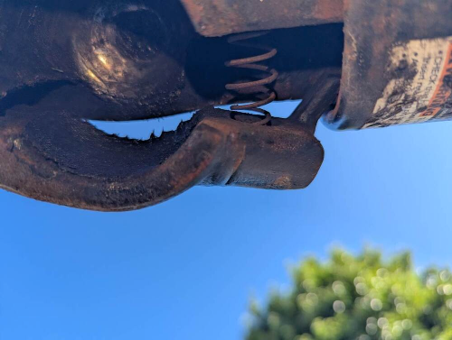
First, I would suggest a serious de-greasing: So much gunk in any hitch can cause it to stick when hooking up. GJ
-
We laid out the gutter in HOT Florida sun, and about half of our installs failed when it shrunk over the following month or so. I have to remove it and will install as RoutLaw suggested above to prevent the hard turn with it's shrinkage issue. GJ
-
Reset 2.0 has started squeeking when backing up
Geronimo John replied to DunnYet's topic in Mechanical & Technical Tips
Good advice. Just be careful not to have any of the four individual trailer tires lock up when doing a panic stop. Apparently my curb rear brake on Ollie locked up last season and a flat spot was the result on the tire. Found it during routine pre-trip annal inspection. I plan on replacing my 2018 Michelin's next season so just put the unused never on the ground spare tire on that location and am good to use the slightly damaged one as a spare for this season. Very happy that OTT gives is a full size matching spare! GJ -
Reset 2.0 has started squeeking when backing up
Geronimo John replied to DunnYet's topic in Mechanical & Technical Tips
I for sure know that "Duhh" feeling. Hope it works out well for you Monday. GJ -
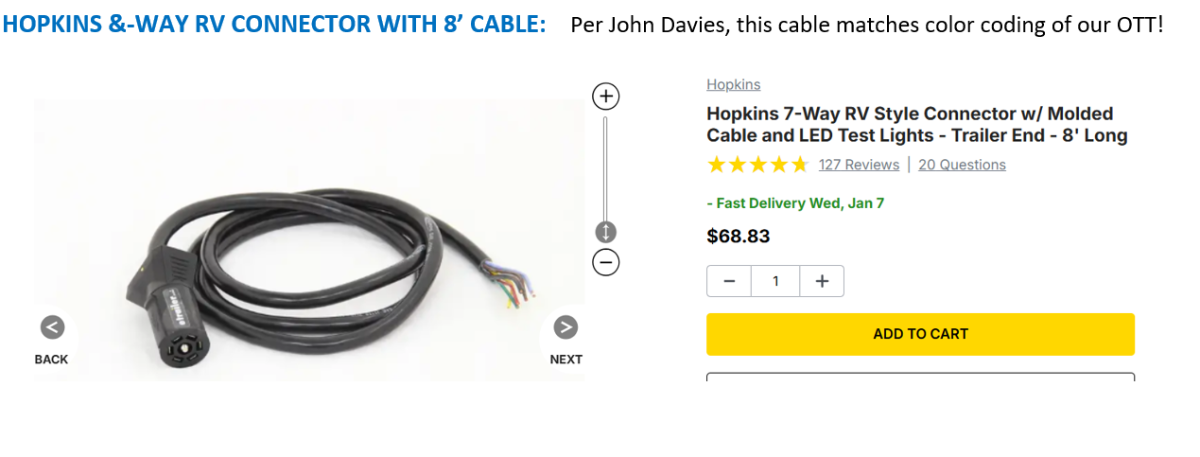
Boudicca: JD is a outstanding standup guy. Comes across some times a bit gruff (Don't we all?), but is pure of heart and giving to a fault. And Chris can sure cook up a wonderfull mountain of pasta as well. I went thru the same process as you, but had the tools and past knowledge to get to the bottom of it. For grins I would suggest you purchase a new seven pin plug for spare parts or use with JD. More than a few ownes like the one below. With or without the cable. It is one that John Davies suggested. If you have a spare few inches in your existing you could just get the 7-pin end. I had those inches and did just the end. Next time I'll have to get the full cable shown below. Amazon.com or Tractor Supply are both good sources for a lot of what we need. The cable connections are easy, getting the "Right" wire into the proper peg of the cord is complex. Having the same color to color at the box makes life a lot easier. Good luck. GJ
-
I have often wondered why JD and others have used "cable loom" for the trans axle brake connection upgrade. I think a piece of 1/2 inch of CPVC (Hot Water, which is smaller in diameter than regular PVC) would work just as well, but give better stone protection. Just musings from a RoF. GJ
-
Missing screws on cabinet cabinet drawers
Geronimo John replied to Gliddenwoods's topic in Mechanical & Technical Tips
Screws are good, but bolts are better...... GJ -
Wow what a difficult time you have had. Frustrating for sure. I had a simular issue with my 2018 OE2. Problem was the male 7-pin. Art and I changed it out and it stopped the rogue errors like yours. Many owners have had problems with the brake cable inside the axles. John Davies used the cable protection like you used and ran the cables outside the axle with a bunch of zip ties. He ran it on the back side to protect it some from flying stones. One thing to try is to hook up your trailer to a different truck and see if they get a problem as well. But finding someone willing to do that would be difficult. GJ
-
Following JD's lead on this: Some thoughts about the 3 way it appears you have done all the common items: Turn the control panel up to setting 5. Park with the curbside door on the north side as much as possible to keep the solar gain off the unit. If not possible, lowering your awning a bit to put the unit into shade. Open the frig door and look in the upper back wall where the aluminum cooling fans are. On the right side of them is a white plastic "clamp" that holds the thermistor for the unit. It will slide up and down on the right most fin. This thermistor controls the cooling system. Moving it up or down will increase/decrease the temp in the box for each of the five settings on the control panel. I don't recall which way you move it go get cooler, but there there is a post on the forum. I'm sure one of the members will remind us on this detail. The Beach Lane Fans seem to be the best fan solution for a warm frig in hot conditions. So regardles of any of the suggestions, if you use a 3 way where it is hot you need the extra cooling needed by the frig. Do plan on doing this if you get yours running. Good posts on the forum on how. So now to get to the gas burner orifice. It is easy to get to and remove. Follow the gas supply valve into the curbside front of the lower access panel. It goes horizontal into a gas control valve. Beyond that valve is an air shield. The outside cover can be bent out to reveal the gas orifice. A small combination wrench is needed to remove it. Done. Hope this helps. GJ
-
Main battery switching, a different approach
Geronimo John replied to Snackchaser's topic in Ollie Modifications
Good write up. But I'll stay with my 350 amp BlueSeas Master DC cut off switch. Why? Less complicated and less maintenance than a Master Switch. When a Master Switch if off, there are no power draws during the 8 months my OTT is lonely. Smart owners always do a brake check when starting a tow. Doing so also hints at DC power to the CO and Propane detectors and referigerator. GJ -
Maxxfan Dome installation (previously orientation)
Geronimo John replied to Townesw's topic in Ollie Modifications
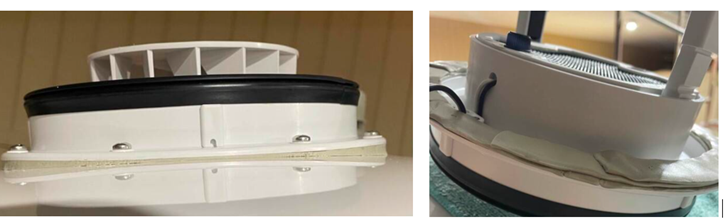
AMEN! Best suggestion of the week! ++++++++++++++++++++++++++++++++++++++++++++++++ Bill: Best installation approach I have seen. Very creative way to intall the fan on a curved roof. Thanks for your time and effort to create a bathroom fan replacement "Best Procedure" yet. GJ
-
Adding a Matching Rear Porch Light and some Front Lighting
Geronimo John replied to jd1923's topic in Ollie Modifications
JD: Great post. Seriously like, and am considering at least the front light install. I would prefer not to have unplug when removing the cover. I have a"glam cam" thru the hull for my DC to DC cables, and the under sink portal hatch. Combined they appear to provide an access pathway. For reference, the belly band is well below the sink cabinet top. What do you think about using the light switch circuit of the jack to provide power to the front light location. Tap the load side of the jack light switch, add fuse and run power under the doghouse area to a cable glam, then inside up into the under sink, and thru the hull to mount just above the belly band? Would it worth the extra effort and possible to do? Thanks GJ -
Furrion Stereo Upgrade: A Sound Choice
Geronimo John replied to Snackchaser's topic in Ollie Modifications
I have a couple of speakers that have given up. Will check power and resistance, but suspect they are blown and need to be reuplaced. Are these the ones you used? Thanks, GJ
-
Missing screws on cabinet cabinet drawers
Geronimo John replied to Gliddenwoods's topic in Mechanical & Technical Tips
Roger, thanks for the flowers... OH with small washers too! GJ -
Made in USA leaf springs
Geronimo John replied to Mountainman198's topic in Mechanical & Technical Tips
Try unloading the fitting and likely you will get it to take grease. Sorry for speed reading this 36 page thread if you already tried this. GJ -
Assuming the valve set up is correct, and the pump screen is not plugged, them many have found that the boondock hose seal was worn or the boondock hose fitting was not FULLY and FIRMLY tightened. As a result, that connection sucks air and little or no water moves on board. Suggest double checking that connection and raising the boondock container as high as you can so reduce the hydrostatic head to the pump. This will assist in getting the pump to self prime. Ours takes about a minute a gallon to boondock onboard. Hope this helps GJ
-
"Best" low profile AC replacemet
Geronimo John replied to Gliddenwoods's topic in Mechanical & Technical Tips
Owners/Moderators: I had heard a rumor that OTT is using/considering the Houghton 3400 on new builds. Can this be confirmed? If so: Does it have the fan on contineously issue resolved so that it can be set to turn off the fan with the compressor? Does it have remote thermistor? Does it condensate drain by tube option for those with no height concerns? Please advise. GJ -
Start with three each for the jacks. Or make every owner sign a waiver that they will not operate more than one jack at a time.... LOL One for all the electronic outlets
-
Wiring conundrum for the water heater
Geronimo John replied to routlaw's topic in Ollie Modifications
Forgive me if I am not understanding your problem. But here is what I am thinking: Your Hull #70 is most likely set up like my 2018. A hot water requires a bunch of energy. It can get that energy from propane or 120 volt. The switch on the unit activates the 120V AC power to heat the water. The switch inside just activates the circuit board. Our hulls are not set up to power up hot water from the DC source. It is not like the refergerator that is. The Suburban hot water heater needs energy from three systems. The 120 V lines provide alot of power to the unit if your outside switch is on to use 120V power to do the heavy lifting (heating water) The DC power to to the gas solenoid valve to provide propane to heat the water if you want it to do the heavy lifting. But regardless of how you want to provide the energy to heat the water, you also must have DC to the circuit board. Those wires are not sized to provide power to heat the water. The DC wires are there only to provide power to the circuit board. Put a massive load on them and one would think you would blow it's fuse. Likely the reason your not blowing the fuse is that your new demand hot water has a sensor that will not energize it's heating coils unless the voltage is high enough to work properly. IF THIS IS YOUR PROBLEM Then you have a larger project than you anticipated as you'll need to run a new DC + and - to your demand hot water heater. I sure hope I am missing the boat on this one. GJ -
JD: Battery health with a 2023 should not be an issue. But you are correct in mentioning it as a possibility. Hopefully some how he didn't get Battleborns slipped in...... Traveling Angels: If the above testing does not lead to a conclusion, then JD's hint that the batteries themselves could be an issue. If you have more than one, then they would need to be individually charged to SOC 100% and load tested. What are the brand of your Litho's? GJ
-
I note that some of the newer trailers have a 300 amp DC breaker. Fortunately ours is a 300 amp fuse. Good suggestion to upgrade the breaker. GJ
-
nice!
-
Step One: I agree with Tom and Doreen's post. Step Two: If you put a volt meter on each side of the breaker and use a common ground for the - lead, you can measure the voltage drop thru the breaker. If it is nominal, then the next step I recommend is using your brake temperature IR gun to scan all the 4/0 terminal temperature. They all should be about the same. If you find one hotter, then make the system safe and clean that terminal. Then retest a second time. Clean the next hottest one and retest. Repeat until you see all of them about the same temp. Good luck. GJ
-
Made in USA leaf springs
Geronimo John replied to Mountainman198's topic in Mechanical & Technical Tips
Many of us know that feeling. We purchased ours from Hawaii having never seen one in person. But what we, as you, did was to really study the tone and helpfulness of the members here on this forum and the "SOB's" (Some Other Brands) as well. At the time, and still to this day, I think that the owners sell more trailers than OTT does themselves. No other brand came close in this regard. After our purchase I had an opportunity to go to the factory tour and instantly fell in love with our decision. As a technical we all know that machines need maintenance and TLC. Also that some times tweeks to the foundational design of a machine is necessary. WIth OTT, we have seen a few upgrades, a few changes, and very few OOPS. And the number of OOPs is very small. However over times things change. The two biggest changes I have observed in the past ten years from an owner's perspective likely are the percentage of owners taking their OTT's boondocking further into the wild and running heavier than earlier years. The impacts are higher "G" forces and typically +/- 6,000 pound weights on the suspension 100% of the time. Both of these changes are not OTT fault. There is clear evidence of premature spring failures from OTT owners having road side spring failures, and dozens more finding that their springs flatening out way too early in what should be a normal spring's useful life. So a design change is needed. I believe from history that OTT would not ignore such failures without concern and would be monitoring our experiences. I also would wager one of Art's famous home brews that they are looking at an upgrade standard spring to the 2400 # Dexter four-leaf springs and an option for a "Boondocker's Heavy Duty" suspension package featuring the Alcon type of 5 leaf. Those options both make good common sense. Good news is that OTT takes a lot of care and time, as they should, before making such changes. In that regard it would smart to keep track of the owners who have changed their springs and to monitor them in the normal duty and heavy duty class. In doing so to get specific data as to the pros and cons of their spring choice for their use. If I was running their quality control team that is exactly what I would be doing. One needs data to to make data driven decisions. GJ