
Geronimo John
-
Posts
2,401 -
Joined
-
Last visited
-
Days Won
68
Everything posted by Geronimo John
-

Stabilizing versus leveling
Geronimo John replied to ripple963's topic in Mechanical & Technical Tips
Hate to admit this here on the forum.... but..... Me as well. I travel solo a LOT and the number of wasted trips back and forth does get a bit old. As in older than this RoF! GJ -
Stabilizing versus leveling
Geronimo John replied to ripple963's topic in Mechanical & Technical Tips
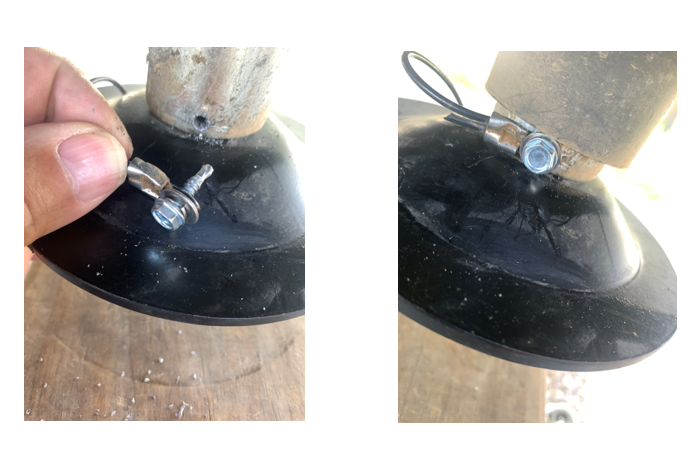
How wise you are. Been there and was suprised that my jack foot had taken a hike when I was not looking! Simple solution: Stainless Steel Cable (Really small) and a couple cable ferrules: Drill a hole in the jack foot and put a small loop and ferrule so it will not pull out of the jack foot. Another loop attached to the jack leg. Just enough room if you think small. In the event that the jack bolt leaves us, we should hear the tinkle tinkle of the foot being tortured by the pavement! Either way a spritz of black paint and a bolt and $35 saved. GJ
-
Stabilizing versus leveling
Geronimo John replied to ripple963's topic in Mechanical & Technical Tips
A short (by comparison for once) summmary: I concur with the "To Each Their Own" concept. That using hind-sight is an unfair approach to just about anything. That OTT has and still makes a product we all are proud to have, use and keep. That over time our requirements and circumstances will change. We will all end up modify, donating or selling our Olivers. We each exhibit moments of brilliance, and moments we wish we would have avoided. This forum is vibrant because we understand the above for ourselves and others. God bless Scott Oliver, his family and the OTT TEAM they have built. And all the participants of this forum. John Russell -
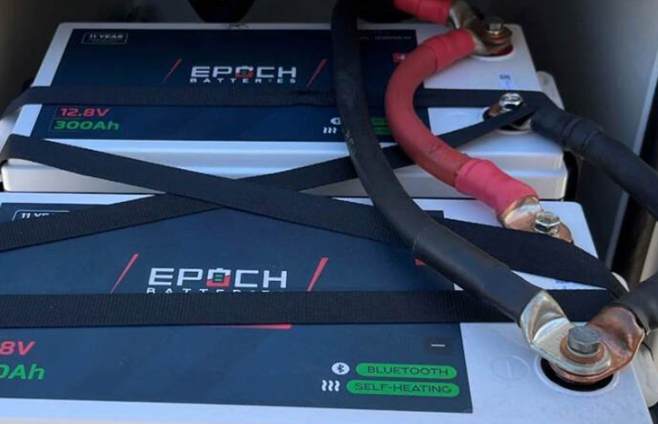
JD: your battery bay sure looks a lot simpler with your new batteries! Also like the cross strapping idea. GJ
-
Battery problem Or Other ?
Geronimo John replied to Alberta and Randy's topic in Mechanical & Technical Tips
Sorry folks, I just noted that the above is from 2022. So likely all of the below was a waste of your and my time. GJ ++++++++++++++++++++++++++++++++++++++++++++++++++++++++++++++++++++++++++++++ Scuba RX is spot on in that both cables coming into the battery bank need to be 4/0. Beyond the above statement, what you have is a serious problem that is unrelated to your poser loss. The 2,000 watt Inverter if loaded will easily pull over 2,000 watts. Recalling Watts = Volts * Amps or Amps = Watts/Volts For your inverter it can easily require the wire to carry 2000A/12.5V = 166 amps. The 10 AWG wire is rated only for 30 amps. THIS IS A SERIOUS FIRE SAFETY ISSUE. Please seek help in changing out those wires. They are NOT OEM. Now back to your phantom loss: The best way to stop all losses is to add a Master Power Shut Off Switch. Many posts on the forum about this. Here is info I borrowed from John Davies with my rationale for going with the Blue Seas 350 A rated disconnect. Since it is likely at some point down the road you'll be upgrading to Litho's, that would be the best time to add such a switch. In the meantime, just disconnect (DISCO) one of those big 4/0 wires to have no losses. GJ John Davies Master Battery Switch.docx Geronimo John -
New : Home Brewed Oliver song and video
Geronimo John replied to Galway Girl's topic in Campgrounds & Parks
Amazing. Just amazing. Have been to more than a few of the sites in the video, hope to do more. God willing. GJ -
BB Owners: The above thread has some safety precatutions to think about taking if still using your BB's. They appear to be: Individually inspect and test your BB's as presented by Will P. Also inspect the BB terminals and ALL 4/0 cable lugs with an IR gun or IR camers to visually as suggested above. Only charge your BB's if you are present and can check in on them periodically. Don't use excessively high charge currents. My limit is 60 amps for three BB's. Install the temperature sensor that came with your 712 Smart. Place a rate of heat rise detector in your battery box. From AI: For an RV lithium battery storage box, a Rate-of-Rise (ROR) Heat Detector is generally recommended over a standard smoke detector. Because lithium battery failures often involve rapid overheating (thermal runaway) rather than immediate, thick smoke, ROR detectors provide faster, more reliable alerts by triggering when the temperature spikes quickly, minimizing nuisance alarms from dust or minor temperature fluctuations GJ
-
Wow tough and good question. If the hand of GOD had them by a private part and they actually did as you suggested, then my answer would be back to Dragon Fly: Did they redesign their 100 AH BB's to address all the issues with the old design? What does Will P. have to say about their new design? 🙂 How's that for a sly response? GJ
-
JD: Many thanks for the offer. I'll order out lugs and cable just to have them in case they are needed at other locations. I'll also bring my Harbor Freight tools in case my BB's fail on the road. But your cutter and crimper are for sure higher quality than mine. Hopefully my BB's will survive at least until the warranty has expired. Although I doubt that will be the case so being ready and prepared with options is warranted. Many thanks! GJ
-
Stuck Somewhere: Above options give me a way around a failure. Shipping a way to get the replacement battery, and tools to do it in less than a day. Since my tour route can include Lost Wages, NV I could camp out at Dragon Fly... with an attitude, and Crazy Horse with his quiver of bad messages. 🙂 Fire Danger: Great comment. I will be hooking up the temp sensor, and thanks to your post, will put a fire detector in the battery box just for grins. Just need to figure out if a "Rate of Heat Rise" or a "Smoke Detector" would be best for that purpose. (GJ EDIT: See Below about such a Detector, also looked into the return idea.... the defective BB's have to arrive at Reno, not Lost Wages. That's a bunch of miles further than I would do.) GJ
-
BUT, when I do upgrade, how well will my existing 3 each BB's 4/0 cabling work for one or two EPOCH's? Knowing would determine if I should pack for this season my cable cutter, hydraulic crimper and 4/0 lug kit. As you know I like to be prepared, have options, and plan ahead. 🙂 GJ
-
Good thoughts. Fortunately they will not all start to fail at the same time. Also, thanks to Will P. we know exactly what to look for. Hence should one of mine start down that path, I'll pull it out of the harness and "Only" have 200 AH of power. More than I had when I purchased and used the OTT AGM's for five seasons. So we have a pretty decent path forward. Key is Knowledge, and that comes in great abundance on our forum! GJ
-
I understand your position and thoughts. But on my end, and more than a few others, we should not have to be replacing our ten year "Bullet Proof Battle Born's" now, and spending a dime is more than we had planned on doing ....until well down the road. With "only" a 60 amp PD charger, and a 300 amp fuse my hope is that our 3 BB's will continue to perform. That the Trust side. On the Verify is... the with lots of inspections and monitoring of course. GJ PS: I really like your nuclear power plant in your Ollie!
-
$2400 to do so, plus likely mods to the cables and fusing... OUCH............
-
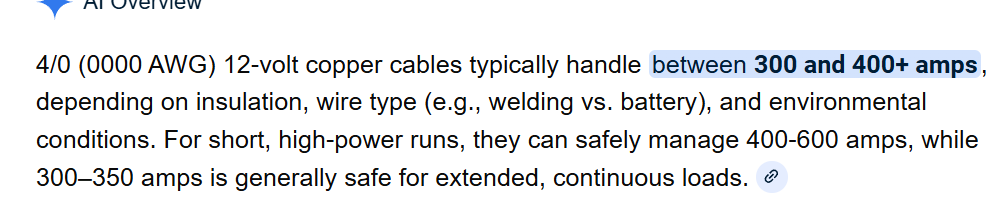
I know you are just joking. But let's not toss that glove as someone may try it. I think our 4/0 cables and lugs would have some concerns if running them at 900 amps. Not to mention our fuses. Checked AI and "it" agrees.
-
I think that they have been in that zone for quite some time now. I am suprised that we have not seen more on this. Glad I don't own any Dragon Fly stock. Sad that so many of us are, or will be impacted by their design, marketing and now warranty decisions. GJ
-
Bathroom floor drain gray water valve problem
Geronimo John replied to Citrus breeze's topic in Mechanical & Technical Tips
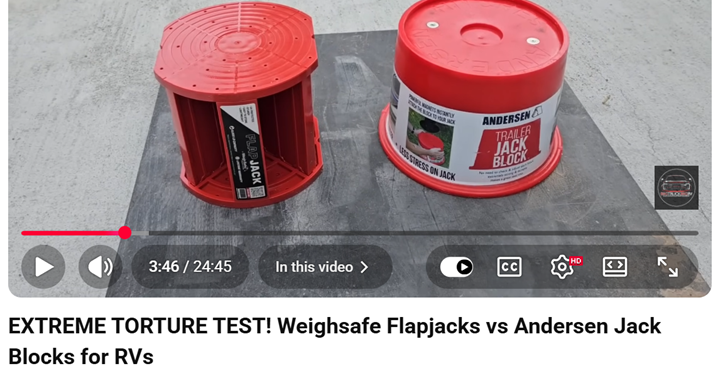
I was sort of leaning towards the Flap Jacks for those reasons. Then I saw this video: Well, both tested exceptionally well. Basically it appears that only a nuclear inferno would damage them. That test is an order of magnitude or two more severe than even Crazy Horse could abuse them. The attributes of extreme durablity, light weight, 1/4 of the storage space, and now superior slip planes of the Flap Jacks works for us. Thanks to Ron and Chris for highlighting this amazing product. We'll be using them this season! GJ
-
Bathroom floor drain gray water valve problem
Geronimo John replied to Citrus breeze's topic in Mechanical & Technical Tips
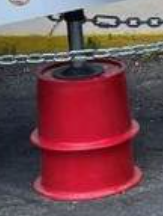
Next picture shows yes they stack for use, but not efficienctly for storage...three of them would be a lot of space in my 5.5' F-150 bed.
-
Bathroom floor drain gray water valve problem
Geronimo John replied to Citrus breeze's topic in Mechanical & Technical Tips
Not finding anything with that name. Did you mean Jack Blocks like these? Do they stack or are they internally reinforced? Thanks. Exploring options.
-
Bathroom floor drain gray water valve problem
Geronimo John replied to Citrus breeze's topic in Mechanical & Technical Tips
"Big Lego's" you use? GJ
-
Bathroom floor drain gray water valve problem
Geronimo John replied to Citrus breeze's topic in Mechanical & Technical Tips
Once again I credit John Davies for his wisdome many years ago: For years I have mentioned the concept that having slip planes to reduce risk of damage and wear. There are many ways to minimize jack wear by reducing movement. So I compliment ScubaRx and Mike & Carol for their posts. I would like to also mention that they both have taken to heart the concept of multiple slip planes. Their use of the plastic bases under large blocks does this. Should they move their Ollie while supported, movement is assured by both short jack extension and longer distances occupied by their blocks. This setup has a three locations for the feet to become unloaded during a drive off. Between the jack foot and the wood block Between the plastic block and the wood block Between the plastic block and the ground plastic/wood pad During a drive off while jacked up without the ground slip plane, the jack foot will likely slide on the block. As it passes the edge, in softer soils the block could "dig in" and begin to rotate. As it rotates, the jack stem could come sucumb to high stress. So for these owners, please consider adding in a second 2X6 under the jack foot. Over the past 8 seasons I have just used a pile of 2X6X11 blocks. I carry a milk crate in my basket. It holds eleven of them I recall. Due to limited storage space for my mini blocks I have not benefitted from the benefit of jack wear that the big blocks bring. Time for me to upgrade my thinking and evaluate the "Big Block" options. This Ole Dog can still learn from others!
-
Inspectable Item: Propane Area
Geronimo John replied to Wayfinder's topic in Mechanical & Technical Tips
And very importantly as Hoosier brought to light, I was remiss in not adding to my list an important reason for our use not having an automatic switch over valve: We camp when it is warmer and we fully winterize when our trailer is in storage. As such, we have no need for it to burn propane to keep Ollie warm when it is lonely in unattended hard freezes happen. That said, a significant number of owners do need/want/use these auto change over devices. And that's cool. GJ -
Inspectable Item: Propane Area
Geronimo John replied to Wayfinder's topic in Mechanical & Technical Tips
Time for a left turn on this topic. The more I ponder my propane system, and the way that I use it, I'm questioning why I want or need an auto switch over valve. Rationale: I don't ever use the auto switch over part of the device . I want to know when I have an empty tank. It is a single point of failure. It is expensive to replace Why not just buy two regulators and two 18" hoses, attach oneset to each tank, and "T" their outputs to the supply line going into Ollie? Use one tank at a time. When it goes dry, open the small hatch and shut off one tank and open the second tank's valve. 100% redundancy with less points of failure for about the same cost. Your thoughts? GJ -
Inspectable Item: Propane Area
Geronimo John replied to Wayfinder's topic in Mechanical & Technical Tips
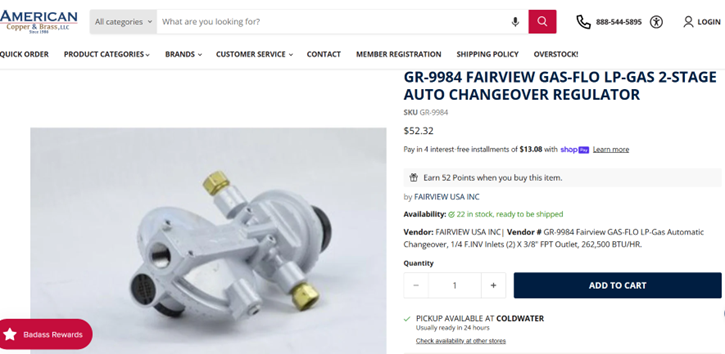
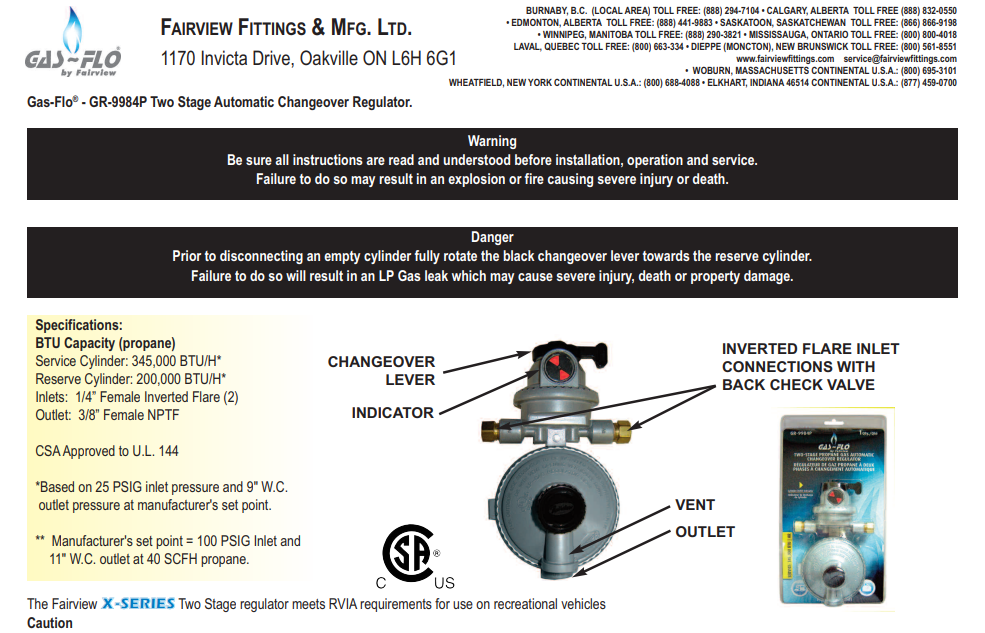
Drats you are correct. It appears that the American Copper and Brass have their wires mixed up. They are selling these two auto change over valves. Their left one shows 245KBTU and the one on the right is their 345KBTU model of another mfg. . Gut the Fairview Fittins and MFG web site says that the GRF9984 is a 345 KBTU model as I posted previously. The Fairview web site says that the GR9984 is rated at 345,000 BTU. Go figure????. Here is the link to the full manual: https://olivertraveltrailers.com/wp-content/uploads/oliver-university/Component_Manuals/Propane_Regulator/Fairview-GR-9984P-Propane-LP-Regulator-Manual.pdf GJ
-
It looks like your Ollie and those winding roads got a lot of snow and several days of hard freeze too. I hope that you will be able to get back safely after the roads get cleared and the thaw allows. Glad you reached out to optimize your rig from being damaged. We all wish you a safe return to your Ollie. GJ