
Geronimo John
-
Posts
2,433 -
Joined
-
Last visited
-
Days Won
71
Everything posted by Geronimo John
-
 For sure that's the case. Living in Hawaii, with my Ollie on the mainland, she only gets out once a year. Granted, it's for a 3 to 4 month spin around the USA. After her exercise, she gets a nice cover and rests in a dark barn. So a wrench is logical in my case. Not so for most owners who are out and back many times a season.
-
My combination wrench was paid for 50 years ago. It works real good on the terminal to disconnect and kill all loads. Cost me about 90 seconds longer than switching a switch. Just saying why add more weight for almost no value?
-
LOL Shallow Gal, you may be advertising the wrong message! 😘 Sorry, could not help myself. Now back to the real question, where did you find the amber tape?
-
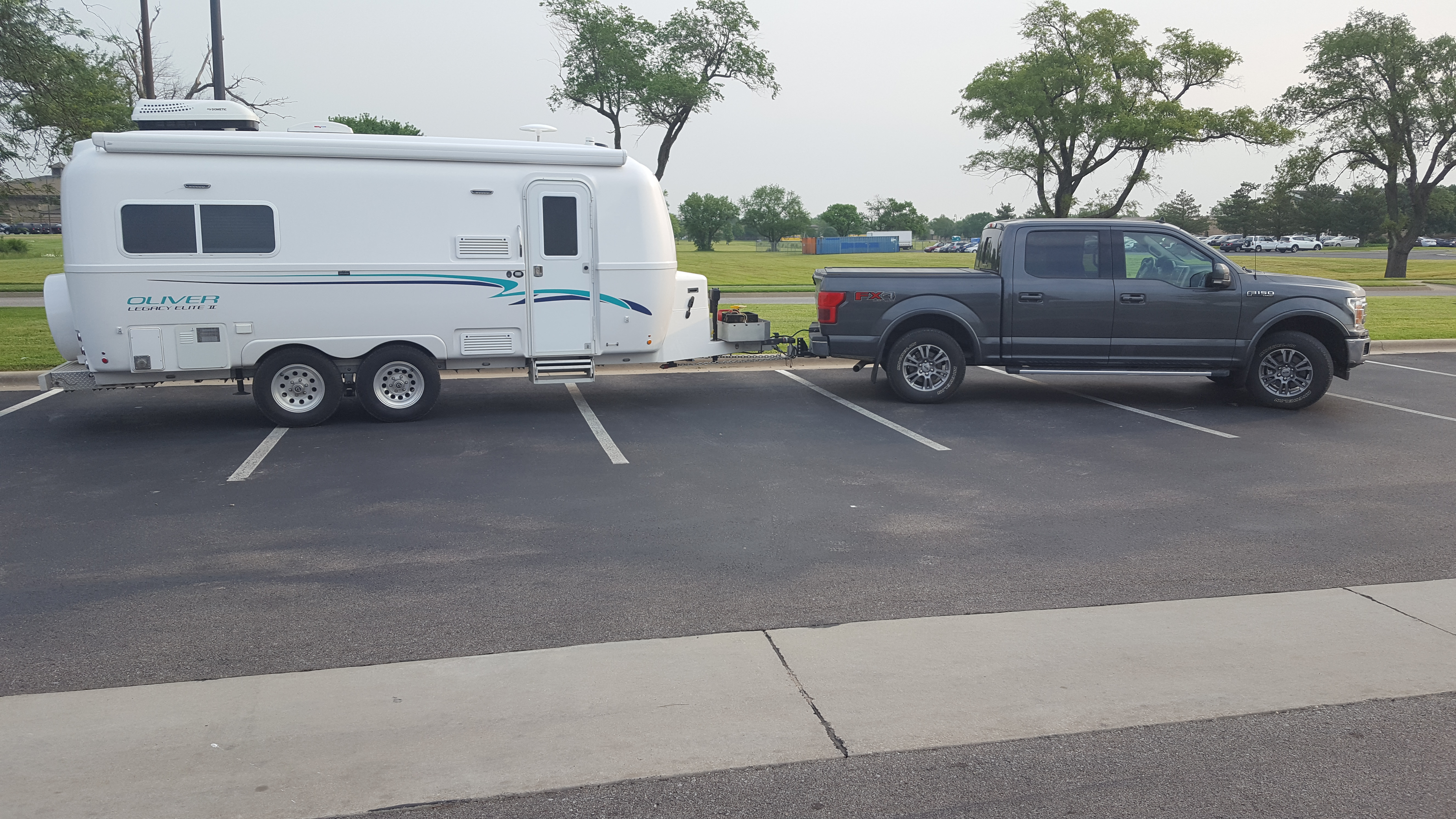
I agree. Each Summer I run from OK to OR and back. Out on the flat interstate out west, the speed limits generally are 80 MPH. If I run at the legal limit, I AM the island in the stream with hundreds of trucks a day running well over the limit. I will often follow (well behind) their convoys so as to not be a hazard. I employ extra following distance to avoid windshield damage, truck induced wake turbulence, and to let them clear out any deer, elk or other hazards. I can say that for sure, my F-150 SuperCrew Ecoboost and Ollie II can keep up at or beyond those posted limits when conditions are good. However going across I-80 there are some sections that almost always have severe alternating left/right cross winds cause me to slow down to 65 - 70 MPH for safety. My travel safety mitigations are: I set my truck's emergency anti-collision system to the most sensitive setting. I always tow with an Anderson with the ball greased. Ollie has never needed sway control. I use the Anderson only for WD purposes... as is required by Ford for their F-150's with tongue weights over 500 pounds. My loaded F-150 front and rear axle loadings are within 30 pounds of each other. To get that on my rig's set-up, I need and use 3 to 4 threads tension on the Anderson chains. I run Michelin Tires at 43 PSI cold, and they are always monitored by my dash mounted tire pressure monitoring system. I carry a DeWalt 20V air compressor so that I can check my tire pressures easily before the sun hits the tires. Having this compressor (With the hard case) makes this task easy. Let the sun or road miles hit your tires, and using a gauge is just guessing what you really have in the tires. I use a Etekcity Infrared Thermometer 800 non-Contact Digital Temperature Gun to check my tires every two hours or so. My Ollie loaded is 5700 pounds, and my truck has one person and about 500 pounds of gear. As such, I am towing well below the door sill weight limitations. Credit where credit is due, the idea for most of the above safety practices came from John D and other senior mentors on this web site. Geronimo John
-
Good summary ChrisMI. For my 2018 Ollie, (Used trailer w/prowatt), I would add a Victron BMV-700 Smart Battery Monitor (Includes 250 A Smart Shunt & Smart Display) for about $144. Not the more expensive Bluetooth one that the young folks would "need". 🙂 My rationale is that the existing battery charge monitor is worthless on the much flatter SoC curves for the lithium batteries. Geronimo John
-
Modified my wife’s iPhone 11 Pro by driving over it
Geronimo John replied to John E Davies's topic in General Discussion
My condolences! Hope your insurance covers your loss. -
Seal the rear Oliver Light (re-caulk?)
Geronimo John replied to Wayfinder's topic in Mechanical & Technical Tips
What a PITA wet bedding during a boondock trip can be! This past week, I also encountered what appears to be the same problem as yours. With the help of my daughter (Allison), we were able quickly fix our two leakers without spending a dime. The first one took us an hour to figure it out. The fix took ten seconds. The second window had the same issue, and also took another ten seconds to also fix. Not saying it may be the same as your problem, but it is darn sure worth a 30 second look see! In the below picture you will note the +/- 2 ½” gap in the operable window bottom track & water diverter (TWD). The TWD is a black track that extends under both the operable and fixed windows. It is about ½” wide, and has holes drilled through the material for water passage and seals against the sides of the aluminum window frame. This seal conveys water that has gotten past the flanks of the operable window, and ports the water down to the window weeps. An important function of this black thing is to distribute water flowing from the operable window side of the track to the weeps of that the sealed window weeps. As the picture shows, this section of the TWD has slid forward, allowing all the water to flow to only the weeps of the operable widow. Use a pair of needle nose plyers, or a similar sized tool, and push the TWD back to the rear to meet the section from the back window edge. Then close the window and spray water onto the side of the trailer and observe if your flooding issue has been corrected.
-
What a PITA wet bedding during a boondock trip can be! This past week, I also encountered what appears to be the same problem as yours. With the help of my daughter (Allison), we were able quickly fix our two leakers without spending a dime. The first one took us an hour to figure it out. The fix took ten seconds. The second window had the same issue, and also took another ten seconds to also fix. Not saying it may be the same as your problem, but it is darn sure worth a 30 second look see! In the below picture you will note the +/- 2 ½” gap in the operable window bottom track & water diverter (TWD). The TWD is a black track that extends under both the operable and fixed windows. It is about ½” wide, and has holes drilled through the material for water passage and seals against the sides of the aluminum window frame. This seal conveys water that has gotten past the flanks of the operable window, and ports the water down to the window weeps. An important function of this black thing is to distribute water flowing from the operable window side of the track to the weeps of that the sealed window weeps. As the picture shows, this section of the TWD has slid forward, allowing all the water to flow to only the weeps of the operable widow. Use a pair of needle nose plyers, or a similar sized tool, and push the TWD back to the rear to meet the section from the back window edge. Then close the window and spray water onto the side of the trailer and observe if your flooding issue has been corrected. OLIVER ELITE II With Rear Curb Side Storage Compartment Access.pdf
-
A stainless steel fender washer helps keep the rope on the nail. To remove, I use a piece of cord and loop it around the nail. Pulls out easily. I really only have three as that's all I need for my OEII patio cover. Total cost under $3, and they seem to have a lifetime warranty.... unless I lose it. 🙂 I don't carry a heavy hammer. If the ground is rocky, a rock works nicely. Cave Man style!
-
@wdking4: Please search the Forum for Towing with a Toyota Sequoia 4.7L from the 2018/2019 time frame. Same thoughts you have were mine back then. The advice Mr. Davies provided was spot on. My Sequoia did fine on flat land. But mountains it put me in the right lane, at times in low gear. As every summer is a repeat, I upgraded to 2019 F-150 3.5 Eco Boost. Yes you can tow a OEII with a Tacoma... as long as you keep your speeds reasonable and on flat land. I strongly recommend you not take it to real mountains as your TV does not have the weight, brakes or power to do so safely. If you want more details, kindly PM me. Geronimo John
-
F350 and occupants saved by their safety chains
Geronimo John replied to John E Davies's topic in Towing an Oliver
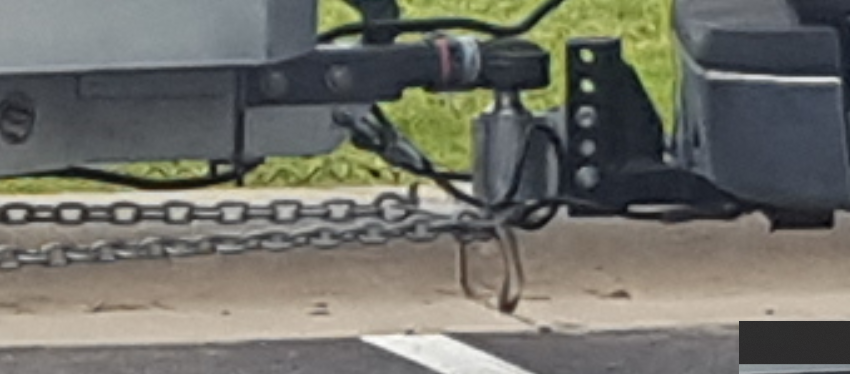
Ok a relook at my OE2 and Anderson with respect to safety chains. With the two large WDH chains installed to the plate, which is part of the Anderson Receiver system, it would appear that we have four safety chains in effect. So long as the pin holding the system in the truck receiver stays in place. Your thoughts? Geronimo John
-
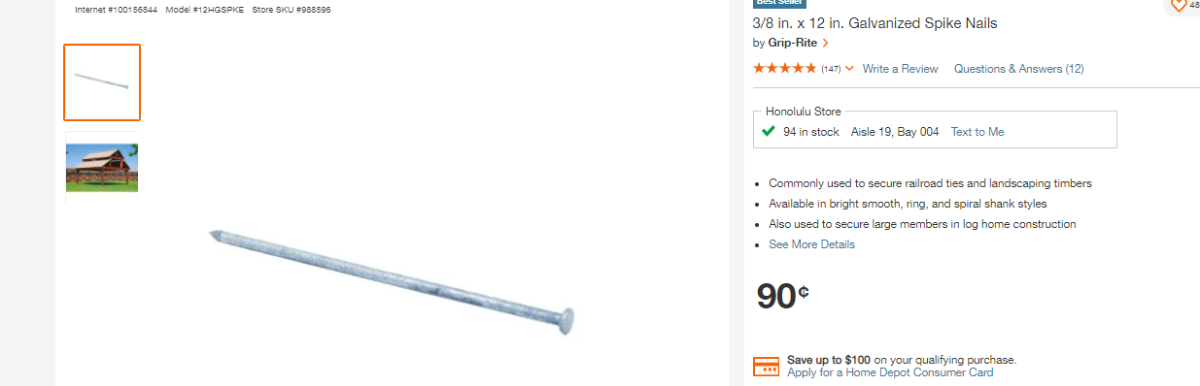
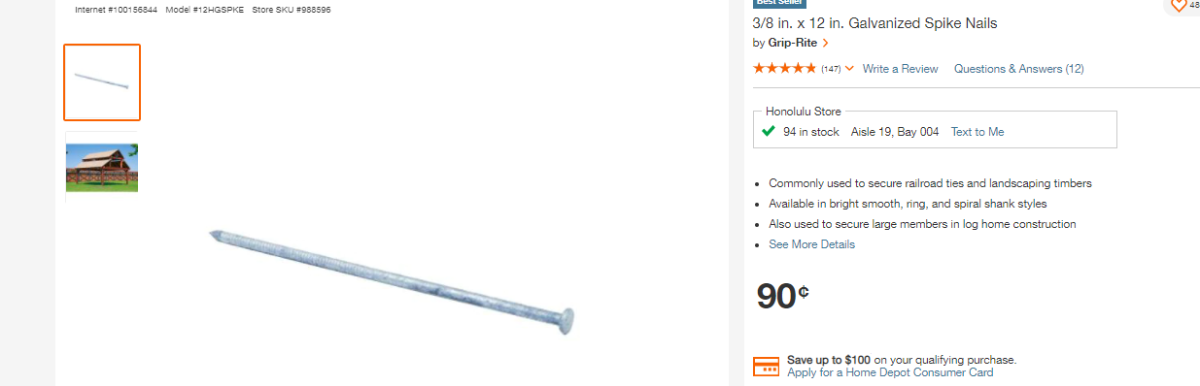
I prefer my multipurpose, strong as nails, self defense throwing spike, the ever popular 90 cent landscape nails at Home Depot. They don't require a brass hammer, break rocks, and if lost are easily found by the next guy. And, they don't require oiling for at least 15 years! However, I have found that by wearing red sketchers they are an eye catcher. But most wise campers don't generally comment when I have half dozen of these in my nail belt.
-
@ Patriot: Which model number Action Packer did you use? I really like your solution. Thanks for posting it.
-
How Long Did Your Oliver Duralast Battery Last?
Geronimo John replied to Geronimo John's topic in Mechanical & Technical Tips
Thank you all for the above thoughts. A follow-up questions for those who HAD DURALAST, and CONVERTED to 12V AGM: Were the standard Oliver battery cables able to be reused with the new AGM 12V batteries? Are the AGM's really worth double the cost of the Lead Acid Marine Deep Cycle batteries? Thanks John -
How Long Did Your Oliver Duralast Battery Last?
Geronimo John replied to Geronimo John's topic in Mechanical & Technical Tips
-
My Ollie is a Spring 2018 egg. At purchase I decided to run with the standard Duralast 12V Marine Deep Cycle batteries. They are approaching their fourth season. For those with the same standard batteries, how long did yours last? I am considering going AGM, but solar is not in the cards. If you upgraded to AGM, what was necessary, and what would you recommend. Thanks Geronimo John
-
Failed Andersen tension chain coupler - ideas?
Geronimo John replied to JRK's topic in Towing an Oliver
When I was using a Toyota Sequoia as my TV, I needed all seven threads on the Anderson chains to level things out. During year two, I approached a parts store entrance where there was a significant grade change from the road. At less than 5 MPH, when my TV went nose higher, I heard noise from the trailer that caused me to stop. I saw that the Anderson chains were really really really tight. I gave them the 245 pound bounce test, they did not move at all. I backed out of the driveway, and loosened the Anderson chain nuts 4 threads and tried again. I stopped at the same place and did another bounce test. This time they could be moved just a bit. To get into the driveway, I had to loosen them to full slack. Point is that a quick grade change will increase or decrease your Anderson chain tension. If your chains are set real tight, and you add to their load a grade change, it can be enough to damage your quick link(s). -
On the other hand, here is the Dexter AWG wire sizes chart. With an OEII, we would be on the 4 brakes, under 30 feet = 12 AWG. So the text book answer is 12 AWG. But I still think that 14 AWG would work very well. That said, when my time comes to replace the cable.... I'll ponder it a bit more. 🙂 For those wanting the full Dexter Service info, it may be found at: http://www.dexterpartsonline.com/files/2036913/uploaded/600-8K Complete Service Manual.pdf GJ
-
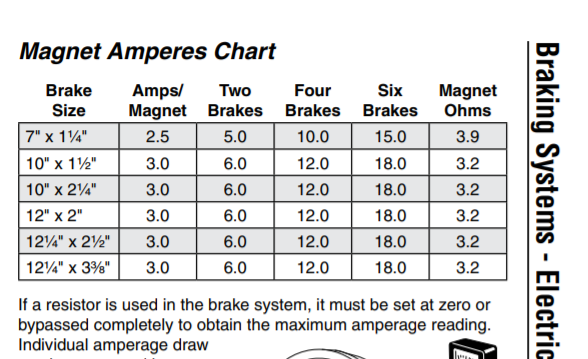
@JRK: Here is the Dexter chart that reflects what I thought concerning amperage to their dual axle brakes:
-
@Scribe With A Stylus: We had the 4 cylinder with the 7 speed trans. Single rear wheels. I think they were 15 PAX machines with about a 4+ foot equipment storage area in the rear. These MB vans were slated to be driven by younger coaches, mostly hauling our athletes and their gear. This setup would not be my recommendation for pulling an Oliver Elite II. Just not enough power. The sleeper recommendation for a TV on the cheap would be a Toyota Sequoia with the 5.7 L engine. I still have our 2005 with the 4.7 and towed Ollie for my first 12,000 miles or so. It needed more power. In 2019 I upgraded to a F-150 Lariat, 3.5 EcoBoost, FX4, Heavy Duty Tow Package. Now that truck is a beast! But the cost difference over a good used Sequoia 5.7 is not something that a lot of folks would want to entertain. Good luck, GJ
-
Another preventive reason to downsize the receiver hitch on the back of Ollie is to prevent potential Darwin Award winners (idiots) from towing their jeeps behind the trailer.
-
Long ago I upgraded to the 2 5/16 hitch. Glad I did. Would do it again. Lots of discussions on this topic. Suggest you search the blog.
-
F350 and occupants saved by their safety chains
Geronimo John replied to John E Davies's topic in Towing an Oliver
Funny, I was looking on line at the very same chains! Thanks for posting. I was thinking of using my curly safety strings to connect up to the real safety chain attachment points, and run them back to a second attachment point under the propane tanks. Sort of a safety cable to the safety chain approach. No point in tossing them. -
According to E-trailer, they state in their "How much power do electric brakes use?" the following: While there is no absolute standard for amp requirements on trailer brakes there are common practices between trailer component manufacturers. This creates a defacto standard. We’ve determined amperage requirements based on extensive testing, customer experience and information gathered directly from trailer component manufacturers. We’ve found the most common amperage draw on a 7-inch brake magnet to be 3.2 amps maximum. The increased amperage of a 10 or 12-inch brake magnet tends to max out at 4 amps. This means that a double axle brake system would be drawing a maximum of 16 amps for a full emergency stop. So, I'm thinking that when replacement or repair time comes around, that AWG 14 is likely to be a reasonable choice. Your thoughts? GJ
-
Xtend and Climb Pro Series 780P 12.5” telescopic ladder
Geronimo John replied to Patriot's topic in General Discussion
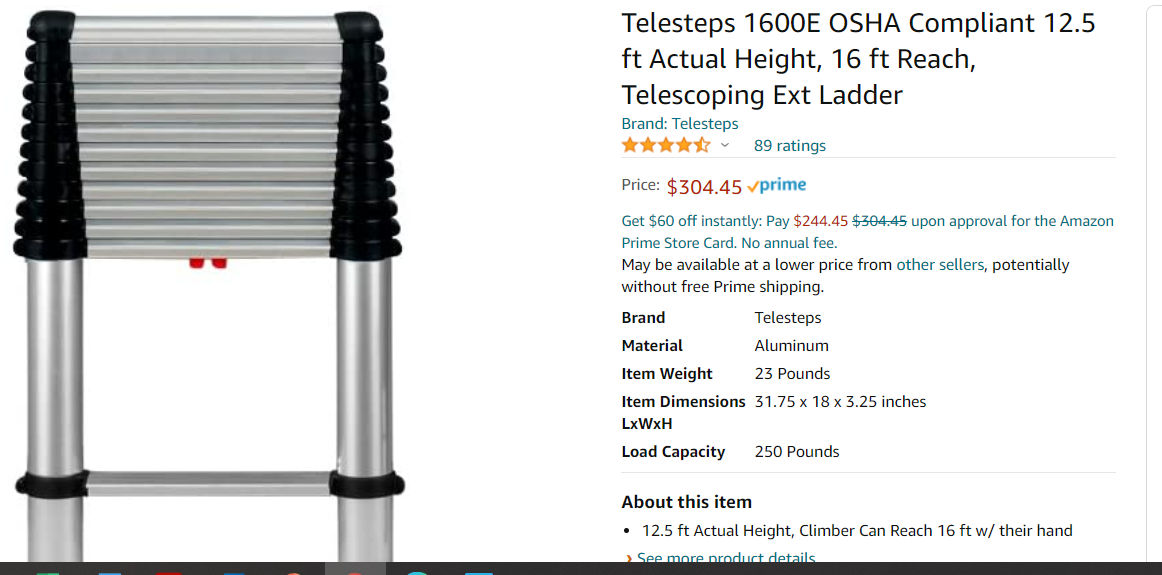
Three years ago, I purchased at Home Depot the Telesteps ladder shown below. As decked out, I'm about 245 pounds so I really liked the stronger version of the TeleSteps Climbing Ladder, Type 1, Model 1600E. If you are over 190 pounds or so, you may want to consider this heavy duty OSHA Compliant version. This firm was one of the original telestep providers and their product is first rate. When I get up on top of Ollie, I extend it out the full length and it gives me a high hand hold to then slide off the side to the roof. I would not recommend getting anything shorter than 12' actual ladder length. Don't be confused by how high you can reach, just go by the ladder actual height. I have been all over the roof of our Elite II every year for detail cleaning (Typically twice a season) and waxing every season. It is easier to wax the center section from on top. Safer to wax the lower top side sections from the ladder. First couple of times I was on top, I was a bit worried. Now not so much any more. This model collapses down to about 3' and fits very nicely in the front side (Behind the hanging cloths) of the coat closet as you enter Ollie. I cover it in a blanket to protect the fiberglass.