
Rivernerd
-
Posts
973 -
Joined
-
Last visited
-
Days Won
18
Everything posted by Rivernerd
-

Progressive Dynamics Converter
Rivernerd replied to thompsonkd's topic in Mechanical & Technical Tips
Yep. That is why I use Google with a search like: "Oliver converter inverter" to find threads on the Oliver forum relating to the inverter or converter. -
Tow Vehicle, 6'4" vs 8' box, Crew vs Mega, DA vs SA
Rivernerd replied to JDAstroPhoto's topic in General Discussion
We have a similar headlight height adjustment wheel on our 2019 Tundra SR5. Until I remembered it came on the truck, I wondered why the headlights were set so low! Duhhh! -
Roger: Where did you obtain the dial dimmer switches for the Porch Lights and Outside Courtesy lights?
-
2023 Lithium Platinum Package 7-Pin connector 12v Charging
Rivernerd replied to JDAstroPhoto's topic in General Discussion
UNLESS you have the Truma Aventa air conditioner. Since Truma will not allow installation of a Micro Air Easy Start in its units, you must have 3kw to start and run the Truma Aventa AC unit with an inverter/generator. That is why we carry two 2kw dual fuel Champion inverter generators with a Paralink kit. When running on propane, the two units generate about 3060 watts combined, which is barely enough to run the Truma Aventa AC. So, with the Truma Aventa AC, the EU3200 would not be "overkill;" it would be necessary to run the air conditioner. -
Tow Vehicle, 6'4" vs 8' box, Crew vs Mega, DA vs SA
Rivernerd replied to JDAstroPhoto's topic in General Discussion
Will it be garaged? Will the truck with the 8' box+Crew or Mega Cab easily fit into your garage? FWIW, that extra 20" of wheelbase can also make a difference at many campsites. If usually camping with 2 adults, I would prefer the CrewCab with 6'4" box. I would sacrifice the 50-gallon fuel tank for the greater parkability, and probably slightly better gas mileage. -
2023 Lithium Platinum Package 7-Pin connector 12v Charging
Rivernerd replied to JDAstroPhoto's topic in General Discussion
In principle, this fact concerned me. Like many others accustomed to having lead/acid batteries recharged by the tow vehicle alternator, I was concerned that the three 130Ah Lithionics G31 batteries included with our 2022 Elite II would get discharged during long driving days (when we run the absorption fridge on DC power), even though we have 380 watts of solar on the roof. So, I determined to follow John Davies' excellent posts referenced above and install a Redarc DC to DC charger IF our lithium battery state of charge seems low after long driving days. In actual practice, I am not yet concerned enough to invest the time and $$$$ in a DC to DC charger. We drove our Hull #1291 from Hohenwald back to central Idaho in the middle of last November. Some days were overcast. The daytime temps were consistently above freezing, and all night time temps were below freezing. We ran our absorption fridge on DC power while on the road, but switched to propane at night. Our battery state of charge never got below 85%, even on cloudy days, and quickly recovered to 100% once reconnected to shore power at a campsite. But, the DC power draw from the fridge during those cold temps, with the trailer cabin unheated during the day, was doubtless minimal. I plan to gather more data as we travel with Hull #1291 this spring and summer. An uncooled cabin may get pretty warm when on the road on hot summer days, requiring much greater DC power draw to keep the fridge at set temps. That should better inform the DC to DC charger decision. -
I have heard of dust fouling the contacts on those switches as well. If it were my Elite II, I would pull the switch cover off to evaluate how clean those contacts are. If you do this, please report what you find, so others (like me) who have that same switch panel can learn from your experience.
-
You didn't mention shore power. I presume shore power is not connected, right? The lights are 12V. The inverter inputs 12V and outputs 120V. The inverter cannot be powering your lights. The lights are getting 12V power from somewhere. Are your lithium batteries the Lithionics brands now being installed by Oliver? If so, are all of the blue on/off buttons dark? More details of your 12V electrical system would help diagnosis. That includes brand of lithium batteries (which I presume are LiFEPO4), number of batteries and total amp hours. A photo showing their current condition would be really helpful. If you have three 130Ah Lithionics batteries, is there a red switch mounted on top of them?
-
Bill and Nancy's towing vehicle issues
Rivernerd replied to Bill and Nancy's topic in Towing an Oliver
Our 2019 Tundra with 5.7L V8 and towing package is adequate for towing our Elite II. But IMHO, it is not optimal, like a 3/4 or 1-ton gasser truck could be. We will not find out until prices for heavy-duty trucks (hopefully) settle back down in a couple of years from today's obscenely-high price levels. We get between 8 and 9 MPG when towing the Elite II with regular gas. Not optimal, but for now, a sensible trade-off. -
46" to aft end of backsplash. 46 3/4" to aft end of countertop.
-
I am a woodworker too. I know quality work, and good design, when I see it. This is it.
-
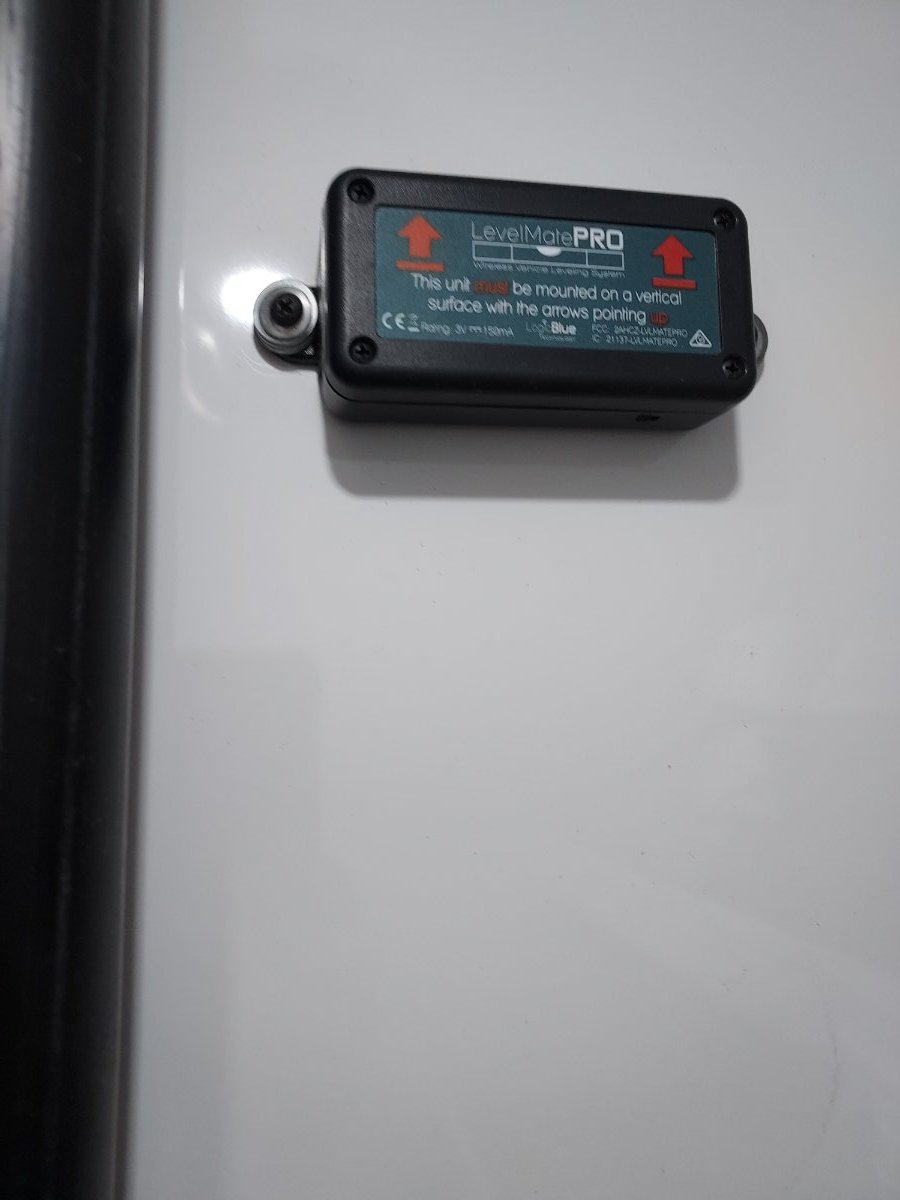
Another option inside the closet: the wall between the closet and the bathroom. The bath vent that runs through the roof is visible on the left side of the photo. Because that wall between the closet and the bath is thin, to avoid penetrating the bathroom side of the wall, be sure to either: (1) use washers, as I did or (2) attach it with double-stick tape or Velcro. In hindsight, it would have been easier to use double-stick tape.

-
FWIW, the Ford F250 available through the posted link above has NEARLY DOUBLE the payload capacity of our Tundra--2883 lbs. vs. 1460 lbs. Payload is the single most important criterion for towing safety. That F250 would be a great tow vehicle for an Elite II.
-
Given the sad experience you describe at your local dealerships, I recommend you consider a "fly and drive" possibility. Search deals on the web, even if they are a long way from home. If you can find a truck that works for you in, say, Texas, you can fly there and drive it home. There are a few dealerships in the nation that are doing business that way. If you read my post in the Tow Vehicle thread, you know that we still tow with our 2019 Tundra because right now is a really bad time to buy a truck. I can wait because the Tundra works for us, just not optimally. You can't wait. So, if the "fly and drive" method doesn't pan out, you my need to pay the premium for a used truck. Good luck!
-
Once you get the "gain" properly set on the trailer brake controller (on a deserted, straight and level section of road), you don't have to touch the brake controller lever for normal braking. You just put your foot on the brake pedal, and the trailer brake controller applies the trailer brakes at the same time your tow vehicle applies the tow vehicle brakes. You can feel the difference in braking power once you get the gain properly set. And, you can feel the trailer brakes stopping the trailer, independent of the truck braking system. Setting the gain is a trial and error process, which is why you do it on an empty section of straight, level road. Start by setting the gain to #5 out of 10. Get the rig up to about 25 mph and then stop it using the brake pedal. If the trailer brakes "grab," reduce the gain to 4 and try again. If you can't feel the trailer brake engaging at all, increase the gain to 6, and try again. After 5-10 minutes, you should be able to get the gain set to where the trailer brakes engage to about the same extent that the truck brakes do, so they work as a team to stop the whole rig as a unit. As well explained by John Davies above, you may need to use the manual lever on the trailer brake controller to engage the trailer brakes independent of the truck brakes, but those situations are not common. As he notes, manually engaging he trailer brake lever is an effective way to stop trailer sway, but Oliver's don't sway! For nearly all driving conditions, once you get the gain properly set, you should not need to use the manual lever for normal braking. But, the settings do change as your brake shoes wear in, so at the beginning of every long trip, I engage the brakes on an empty road close to home to verify that I can feel the trailer brakes engaging, as they did when I initially set the gain. If not, I adjust until they engage smoothly with the truck brakes, then proceed with the trip.
-
Aftermarket trailer brake controllers have commonly been installed by auto electrical shops for decades. They were not even available from some truck manufacturers until the last decade or two; they were almost always installed after the factory build. Trailer brake controllers are available for your specific Titan truck for as low as $175: See this link, for example: https://www.etrailer.com/bc-2022_Nissan_Titan.htm?style=without+factory+Tow+Package Installation may cost double that amount--get quotes. I strongly recommend you contact a reputable auto electrical, or auto mechanical shop, or two or three, wherever you live and get competitive quotes. And, I strongly recommend that you don't tow your Oliver again until it is installed, and you know how to set the gain to properly control the trailer brakes. It is a critical legal and safety issue. If you are involved in an accident towing your trailer without a trailer brake controller, your insurance company may try to decline coverage. I would not even consider taking that risk.
-
Sound test of my new Isotherm fridge. Pretty amazing!
Rivernerd replied to John E Davies's topic in Ollie Modifications
I am keenly interested in whether the Isotherm fridge will fit through the door of your Elite II without removing the door frame. I noted that you had to take the old fridge out in pieces. My wife would strongly prefer a Danfoss compressor fridge over our absorption fridge (after I mentioned an article on RV fridge fires), so the day may come when I get to do what you are doing right now. I look forward to your usual clearly-written and photographed report on the process! -
We have an Amcrest GPS GL300 tracker. Whenever our Elite II is: (1) away from its fully-enclosed storage shed next to our home, and (2) not connected to our tow vehicle, we turn the tracker on. It requires a subscription fee, but we enjoy the peace of mind. I have read anecdotal stores of such trackers being used by police to find stolen trailers. In your shoes, I would leave the tracker on whenever it is parked in front of your home. The tracker is in addition to two different kinds of Bulldog coupler locks, which we install when leaving the trailer at a campground unattended.
-
My Criminal Law professor in law school, Woody Deem, started each class session with the statement: "Criminals are stupid." He would then delight the class with real stories from his decades as the Ventura County California prosecuting attorney.
-
Given your experience, I would recommend setting the furnace thermostat a few degrees higher, which should allow more warm air to get to that sensitive area. I also recommend doing what is sometimes done in vacation homes in cold climates: leave the kitchen faucet dripping a bit over night to help prevent freeze blockage when ambient temps drop below freezing. Also, I cannot tell if you have the Truma water heater. If so, set it to Comfort rather than Eco mode. That will keep the water in the system warmer. Please report if you try any of these methods, and if so, what works.
-
Can I tow with 2006 Ford F-150 XL 4.2 L, 6 cylinder truck?
Rivernerd replied to Melodyb's topic in Towing an Oliver
As long as you are replacing your 4.2L 6 cylinder F150, I strongly recommend you spend the extra $$$$ to buy a 250/2500 level 3/4 ton truck. Or even a 350/3500 level 1-ton. Our tow vehicle is a 2019 Tundra with a 5.7L V8 with tow package. It is barely enough to safely tow an Elite II, even with an Andersen weight distribution hitch. There is lots of helpful information in this thread entitled Tow Vehicle: Good luck! -
I purchased my furnace filter fabric from Amazon: https://smile.amazon.com/gp/product/B077SP23FP/ref=ppx_yo_dt_b_search_asin_title?ie=UTF8&psc=1 The 4-square-foot piece is more than I will ever need, but it cost less than seven bucks.
-
For our Hull #1291, I purchased this inexpensive collection of blade fuses: https://smile.amazon.com/gp/product/B07G33XCHM/ref=ppx_yo_dt_b_search_asin_title?ie=UTF8&psc=1 It probably contains more fuses than I will ever need for the Oliver. I store it in the "secret" compartment below the pantry, underneath the velcroed piece of fiber granite.
-
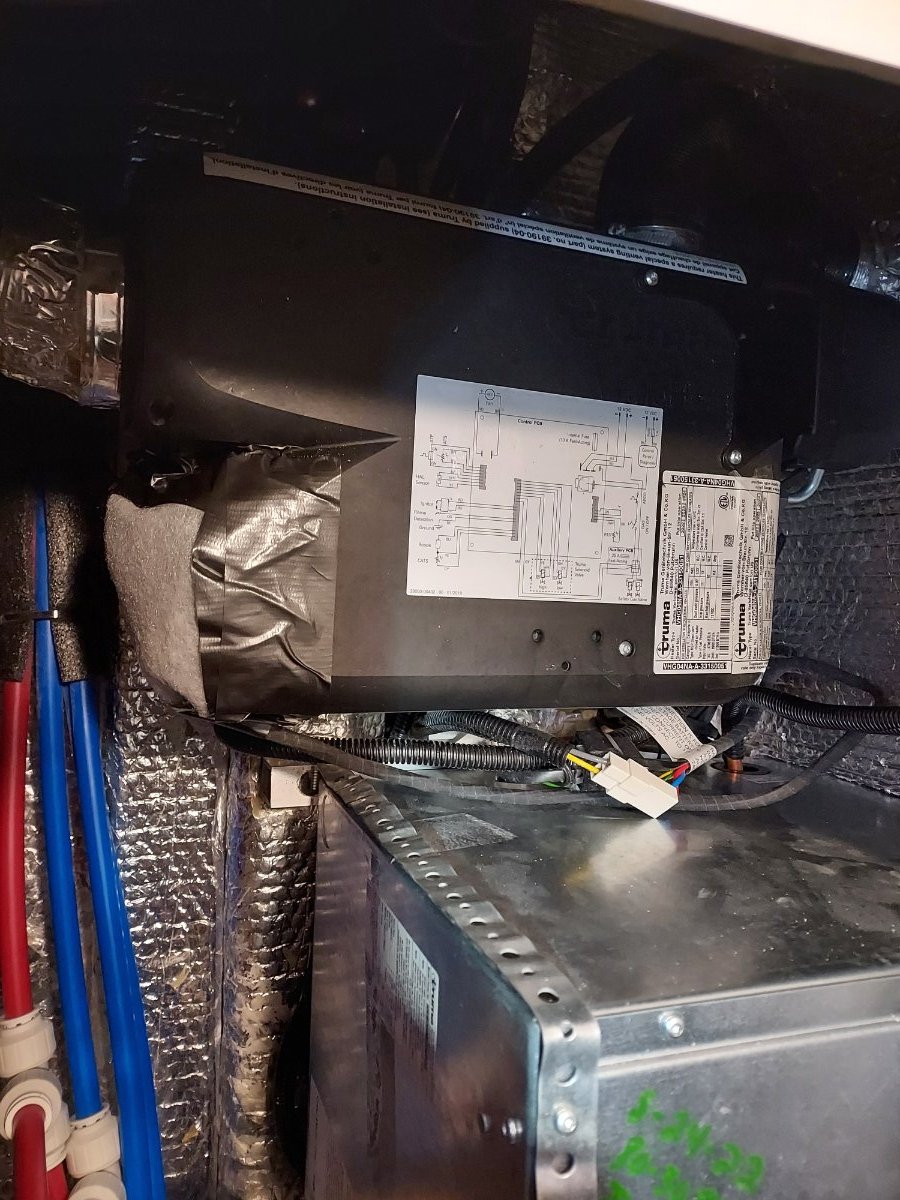
Please post when you install your return air filter. I considered a home-made filter mounted on the inside of the return air grill, but opted instead to tape filter fabric over the intake housing on our Truma Varioheat furnace. I did this thinking that, given the distance from the intake housing to the return air vent, much of the air pulled in to the intake housing comes from the open area around the furnace, not just from the return air vent. I figured that filter fabric taped to the intake housing would be more effective at filtering all of the air sucked into the furnace. I will be keenly interested in your filter design. I welcome any improvements over my crude installation.
-
Problem with rear emergency escape window
Rivernerd replied to Fargoman's topic in General Discussion
Thanks for reporting your actual experience with the rear window replacement. This will be very helpful for anyone who needs to do the same repair.