2008RN
-
Posts
229 -
Joined
-
Last visited
-
Days Won
1
1 Follower
Recent Profile Visitors
3,577 profile views





2008RN's Achievements






-
I would like to Will Prowse do this strenuous testing with intact battery to other manufacturers like Epoch, Lithonics and then cut them open after the ridged testing. Then we could really compare. Maybe he has, I just haven't taken the time to look. I agree I think the BB interview was a PR stunt. Lithium batteries are still semi new technology and still evolving. Just because they meet an industry standard does not mean they are well built. It is like high jumping and setting the bar at one foot. As long as you jump over the bar you're good to go. Also Will could take a brand new BB battery and cut it apart to see if he really caused the internal problems he showed. But I highly doubt that kind of melting happened just from cutting the tops off. I understand this takes some financial backing to do these types of test. I don't mean to dish Will, but is he completely impartial in this. There are a lot of variables.
-
We have the 3.5K axels I put the 5 leaf springs on the Oli. I have almost 11K miles on them. The first couple of days (750 miles) seemed a little rougher then they mellowed out. I do go on gravel, and some of the 2 lane roads in the nation are as bad or worst than gravel roads. I just got done doing a lub on the wet bolts and checking everything out. All seems fine. The Oli weighs about 6500 pounds when loaded. I haven't notice any problems in the interior, it was worse with the original springs. The trailer stays pretty mellow with movements of an inch or two after uneven pavement. Where it used to bob and weave like a drunken sailor before making it harder to control. After the leafs no control issues. I think you would be fine either way.
-

Knee replacement surgery, anyone gone through this?
2008RN replied to routlaw's topic in General Discussion
Been there and done that x2 (ten years apart.. Both times I used a stationary training bike during rehab. It few weeks after surgery before I could get the knee joint loose enough to get all the way around the top of the pedal stroke. it was probably 2 months before I could get a above 40 rpm still without force. By 3 months I was walking 5 miles a day and standing on my feet 8 hours a day before I went back to work as a cardiac RN. Both times I did each knee during the summer. It wasn't until spring that I got out on a real bicycle. Even at 9 months I still had to Ice the knee after bike rides. As mentioned above it was about 1 year the I forgot that I had a knee surgery. Also as stated above rehab is tough and painful. Do what PT tells you. The important thing is getting full mobility back. Then getting muscle stronger. This takes months. I still have a minor problem with my left leg (Dominate) with standing on one leg and balancing long enough to put my pants on easily standing up. I still do it, but I am clumsy. I did have an exterior tendon release a few years before the surgery because the tracking on my patella to the knee joint, which might has cause the slight balance issues. Things I have never done again. I love sports and always pushed my self hard. Down hill skiing, If I could not do the double diamonds, and push myself it wasn't worth skiing. Jumping down off of anything: The truck tailgate, large logs and rocks when hiking, Anything that required cutting side to side, soccer, racket ball, etc. As far as trailer maintenance, 3-6 months for some of the easy stuff. The hard stuff like repacking bearings 9+months. You learn about getting down on the ground and getting back up. I still can not squat down to the ground like a mechanic would to work on things. Only do what is comfortable and you feel safe. Remember baby steps. If you have to repack bearings or such coming up soon you should have someone else do it. I do all of my maintenance on my Oli it just means modifying how you do things. I know little old ladies that still garden that have had knee replacement. You should be back in the camp grounds in around 6 months or so. Remember Ice and Stretching during the next 9 months. I spent my lunch breaks Icing the knee on my lunch breaks. I was the best surgeries I have done. Hang in there and don't give up. -
I sorted through mine a couple of years ago. I had to dig into them 6 months ago. Back in the shed are cables from around 1987 when I first got involved with Unix systems, and playing with original PCs. I left IBM 20 years ago. I just got rid of all my old manuals and programming books. My lap top is 1year old, but the desktop is 15 years old. Talking about all of this old stuff, makes my want to clean house and get rid of anything that is older than 2015. Totally retiring in May, so it’s time to embrace to future.
-
I was trying to find specs on the brakes. What I found is the it didn't matter if it was 12" or 10" brakes. Dexter shows 12 gauge to run 2 or 4 brakes from the tongue of the trailer. I do not think the dexter wires coming out of each of 10" brakes are 12 gauge the look more like 14 or 16 gauge. Other places such as trailer shows 14 gauge to each brake. One 12 gauge from the tongue could easily be split into 4 separate 14 gauge wires. I just do not know how and where Oliver did this. If there are problems I would say it was Oliver design problems and not Alcan upgrade.
-
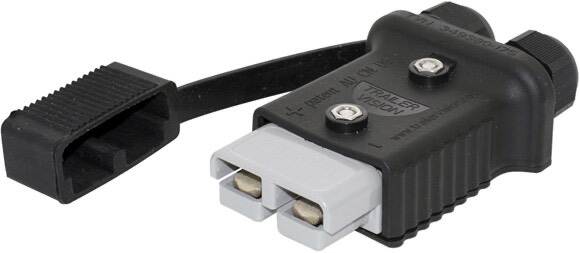
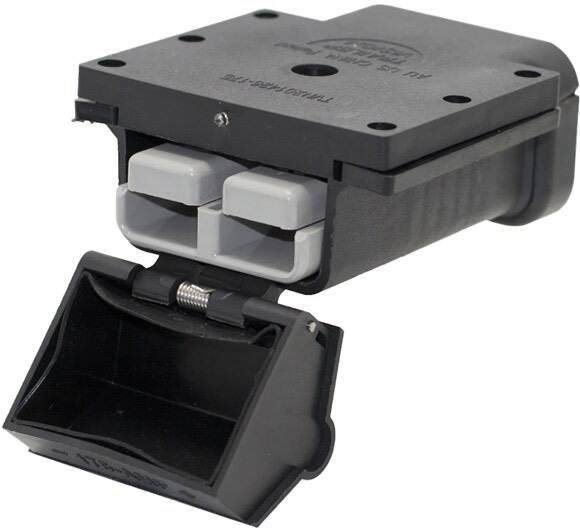
I got everything from Powerwerx.com, and the plugs are SB175. Here is the covers: https://powerwerx.com/trailer-vision-tvn349380-175-sb175 https://powerwerx.com/trailer-vision-tvn201426-175-sb175
-
Thanks, I checked out the remote controller, and found the setting thanks. I also tried the FXC app, I thought that would be cool. After playing and looking thing up for 1/2 a day, I found out the remote controller the was shipped with the Oli doesn't have the bluetooth function. Not sure if I will spend the $100 for a new controller to have a cool function.
-
I used this on the Cable between Truck/trailer. Then I used the mountable ones with the flip cover under the bumper and Oli I have done a few day of rain on the Oregon coast, and I was surprised that they were dry when we stopped. I thought I would have some moisture between the connectors.

-
I went the same way you did. I put Andersen connectors under the reat bumper and under the front of the Oli. I use it when we travel day after day boondocking. If I stayed somewhere with power, or will be staying the next night with power I probably won't use it. We have a trip coming up to Yosemite, Arches, Dinosaur National Parks, and using harvest hosts whenever possible; We will depend on the DC-DC charger much more. Have an August trip, and it should be around 100 degrees everyday, We will be on shore power most of the time and will probably not use the DC-DC charger much if at all. Maybe when we go to Lithium we might use it more often. We are pretty conservative with power on the AGMs. If we boon dock for several days in one spot we use Generator at dinner time to top off the batteries. Except In Wisconsin State parks generators are not allowed so we supplement with the DC-DC charger and the Ford Diesel when staying multiple days. I am going to install an Andersen Cable on the front of the truck this spring. So I can attach from either end of the truck. I am planning on making a Jumper cable with an Andersen connector on one end. so I can jump start or get jump started from either end of the truck.
-
I have another question related to upgrading to Lithium. My 2020 LEII came with a Xantrex Freedom XC 2000. Can the Xantrex Freedom XC 2000 be used with lithium? The 2000 watts has been sufficient for our life style although I would like extra capacity with the batteries that lithium would give.
-
I don't mean to overwhelm you. While you are under the Oliver looking at the shocks, Pay close attention the leaf springs. Look to make sure the leafs are not sitting flat on one end or the other and/or over-sprung. If they are it could cause the shocks to wear out prematurely. If they are there is a huge topic on leaf springs ( more like a book). Remember to just take one thing at a time, you have an older trailer, but is built to last. There is a ton of information on this website, and people that care about there Olivers. Happy Travels.
-
Because it is easier and cheaper to deny and shift blame, and hope that a class action doesn't take place. This is the way the world has gone, no integrity. I would bet the CEO is selling any shares if they even have them. Sorry for the rant.
-
I updated my Truck to a 245Amp alternator with 4/0 to one battery and upgraded the link between batteries to 2/0. I ran 1/0 back to the Oli for the Victron DC to DC charger. While I was working with the big wires, I did the John Davies clean up in the battery compartment with 4/0 with smartshunt and shut off switch so that when I upgrade from AGM to Lithium I would have a good foundation. I bought a hydraulic crimper and I loved it. Made all the work so much easier. While I was at it I bought several extra lugs from 6ga to 4/0. I love my dog but for me tools are mans best friend. They can make life so much easier, they just aren't warm and snuggly.
-
@Geronimo John I have to agree with you. about using the Step wet bolts. When I was installing the Alcan springs in the Oli. I used the wet bolts from Alcan and found when Torqued down to the specs, I could not get grease through the sides on the Bushing. I finally measured the step bolts and the measured the springs and carriers. I found that the should bolt allowed just over .010 slop. This allowed grease to come out of the sides and allowed the shackles and springs to move freely. This allows the EZ-Flex to move freely, and do what it was designed for. All of the stress is on the bolt itself and is not on the threaded shoulder thus allowing a lower torque.
-
Wow, thanks guys for all of the input. I really appreciate it. Those were questions that kept bugging me about Lithium batteries.. I feel much more comfortable when the time comes to upgrade,