Leaderboard



Popular Content
Showing content with the highest reputation on 01/26/2020 in all areas
-
Yup...I'll likely see the info and post tomorrow on which specific tire. I note that the 'Oliver University' page hasn't caught up with these production changes yet...and neither the tires or the battery specs are available in downloads. More when I hear it back from Oliver Sales.2 points
-
My wife and I have spent 18 summers on the Yellowstone River, midway between Livingston and Gardiner, and the north entrance to the Park., so we’re in and through the Park multiple times over the course of every summer, and going in and out of every entrance. There have already been lots of good suggestions given here already which I won’t duplicate, but I’d like to offer a couple more points to keep in mind. One is that if you go into the Park early, say between 5:00 am and 7:00 am, you’ll beat most of the slow traffic, plus have a better chance of seeing wildlife. And, May is a good time to see wildlife in the Park. (While I don’t disagree with the recommendations regarding Grizzly RV Park, West Yellowstone, and areas surrounding the West entrance, it is often really backed up traffic wise there, both getting into the Park, and often all the way to Madison Junction and beyond, unless you plan on getting into the Park at the crack of dawn.) The other point I’d like to make is to look up ahead of time what the planned road construction is for the summer in the Park, and if your time is limited, make your plans to minimize delays that you might incur in these construction zones, which can be done to some extent by taking a different route in the Park, and/or driving through construction zones at off hours. You may also wish to avoid towing your trailer through construction zones in any case - another reason you might wish to stay outside the Park. John2 points
-
We asked about a surge protector on the Oliver during our Jan 21 factory tour. We were told by Anita that the 2020 Oliver has a surge protector built in and is standard.2 points
-
Started journey south with hull number 412 bound for warmer weather. I stopped for diesel for my Duramax. Diesel on the pump was listed for $2.94 per gallon. Using my TSD/EFS fuel card, I paid $2.28 a gallon. It saved me a total $12.99. The app showed the location of each truck stop on my route. I was traveling on I 65 southbound when I refueled in Alabama. My receipt showed up in the app almost immediately. I will get another receipt tomorrow which will show the debit from my checking account.1 point
-
No, just in her car and my truck. With SiriusXM, though I rarely listen. My wife turns it on. A sat radio in the trailer would definitely be on my To Do list, if I listened regularly. The news channels would be nice. And it would be nice to have a weather alert mode too, for “just in case”. John Davies Spokane WA1 point
-
FYI the remote display is super easy to relocate, and it uses a regular Cat-5 ribbon style cable to power it. John Davies Spokane WA1 point
-
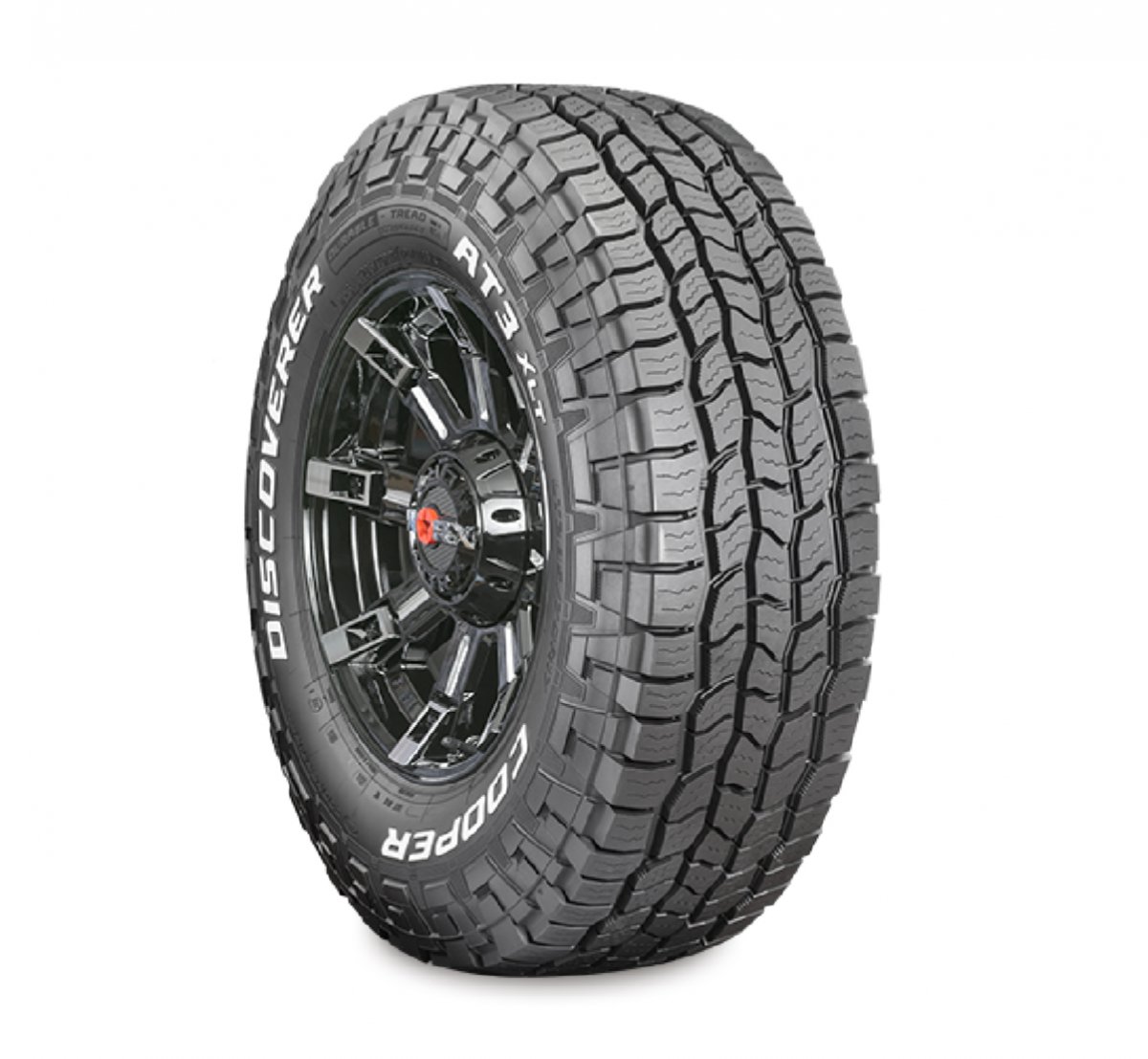
I would not mind seeing these trailers coming with these tires, they are on my shopping list as replacements for my Land Cruiser. They are what I call High Testosterone Tires. (I think Ollies are a little bit effeminate.) For rocky roads they would offer a whole lot more sidewall protection than any regular All season. John Davies Spokane WA
 1 point
 -
With all the expensive electronic equipment onboard most Ollies it is good that the surge protector is now standard equipment. I'm not sure where the electronic readout for the protector is placed. But, if you are sensitive to light (flashing or otherwise) make sure that the readout is in a place that hides that flashing screen from view while still being easily accessible so you can read the codes that it displays. I'd have mine placed inside the first overhead cabinet right on the pantry wall. In this location all one has to do is lower the cabinet door and you can see the readout from the entrance door - assuming that you have not filled that cabinet so full as to block the view of the readout. Bill1 point
-
Those are some pretty nicely thought out systems and a first class job was done building and installing them. For ourselves we don't plan to travel any back roads (gravel or rocks) and boondocking is not to our liking, I see no need for me to invest in a system like that, but I will say here it looks like great protection for those who wish to camp that way. As you can see we probably won't be going to Alaska with our trailer, or camping beyond the paved roads. trainman1 point
-
Dwain - Both John's give you good advice. When one has the time it is certainly better to get off the interstate and explore. However, I do not find interstate travel to be stressful at all. In fact, there are traffic studies that claim that the interstates are safer - primarily due to the lack of "cross traffic". Unfortunately, the interstates tend to be boring - very boring and not as "scenic" as other alternatives. Having said this, interstate 40 has some particularly nice areas. While dangerous (think curvy roads, rock slides and the trucks and cars that JD mentions) the Pigeon River Gorge section of interstate 40 (just east of the TN/NC line) and the section of 40 west of St. Louis are very nice. I used to think the Great Plains as seen from the interstate were boring and lacking in virtually any human stimulation. However, over the years I've developed a liking for those vast fields of sun flowers, waving wheat or corn fields and gently rolling hills. If you look for it and open your mind to something different that what you are used to, you can find beauty and interest in some of the strangest places and/or things (who would have thought that the Corn Place would be a place of interest?). I certainly would not plan some grand trip for my first excursion in a brand new camper of any sort. Give yourself a bit of time and experience with the new Oliver. You will feel more comfortable and confident and relaxed once you are more familiar with this home on wheels if you take a few shorter trips first. Bill1 point
-
Stay away from Interstates entirely, wander along on secondary highways, take your time, learn the patterns of towing and living in a trailer. Interstates are full of too many nasty big rigs traveling too fast and too close together. Interstate highway travel is sometimes required if you need to cover a lot of miles, but it is seldom enjoyable when towing. It is always stressful. There are a bunch if camping apps, download a few and study them and you will get a feel for what is out there. I just hate those Interstates.... IMHO of course. John Davies Spokane WA1 point

-
Recent Achievements
-