Leaderboard



Popular Content
Showing content with the highest reputation on 02/15/2025 in Posts
-
There are lots of Olivers with the keyless RVLock so I thought it's worth sharing our good experience with this great company. We decided to install an Amazon-purchased RVLock keyless door handle ourselves instead of buying it as an Oliver option. The installation was quick and easy, and it comes with a generous lifetime warranty. The locks are made in Utah by a small company, and they look and feel like a quality product. Unfortunately, however, there have been issues with the electronics because it has failed three times already! It first failed after about six months, and I called the company for the warranty claim. They wanted proof of purchase, then sent a replacement KPD keyboard and PCD circuit board with installation instructions. We were able to look up the receipt on Amazon and received the parts in a few days. It failed again about a year later, and RVLock still had me in their system. They immediately sent more replacement circuit boards with a new rubber keypad cover. This time, I applied sealer around the lock even though there were no signs of water intrusion. Unfortunately, it failed for the third time a few weeks ago. The RVLock company’s customer service was apologetic and said that they’ve done some design changes to address the problems. This time, they sent upgraded circuit boards, a new speaker circuit board, a foam gasket, and instructions. There was a shipping charge of $3. I hope that this is the final fix because we genuinely love the lock and we wish success for companies that stand behind their products. Cheers! Geoff
 7 points
 -
Don't most of them (spouses that is)?🤪4 points
-
I should always add a caveat to my posts so people will know that I have 600 square feet of shop for my Oliver, several large workbenches, a plethora of clamps and superior craftsmanship skills. I just assume most people on here are similar since RVs and TTs always break and need constant repair (One of the reasons I bought the Oliver). Not to mention that I love doing this kind of work, so it isn't tedious for me. My wife just looks at me like I live in a different world.4 points
-
RV lock was one of the first top 5 mods I installed on our Oliver. 5 years later it still works perfectly, has served us well and so convenient. I did replace the original key pad with the new updated silicone rubber key pad. Highly recommend based on our use and experience.3 points
-
We also had a great experience with RVLock last year when we replaced the keypad with the upgraded version (the numbers were peeling off on the original pad). After commenting this story to the RVLock folks manning their booth at the RV show in Quartzite last month - I was awarded with a huge swag bag of cool stuff! A great and responsive company, RVLock.3 points
-
Same here. We use our FWT exclusively for our water needs, as mentioned in other threads. Filling at home with a known pedigree of our (delicious) well water is standard practice for us. Granted, D still filters the well water through a Travel Berkey, but she does the same thing at home with the Big Berkey -- works out fine for our style of camping, FYI.3 points
-
CGI does great work…3 points
-
I believe that it is a shame that we have to be so surprised by a company that really does stand by its product. However, it is really refreshing to hear about those who do. Thanks for letting us know how these guys have treated you. Bill3 points
-
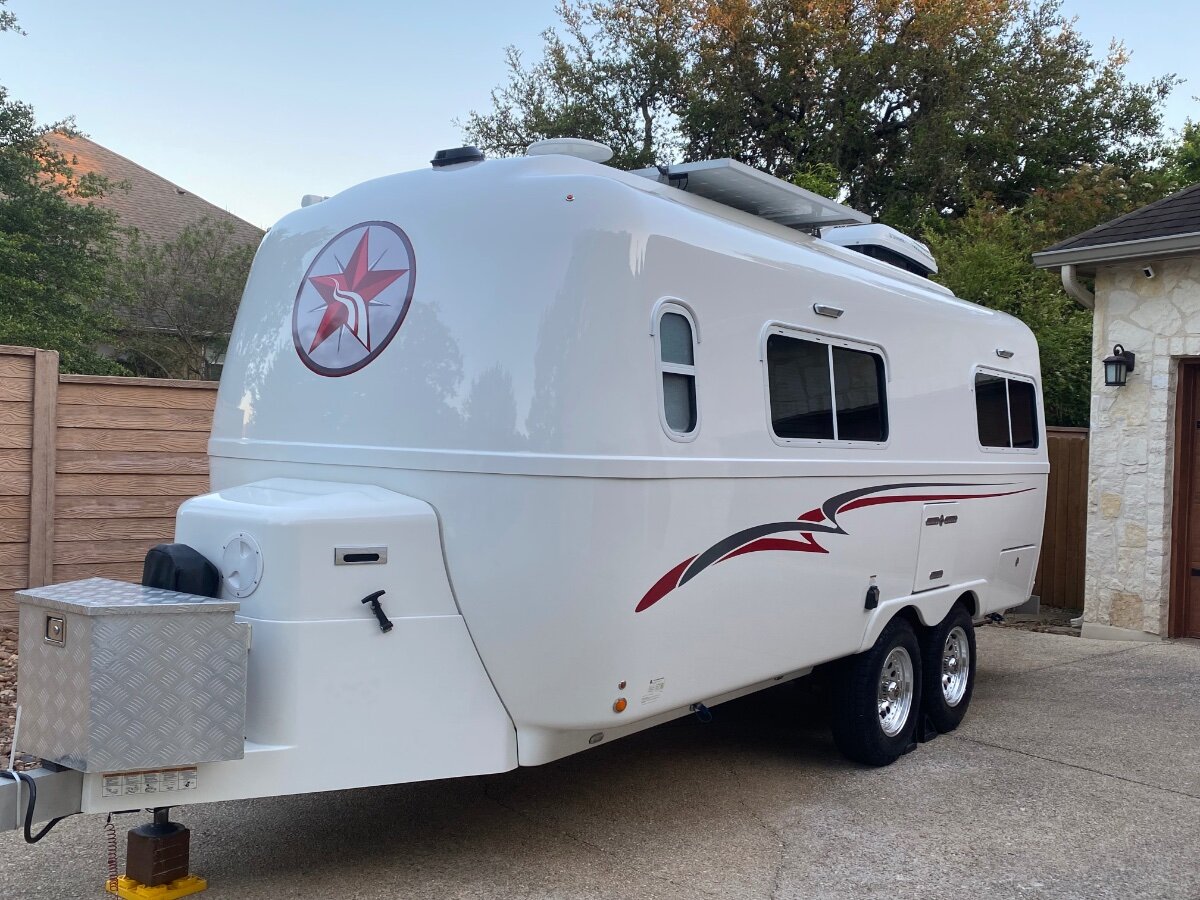
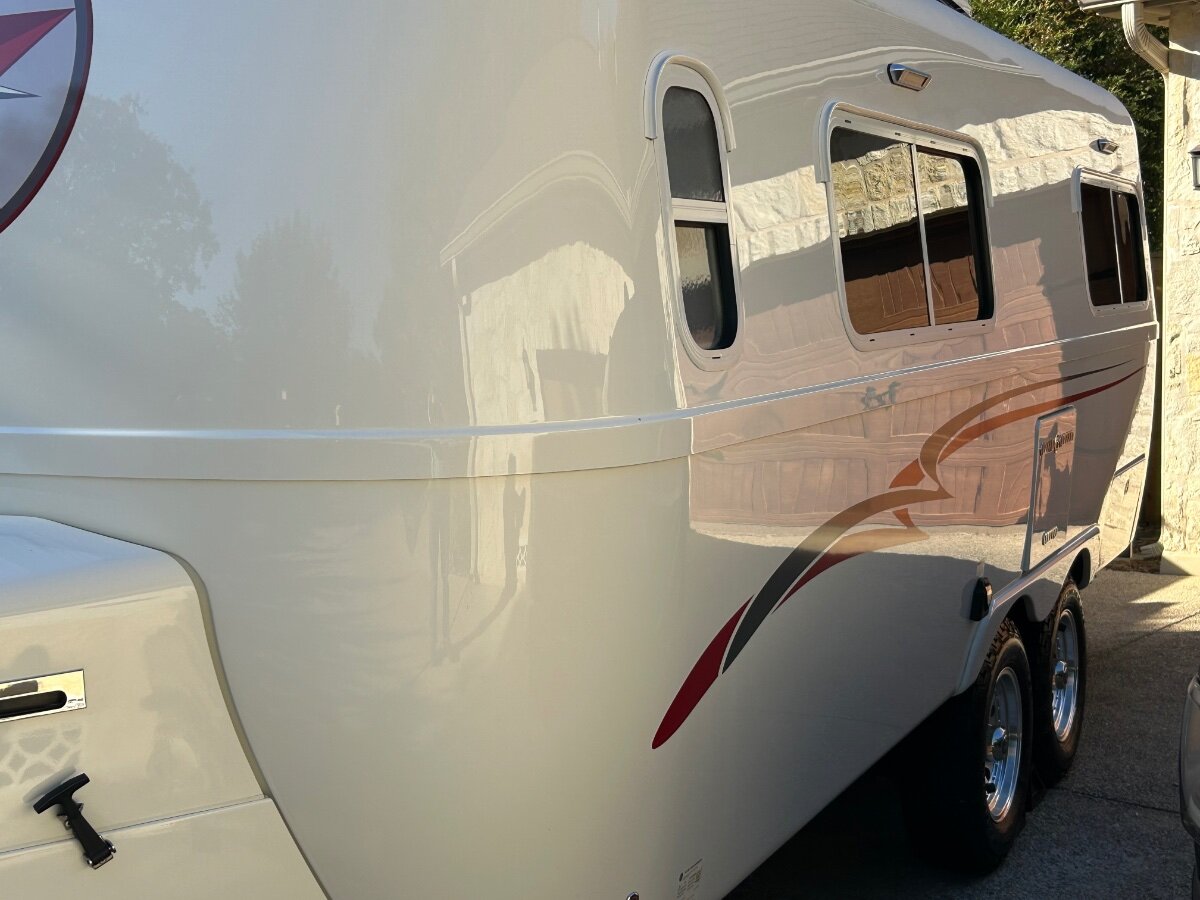
We decided to let CGI do the work on our camper after talking to several Oliver owners who have had their Olivers ceramic coated. It took 4 guys who knew what they were doing 9 hours to complete the process. Our camper had very little oxidation. It has been covered or under a shelter at all times (2020 Hull 588). I had to convince Joe that his knees were not 20 years old any longer and NO some DUDE was not going to help him do it if he could find that DUDE. After he saw the work Gavin and crew did to make her shine like new he agreed. They also replaced the moldy white trim around the windows. We arrived back to NC to 6 inches of snow and freezing temperatures for about a week. When we rinsed and soaped up the camper, she looked brand new. No hard scrubbing required.
3 points
-
I got one for myself at that price, as well, along with a multimeter to replace one that went kaputt!3 points
-
This is true, but does the Oliver owner need greater precision? The Klein products mentioned above read to +/- 0.01A DC and other multimeters can read to 0.001A. We're not testing electronic circuits. Several Oliver owners that have written here with electrical issues do not own one and have little to no experience in their use. Also, if you have a reliable Bluetooth shunt installed, do you need a clamp meter at all? They are clumsy and mine often sits in its pretty case. However, all Oliver owners should have a basic multimeter and at a minimum know how to read voltage. For example, water pump not working? Is it getting 12VDC at the pump? Heck, I've done automotive installations and troubleshooting since the 70s with only a test light in my toolbox. With this simple tool, no dials to turn or readings to understand, if it lights brightly you have voltage. Got my son and I each one of these for Christmas stocking stuffers. They were on sale for $8 at the time and so easy to use with one hand (try that with a multimeter)! 🤣 https://www.amazon.com/gp/product/B08D9RY532/ref=ppx_yo_dt_b_search_asin_title?ie=UTF8&psc=13 points
-
We go where we go, no gentle treatment here. You should see the front of my trailer, there’s enough chips and rock gouges to qualify it as a replica of the surface of the moon. The rest is pretty shiny. 😎2 points
-
Problem is… Now y’all have to take extra good care of it! Camping in our Oliver is like driving an old farm truck. Where a little scratch, a door ding, just doesn’t bother you! 🤣2 points
-
Mike, we had CGI do our 2022 a year later in November, 2023. They did a great job and it looked better than new. All the imperfections and swirl marks from new were gone. Very easy to clean it now. John2 points
-
J & J - Looks great! How refreshing to find four relatively young guys that are not afraid of a bit of hard work. Yes, I know that they charge a fairly high price for that work, but, I've paid more for less. I assume that you took some Pepsi with you? Bill2 points
-
True. In that respect, us men are all in the same boat.2 points
-
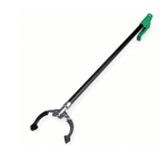
One of our original purchases was a trash grabber: It works GREAT for pushing our milk crates back into the basement. But when removing the milk crates the vinyl flooring hooks the edge of the milk crate. So I tied a paracord "Yoke" to the base of the crate one one end, and to the door hinge on the other. By pulling the paracord "high", it lifts the milk crate just enough to pass that edge. Also a lot faster. GJ
2 points
-
@Galileo - Hey, Val! @ScubaRx Steve and Tali are owners that have upgraded to disc brakes. There are others, too. The newer Dexter "Never-Lube" axles are configured with sealed bearing "cassettes" - I believe they're only available with the 5.2k# axles (I may be wrong here). One still needs to inspect them annually, however. Last time I checked, the disc brake upgrade was definitely only available with the heavier axles and not for the 3.5k# axles. The disc upgrade is on our radar screen but not until our 12" drum brakes need replacement, FYI.2 points
-
YES, it important to have a pressure regulator. Not using one could result in you blowing your water lines apart at connections. A very costly proposition, not to mention a quick end to a trip. The water pressure isn't the same at each campground. Not using one is "high risk, low reward".2 points
-
First Questions: 1. Are you hooked up to City Water? 2. Are you using a device to keep the incomoing water pressure in the Ollie below 40 psi?2 points
-
We I installed the little orion in the boat this week. It's a great little piece of equipment.1 point
-
Congratulations from hull #12. Wishing you many miles of smiles, as we have enjoyed ourselves for 17 years now.1 point
-
That's interesting. I'd like to know more about that.1 point
-
Sure does look like the same stuff that is on mine too. If/when you replace it, be sure to clean, clean, clean the surface of the Oliver before going any further. Also, a nice low humidity, and warm to hot day when you can hold the new gasket in place for at least 24 hours would be advisable. Good luck! Bill1 point
-
John, despite my efforts washing and waxing on a regular basis our old trailer was looking a little dull. The CGI guys made it look better than the day we picked it up. Much easier to clean now.
1 point
-
@John and Debbie John: I believe what you are calling a pressure regulator is actually a backflow preventor. There are two backflow regulators located just under the floor board in the rear storage compartment. They are adjacent to the Fresh Water Connection and another one just adjacent to the City Water Connection. The blackflow regulators can be seen on the plumbing drawing in the 2022 Owner's Manual on the Oliver University page. Check out the drawing to see if that is what you are referring to. A backflow regulator does not regulate pressure. @Ronbrink @John and Debbie I stand corrected; see Ronbrink's post listed below.1 point
-
GJ, since we've gotten to know each other (virtually), you know I ALWAYS have an answer (as do you)! I truly enjoyed your post, but I would just increase the pressure and blow those LBs out! 🤣 Seriously though, every Oliver owner should know this line is clear, since every time we fill the tank until it overflows and pressure cannot build in an open system. Before every trip, I fill mine at home where house pressure is known. We have an adjustable regulator in the basement.1 point
-
Yes, at least 99.85% of the time. And you are correct in that the OE2 fresh water fill, lines and tank is an open system. But the open part is only the fresh water fill tank overflow tube located in the area under the microwave space. This line vents out of the trailer just aft of our steps. Should mud daubers or other critters build their nest in that line, that open tank system no longer is. Problem with this line of logic is that many owners set their pressure at 40+ PSI. I am not at all sure what the OTT poly FWT is pressure rated for. And being that water is a non-compressible fluid, an over pressured tank would only fail with just a big puddle. Not like how pressurized compressible gasses act during failures. But could easily test to failure the FWT system to find out.... on your trailer! Actually funning aside, I wonder if OTT ever tried to blow up a FWT by overpressure? I suspect yes, hence the oversize vent tube..... But I'm just guessing. 🙂
1 point
-
Same here. We use 550# paracord lanyards on our milk crates that live in the "garage."1 point
-
A manufacturers max payload number is theoretical for a very specific version of that truck. After all is said and done, options added, axle ratios, etc. You often find that the payload numbers are far less than the maximum stated for the truck. Don't believe it until you see the sticker on the door. And, maybe then until you've put it on the scales. Then you will run into what every other half ton truck tower runs into. Payload limits.1 point
-
@Steph and Dud B I'm getting one!1 point
-
100% concur, @Geronimo John, John! We've got the disk brake upgrade on our radar and will likely drop the hammer on them when our current 12" drums need replacement...FYI1 point
-
@EurekaJ - Hey, Jay! Welcome to the Oliver Family... We look forward to seeing pix of your future OTT adventures. Thank you for your service to our Great country!1 point
-
Nice looking piece of kit, for sure. Definitely not a cheap date!1 point
-
There was a small allotment received from Truma, and they were assigned to people with scheduled maintenance.1 point
-
1 point
-
I doubt THAT very seriously. Bill1 point
-
latest link on where to find these: https://www.outwater.com/SD-1601 point
-
The purchase of my LEII came earlier than I expected as I’d originally intended to get a new hull. I will not make it to the Oliver Rally this year due to other commitments. The 2026 rally will be a priority as I approach full retirement. I will be looking for great advice and recommendations from other owners prior to hitting the road.1 point
-
Bought something like this when we had a fifth wheel, to help me reach into the bed while hooking up: Heavy Duty Tire Step https://a.co/d/5vK6ftR.1 point
-
Art, have you tried the new ceramic Berkey filters?1 point
-
Like @mossemi has noted above, the freshwater inlet has fewer "restrictions" than the City Water side (I believe is true in all OTT models) for this, and other boondocking reasons, we've adopted the practice of only using water from our FW tank -- regardless if staying at an established CG with city water hose bibs. As @Geronimo John has noted in other similar threads, static and dynamic pressures are NOT the same animals even at the same pressure! One can really "hammer" the OTT system with a dynamic pressure at 40psi ultimately causing leaks or other damage, IMO. Always SLOWLY crack open the city water valve when using either the FW fill or CW side of the OTT water inlet system, this practice will "soften" the blow of dynamic water pressure on your plumbing system. FYI, we haul around a "Travel Berkey" water filter system (it lives under the forward dinette seat) and never yet had a problem consuming filtered fresh water from our tank. We keep the FW Tank sanitized regularly throughout our travels as a standard practice. Monitoring the CG water pressure going into the City Water inlet with our in-line pressure gauge is another SOP for us which indicates when we need to "throttle-back" the flow via the hose bib valve due to high CG water pressure. Casablanca has 40psi pressure regulators, but peace of mind is achieved by monitoring the in-line pressure gauge. For our style of OTT camping, we only connect to the City Water inlet when sanitizing the plumbing system.... my $0.02. Safe travels, ALL!1 point
-
Relying on campground supplied water pressure regulation alone has risk to the care free enjoyment of our wonderful Ollie's. But WHY? It comes down to physics. The CG water system typically are sized to accommodate the anticipated max load when built. Rarely do the owners of the CG plan for much future expansion, pipe scaling, or future site space density of users increase. So over time the site's water pressure delta between high flow and low flow periods increases. But WHY? Increased demands over time, the flow efficiency of the system decreases due to due to flow friction. More friction begets lower flow, and increased static and dynamic pressure differences. The problems start cropping up at those customers at the furthest site from their water main connection. Low flow complaints lead to the owner reducing the pressure modulation on their end to increase pressure to serve the end of line flow requirements during peak times. The Delta Pressure between low and high flows can easily be 25 PSI. So effectively to be conservative with what pressure you want your Ollie to see is your own water pressure regulator. Hence, for all of the above reasons, we do not leave city water pressure "on" to Ollie unless we are filling the fresh water tank or using the dedicated black water flush system. GJ1 point
-
Water pressure will vary by campground. We’ve been to campgrounds that require a water regulator and had bucket full of basic regulators for those who didn’t have one. I carry two, one with a gauge that is adjustable and one that has no gauge and regulates to 50 psi. Once, we had one with a regulator that froze overnight (I didn’t think it would get THAT cold!) and we were happy to have a backup. The basic ones are not expensive. Mike1 point
-
Thanks to both for the information. I will go out and get a regulator today. Appreciate the help! Greetings from LeFleur Bluffs State park!1 point
-
Yes, we are hooked up to city water. We do not have a regulator. It was not leaking at our previous stop. I just googled and it says to keep pressure below 40psi and use a regulator- which I don’t have yet. I toggled back the city water spigot and it seems to have stopped. is it imperative to have a regulator? thanks for your quick help. Needless to say was panicked at first being only out second trip out.1 point
-
Ditto: Lock N Lube, Mystic in my axle zerks and CV-2 on the bearings. That said, when I run out of CV-2 (In about 8 years) I'll go with the Dexter Mobile Synthetic bearing grease. It is specifically called out in the EZ Flex installation procedure that I posted earlier today. GJ1 point
-
Many people use the lock n lube. I'm sure you are looking forward to picking up your new Ollie soon. Congratulations. I'm sure you'll get comments on the gun from others who've used it.1 point
-
Hi Patriot and all the other helpful people, We get some pretty cold nights (and days) in the East! We like to spend time near the beaches in November. And up in the Mountains. So the ECO will be on at night. I don’t like to run the FRESH water waiting for it to heat for dishes and stuff so I switch it to COMFORT. It’s good to know in the milder weather we can turn it off. We are one year in to the Oliver and the Camping adventure and sad to see the season end. We have not gone off grid yet but are practicing up at the State reservations that only supply electricity. Thanks for the help, advice and good ideas. Catherine1 point
-
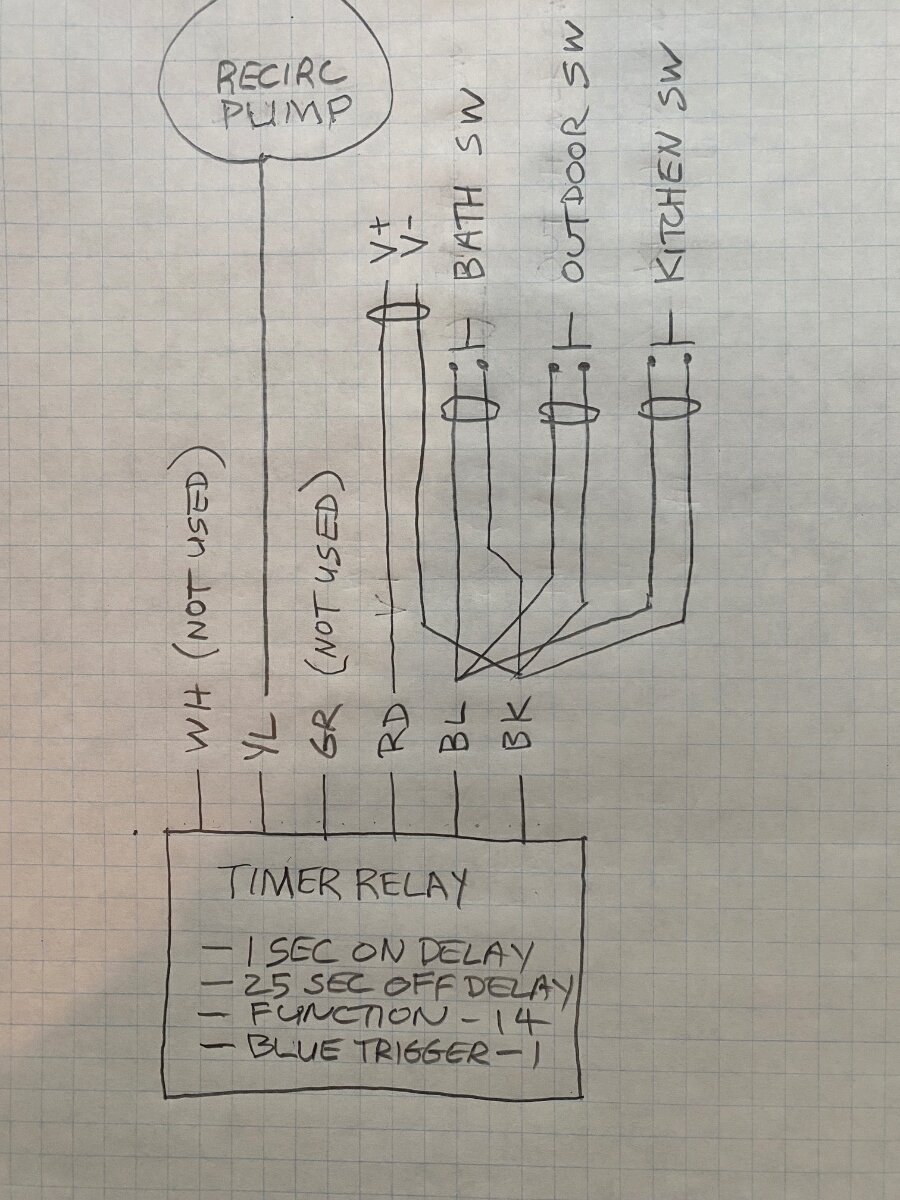
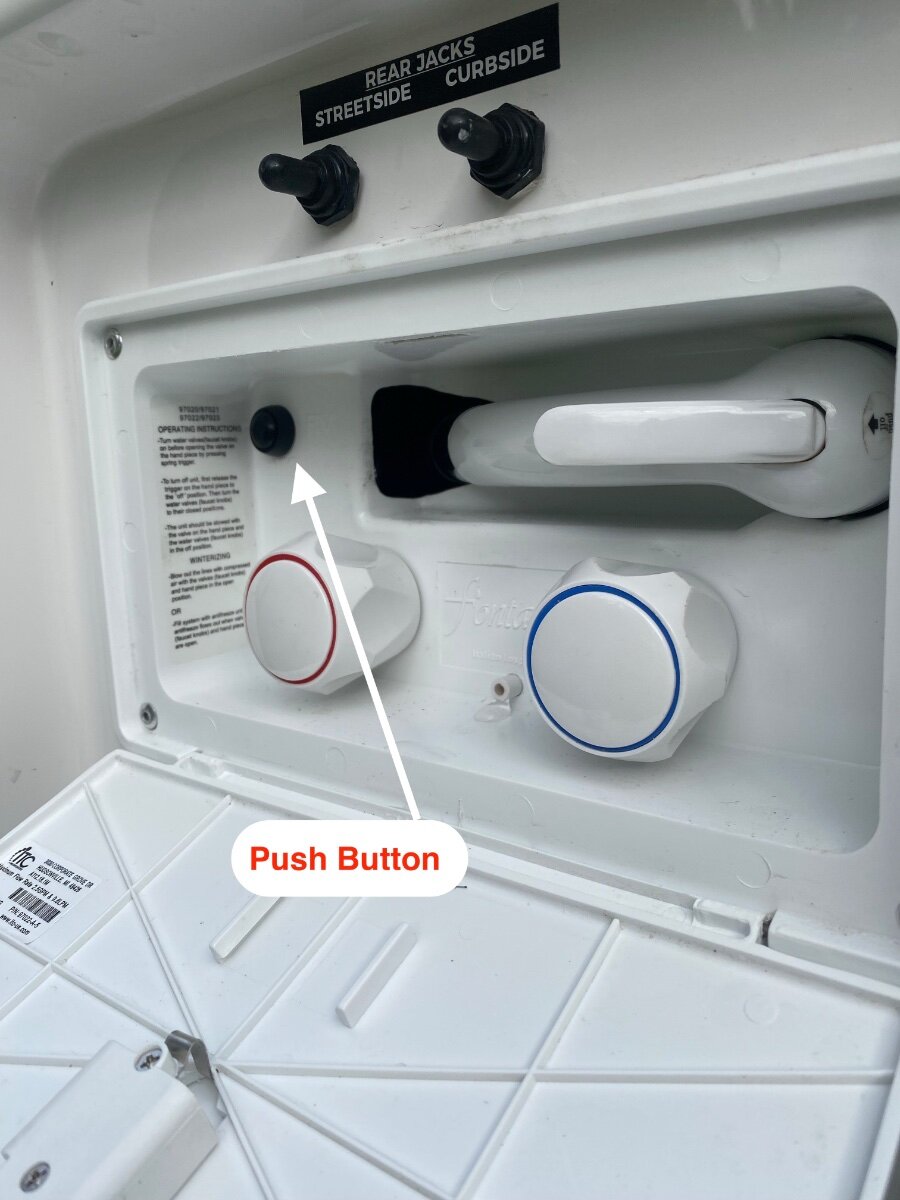
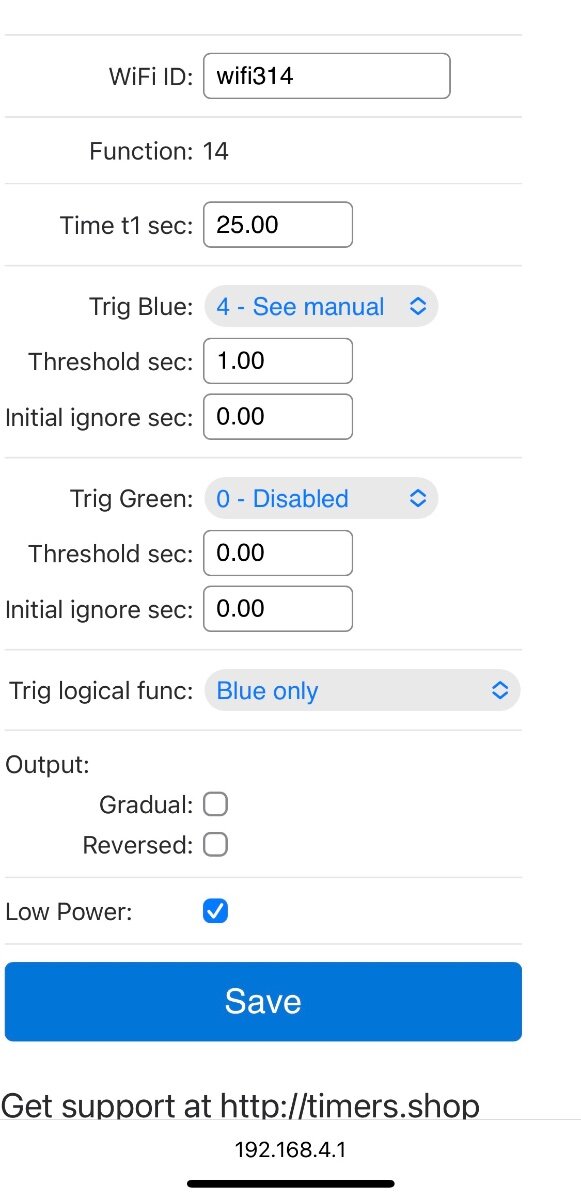
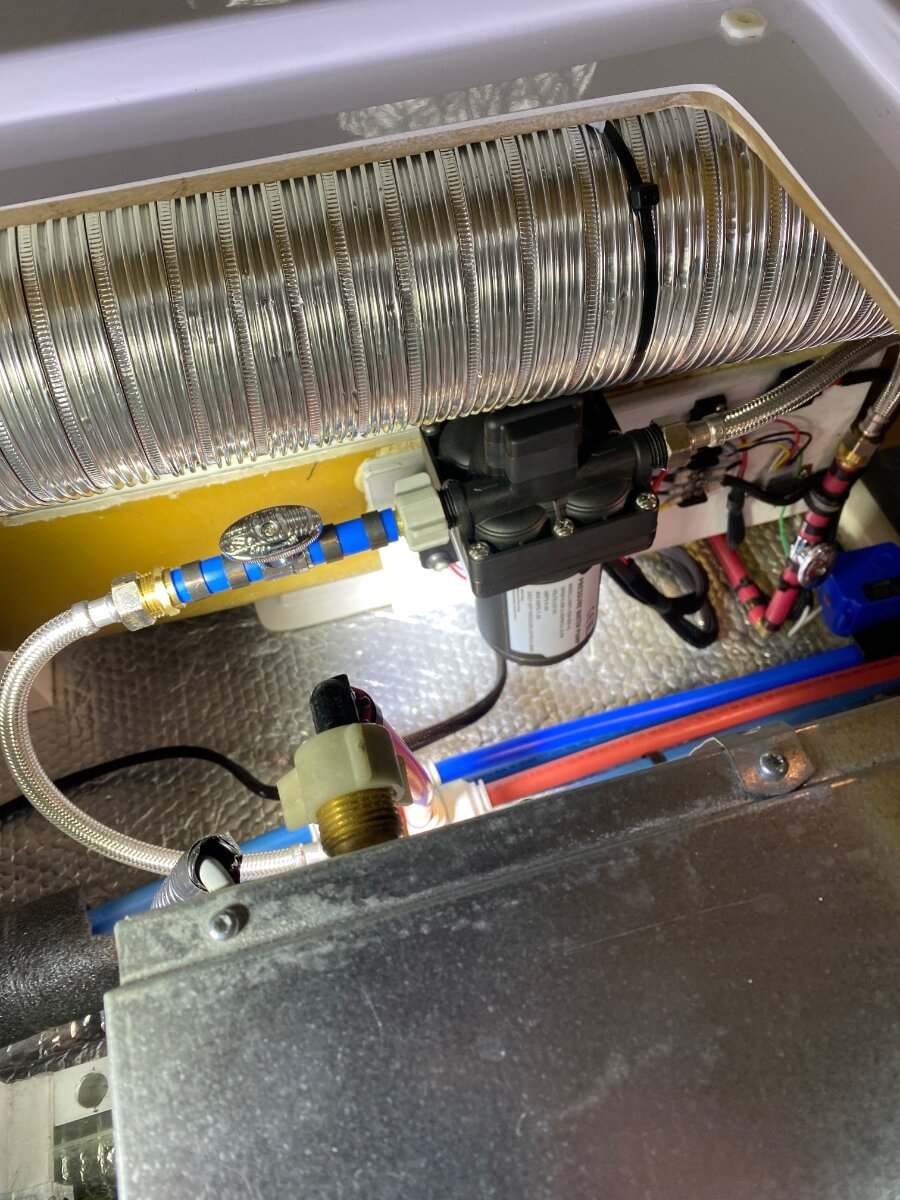
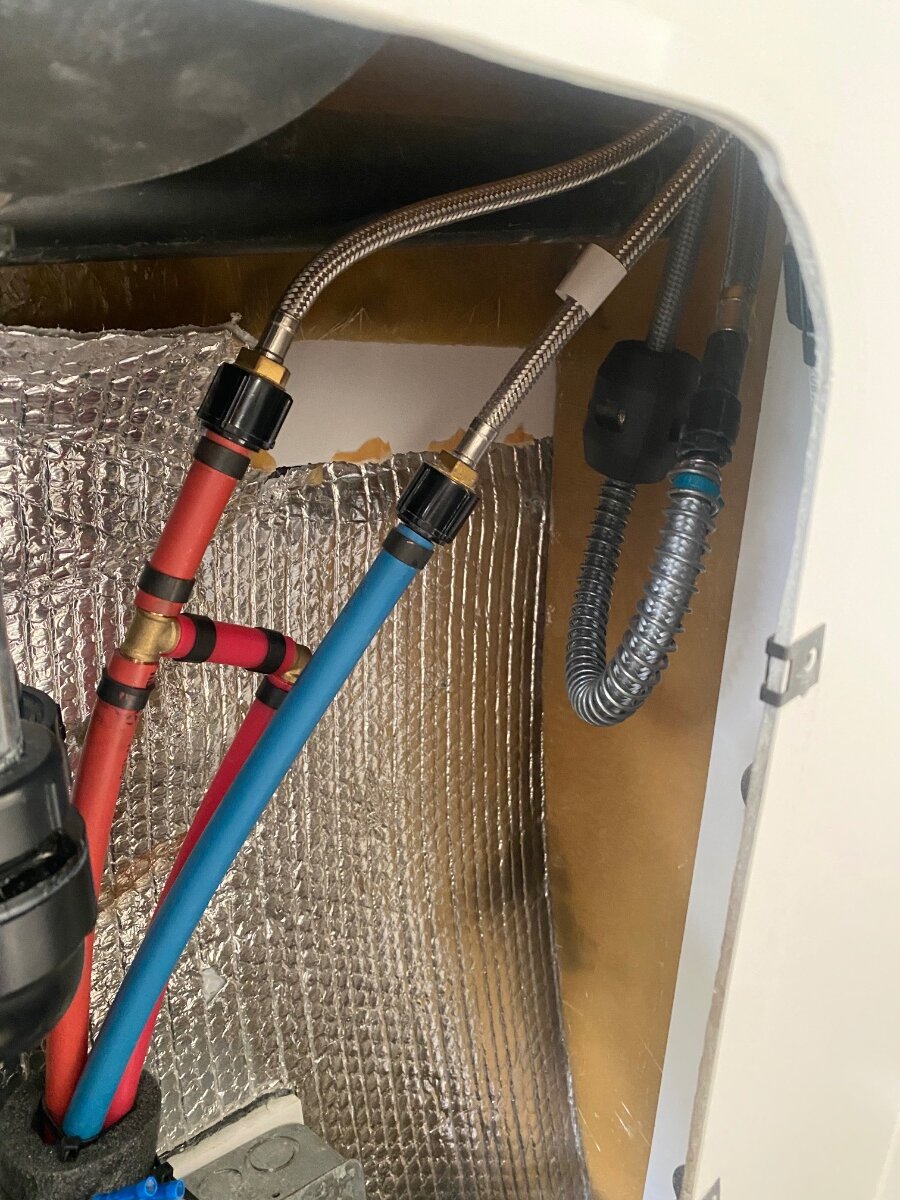
This is yet another modification for instant hot water. I was inspired by @Minnesota Oli who brilliantly installed a timed solenoid valve to circulate hot water from the bathroom faucet back to the freshwater tank. This saves from wasting water down the drain while waiting for it to get hot. I loved the concept of using a timer, but I went with a recirculating pump instead of a solenoid valve. We’ve used this design for about a year now, and it’s been very luxurious and effective. Not only does it help conserve fresh water, it prolongs the grey water tank volume which is now our most limiting factor when boondocking. The recirculation pump is started from momentary push button switches installed at each faucet. The button(s) activate a timer/relay that runs the pump for 25 seconds. Experimentation showed that 25 seconds sufficiently heats the pipes to deliver hot water at full temperature. The pump circulates the hot water back to the hot water heater, rather than into the fresh water tank. The new recirculation pump is the same model as the existing main pump. It was connected with flexible faucet hoses to reduce vibration and isolation valves so it can be used as a spare if needed. The pump was mounted on a plywood board fastened with construction glue to the vertical fiberglass surface by the furnace return vent. Note: Pump pressures can vary, so it might be necessary to slightly adjust the pump pressure switch to overcome the house pump pressure. Also, the pump may not overcome some of the higher city water pressures if a pressure regulator isn’t used. . . as it should be regardless. The Oliver has two separate hot water loops that I joined together so that the kitchen faucet is included in the recirculation loop. Being a shorter loop, there was less water wasted while waiting for it to get hot, but it's used more frequently so it's worth it to join the loops. There is plenty of room under the floor and behind the cabinets to run PEX return lines. “T” fittings were installed at the kitchen and bathroom faucets, and at the water heater input as shown on the drawing. Note: There was a buried 3-way valve, flexible by-pass hose, and a (clogged open) check-valve for water heater isolation. It was restricting flow and pinching the furnace duct so I completely removed it. The Water Heater can be easily isolated other ways if the need arises. The momentary push buttons were arbitrarily programed so that they must be depressed for one second before the pump will start. The buttons were non-intrusively mounted in 1/2” holes. The bathroom button is behind the existing bathroom pump switch, the kitchen button is above the sink, and the outdoor shower button is inside the shower wand enclosure. The sheathed button wiring is joined together under the street side bed along with the timer. I used terminal blocks, but wiring could be joined with any number of splicing methods. The button wiring carries no measurable voltage or current, it’s simply a switch to “low” (ground) for the timer trigger. Wire runs to the bathroom and outdoor shower switches are pretty straight forward, the bathroom vanity shelf needs to be removed for access. The kitchen switch wiring is laid under the liners in the upper cabinet, through the attic, and down the rear wall next to the clear AC drain tubing. I used a programmable timer/relay for the pump. An inexpensive (re-usable) Programer is also needed to program the timer. The Programer has built in App and Bluetooth for programing it on a smart phone and I’ve provided a screen shot of the program settings. This is truly simple to do, and quite fun! As many in this forum know, the Tuma Comfort II water heaters have a built-in circulation pump, controlled by temperature sensors, that keeps a small internal tank ready with hot water. Only one part (unavailable to public) differentiates it from the Truma Comfort II “Plus” that has a full hot water recirculating system. It took a few years, but I finally have the design details for that part and I’ll try to fabricate one when the Truma is removed for the up-coming factory recall work. More to come if I’m successful. The Truma “Plus” recirculation system provides true instant hot water (when not in Eco mode) because it keeps hot water circulating through the system based on temperature sensors. My system has a 25 second delay before the water is hot, then it cools down until the button is pushed again. This is less convenient, but more energy efficient because it doesn’t periodically cycle. I’m still on the fence which system is better, but fortunately the recirculation loop installed in this modification will work for both systems. Hope someone finds this useful! Cheers! Geoff Shopping list: Sureflow pump https://a.co/d/cSLUWEF 10 amp Timer/Relay https://a.co/d/g6C1zaZ Timer/Relay Programer https://a.co/d/9h1HtK6 Momentary switches https://a.co/d/i9wwhNs Terminal Blocks https://a.co/d/bkgrKhh Red PEX and fittings Flexible faucet hoses 1/4 turn valves
0 points



















-
Recent Achievements
-