Leaderboard




Popular Content
Showing content with the highest reputation on 09/02/2025 in all areas
-
Ready to put in place tomorrow...
 7 points
 -
I assume the power for the breakaway brakes comes directly from the batteries. So, when I switch the batteries off the breakaway feature is disabled. I only switch off the batteries when in storage and I can’t move the trailer without the batteries switched on (raise and lower the front and rear jacks). In fact, the first thing I do when taking my trailer out of storage is to turn on the batteries, so I’m fairly confident that towing with no breakaway brakes is not an issue. Mike4 points
-
I did this modification to The Outlaw Oliver, Hull #050 in March of 2017 after spending a month in the desert near Quartzsite, AZ. I got real tired of having to manually move those valves.
4 points
-
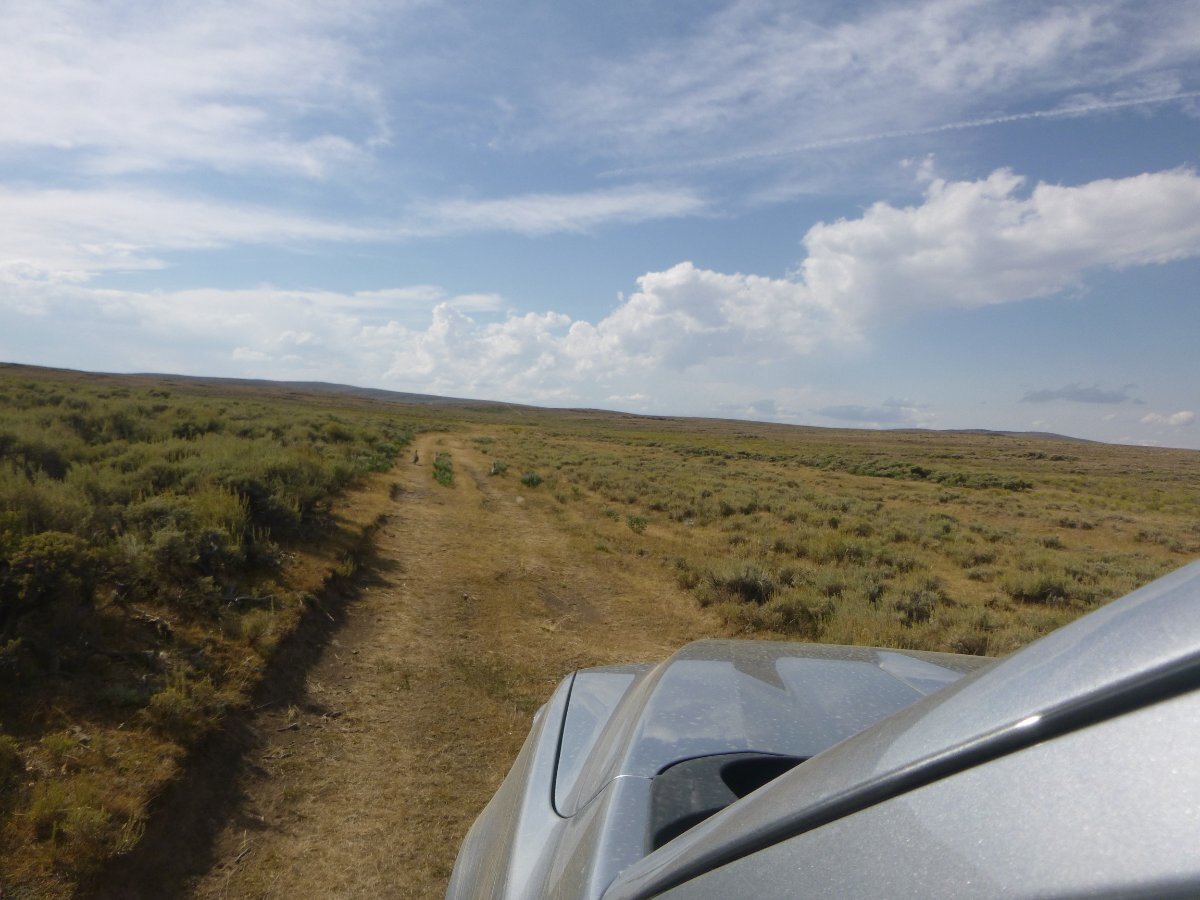
AND saw some of these (for those that have never been in this area of the country, the second pic is about all you can see for as far as you can see - sharp eyes will note the three sage grouse at the left hand side of the road).
4 points
-
The power for the brake disconnect, and the LP/CD detector, comes directly off the battery with no fuse on the brakes. I believe they are connected to the line side of one or both of the main breakers. The jacks, and the 12 volt panel are powered via the 60 amp main breaker, and the inverter from the 300 amp main breaker. If you switch-off both breakers, then you have effectively turned off 99% of the parasite loads (exception is the LP/CD detector). However, the solar panels, brake disconnect, and the LP/CD detector will remain in service, which I think are good things. The breakers are also there to protect the circuit in case of a fault. I think a solar disconnect switch is necessary, as I explained earlier in this thread. But I think a main battery switch is redundant, and only useful to someone who knows where it is. Fire departments will just cut the battery cables if there is a fire concern. It's perfectly okay to have one, but they introduce unwanted circuit resistance due to more terminations, contacts, and wire. Hope this provides a better perspective! Cheers! Geoff3 points
-
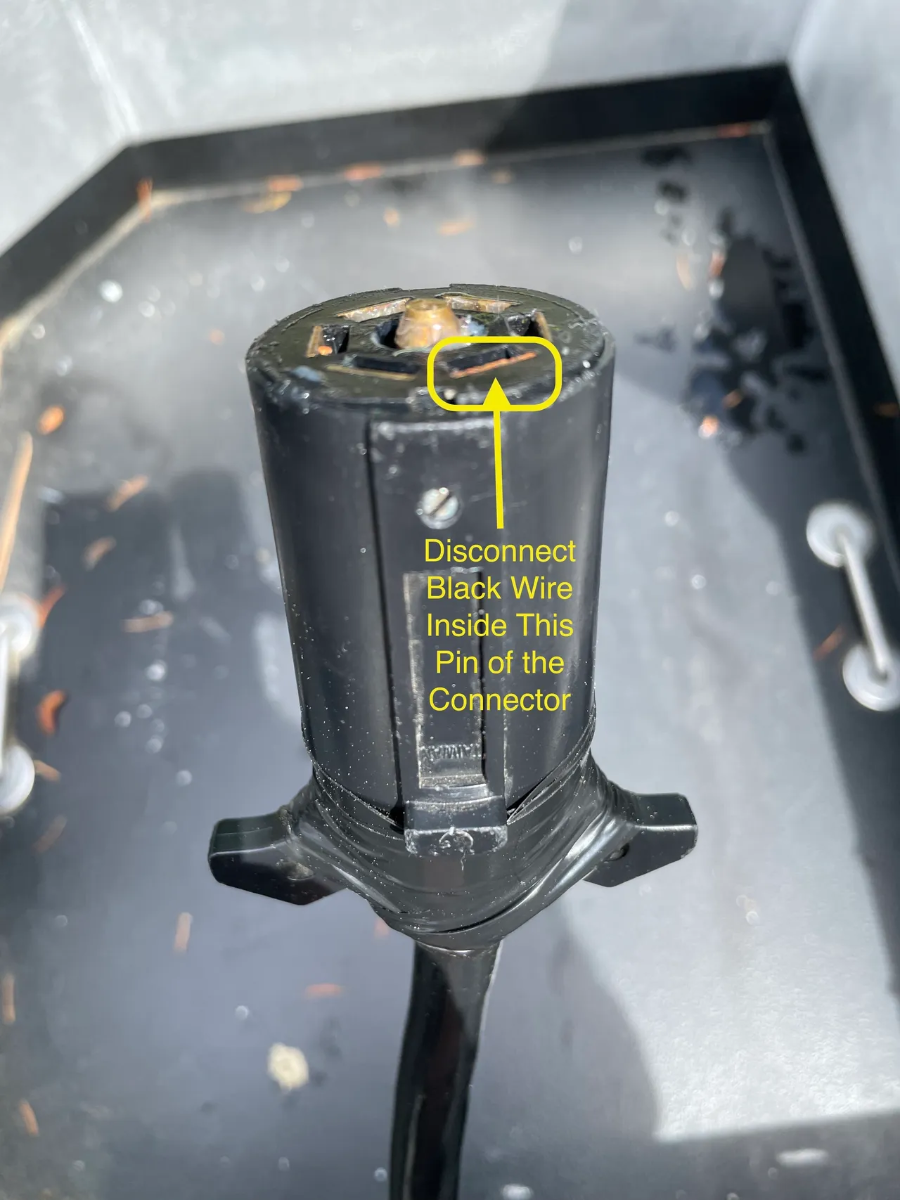
See section 7 of the article on the upgrade ...in our 2019 EII manual it shows it as a Black Charge wire as shown in the wiring diagram and in the PICTURE below. The reason we disconnected the wire inside the 7 pin cable was to protect the alternator. Lithium Batteries they can "draw" charge current much faster than older AGM or other Lead Acid Batteries...so ultimately they would try to draw way more power than the truck wiring would provide. (To install the DC/DC converter you'll run dedicated lines back to the DC/DC charger.) Full battery upgrade is here...including the section 7 about disabling the charge wire. https://4-ever-hitched.com/blog-articles/f/lithium-battery-upgrade Step 7; Disable the 7 Pin Charge Line: We will be installing a new DC/DC charger into our Oliver EII. But before we do that install we need to disable the current charging wire that runs from the 7 pin cable on the tongue of the Oliver. That 7 pin connector is the one that plugs into the back of the truck for lights, brake lights, emergency brake power. Inside the 7 pin cable there is a BLACK wire that provides 12V (B+ ) from the truck battery/alternator B+ all the way back through the trailer, through a 20A breaker and back to the batteries via the 12V Bus bar in the trailer. We will not be using that (Black) charge line for the trailer an longer. We disabled that line on the 7 pin connector by putting heat shrink coating over the screw terminal on the black B+ wire conductor and also taping up the screw lead the body. We reassembled the conductor and tested that no 12V was present on the wires inside the trailer. Wiring Digram for Oliver EII 7 Pin To disable the Charge Wire (BLACK) from the 7 pin, remove the cover and disconnect the wire from the connector by taping up the wire and putting it back inside the cover. Don't cut the wire in case you need to use it in the future.
2 points
-
Hope ya got a few of these:
2 points
-
Thanks. I came up with this idea a couple days ago and purchased these. It allowed me to disassemble all without a helper and should work the same for the installation of the new axles and leaf springs after building the assemblies on our garage floor. https://www.amazon.com/dp/B0CWTW7TQY/2 points
-
Geoff, I thought some regulars here may notice! I did use jack stands at the fronts of the steel frame members, took them away for the picture! 🤣 I have the jack stands back under the Oliver overnight in the same front positions so the weight of the Oliver is spread over 5 points, sitting nice! With the Alcan leaf springs, I purchased everything new from them, HD shackles and new wet bolts. You may have to remove your wet bolts, the ones not accepting grease, and clean the dirt out of them. After removing ours today, they do get dirty inside! After 25K miles? It certainly could be time for new wet bolts and bushings. After 2 hours cleaning up our Dexter E-Z Flex equalizers, I found the main center bushings cock-eyed and heavily worn, the end bushings for the shackles also a bit worn. After cleaning, the center bolt sleeves just wobbled inside of the bronze bushings. I would not have known this without removing them and fully cleaning, disassembling and inspecting them. I need to replace them, but cannot wait for parts now with work in process. I have no idea total miles on our hull. Good to get a fresh start after 10 years. I've got a whole lot more to write about soon!
2 points
-
Exactly what I did when we went with lithiums.1 point
-
I’m curious, has anyone that has installed a battery disconnect switch addressed the potential issue of “inadvertently de-energizing the emergency breakaway brakes? I wonder where the power for that switch comes from.1 point
-
On BLM land near - Atlantic City, WYOMING
1 point
-
Also this is a "nice" reminder as to at least one of the reasons we sanitize the fresh water tank. Bill1 point
-
The fresh water pump in my 2022 Elite II, Hull #1091, would not pump water from a full fresh water tank after sitting through the winter. Several attempts, no water, just a whining sound, Before I tried John Davies "prime the pump" suggestion above, I removed the filter from the inlet side of the pump. It was full of brown slime! A thorough wash of the filter housing and mesh filter enabled the pump to then work as designed, pumping water from the fresh tank to the sinks and toilet. Lesson learned: check, and clean, the pump filter annually after de-winterizing.1 point
-
Yes, I have seen those claims and reviews backing it up. I believe they began by making high end ice shanties for fishing, so they have some credibility with their insulated panels. Your contrast with the Oliver is my experience as well - more of a three-season trailer than four but yet better than most. Technologically, the Xplor is an intriguing trailer - truly can live completely off grid for as long as 60 gallons of water will last you. But then once again, I had to ask myself at my age am I going to be out in the cold camping or the more extreme heat, and the realistic answer is no unless there is an apocalypse. Thus, for the money and my anticipated use ... I use my Oliver completely off-grid the majority of the time. Just not for extended periods and not in extreme conditions or extreme locations. Perhaps the same is true for you and you want to push those boundaries - I get it.1 point
-
I also had issues with a first batch of Mopeka sensors, however upon complaint the company sent me a new set that has worked well over our last 60 days of travel. A physical/visual pressure gauge means opening the doghouse to check. A weight scale means opening the doghouse, removing the LP tank hold-done bracket (ours is padlocked) and then having the strength to lift the tank to measure, make LB to % full calculation, and finally remount tank and doghouse! I do like the scale approach better than the visual gauge (also often not accurate), but... How often do you want to do this? When camping, every day we leave the trailer and every night before bed (also when in storage) we check all of our readings by Bluetooth apps. We check the Epoch batteries and all Victron devices to see that batteries are good SOC and amp usage is as expected. Then I check the Ruuvi app for temperatures of 6 sensors (fridge, freezer, truck fridge, basement, cabin, etc.) and we read the Mopeka app for % fill data on both tanks. Want to make sure there is no LP leak (though I would smell it) and I've found when a tank reads 10% or low teens, it's time to switch tanks and then I know we have one to refill. And my favorite device and app is the LevelMate PRO. I would never want to back into a campsite w/o this great tool and app again! With Chris' help, positioning the Andersen Levelers, we get level without me even getting out of the driver's seat! These are getting more expensive, but if I had to open the doghouse I just wouldn't bother, then we'd wake up one cold night, furnace cold, to realize one tank has emptied, time to switch (manually) to the other tank. Love app view of important trailer data! https://www.amazon.com/Mopeka-Pro-Check-Bundle-Wireless/dp/B0BX1CQ6JQ/1 point
-
Thanks, John, for saving my ass again. Simply setting the Prestone on the bumper was enough for the pump to self-prime. I'd had thought my engineering degree would be helpful for more than calculating heavy lifts and overhauling turbine generators, but sometimes forget the basics.1 point











-
Recent Achievements
-