Galway Girl
-
Posts
804 -
Joined
-
Last visited
-
Days Won
25
Everything posted by Galway Girl
-

How Many Pounds of Stuff do You Carry?
Galway Girl replied to Mike and Carol's topic in Towing an Oliver
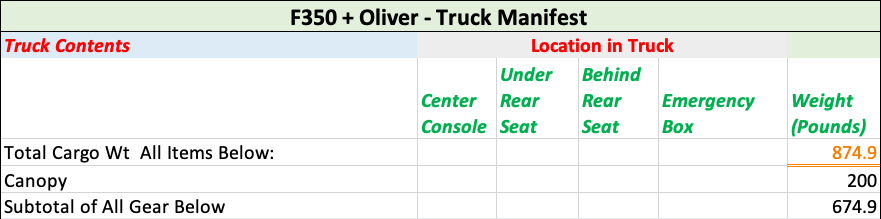
We are constantly changing what we carry depending upon the trip. Since we're preparing for a 9 month road trip, I thought I would take a moment to categorize the items we have to carry and put it into an XLS and share that with the forum. Here's the OVERVIEW total weight of what is in the truck bed. If you want to see what makes up that weight...the XLS is attached listing details like Bikes, Generator, Camp Chairs, etc. The full xls is attached which lists all the items and their individual weights. We plan on scrubbing the contents before we start our 9 month road trip. truck manifest.xlsx
-
I’m about to cut a hole in the interior wall to add a panel for our Xantrex controller display. Tips appreciated on how to cut safely, including best blades, bits for the job. Hull 505 Craig
-
Fixed the issue by changing two settings in the xc2000. 1) Disable power save mode. 2) Set transfer mode to UPS from Appliance (default) Power save mode, by function, cannot work with clocks (like on the microwave) and timers (or devices that need power 24 hours a day). In the power save mode the inverter turns off if loads drop to <25 watts. So essentially in our trailer the inverter was turning on and off at a 25ms interval...and that drove the microwave timer board crazy. Examples of devices with timers include microwave ovens, TV boxes, coffee makers with brew timers, refrigerators, and freezers with defrost timers. When the Freedom XC PRO is load sensing the output for loads, lights that have a wattage lower than 25-watt threshold, may flash momentarily, clocks and controller boards will keep resetting every 25 ms. To avoid issues with beeping devices turn off power save mode by setting to code dl5. (Disable) also, Selecting APL- appliance sets the transfer time from line to battery to 20 ms. Selecting UPS (uninterruptible power supply) sets the transfer time from line to battery to 10 ma.
- 1 reply
-
- 2
-

-
I just installed a new XC 2000 Inverter Charger as I prepare for a Lithium Upgrade. This inverter charger replaces my existing Prowatt 2000 inverter that was installed at the factory. I was able to wire in the inverter very easily and it seems to be working well. Per instructions from the factory the AC input power to the XC 2000 is connected from the 20A Breaker for the uW/110V outlet branch. The AC Output is connected to the 20A GFCI Plug under the front dinette seat. (This is the same way our previous Prowatt 2000 Inverter from the factory was connected.) When on shore power, the internal bypass allows shore current to flow through the 110V Outlets and the uW Outlet. When shore power is removed (or drops) the Inverter switch kicks in and the inverted AC power from the battery now provides the power to the circuit. Everything works as it should, batteries are charged, circuits work but there's one problem and it's with the uWave. When I take away shore power, and the inverter kicks in, the microwave beeps about every 3 seconds. I've tried several things, but opening the door makes the beeping stop while the door is open. I can actually start a convection cycle but after it finishes the microwave returns to beeping every 3 seconds and won't stop unless I open the door. Close the door and the uW starts beeping again. Any tips or ideas, I've not found anything in the uW Manual about beeping. Craig
-
New to this forum, looking for feedback on Lithium package
Galway Girl replied to serge's topic in Introduce Yourself
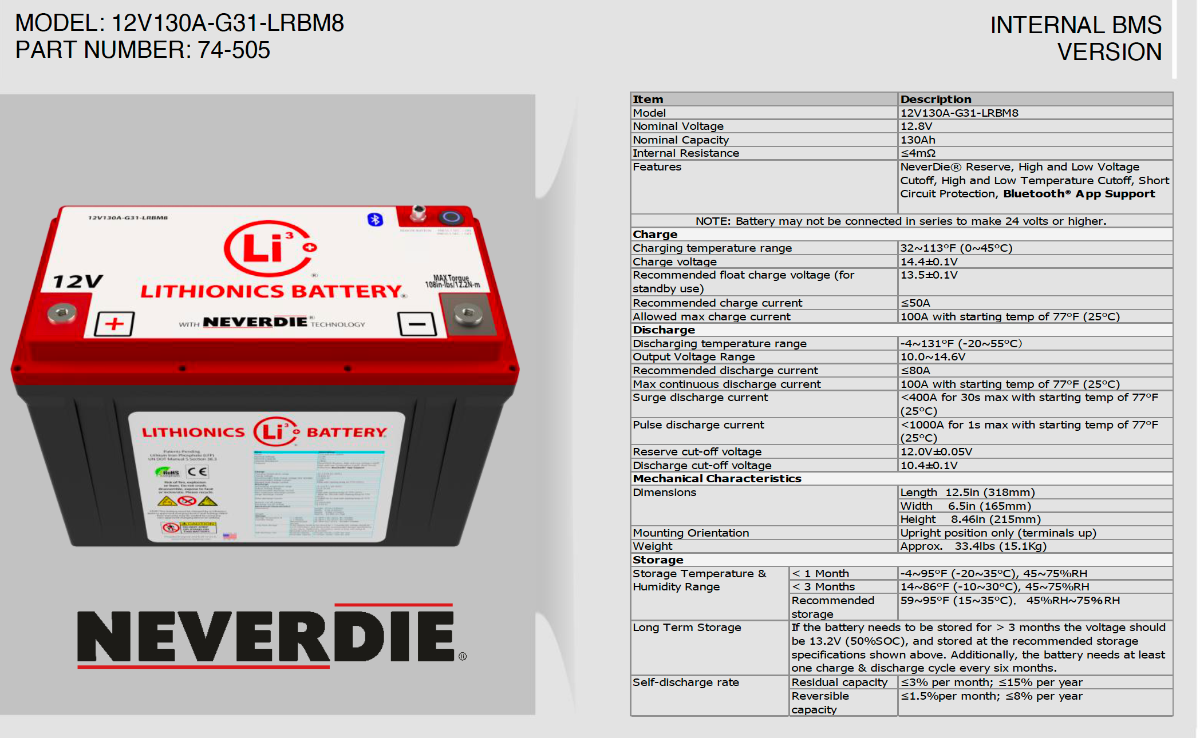
I believe at this point Oliver is committed to Lithionics for all LI packages for ship dates later in the year. The GTX315 has the heaters built in, the other model which Oliver Uses does not have a heater and charging cuts off at 32F or 0C Datasheet for the 130AH unit is here: 12V130A-G31-LRBM8-R5.pdf Pix from the data sheets to quick compare: Up to 3 of these Lithionics G31's fit in the battery bay of the Oliver. The Oliver specific version slightly higher watt hour rated. Two of these Fit in the Battery Bay as part of the Platinum LI Package. These same batteries are used in Winnebago Class B's and other Motorhomes..
-
New to this forum, looking for feedback on Lithium package
Galway Girl replied to serge's topic in Introduce Yourself
I'm upgrading my 2019 to the 630AH Lithiums this month....because my 4 - AGM's died after 18 months. I'm choosing to NOT upgrade to the 3000W Inverter as it would cause major rewiring of my 2019 EII. As you choose, first notice that there are two "inverter" options also at play along with the Lithium Battery sizes. A 2000W inverter/charger is wired to run the uWave, fridge and outlets. And normally are sold with the 3 - lithium batteries. The 2000W charger will output 80-100A for charging the batteries. A 3000W inverter/charger is wired to also be able to run the A/C off the inverter and is available with the upgraded 630AH batteries. The 3000W charger will put out 150A for 50% faster charging of the LI batteries. The Lithium Platinum package includes the 3000W inverter, so you'll be able to run the A/C off of the 630AH Lithium batteries for a while. (How long depends on how hot it is, how much power you're solar is bringing in etc.) Differences with the dual 315AH Lithionics Batteries offered in the Platinum Package: 1) Housed in a rugged Aluminum Alloy Enclosures 2) Built In Battery Cutoff cutoff switches 3) Internal heater for cold weather charging 4) Also has the built in Bluetooth monitoring via a phone/tablet. (See Attached PDF of the battery Owners Manual). I'm confident if you choose either of the current Lithium Packages you'll be getting a very well designed system that will last many years longer than the typical AGM based systems. GTX12V315A-E2107-CS200-Battery-User-Guide-RevA.pdf -
We are located just north of Seattle and planning a similar Alaska trip starting out in Mid June and Return Mid Sept. Hull 505 - Galway Girl Craig & Rose
-
Congratulations! Just for fun check out our blog showing our trip from the Pacific NW to Tennessee, and don't miss the "Oliver Trailer Outfitters List" on Amazon for all the goodies to stock your new Oliver. You'll find the link at the top and bottom of our posts. https://4-ever-hitched.com Craig & Rose - Hull 505 - Galway Girl
-
Jumping in as we use them as well... size of Action Packer that fits the Oliver Front Tray. Not suggesting you buy from Amazon, just using it to show the size etc. Craig
-
Attached is the 2022 Brochure....below are the color choices for 2022. Oliver Travel Trailr 2022 Brochure.pdf
-
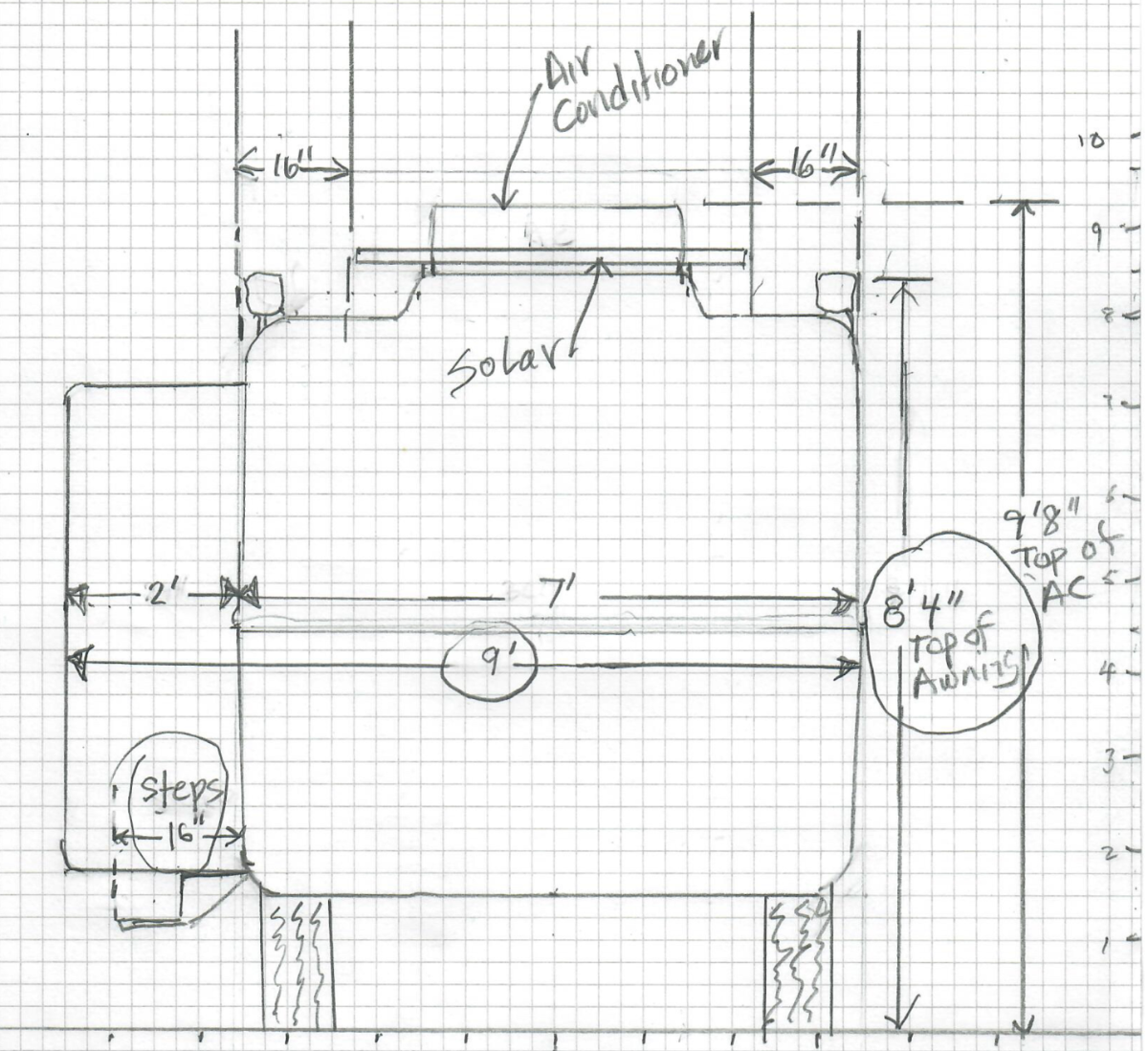
We showed our trailer last week and the party wanted some quick measurements after the visit to make sure the EII would fit beside his garage. What he asked for prompted me to do this extremely rough sketch for him...and I thought dropping it here might be useful. It looks at the EII from the FRONTAL view, with the door and steps open. Text that went along with the sketch: Here are the measurements you asked for and a bit more on the front view sketch with Steps and Door Open. The drawing is at a scale of 3” per square, or 4 squares / 1 foot. Height: (To see if it will fit under your overhang area.) Height from Top of Awning to Ground - 8’ 4” (102”) Height to Top of Solar Panels - 9’ 1” Height to Top of AC - 9’ 8” Width: (To see if it will fit between the house and the hedgerow.) Trailer Width Door Closed - 7' Trailer Width with Door Open - 9’ (Door sticks out 24” from belly band.) Steps - Stick out 16” from trailer when fully open). Solar Panels are 16” from edges of trailer on either side. Hope that helps you plan your parking spot. If anyone has an actual 2d drawing of the Oliver from Side , Front and Top Down profile (which is the floor plan I guess) it would be nice to have. Craig - Hull 505
- 1 reply
-
- 8
-
-

-
Thanks to both you and John for answers.
-
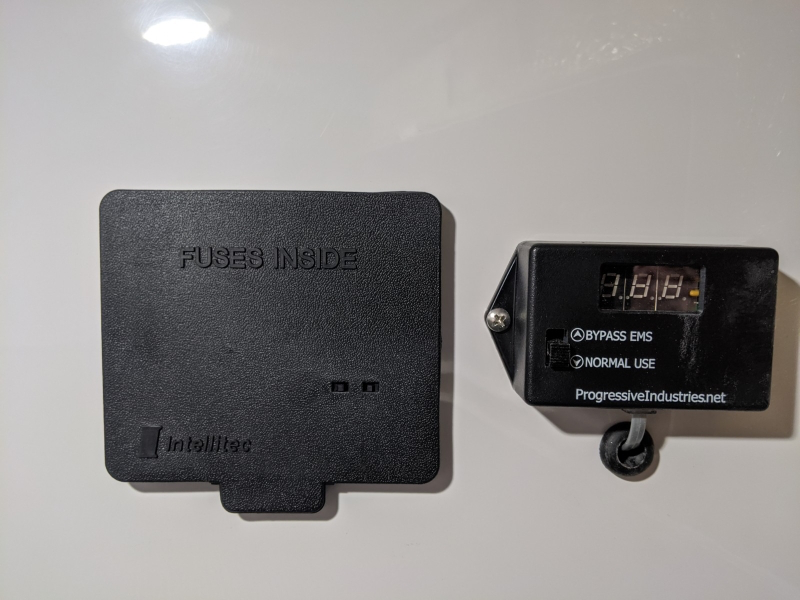
Nice looking installation. Wondering - on 14.6...does the converter fan shut off when batteries are full? Sounds like it runs all the time now? When I had my AGM's the fan would run for a time while charging but shutoff after batteries were full. According to Progressive Dynamics this is what they told me about the converter and it's behavior: "Whenever you have shore power (or generator power if you have one), the converter is supplying the DC power for the 12 volt accessories and fuse board. If you disconnect the black and white converter wires that feed the 12V panel, or shut off the breaker feeding the converter, then the battery only will be supplying DC power to the fuse board. You can turn off the AC breaker that controls the converter to turn it off in-between charges. - Source Andy Giesen - PD Support" CS
-
I have a better weigh that I received as a retirement gift. Used it a few times and it was within about 5% of scale weights. It's not a substitute for an accurate tongue scale or weighing at a weigh station, but accurate enough to be an interesting quick check tool. Craig
-
Alaska and BC planning for September, need some info
Galway Girl replied to John E Davies's topic in Campgrounds & Parks
John, Watching as we’re planning for a 2022 Alaska trip July-Mid Sept. We would go up to Canada from Everett and Loop Back through Spokane to hit Jasoer Glacier on way back. If you need a milepost book we have a spare 2020 I could ship to you. PM me if you want it. Craig -
Which are your blacktank chemicals of choice
Galway Girl replied to Trainman's topic in General Discussion
We moved away from the orange packets and blue variety to Happy Camper and it really works. We put a scoop in toilet, fill to rim swish to dissolve and flush. Also couple quarts & 1/2 scoop for the sinks.
-
Alan, NCEagle (John) found a slick use of a SW feature and sent this to me earlier in a PM when I asked that same question: "... I use the software switch called "Charger Ignition Control". If "auto-on" the charger won't work without a car ignition - which the Ollie doesn't have so the charger is off when that switch is on. Conversely, when the ignition control switch is set to "off" the charger will charge the battery whenever it has the power to do so." Craig
-
Andrew, That's an EXCELLENT point, if you have the PD4060 it is on a 15 Amp AC breaker. Flipping that off will only allow the solar to charge your batteries. That would pretty much negate the negative side effects of having the PD4060 converter. I wish I'd thought of that one! Craig
-
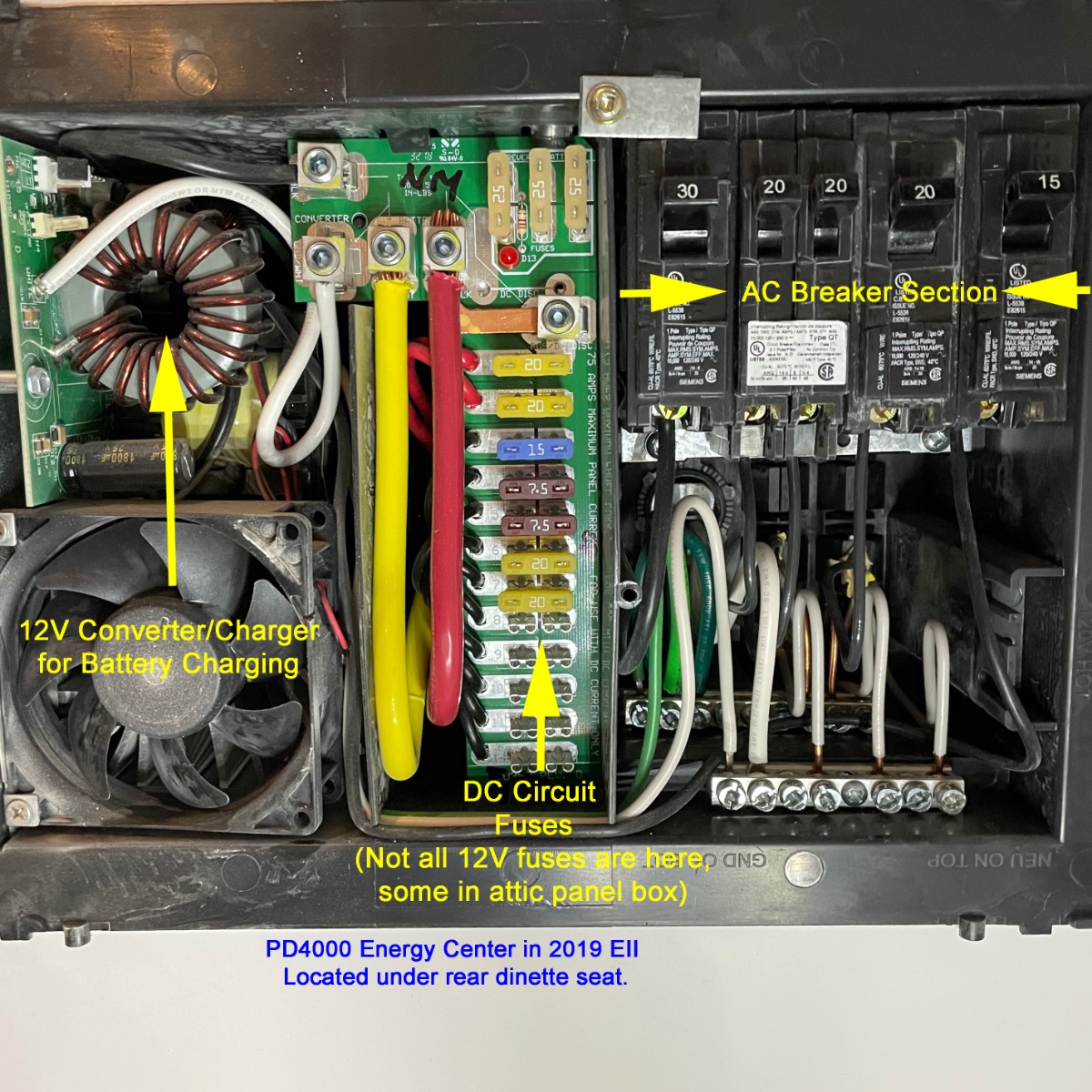
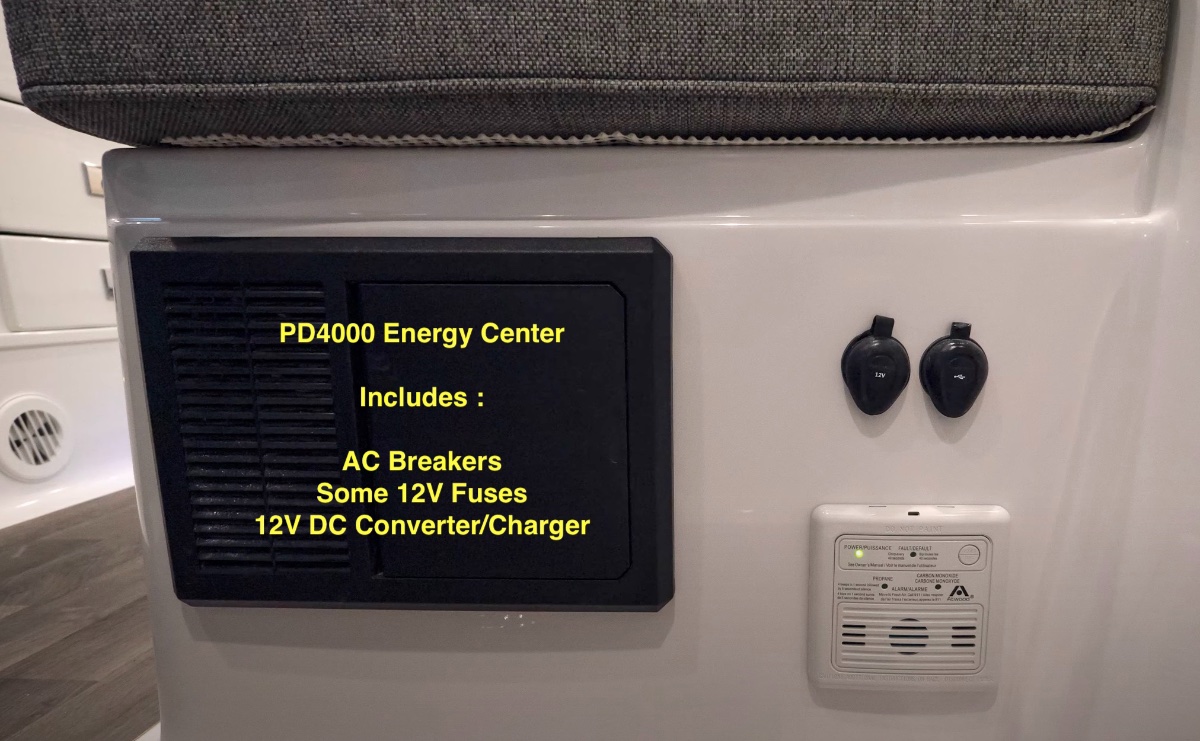
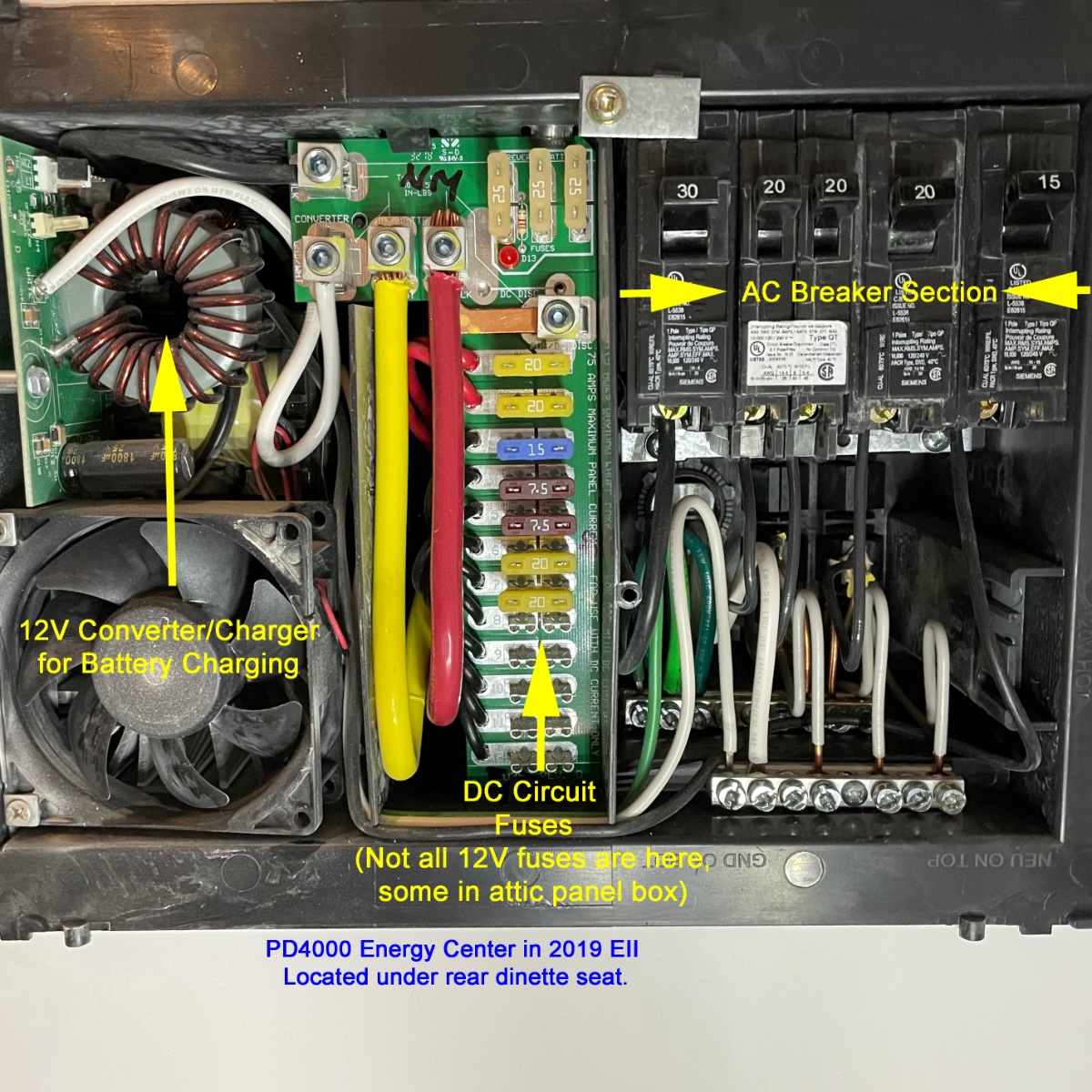
Ray and Susan - the pix John is posting are of things likely not in your trailer either because he's added them or they from the earlier model year EII's. Earlier models up through 2019 had a Progressive Dynamics 4000 Energy Center under our Dinette Seat. (PD4000 Energy Center under dinette seat, but with Cover OFF) - The PD4000 unit housed AC Breakers, SOME DC fuses (but not all) and the power Converter that charges our batteries. The rest of the DC Fuses were in a small fuse box in the attic next to the surge protector display. In the newer models like yours they switched to a new set of energy panels for AC Breakers and DC Fuses (all in one convenient place under the dinette) as shown in your pix. They also changed to either a 2000 W or 3000 W combined Xantrex inverter/charger...which is able to be programmed for a charge profile for Lithium Batteries from a variety of vendors. So looking at some of our posts for other pre 2020 unit pictures could be a bit confusing if you are thinking your missing some new or special feature. Craig
-
HOW TO: Propane/ CO Detector On/ Off power switch
Galway Girl replied to John E Davies's topic in Ollie Modifications
Very nice job. I need to get some of those wire tags. I've been tracing wires like crazy trying to figure out how Oliver hooked things up as I prepare to swap out my existing factory installed Xantrex ProWatt Inverter for a new Xantrex XC2000 Pro Inverter Charger and new Lithiums. Scratching my head as many of the wiring diagrams are missing...for example, I don't have a wiring diagram at ALL for the 2000W ProWatt Inverter circuit. The AC power input to the ProWatt comes from the AC breaker panel and connects through an auto switch in front of the ProWatt 2000. The ProWatt AC inverter output from the auto switch runs forward and connects to the GFCI Outlet that is under the front dinette seat. That circuit loops all the way around the trailer and includes the microwave, fridge and all the outlets, and ends up connected back at a 20A AC breaker in the PD4000 distribution panel. Craig -
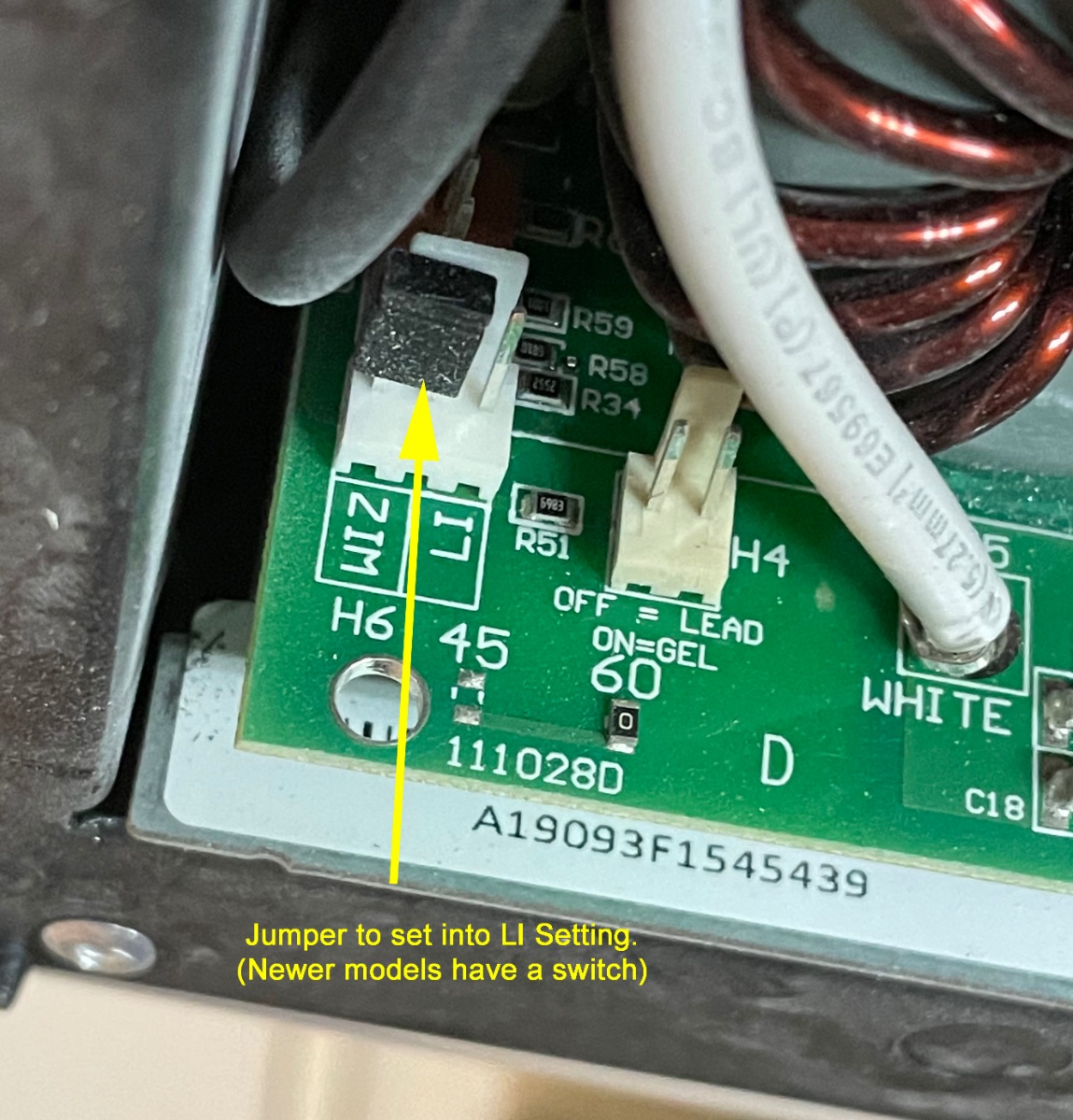
I'm in agreement, that there is a real need for a drop and go LI upgrade. You can in fact do a drop in LI's if you have the PD4060 with LI setting in your Oliver and be down the road pretty quickly. I planned to do that as well but I decided after research to upgrade to a smart charger/inverter along with the new LI batteries. Backdrop: Trailer manufacturers (including Oliver) are shifting rapidly away from the older "CONVERTER" technology as typical from Progressive Dynamics to newer Smart Charger/Inverters as they provide more benefits to customers and programmable profiles for Lead Acid, AGM and Lithium's which all can have different profiles. They are also looking at newer trailer control and wiring schemas to have touch control centers for all loads, batteries, solar etc. The benefits to the customers are single points of control for the multiple systems, and for the Trailer Mfrs a reduction in the time to integrate and wire up the trailer systems. My current hull 505 (2019 EII): has a PC charge converter and a separate 2000W Prosine Inverter My Load Center is from Progressive Dynamics, is the PD4000 line, and under the dinette seat. (Covers off the load center) That power center includes the AC Breakers, about half the DC Fuses and the the PD converter model PD4060K which has a charge wizard for Lead Acid/AGM battery charging and and a built in Lithium Setting Switch. That LI Switch on the PD Converter when set, outputs a constant 14.6 v, but is NOT a smart charger by any means. I also have a separate Xantrex ProWatt 2000 pure-sine inverter. Battery Shopping : As I shopped for batteries I started with Battleborn support and learned a few things about LI battery charge profiles. They are different for each chemistry, and each battery manufacturer and each battery management system (BMS) has it's own specific charge profile that is "BEST" for battery cycle life. Battleborn said their products will work well with the Progressive Dynamics Converters that have the Lithium Setting, but they said at the end that the ideal setup is to have a SMART charger with a customer settable Lithium Charge profile. They encouraged me to consider upgrading my charger if I had the budget and space to a smart charger....but said the LI setting would work. Smart Charger ? to PD: My next call was Progressive Dynamics Support to find out if they had a newer LI smart profile converter that would plug into the PD4000 load center...no joy. Speaking with Andy (Svc Mgr) at Progressive Dynamics I learned that the PD Converter units on LI setting outputs a constant 14.6V to the batteries. Andy said they do not have an available LI specific smart charge wizard from PD for the basic converters in the PD4000 load center. A smart LI wizard would drop from 14.6 bulk charge back to a LI Specific float voltage around 13.4. Andy said while they don't have a plug in converter with smart lithium profiles yet. He closed by saying the PD 4060 unit works to bulk charge Lithium you may not be Optimally Charging and delivering the longest life for the new LI battery. Oliver's newer choice - Inverter Charger combos: What I also learned, is that in the newer inverter/chargers Oliver is using like the Xantrex XC 2000 or XC 3000 , (or Victron Inverter Chargers) they include a smart programmable battery charger specifically designed to be able to set a lithium profile to exactly match whichever battery specs are provided by the Battery Manufacturer. This charger replaces the former PD4060 converter section. In the 2021 and newer trailers Oliver no longer uses PD4000 energy center. Oliver has moved ahead to the newer technology of smart inverter chargers. The Benefit of these smart inverter/chargers are much longer battery life for the Lithiums while also delivering inverted power to the trailer. Summary: So while I know I could do a simple drop in of Battleborn's into the Oliver with the PD 4060 Converters set to LI and add the "victron smart shunt" , I found that the end result will be a LI battery pair with a somewhat reduced overall life. Finally when I then spoke with Lithionics directly about my upgrade, they said they would prefer that I upgrade to a smart charger and away from the PD4060 converter as they don't meet the charge profile that would provide the longest useful life of the Lithionics batteries. Hope that's interesting to those who are following this thread. Craig
- 24 replies
-
- 14
-
-
-
2,000 watt inverter vs 3,000 watt inverter
Galway Girl replied to Fritz's topic in Mechanical & Technical Tips
That second breaker (bottom pix) is the main 60A Breaker for all the 12v loads for the trailer. Some leads run over to the DC power panel with 12V fuses for various circuits like Lights, Fans etc. There are a few of the lines to the right side of the 60A breaker are for things like the Propane Detector. -
How Long Did Your Oliver Duralast Battery Last?
Galway Girl replied to Geronimo John's topic in Mechanical & Technical Tips
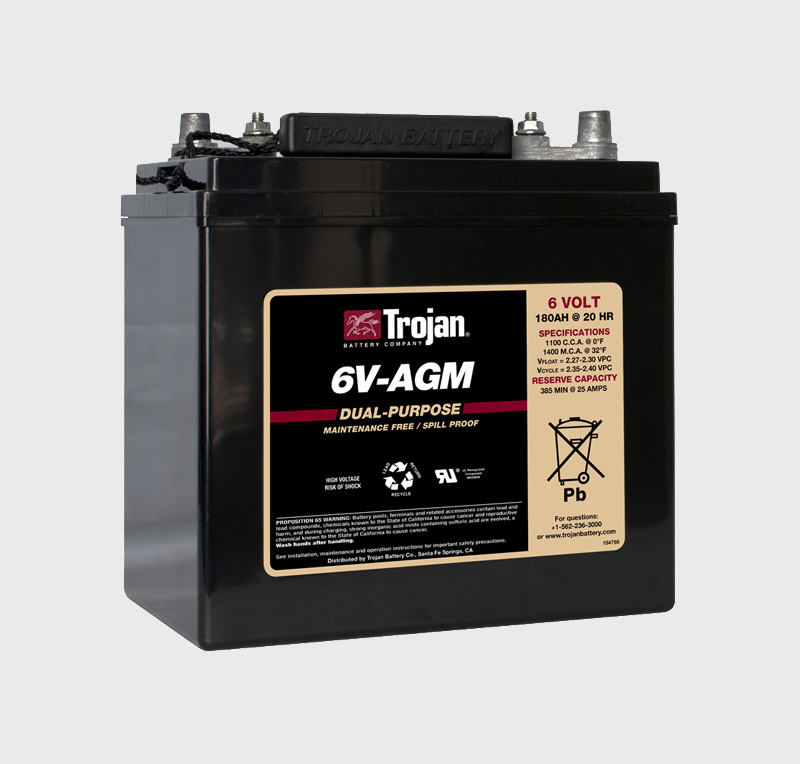
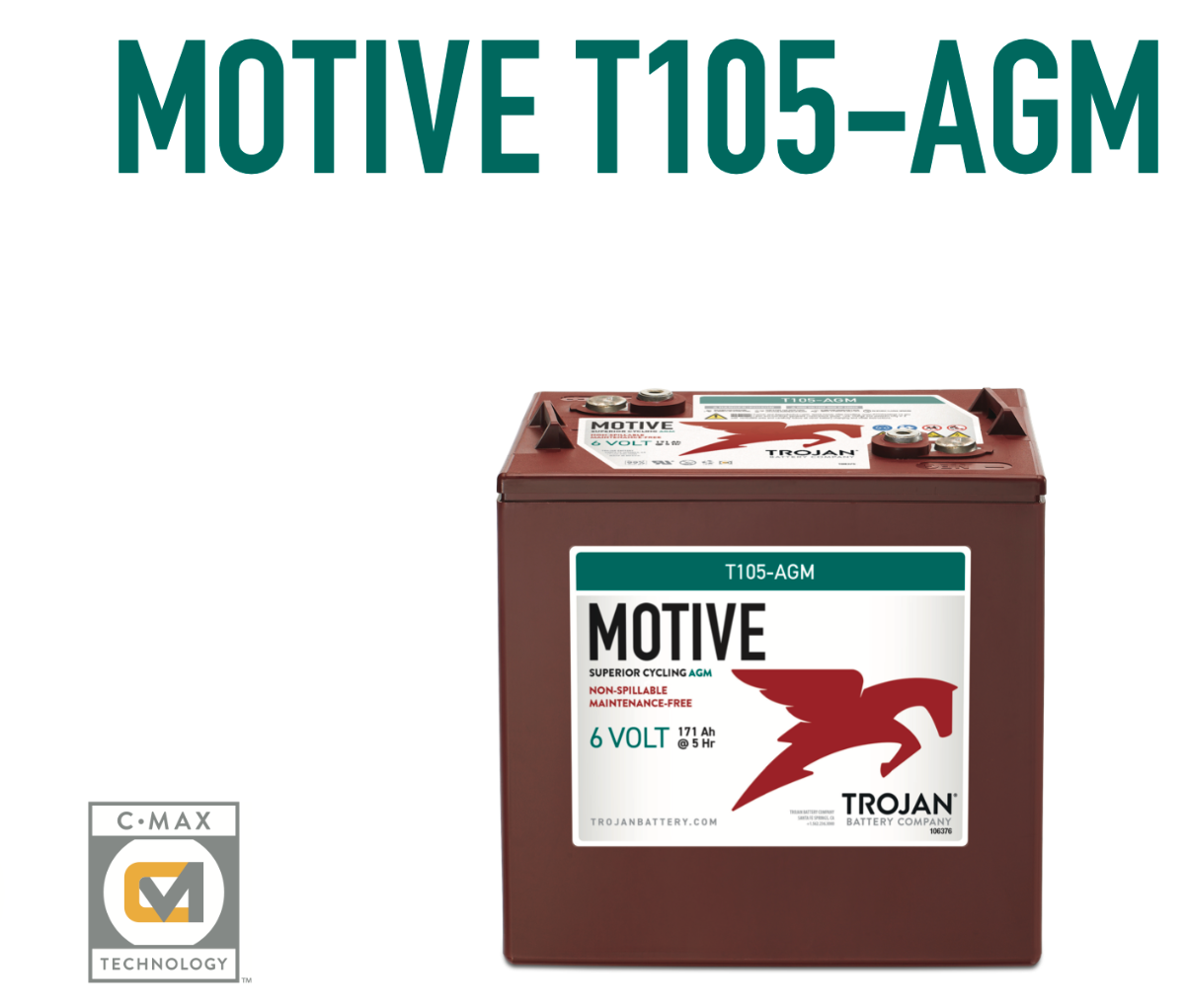
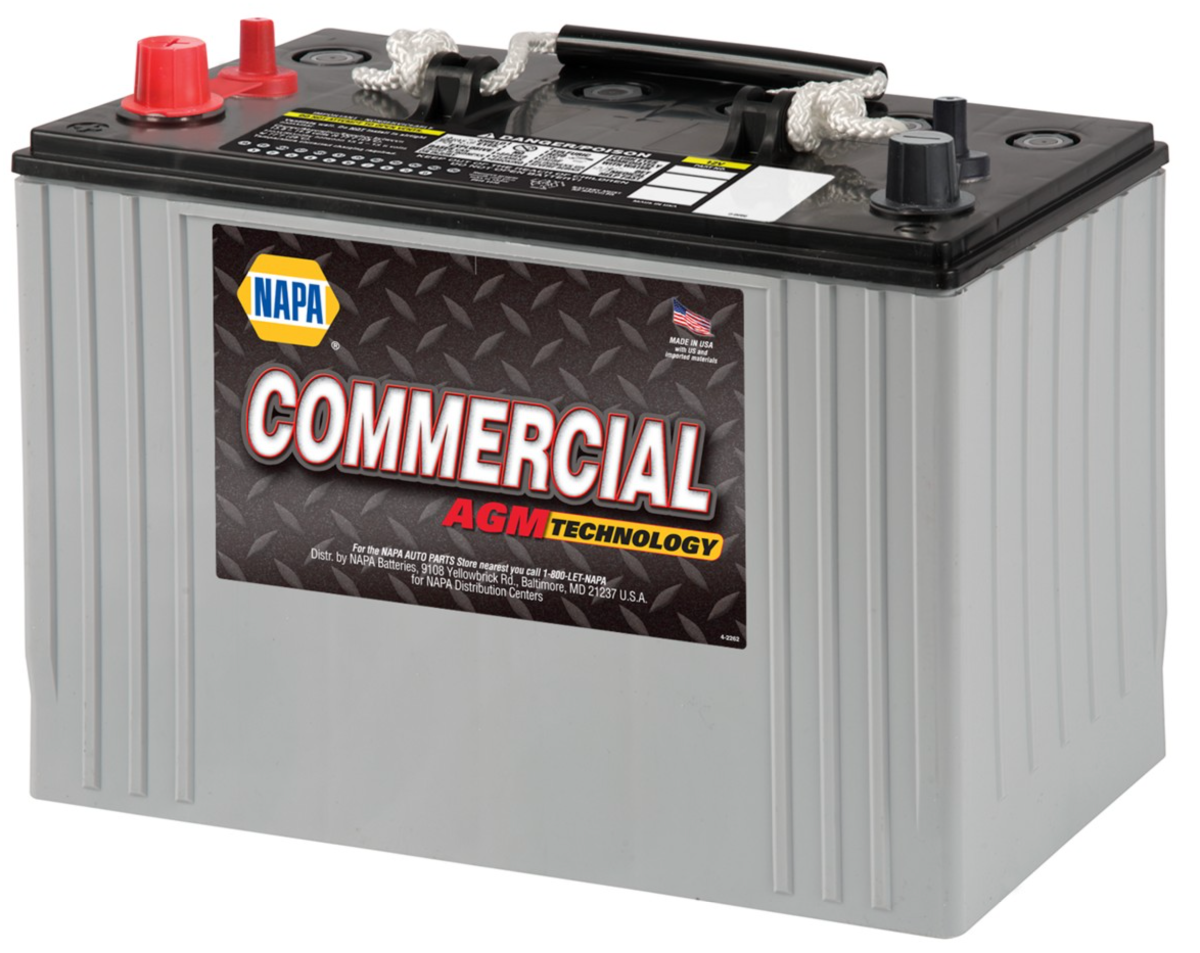
Just sharing the specific "Trojan" Battery that shipped with our Oliver and all 4 died within 16 months. They were maintained per the standards set forth for warranty support. Properly charged using the onboard Progressive Dynamics Charger and the Zamp Solar. The Trojan Service contact stated these are made for them by a Chinese Manufacturer as their OEM line. He said they do often have problems with them but as they are only warranted for 12 months...I was not offered any compensation. Finally, the rep told me to buy the "Maroon Case" trojan if I want a good battery as they start with a 2 year warranty. Below is the "preferred" High Quality Motive T105-AGM 6V recommended to me during my support call with Trojan. They have a 2 year warranty but are known for lasting 4+ years when properly maintained. In the end, I bought two of these Napa Branded 12V AGMs to get us buy until we are able to install our Lithium upgrade. My nephew is the West Coast GM and said try East PENN as he's toured many of the battery manufacturer for Napa, and found that East PENN Mfg. (a US Company) has better quality than off shore OEM brands. They came with a 12 month full replacement warranty, and added 3 year prorated. NAPA Commercial AGM Battery BCI No. 31 800 A Glass Mat Part #: BAT 9831DT 105AH (Dual Terminals) Manufacturer : East PENN You can see my progress on the upgrade by following this thread in the Forum:
-
How Long Did Your Oliver Duralast Battery Last?
Galway Girl replied to Geronimo John's topic in Mechanical & Technical Tips
Forgot to say....to move from wet lead acid to AGM the change can be simple, depending upon the converter that’s in your Progressive Dynamics power center under the dinette seat. Also, do you have Solar (Zamp)? -
How Long Did Your Oliver Duralast Battery Last?
Galway Girl replied to Geronimo John's topic in Mechanical & Technical Tips
My 2019 shipped with 4-6v Trojan Black AGMs. They died after only 16 months. I was told on a call to Trojan support that black case AGM Trojans are not true Trojan batteries but an Oem’d brand Trojan Remarkets for cheaper price and only had 1 yr warranty If you want to buy 6v Trojan AGMs, buy the Motive T105-AGM maroon case Trojans which are a longer warranty battery. Craig 2019 Hull 505