
topgun2
-
Posts
7,791 -
Joined
-
Last visited
-
Days Won
467
Everything posted by topgun2
-
Looks like it did an "Artie Johnson" on the passenger side and the weight of the a/c is what caused that to shift on the roof. Doesn't appear to me that it actually flipped, but, that is possible. Give the guys in the shop a week and it would look just like new. Please, somebody take care of this poor thing! Bill
-
"Say Good night, Gracie". Really liked them both even though I was/am a bit too young for that time. Bill
-
I have the twin floor plan so I've never had to deal with the problem you are looking at. However, with the people that I've seen who convert the large bed each day, they generally "roll" that bedding and place it at the back. This leaves each side of the table open for business. I trust that those with actual experience will chime in here shortly. Bill
-
"air" can get into any line (and does) when the tanks are removed from a line. And, I'm sure that there is a small percentage of air in the tanks themselves. However, the gauge in question would only show the situation on the tank - not the lines. I'm thinking that the most obvious problem here was simply a gauge that was stuck and by "working" it several times you got it unstuck. In any case - glad you got it fixed. Bill
-
For what its worth - in addition to the Oliver furnace I always carry both a small 1500 watt electric heater (used only on the rare occasion I have shore power) and my "Mister Heater Buddy" propane heater. Both work great at any altitude with the Mister Heater Buddy not having an effect on electric usage since it has no fan. Bill p.s. I really do think that there is something amiss with the furnace not working above 5,000 feet and would have it "serviced" if I could not find the source of the problem.
-
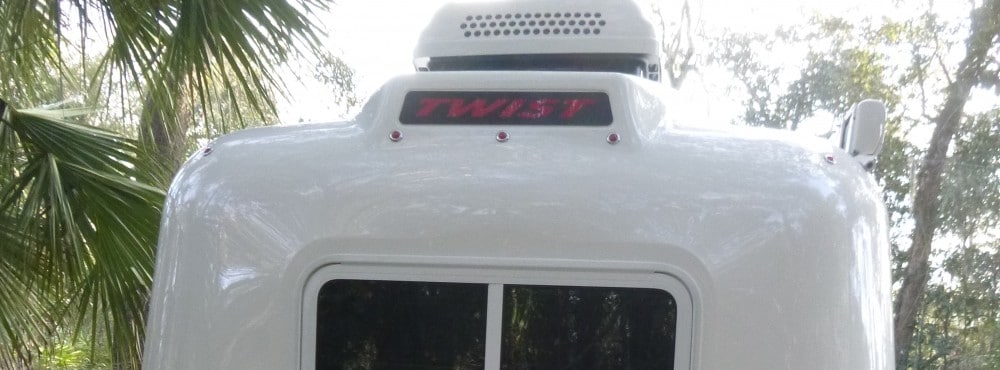
Oliver "Twist"? Need I say more? Bill
-
Have you tried switching the position of the tanks? Also, I noticed in your pics that the control lever is pointed to the left in both pics - I assume that you have moved it to the right and then back to the left just to see if you still get the half red indication? Bill
-
I've camped at just over 11,000 feet with no problems with the furnace. However, I do recall reading that anything above 6,500 to 7,000 might cause issues due to lack of O. Suburban for mine. Bill
-
And, its tomorrow too!
-
Good suggestion from George, but, don't forget to also check around your windows, marker lights, etc. Bill
-
Nan - That is good news about the knee. As soon as you are able I trust that you will "get to it" regarding the truck and then the Ollie. As has been mentioned before, the whole process is really not that difficult. When you first are starting out, there is virtually nothing that is "over the top" particularly if you are doing it by yourself. Get a checklist and stick to it and you will be fine. With regards to checking my electrical connection from the truck to the Ollie - it is part of my "walk around" at each stop. While the pump is filling my tank I simply walk around the rig looking at it from top to bottom. Specifically I look at all of the connections - if something looks wrong I inspect it further and I touch each of the wheel hubs (the center part of the wheel) to see if they are hot which might indicate a problem with the wheel bearings. Then when I start my F-150 there is a screen that tells me if the lights are functioning properly. That's all there is to it. After being in two accidents where I've been hit from the rear because the other driver "didn't see me", this is the least I can do to make sure I've done everything in my power to prevent it from happening a third time. In addition, your stop lights and turn signals are the only way you have to communicate with others as you hurtle down the highway driving 10,000 pounds of machinery. Not only is it the law that these lights must function properly, but, it is in your own best interest. Bill
-
Nan - The big black "cable" is actually for the electric connection between your tow vehicle and the Oliver. Its what allows the lights to work on the Oliver while you tow it down the road - this includes your turn signals, brake light, running lights, emergency flashers and also charges your batteries in the Oliver using the alternator in your tow vehicle. This "cable" gets plugged into a socket that is on the rear of you tow vehicle - this socket is many times covered by a little "door" that keeps it cleaner when you are not using it. A good rule to follow (besides your checklist for all these connections) is to make sure that all of your vehicle and Ollie lights are functioning properly just prior to departure. I even do this even when I've stopped for gas or a rest stop. Bill
-

Dexter axle loose bolt at the equalizer
topgun2 replied to BackofBeyond's topic in Mechanical & Technical Tips
Horace - I carry a grease gun with me and give the equalizer zerks a shot any time I get over 3,000 miles. Since I've always got a tarp with me too there is never really any excuse not to lay the tarp down and take care of business. Besides, after all that hard work I deserve an adult beverage - as if an excuse is really needed. Bill -
"Ollie Gear" Company Store, products desired. Speak up!
topgun2 replied to John E Davies's topic in General Discussion
Oliver marketing has given away Oliver t-shirts at some rallies and (if they have them in stock) have given t-shirts to new owners of Ollies at delivery. Since you have a relatively new Ollie and if you didn't get a t-shirt at delivery, you might want to call your sales agent and ask nicely if you can get one (or two). Bill -
Sorry - no change to the "avatars" that I've seen. Bill
-
Is Legacy two big enough for 2 adults and two 60 lbs dogs
topgun2 replied to Mac's topic in General Discussion
I'm sure that "Shallowgal" will respond to this question at some point - all four of them at presently on the road somewhere near Rapid City. They have been in an Elite II for several months now traveling to Alaska and back with their two fairly good sized dogs. As far as I know both the humans and the dogs are doing fine and enjoying the ride. Bill -
I know that many of the folks out in the mountain west know what they are doing with snowy weather. However, this storm is one for the record books - and even people that are "used to it" just may be caught off guard. That along with visitors that are not as experienced could combine for some real bad situations. Please be careful out there! Bill
-
KWR - I do not have a dish for the Oliver but I do know that they are all wired for this type of service. Indeed, this is one of the reasons for the 110 volt, 12 volt and coaxial connections that are in the attic. Unfortunately this is about all I know. I'm sure that a quick call to the guys in Oliver Service could get you pointed in the right direction. Good luck. Bill
-
At the Pisgah Inn on the Parkway they sell a grey t-shirt with the label - "The view from Mt. Pisgah" - on it. Bill
-
Why do you think they call it Red Canyon? Nice!
-
Even the driving helps get you more comfortable with the Oliver - its just so plain easy. Unfortunately, since this is your first RV you have nothing to compare it to but take my word on it. In addition, given the double hull construction, not only is the Oliver cooler in the summer and warmer in the winter, it is also quieter. This helps when you have been driving all day and can't find that nice quiet, peaceful place to camp. However, I'm sure that you are looking forward to a bit of time just to settle in. Bill
-
Hull #528 left the nest and made it to Texas
topgun2 replied to Shaferkg's topic in Delivery Day Photos
Sure doesn't look like there is much stress going on here. Nice shiny new Oliver and shiny new Andersen hitch too. Keep the good times rolling! Bill -
Nicely done, Jaque! How about some camping pictures and/or road pics? We really do share your excitement. Bill
-
I'm so very sorry to hear this news. Hopefully all of the immediate Oliver family knows just how saddened all of us are even those who never actually got the chance to personally meet him. There is no question that he has left this world a better place. Talk about leaving a legacy - obviously he left more than one or even two. Bill
-
Launch of Hull #517 - The Scent Free Ollie!
topgun2 replied to ScentFreeInSC's topic in Delivery Day Photos
DavidS I'm guessing that the Andersens are made of a slighty softer plastic. Mine have never "slipped" that I know of. The only downside to the Andersens is that they are a bit tight between the wheels. Andersen says that if they are too tight you can simply cut off a bit from the narrow edge, but, I've not done that. Bill