
topgun2
-
Posts
7,790 -
Joined
-
Last visited
-
Days Won
467
Everything posted by topgun2
-
Boy, would I ever love to see that! Ever notice just how nice the Oliver's clean and curvy lines match with rugged rocks? They really do make for a nice combination. Bill
-
Bill - What did it cost you for the airplane that did the sky writing? Bill
-

Clean Water Hose Length? Hose Heater Tape?
topgun2 replied to DonnaDuane's topic in General Discussion
Actually, the Zero G is the hose that I mentioned above. After seeing reviews I bought it because it is very easy to store as compared to a regular hose. Sure does make for a fun afternoon trying to get that thing back into the container it came in! Bill -
For what its worth, I keep my inverter OFF except for when I specifically need to - primarily to power the microwave for popcorn. This is because even when the inverter is not being used but is in the ON position, it will draw a bit of power. There is no reason to "waste" this power (read battery resources) if there is no immediately need for 110 volts. Bill
-
Bluetooth Pairing to Samsung Smart Phone
topgun2 replied to dbp05ret's topic in Mechanical & Technical Tips
Once again Richie and Jason work their magic. -
I did a 1/2 Ironman triathlon in Muncie a number of summers ago. The pavement was so hot that my shoes stuck to the tar in the pavement with each step on the run. What was I thinking? After spending the first 25 years of our marriage traveling during the holidays, it sure is nice to go to church, put an extra log on the fire, relax, go for a short hike on Christmas day to feed the animals in the forest and generally do nothing. Bill
-
Darryl & Kim - I'm guessing that the Coors light on the nightstand helped too! Glad to hear that all has worked out well for the two of you and you are now "on the road". Hopefully the two of you can get to this year's Owner's Rally and we will have a chance to meet in person. Also, glad that the Forum was of some help to you. Remember the old motorcycle saying, "black things down and shiny side up". Bill
-
Clean Water Hose Length? Hose Heater Tape?
topgun2 replied to DonnaDuane's topic in General Discussion
25 is minimum length to go with. I always carry an additional 25 but have seldom needed it. Sorry - no advice on the heater tape or heated water hose. Bill -
Temps (here at 2400 feet elevation) never got below 32 degrees last night and there was a bit of light rain. Therefore, the amount of snow has been reduced from about 12 inches to around 6 inches as of 9:00am. Virtually everything is closed for the day - you got to remember that these southern towns simply do not have the equipment for "proper" snow removal. And, due to the weight of the snow, there are many trees down blocking the roads. Looks like a day of another log on the fire and trying to remember exactly where that bottle of wine is located. Bill p.s. sledding is a bunch of fun since the streets still haven't been plowed.
-
Just make sure that you mark that old hose you are using for black/grey water in some way so that you don't get the two mixed up! And you thought that the hose made the water taste bad - just wait until the two hoses get mixed up. Bill
-
Try this. Bill https://www.amazon.com/gp/product/B00JRYHGKC/ref=oh_aui_detailpage_o06_s02?ie=UTF8&psc=1
-
Water dripping from vents under trailer
topgun2 replied to MaryandBill's topic in Mechanical & Technical Tips
Well, depends on how old your Oliver is. On older Olivers the front of the bath vanity is held in place with only caulk while on newer units there are four screws and (I believe) caulk. The only way to look at those connections is to remove the screws, take a sharp knife or (preferably) a razor and carefully cut the caulk in order to remove that front. Of course, once removed the only way to get it water tight is to once again re-caulk that area. I would only do this as a last resort in trying to find the source of the leak - its not hard to do, but, it is a bit of a pita. Bill -
Water dripping from vents under trailer
topgun2 replied to MaryandBill's topic in Mechanical & Technical Tips
Yes, there are a couple of things in the front of the camper that could leak and drain out the scupper holes. The drain from the shower pan and bath sink, the showerhead/sink faucet are both potentials. Get a flashlight and take a look around under both the dinette seat nearest the bath and under the street side bed near the pantry. That might help you find the leak. Bill -
Water dripping from vents under trailer
topgun2 replied to MaryandBill's topic in Mechanical & Technical Tips
Assuming that your "vents" are the little silver colored things on the bottom outside shell of the camper (actual name for these things is scupper holes or scupper hole covers to be technical). The purpose of these is to allow drainage of leaks from between the inside and outside shells of the camper. Therefore, the job is to find out where the leak is coming from and then stop it. Probably you are on the right track with regards to the water inlet. Good luck. Bill -
Stan - Try a PM to Jason Wamsley. Bill
-
Randy - A big YES to all of those but especially number three. It seems that when I'm breaking camp someone interrupts me (usually wanting to know something about the Oliver) and then I'm in a hurry to get out of Dodge. I have to remind myself to slow down, relax, and get back to business - the potential "costs" of not doing that are simply too large. Bill
-
Just gotta love an old two cycle engine snow blower - that is except for how I smell at the moment. Even with such heavy snow that little puppy was able to get at it. Given the snow was ten to twelve inches deep and so heavy I had to only take 1/2 a width of the blower on each pass. But, it sure beats the heck out of shoveling. Unfortunately, the snow plows have not plowed the street since last night and there are presently fallen trees blocking the entrance and exit to our street. I'm sure that the 4 wheel drive truck could make it out in the event of emergency but that just might mean I would get it dirty! Since I also cleaned the drives for some (really) elderly neighbors its a virtual guarantee of a couple bottles of wine and/or cookies! Bill
-
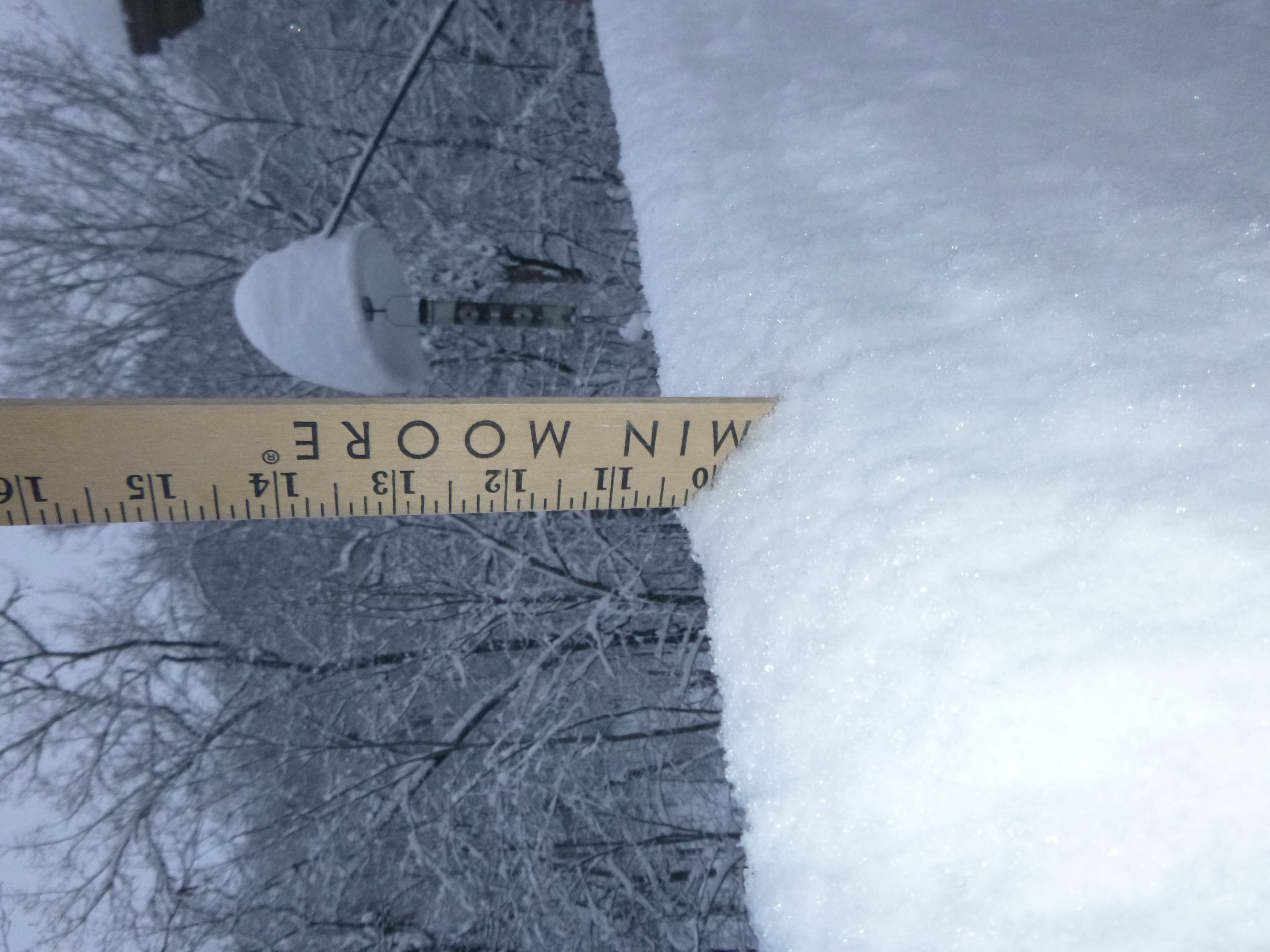
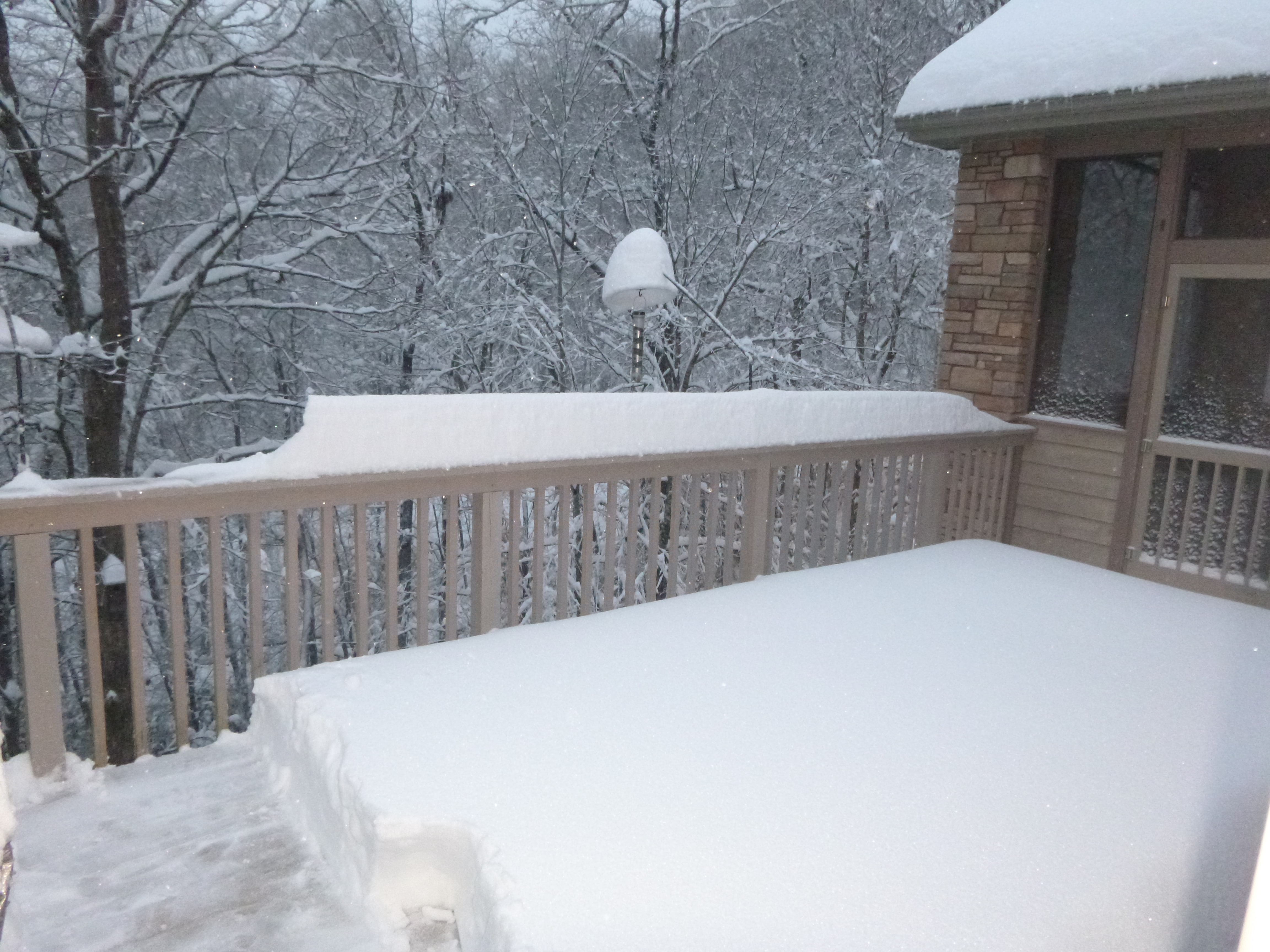
OK, having lived north of the Mason Dixon line for a period of time I know that there are places where snowfall is virtually a daily occurrence. However, the "average" total snowfall for the southern town in which I currently live is 6 inches and the average high temperature for December 9th is right at 51 degrees. At 7:30 this morning these pictures were taken. AND! It is supposed to keep snowing all day today. Sure is quiet and beautiful though and I'm one of the very few people that has a (small) snow blower. Of course this means that shortly I'll be out there making a first clearing job on my drive and the drives of at least 6 others. What time does the game start? Bill

-
When I got my first boat trailer (about age 15) I made the same mistake of not chocking the trailer wheels before unhitching. Nice hole in that garage door that my Dad sure wasn't happy about and I got to fix. Since then I've always placed a sign on the tongue that says "CHOCKS". Bill
-
I've never had a problem with moisture under the mattress. However, as a precaution I did cut a piece of 3/4 inch foam board to place under the mattress and as Randy did I came up each side about four inches. I still haven't had any moisture problems, but, I have not camped in anything below about 25 degrees since I added the foam board. Since foam board is a bunch cheaper than hypervent, it just might be worth a try. Bill
-
I didn't purchase that cable hanger because I figured that since the "safety chains" are actually pigtail cables it would be easy enough to simply hook them over the tongue of the Ollie. The emergency brake hook and cable I hook to the wires right under the fiberglass covering the tongue and the electric cable "wedges" nicely right behind the front jack. However, I did get the "cap" that covers the electric cable in order to keep the dirt and rain out of it. Bill
-
Darryl & Kim - Depending on how you plan on getting to Hohenwald - be very careful. I assume that you are following the weather reports concerning the storm that is descending upon Western North Carolina as I type this. I think that if your route is from the West, North or South you should be OK. But, Sunday, Monday and early Tuesday just might be very difficult on interstate 40 east of Knoxville. With temps forecast for Tuesday afternoon to be at or above 45 degrees, you should be OK then. Be careful! Bill
-
Tom & Holly - Welcome to the family! Way more comfortable, secure and easier to deal with. I just got an email this morning from a friend a few miles north of you who told me the temp this morning was -5 and that came with 11 inches of snow. I think that given that weather I too would pass on the camping for at least a few days. Hopefully you can join many of us at the 2019 Owner's Rally in May. Heck, by then you two should be seasoned Oliver travelers. Bill
-
It's beginning to look a lot like Christmas...
topgun2 replied to SeaDawg's topic in General Discussion
Already got a 27 year old snow blower - got it out of the garage a couple of days ago and with a short shot of starting fluid into the carb it fired right up. Bring it on! Bill p.s. a normal winter's snowfall for this town is right at 6 inches. The current forecast is calling for between 6 and 18 inches. If that happens can I count on Santa to bring no more snow for the rest of the winter? -
Quick question for those who have done custom graphics
topgun2 replied to Overland's topic in Ollie Modifications
Ouch!