
topgun2
-
Posts
7,789 -
Joined
-
Last visited
-
Days Won
467
Everything posted by topgun2
-
Kim & Travis - As a fellow North Carolinian let me add a welcome and congratulations. Certainly your Oliver is going to be WAY more comfortable than virtually any tent. If you haven't been over to the factory yet any nice long weekend between now and June would make a great little trip and maybe even give you a chance to see your Oliver on the production line. Certainly June will be here before you know it - I lie - this will probably be a long wait. But, you can fill the time with making plans for where you will take it and for how you will outfit it. I'm sure that we are all excited for you! Bill
-
Another way to kind of do what you want is to do a vinyl wrap. At least one owner has had that done and while I didn't personally care for the theme they picked, the overall result was very nice. And, a wrap could be changed or modified and be easier than a paint job. Bill
-

Are 12V batteries hooked up in series or parallel?
topgun2 replied to Bobfirst's topic in General Discussion
Hopefully I'm not stepping on anyone's copyright toes but I found this over on the Fiberglass RV Forum: http://www.marxrv.com/12volt/12volt.htm http://www.marxrv.com/12volt/12volta.htm Bill -
Hobo - See this post - http://olivertraveltrailers.com/topic/levelingsupport-blocks/ And do a search for Andersen leveler. As Overland comments - they are expensive hunks of plastic - but they are easy to work with. Once you have done this do some online research for other types/brands of levelers that are similar to the Andersens. Within the past two weeks I remember seeing an ad for these things - possibly at Camping World - and they sure were a bunch less expensive. In using "blocks" (legos or wood or ??) under the Oliver jacks, another benefit is that by reducing the length of the jacks that are deployed, you save a bit of time, save a bit of battery juice (as per Mainiac above) and reduce the amount of torque that the deployed jack must handle. Mine you that the Andersen levelers that I'm referring to are placed under the tires while the blocks are placed under the onboard Oliver jacks. Of course, "legos" of lengths of 2 x 6 lumber can be used under both the tires and jacks but the putting together of the "legos" for under the tires can be a bit of a guessing game and carrying enough of the correct size 2 x 6 lumber can also be a bit interesting. When I first started RV camping I did the 2 x 6 lumber thing until I learned what I thought I needed. Now I carry two Andersen levelers, three of the blocks referenced in the post above and two fairly short pieces of 2 x 6 lumber and one stack of ten of the legos. I can't remember the last time I actually used the legos. But the blocks and the Andersens get used every trip. Hope this helps. Bill
-
"To Equalize or Not to Equalize: That is the Question
topgun2 replied to hobo's topic in Towing an Oliver
FrankC - Assuming that we are talking about an Elite II then, in my opinion, you don't have much of a choice. Off the factory floor an Elite II - full propane tanks but all tanks are empty is going to weigh in right near 5,000 pounds = or - a few pounds. Unless you plan on keeping yours this way, I believe that you will soon get it very close to that 600 pound number (assuming a 10% hitch weight versus total weight). And, if you are at all like ScubaRx you will be much closer to 700 pounds. Either way, not enough room for error in my book. If for no other reason (and I do believe that there are other reasons) I'd use the Andersen. Bill -
"To Equalize or Not to Equalize: That is the Question
topgun2 replied to hobo's topic in Towing an Oliver
FrankC - Do you know what the tongue weight limit is for your Ford? My F-150 has a limit of 500 pounds (without a WD hitch) even though it can tow 12,000 pounds, and I'd be a bit surprised if yours wasn't the same with regards to the hitch weight. I also have the electronic anti-sway on the truck and leave it on even when towing with the Andersen. Bill -
"To Equalize or Not to Equalize: That is the Question
topgun2 replied to hobo's topic in Towing an Oliver
Initially don't over think this. Prior to delivery simply get your hitch ball height to between 23 and 24 inches on level ground. At delivery your Andersen will be set up for you with (probably) 6 threads showing beyond the nut (which is to the rear of the red bushings). Then after delivery you can use John's guide above for tuning it to your liking. Bill -
Brandi - Nice to see you! Hope that little "RED" Oliver is treating you nicely. Not that I think that it really matters much, but, I noticed that the magnets you reference already have 3M tape on the back of the magnet. I believe that this is the "regular" 3M tape and not the removeable 3M tape. I put mine on with the removeable but have not touched them in over two years. So, I'm guessing that either one would be fine unless you think that there just might be a reason to remove them in the future. However, with the regular tape one should probably be a bit more careful with the original placement of the magnets just to make sure that they are exactly where you want them. Bill
-
Due to my own "not getting to it", I only made my reservations last week. All of the area near the lake is now reserved and most of the next area above that is now taken. While there are still camping spots left, the choice is getting slim. So, if you are still thinking about joining the party, I'd plan on making my reservations sooner as opposed to later. Hope to see you there! Bill
-
Welcome home - glad to hear that you made it safely. Now - all those Holiday presents for your new baby! Bill
-
For what its worth - I ran my first 3.5 Eco-boost DI engine for right at 60,000 miles prior to selling it and getting a new one. I never had a problem with it. However, I understand that those engines didn't usually start to have problems until they had over 100,000 miles on them. Bill
-
For a look into what 2.7 owners have to say about that engine, have a look here - https://www.ford-trucks.com/forums/1562099-any-experience-with-new-2-7-eco-and-towing-out-there-2.html Bill
-
Michael - A quick call to the Oliver Sales Office could help you in finding out exactly what came with your camper when it came off the assembly line. Yes, the WiFi setup could have been changed after that but it is highly unlikely. If you decide to make that call, I'd ask them to send me a full list of your unit's production since this will include all options, manufacturing dates, color choices, etc. Bill p.s. Welcome! You now belong to a very small group of like minded RV owners. Also, I'm jealous! I've been wanting to come to Austin for the Formula One Grand Prix for a number of years now. You are fortunate to be so close.
-
FrankC - You'd be better off asking this question to your sales rep at Oliver since they change items every so often. However, from what I know, the pressure regulator that Oliver supplies is not adjustable. Bill
-
George - Have you tried talking to Scott Oliver? If not, I'd at least give him a chance to help you. Bill
-
Even if you are not a fisherperson this very short video is a nice view of nature. Enjoy - Bill http://click.email-orvis.com/?qs=35e939a676b35728ba1f847522eb92025e6e9767e4290f4bd0cfd9da8d9eff4e964baf94311072c121c9c59431e683bddde555564ba090e8a94e6a00ced49f29
- 1 reply
-
- 3
-

-
Yukon - yes on the heat being on via the propane furnace and city water disconnected. However, depending on just how cold you are talking about, drawing water from the fresh water tank could be a problem for you. Whenever I camp in sustained cold temps I simply keep my water in portable containers (gallon milk jugs for the toilet and other water needs if I'm not out too long and larger 8 gallon containers if I plan on being out awhile). This way, there is no water in the water lines of the Oliver at all. Bill
-
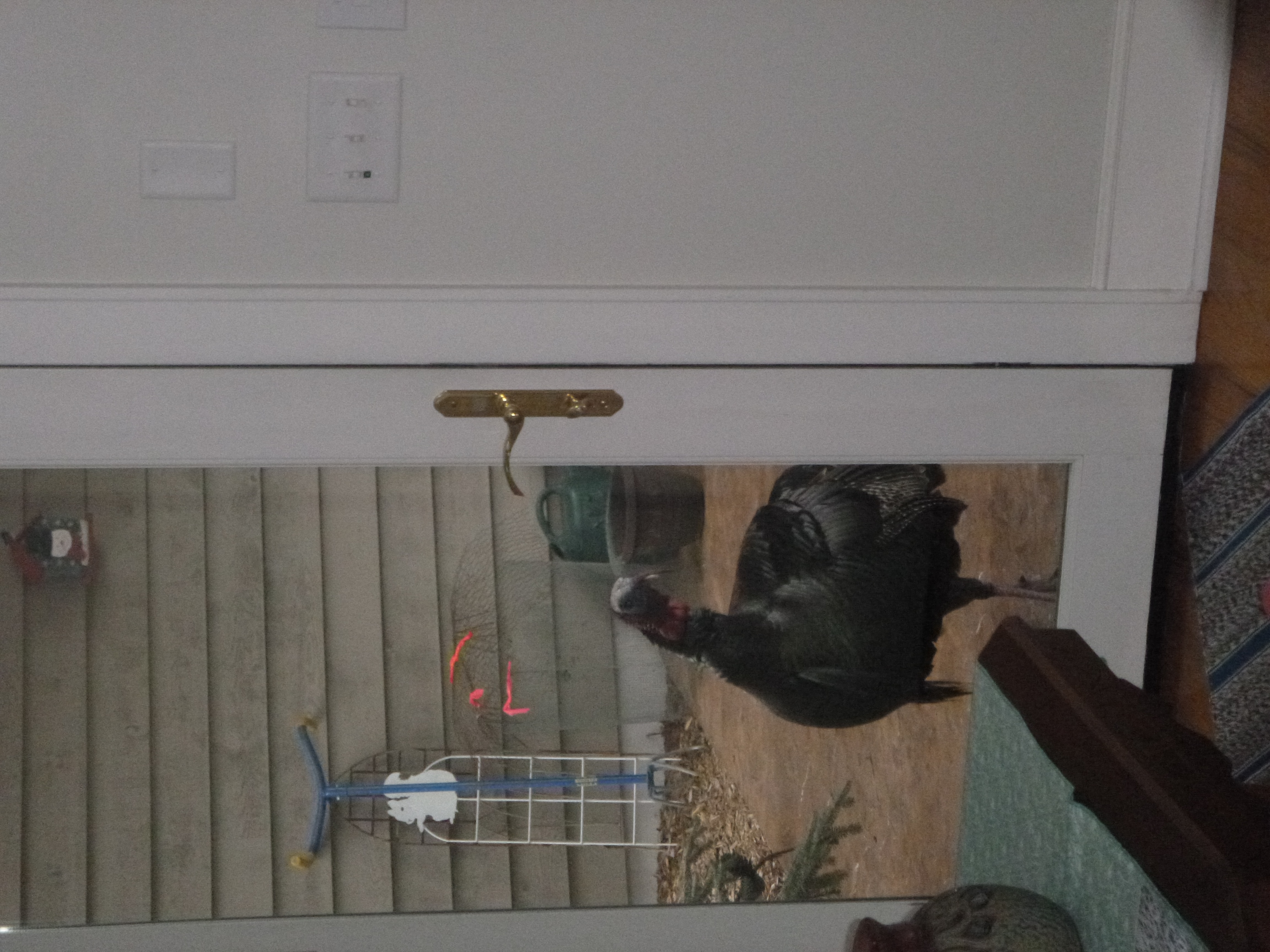
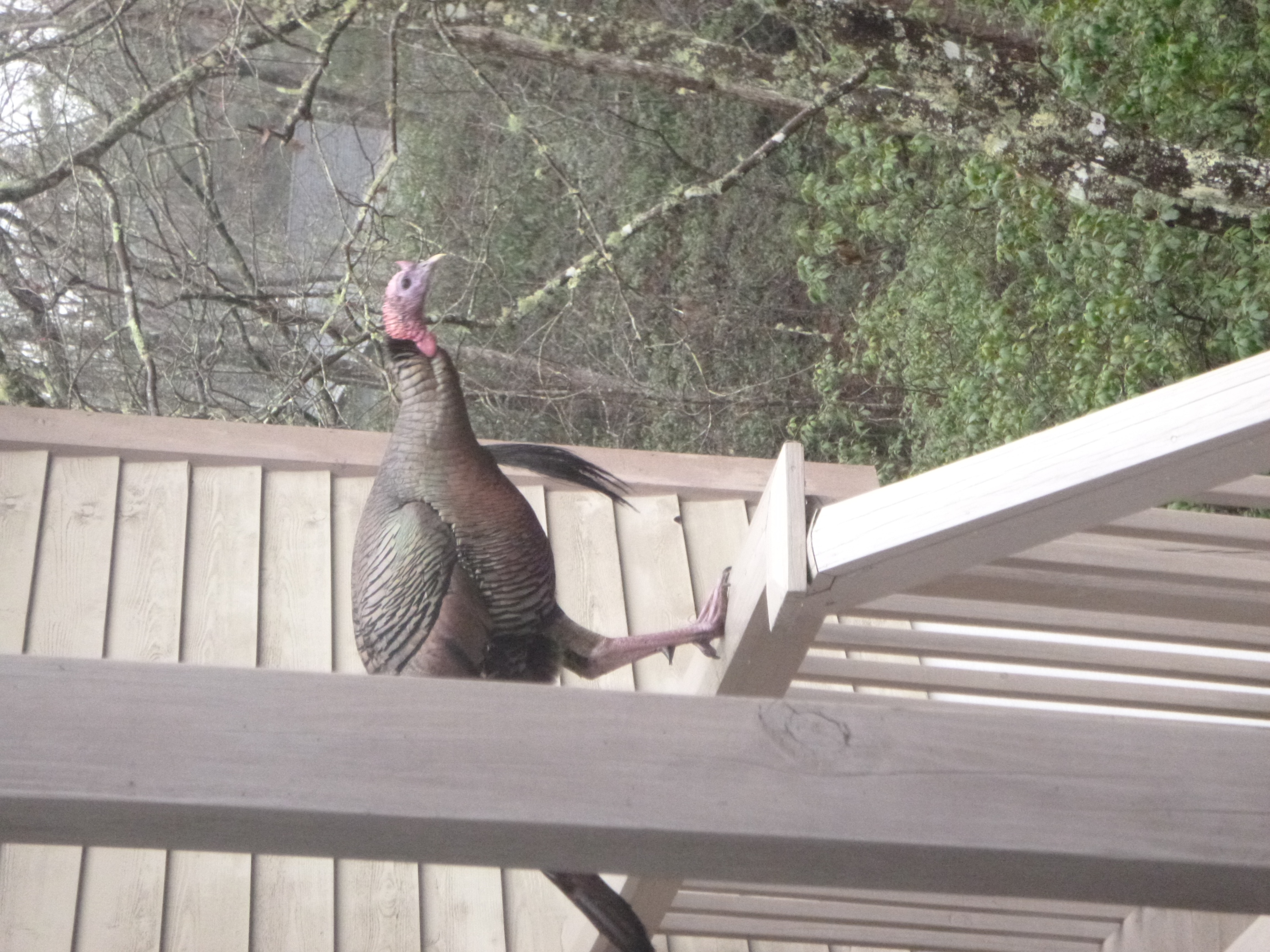
Guess who's coming to dinner? These birds showed up outside my rear door. Bill

-
FrankC - I really do not see a design issue here. Virtually all RV's have holes in them that must be sealed in some manner - usually caulk. One of the benefits of the Oliver design is that with an inner and outer shell, there are times when any leak through the outside shell will simply "flow" between the shells and out the scupper holes in the bottom. There is virtually no wood to rot, mildew or grow fungus on either. While some of the leaks reported here on the Forum were more than likely caused by the lack of proper sealing at the factory during production, many others have been caused by a simple lack of proper inspection and/or maintenance by the owner. Of course, either way a leak is a leak and can be very frustrating to find and stop. Your mention of Dri-Dek has almost nothing to do with leaking. In fact, it has more to do with the Oliver being so sealed and tight that moisture/humidity simply can not escape from the interior without measures to reduce it. Primarily this product has been used under mattresses so that the moist air emitted from our bodies can escape from under the mattress. However, there are a number of ways that this "problem" has been attacked. Insulation directly under the mattress, simply lifting the mattress to ventilate that area each day, sleeping while in a vertical position (just kidding), have all been used for this purpose. Finally, the sliding windows on Olivers can leak for a couple of reasons. If the windows were not properly installed, if the "weep holes" are not clear or if there is a huge amount of rain directed at a window, can all cause leaks. Of these the most prominent is the maintenance of the weep holes. I own an Elite II, hull number 117 and have been fortunate enough to have never had a leak (that I know of). I check all places where water could enter at least once a year, repairing as necessary, and clean my window weep holes at least a half dozen times a year - particularly when I've camped under some shedding trees or driven down some nasty dirt roads. Most of these same maintenance procedures should be taken with all RV's and since the Oliver has no seams those potential points of leakage are eliminated as compared to all non-molded fiberglass trailers. Bill
-
A special THANKS to all that participate on this Forum. Without each of you our Oliver world would be so much smaller. Bill[attachment file=P1010962.JPG]
-
https://www.harborfreight.com/catalogsearch/result/index/?dir=asc&order=EAScore%2Cf%2CEAFeatured+Weight%2Cf%2CSale+Rank%2Cf&q=multi+use+transfer+pump Try the above link for the kind of pump that you can use for adding anti-freeze to any camper. I assume your question about the toilet is for John given that he has the composting throne. Certainly the smaller Oliver can fit into places that the larger one can't. However, both are very easy to tow. You really should arrange to see both before you you decide. Bill
-
I've been camping with temps as low as 22 degrees with no heat on inside the Oliver and no harmful effects, but since I didn't stay up all night I can't tell you exactly how long it stayed at that temp. I didn't winterize anything. However, since the daytime temps were in the low 80's the day before, I'm certain that everything was nice and toasty prior to that overnight chill. For reference, it was in the mid 30's inside the camper when I got up to turn the heat on. Given the situation you describe, I would think that an interior temp in the mid 40's with hatches and/or drawers open to allow heat between the hulls would be more that sufficient to protect you. But, as John points out, there are a couple of areas that just might be a bit more venerable at that interior temp- such as the area around the winterization port, the black tank flush port, and the exterior shower. I would certainly err on the side of caution in this area. Bill
-
I've had two 3.5 liter Ford F-150's (2011 and 2017) and both have performed without a "hitch" (sorry) in towing my Elite II. All of the extra specs of the 3.5 versus the 2.7 come in handy for a more relaxed towing experience. Yes, the 2.7 would probably do the job, but, in those situations where you need a bit more grunt - like merging onto an Interstate - or a bit more load capacity, or a bit more … the 3.5 can more than do the job. Bill
-
There is another related issue - at least in the State of North Carolina. Vehicles with a combined weight (when towing) of greater than 5,000 pounds must declare what maximum combined weight will be towed and your license plate fees are increased from the standard (5,000 pounds). This is supposedly to make those that tow more/weigh more pay for the additional wear they have on the roads. If then that combined weight is exceeded and law enforcement pulls you over, you could be cited for excessive weight. The only times I've seen this actually happen is when a light duty 1/2 ton pickup was towing a front end loader. However, I've noticed many instances where 1/2 ton pickups are towing reasonably large campers and the license plate is a standard plate therefore only rated for the 5,000 pounds. As John points out though, I doubt very seriously that law enforcement would cite an out of State person under this law. And, of course, all of this has nothing to do with a weight distribution hitch. Bill
-
Mark - I thought of that but didn't think that it was very likely for both bottle to get stuck at the same time. However, I've heard of stranger things and it is worth a check. Bill