John E Davies
-
Posts
5,759 -
Joined
-
Last visited
-
Days Won
243
Everything posted by John E Davies
-
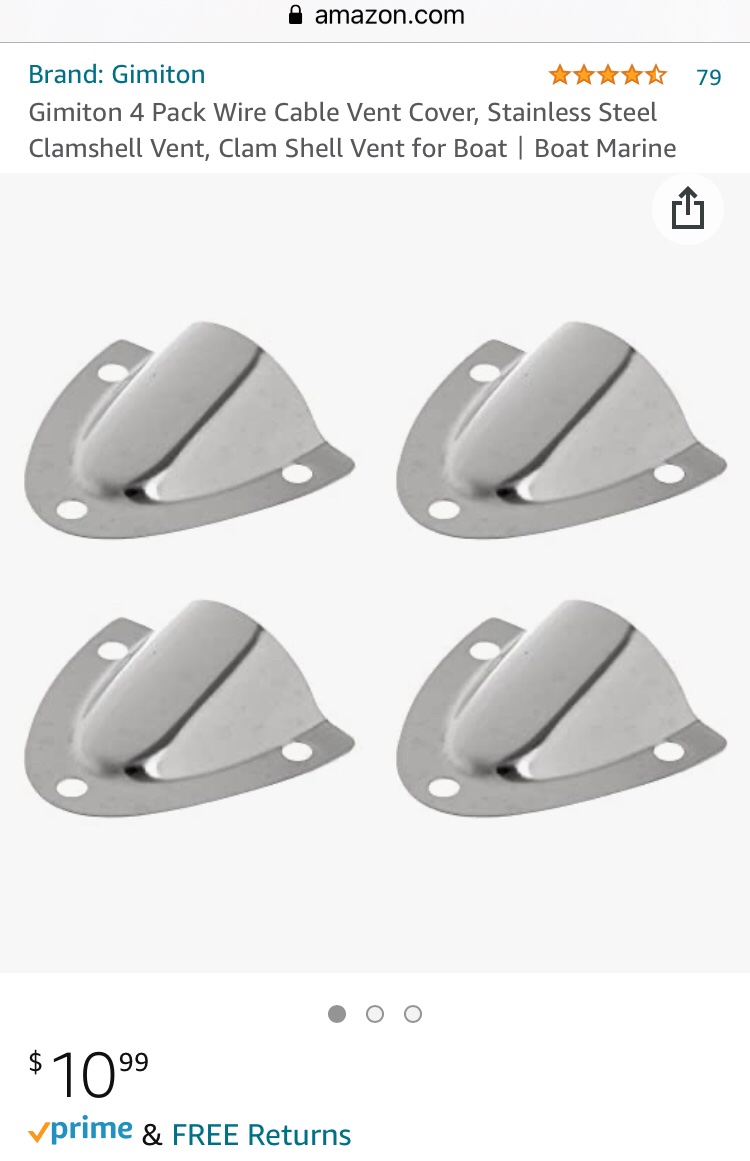
 There is a possible excellent reason that the Ollie engineers chose the existing location for the air return in an LE2. I woke up at 4:00AM and it just popped into my head. There are a dozen moisture vent/ drain holes in the bottom of the hull, the ones with those cute little stainless steel covers. The covers face rearwards so IMHO when the trailer is moving they will provide a slight suction effect, which is good for drainage. (I can’t imagine another possible reason for taking the time and expense to install them all with rivets. Most manufacturers would not bother.) HOWEVER, in addition to letting out condensation or an actual water leak, they will also let air go back inside the outer hull when the trailer is stopped and there is a low pressure created inside, like turning on an exhaust fan with all the windows closed. Duh. But if you relocate the furnace grill to the far side of the cabin, you are essentially creating a slight vacuum under the floor with the furnace fan, so air is going to be pulled inside through those holes. A little air infiltration isn’t bad, but on a really frigid day it will also suck in trickles of freezing cold outside air right where you don’t want it, under the tanks and plumbing. With the existing location there is no suction created under the floor, instead the cabin air enters directly. So maybe they really did choose this spot for a good reason. A lot of “jet engine” fan noise may be preferable to drawing in cold air through the drains. A completely sealed return air duct from a single opening under the dinette would 100% fix that (like in a home HVAC system). It would have to be huge with no restrictions, so I see no way that could work in an Ollie. If you could put one way check valves at the drain holes, they would prevent air entry when the furnace was going, but it would also stop that beneficial movement when you are running an exhaust fan. Or you could crawl outside with duct tape every time it got really cold.... or install those interesting inflatable winter trailer skirts. .... https://www.airskirts.com/ We need to measure those holes and calculate how many square inches they represent, combined. My guess is about 10 square inches, which is pretty big for an active air leak in a small trailer. My other guess is that the average owner camping in moderately cold weather would find that this is a non issue, but one that plans to camp in sub zero temperatures at the ski resort (or Texas during a Polar Vortex) with water in the tanks and lines should avoid changing the furnace vent! I am half asleep, the actual flow there may be negligible, so this is either complete nonsense or in fact pure brilliance. Please discuss after you have had your morning coffee. Thanks! John Davies Spokane WA
-
Airtabs work best on a vehicle with a square butt - like 99% of the commercial trucks, travel trailers and motorhomes out there. But an Ollie is already well streamlined in back. It will accumulate dust there, for sure, at any speed. Tabs on the sides and top would most likely be a little helpful at speeds high enough for them to operate. But as I quipped earlier, you have to not slow down below the speed at which they can function. And there is no practical way to install them on the belly, unless you made a big pan there, behind the axles to provide a flat place for them to mount a foot in front of the rear bumper. http://www.airtab.com/how-do-they-work.htm They are easy to install and reportedly not too bad to remove, so you could be the first Ollie owner to try them, and post your before and after dirt road pictures here....;) If somebody were to give me a box of them I definitely would try them. But I won't spend a bunch of cash on what will most likely be a total bust. FYI these are used on aircraft with incredible results, but they are designed to keep the airflow attached to the wing surfaces at unusually high angles of attack (landing, takeoff, low speed). ... https://www.boldmethod.com/learn-to-fly/aerodynamics/vortex-generators/ John Davies Spokane WA
-
POLL: Balance your trailer tires.
John E Davies replied to John E Davies's topic in Mechanical & Technical Tips
I am probably preaching to the choir, but I will mention it anyway. Be really careful about where you take your trailer, if you haven’t already been there before, use the Google Earth or Maps satellite view to check out the parking. My favorite Discount Tire store is quite old and small, and would be a pure nightmare to pull an Ollie into. It has a very tight dead end parking lot, extra storage in the way of half a dozen 40 foot shipping containers, and the single driveway enters a very busy four lane road. John Davies Spokane WA -
Can you please post a link to your blind, and also to the clear glass pane? I would really like to be able to see out the door! Thanks, John Davies Spokane WA
-
HOW TO: Move the factory cargo tray to a rear rack
John E Davies replied to John E Davies's topic in Ollie Modifications
Update, I have used this system for two camping seasons without any issues. At first I was pretty paranoid about the hardware loosening from the often violent up and down motion at the rear of the trailer. I retorqued the bolts a couple of times, I got a little nut movement the first time, but never after that. I do check them annually, when I check stuff like the front jack attach nuts and the hitch and suspension bolts. Even when I forcibly backed the rack into the stone siding on my house, it did not budge. But the stonework sure did 🤭 Note to self: a trailer backup camera only works when you actually turn it ON! John Davies Spokane WA -
There are a bunch of bike rack threads. The quickest solution would be to remove the undersized factory receiver and bolt down a 2” steel one. You would have to fabricate mounting plates and weld them onto the new receiver tube, to be secure. I personally would build an aluminum support structure like the original Ollie rack, with long main support arms and a couple of crossbeams, and bolt down the trays directly to it. That saves a fair amount of weight and complexity, and completely removes the “how do I keep the bike rack from flopping around” problem entirely. I think overland has that setup with 1-Up trays. I built my own rack, but I would never carry bikes there for a number of reasons. https://olivertraveltrailers.com/forums/topic/3263-how-to-move-the-factory-cargo-tray-to-a-rear-rack/ It is interesting to see how something as basic as a bike rack can get so many people riled up....😬 John Davies Spokane WA
-
And remember that the height of an Andersen ball will vary a little, depending on how worn the friction sleeve and steel shaft are, and whether it has been just assembled or it was used for a while. It does settle a fair amount with use. So if you are looking for precision, this is kind of an apples to oranges comparison. Is there a specific reason you prefer this over an Andersen Rapid Hitch? At 1/2 the weight (17 pounds), and no rust issues, that can just be tossed into a plastic bin when not needed. Or just put the head itself in storage and rotate the mount 90 degrees in the receiver for clearance and to use it as a step (drill a new pin hole). Thanks. John Davies Spokane WA
-
Length of Sewer Pipe Extension Needed
John E Davies replied to aquestell's topic in Mechanical & Technical Tips
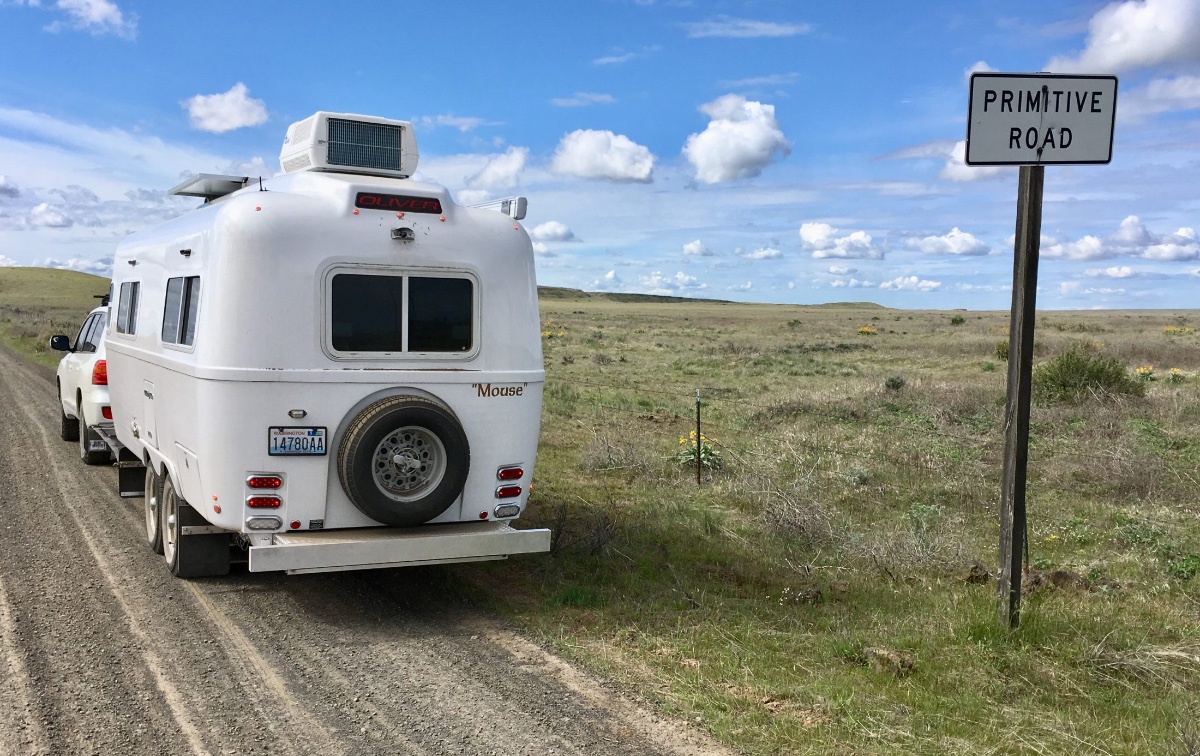
I really like this pic, it illustrates the disadvantages of a rear entry door in a truck camper (or Airstream nest). Not everybody drives over what the Aussies call bull dust, but this shows why your bikes get so nasty back there. OTH I have been on busy gravel USFS forest roads where the dust is so bad by mid summer that it is like ankle deep talcomb powder on the shoulders, and it completely coats the trees for hundreds of yards downwind... you definitely don’t want a campsite close by. Vortex generators would help a lot, but only if you never slowed below 30 mph😬 John Davies Spokane WA
-
You need to also consider the benefits of simple convective airflow and how slow air exchange helps to remove stale air from all the dead end compartments. That requires a top and bottom opening in each compartment. Even if that isn’t doing much to move heat under the floor (using the furnace fan) it should help to keep everything at a more consistent temperature. I normally crack open the closet and pantry doors when running the AC or furnace, but I suspect that would not be needed with two vents in each of those areas. All this air circulation means you have to be very comfortable cutting lots of holes, and looking at the clutter of extra grills. Cutting rectangular ones is more work, but a 4” round hole saw makes adding round ones very quick and easy. I personally prefer the appearance of round ones. You still have to deal with dust cleanup. I put down paper towels behind the future hole, and lay a shop vac hose close by while drilling. That helps a little to control the mess and keep the dust out of your lungs. And once you commit and drill that first one, the following ones are a whole lot less stressful. John Davies Spokane WA
-
Length of Sewer Pipe Extension Needed
John E Davies replied to aquestell's topic in Mechanical & Technical Tips
If you never drive on an unpaved road, then that compartment might stay only a little dirty. If you should happen to drive on a maintained gravel or raw dirt forest road, or even a long stretch of “under construction” highway, that space will become choked with dirt. Being in a low pressure area directly behind the tires, it will never, ever be a clean area, unless you can figure out a good way to completely seal it off, including any drainage openings. It would have to be close to 100% air tight. A great spot for your chairs, clean and easy to access, would be strapped down inside a good rooftop carrier like a Yakima Skybox, on top of your TV. That is where mine go. My box is a Carbonite Lo, so it will clear my garage doors; a taller one would provide more useful volume, but it would not look so very cool. John Davies Spokane WA -
I think this is fine, my only concern is the first bath return seems too close to the existing warm air register. It is certainly best to have the cold air returns very low, because that where the cold air collects, but in the bathroom you have to also worry about water ingress during showers. So I would be inclined to put only one, located up high in the bulkhead wall, as more than one owner have done. That also provides good airflow into the bathroom from the main room when the door is closed and the exhaust fan is running. If you want low returns, they need to have some sort of hood or splash guard over the top. The others will work, I have already done that, using 4” round vents. I am considering putting one more in the bottom of the closet wall, to draw cold air into that space and then out the closet floor. It would require adding return holes through the floor near the door opening, and adding a screen so you don’t lose any small objects down the rabbit hole. An extra grill up high in the closet wall will let it vent freely in summer and winter - as built it (and the pantry) is a dead end box that traps both heat and cold, and in the closet, any moisture from a damp jacket or shoes. John Davies Spokane WA
-
Sorry, this is not correct. There are two separate systems operating in a furnace, and never the twain shall meet, hopefully, or you could die... The combustion air comes in from the outside, gets heated inside the burner and then is dumped back outside the trailer. The cabin “conditioned” air is sucked in by way of the grill openings around the furnace housing, it passes over the burner/ heat exchanger, and then is pushed into the cabin by way of the fan discharge opening, and any attached ducts. So one or more return air registers are needed inside the trailer (at least one is specifically required by the installation instructions.) Getting the air circulation balanced is very important in a home with forced air central heating, and no less so in a trailer. The location Oliver uses in an LE2 is more than a little confusing to me, it just seems so very random and poorly chosen. In addition to silencing the jet engine whine, a remote opening would allow you to line the inside of that inner wall, and the solid cover over the existing grill cutout, with sound insulation, which would further deaden the machinery noises such as the water heater sparking, and the water pump chugging, using this stuff: .... Acoustic foam panels John Davies Spokane WA
-
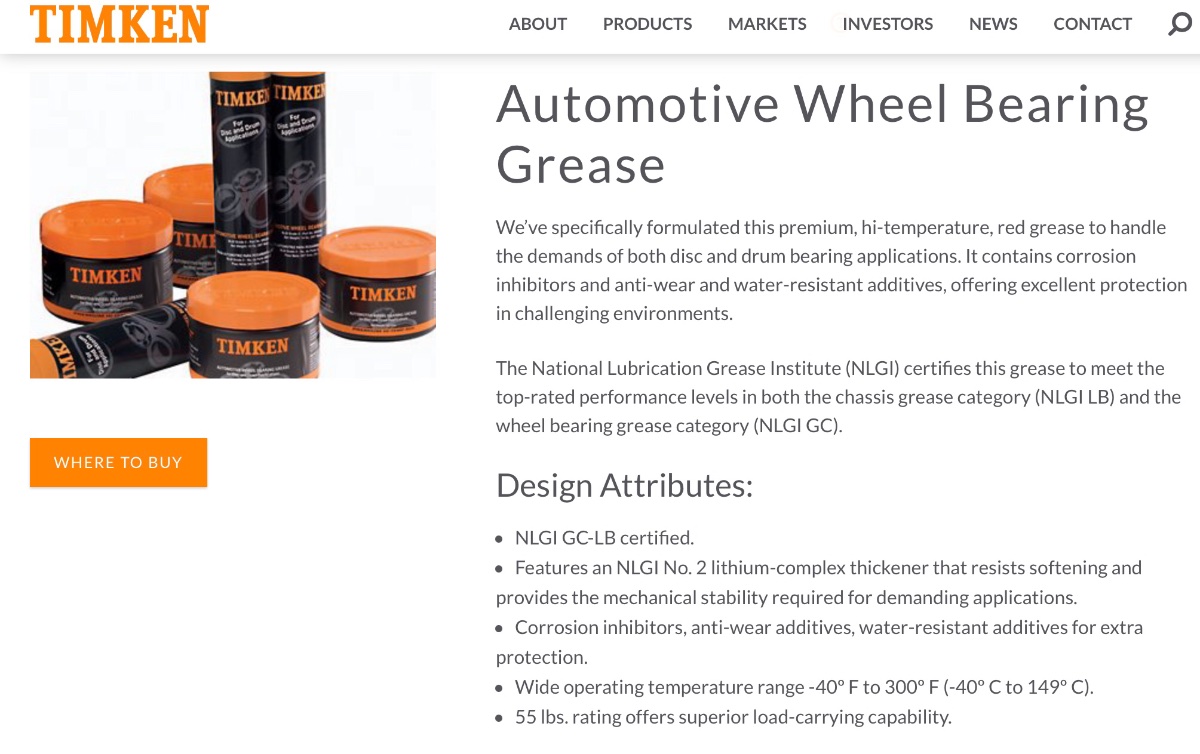
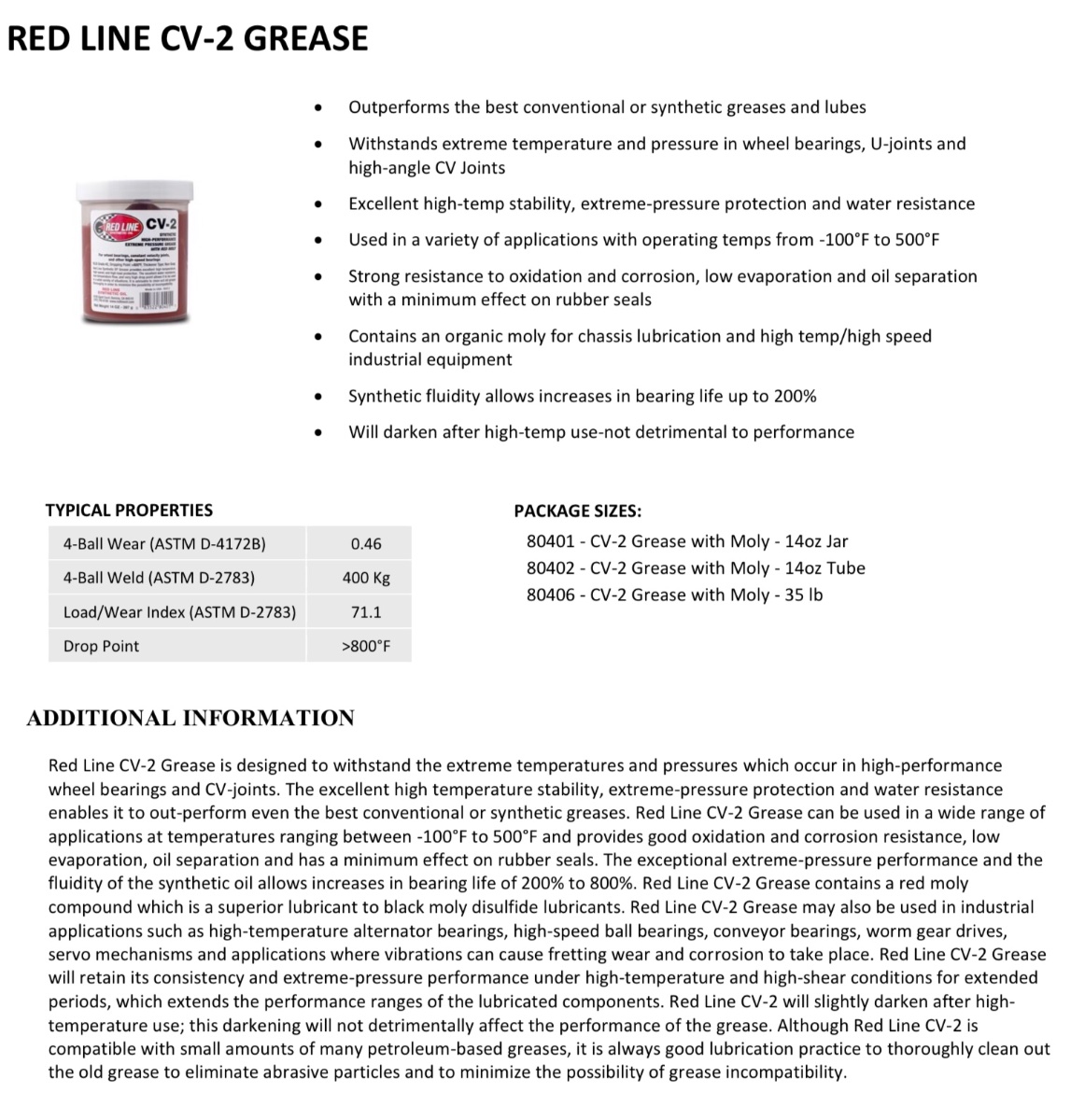
I am sure the Timken grease is really good, and also really expensive. But it is still a regular lithium based product, with all the limitations that come with that kind of chemistry. If you are going to invest in a premium brand of lubricant, you should probably get the most premium one available. I have been using CV2 in just about everything for several years now, and I am not going back. I used to pay $14 for a dinky 3 ounce tube of special Phil Wood bicycle bearing grease, for just $2 more I get 14 ounces, so now I just use the Redline. John Davies Spokane WA
-
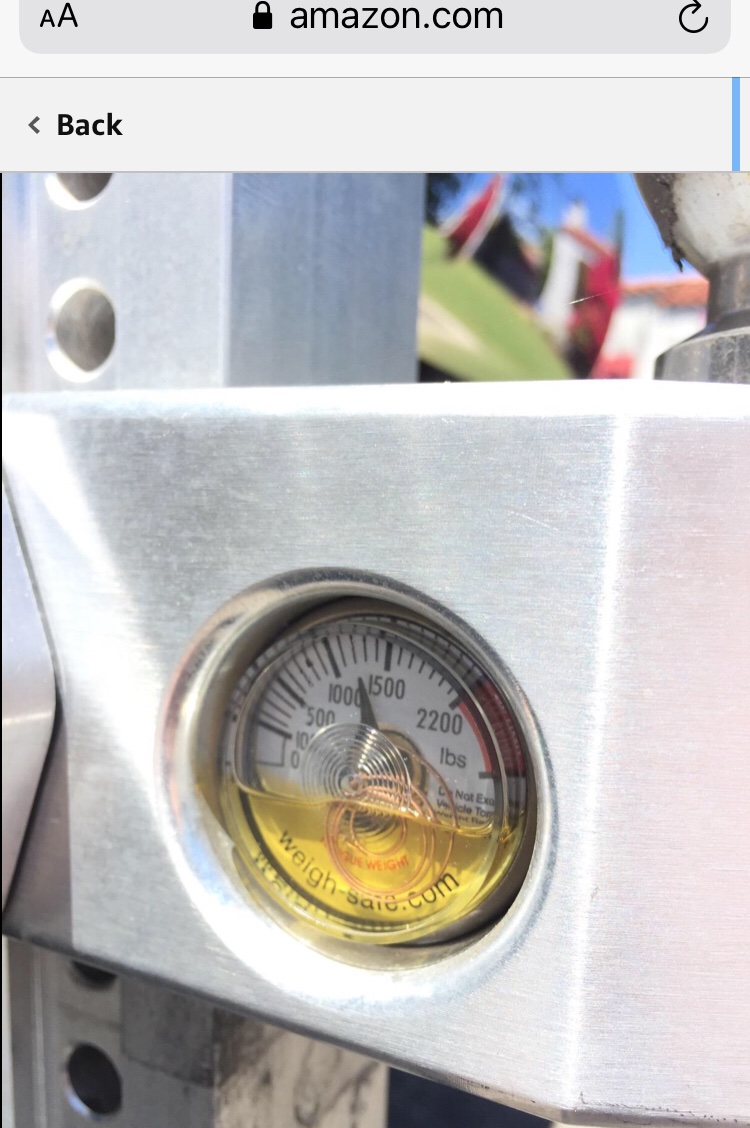
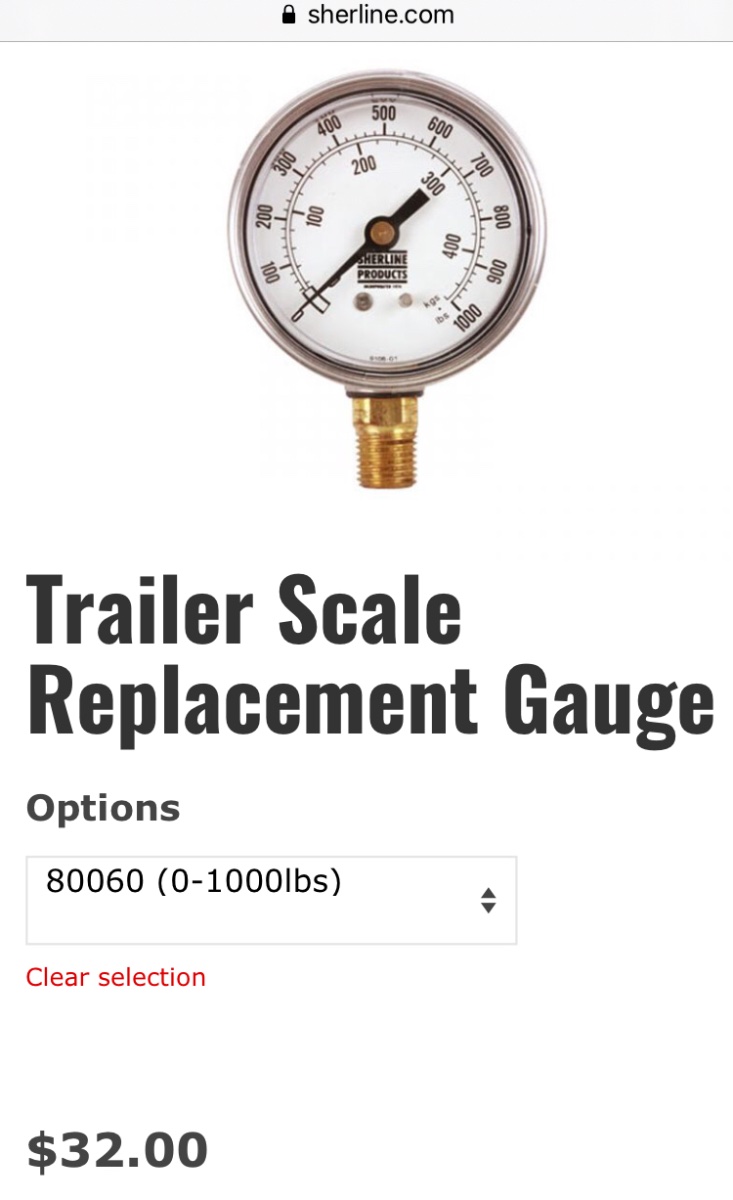
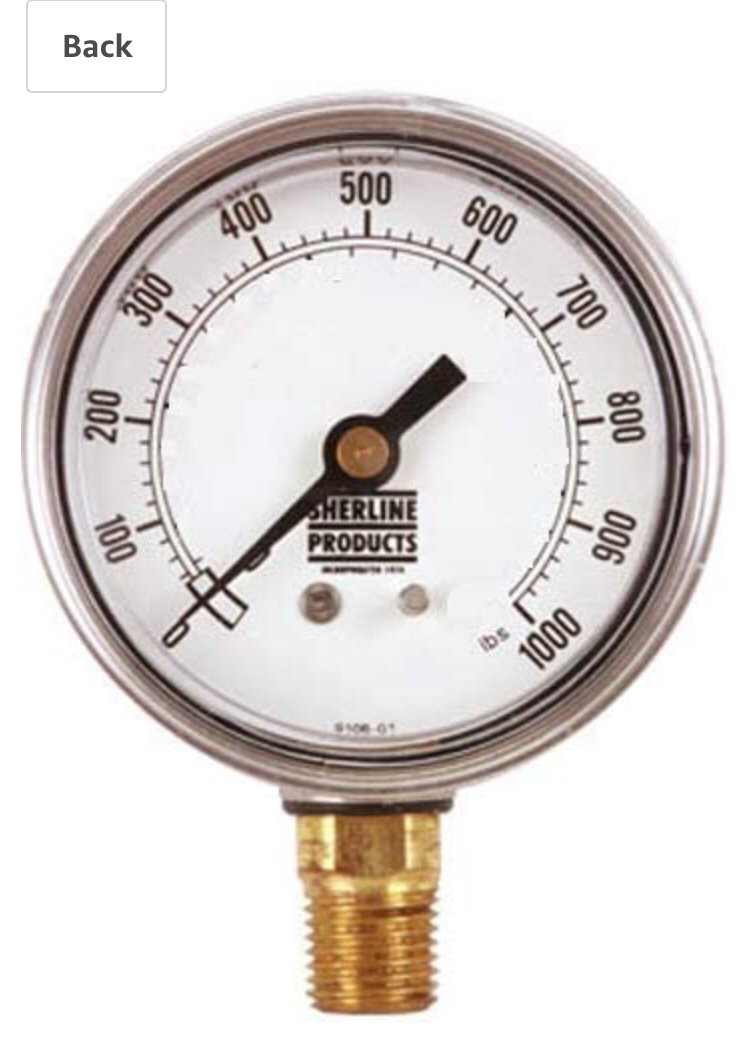
That is a very cool concept, but you need to find out how hard it is to replace (by yourself) that precision mechanical gauge when it fails. They are very fragile devices by their very design, and placing one under a heavy load that bangs and lurches on rough roads is a very questionable engineering choice. However the hitch does have a built in dampener to reduce pressure spikes. Any idea how you would remove that one? (The Sherline has the same oil filled gauge, it can be replaced in a couple of minutes using an open end wrench.) What about the seals in the vertical hydraulic ram? Are they serviceable and can an owner add oil? How long would it take if you had to send it back for service? OTH it is certainly a pretty thing, I will admit that! John Davies Spokane WA
-
Ford F-250 crew cab 7.3l SWB 4x4, which tires?
John E Davies replied to fredmin's topic in Towing an Oliver
If you plan to ever pull a big trailer, or care about resale value, get the 4.3 axles! These SD trucks with their commercial grade engines are built specifically for heavy loads and heavy towing, and the higher ratio you want will greatly reduce the torque at the wheels, by about 20%. That much power loss will be sorely missed when you get high up and face your first 12% grade. These engines lose power at high altitude, your 440 engine ft lbs, at sea level, becomes just 260 ft lbs at 10,000 feet elevation! If you really want better fuel economy buy the turbo diesel. I really like that 7.3 gas engine, but I think getting the 3.55 axles would be a big mistake, that you would regret making every time the towing conditions got extreme. IMHO of course. John Davies Spokane WA -
Add a poll to this thread, people can answer the questions there. It is easy and a lot more interesting than just getting a stream of comments. Why don’t you just try dropping the pressure and seeing for yourself? This is not rocket science. Common sense tells us that rock hard tires that are inflated for a 6000 pound load per axle will not ride well when the weight is HALF that number. This is in reference to the LE2 trailers only! If you have a HD truck with 10 ply tires, you should also be using much less than the 80 psi sidewall pressure on the front tires, and also on the rears when driving empty. My Land Cruiser has LT tires and they are set at 42 psi. I had a Ram 3500 and used 50 front and 60 rear towing and loaded. And dropped the rears to 50 when empty. John Davies Spokane WA
-
Just be very aware that your receiver is a whole lot weaker than a steel one of the same wall thickness. Expect cracking in the corners and lots of wear inside. Additionally, the wall thickness at the grooves for the retaining ubolts is now very small. It is highly likely to break there! I think it is a most dangerous modification! I suggest that you replace it with a steel receiver ASAP. John Davies Spokane WA
-
1.25" Rear Bumper Accessory Receiver
John E Davies replied to Carl Hansen's topic in General Discussion
Anybody - try checking some local 4x4 offroad custom shops, they are used to fabricating all sorts of stuff. Usually from steel, but some will have aluminum expertise. And don’t forget local machine shops. Jeepers and overlanders get stuff made all the time, you can benefit from those shops. Any machine shop could mill a beautiful 2” receiver from a solid block of 3” square 6061 T6, and put in the necessary holes or grooves. Or they will weld one up from 1/2” plate. This is nothing out of the ordinary for them. John Davies Spokane WA -
Ford F-250 crew cab 7.3l SWB 4x4, which tires?
John E Davies replied to fredmin's topic in Towing an Oliver
If you can provide the make and model of the tires, it would be helpful, then we can look up reviews on Tire Rack and elsewhere. Since you do want to get “remote”, IMHO get the larger diameter all terrain tires. Bigger sidewalls are better when it gets bumpy, especially if you are inclined to air down (reduce pressure to say 30 psi) for very slow travel. People swap OEM road tires for All Terrains all the time, rarely do they go back in the other direction. It is a TRUCK, after all.😬 In any case, any OEM tire is going to have decent road manners and tire wear, it is usually only when you get into more specialized types, like mud tires, that things get wonky. The All Terrains will provide better traction and rock cut resistance when venturing off pavement, so you will not worry quite so much at the “Pavement Ends” sign. And if your Ollie gets bogged in a soft spot, you will be more likely be able to drag it free. John Davies Spokane WA -
1.25" Rear Bumper Accessory Receiver
John E Davies replied to Carl Hansen's topic in General Discussion
It is not so much about killing you, as it is also killing that busload of innocent passengers when your trailer swaps lanes on the freeway.... It was their lawyers who are responsible, is my suspicion. Liability lawsuits can destroy a company. A large number of frivolous ones largely helped to wipe out our thriving General Aviation industry forty years ago. It sure would be nice if they gave us super strong parts and just said, “You can use your own judgement, load that sucker down!”. 😬 But the likelihood of that happening is nil. John Davies Spokane WA -
You probably need the Andersen hitch, almost all light trucks do for the LE2 because of the fairly high tongue weight. Oliver will set it up for you at delivery day. It is adjustable for height. John Davies Spokane WA
-
That looks quite interesting, if you mean the first on that page, the eTrailer tall one. I would like to know, what is the precision of the gauge? Have you seen a spec sheet? Using a 2000 pound rated mechanical instrument to measure an expected weight of around 600 pounds means that it will not be in its most accurate range, which is the center of the dial, plus it will be a little harder to interpret. But if you also have another much heavier trailer, it might be a good choice, and don’t use it as they show in the video, under the tongue jack; the reading will be incorrect (too high). And it appears to have no height adjustment when using its own tube, which is not at all good. I have the Sherline LM1000, which is much more compact and is fine for an Ollie. You do need to figure out a support for it, blocks or a tall portable automotive steel jack stand. Considering that you most likely will use it only a few times for a travel trailer, that is not a big deal to most buyers. Sherline LM1000 With any of these, you must ensure that the trailer is level, take half a dozen readings (average them), and always be gentle, don’t slam it around or drop it onto the ground. Please post a review if you get the big one. John Davies Spokane WA
-
Airsteam has a nationwide dealer network, and distributes trailers to them at a discount so they can decide on the street price for their locale, and survive financially. Oliver has no dealers, no wholesale pricing, no mass production, and no inclination or need to discount a trailer that has a year backlog in orders. Why would they even consider it? It would not make any financial sense. If times go bad, they will continue to produce bathtubs and mobile home accessories, and they will survive until the bad times pass, as they did in 2008. Airstream is owned by Thor, and they do nothing but RVs. They would not have any kind of financial cushion if the economy goes bust and folks quit buying them. https://www.thorindustries.com/thor-companies John Davies Spokane WA
-
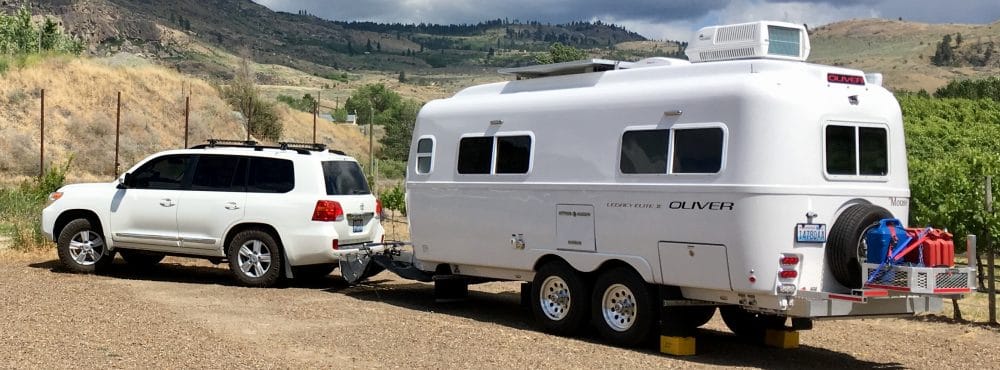
What SUV? it sounds VERY borderline. A typical LE2 will be around 650 pounds TW, it could go higher depending on where you store your gear, especially if you load down the tongue cargo tray. You need a tow rating of at least 7500 pounds, preferably higher, to be really safe, and a good payload in the TV to handle the trailer load plus passengers and all your stuff. These trailers are quite heavy for their physical size, they are not at all like a 2500 pound Casita. An Andersen hitch weighs about 60 pounds, and it must be added to the tongue weight calculation! Tell us about your current TV and we can get you a solid answer quickly. This situation is discussed very often in the Towing forum. John Davies Spokane WA
-
in your shoes, I would skedaddle to the nearest Walmart or Home Depot and buy two or three additional 20 pound (standard BBQ size) full bottles of propane. You are maintaining a 90 degree temperature differential (Delta T) and your appliances will be sucking gas like you will not believe. I am sure there are a lot of full timers in the South who are in your same situation, so you may not find any full bottles to buy, but I think it would be prudent to check anyway. Is there any way to dump the Truma when it is this frigid? That would save that expensive unit from freeze damage if the worst happens. Is there a lot of snow on the ground? If so, get out the shovels and pile it up around the belly to block out as much air infiltration as possible. If you have any construction materials that are not frozen to the ground, you could make barricades from that. Good luck. john Davies Spokane WA