
jd1923
-
Posts
3,890 -
Joined
-
Last visited
-
Days Won
316
Everything posted by jd1923
-
The Apex is powered by 48V system and was designed to add 1-2 solar awnings. You could ask OTT for a schematic showing your electrical system (with integration of the awning panels). The solar charger (SC) you install should have 48V output but for some reason OTT advertises the 400W rooftop solar on the Apex is 24V. New panels must be on an independent SC. I would trace everything down and create your own system drawing. In our older hull, I had to pull every wire to fully learn the system (not good when under warranty)! 🤣 In the Elite we have 12VDC and 120VAC systems. The Apex has 48VDC and 120VAC systems and it must have a 48|12 DC-DC converter. The 48V system must be stepped down to 12V to run lights and other 12V accessories. You should locate this step-down converter for general purposes. I would start at the batteries. See how many wires are connected there, follow them into the hull to see where they are connected and where is your main fuse. A new solar charger must connect to +/- battery somewhere. The other active Apex thread shows many pictures and some show unused terminals labeled "battery." I would encourage you in that adding our Solar Suitcase was the easiest major electrical upgrade I've made to our Oliver. I've attached my upgrade link here for example. Of course, you have a 48V system so system components may differ but the basics are the same. Re Starlink, there are some complex installations and some who just plug it into an outlet and lay it on the ground! 🤣 From the HOME page of the Forum, search for "Starlink" for many discussions.
-
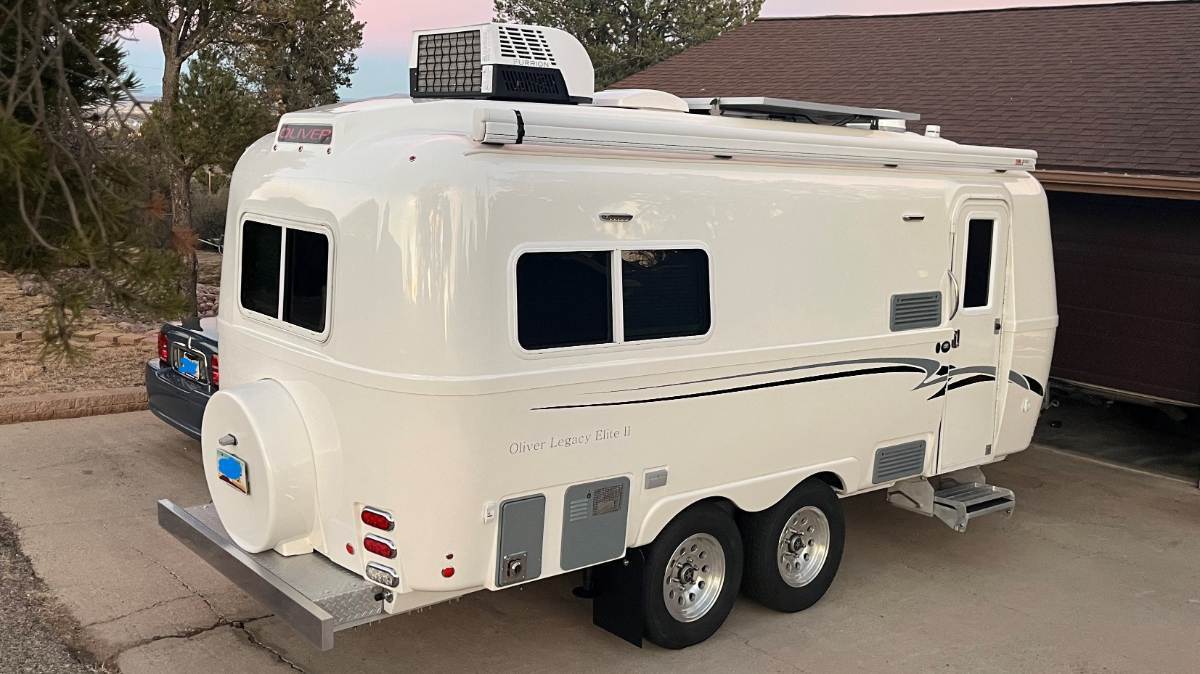
Yeah John, thank you. She’s pretty again and our 11-year-old Oliver is also more capable than ever! 😎 Not a chance we would trade our newly upgraded and restored Oliver for a brand NEW 2027 Apex or Elite. We are better optioned than either new model. It would be less dependable without going through everything again, and way too much trouble to do so.
-
Yes Bob, this voltage is very low! An automotive LA battery after sitting overnight or sitting for a few days should read 12.5V minimum and more like 12.6V with a newer battery. When towing or at highway speeds, voltage across the battery with the alternator running should produce 13.6V min and more often 13.8V to a max 14.2V. The term Smart battery bothers me unless it's smart enough to know you have the DC-DC charger attached. Check a Nissan truck forum, search for "alternator" or "towing." If you have been DC-DC charging adequately for some time and now nothing, you could have blown something in the Nissan alternator. Perhaps it did not have +50A available. Your DC-DC charger installation is likely fine. Instead of "inverter service" test your alternator or take it to an electrical shop that rebuilds alternators and starters, Before I installed our Orion 50A charger, I installed a HD alternator rated at 50A greater capacity. Let us know. Best wishes, JD
-
I agree with GJ on the points he made, except this one. A 48V 100 Ah battery translates to 400 Ah in 12V. There are 3 of us that have 900 Ah with our mods. This huge/heavy battery fills the bay without leaving room for another, you’re capped at 400 Ah. OTT has had issues with electric awnings retracting and/or not opening when they should. $5K is an expensive awning that may be in the direction of the sun occasionally. The advertised DC-DC charger is not viable (in any new Oliver product). IMHO, the best looking Oliver is the Elite by far! Painting unless powder coated is not good. Flat Black-out trim is a fad kids started 10-20 years ago. The Apex looks like a mod trailer created by a 20-something. AT tires do nothing for a trailer. They only add value to the TV on drive wheels. No additional traction, just more difficult to keep clean. The 48V Houghton is not an efficient variable-speed model and the black cover will make it run hot when sunny. I promise you, my old hull has far more upgrades for “standout improvements for serious boondockers! The ECOFLOW system is laden with proprietary cabling and connectors that cannot be sourced through normal channels like an RV store or trailer service center. Need to get your Ecoflow system repaired? You'll be on your own or head back to Hohenwald! Better have installed Victron! Blackout not for me. Chrome wheels are a must, with ribbed tires and a few satin gray touches on the grills, yeah! 😎

-

Plastic Swivel Adaptors starting to fail - likely age
jd1923 replied to Wayfinder's topic in Mechanical & Technical Tips
When leaving the trailer, e.g. a day trip, there are several things we check. One is to be sure the water pump is OFF. Likewise if on City Water I will shut-off our hose connection at the hook-up. LP off at the tanks is also a good idea for safety. If you leave pets in the trailer these things are more important and of course they need cool fresh air! Almost as bad as water leaking into the hull would be leaving an electrical appliance on that could cause a fire. You could trip the breaker at the post. If un-plugged the batteries could run down. As we’re locking up to leave, I’m checking the shunt reading on the app to see that amps in or out is what’s expected. 😎 -
Hey Gregg, I might have a fix for you! First idea, if you truly have antifreeze ALL the way up to the pump, perhaps all you need to do is crack the cold side valve at the sink faucet allowing air in the line after the pump to escape. This simple fix would be great, but perhaps more priming is required. During April, our son was camping in the Oliver when he ran the fresh water tank down very low, leaving only air in the pump lines. We came out for dinner and I expected I could refill the fresh tank from my 35-gal aux tank on the pickup bed. It would not pump even though our truck was a bit uphill and I had the hose primed to the inlet. First time ever this had occurred. When Chris and I camp, we refill asap after hearing the pump take a little air, that gurgling sound. Both the Winterization and Boondocking valve configurations, pull from the RR water inlet using the water pump to suction. In either configuration the water pump may need to be primed. I brought the trailer home next morning. Good thing he was camped only 12 miles away! Connect a pressurized garden hose to the rear inlet. Turn the hose ON, turn your water pump ON and open the cold valve on the kitchen sink faucet. The air will expel out of the faucet and once you have a steady flow of water the line is bled. Close the faucet valve, remove the hose and replace it with your antifreeze line to continue winterization. Give it a try. This should do it! 😂 I have a simple hand pump that I've used to sanitize the City and Fresh water lines. Going forward we'll travel with this pump as it could be used to prime the water pump when a live garden hose is not available. 😎
-
Yes, "sane and fit!" For 6 years, we had 13 acres in Loudoun County VA and that was real work. We had a few black angus for land use, a couple of horses, our yellow lab and a barn cat that came with the property. I mowed the pasture twice a year to keep the weeds down and from spring through summer the area around the home had to be mowed every 5 days. Waiting a week, the grass would get too long in the N VA climate! Clearing/repairing the thousands of feet of fence line was never ending. When we put the property on the market, Chris and I did yardwork everyday, all day long. We didn't want a prospective buyer to realize how much work it was. It presented nicely without a blade of grass out of place! We returned to visit friends two years later. The property was in shambles, everything needed mowing and trimming. Some of us are responsible, some even enjoy work and others may not be either. 🤣 Here we're only on 3/4 acres, but with 35 mature pinion pines, scrub oak and local weeds growing rampantly with the late summer monsoons. We're about halfway done with our fall clean-up but we could do a major trimming in the winter. Could you request installation of Alcan Springs? OTT stocks them for the Apex. The more you get included, the less you'll have to do after delivery. Besides 1750# spring failure, the heavier springs greatly improve towing. Russel, we certainly agree on this! Bringing a contractor in the trades on our property is a rare case and when I do, all I do is worry. Bringing one of our vehicles in for service is just as rare. I used to be afraid of carbs and fuel injection but not after working on them. After purchase of our older TV, I wasted $692 on two service visits to get the A/C repaired. Of course it took two visits and you would think afterwards it should be fixed, but not! Each time the A/C cooled for only a couple of months. March 2026 after watching a few YouTube videos, I bought the gauges, a vacuum pump, installed a new compressor, dryer and condenser (all parts for total A/C restoration $478) and now we're COLD! Purchased $156 in tools and $42 in refrigerant. An entire NEW A/C system costs less with my labor than two lame service visits. Wish I had saved that $$$! Then I recharged Chris' Lexus GX470 before the summer. Watched the ChrisFix video again for review and in just an hour using two cans of R134a ($28) the GX now also blows COLD. Tools were paid for, knowledge is now engrained. Next spring we'll get the A/C working on Adam's '97 T100! 😎
-
How about a 40-gal tank that's only 18" tall? https://www.usplastic.com/catalog/item.aspx?itemid=167746&catid=599 This company also makes flat tanks, like the Oliver! They come in so many sizes and custom sizes and hose fitting selections. Plan to the available area in your bed. You could also plan for two smaller tanks in odd spaces that would be hard to store other gear. https://www.usplastic.com/catalog/item.aspx?itemid=127750&catid=960
-
Fresh Water Tank Overflow Condition
jd1923 replied to Wayfinder's topic in Mechanical & Technical Tips
Yeah but, I believe this related thread has shown a plugged screen can lead to a worse outcome. Not yet proven until @Rivernerd investigates further but the only way I see the fresh water tank can be pressurized is if the overflow is somehow plugged! -
🤣 🤣 🤣 🤣 🤣! This depends on you! But given you have a thread titled "Dan's Mods" means it's in your nature (as an engineer), like mine, respect. But truly half of Oliver owners have not modified or upgraded anything, and that’s OK too, some on this forum and many not. Some still hanging onto AGM lead acid batteries and that awful TV, their ducts half blowing air, manual water valves under beds, the basic RV microwave, 1750 LB springs with a known high failure rate and that freight-train Dometic A/C. You can decide to live with it all, or not. "a Gold mine" thank you, I like that! I learn by doing and I've worked my entire life. I'm here to learn first and then help where I can. Just 3 1/2 years ago I had no idea, "What's an Oliver?" I now know it well, learned by tearing down, rebuilding every onboard system. But seriously, I want, we need a fully capable camper. It's unsafe to have an unreliable camper when 100+ miles away from services off-grid. In our 198 Oliver overnights, not one repair was made while traveling (presently knocking on my forehead and other hardwoods within reach). We did have a bathroom water pump switch issue last outing, but since it happened on our last night out, I decided to fix it the next week at home. I could have, should have secured this wiring when I was in the vanity for other maintenance. Every other week someone on this forum has an issue while traveling; no hot water, no heat, no 12VDC, fridge not cooling... There's about a dozen of us here who provide help to other members and we're happy to do so. Three years ago, I was asking for Oliver advice. I spent a full 2 years in upgrade work. At first, I had no idea where to start except the lame TV was a glaring need. Got most of my ideas here on the Forum, reading about other inverter or A/C upgrades. In 2023, I started by reading everything the great John E. Davies posted. He was still on our Forum for about 6 months after I joined so there was some time for discussion. Three years later, I've done many more upgrades than he, for sure and I'm about done! We have the electrical, mechanical, HVAC and plumbing systems we need, a newly replaced 10K suspension system and a full exterior restoration. Our TV is also restored and in good maintenance. I travel in our Oliver to get away and in doing so, I force myself to take some time off. If I'm home, I'm working. My Oliver to-do list is down to scratch, so I'm back to working on our house and property (new kitchen sink soon, a stone masonry repair, new 14-step deck staircase with hand-cut stringers, and yardwork). The real list never ends. Call me strange, but I enjoy yardwork and repair work. I'd go crazy laying at the beach (Chris too) or sitting in a lawn chair reading a novel. Only manual labor allows my mind to rest (or dumb TV shows)! 😎 "When will it end?" Given you started with a well-optioned 2026 and you've already coated the exterior and worked some upgrades, your path should be much shorter than mine. Some guys always have "the long list" but it doesn't have to be! I read re your music, your desire for better lighting and drinking water, and my guess is there's much more to come as you turn your imagination to reality. You're now the one giving the rest of us good ideas. Please keep doing it. Give it a year or two with more of your hard work! 😂
-
Dean, they were also too far away for me, almost as far as the OTT Rally and both are beyond our means. I spent time looking around online, thinking there should be somebody in the Phoenix Valley that would do this work closer to home. One company wouldn't even look at our hull due to its age. They only coat brand new vehicles, so no extra prep/paint correction (or gel coat) work included. Then talking to my autobody painter, he referred me to a local auto specialist who works paintless dent repairs, other detailing and custom ceramic coating, but he won't work with wax! I observed a few examples of CGI work at the 1st Texas Rally. Beautiful work, but sticker-shock was more my gut feeling. Their Oliver website page states "starting at $3K" and one advertisement stated another $400, shared travel cost per trailer, when they travel to do their work at a rally. My guy quoted $85/ft for the full length of the trailer, 23 1/2 ft hitch to bumper. He said, "That's what it's worth and more would be over-charging." His industrial shop (he works on semi-trucks too) is just 20 miles from our home. Cameron worked on our trailer himself over a 2-week period and into Thanksgiving holiday, because he wanted "another couple of days to get it right." It sure came out GREAT! Our Oliver sits in the Arizona sun 24x7x365. Ceramic coating it designed to repel UV rays and after 11 months she's still shiny. I'll go back for the annual service regularly. I only suds spray and pressure wash after trips when it really needs it. My arms, shoulders and body will not be used to wash or wax our hull, never have, never will. I'd rather replace trailer axles (done that) than spend a couple of hours with a buffing machine. And no wax required on ceramic. The restorer in me wanted to get everything else exterior done before, during and after! I waited over 2 years to work the exterior, letting it get pasty while doing all the interior mods (exterior restoration post linked below). We're going back soon for the annual "decontamination rinse and polishing." I expected it to be in the hundreds but he just quoted me $185 for the annual. Wow, something costing less than what you would expect is a rare case today. 😎 Maybe there's the right guy in your part of Colorado! Best wishes, JD
-
Used Oliver advertisements Return to the Oliver Forum
jd1923 replied to dewdev's topic in General Discussion
It sure is! 🤣 And yes, it doesn't get any easier as we get older. For months, I got used to kneeling on a dinette back cushion (have new cushions now) to get my upper body into the basement openings. I was 69 then, and now at 71 if I had to do it again, it would be harder! Looking back at the summer of 2024, I spent the whole time working Oliver upgrades. We don't travel much in the summer. I worked my main electrical upgrade Jul-Aug, just after (almost) finishing my duct work mod. I say 'almost' because I was still waiting on delivery of the return duct and filters. I've gotten used to patiently waiting on parts for one project while working another. There's always something to do! At least that was the case for quite awhile! My first Oliver project was a new A/V system in July 2023. My last major project was our Chill Cube A/C upgrade Dec 2025. I worked 35 documented upgrades in these 2 1/2 years! First step was replacing LA batteries with lithium (lucky you starting with 640 Ah Lithionics)! Then removing a Xantrex 2K inverter with external ATS, and some crazy junction box containing a dozen residential wire nuts, OMG! Then rewiring everything to the under dinette seat area (no switches/fuses under the bed) and this ended with the Victron Multiplus II installed on a custom platform, all in working order. Then I added the SC and wiring for a 400W Renogy suitcase (Aug-Sept). I added the Orion DC-DC charger the next spring as I collected all the necessary parts in the time between. We had 100 things to do and if one effort was on hold waiting parts, I started on the next task on the list! 😎 -
Used Oliver advertisements Return to the Oliver Forum
jd1923 replied to dewdev's topic in General Discussion
Dean, many of us are looking forward to seeing your work and new Victron system! 😂 I think I have +/- 1000 hours in +/- 40 upgrades over 3 years, likely 200 hours in electrical upgrades alone. Yeah, I'm in Excel for everything from paying bills to keeping to-do lists. I have an Auto Maintenance worksheet with a tab for every vehicle we have or have owned. One for the Oliver of course, another for the TV and everything else. It denotes the dates of expenditures and maintenance completed so to keep a full history and what's needed next. My $5K included 900 Ah Epoch Essentials mostly at 2024 prices ($2,819 total). Today, I would go with a cheap model since the batteries I have cost $3,750 list price today. We spent $2K in Victron devices; a SmartShunt, the MP2 and two interfaces (Bluetooth and MK3-USB-C configuration interfaces), a 30A MPPT SC, the 50A Orion DC-DC charger, 15A SC for TV solar and 12|24 DC-DC for Starlink power. Then a 400A ANL fuse and housing, two 400A buses, 35A breaker, 4 and 10 AWG wire, etc. The first reason costs are higher now is two years of inflation (cost of copper!) but in comparing systems it's mainly the cost of dual 50A SCs (vs. my single 30A) and the "Victron Lynx Distributor, Cerbo GX MK2 with GX Touch 70 Display." Instead of a cabin display (I read my app more often when outdoors or from the driver's seat), I went with a simple VE interface for $83 which reads temp and is a Bluetooth interface for the Multiplus II. https://www.amazon.com/dp/B07FCV43LQ/ The two GX devices are likely $500+ depending on where you buy them (do not suggest Amazon), more when buying from a "professional installation company." I went without Cerbo accessories for not wanting additional device integration, nor a cabin display. I used basic 400A 8mm pure copper buses, a pair for $40, where Lynx Distributors can be $200-400 each. https://www.amazon.com/dp/B0D59Z9S7W/ We all have different needs and I can tell you, when you do all the work yourself, have ready all the parts you need to minimize time (drawings, good planning), and buy all the hardware you want that makes you happy! 😎 As it costs 2-3 times as much to get this work done for you, labor included! -
Used Oliver advertisements Return to the Oliver Forum
jd1923 replied to dewdev's topic in General Discussion
How much does OTT charge for their Platinum package? The 2027 Oliver EII Platinum is $101,000. The EII Standard is $85,000. OTT's "most popular" package adds $16K for an array of electrical options. Now that's truly "money growing on trees!" 🤣 You get a 3K Xantrex inverter, 400W solar with SC from Zamp or Victron if you're lucky. Of do you? Would OTT instead install a "Rich Solar" system like we've seen recently? Add 640 Ah in Lithionics. What make shunt is used? It could be a Victron. And then some off-brand DC-DC charger that should NOT be wired to the 12 AWG AUX wire in the trailer harness in the first place! With 3-4 brand names OTT must drill many large holes into the pretty interior hull of your Oliver for multiple screens! If you prefer apps, you would need to learn how to use ALL of them. "Keeping life simple" is not happening here, not at all! Simplicity no, complexity is the word and there's only a few of us Oliver Owners on this Forum that understand most of it. In a fully integrated Victron system, add a screen if you like or not, and one user-friendly app is all you need to see status of all devices. Our hull has 6 Victron devices and 2 more in the TV. Include 900 Ah in heated LiFePO4 batteries and we have spent a total of $5,000 in Victron components, buses and all wiring, everything (labor not included). The DIY-capable owner should buy the new 2027 EII Standard and add their own solar-inverter/charger/lithium upgrade. For those incapable or not wanting to do the work, they'd have 10K for labor in buying the Standard over the Platinum model. Yes, 10+ have upgraded to Victron, discarding what was installed OEM. How many would make the choice if a Victron installation was offered? This is the real question. Want true simplicity? Skip all these upgrades, buy the Standard package and plug into 30A shore power! Or OTT could offer a fully integrated Victron system, first for superior overall performance and for the simplicity of the integrated system! 😎
-
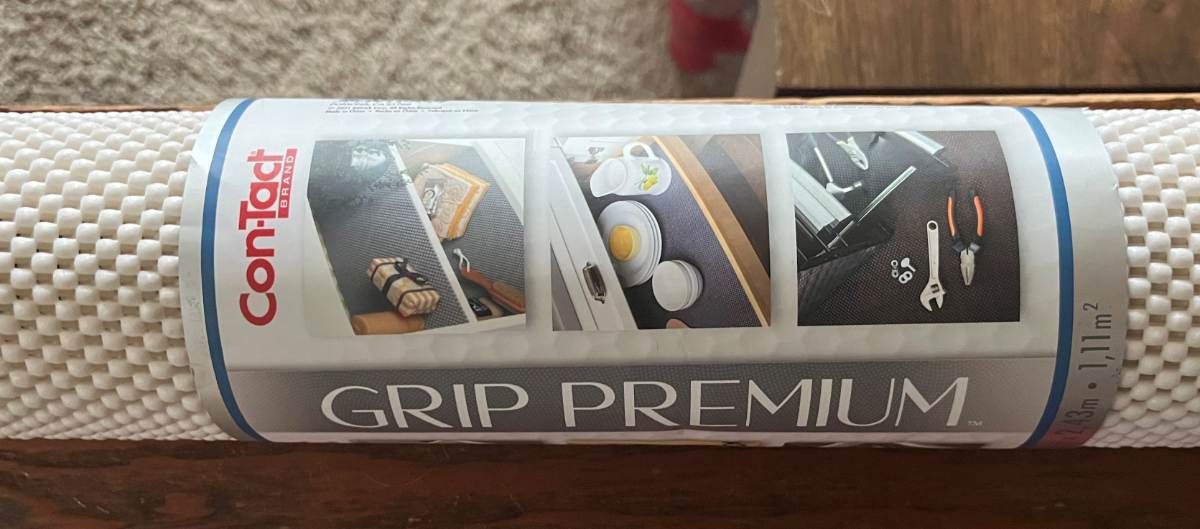
Prior owner left us a roll of this and more of it was under the cushions. This stuff works, Con-Tact Brand Grip Premium by KITTRICH Corp.
-
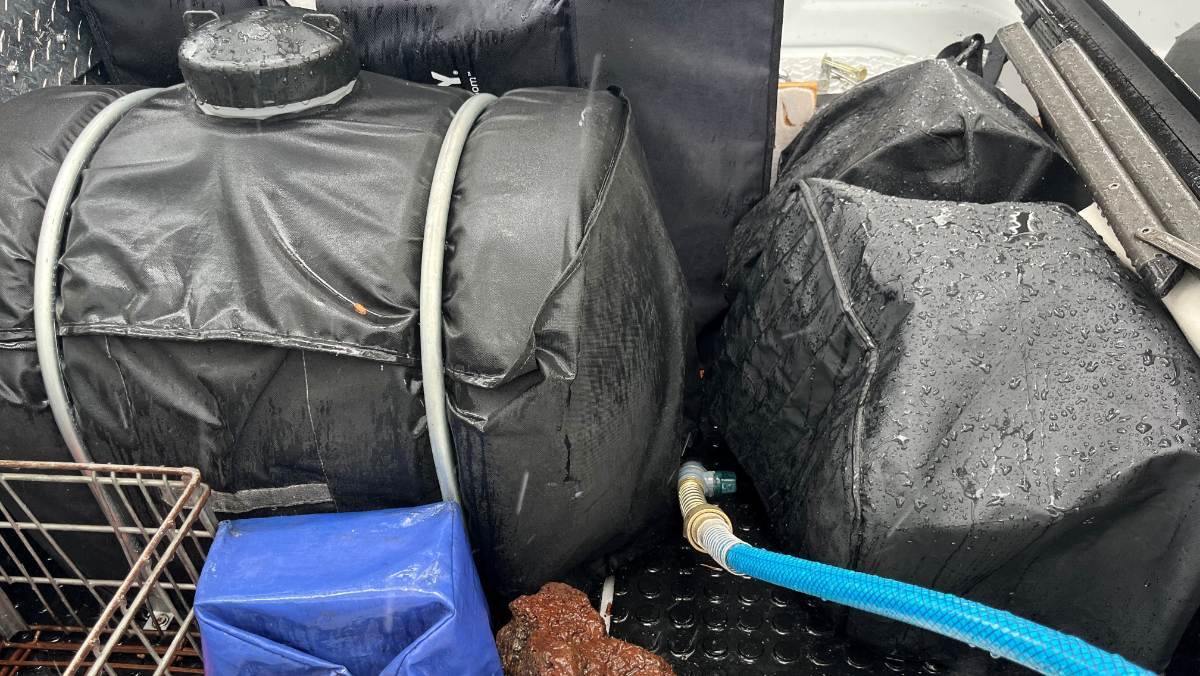
Water would be "our biggest constraint" if we did not have our secondary fresh water tank. Yes, we always fill both tanks before leaving home; the 32-gal in the Oliver and 35-gal in the TV (a lifesaver): https://www.tractorsupply.com/tsc/product/horizontal-leg-tank-35-gal-2137324 Also, we do not use onboard water for cooking or drinking. So we also carry 10+ gallons drinking water in 1 and 2.5 gallon food quality jugs. And with cold water in glass carafes in the fridge AND truck fridge, we start with about 80 gallons total. Our Wisconsin friend @FloraFauna also always carries an extra 35-gal fresh water! Steve once wrote something like, "I wish it was larger!" The most we ever got out of our Oliver Fresh Water tank was once 28 gallons (measured when refilling). More often it's closer to 22-24 gallons when you can hear the water pump taking air. Lift the front jack another inch and you could get another 3-4 gallons but it's time to refill the tank. With the TV hitched, 35 ft of hose (10+25) will connect the secondary tank to the Boondocking water connection. It's so easy with Eley hose quick-connects on all parts! When refilling the first time, I use about half (18 gal) so that we can refill again. Water in tow we can last 10 days, with quick showers every other day. So given we have enough water for 10 days and our 900 Ah with solar suitcase we can also last 10 days. It's the Black Tank that limits our travel. We can dry camp for 10 days, IFF we dump the black after 5 days (based on 2 of us). If you have composting then you would not have this constraint. I mounted our tank (special order mounting straps) and put a cloth cover over it to keep direct sunlight out (unnecessary with a truck cap). Put it in the middle of the bed, the area which is hard to reach for other items. I could not see carrying 5-gal jugs to the rear. What's 5 gallons, about a half day of usage? Gotta have water, the more the better and more so in the desert southwest! 😎
-
We leave it out at night. One exception, we stayed at a sketchy campsite one night where I did not have a good feeling re the neighbors (van life types and some living out of cars). So I brought it in before going to bed and we left next morning to find a better campsite! I bring it in every time we leave for the day. In fact 90% of the time we use the truck mount, so we have to pull it down. I put it in the Starlink travel bag ($40 option includes a dish frame and bag) and it with the 2' pole extension sits in my truck tool box. Takes 1 minute to mount or remove. Once camping outside of Durango, we drove into town and halfway there I realized the Starlink was still up on the truck mount, NP! 🤣 Most of you have truck caps. I believe you could easily side-mount the base-mount 2" PVC pole to the side of the cap. The second removeable piece of PVC pipe mounts above to provide height. Paint it to color match and have it there ready. Ron and others have tall poles, mounting suction cups, etc. I just don't want the hassle, love the truck mount. If you can move the dish 10 ft up to avoid trees, you can also move it 10-20 ft over to a clear spot. How far? We've never needed the dish more than 30-40 ft away from the Oliver to clear trees, but we're not often in heavy woods. Where we camp, the Ponderosa Pine is our tallest tree. You wrote "WIFI to WIFI." I believe you mean what MobileMustHave.com calls "WiFi as WAN" (check them out, they have videos explaining everything). I have a Pepwave router which is capable of this and so could your router. Just recently I created a hardwire solution for my truck mount (30V power and Ethernet LAN). So now I have the Mini wired to the Pepwave router directly which allows us one login. You should have up to 50' distance with Wi-Fi as WAN, though it will depend on your router antenna. We have the extremely capable Parsec Husky which in my experience covers 100+ ft radius in broadcasting Wi-Fi. When I cannot park our TV in clear view of the northern sky, I will use the portable stand with battery and change login to the built-in Mini Router. I installed our router in our truck for a number of reasons; 1) our Internet connection ALWAYS travels with us, day trips too, 2) The Oliver will be parked in the shade more often and the tow vehicle can be moved some, the trailer not so much, and 3) when we travel for business or pleasure without the Oliver we have our Wi-Fi, no need to use unsecure hotel or public Wi-Fi. My portable stand is large and clumsy. Next mod will be to remove the post and replace the large plastic tank with a flat metal base. A short pole and flat base will be much easier to store when not in use. Very often with our router setup and T-Mobile Business 5G Cell SIM card ($30/mo) we do not need the Starlink (80/20 rule). Boondocking in a canyon? Time to connect the Starlink! This link will go to my final post of the thread, when I hardwired the Starlink. =>
-
Touch up for INTERIOR caulk filled holes
jd1923 replied to ScottyGS's topic in Mechanical & Technical Tips
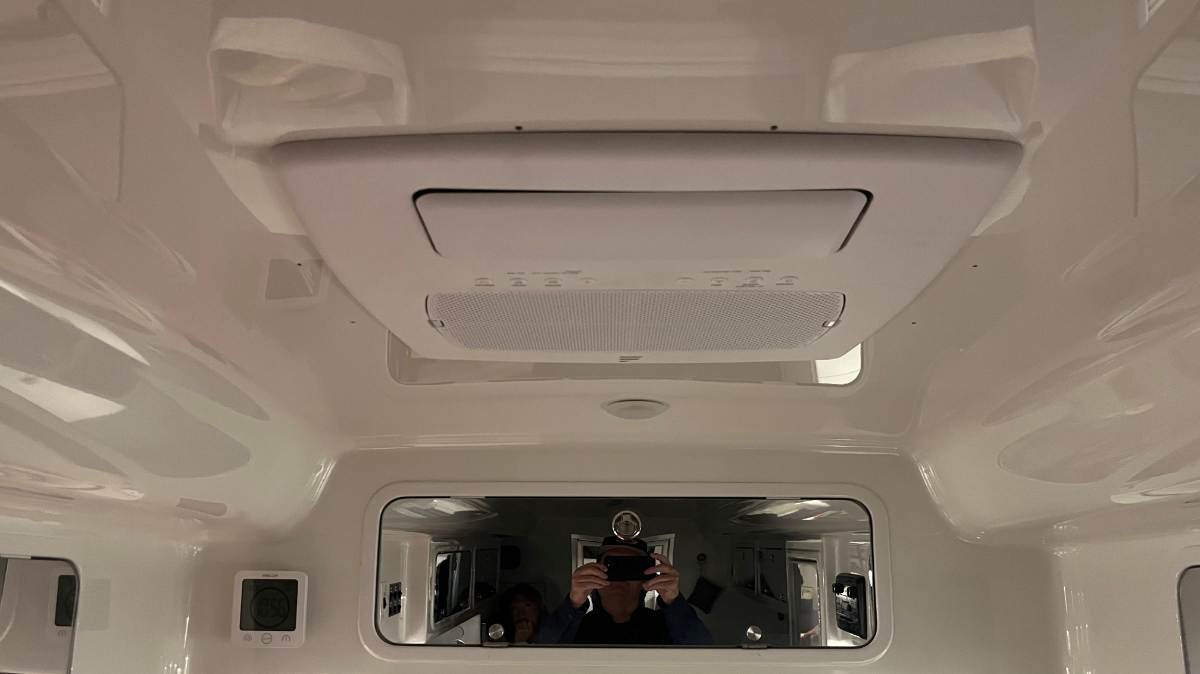
Scotty is camping and he might not have a pic before he filled the holes. I filled mine too but have this picture from before. You can see two holes in front and look closer to see two more on either side. The Dometic P2 was twice as big inside and out. There are two more in back 6" beyond the much smaller Chill Cube. Notice the headroom too! Another reason it's quiet is the air handler/fan are not hanging down into the cabin interior like ALL the others! Scotty got his installed at summer end, and he was only able to test the A/C minimally. He got the newer Heat Pump version and we hope to hear about that function soon. The link below goes directly to page 2 of my Chill Cube post which shows the installation. Pages 3-4 have some of my reporting on its efficiency. We ran ours all summer (all of 2026) and we just LOVE it!
-
Used Oliver advertisements Return to the Oliver Forum
jd1923 replied to dewdev's topic in General Discussion
LAST CALL! These are at the Rally now, so please write me if interested. Thanks, JD
-
High Pointe Convection Oven Tripping CGFI Breaker
jd1923 replied to 2008RN's topic in Mechanical & Technical Tips
OTT installed our microwave on an independent run to the 120VAC power panel, using white Romex (14-2 AWG). On a separate 14-2 run are the 110V outlets. OTT wired two (2) hot/black wires to one 15A breaker. In how they wired this, better not run the microwave and a blow dryer at the same time! 🤣 Wiring to the 20A breakers, for A/C, HWH and Fridge, is the yellow Romex (12-2 AWG). I understand OTT in later years used 12-2 Romex for all 120VAC wiring. The first outlet which is under the dinette is a GFCI outlet, so all other downstream outlets are hence GCFI protected. Our microwave was not wired by OTT to a GFCI circuit and therefore neither is our new air fryer. Since I disabled the PD converter when installing a new inverter/charger, I used the 15A circuit breaker for the converter now for our oven. Now we can run the oven and blow dryer at the same time on the two 15A breakers since the inverter can handle it. In our 1980 built home, we have one 15A GCFI breaker in the 200A panel. It protects 5 outlets in three bathrooms and 2 exterior outlets on the deck. There must be 150 ft of #14 wire connecting these 7 outlets. I guess that was local code 46 years ago. What I've read here is new homes now have GCFI outlets throughout the garage, bathrooms of course, and exterior walls, etc. -
High Pointe Convection Oven Tripping CGFI Breaker
jd1923 replied to 2008RN's topic in Mechanical & Technical Tips
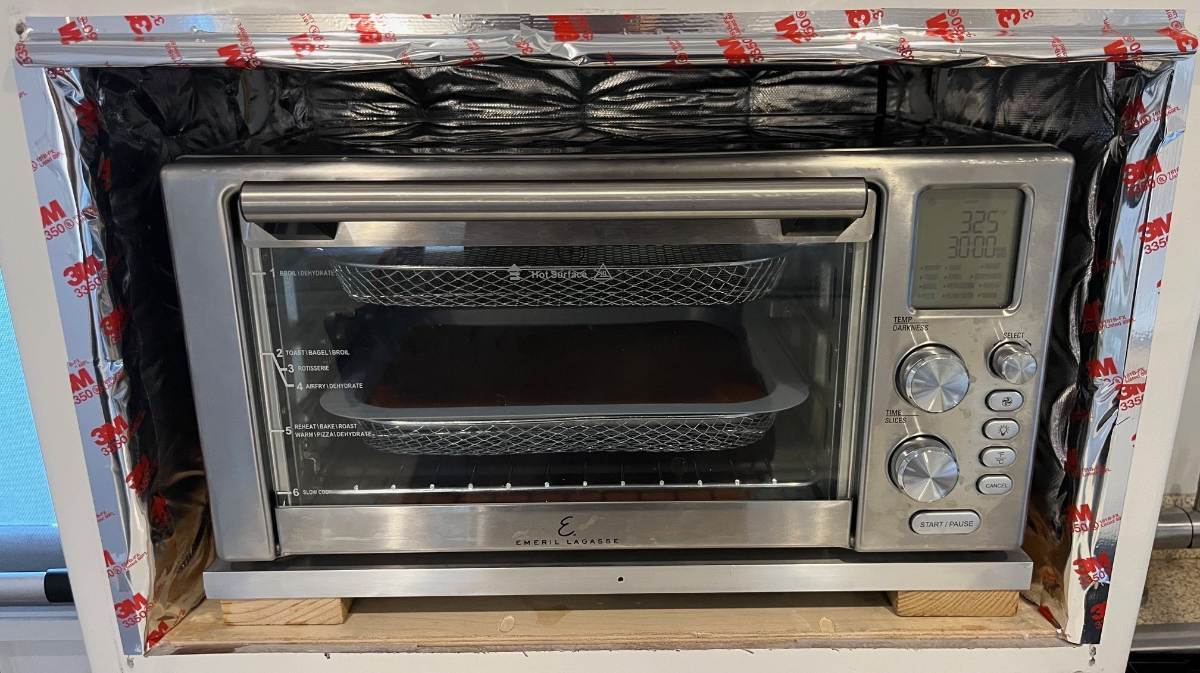
It would be cool if you could troubleshoot your oven with Geoff's help! I'm sure we'll hear back on this. If you have to replace it, there should be several models that would fit. Now that you had it out, you know the internal dimensions. I was able to repurpose the OEM microwave grill to fit around our new oven (by merely cutting off the inside plastic tabs). I'm actually surprised OTT would install an oven in an uninsulated closed cabinet. I know some of the very early hulls had oven vents but they stopped that (history provided in the thread linked above). We had microwave only, so without the oven feature there is little external heat, no real need for proper insulation and venting. However, a convection oven is a different thing! I suggest any Oliver owner who has an oven and uses it for more than a few minutes at a time should add proper ventilation! Two 3" vents in the top-back corners truly allow the hot oven air to escape without needing a fan. Kiln insulation helps too. We use our oven regularly, running on inverter, 400F for 20 minutes or more and the cabinet surround and the kitchen cabinet above are just warm to the touch. 😎 Good luck with this, Bob!
-
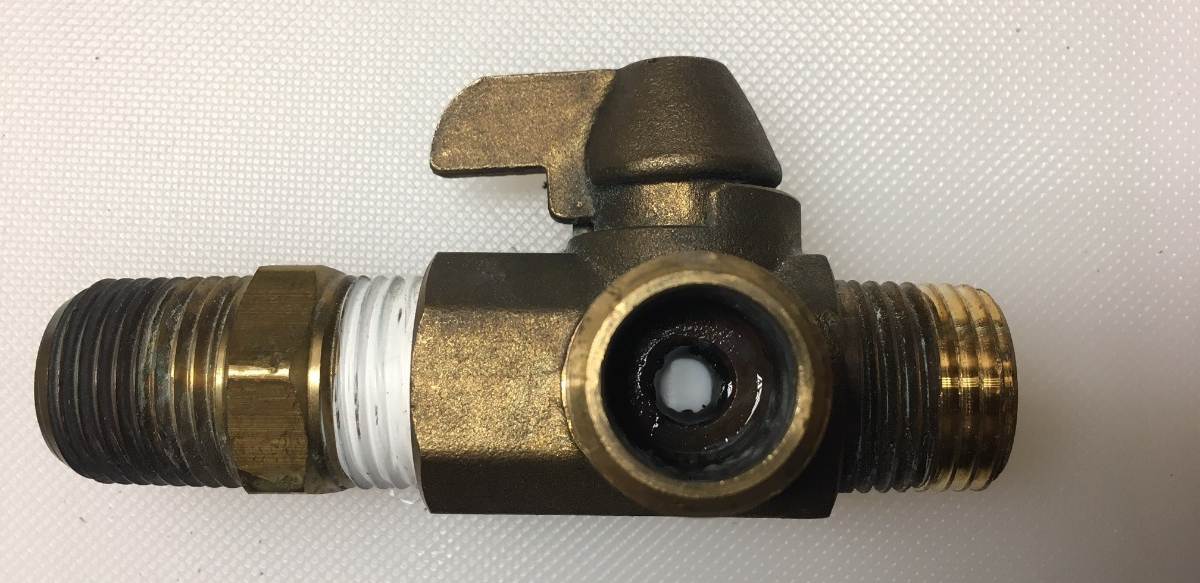
Yes, at some point OTT replaced two (2) brass two-way valves with four (4) basic open/shut valves. Both configurations achieve the same end result of three (3) plumbing configurations, 1) Normal Camping, 2) Sanitation/Winterization or 3) Boondocking positions. Maybe the change was due to the higher cost of lead-free brass or the 1/4" flow restriction in the OEM brass valves (see pic). I replaced ours with 2-way motorized ball valves with 12mm ID. I've never seen inside the basement of an LEI, but both models have similar kitchen sinks, wet baths, outdoor showers, 3 water inlets, etc. Of course things are more cramped and some things are mounted in different locations.
-
Yeah, I missed that too. Dave has the older EI along with a couple of others who frequent our Forum. Oh, and there are no plumbing schematics older than 2019 as far as I know. Maybe @DavePhelps could review the 2019 diagram and comment re older EI differences. The plumbing should be similar. EI and EII have 3 water inlets with similar (same) valving configurations. They likely install water line restrictors on both models. I forgot to mention, there's no restrictor on the boondocking line since the Oliver water pump supplies the suction there's no need.
-
Used Oliver advertisements Return to the Oliver Forum
jd1923 replied to dewdev's topic in General Discussion
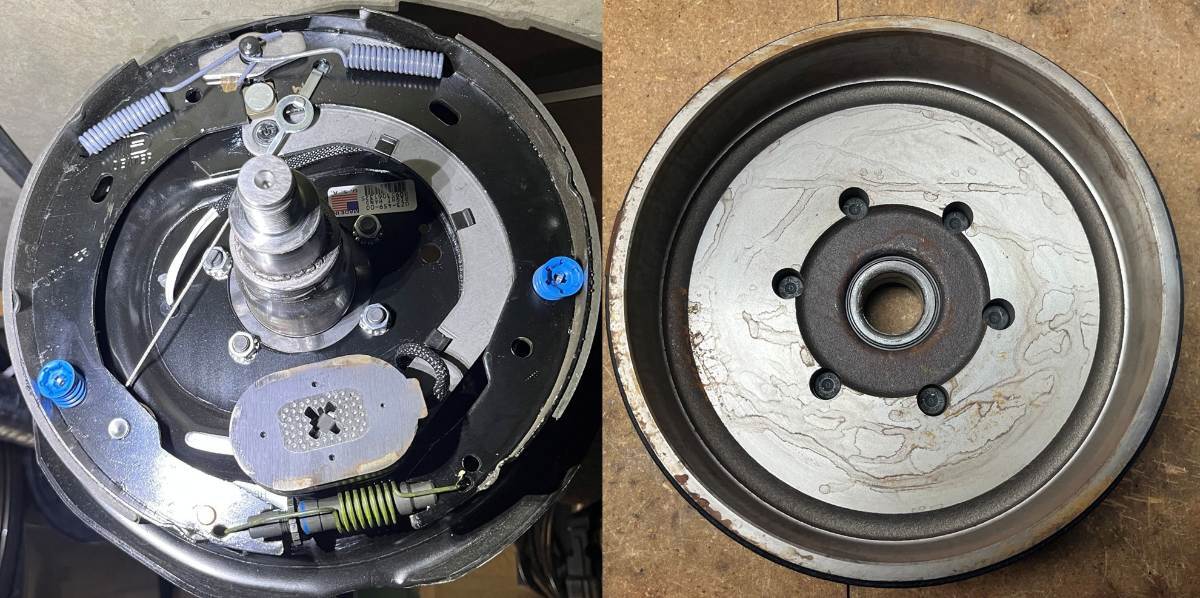
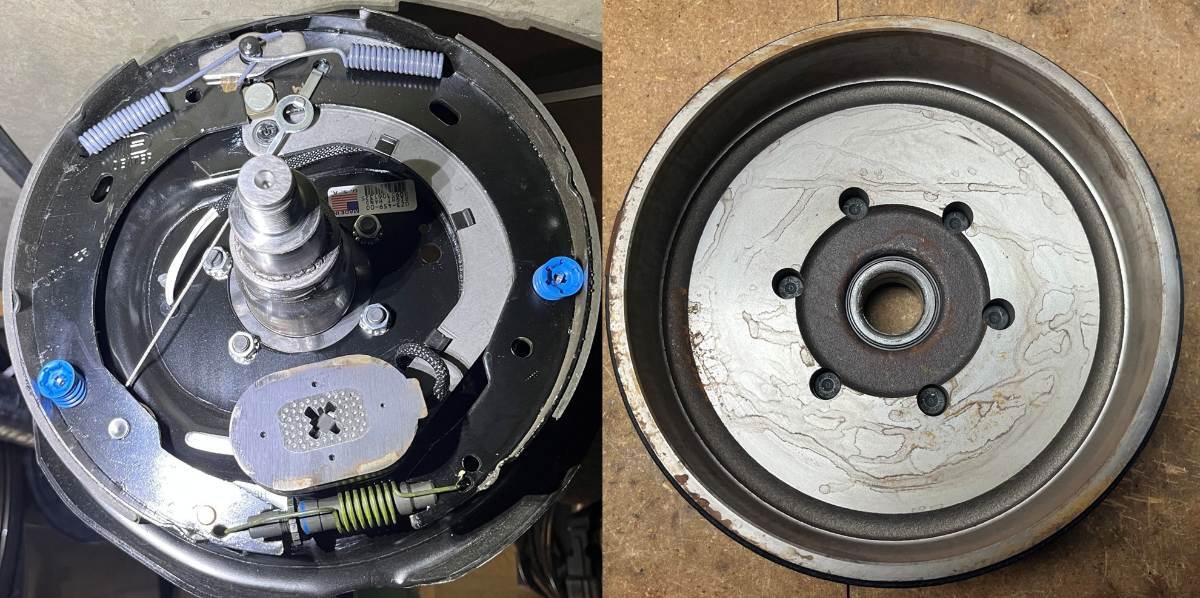
Turns out these parts as pictured will be at The Rally next week 4-Sale. A good traveling spare set would include a left and right hand set to cover a full axle rebuild. Anybody who can change a trailer tire can mount this hardware on roadside if necessary (think Alaska trip). The hubs come off with a small circlip and one large nut. The brake backing plates connect with 5 nuts on the axle studs (you can see 4 of 5 nuts in the picture). These parts are listed on eTrailer to see their retail value. These are brand new parts to be sold at a very good cash price. Please PM me if interested. You could pick up the parts pictured at the Rally and I would ship a like set for the other side to you free shipping.
-
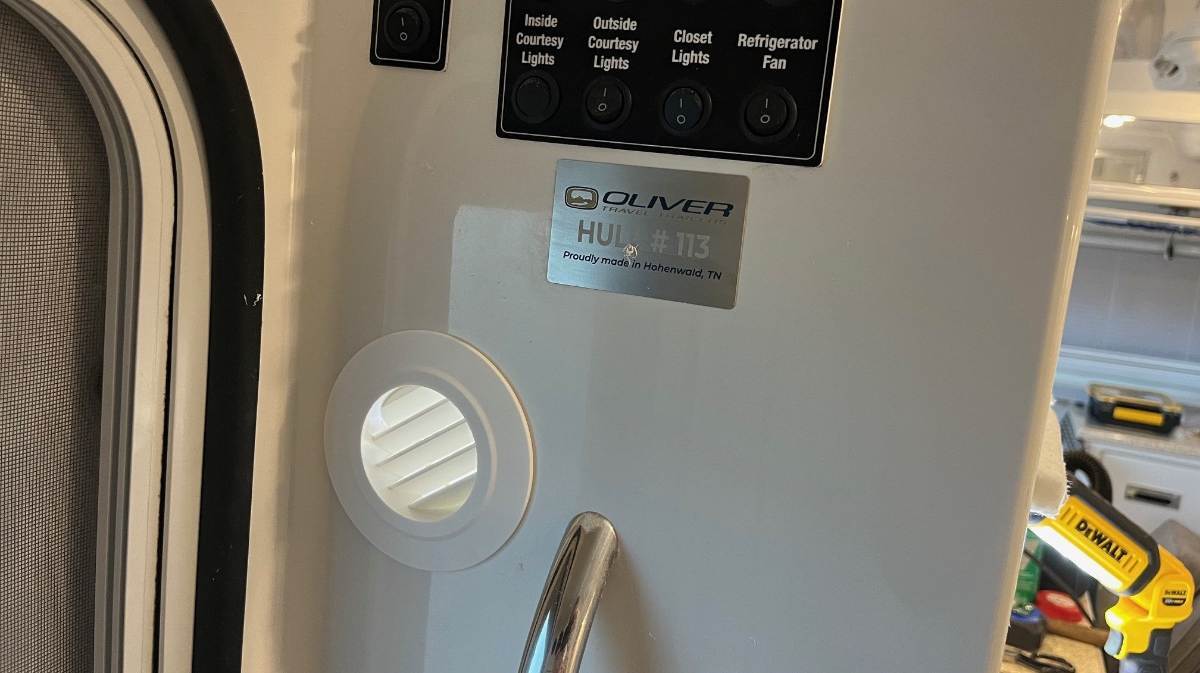
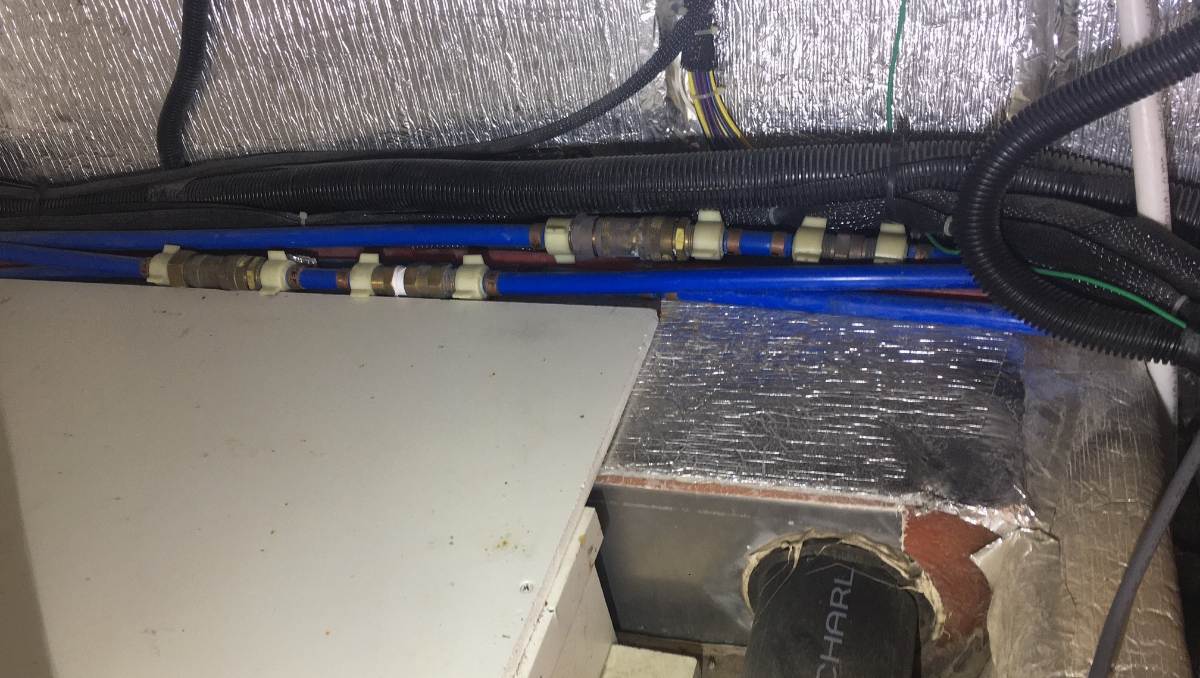
Welcome @AKPilot and congratulations! Btw, there are quite a few of us who feel OTT built a darn good Oliver back in the day! I've been restoring our for 3 years and finally all the major stuff is done! 😎 I would start with Dave's suggestion, meaning first be certain your valves are set correctly. There is another reason the boondocking port may work and the others do not. If you look closely at the OTT plumbing diagram at the City and Fresh Water inlets it shows backflow prevention aka check-valves on both lines. What the schematic does not show is that OTT also installed water flow restrictors next in line (see pic, rear wall of basement, Hull #113). This statement had me thinking. Perhaps hard water left in the plumbing over a long period of time would evaporate leaving heavy calcium deposits in these waterline devices. I say heavy because there is a bit of water upstream. Our check-valves always leak a little when unpressurized. With ample water uphill and basically an opening downstream, more and more evaporation over time could lead to calcium buildup that would eventually close the openings. This may well be your use case. I've had it on my long list to REMOVE these restrictors. A true pressure regulator on the fill hose is superior to an inline restrictor, since limiting pressure vs. restricting GPM flow rate are not the same (the former is good, the latter no so). I believe removing them is best. At the same time, the check-valves could be cleaned with CLR but most owners when getting in there have replaced them. They're a relatively inexpensive part and yours are likely to crusty to clean anyway. Hope this helps! Please post your maintenance, repairs and modifications here as you work through them and of course ask questions for anything you need!